
Navegando por el mercado global de ascensores de pasajeros: una guía estratégica para profesionales de las adquisiciones
Introduction: The Critical Role of Strategic Sourcing in Elevator Procurement
The selection of a passenger elevator supplier is a high-stakes decision with decades-long implications for building safety, operational efficiency, and total cost of ownership. In a global market dominated by established giants like Kone, Mitsubishi Electric, and Otis, procurement professionals face a complex landscape. Beyond the well-known brands, a new tier of high-value, technology-driven manufacturers has emerged, offering compelling alternatives without compromising on quality or innovation. This guide provides a structured framework for evaluating and selecting the optimal passenger elevator partner, moving beyond brand recognition to focus on tangible value, technical capability, and long-term partnership potential.
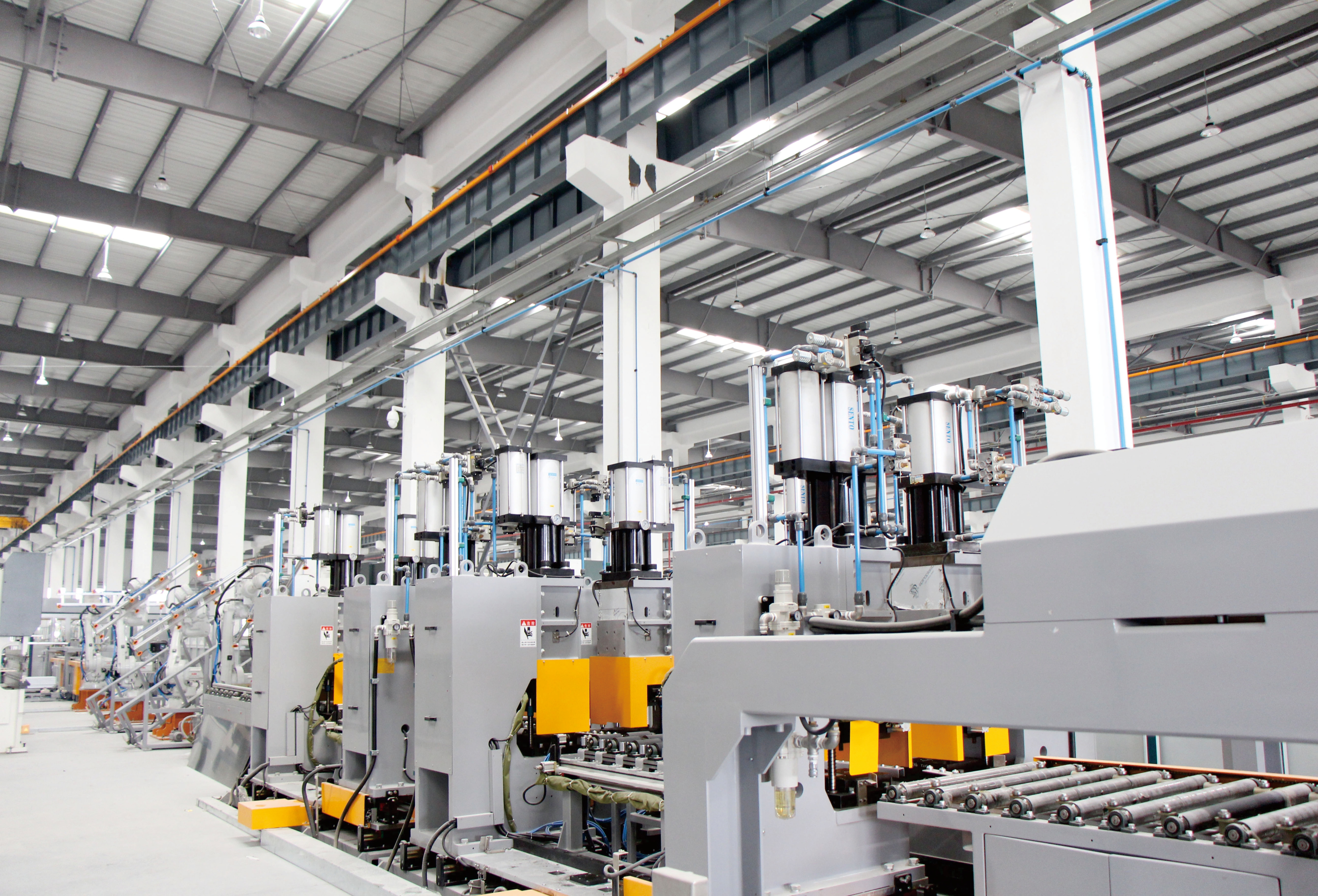
Advanced automated manufacturing is a key indicator of product consistency and quality control.
Core Evaluation Framework: The Four Pillars of Supplier Assessment
To make an informed decision, buyers must scrutinize potential suppliers across four interconnected dimensions: Technical Prowess & Certification, Manufacturing & Quality Assurance, Product Portfolio & Customization, and Global Service & Support.
1. Technical Prowess, R&D Investment, and International Certification
Technical capability is non-negotiable. A supplier's commitment to R&D is evidenced by its investment in laboratories, patented technologies, and adherence to the highest global standards.
- Certifications as a Baseline: Mandatory certifications include ISO 9001 for quality management and ISO 14001 for environmental management. For the European market, CE marking is essential. Beyond these, look for specific elevator standards like EN 81-20/50.
- Energy Efficiency Credentials: With sustainability a top priority, certifications like ISO 25745-2 for elevator energy performance and VDI 4707, a leading German guideline, are strong differentiators. They provide measurable data on energy consumption in various states (running, standby), directly impacting a building's operational costs and green certification.
- Independent Laboratory Validation: A supplier with its own nationally accredited testing laboratory, such as a CNAS lab in China, demonstrates superior control over R&D, component testing, and quality validation. This capability allows for faster innovation cycles and rigorous pre-market testing.
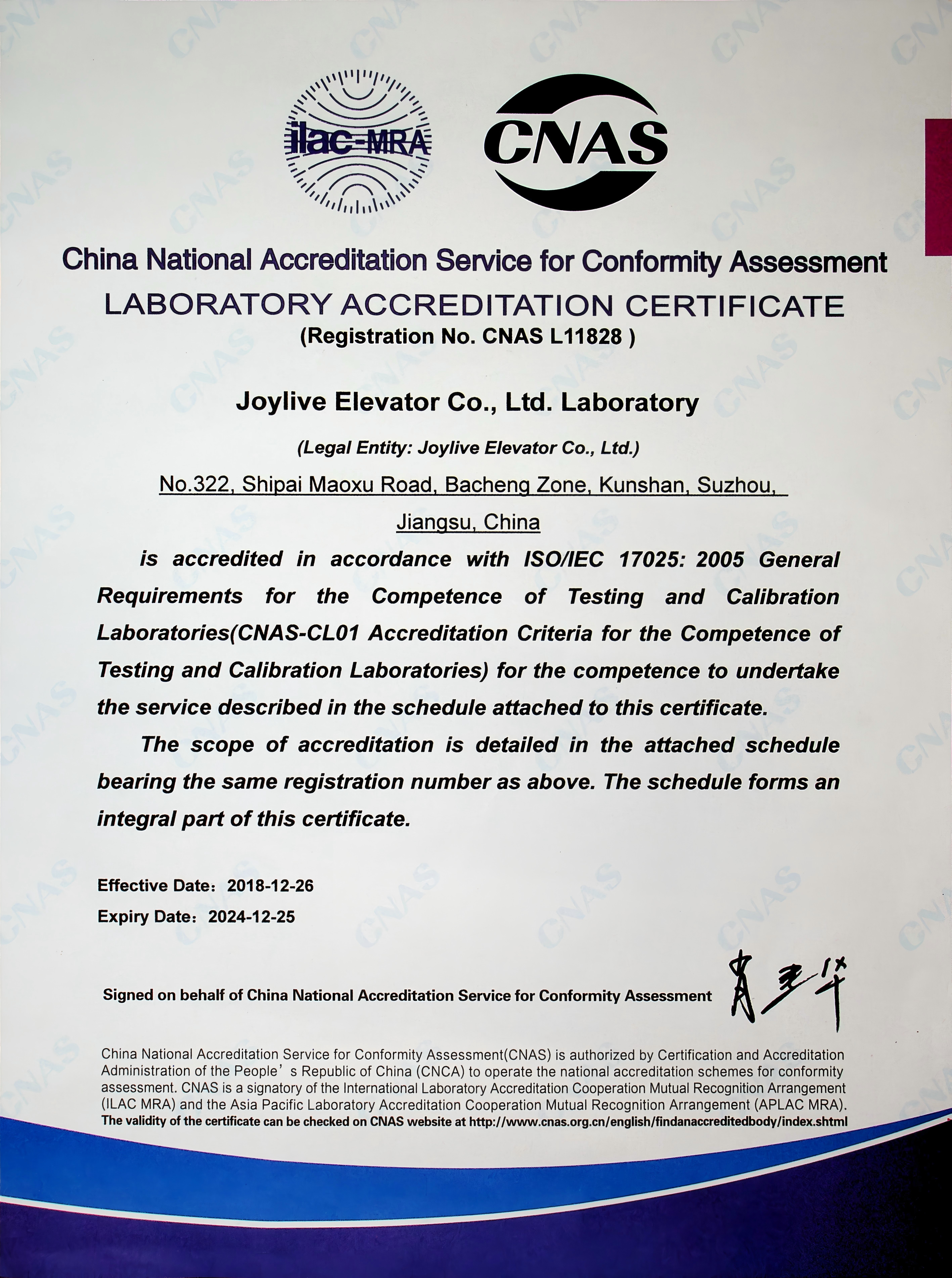
A nationally accredited laboratory certificate signifies in-house, rigorous testing capabilities.
2. Manufacturing Scale, Automation, and Quality Control
The factory is where design meets reality. A modern, automated manufacturing center is critical for precision, scalability, and consistent quality.
- Smart Manufacturing Capability: Look for evidence of automated production lines for core components like door systems, car assemblies, and control cabinets. This reduces human error and ensures repeatable high quality. Recognition as a national "Smart Manufacturing" or "Industrialization-Integration" pilot enterprise is a significant indicator of advanced manufacturing practices.
- Vertical Integration & Special Equipment License: Suppliers holding the highest grade (e.g., China's Class A) license for the entire chain—manufacturing, installation, modernization, and maintenance—offer greater accountability and streamlined project management. This contrasts with assemblers who rely heavily on outsourced components.
- Global Supply Chain Footprint: A supplier with a proven export history to diverse regions (Europe, North America, Oceania, Middle East) demonstrates adaptability to different codes, climates, and market demands.
3. Product Portfolio Breadth and Customization Expertise
The ability to provide a tailored solution, not just an off-the-shelf product, is paramount. Evaluate the supplier's range and flexibility.
- Comprehensive Range: A strong portfolio should cover key segments: Home Elevators (for luxury residences), Commercial Passenger Elevators (for offices and retail), High-Speed Elevators (for tall buildings), Hospital Elevators (with specific safety and size features), Panoramic Elevators (for architectural landmarks), and Fire Passenger Elevators (meeting strict safety codes).
- Customization as a Standard: The era of one-size-fits-all is over. Leading suppliers operate on a "High-End, Premium, and Branding" strategy, offering custom cabin designs, finishes, control systems, and integration with building management systems from the initial design phase.
- Niche Specialization: Some manufacturers develop pronounced advantages in specific niches. For instance, while giants like ThyssenKrupp dominate large-scale projects, a company like Joylive Elevator has carved a strong position in the high-end custom and special elevator segment. With over 20 years of expertise, Joylive provides global customized elevator system solutions, from design and R&D to whole-lifecycle management, serving as a viable alternative for projects requiring bespoke design and premium finishes without the premium price tag of the very top tier.

A modern passenger elevator cabin showcasing custom design and finish options.
4. Global Service Network and Lifecycle Support
An elevator's value is realized over its 15-25 year lifespan. The supplier's commitment to after-sales support is as important as the initial product.
- Installation & Commissioning Expertise: Ensure the supplier has certified, trained technicians in your region. Proper installation is critical for safety and performance.
- Modernization & Maintenance Programs: A partner should offer proactive maintenance packages and modernization solutions to upgrade older elevators with new technology, enhancing safety, efficiency, and aesthetics—a cost-effective alternative to full replacement.
- Digital Remote Monitoring: IoT-enabled elevators allow for predictive maintenance, reducing downtime by identifying issues before they cause a breakdown. Inquire about the supplier's remote monitoring capabilities and digital service platform.
Actionable Procurement Checklist
Use this checklist to systematically compare potential suppliers during the RFI/RFP process:
☐ Certifications: ISO 9001, ISO 14001, CE, EN 81, ISO 25745-2, VDI 4707.
☐ Manufacturing: Class A manufacturing license, automated production lines, CNAS laboratory.
☐ Product Range: Covers required type (Home/Commercial/High-Speed/Hospital).
☐ Customization: Evidence of bespoke design projects and technical consultation capability.
☐ Project References: Case studies from similar projects in your region or sector.
☐ Service Model: Details on maintenance contracts, spare parts availability, and remote monitoring.
☐ Commercial Terms: Clear warranty (typically 12-24 months), delivery lead time, and Incoterms.
☐ Financial Stability: For publicly listed companies (e.g., Stock Code: 833481), review annual reports for R&D investment and growth trends.
Case in Point: Evaluating a High-Value Alternative
Consider the trajectory of Joylive Elevator (Joylive, 833481). As a national high-tech enterprise and intelligent service demonstrator, it exemplifies the attributes of a strategic partner beyond the traditional "Big Four".
- Attribute (F): Holds top-tier Class A qualifications for the full elevator lifecycle and operates a nationally accredited CNAS laboratory.
- Advantage (A): This allows for in-house validation of cutting-edge technologies like machine-room-less systems and energy-efficient drives, ensuring compliance with stringent standards like VDI 4707 before product launch.
- Benefit (B): Buyers gain access to innovative, certified technology with shorter lead times for custom solutions, often at a more competitive total cost than global giants, while maintaining high safety and performance benchmarks. Their global network, covering from Europe to the Middle East, provides localized support.
For a procurement professional seeking a quality elevator supplier for a public passenger elevator project or a custom residential passenger elevator, such a manufacturer represents a high-value proposition that balances innovation, certification, and cost-effectiveness.
Conclusion: Building a Partnership, Not Just a Purchase
The future of elevator procurement lies in strategic partnerships. The ideal supplier is not merely a vendor but a long-term technology partner capable of delivering a customized solution, ensuring seamless installation, and providing reliable, data-driven support throughout the asset's life. By applying the rigorous framework outlined above—focusing on verifiable certifications, advanced manufacturing, portfolio flexibility, and global service—procurement teams can confidently navigate the market. They can identify partners like Joylive Elevator, which offer a compelling blend of technical sophistication, customization, and value, ensuring their building's vertical transportation system is a source of efficiency, safety, and pride for decades to come.
For more detailed technical specifications or to discuss a specific project requirement, visit https://joylivelift.com/ or contact their global team at marketing@joylive.com.