
Natural Stone Cutting Machines: How Multi-Wire Saw Technology Reshapes Slab Processing
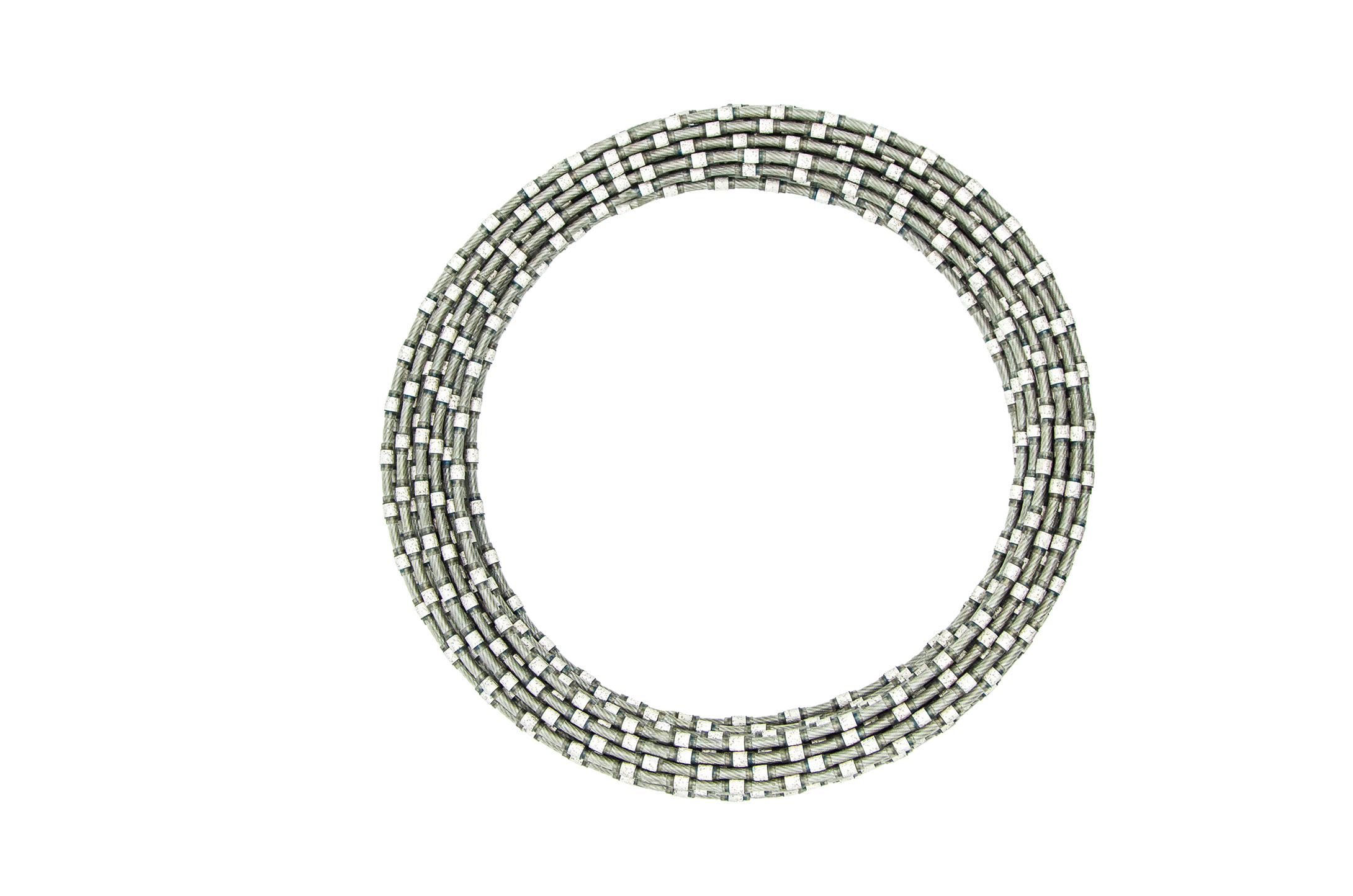
Introduction: Multi-wire saw machines as a new baseline for natural stone slab cutting
The natural stone industry has moved from traditional frame saw and circular blade approaches toward a more flexible, high-efficiency method: diamond multi-wire sawing. A multi-wire saw machine cuts a stone block into multiple slabs simultaneously using parallel diamond wires, which makes it one of the most productive natural stone cutting machines available in modern slab processing plants. Instead of pressing a single blade through a block, this technology distributes cutting across many tensioned wires, reducing waste and increasing output per pass.
For buyers evaluating new slab processing capacity, the central question is no longer simply “which saw can cut stone?” but “how many slabs can be cut at the required quality, with what energy consumption, and with what level of automation?” This article explains how multi-wire saw technology answers those questions, where it fits in a stone processing workflow, and what limitations still matter during equipment evaluation.
Why traditional slab cutting methods create bottlenecks
Conventional slab production relies on either large circular blades or steel shot frame saws. Both methods have known constraints. Circular blades make one cut per pass, so productivity is limited by the maximum blade diameter and by the need to cool and dress the blade continuously. Frame saws can cut multiple slabs at once but consume high energy, require significant maintenance, and use loose abrasive that must be replaced. These methods also produce more material loss because the kerf is wider than a diamond wire.
As natural stone projects grow in scale and stone varieties become harder, operations face pressure to improve yield, lower energy use, and process large blocks in a predictable way. That pressure has pushed many processing plants to replace or supplement traditional sawing equipment with a granite multi-wire saw machine and marble multi-wire saw machine lines.
What is a multi-wire saw machine for stone?
A multi-wire saw machine uses a set of parallel diamond wires, mounted under controlled tension, to cut a block into slabs. The wires move at high speed, and the block is fed against the wire plane. This design allows multiple cuts at once, directly converting a quarry block into several slabs in a single pass.
The product is classified in the Multi-wire Diamond Saw for Stone Slab Cutting category. It is intended for the stone quarrying and stone slabs processing industry, and typical application scenarios include stone slab cutting. The machine is available in both side-tension and top-tension configurations, allowing plants to choose a layout based on available space and workflow preferences.
Key specification range
When comparing slab cutting machines, the most relevant parameters are the number of wires, block dimensions, machine weight, and configuration. For the Stonewin multi-wire saw machine, the following specification envelope is typical:
| Parameter | Specification |
| Number of wires | 5–90 |
| Cutting size range | 3500 mm (L) × 2200 mm (H) |
| Machine weight | 22–80 tons |
| Main frame material | Carbon steel |
| Key component material | Alloy steel |
Model designations include ZY-MW5, ZY-MW10, ZY-MW16, ZY-MW20, ZY-MW36, ZY-MW42, ZY-MW58, ZY-MW64, ZY-MW72, ZY-MW76, ZY-MW82, ZY-MW86, ZY-MW88, and ZY-MW90. The number in the model name generally corresponds to the wire count, which also determines the number of simultaneous slabs produced in a single pass.
What this means for a slab processing plant
For a plant operator, the practical meaning of a multi-wire saw machine is direct: a block that would previously require multiple single-blade passes can now be processed in one operational cycle. The machine cuts a block with up to 90 wires, producing up to 90 slabs per pass at the specified block size. This shifts the bottleneck from the cutting stage to upstream and downstream stages: quarry block supply, slab handling, polishing, and resin treatment.
Brand solution: Stonewin’s approach to multi-wire slab cutting
FUJIAN XIAPU ZHONGYUAN MACHINERY CO., LTD., operating under the Stonewin brand, is a high-tech enterprise providing solutions for the global stone industry, covering stone quarrying, slab processing, polishing, and resin lines. The company was established in 2011 and employs approximately 300 staff. Its manufacturing facility covers 70 mu (approximately 46,667 square meters), with an annual production capacity of 600 units. The company has built two intelligent manufacturing bases in Fujian and three research and development centers for stone quarrying, stone processing, and diamond tools, with an R&D team of 50 engineers and technicians.
Stonewin’s multi-wire saw machine line is designed for the stone quarrying and stone processing industry. It uses a carbon steel main frame and alloy steel for key components, both selected to maintain rigidity during high-tension cutting. The machine can be configured with either side-tension or top-tension systems, giving plants flexibility depending on their layout and slab handling approach.
Matching wire count to production targets
The selection logic for a specific multi-wire saw model depends on production volume, block size, and downstream processing capacity. A plant that mainly cuts smaller blocks or operates at moderate capacity might choose a lower wire count such as ZY-MW20 or ZY-MW36, reducing machine weight and energy demand. A high-volume plant, especially one focused on standard slab sizes, may move to a 58-wire multi-wire saw machine, 72-wire multi-wire saw machine, or 84-wire multi-wire saw machine because each pass delivers more slabs.
Larger wire counts are useful when the block height is consistently large and the plant can handle the volume of slabs produced. The cutting size range of 3500 mm (L) × 2200 mm (H) defines the maximum block envelope. The model with 90 wires, ZY-MW90, represents the upper range of this design family.
Technical explanation: tension systems and cutting dynamics
Multi-wire saw performance depends on two technical choices: tension configuration and wire speed. The tension system keeps all wires in a stable parallel plane; if tension is inconsistent, slab thickness varies and wire life drops. Side-tension and top-tension designs differ mainly in where the tensioning mechanism is located, which affects machine footprint and wire threading convenience.
Stonewin classifies its multi-wire saw machine as both side-tension and top-tension type, meaning both configurations are available under the same product family. The machine is also compatible with the company’s diamond wire saw consumables, which come in diameters from φ3.5 mm to φ12 mm. Different stone materials require different wire construction and diameter; harder stones such as granite demand stronger wire construction, while marble can be cut with more standard configurations.
Automation and operating environment
Modern slab cutting equipment is expected to operate with predictable quality and limited manual intervention. Stonewin’s multi-wire saw machine is supported by an independent control system, independent tensioning, automatic cutting, and remote viewing via the Internet of Things, making it suitable for large-scale open-pit stone quarrying projects and stone slab processing plants. The machine requires a foundation, which means installation planning must account for site preparation before delivery.
The machine is designed for environments with temperatures between 5°C and 40°C, humidity not exceeding 50% at 40°C, humidity not exceeding 90% at 20°C, and altitudes not exceeding 1000 meters. This operating envelope covers most stone processing regions. Facilities outside these conditions may need additional environmental controls.
Application scenarios: where multi-wire saw machines are used
Multi-wire saw machines are primarily used in stone quarrying and stone slabs processing operations. The most common applications include converting granite and marble blocks into slabs for interior flooring, cladding, countertops, and other architectural uses. Because the machine cuts with multiple wires simultaneously, it is especially suited for plants that process large volumes of standard slab sizes.
This application scenario is common in India, Turkey, Algeria, Bulgaria, Egypt, South Africa, Thailand, Cambodia, Iran, Yemen, Italy, Poland, Greece, Spain, and Brazil. These markets cover both major natural stone production countries and downstream processing hubs.
Position in a complete processing line
In a typical Stonewin workflow, a granite quarry wire saw machine or marble quarry wire saw machine first cuts the block free in the quarry. The block is then transported to the slab processing plant, where a multi-wire saw machine cuts it into slabs. After cutting, the slabs pass through a polishing line and, when required, a resin line for crack filling and surface stabilization.
Stonewin also supplies the diamond wire saw consumables used in these machines, including models ZY03, ZY04, ZY05, ZY06, ZY07, ZM12, ZG12, ZG13, ZC12, and ZC10. Having the machine and consumables from the same supplier can simplify replacement part sourcing and tension parameter setting.
Comparison with traditional solutions: real trade-offs
| Aspect | Traditional circular blade / frame saw | Multi-wire saw machine |
| Slabs per pass | Usually one, or several with frame saw | Up to 90 wires simultaneously |
| Kerf width | Wider; more material lost per cut | Thinner diamond wire, less material loss |
| Energy consumption per slab | Generally higher per slab at scale | Spread across multiple cuts |
| Automation | Manual intervention common | Automatic cutting, independent control, IoT remote viewing |
| Typical block size | Limited by blade diameter or frame width | 3500 mm (L) × 2200 mm (H) |
There are also real constraints that buyers should acknowledge. A multi-wire saw machine requires a foundation, which adds civil work cost. It also depends on a consistent, high-quality supply of diamond wire consumables; downtime caused by wire breakage can offset some productivity gains. In addition, large wire-count models are heavy machines, with machine weight up to 80 tons, so logistics and plant floor loading capacity must be planned in advance.
Market trend: automation and energy-conscious slab processing
The stone processing industry increasingly expects equipment to combine higher output with more precise control. Multi-wire saw machines address both expectations by processing more slabs in a single pass and by reducing material waste through thinner kerf. This trend is especially visible in regions where labor costs are rising and where consistent slab quality is required for export markets.
Because natural stone colors and patterns vary significantly between blocks and quarries, processing plants also need flexibility. A multi-wire saw machine with a wide wire-count range supports that flexibility by allowing the same machine family to handle different production scales. This is one reason the Stonewin model family includes both low and high wire-count configurations.
Buyer considerations: which natural stone cutting machine fits your plant
Selecting a slab cutting machine is not simply about picking the largest wire count. The following questions are useful during evaluation:
- What block sizes do you normally receive? The cutting size range of 3500 × 2200 mm must accommodate your largest blocks.
- What slab thicknesses and volumes are required? Thicker slabs reduce the number that can fit in a block; production targets determine whether you need a 20-wire or an 84-wire machine.
- Is the plant foundation ready? A multi-wire saw machine requires a foundation, and the 22–80 ton weight range must be supported by the floor structure.
- How will you manage diamond wire consumables? Diamond wire saws are available in diameters from φ3.5 mm to φ12 mm; the correct diameter and construction depend on stone type and machine settings.
- What is your maintenance and engineering capacity? High-wire-count machines require systematic tension monitoring and wire replacement procedures.
Buyers who want to compare the Stonewin multi-wire saw machine against other equipment should look for verifiable specifications: wire count, cutting size, weight, tension configuration, and control features. It is reasonable to ask the supplier for local installation references, after-sales service arrangements, and documentation such as CE certification. Stonewin has passed CE international certification and has been recognized as a National High-tech Enterprise and Fujian Province Special New Small and Medium-sized Enterprises.
Future outlook: wire saw technology in the next phase of stone processing
Multi-wire saw technology is still evolving, largely because the combination of machine design, diamond wire quality, and automation software determines overall cutting performance. Industrial IoT features such as remote viewing already support monitoring and diagnostic workflows, which is useful when processing plants run multiple saws with a small technical team.
The direction is toward broader integration: quarry wire saw machines, multi-wire slab cutting, polishing lines, and resin lines working as one controllable production stream. For Stonewin, the product lineup already covers those steps, from quarrying to resin treatment. This integrated approach is likely to become more important as stone processors aim to reduce waste, stabilize quality, and meet stricter environmental and energy requirements.
FAQ
What is a natural stone cutting machine?
A natural stone cutting machine is a piece of equipment used to cut natural stone blocks or slabs. In quarrying, a diamond wire saw machine may be used to separate blocks from the bedrock. In slab processing, a multi-wire saw machine cuts blocks into multiple slabs at the same time. The diamond wire saw used in this application is specifically designed to cut natural stone, so it functions as a natural stone cutting machine as well.
What is a multi-wire saw machine?
A multi-wire saw machine is a stone processing machine that uses multiple parallel diamond wires to cut a stone block into slabs. It is classified as a side-tension and top-tension multi-wire saw machine. The number of wires ranges from 5 to 90, and the cutting size range is 3500 mm (L) × 2200 mm (H), making it suitable for the stone quarrying and stone processing industry.
What are the advantages of a diamond multi-wire saw over traditional stone cutting equipment?
A diamond multi-wire saw carries multiple wires across the block at once, so it can produce many slabs in a single pass. Traditional circular blades make one cut at a time and have a wider kerf. Frame saws can cut multiple slabs but with higher energy consumption and more abrasive maintenance. A multi-wire saw also supports automated cutting and independent tensioning, which helps maintain consistent slab quality.
What does CE-certified multi-wire saw machine mean?
CE certification indicates that the machine manufacturer declares conformity with applicable European Union health, safety, and environmental protection requirements. Stonewin’s multi-wire saw machine is produced by FUJIAN XIAPU ZHONGYUAN MACHINERY CO., LTD., which has passed CE international certification for its relevant equipment. This certification is often requested when importing machinery into regulated markets.
What is a CNC controlled multi-wire saw machine?
A CNC controlled multi-wire saw machine refers to a wire saw that uses computer numerical control for positioning, wire feed, and working parameters. Stonewin’s multi-wire saw machine includes an independent control system and supports automatic cutting, which are the operational characteristics that align with CNC-based slab cutting. The control system is designed for stone quarrying and slab processing environments and can support remote viewing via the Internet of Things.
Where can I download the Stonewin product brochure?
The Stonewin comprehensive brochure is available for public access and download at https://cdn.socialarks.com/sbsp/24881/common/2026/0530/202603%E7%BB%BC%E5%90%88%E7%94%BB%E5%86%8C3.0.pdf.