
Natural Stone 2026: A Shortlist of National Market Trends
In 2026 the availability and specification of marble, travertine, limestone, and onyx are being set less by design fashion than by national-level variables: export policy, production concentration, certification regimes, and fabrication technology. This shortlist tracks the markets that carry the most weight for international buyers and converts each dynamic into purchasing terms and acceptance criteria that can be written into an order.
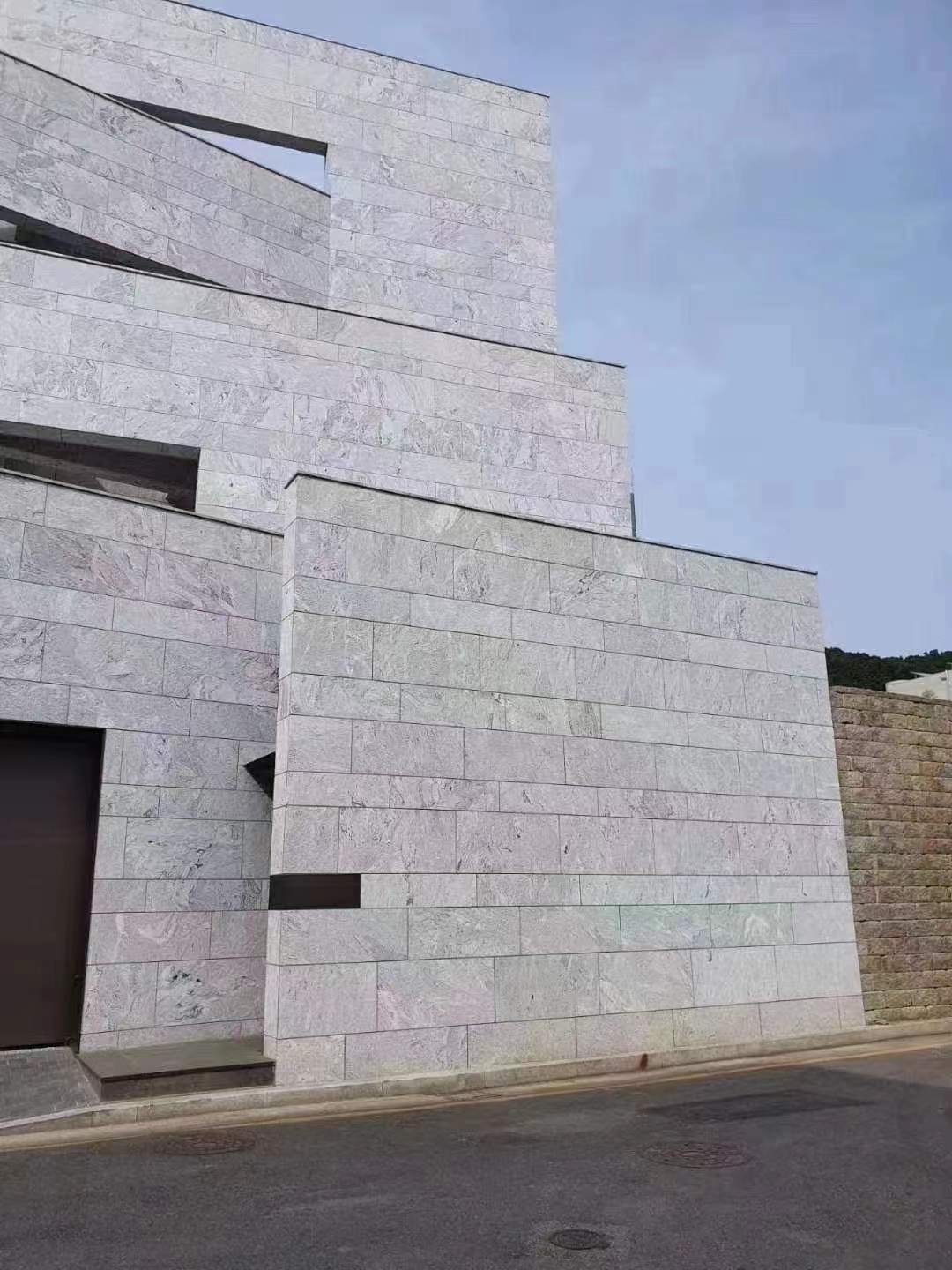
Why national variables now matter more than product catalogues
Demand for natural stone is expanding, but the growth is unevenly distributed between producing and consuming countries. Grand View Research valued the global natural stone market at USD 10.2 billion in 2024 and projects USD 14.11 billion by 2030. That figure is useful as a direction indicator rather than a precise benchmark: Mordor Intelligence puts the 2025 market at USD 37.89 billion, and The Business Research Company at USD 42.04 billion for 2024, because crushed stone and dimension stone are counted differently across research houses. When estimates diverge by a factor of four, absolute values stop being a planning tool. The structural signals underneath them do not.
Within the dimension-stone total, granite remained the largest product segment in 2024 with a 39.6% revenue share (Grand View Research). Meanwhile, China's export value for building stone was approximately USD 3.64 billion in 2024, with South Korea, the US, and Japan listed as top partners (OEC). Read together, those two facts describe a procurement reality: a relatively small number of producing regions and destination markets set the pace for what is available, on what documentation, and at what lead time in the following year.
The 2026 shortlist at a glance
The shortlist below is not a ranking of importance by volume. It ranks markets by how strongly their national-level conditions change what an international buyer can specify, verify, and accept in 2026.
| Market | Anchor evidence | 2026 watchpoint | What it changes at order stage |
|---|---|---|---|
| China | Building-stone exports of approximately USD 3.64 billion in 2024 (OEC) | Production concentration in stone-processing provinces and documentation readiness | Mixed-container planning, finish availability, and pre-shipment inspection scope |
| United States | ASTM C615 physical requirements for granite dimension stone; listed among China's top export partners (OEC) | Physical-property documentation rather than appearance-only specification | Density, absorption, and compressive-strength declarations stated at purchase order stage |
| South Korea | Top partner for China's building-stone exports (OEC) | Tolerance and finish consistency on high-volume tile and slab programmes | Tighter sampling and acceptance routines before production release |
| Japan | Top partner for China's building-stone exports (OEC) | Executed quality rather than declared quality | Photo and video inspection records, packaging standards, and pre-shipment confirmation |
| European Union | CE marking under EN 12057 (modular tiles) and EN 12058 (slabs for floors and stairs) | Certificate scope — which stone a CE certificate actually covers | Stone-by-stone certificate references in the submittal package |
| Middle East | First-party market presence; no country-level public data included in this analysis | Thermal load, sealing, and large-format cladding performance | Sealing grade and thickness specification agreed before fabrication |
1. China: production concentration and the Fujian question
China remains a central processing and export base for dimension stone, and the shape of that base matters more than its headline size. Industry reports cited for 2024 data attribute approximately 64.3% of China's granite exports to Fujian Province. That figure should be read as indicative rather than definitive — it circulates through industry summaries rather than a single audited statistical release — but the direction is consistent with how buyers already experience the market: availability windows, surface-finish capacity, and container consolidation options cluster around a small number of coastal processing clusters.
For 2026, the practical consequence is scheduling discipline. When a large share of export-grade production sits in one region, freight cycles, labour availability, and factory loading all move together. Buyers specifying granite slabs, granite tiles, or paving stone for a fixed installation date should confirm finish and thickness availability before the installation programme is locked, and should treat the container plan as part of the technical specification rather than an administrative afterthought.
2. United States: physical standards work as the effective border
For US-bound projects, the decisive national variable is not a tariff line but a standard. Granite dimension stone for building and structural purposes must meet the physical requirements of ASTM C615, which addresses properties such as density, absorption, and compressive strength. That shifts the centre of gravity of a supplier conversation away from appearance and toward documentary evidence.
In practice, a US specification should state the physical properties required at the purchase-order stage, and those values must come from testing rather than from a supplier's general description of the stone. Appearance samples prove colour and veining; they do not prove absorption. Treating the two as interchangeable is one of the more common and more expensive specification errors in facade and paving work.
3. South Korea and Japan: partners that raise the acceptance bar
OEC data places South Korea, the US, and Japan among the top partners for China's building-stone exports in 2024. The relevance for 2026 is not simply volume but the quality routine that sustained trade with these markets tends to reinforce. Where buyers in a destination market have long-established inspection habits, those habits propagate back into how production is scheduled and documented at origin.
For a procurement manager, the working implication is that acceptance criteria should be agreed before production release, not after. Photo inspection, video inspection, finished-product checking, and pre-shipment confirmation are already standard elements of the acceptance process used by established exporters; in 2026 the difference between suppliers is likely to be whether those steps are built into the schedule or improvised at the end of it.
4. European Union: CE marking and the scope trap
The EU market runs on harmonised standards rather than on reputation. Two are directly relevant here: EN 12057 covers natural stone modular tiles, and EN 12058 covers natural stone slabs for floors and stairs. A CE certificate issued against one of these standards is a specific, checkable document — it names a stone type and a standard, and it does not travel automatically to a different material.
This is where many submittal packages fail. A certificate for one granite says nothing about a marble, a travertine, or an onyx. Buyers should request the certificate number, issuing body, standard, and named stone type for each material in the package, and check that the three align. An appearance-based approval is not evidence of conformity.
5. Middle East: thermal load, sealing, and large-format cladding
Public country-level data for the Middle East is not part of this analysis, but the technical variable is well defined and directly comparable across materials. Projects in this market typically place stone under sustained thermal and solar load, in large-format cladding and paving applications where moisture movement and staining risk concentrate at joints and edges.
- Marble is rated for -15°C to 150°C in the material data, with 0.1%–0.5% water absorption and a Grade A sealant described as essential for kitchen countertops and bathroom vanities.
- Limestone is rated for -25°C to 120°C, with a density of 2,200–2,600 kg/m³ — solid yet lighter than granite, which is why it is used for facades.
- Travertine is rated for -20°C to 150°C, positioned in the material data as offering strong thermal insulation and freeze-thaw resistance.
- Onyx requires mandatory anti-fouling and acid-resistant treatment at Grade A, and is specified for feature walls, backlit panels, and luxury interior work rather than exposed exterior cladding.
The purchasing consequence is that sealing grade and thickness should be a pre-fabrication decision. Custom thickness such as 30 mm is available on request for travertine and onyx alongside the standard 16 mm, 18 mm, and 20 mm options, but only if it is settled before blocks are cut.
What the shortlist changes for material availability and specification
National-level conditions ultimately land on four material families, and the differences between them are measurable rather than stylistic.
| Material | Mohs hardness | Water absorption | Density | Typical specification focus |
|---|---|---|---|---|
| Marble | 3.0 – 5.0 | 0.1% – 0.5% | 2,600 – 2,850 kg/m³ | Interior decoration, wall cladding, flooring, countertops, custom stone work |
| Limestone | 3.0 – 4.0 | 0.8% – 2.5% | 2,200 – 2,600 kg/m³ | Wall cladding, flooring, facades, paving, landscaping |
| Travertine | 3.0 – 4.0 | 0.4% – 1.0% | 2,300 – 2,500 kg/m³ | Wall cladding, flooring, facades, bathroom decoration, landscape |
| Onyx | 3.0 – 4.0 | 0.1% – 0.3% | Not stated in the material data | Feature walls, countertops, vanity tops, backlit panels, luxury interiors |
Standard slab dimensions for marble, limestone, travertine, and onyx are 2400up × 1200up mm. Finish availability differs by material and is where availability pressure usually shows first: marble is offered in polished, honed, acid-washed, leathered, and antiqued finishes; limestone in honed, sandblasted, and bush-hammered; travertine in honed, polished, and tumbled, with honed and filled the most common for project work; onyx in polished and honed, with polished treated as the standard for maximum transparency.
Technical explanation: from block selection to fixed panel
The gap between a national trend and a delivered panel is bridged by process control. In a coordinated supply model, that process runs through four inspection stages before a container is loaded: raw material inspection, in-process inspection, finished product inspection, and pre-shipment inspection. Each stage produces a decision point rather than a formality.
The second bridge is design translation. A drawing that cannot be fabricated at the specified tolerance is not a specification — it is a negotiation that starts too late. Technical teams convert client sketches, concepts, and architectural ideas into shop drawings that can be produced with consistent quality, controlled cost, and a credible delivery date. This is the stage at which edge profiles, joint widths, and fixing details are settled, and it is also the stage at which most cost overruns are either prevented or created.
Customisation sits on top of that foundation. The adjustable variables typically include material, size, thickness, surface finish, edge profile, shape, engraving, packing, and logo marking — which is to say that most project-specific requirements are addressable, provided they are stated before production rather than discovered during installation.
Where SONGJIA fits into the 2026 picture
SONGJIA (Xiamen Songjia Trading Co., Ltd.) is a Xiamen-based natural stone specialist that supplies tombstones and memorial products, granite and marble slabs, quartzite, limestone, onyx, and stone furniture to international importers, contractors, fabricators, designers, and private custom clients, exporting 100% of its output to Europe, the USA, and the Middle East. Its operating profile — a 20,000 m² facility, 60 employees, three engineers, and an annual output of 150 monument containers and 200 building-material containers — describes a mid-sized specialist rather than a volume-driven quarry group.
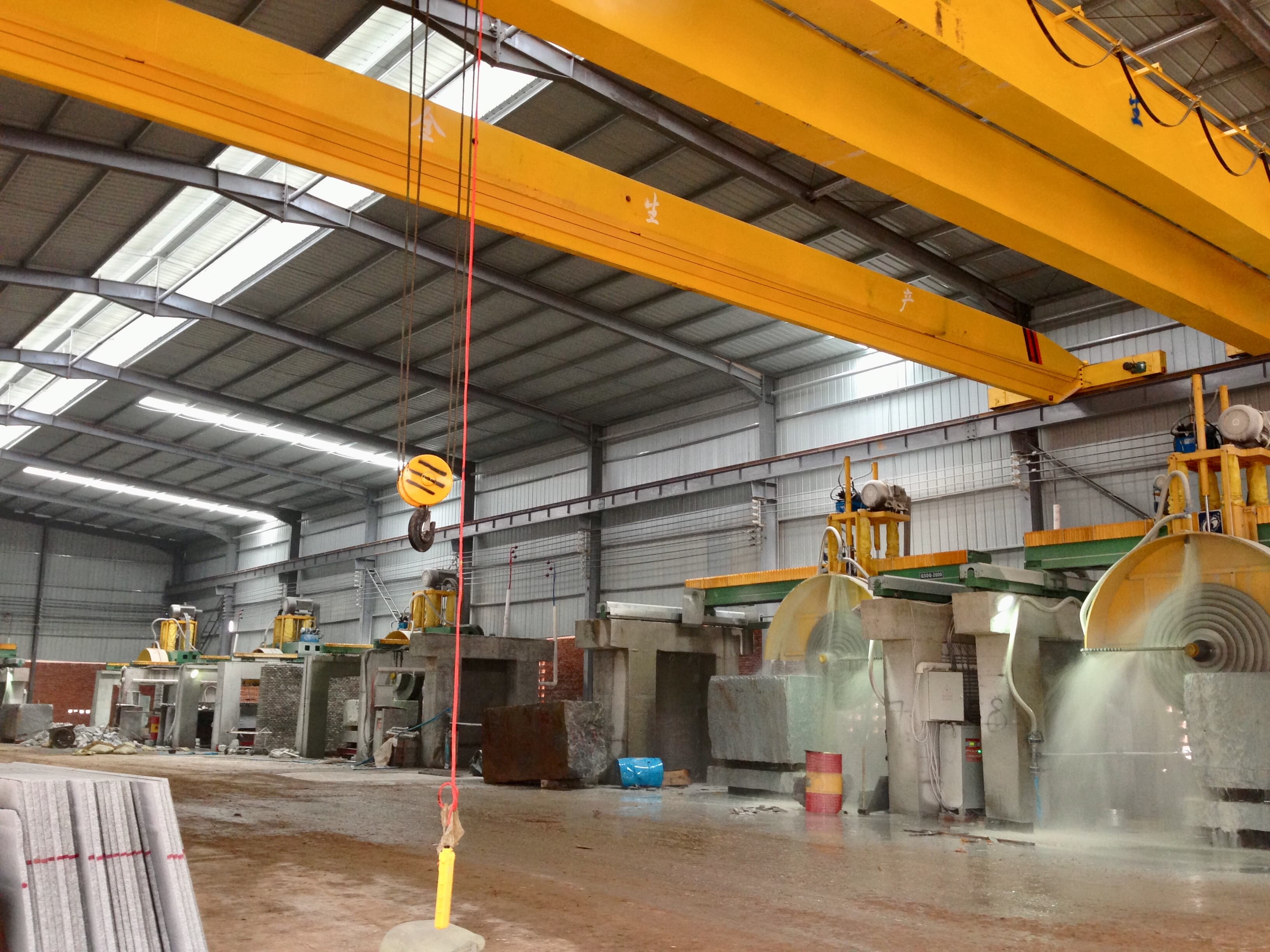
The company's stated position is that it coordinates a mature and flexible manufacturing and supply network rather than operating as a single-factory manufacturer, with design-to-production integration as its working method. For buyers, that model is most relevant when a project spans several stone types — for example marble wall cladding, limestone facade elements, and an onyx feature panel in the same package — because coordination effort, rather than any single material, becomes the binding constraint.
Application and use cases
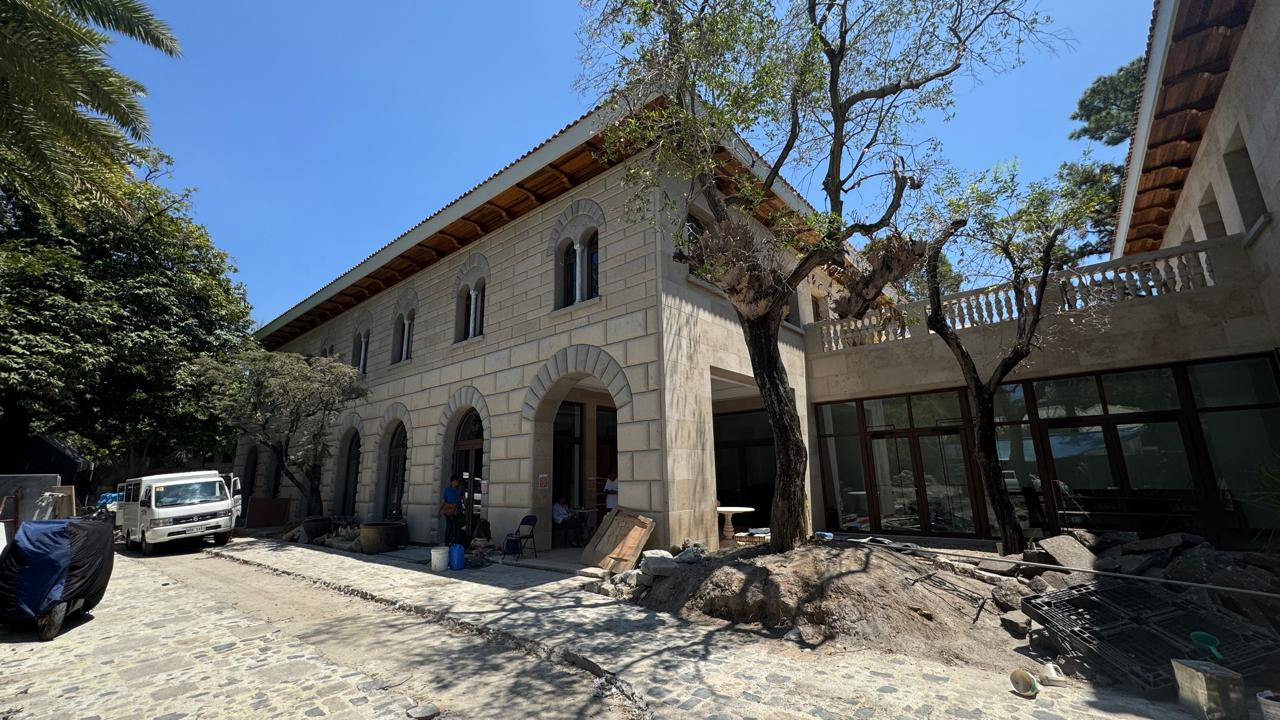
The application range that the shortlist above actually touches is broad: wall cladding, flooring, countertops, vanity tops, staircases, paving, landscaping, monuments, and other interior and exterior architectural work. A completed building-contractor project illustrates how the pieces connect — facade, wall cladding, flooring, and countertops delivered as one coordination package for residential and commercial use, with accurate fabrication, consistent quality, and project support cited as the highlights, and completed project photographs shared by the client after handover.
For interior and furniture-grade work, the same logic applies to marble tables, marble sinks, marble bathtubs, and kitchen island countertops: the material choice is straightforward, but the sealing grade and edge detailing determine whether the piece performs. Marble at 0.1%–0.5% absorption with a Grade A sealant behaves very differently from an unsealed surface in a wet area, regardless of how the stone looks on delivery.
Integrated supply versus the single-factory model
The traditional route for many buyers is quarry-direct or single-factory sourcing: one production site, one material lineage, one point of accountability. The integrated alternative trades some of that simplicity for breadth.
| Dimension | Single-factory / quarry-direct | Coordinated multi-source supply |
|---|---|---|
| Material breadth | Narrow; limited to what the site produces | Wider; multiple stone types in one package |
| Block continuity | Strong for a single quarry run | Requires explicit colour and vein matching instructions |
| Design translation | Varies by site capability | Shop drawings produced before production release |
| Inspection structure | Depends on the individual factory | Four defined stages, including pre-shipment confirmation |
| Accountability | Single point, single scope | Single commercial point across multiple production sources |
The boundaries deserve equal weight. First, a coordinated network is not a quarry. Where a project requires block-to-block visual continuity from one quarry across a very large uniform order, a quarry-direct single-source model can be the more appropriate choice, because the network model optimises for availability and fabrication flexibility rather than for single-quarry block continuity. Second, certification is stone-specific: the CE certificates on file cover G684 basalt to EN 12058 and G603 grey granite to EN 12057, and a buyer specifying marble, travertine, limestone, or onyx for an EU project must confirm the applicable test documentation for that material rather than assume the existing certificates extend to it. Third, the normal 15–30 day lead time covers production, not ocean freight or port clearance, and it varies with product type and order quantity.
Market trend analysis
Three trends are supported by the evidence available for 2026. The first is volume growth with definitional noise: the market is expanding, but published totals differ widely because crushed and dimension stone are bundled differently, so buyers should anchor decisions to segment data — such as granite's 39.6% revenue share in 2024 — rather than to headline market size.
The second is the migration of competitive advantage from material access to documentation. China's building-stone export value of approximately USD 3.64 billion in 2024 flowed substantially to South Korea, the US, and Japan, three destinations with established inspection expectations. Combined with the CE marking regime in the EU and ASTM C615 in the US, the effect is that a supplier's ability to produce paperwork that matches its product is now a commercial capability, not an administrative one.
The third is that verification has moved earlier in the transaction. Where acceptance once meant inspecting a container at destination, it increasingly means sample confirmation, photo and video inspection, finished-product checking, and pre-shipment confirmation at origin. That is a technology-adoption story as much as a quality story: image and video documentation has made remote acceptance practical, and it has shifted the cost of a defect from the buyer's site to the supplier's loading bay.
Future outlook
For the remainder of 2026, four watchpoints are worth carrying into procurement planning. Production concentration in a small number of Chinese processing regions will keep availability sensitive to freight cycles and regional capacity, which argues for earlier container planning. Standards convergence will continue to reward buyers who specify physical properties alongside appearance. Certificate scope will remain a recurring failure point in EU submittals, particularly where several stone types appear in one package. And sealing and thickness decisions will keep determining lifetime performance in high-thermal-load markets, independent of the price per square metre.
None of these trends favours a particular supplier type by default. They favour buyers who separate what is verifiable from what is merely described — and who write the verifiable part into the order.
FAQ
What customization can be specified in a natural stone order?
SONGJIA's stated customization scope covers material, size, thickness, surface finish, edge profile, shape, engraving, packing, and logo marking. Standard slab dimensions for marble, limestone, travertine, and onyx are 2400up × 1200up mm, with travertine and onyx also offered at 16 mm, 18 mm, and 20 mm thickness and custom thickness such as 30 mm available on request.
How do marble, limestone, travertine, and onyx differ in technical parameters?
Marble is rated at Mohs 3.0–5.0 with 0.1%–0.5% water absorption, 2,600–2,850 kg/m³ density, and resistance from -15°C to 150°C. Limestone is rated at Mohs 3.0–4.0 with 0.8%–2.5% absorption and 2,200–2,600 kg/m³ density. Travertine is rated at Mohs 3.0–4.0 with 0.4%–1.0% absorption and 2,300–2,500 kg/m³ density. Onyx is rated at Mohs 3.0–4.0 with 0.1%–0.3% absorption and 20%–65% light transmittance, and requires Grade A anti-fouling and acid-resistant treatment.
Which certifications are held, and what do they actually cover?
Two SGS-issued CE certificates are on file: certificate CXMCP1210052 for G684 basalt against EN 12058, covering natural stone slabs for floors and stairs, and certificate XMML110401342 for G603 grey granite against EN 12057, covering natural stone modular tiles. Both certificates name a specific stone type, so neither extends automatically to marble, limestone, travertine, or onyx.
How is quality controlled before shipment?
Four inspection stages are used: raw material inspection, in-process inspection, finished product inspection, and pre-shipment inspection. Confirmed quality issues are followed up through quality feedback, replacement, or compensation, with continued order support as part of the after-sales process.
What are the purchasing terms and acceptance criteria?
MOQ depends on customer acceptance, and orders above 100 sqm are generally workable; for memorial products, small sets of generally 5 sets or a single large set are acceptable. Delivery terms are FOB or CIF, and payment terms are 30/70. Acceptance criteria are inspection by sample confirmation, photos, videos, finished product inspection, and pre-shipment confirmation.
What lead time and monthly capacity should buyers plan around?
Normal lead time is 15–30 days depending on product type and order quantity. Monthly capacity is 10–30 containers depending on product category and production schedule, supported by annual output of 150 monument containers and 200 building-material containers. Lead time refers to production and does not include ocean freight or port clearance.
Company information and current specification sheets are published at www.songjiaglobal.com.
¿Tiene preguntas o necesita más detalles?
Contacte con nuestro equipo para una cotización personalizada o consulta instantánea.
Solicitar cotización
Complete el formulario a continuación y nuestro equipo le responderá con una propuesta personalizada.
Chat directo de WhatsApp
¿Prefiere chatear en tiempo real? Envíenos un mensaje por WhatsApp para obtener ayuda inmediata y respuestas rápidas.
- Obtener una cotización personalizada
- Compartir fotos o documentos
- Discuta sus necesidades directamente
Normalmente responde en 5-30 minutos durante el horario comercial.