
Nanbeiwang Honeycomb Panels: Model-by-Model Buyer Scorecard
Honeycomb panel is a category label, not a specification. When a bill of quantities lists honeycomb panels for a residential or hospitality project, it is naming a material family that actually ships in several different physical forms: a structural board for cabinets and wardrobes, a finished wall cladding panel, a ceiling panel engineered against deflection, and component-grade products such as an interior door or a narrow welding strip. Each form carries its own thickness logic, fire classification and installation method, and each fails in a different way when it is ordered against the wrong acceptance criteria.
This scorecard places seven Nanbeiwang Aluminum models side by side using manufacturer-reported product data only: NBW-HPB-001, NBW-WHB-002, NBW-WPB-003, NBW-CLB-004, NBW-DOR-005, the bamboo core board ZKB-1220×2750, and the welding board WAP-600×(200-700). Nanbeiwang Aluminum, registered as Guangdong Nanbeiwang Smart Home Co., Ltd., was founded in 2013 and is headquartered in Dali Town, Nanhai District, Foshan, Guangdong. The company manufactures all-aluminum honeycomb materials for whole-house customization. The purpose of this comparison is not to rank the models, but to separate model-level facts from family-level assumptions and to give buyers a checklist that can be written directly into a purchase order and an incoming inspection plan.
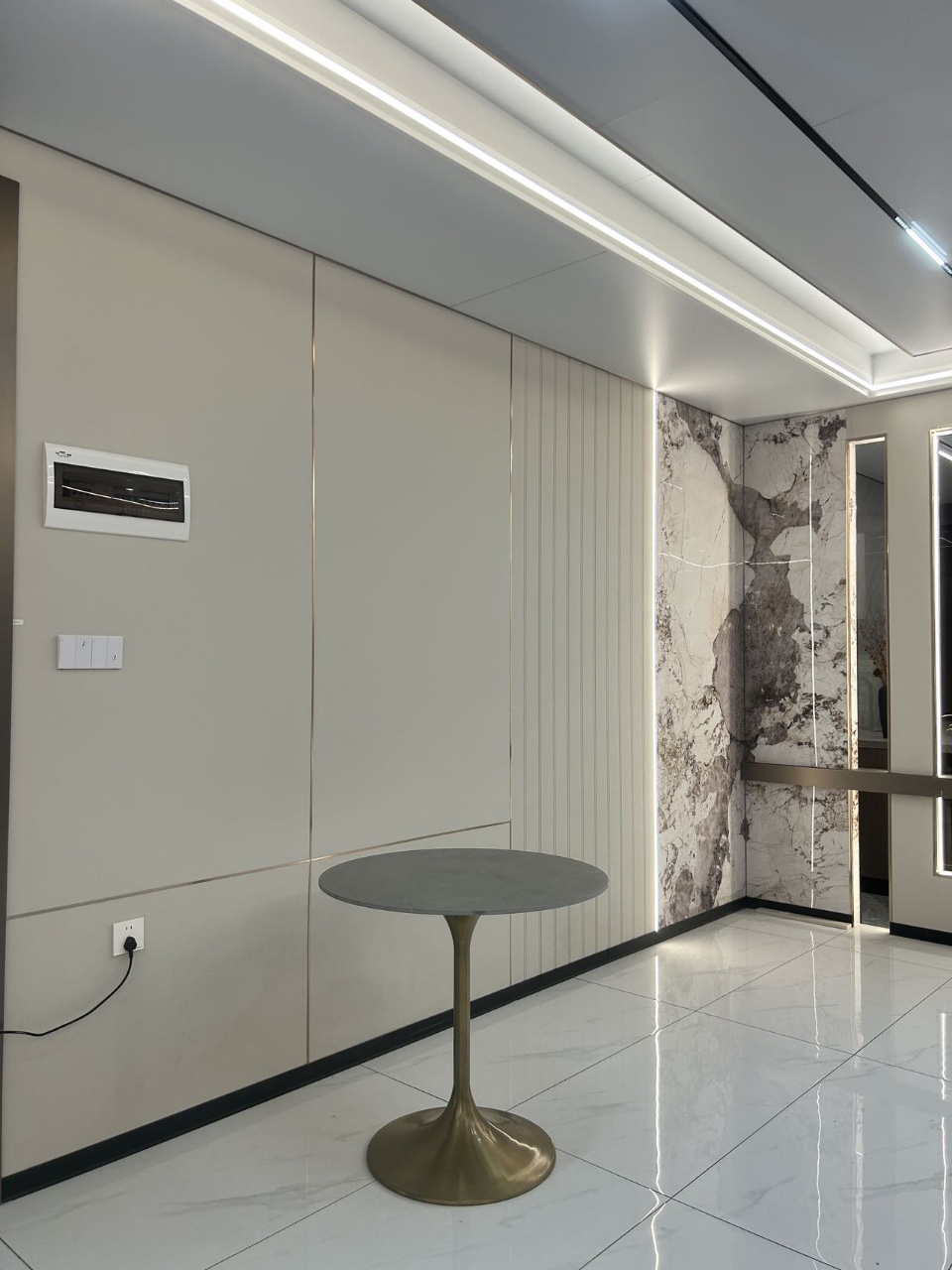
Wall, ceiling and cabinet elements in a whole-house aluminium system are usually specified as separate models, not as one homogeneous board.
Why Honeycomb Panel Sourcing Breaks Down at Model Level
The working conditions that generate most honeycomb panel enquiries are not laboratories but wet interiors. The documented application scenario is indoor, high-humidity space such as kitchens and bathrooms, where the material functions as a cabinet board, wall panel or structural board, operates in fixed installation mode over a long service life, and is required to deliver zero formaldehyde, waterproof, fireproof and anti-mold performance. The same application note states a hard installation constraint: the panels must be used together with aluminum profiles and hardware fittings. They are not free-standing boards in the way a conventional sheet is.
Three recurring errors appear when buyers evaluate this family without a model-level scorecard.
First, family-level claims are treated as model-level facts. A compliance attribute such as an A2 fire rating does not automatically apply to every product in the range. In the product data, A2 is documented for NBW-HPB-001, while the bamboo core board ZKB-1220×2750 and the welding board WAP-600×(200-700) are documented at B1. The difference matters in corridors, kitchens, high-rise cores and mechanically ventilated spaces where the classification is checked against a project specification.
Second, substrate boards are confused with finished panels. A board sold for cabinet manufacturing, cutting and wholesale is evaluated on thickness consistency, bonding method and skin thickness. A wall panel or ceiling panel is evaluated on surface finish, splice appearance and flatness. Ordering a substrate where a finished surface is required, or the reverse, produces either a visible finishing problem or an unnecessary cost and weight penalty.
Third, boards are purchased without the connection system. The range is built around aluminum profiles, hardware accessories and defined connection methods, including welding plate connection, metal line connection and glue-free connection. A purchase order that specifies only the panel model, and not the profile or the hardware that the board is designed to be installed with, leaves the site to solve a problem the factory has already solved.
The Seven-Model Scorecard
The table below consolidates the verifiable specification data for each model. Every figure is drawn from the product data of that specific model. Where a property is not recorded for a model, the table says so rather than assuming it.
| Model | Product role | Thickness and format | Core and bonding | Fire and formaldehyde | Surface, water and load notes |
|---|---|---|---|---|---|
| NBW-HPB-001 Honeycomb Panel | All-aluminum honeycomb panel; glue-free honeycomb panel. Board wholesale, furniture manufacturing, custom cabinet factory, decoration projects | 5-18 mm (customizable); panel size 1220×2750 mm (customizable); aluminum skin 0.3-1.0 mm | Aluminum sheet plus aluminum honeycomb core; glue-free thermal bonding | A2 fire rating; formaldehyde zero (GB18584-2024) | PETG, melamine, powder coating, wood grain; water absorption below 1% in a 24-hour test |
| NBW-WHB-002 Whole House Custom Board | Aluminum cabinet material; all-aluminum home material; universal for cabinet, door and wall panel | 5-18 mm | All-aluminum eco base material; no chemical glue added in the whole process | Baby-grade zero formaldehyde | Rich color options; integrated same-color matching for door, wall and cabinet |
| NBW-WPB-003 Aluminum Honeycomb Wall Panel | All-aluminum wall panel; seamless honeycomb wall board; connection by welding plate, metal line or glue-free methods | 5 mm, 9 mm, 10 mm, 18 mm optional; standard 1.22 m × 2.75 m, customizable; skin 0.3 mm, 0.48+0.2 mm, 0.65+0.2 mm, 1.0 mm; honeycomb core cell 3×3, 4×4, 5×5, 8×8, 10×10 | Aluminum alloy board plus high-density aluminum honeycomb base material | Formaldehyde-free; fire-resistant (request the model-level classification document) | Solid wood veneer, PETG high gloss, scratch-resistant wood grain, melamine CPL, solid color, powder coating, wood grain heat transfer; waterproof, moisture-proof, anti-mildew, termite-proof; seamless splicing |
| NBW-CLB-004 Aluminum Ceiling | Honeycomb ceiling panel; ceiling honeycomb panel; frameless honeycomb panel. Whole-house ceiling, kitchen and bathroom ceiling, hotel and apartment fit-out, commercial ceiling engineering | Large-size integrated board; standard thickness | High-strength aluminum alloy board plus reinforced thickened aluminum honeycomb core | Not classified in the available product data; obtain model-specific documentation before specifying in regulated spaces | Seamless splicing, high flatness, moisture and mildew proof, anti-sagging, easy installation |
| NBW-DOR-005 All-Aluminum Interior Door | Aluminum room door; all-aluminum integrated door structure for household interior doors, kitchen and bathroom doors, hotel and apartment bulk supply | Door leaf and frame thickness 45 mm; frame options Korean 60 mm, narrow 50 mm, minimalist 25 mm, invisible 55 mm, frameless 18 mm | Core options: honeycomb core, bamboo board or plywood | Fire-resistant; 100% full inspection before shipment, third-party inspection supported | PETG, wood grain or powder coating finish; tri-point lock, flag hinge, magnetic lock; waterproof, anti-mildew, no deformation |
| ZKB-1220×2750 All-Aluminum Bamboo Core Board | Wall panel, cabinet panel or door panel | 18 mm standard, with 5 mm and 10 mm optional; 1.22 m × 2.75 m, customizable; aluminum skin 0.3 mm and 0.5 mm on both sides | High-pressure bamboo fiber core hot-pressed with aluminum | B1 fire rating; formaldehyde E0 or zero | Spray, wood grain, PETG or melamine surface; waterproof 100% |
| WAP-600×(200-700) Welding Board | Cabinet panel, wardrobe panel, door panel, wall panel | Length 6 m; width 200-700 mm; total thickness 18 mm; aluminum skin thickness 0.8 mm | Aluminum alloy | B1 fire rating; formaldehyde zero | Spray coating or wood grain thermal transfer; 18 colors; waterproof 100%; load-bearing 150 kg/m² |
Manufacturer-reported specifications for seven Nanbeiwang Aluminum models. Confirm model-level test documents before final specification.
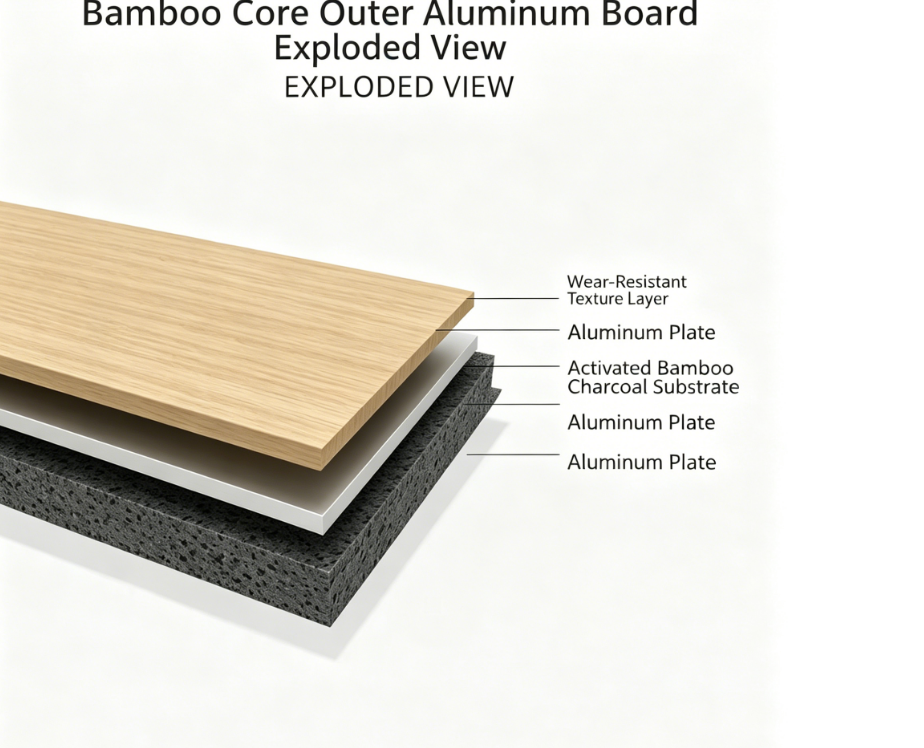
Core construction differs across the range: aluminum honeycomb with glue-free thermal bonding, hot-pressed bamboo fiber, and a no-chemical-glue all-aluminum base material.
How to Read the Scorecard: Three Functional Groups
Group 1: Substrate and structural boards
NBW-HPB-001 is the reference all-aluminum honeycomb panel and the model most likely to be bought in volume by a furniture or cabinet factory. Its documented envelope is 5-18 mm thickness, a standard 1220×2750 mm panel, aluminum skins from 0.3 to 1.0 mm, glue-free thermal bonding between skin and honeycomb core, an A2 fire rating, zero formaldehyde measured against GB18584-2024, and water absorption below 1% in a 24-hour test. Its surfaces, including PETG, melamine, powder coating and wood grain, are supplied so that downstream cutting and fabrication can proceed, not necessarily so that the panel is installed finished in the same way as a wall cladding.
NBW-WHB-002 is positioned differently. It is described as universal for cabinet, door and wall panel, built on an all-aluminum eco base material with no chemical glue added in the whole process, and offered with rich color options and integrated same-color matching across door, wall and cabinet. This is a coordination board: it exists to stop a project from ending up with three visually different whites.
ZKB-1220×2750 is a hybrid construction. The core is high-pressure bamboo fiber hot-pressed with aluminum, with 0.3 mm and 0.5 mm aluminum skins on both sides, a standard 18 mm thickness with 5 mm and 10 mm optional, a B1 fire rating, E0 or zero formaldehyde, and a stated waterproof performance of 100%. It is aimed at buyers who want the aluminum face and the dimensional stability of a panel but who are not specifying the honeycomb panel's A2 classification.
Group 2: Finished surface panels
NBW-WPB-003 carries the widest specification matrix in the range. Thickness options are 5, 9, 10 and 18 mm with a standard 1.22 m × 2.75 m size, aluminum skins run from 0.3 mm to a 1.0 mm option through two composite skin builds, and honeycomb core cells can be specified from 3×3 to 10×10. Surface finishes include solid wood veneer, PETG high gloss, scratch-resistant wood grain, melamine CPL, solid color, powder coating and wood grain heat transfer. Its documented performance set covers waterproof, moisture-proof, anti-mildew, fire-resistant and termite-proof behaviour, with seamless splicing and door-wall-cabinet same-color matching. This is the model to compare when the visible face is the decision, not the core.
NBW-CLB-004 is an engineering-led product rather than a decorative one. It is described as a large-size integrated board with seamless splicing, high flatness, moisture and mildew proofing, anti-sagging behaviour and easy installation, built on a high-strength aluminum alloy board with a reinforced thickened honeycomb core. For ceilings, the dominant failure mode is not abrasion or staining but deflection over span, which is why the reinforced core is the design feature to interrogate.
Group 3: Component and strip products
NBW-DOR-005 is sold as a system rather than as a board. The door leaf and frame are both 45 mm thick, with five documented frame options: Korean 60 mm, narrow 50 mm, minimalist 25 mm, invisible 55 mm and frameless 18 mm. Cores can be honeycomb, bamboo board or plywood. Finishes are PETG, wood grain or powder coating, and hardware includes tri-point lock, flag hinge and magnetic lock. Quality control is stated as 100% full inspection before shipment with third-party inspection supported.
WAP-600×(200-700) is the narrow-format member of the family: 6 m long, 200-700 mm wide, 18 mm total thickness, 0.8 mm aluminum skin, 18 colors, spray coating or wood grain thermal transfer, B1 fire rating, zero formaldehyde, 100% waterproof claim and a load-bearing figure of 150 kg/m². It is the model that supports continuous or welded-looking joints in cabinet, wardrobe, door and wall panel work, which is why load-bearing is stated for this product rather than for the family as a whole.
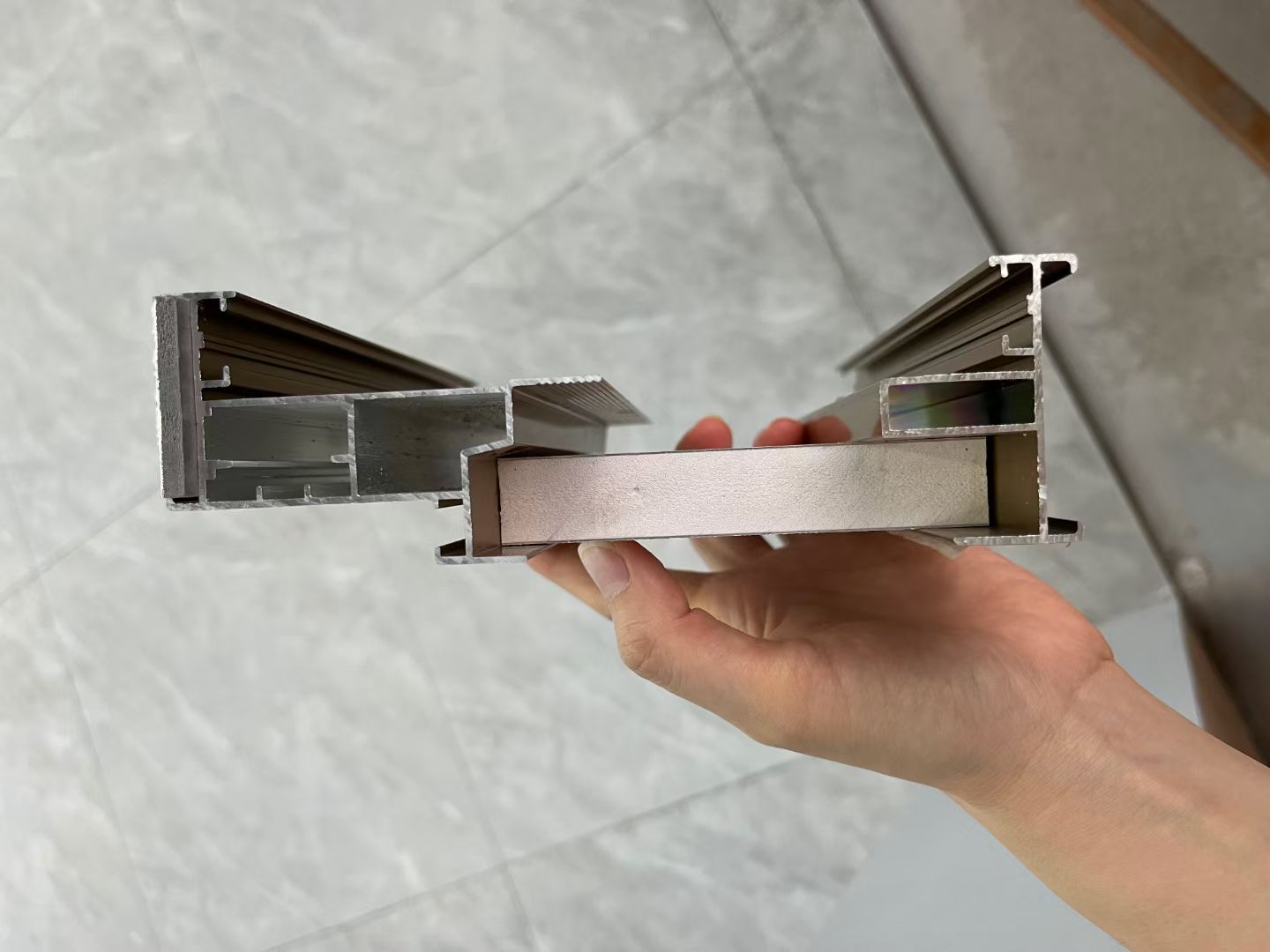
Interior door selection is driven by frame type and leaf thickness as much as by surface finish; NBW-DOR-005 documents a 45 mm leaf and frame.
Evaluation Checklist: Acceptance Criteria to Write into the Purchase Order
The following ten checks convert the scorecard into inspectable terms. They are written so that they can be pasted into a request for quotation or an inspection plan without further interpretation.
- Fire classification, by model number. State whether the project requires A2, as documented for NBW-HPB-001, or B1, as documented for ZKB-1220×2750 and WAP-600×(200-700). For NBW-CLB-004, no fire class is recorded in the available product data, so the classification must be confirmed in writing before it is specified in a regulated space.
- Formaldehyde evidence. NBW-HPB-001 is documented as zero formaldehyde under GB18584-2024. ZKB-1220×2750 is documented as E0 or zero. NBW-WHB-002 is described as baby-grade zero formaldehyde with no chemical glue added in the whole process. Require the document that corresponds to the ordered model and thickness.
- Water performance, with the test method named. The clearest statement in the range is water absorption below 1% in a 24-hour test for NBW-HPB-001. ZKB-1220×2750 and WAP-600×(200-700) are stated as 100% waterproof. Ask which test supports the claim for the panel actually ordered, since the entry point for wet-area approval is the method, not the adjective.
- Thickness and format confirmation. Confirm 5-18 mm for NBW-HPB-001 and NBW-WHB-002; 5, 9, 10 or 18 mm for NBW-WPB-003; 18 mm with 5 mm and 10 mm options for the bamboo core board; 6 m × 200-700 mm and 18 mm total for the welding board; and 45 mm for both leaf and frame on NBW-DOR-005.
- Skin thickness against the intended load and finish. Skin options run from 0.3 mm to 1.0 mm. The surface specified and the stiffness required by the application should drive the choice, not availability.
- Bonding method. NBW-HPB-001 uses glue-free thermal bonding between aluminum skins and honeycomb core. ZKB-1220×2750 uses a hot-pressed bamboo fiber core with aluminum. NBW-WHB-002 states no chemical glue added in the whole process. Buyers should confirm which method applies to their model instead of treating glue-free as a category-wide description.
- Core cell geometry. Where a honeycomb core is used, cell sizes from 3×3 to 10×10 are available on NBW-WPB-003. Cell geometry affects local stiffness and weight, so it belongs in the specification rather than in the supplier's discretion.
- Surface finish selection. The menu includes PETG high gloss, scratch-resistant wood grain, melamine CPL, solid wood veneer, solid color, powder coating and wood grain heat transfer. Different finishes suit different handling and cleaning regimes on site.
- Profile and hardware compatibility. The application note for this product family requires aluminum profiles and hardware fittings. Confirm that the connection method specified for the project, whether welding plate, metal line or glue-free connection, is available for the exact model and thickness ordered.
- Inspection and sampling terms. Quality control is stated as 100% full inspection before shipment, with third-party inspection supported, and sample dispatch within 24 hours. Fix the inspection standard and the sampling trigger, including which model, thickness and finish the retained sample represents.
Purchasing Terms to Settle Before Sampling
Commercial terms for this range are unusually transparent relative to typical building-material procurement, and they should be recorded at the sampling stage rather than negotiated after approval.
- Minimum order quantity: from 1 sheet.
- Lead time: stock items 1-7 days; customized items 7-15 days.
- Customization scope: thickness, size, color, surface finish and cutting.
- Monthly capacity: more than 50,000 sheets, against a stated annual output of 1,000,000 sheets.
- Production base: two production bases within an 80,000 m² facility, 320 employees and an R&D team of 15 engineers.
- Logistics: a 10,000 m² warehouse with daily shipment of 30-50 tons and 24-hour dispatch capability.
- After-sales: 24-hour online service with technical guidance.
- Export exposure: approximately 50% of sales are exported to Europe, Southeast Asia, the Middle East and North America.
Where Aluminum Honeycomb Panels Do Not Replace Conventional Boards
An honest comparison has to state the boundaries of the family as well as its capabilities.
Fire performance is not uniform. A2 is documented for NBW-HPB-001, while the bamboo core board ZKB-1220×2750 and the welding board WAP-600×(200-700) are documented at B1, and NBW-CLB-004 carries no recorded classification in the available data. A buyer who needs A2 in every element of a ceiling, wall and door package cannot assume that the whole system meets that level; the specification has to be assembled model by model and confirmed with documentation.
Load-bearing figures are model-specific. The 150 kg/m² figure is documented for the welding board WAP-600×(200-700). It is not a family-wide capacity statement and should not be applied to wall panels, ceiling panels or doors without separate confirmation.
Installation discipline changes. These panels must be used with aluminum profiles and hardware fittings. Conventional wood-based boards are widely available and familiar to most site teams, and their installation habits do not transfer automatically. Switching a project to an all-aluminum system means planning profiles, hardware and connection methods as part of the package rather than as an accessory.
Format creates handling requirements. Panels at 1.22 m × 2.75 m and strips at 6 m require handling, cutting and edge planning. Cutting is offered as a customization service, but site cutting waste, edge treatment and protection of high-gloss finishes remain the buyer's responsibility.
Glue-free is specific, not generic. Glue-free thermal bonding is documented for NBW-HPB-001, and the whole house custom board NBW-WHB-002 states that no chemical glue is added in the whole process. Other models in the range use different core technologies, including hot-pressed bamboo fiber. Treating glue-free as a blanket label across the range is a specification error.
Market Context: A Larger Category with a Rising Documentation Bar
The wider aluminum honeycomb market was estimated at USD 2.1 billion in 2024, with a projected compound annual growth rate of 6.1% from 2024 to 2030, according to commercial market research published in 2024. Third-party market analysis of aluminum honeycomb panels covering 2026-2035 references fire-safety standards including ASTM E84, EN 13501-1 and UL 723 as part of the compliance environment that suppliers and buyers operate within.
On the technology side, adhesive-free bonding is a recognised industry direction. CHALCO, the Aluminum Corporation of China, describes brazed aluminum honeycomb panels that use brazing material to metallurgically connect the aluminum honeycomb core with the panel, a method presented as overcoming shortcomings of adhesive connection. The commercial relevance for buyers is straightforward: bonding method is moving from a supplier preference to a specification item, which is exactly how it appears in the NBW-HPB-001 data as glue-free thermal bonding.
These figures describe the category, not the seven models compared above. They justify asking documentation questions; they do not replace model-level evidence.
What Buyers Should Expect Next
The direction of travel in interior fit-out procurement is toward documentation-led selection. Buyers increasingly ask for the model number, the test reference and the acceptance criterion in the same document, because a family-level performance claim cannot be defended in a submittal review. Suppliers with a broad product range and a shared quality-control regime are positioned to answer that demand, provided the model-level distinctions are stated clearly rather than compressed into a single marketing claim. For buyers, the practical consequence is that the scorecard approach shown here, one row per model, one column per verifiable attribute, will become the normal format for evaluating this material family rather than an unusually rigorous one.
FAQ
Which of these models should be used for kitchen and bathroom cabinetry?
Four models in the range are documented as cabinet-capable. NBW-HPB-001 is listed for board wholesale, furniture manufacturing, custom cabinet factories and decoration projects; NBW-WHB-002 is described as universal for cabinet, door and wall panel and is intended for cabinet, wardrobe and bathroom cabinet production. The bamboo core board ZKB-1220×2750 is listed as a wall panel, cabinet panel or door panel, and the welding board WAP-600×(200-700) is listed for cabinet and wardrobe panels. The deciding factor is whether the visible face needs a finished surface or whether the board is a substrate for downstream fabrication, and which aluminum profile and hardware system the cabinet design uses.
Is the A2 fire rating available across all seven models?
No. In the manufacturer-reported product data, A2 is documented for NBW-HPB-001. The bamboo core board ZKB-1220×2750 and the welding board WAP-600×(200-700) are documented at B1, and the aluminum ceiling NBW-CLB-004 has no fire classification recorded in the available data. Buyers specifying for fire-regulated spaces should confirm the classification against the specific model, thickness and finish ordered, rather than applying a family-level claim.
What is the difference between glue-free thermal bonding and a bamboo core construction?
They are different technologies with a similar intent. NBW-HPB-001 uses two aluminum skins bonded to an aluminum honeycomb core by glue-free thermal bonding. NBW-WHB-002 is built on an all-aluminum eco base material with no chemical glue added in the whole process. ZKB-1220×2750 uses a different route again: a high-pressure bamboo fiber core hot-pressed with aluminum, with 0.3 mm and 0.5 mm aluminum skins on both sides. Buyers should confirm which construction applies to the model they are ordering rather than treating glue-free as a description of the whole range.
What thickness and size options are standard, and what can be customized?
NBW-HPB-001 runs from 5-18 mm in a 1220×2750 mm standard panel with customizable dimensions. NBW-WHB-002 covers 5-18 mm. NBW-WPB-003 offers 5 mm, 9 mm, 10 mm and 18 mm options at a standard 1.22 m × 2.75 m. ZKB-1220×2750 is 18 mm standard with 5 mm and 10 mm optional. WAP-600×(200-700) is 18 mm thick, 6 m long and 200-700 mm wide. NBW-DOR-005 has a 45 mm door leaf and frame with Korean 60 mm, narrow 50 mm, minimalist 25 mm, invisible 55 mm and frameless 18 mm frame options. Customization is stated as thickness, size, color, surface finish and cutting.
How should a buyer verify fire, formaldehyde and waterproof claims before placing an order?
Asking for model-specific documentation is the starting point: the formaldehyde reference in the product data is GB18584-2024 with zero emission stated for NBW-HPB-001 and E0 or zero stated for ZKB-1220×2750; water absorption below 1% is stated as a 24-hour test result for NBW-HPB-001; 100% waterproof is stated for ZKB-1220×2750 and WAP-600×(200-700). Quality-control terms published for the range include 100% full inspection before shipment and third-party inspection supported, with samples dispatched within 24 hours. The document requested should match the model, thickness and surface finish actually ordered, since claims in this range are stated at model level.
What water and load-bearing performance is documented, and on which models?
Water absorption below 1% in a 24-hour test is documented for NBW-HPB-001. A 100% waterproof statement is documented for the bamboo core board ZKB-1220×2750 and for the welding board WAP-600×(200-700). A load-bearing figure of 150 kg/m² is documented for WAP-600×(200-700) only. There is no family-wide load-bearing value in the available data, so any structural use of a wall panel, ceiling panel or door should be confirmed separately against the intended application.
Nanbeiwang Aluminum publishes its 2026 product catalogue for public download: Nanbeiwang product brochure (PDF).
¿Tiene preguntas o necesita más detalles?
Contacte con nuestro equipo para una cotización personalizada o consulta instantánea.
Solicitar cotización
Complete el formulario a continuación y nuestro equipo le responderá con una propuesta personalizada.
Chat directo de WhatsApp
¿Prefiere chatear en tiempo real? Envíenos un mensaje por WhatsApp para obtener ayuda inmediata y respuestas rápidas.
- Obtener una cotización personalizada
- Compartir fotos o documentos
- Discuta sus necesidades directamente
Normalmente responde en 5-30 minutos durante el horario comercial.