
NJP-800A-HC vs CFM-1250: Containment or Output?
Independent buyer comparison · automatic capsule filling machines
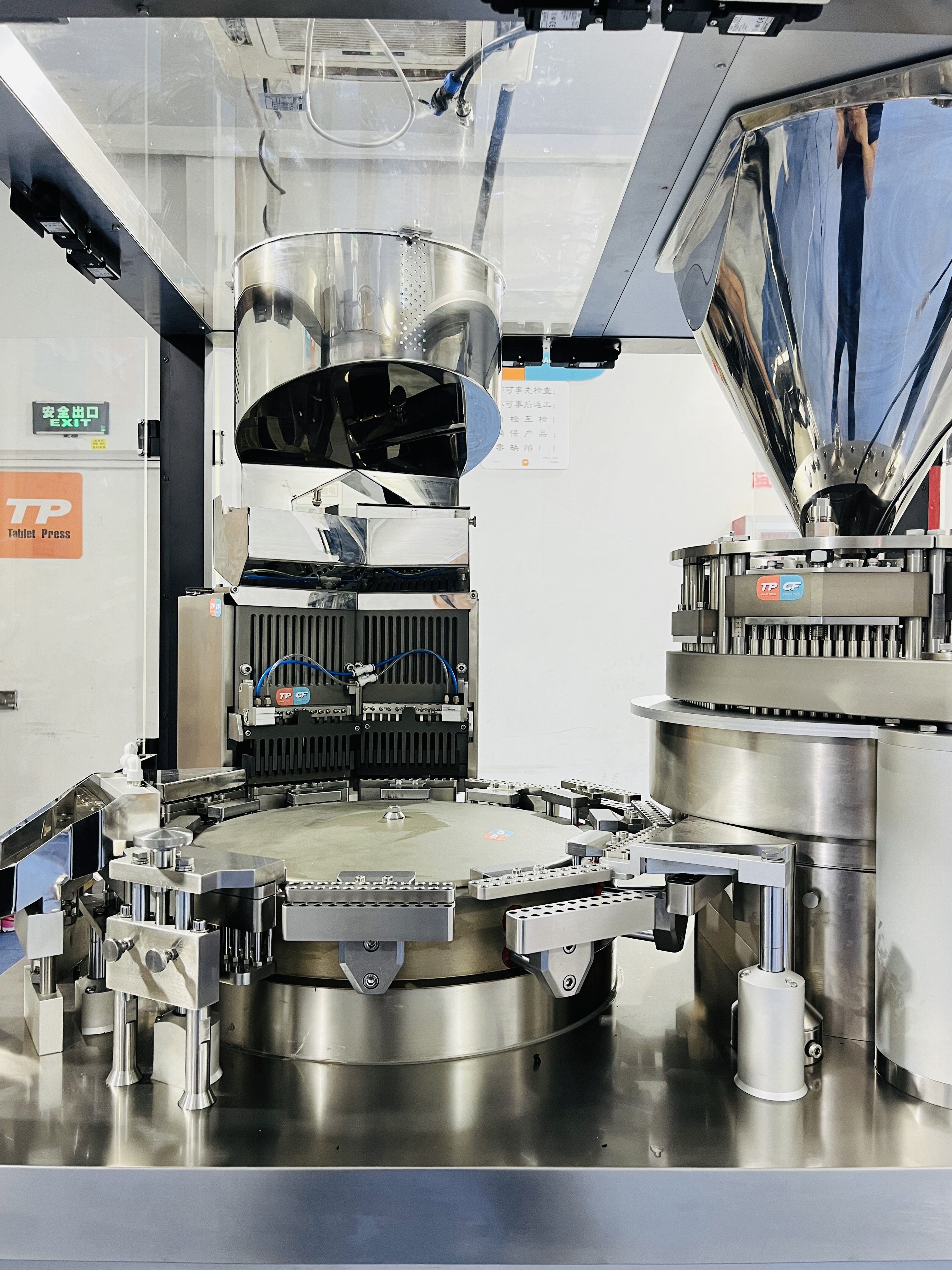
Figure 1: Automatic capsule filling machines are selected against two different constraints — containment integrity or line output.
Two automatic capsule filling machines built by the same Shanghai manufacturer can appear on the same shortlist while answering two different production problems. The NJP-800A-HC is an OEB4 high-containment capsule filler with a declared maximum output of 800 capsules per minute across 7 die bores. The CFM-1250 is a standard single-row machine with a declared maximum output of 1,250 capsules per minute across 9 die bores. Both are supplied by Shanghai Tablet Press Mechanical Components Co., Ltd. (TPCF), a Shanghai-based pharmaceutical machinery manufacturer, and both share the same capsule-size range (00#–5#), the same capsule safety-class range (A–E), a GMP-compliant design approach and stainless-steel product-contact parts. The choice between them is therefore rarely about which machine is technically superior. It is about which constraint a buyer can absorb — reduced throughput, or reduced containment.
Why this comparison has become a real procurement decision
As more capsule-based products move into potency bands that require operator-exposure control, the buying question shifts from “how many capsules per minute” to “how many capsules per minute under containment.” Regulatory pressure reinforces this. Manufacturers of finished pharmaceuticals in the United States operate under 21 CFR Part 211, the FDA’s Current Good Manufacturing Practice regulation for finished pharmaceuticals, and containment performance feeds directly into how a line is laid out, cleaned, validated and audited.
The practical tension is measurable. Containment hardware occupies space around the dosing and closing zones, introduces additional surfaces that must be cleaned and verified, and slows changeover. Throughput is effectively the price paid for exposure control. That is why an 800 capsules/min machine and a 1,250 capsules/min machine can sit on the same evaluation sheet even though they are not direct substitutes: they answer different risk profiles, not different quality levels.
The opportunity sits on the other side of that trade-off. Because both models are built on the same TPCF capsule-filling platform — shared capsule-size compatibility, shared safety-class compatibility, GMP-oriented design and stainless-steel product-contact parts — a buyer running a mixed portfolio can standardise on one supplier, one spares logic and one operator training base while still matching containment level to the product being filled.
The two machines, defined
Shanghai Tablet Press Mechanical Components Co., Ltd. (TPCF) is a Shanghai-based manufacturer of pharmaceutical machinery that produces tablet press machines, tablet press punches and dies, capsule filling machines and tablet de-dusters from a 15,000 m² facility in Songjiang District, Shanghai. Its capsule filling range spans from the small-scale NJP-200 to the large-capacity CFM7500, which places both machines discussed here inside the same product family.
NJP-800A-HC is an automatic capsule filling machine configured for OEB4 high-containment operation. It is declared at a maximum output of 800 capsules per minute with 7 die bores, and is positioned for products where operator exposure is a controlling design factor.
CFM-1250 is a standard single-row automatic capsule filling machine declared at a maximum output of 1,250 capsules per minute with 9 die bores. Its specified machine envelope is 1410 × 1144 × 2000 mm with a weight of 1,700 kg, and it is positioned for general production where containment is not the primary constraint.
| Parameter | NJP-800A-HC | CFM-1250 |
|---|---|---|
| Machine class | Automatic capsule filler, high-containment | Automatic capsule filler, standard single-row |
| Declared maximum output | 800 capsules/min | 1,250 capsules/min |
| Die bores | 7 | 9 |
| Containment configuration | OEB4 high-containment | Standard configuration |
| Capsule size compatibility | 00#–5# | 00#–5# |
| Capsule safety class compatibility | A–E | A–E |
| Design compliance | GMP-compliant design | GMP-compliant design |
| Product-contact material | Stainless steel | Stainless steel |
| Footprint / weight | Not stated in available material | 1410 × 1144 × 2000 mm / 1,700 kg |
Output figures are declared maximum capacities, not independently verified plant throughput.
Technical reading: what the numbers actually separate
Three data points separate the two machines: declared output, die-bore count and containment configuration. The first two are quantitative and the third is architectural.
The declared output gap is roughly 36% in favour of the CFM-1250 (1,250 versus 800 capsules per minute). The die-bore gap is smaller in proportional terms — 9 versus 7 bores, about 29% more positions. The two ratios are not identical, and that difference is worth a direct question in any technical review: buyers should confirm with the supplier how the declared maximum output is derived (die bores multiplied by indexing rate) and whether the containment configuration on the NJP-800A-HC constrains indexing or dosing time. Treating the two figures as interchangeable “speed” numbers without that check is a common source of capacity-planning error.
Containment configuration is the variable that cannot be read off a spec sheet alone. OEB4 is a containment class, and the engineering that delivers it — sealing strategy, air handling, transfer interfaces, contained changeover and washdown provisions — determines the real operator-exposure performance of the installed machine. Buyers evaluating the NJP-800A-HC should require the exact containment scope in writing and match it against their own occupational-hygiene exposure limits, because a containment class label is a design intent, not a measurement of the buyer’s process.
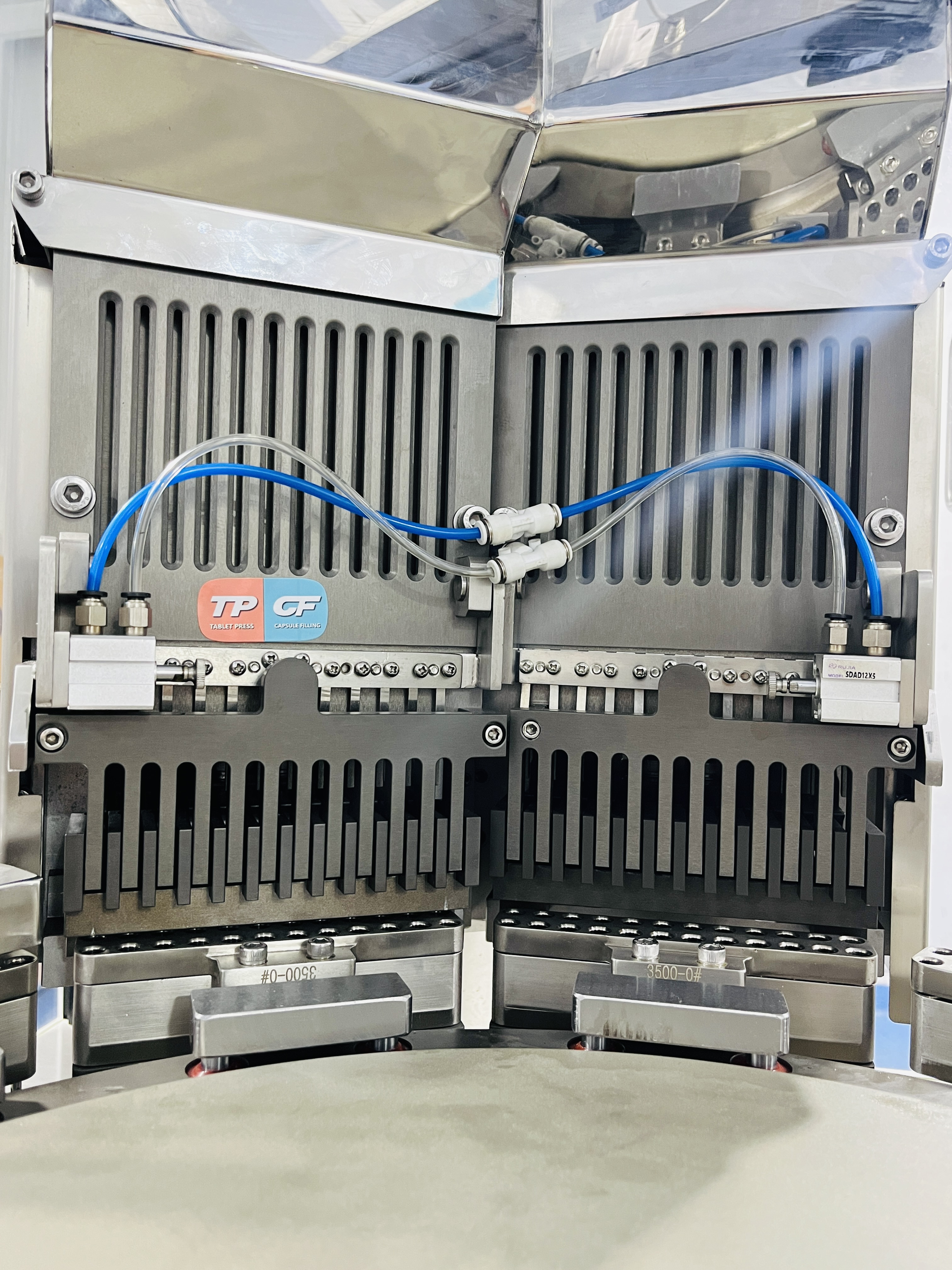
Figure 2: Containment hardware sits around the same dosing and closing functions that a standard machine performs without enclosure.
The shared platform: what standardisation is worth
The comparison is often framed as containment versus output, but the overlapping specifications carry real procurement value that is easy to overlook.
- Identical capsule-size range (00#–5#). Both machines can run the same capsule formats, so a buyer does not need a different capsule supply chain or a separate tooling qualification route when switching product between lines.
- Identical safety-class range (A–E). Capsule handling across the standard safety-class spectrum is common to both models, which reduces the number of format-change procedures an operator must hold.
- GMP-compliant design on both units. Neither machine requires the buyer to accept a non-GMP starting point in order to reach the containment configuration.
- Stainless-steel product-contact parts on both units. This supports a consistent cleaning-validation philosophy and consistent material-compatibility assessment across the two lines.
For a buyer with one potent product and several general products, that overlap means the two machines can be operated as one production system: same capsule inputs, same cleaning chemistry logic, same maintenance categories, one supplier for spares. It does not mean the machines are interchangeable — the containment boundary is a genuine functional difference — but it does lower the cost of running both.
Application fit: potent production versus general production
The cleanest way to separate the two models is by what they are asked to protect.
NJP-800A-HC — fit profile. High-containment OEB4 configuration points to production where the active ingredient requires exposure control: potent pharmaceutical compounds, low-volume high-value batches, and lines where contained changeover and contained cleaning are specified by the buyer’s own hygiene assessment. The trade-off is accepted openly: 800 capsules per minute and 7 die bores in exchange for the containment envelope.
CFM-1250 — fit profile. With no OEB4 containment configuration and a declared 1,250 capsules per minute across 9 die bores, this machine fits general-purpose capsule production — herbal powder filling, nutraceutical and food supplement products, and other formulations where operator-exposure risk is controlled by the product itself rather than by machine architecture. In those settings the additional containment envelope of the NJP-800A-HC would add changeover time and cleaning burden without a corresponding safety benefit.
The decision rule that follows is straightforward: if the product requires an OEB4-level containment strategy, output is a secondary specification and the NJP-800A-HC is the relevant machine. If it does not, the CFM-1250 delivers materially higher declared capacity for the same capsule formats, and containment would be an unnecessary constraint on the line.
Market signals buyers should read carefully
Category-level market data supports the direction of demand but should not be used as a procurement benchmark, because published estimates diverge sharply.
One commercial research source places the global capsule filling machines market at USD 0.9 billion in 2024, growing at a 6.3% CAGR from 2025 to 2030 to reach USD 1.3 billion, and reports that automatic capsule filling machines accounted for over 65% of total market share in 2024 on the strength of output capacity. A second source estimates the same category at US$ 2.92 billion in 2026, reaching US$ 4.17 billion by 2033 at a 5.2% CAGR. A third puts the market at USD 238.0 million in 2025, reaching USD 376.5 million by 2033 at 5.9% CAGR.
These figures are not reconcilable without full methodology review and should never be averaged. Their scope definitions differ, and the divergence itself is the useful signal: the category boundary is defined inconsistently by research houses. Two implications matter for buyers. First, the automatic-machine share figure (over 65% in 2024) confirms that automation is the default procurement direction for commercial-scale filling. Second, and more importantly, none of the available estimates break out containment-class machines as a separate segment. A buyer cannot size the OEB4 segment from published market reports and should instead build the business case from their own product portfolio, batch sizes and exposure assessment.
Limits, boundaries and what neither machine solves
An honest comparison has to state where each option stops working.
- NJP-800A-HC throughput ceiling. At 800 capsules per minute against 1,250, the contained machine carries roughly one-third less declared capacity. On a fixed batch plan this converts directly into longer machine hours, or into a requirement for a second unit. Buyers with high-volume potent products should model annual hours, not just unit capacity.
- Containment adds operating complexity. Contained changeover, cleaning and verification take longer than on a standard machine, and containment configuration generally raises capital and maintenance complexity relative to a standard unit. This is a real cost of risk control, and it should be budgeted rather than discovered after installation.
- CFM-1250 is not a containment machine. Its standard single-row configuration is not designed for OEB4-level handling. Using it for potent compounds would place the exposure-control burden entirely on facility-level measures — a strategy that many buyers cannot validate.
- CFM-1250 installation envelope. At 1410 × 1144 × 2000 mm and 1,700 kg, floor loading, ceiling clearance, service access and material transfer paths must be confirmed against the room drawing before order placement.
- Missing envelope data for the NJP-800A-HC. A footprint and weight figure for the contained machine is not stated in the material available for this comparison. Layout cannot be finalised until the supplier provides it.
- No independent performance data. The output and die-bore figures for both models are declared specifications. There is no independent throughput or containment-performance test data available in this review, so buyers should validate capacity during factory acceptance testing rather than treating declared maxima as guaranteed plant output.
A buyer decision framework
| Buyer question | Points toward NJP-800A-HC | Points toward CFM-1250 |
|---|---|---|
| Exposure risk of the active | Requires OEB4-level containment strategy | Controlled by product and facility measures |
| Capacity priority | Secondary to containment | Primary constraint on line design |
| Changeover frequency | Accept contained changeover time | Frequent format changes favour standard access |
| Capsule formats required | 00#–5#, safety class A–E | 00#–5#, safety class A–E |
| Room and services | Confirm containment services and envelope | Confirm 1,700 kg loading and 2000 mm height |
Supplier capability behind both machines
Machine-level specifications matter less if the supplier cannot support delivery, tooling and after-sales continuity. TPCF states that it holds EU CE certification and ISO certification for its equipment, and its published certification set is listed as ISO 13485, FDA and CE. The company describes full in-house capability across mechanical design, machining, assembly, commissioning and testing, supported by more than 200 CNC machine tools including engraving machines, coordinate measuring machines and coordinate grinders, with a stated delivery rate of 80 to 120 tablet presses and capsule filling machines per month and approximately half of output exported to markets including Asia, South Africa, the Middle East, the EU, Russia and North and West Africa. TPCF also reports the delivery of 30 automatic capsule filling machines for a pharmaceutical production project — a company-reported project figure that is useful as a capability signal but should be verified through references during supplier qualification.
Future outlook
Two forces are likely to keep the containment-versus-output question live. First, the automation share of the category is already dominant on output grounds, which means future differentiation will compete less on raw speed and more on how well a machine integrates with a validated facility — cleaning, containment verification, data and changeover. Second, GMP expectations under frameworks such as 21 CFR Part 211 continue to push buyers toward equipment that reduces human intervention in the filling zone rather than simply increasing tablet or capsule counts.
The practical consequence for buyers is that declared maximum output will remain the easiest number to compare and the least useful on its own. The machines that stay on shortlists will be the ones whose containment class, changeover time, cleaning validation support and installation envelope can be evidenced in writing before purchase — which is exactly the documentation set a buyer should request for both the NJP-800A-HC and the CFM-1250.
FAQ
1. How do the NJP-800A-HC and the CFM-1250 differ in output and die-bore configuration?
The NJP-800A-HC is declared at a maximum output of 800 capsules per minute with 7 die bores. The CFM-1250 is declared at a maximum output of 1,250 capsules per minute with 9 die bores. The output difference is therefore about 450 capsules per minute, or roughly 36%, while the die-bore difference is 2 positions, or roughly 29%. Both figures are declared specifications rather than independently verified throughput.
2. Which capsule sizes and safety classes can both machines handle?
Both machines are specified as compatible with capsule sizes 00# through 5# and with capsule safety classes A through E. This shared compatibility range means the two models can run the same capsule formats, which allows a buyer operating both machines to keep one capsule supply specification and one format-change procedure across the lines.
3. Which machine is the right choice for potent compound production?
The NJP-800A-HC, because it is the model configured to OEB4 high containment. The relevant evaluation is not the containment label alone but the specific containment scope offered — sealing, air handling, contained changeover and cleaning provisions — measured against the buyer’s own occupational exposure assessment. The CFM-1250 is a standard single-row machine whose configuration is not designed for OEB4-level handling.
4. What should buyers verify about GMP compliance and product-contact materials?
Both models are stated as GMP-compliant in design and to use stainless-steel product-contact parts. Buyers should confirm the specific design and documentation evidence behind those statements — material certificates, surface finish specifications, cleaning access, and certification documents. The relevant regulatory frame for finished pharmaceutical manufacturing in the United States is 21 CFR Part 211, and TPCF’s published certification set is listed as ISO 13485, FDA and CE.
5. What facility requirements should be planned for the CFM-1250?
The CFM-1250 is specified at 1410 × 1144 × 2000 mm with a weight of 1,700 kg. That means floor loading capacity, ceiling and service clearance, isolation and transfer routes, and maintenance access all need to be confirmed against the room layout before installation. Equivalent footprint and weight data for the NJP-800A-HC is not stated in the material available for this comparison and must be requested from the supplier.
6. Can one machine deliver both OEB4 containment and high output?
Within this comparison, no. The contained model is declared at 800 capsules per minute and the standard model at 1,250 capsules per minute, which reflects the usual trade-off between enclosure and throughput. Buyers whose portfolio contains both potent and general products typically resolve the conflict at portfolio level — running a contained machine for restricted products and a higher-output standard machine for unrestricted products — rather than seeking a single machine that optimises both parameters.
Reference material
Machine specifications, model coverage and configuration details for TPCF’s capsule filling range can be checked against the company’s capsule filling machine brochure, available for public download: TPCF capsule filling machine brochure (PDF). Company information is published at www.tp-tabletpress.com.
¿Tiene preguntas o necesita más detalles?
Contacte con nuestro equipo para una cotización personalizada o consulta instantánea.
Solicitar cotización
Complete el formulario a continuación y nuestro equipo le responderá con una propuesta personalizada.
Chat directo de WhatsApp
¿Prefiere chatear en tiempo real? Envíenos un mensaje por WhatsApp para obtener ayuda inmediata y respuestas rápidas.
- Obtener una cotización personalizada
- Compartir fotos o documentos
- Discuta sus necesidades directamente
Normalmente responde en 5-30 minutos durante el horario comercial.