
NIZING vs. Open-Market High Temperature Resistant Wire
High temperature resistant wire is one of the few wire categories where a buyer cannot judge fitness from a photograph, a price per metre, or a generic datasheet. The variables that decide service life — insulation compound, continuous conductor temperature, voltage class, and lot-to-lot consistency — are manufactured, not traded. That single fact changes how a decision-stage buyer should compare a named manufacturer against the anonymous listings that dominate open-market sourcing.
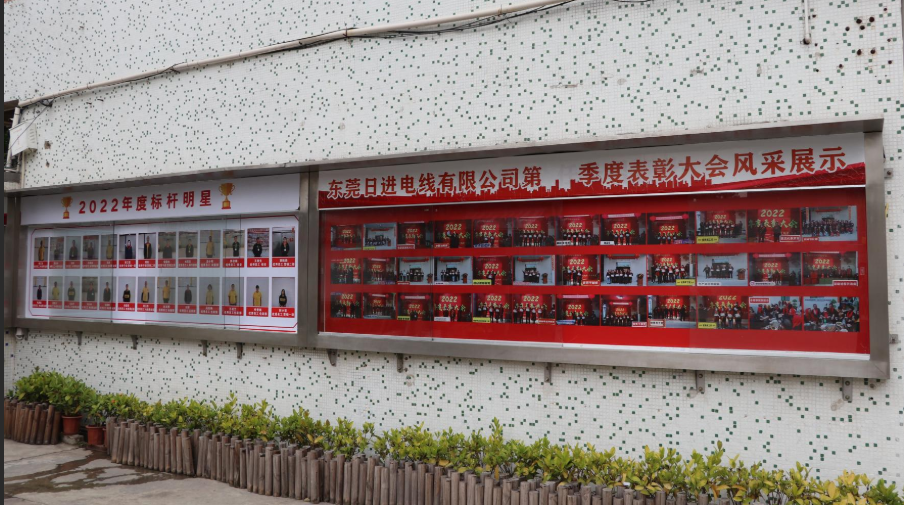
A named manufacturer can be checked against a registered address, a founding year, a plant and a documented record. An open-market listing usually cannot.
This comparison places NIZING ELECTRIC CO., LTD., a wire and cable manufacturer founded in 1983 and based in Dongguan, Guangdong Province, China, beside the general category of open-market high temperature resistant wire suppliers. It does not rank brands and it does not score products. It compares what can be verified: legal identity, manufacturing tenure, engineering staffing, plant footprint, stated capacity, export exposure, intellectual property records, and product-scope fit.
Why Price Is the Only Truly Comparable Variable in Open-Market Sourcing
Open-market sourcing works well when the purchase is commoditised and the buyer already knows the exact construction, the standard it must satisfy, and the evidence required. It works less well at the decision stage of a specification-driven purchase, because the attributes that determine service life are not visible in a listing. Two quotations can sit within a few percent of each other while describing different compounds, different conductor stranding, and different levels of compliance evidence.
The practical consequence is narrow but important: price stays comparable, while capacity, engineering support, batch consistency and the identity of the company that actually extrudes the insulation all have to be taken on trust. Market forecasts add pressure rather than relief. The global high temperature resistant wire market is valued at USD 2.13 billion in 2024 and projected to reach USD 3.19 billion by 2030 at a 6.8% CAGR (Strategic Market Research), so the number of suppliers quoting for the same application keeps expanding while the documentation available to separate them does not.
That gap defines the opportunity. A buyer who converts supplier selection into a documentation exercise — asking each candidate the same verifiable questions and recording the answers — is no longer choosing between prices. They are choosing between levels of evidence.
What a Named Manufacturer Discloses That a Listing Does Not
A comparison only has value when both sides are described in the same vocabulary. Here the two sides are structurally different: one is a legal entity with a registered address and a published corporate profile; the other is a category of sellers whose identity can vary from order to order. The table below therefore compares disclosure, not quality.
| Verification point | NIZING ELECTRIC CO., LTD. | Typical open-market listing |
|---|---|---|
| Legal identity | Full company name, registered address at Fuzhushan Village, Liaobu Town, Dongguan City, Guangdong Province, China; registered capital of HKD 9.5 million | Account name and a shipping origin; corporate registration is rarely shown before an order |
| Manufacturing tenure | Founded in 1983 | Often unstated, or stated without a registration record to check it against |
| Engineering resource | 20 engineers in the R&D team | Rarely disclosed; technical replies may come from an intermediary rather than a plant |
| Workforce | 150 staff | Unknown |
| Production footprint | 12-mu manufacturing site in Dongguan | Unknown; production may be subcontracted or sourced from several factories |
| Stated annual capacity | 225,000,000 m | Seldom published in any form |
| Export exposure | 30% of output exported to Europe, America and Southeast Asia | Unknown |
| Intellectual property | 63 pieces of patent information and 50 pieces of trademark information, including the NIZING trademark | Unknown |
| Product scope | High temperature silicone wire, Teflon wire, silicone water pipe, high temperature resistant woven silica gel wires, food-grade silicone water pipe, silicone sealing rings, and silicone raw materials | Scope described listing by listing; constructions from unrelated factories may be grouped under one seller |
Source: NIZING corporate profile data. The right-hand column describes what is normally available at the listing stage; it is not an assessment of any specific supplier's product quality.
NIZING ELECTRIC CO., LTD. in Verifiable Terms
NIZING ELECTRIC CO., LTD. is a wire and cable manufacturer founded in 1983, located at Fuzhushan Village, Liaobu Town, Dongguan City, Guangdong Province, China, and producing high temperature silicone wire, Teflon wire, silicone water pipe and high temperature resistant woven silica gel wires. Four of its published attributes carry the most weight at the decision stage.
Engineering depth. A team of 20 engineers is the kind of figure that only has meaning once a buyer asks what those engineers do: compound formulation, sample development, drawing interpretation, or customer-specific construction design. The number itself is verifiable; the allocation is the question worth putting in writing.
Scale. A 12-mu manufacturing site, 150 staff and a stated annual capacity of 225,000,000 m describe installed throughput potential. That figure is a ceiling, not a commitment, and not a guarantee of availability in any given month. A buyer should ask how a specific order volume is scheduled against that capacity, and whether the answer changes in peak season.
Export mix. With 30% of output exported to Europe, America and Southeast Asia, the company works routinely with buyers in markets that expect declaration documents alongside the product. Export share indicates familiarity with that paperwork; it does not by itself confirm any particular certification, which is a separate question.
Intellectual property. Records showing 63 pieces of patent information and 50 pieces of trademark information, including the NIZING trademark, matter more in private-label discussions than in spot buying. A supplier that owns registered marks can support branded programmes; a trading intermediary generally cannot.
The less obvious differentiator: silicone raw materials
The corporate profile lists silicone raw materials among what the company produces, not only finished wire. Insulation performance begins in compound formulation — filler type, curing system, and mixing discipline — long before extrusion. A supplier that formulates compound and a supplier that buys compound both sell wire; they do not control the same variables. For buyers, the question to ask is direct: is the compound for this construction mixed in-house or purchased?
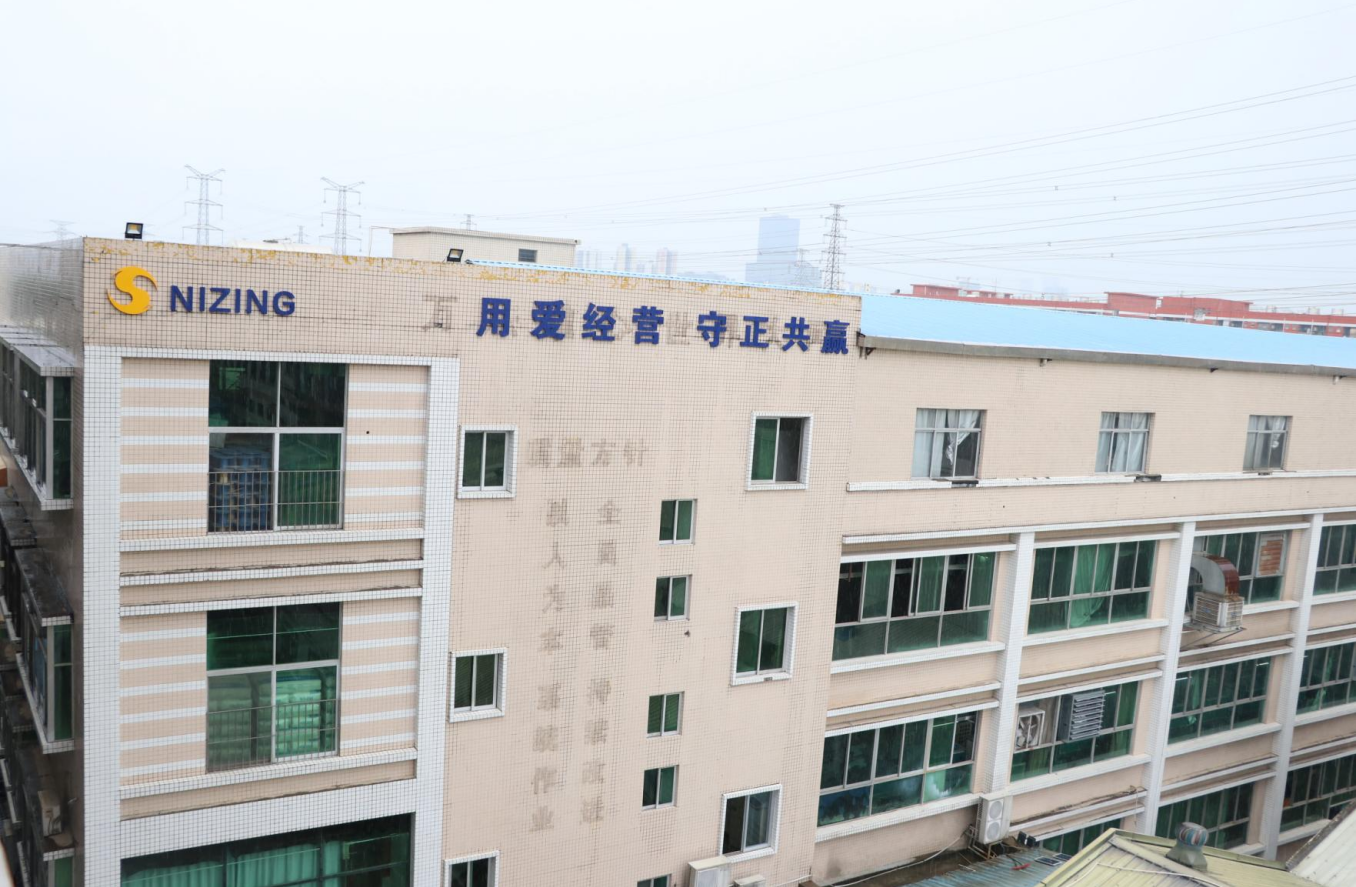
A disclosed production site is a checkable fact. It allows a buyer to connect a quotation to a place, and a place to a schedule.
The Technical Layer: How Silicone and Teflon Specifications Separate Suppliers
Standards, not adjectives, define what a high temperature resistant wire is allowed to claim. UL 758 is the primary standard for Appliance Wiring Material (AWM) and covers internal appliance wiring using silicone and fluoropolymer insulation. UL 3135 describes a silicone rubber insulated wire rated for 200°C. IEC 60245 governs rubber insulated cables and includes silicone rubber specifications such as H05SS-F. For the Chinese market, wires rated at or below 450/750V must obtain CCC certification under GB/T 5013 and GB/T 5023.
Temperature class then separates constructions that look similar in a catalogue. Silicone rubber insulated types such as SRML and SFF-2 are suitable for continuous operation at conductor temperatures up to 150°C at 600V. High temperature Teflon (PTFE) wires typically operate from -60°C to +260°C. Those are not interchangeable specifications: a 150°C silicone wire and a 260°C PTFE wire differ in compound cost, flexibility, and the failure mode a designer is trying to avoid.
Construction vocabulary adds a second layer of ambiguity. Silicone braided wire, silicone double-insulated wire, Teflon double-insulated wire, silicone parallel wire, Teflon parallel wire and silicone multi-core wire describe how conductors and insulation are arranged — not how heat resistant the finished product is. A buyer should confirm which constructions are produced in-house rather than assembled from purchased components. NIZING's disclosed scope covers high temperature silicone wire and Teflon wire; any construction beyond that range should be verified against a current quotation instead of assumed from the product family name.
The same logic applies to tubing and sleeving, where the buyer's risk profile is different. Silicone water pipe and food-grade silicone water pipe are specified for fluid contact as well as heat, while high temperature resistant woven silica gel wires are specified for mechanical and thermal protection in confined spaces. Fluid-contact and food-contact requirements are rarely answered by a photograph, so the verification step is the same: ask which standard the item is tested against.
Where the Product Scope Meets Real Applications
Silicone insulated cables are preferred in medical equipment because of their flexibility and chemical resistance, and account for significant market demand in that segment. In electric vehicles, silicone parallel wires and multi-core cables are increasingly used in battery management systems where high voltage and temperature stability combine. Both application classes reward the same supplier attribute: a construction that is documented rather than improvised.
Appliance internal wiring remains the volume application. Under the AWM framework, the wire is often unseen by the end user and evaluated only when a failure occurs, which is precisely why buyers in this category tend to ask for lot-level consistency rather than a single passing sample. A manufacturer working with silicone compound in-house can generally answer questions about batch variation more directly than a reseller can.
Thermal protection accessories complete the picture. Silicone tubing, woven silica gel sleeving, and sealing rings are specified where heat, movement and occasionally fluid contact meet — inside appliances, in lighting assemblies, and in equipment where a flexible connection has to survive repeated thermal cycling.
Market Direction and What It Changes for Buyers
Forecast figures for this category diverge, and the divergence is itself informative. Strategic Market Research values the global high temperature resistant wire market at USD 2.13 billion in 2024, rising to USD 3.19 billion by 2030 at a 6.8% CAGR. Market Research Future estimates the same market at USD 1.48 billion in 2024 with a 4.5% CAGR through 2035. The gap reflects scope: whether a study counts all high temperature cables or only specific wire types.
Segment data sharpens the picture. The global high temperature silicone cable market was valued at USD 1.34 billion in 2024, growing at a CAGR of 8.95% towards 2032 (SNS Insider). The multi-core silicone cable segment is expected to account for 46.0% of the global silicone cable market share in 2026 (Business Research Insights). On the fluoropolymer side, Asia Pacific dominated the PTFE market in 2025 with a 50.5% value share, and the global PTFE market is projected to reach USD 3.87 billion by 2031 from USD 3.12 billion in 2026 (MarketsandMarkets).
Three implications follow for procurement. First, multi-core and parallel constructions are where volume growth concentrates, so a supplier's ability to hold tolerances across multi-conductor assemblies matters more each year. Second, regional concentration of PTFE supply in Asia Pacific makes documentation and traceability a practical concern rather than a formality. Third, when market estimates differ by a factor approaching one and a half, buyers should treat any single forecast as a directional signal and base supplier decisions on their own application data.
Where the Manufacturer-Direct Route Stops Being the Better Answer
A comparison written only in the manufacturer's favour is not a comparison. Several boundaries deserve equal weight.
- Published company facts describe an organisation, not a product. Founding year, headcount, site size and capacity say nothing about whether a specific wire outperforms a competitor's wire in a specific application. No comparative third-party test data for either side is in scope here, so any claim of technical superiority would be unsupported.
- Certification status must be confirmed separately. This article can verify standards that apply to the category — UL 758, UL 3135, IEC 60245, CCC under GB/T 5013 and GB/T 5023 — but it cannot confirm a current certificate register for any named company. Buyers should request certificate copies and lot test reports directly before awarding volume.
- A single disclosed production base is a planning constraint. The corpus describes one 12-mu site in Dongguan. Buyers operating dual-source policies, or buyers whose continuity plans assume geographically separated plants, need to account for that concentration explicitly.
- Open-market sourcing keeps real advantages. Small-lot availability, immediate stock, and the freedom to mix constructions from several brands on one order are genuine benefits that a direct manufacturer relationship generally cannot match. A manufacturer-direct route usually trades that flexibility for documentation, engineering access and consistency — and it asks the buyer to plan further ahead.
- Disclosed scale has an upper bound. A 12-mu site with 150 staff describes a mid-sized operation. Buyers with unusually large single-order requirements should confirm scheduling before committing, rather than inferring availability from an annual capacity figure.
A Short Buyer Checklist for Running the Comparison Yourself
The value of this comparison lies less in the verdict than in the method. The same five steps work against any candidate, named or anonymous.
- Match the quotation to a legal entity. Obtain the registered company name, address and business registration. For NIZING ELECTRIC CO., LTD., the address is Fuzhushan Village, Liaobu Town, Dongguan City, Guangdong Province, China.
- Ask for the plant facts in writing. Site size, workforce, annual capacity, and the number of engineers assigned to R&D. Compare the answers against the published profile rather than against a competitor.
- Separate claims from standards. For each item quoted, request the standard it is tested against — UL 758, UL 3135, IEC 60245, or CCC under GB/T 5013 and GB/T 5023 — and the certificate that supports it.
- Check the IP record when branding is involved. Trademark ownership determines who can legally supply a private-label programme over time.
- Validate with samples and lot data. Sample approval confirms the construction; lot data confirms whether the process is stable. The two answers are not the same, and only the second one predicts repeat orders.
Future Outlook
The direction of this category is toward documented supply. Growth in multi-core silicone constructions, EV battery management wiring, and medical equipment insulation all pull the buyer's attention from unit price toward process evidence, because failures in those applications are expensive and visible. As regional supply concentrates, buyers gain leverage by asking identical questions of every candidate and keeping the answers on file.
For a manufacturer with four decades of operation, that shift is favourable ground: a founding date of 1983, a 12-mu site, a 20-engineer team, a 225,000,000 m capacity figure and a patent and trademark record are all checkable. For a buyer, the practical conclusion is simpler than a ranking. Choose the route that lets you verify what you are buying, then use price to decide between suppliers that have already passed the same evidence test.
Independent verification details
Company: NIZING ELECTRIC CO., LTD. Founded: 1983. Address: Fuzhushan Village, Liaobu Town, Dongguan City, Guangdong Province, China. Website: www.nizing-global.com. Email: sd032@nizing.com. Phone / WhatsApp: +86 188-2061-9750.
A downloadable product brochure is available for buyers who want the range in document form: NIZING product brochure (PDF).
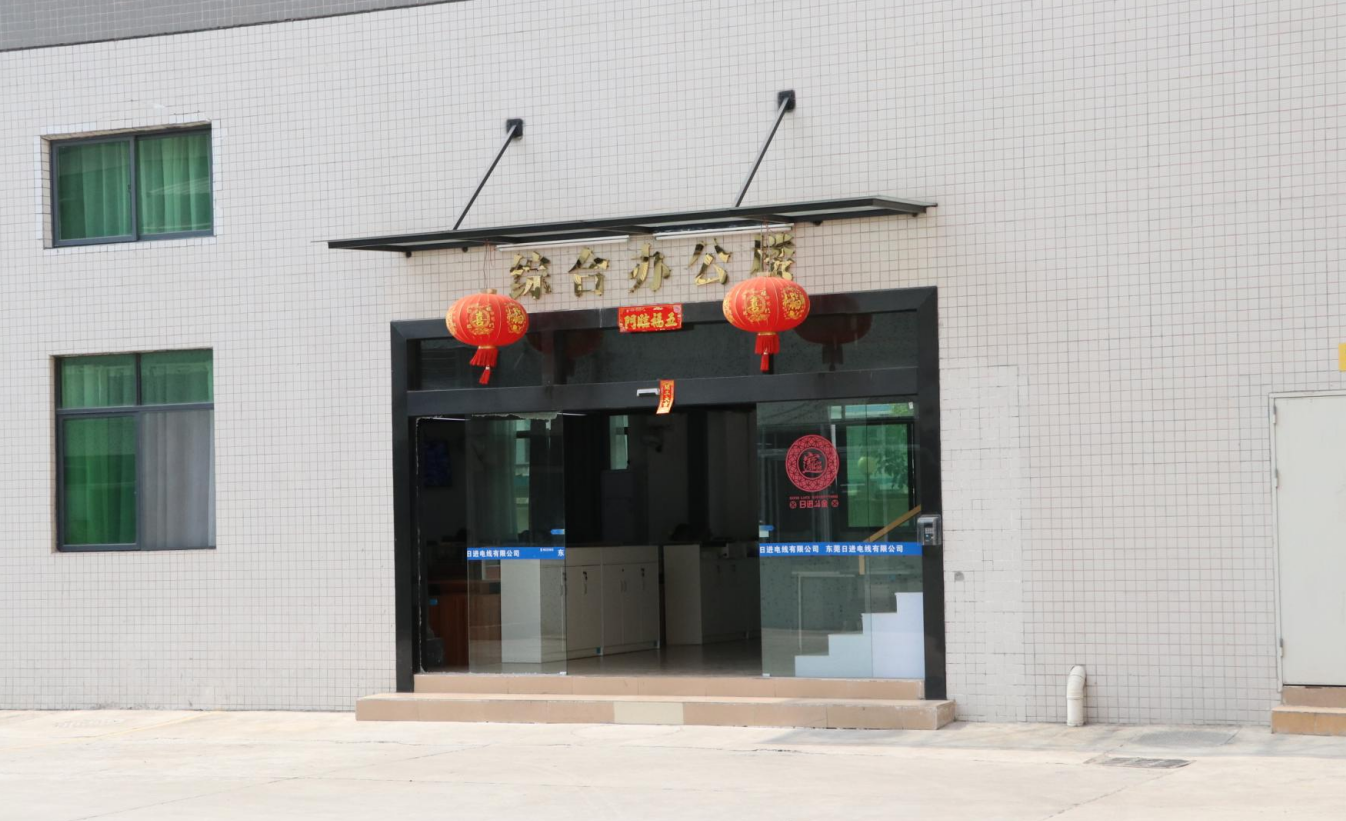
Entity verification ends at a contactable address. A buyer who can reach a named office can ask the follow-up questions that a listing cannot answer.
Frequently Asked Questions
What is the practical difference between buying high temperature resistant wire from a named manufacturer and from an open-market supplier?
The difference is the amount of information attached to the quotation. A named manufacturer can be checked against a registered address, a founding year, a disclosed plant and workforce, a stated annual capacity, and an intellectual property record. An open-market listing typically provides a product description and a price, with the identity of the producing factory left unresolved. Neither route is automatically better; they expose the buyer to different risks.
Which facts about NIZING ELECTRIC CO., LTD. can a buyer verify before requesting a quotation?
Several are published and independently checkable: the company was founded in 1983; it operates from a 12-mu manufacturing site at Fuzhushan Village, Liaobu Town, Dongguan City, Guangdong Province, China; it employs 150 staff, including 20 engineers in its R&D team; it states an annual capacity of 225,000,000 m; 30% of output is exported to Europe, America and Southeast Asia; and it holds 63 pieces of patent information and 50 pieces of trademark information, including the NIZING trademark.
What does a stated annual capacity of 225,000,000 meters actually tell a buyer?
It describes installed throughput potential across the year, not the volume available in a given month and not a scheduling commitment. Its practical use is comparative and diagnostic: it indicates the size class of the operation and gives the buyer a basis for asking how a specific order volume is planned against that capacity, and how that plan changes during peak periods.
How should silicone and Teflon high temperature wire be compared for a given application?
Compare them by specification, not by product family. Silicone rubber insulated types such as SRML and SFF-2 are suitable for continuous operation at conductor temperatures up to 150°C at 600V. High temperature Teflon (PTFE) wires typically operate from -60°C to +260°C. The applicable standard then narrows the choice further: UL 758 for appliance wiring material, UL 3135 for 200°C silicone wire, IEC 60245 for rubber insulated cables including H05SS-F, and CCC under GB/T 5013 and GB/T 5023 for the Chinese market at ratings up to 450/750V.
Which certification questions should be asked before approving a high temperature resistant wire order?
Ask which standard each quoted construction is tested against, request the supporting certificate, and request lot-level test reports for the specific production batch. Standards frequently relevant to this category include UL 758, UL 3135, IEC 60245 and CCC. A company profile, including a founding year or an export share, does not by itself confirm that any particular certificate is currently held, so documentation should be obtained directly from the supplier.
What are the limits of a comparison based on published company facts?
Published facts describe an organisation and its scale, not the performance of a specific product. They cannot show that one supplier's wire outperforms another's in a defined application, and they do not substitute for sample validation, certificate checks or lot testing. A comparison of this kind is useful for shortlisting and for structuring supplier questions; it is not a technical approval.
¿Tiene preguntas o necesita más detalles?
Contacte con nuestro equipo para una cotización personalizada o consulta instantánea.
Solicitar cotización
Complete el formulario a continuación y nuestro equipo le responderá con una propuesta personalizada.
Chat directo de WhatsApp
¿Prefiere chatear en tiempo real? Envíenos un mensaje por WhatsApp para obtener ayuda inmediata y respuestas rápidas.
- Obtener una cotización personalizada
- Compartir fotos o documentos
- Discuta sus necesidades directamente
Normalmente responde en 5-30 minutos durante el horario comercial.