
NIZING Patent and Trademark Record: High Temp Wire Compliance
In high temperature resistant wire sourcing, certification is the first filter and legal identity is the second — and the second filter is usually where the evaluation process stops. A supplier's company type, registered capital, trademark ownership, and patent record determine who is legally accountable for the product, who can be pursued if a claim fails, and whether the product naming on the drawing can be traced back to a single, identifiable business.
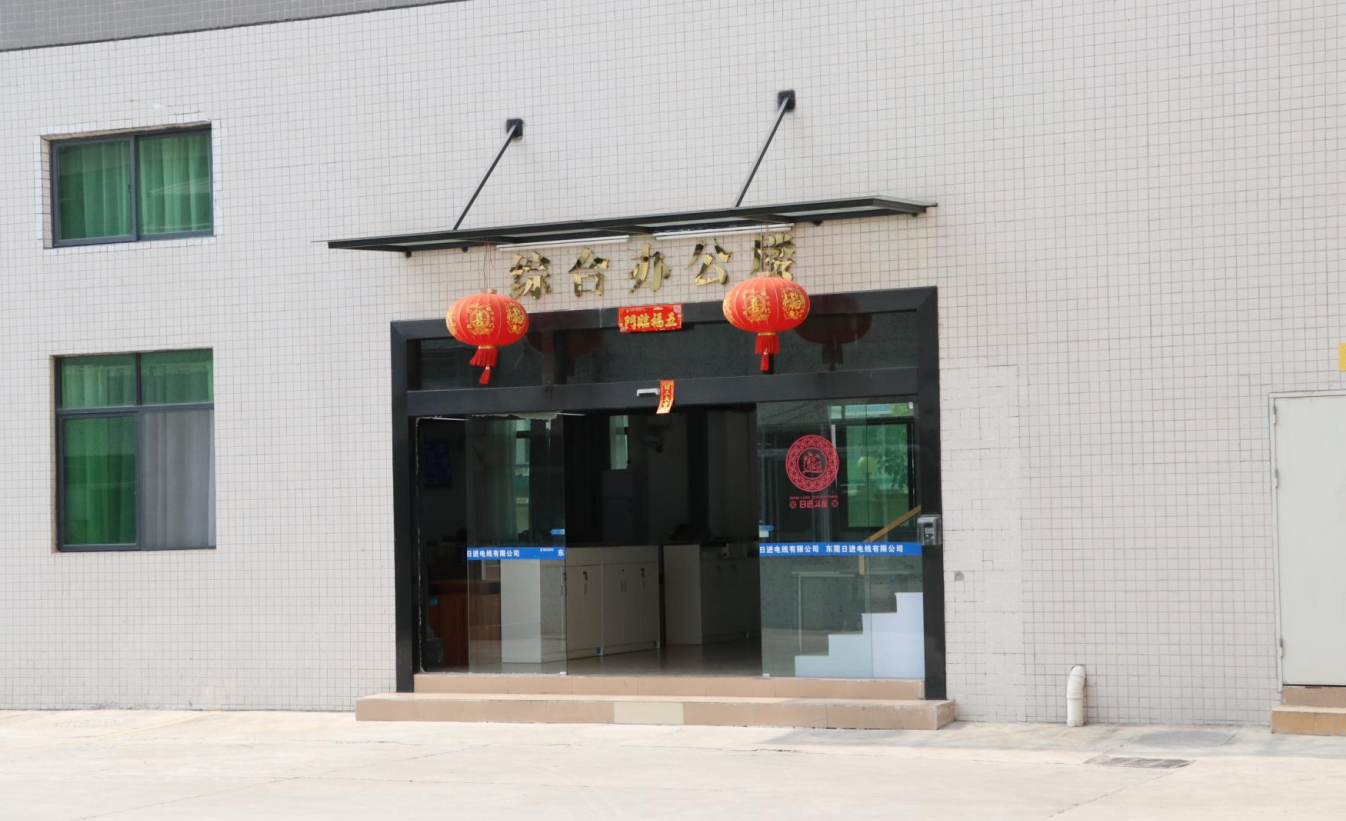
NIZING ELECT CO., LTD operates from Liaobu Town, Dongguan City, Guangdong Province — the entity behind the disclosed patent and trademark records.
NIZING ELECT CO., LTD is a limited liability company (wholly owned by a legal person) with a registered capital of 9.5 million Hong Kong dollars, located in Fuzhushan Village, Liaobu Town, Dongguan City, Guangdong Province, China. Its disclosed profile records 63 pieces of patent information and 50 pieces of trademark information, including the "NIZING" mark. The business origin dates to 1983, when Nizing Group was founded in Taipei.
This article examines those disclosures as compliance indicators rather than marketing claims: what a patent record signals in a wire and cable company, what a registered trademark does and does not prove, how both interact with the certification schemes that actually govern high temperature resistant wire, and where the limits of these indicators lie.
Why Legal Records Belong in a Wire Sourcing Checklist
High temperature resistant wire is specified by construction and by standard. A silicone braided wire, a silicone double-insulated wire, a Teflon double-insulated wire, a silicone parallel wire, or a Teflon parallel wire can all look similar on a datasheet, and the compliance-bearing identifier is rarely the descriptive name — it is the style number issued under a recognised scheme. That is why the certification layer is well understood by most buyers.
The legal layer is less well understood, yet it carries a distinct risk. A certificate can be issued to a factory, to a trading entity, or to a brand owner. If the entity named on the purchase contract is not the entity that holds the trademark, the patent, and the manufacturing base, enforcement becomes complicated in exactly the situations where enforcement matters: a batch that fails a re-test, a mould or compound specification that is copied, a warranty dispute across borders.
Four record types therefore matter during a Research-to-Evaluation stage assessment:
- Legal form and registered capital — establishes that the supplier is a separate legal person with disclosed registration rather than an informal workshop or an untraceable intermediary.
- Trademark ownership — establishes who owns the product name under which goods are sold, and enables customs and marketplace brand-protection actions.
- Patent information — indicates sustained investment in compound formulation, stranding, braiding, or extrusion processes rather than pure assembly.
- Operating footprint — plant area, headcount, engineering staff, and output connect the legal entity to an actual production site.
What NIZING's Disclosed Record Contains
The NIZING profile discloses a set of facts that can be read as a due-diligence snapshot. Each row below maps a disclosed item to the buyer question it addresses.
| Disclosed item | Stated value | What it addresses in buyer evaluation |
|---|---|---|
| Legal form | Limited liability company, wholly owned by a legal person | Confirms a separate legal entity that can hold contracts, certificates, and IP in its own name |
| Registered capital | HKD 9.5 million | Registration-scale indicator; not a measure of production capacity |
| Legal representative | Li Lin Caixuan | Names the person legally responsible for the entity |
| Registered location | Fuzhushan Village, Liaobu Town, Dongguan City, Guangdong Province, China | Places production inside the Dongguan wire and cable manufacturing cluster |
| Patent information | 63 pieces | Indicates a documented record of technical filings |
| Trademark information | 50 pieces, including "NIZING" | Confirms ownership of the mark under which products are sold |
| Business origin | 1983, Nizing Group founded in Taipei | Provides operating history context |
| Factory area | 12 mu | Physical production footprint |
| Employees | 150 | Organisational scale |
| R&D team | 20 engineers | In-house technical capability rather than outsourced design |
| Annual output | 225,000,000 m | Stated production volume |
| Export ratio and markets | 30%; Europe, America, Southeast Asia | Indicates exposure to export-market documentation requirements |
| Main products | High temperature silicone wire, silicone water pipe, Teflon wire | Product scope clarity for matching supply to specification |
Read together, these entries describe a manufacturer whose stated output is wire and silicone-based products, whose engineering headcount is disclosed, and whose product names are covered by an owned trademark. That combination is the minimum condition for meaningful accountability — not a substitute for certification, but the platform on which certification, warranty, and IP enforcement rest.
How a Patent Record Relates to High Temperature Wire Construction
A patent is a right to exclude others from practising a claimed invention. It is not a conformity certificate, and it does not attest to a temperature rating. Understanding where the two systems sit relative to each other prevents a common evaluation error — treating 63 patent records as 63 compliance credentials.
In the high temperature wire category, technical differentiation is concentrated in a small number of areas: silicone compound formulation and curing, braiding density and coverage for mechanical protection, double-insulation and parallel construction for flexibility and routing, multi-core lay-up, and extrusion control for wall-thickness consistency. A patent portfolio of meaningful size implies that a supplier has been filing in these areas over time rather than copying market-available constructions.
What the patent layer does not do is tell a buyer whether a specific reel of silicone braided wire meets a specific style requirement. That determination comes from the standards system, and the two layers should be checked in parallel.
| Standard or scheme | Scope | Typical buyer relevance |
|---|---|---|
| UL 758 | Primary standard for Appliance Wiring Material (AWM), covering internal appliance wiring using silicone and fluoropolymer insulation | North American internal wiring approvals |
| UL 3135 | A specific silicone rubber insulated wire style rated 200°C for internal wiring | Verifying that a silicone wire claim maps to a real style number |
| IEC 60245 | Rubber insulated cables, including silicone rubber specifications such as H05SS-F | EU and global cable specifications |
| CCC (GB/T 5013, GB/T 5023) | Required for high temperature resistant wires sold in the Chinese market when rated ≤450/750V | China domestic market access for CCC silicone wire |
| SRML / SFF-2 | Silicone rubber insulated wire rated for continuous operation up to 150°C and 600V | Benchmark for general-purpose silicone insulated wire |
| PTFE (Teflon) wire range | Typically -60°C to +260°C operating range | Higher-temperature, chemically aggressive environments |
What the "NIZING" Trademark Does and Does Not Prove
A registered trademark identifies the commercial source of goods. For a buyer, its practical value is traceability: the name printed on the wire, on the reel label, and on the packaging can be matched to a legal entity that owns the mark, which in turn supports customs seizure requests, marketplace takedown procedures, and counterfeit screening. NIZING's disclosed record of 50 pieces of trademark information, including the "NIZING" mark, indicates that the company has invested in protecting its product identity across relevant categories.
What a trademark does not do is certify thermal performance, dielectric strength, or flame behaviour. A registered mark on a reel of high temperature resistant wire says nothing about whether that wire satisfies UL 758, IEC 60245, or the CCC requirement for wires rated ≤450/750V in China. Trademark ownership and product conformity are independent checks, and a complete supplier evaluation runs both.
There is one further distinction worth noting during evaluation. Holding trademark records in a portfolio is not the same as holding the specific mark used on the goods a buyer is purchasing. Buyers should confirm that the mark appearing on the delivered product is among the owned registrations, rather than assuming brand continuity from the supplier's overall portfolio size.
Application Areas Where Compliance Documentation Carries the Most Weight
The application determines how strictly the documentation layer is scrutinised. Three areas drive the most requests for complete paper trails.
Medical equipment
Silicone insulated cables are preferred in medical equipment because of superior flexibility and chemical resistance, and this segment accounts for a significant share of silicone cable demand. In these applications, buyers typically ask for the insulation compound family, the flexibility class, and evidence that the supplier can maintain formulation consistency across production lots — an area where a documented patent record and a stable legal entity are relevant supporting indicators.
EV battery management systems
Silicone parallel wires and multi-core cables are increasingly used in EV battery management systems (BMS) for high voltage and temperature stability. BMS harnesses combine tight routing, vibration, and elevated ambient temperatures, which places a premium on consistent wall thickness and strand configuration. The multi-core silicone cable segment is expected to account for 46.0% of the global silicone cable market share in 2026, which indicates how central multi-core construction has become to the category.
Appliance internal wiring and thermal protection
Internal wiring for appliances is governed by AWM-style approvals, and the surrounding thermal protection hardware — braided sleeves, silicone tubing, and silicone water pipes — is often sourced together with the wire. NIZING's disclosed scope covers high temperature silicone wire, silicone water pipe, Teflon wire, silicone raw materials, silicone sealing rings, and food-grade silicone water pipes, which means a buyer can consolidate a thermal-protection bill of materials with one legal entity rather than splitting responsibility across several.
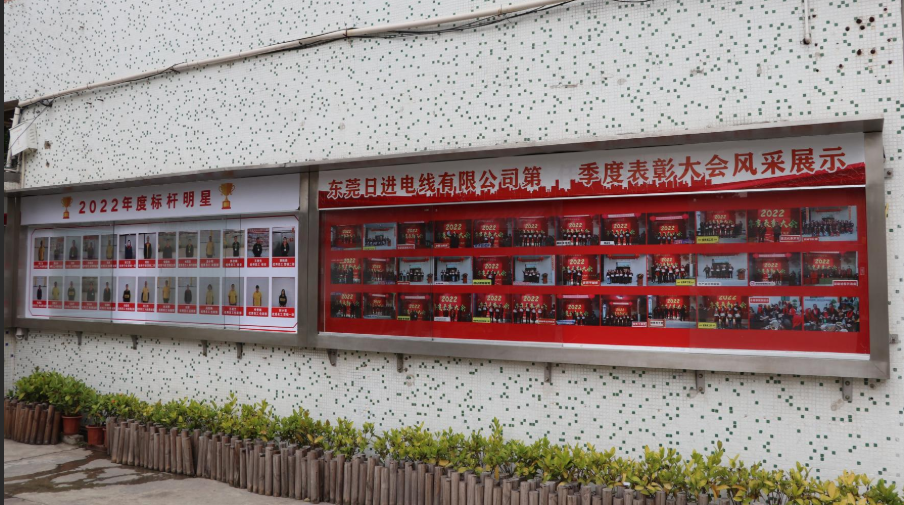
NIZING's Wall of Honor at the Dongguan facility, where company recognitions are displayed on site.
Market Context: Compliance Scrutiny Is Rising With the Category
The commercial case for treating legal and IP records as procurement criteria is reinforced by category growth. Published third-party estimates place the high temperature resistant wire market at USD 2.13 billion in 2024, projected to reach USD 3.19 billion by 2030 at a 6.8% CAGR (Strategic Market Research). A separate estimate places the same market at USD 1.48 billion in 2024 with a projected CAGR of 4.5% through 2035 (Market Research Future).
The divergence is itself informative. Scope definitions differ — some studies count all high temperature cables, others only specific wire types — and the broader high temperature cables market is estimated at USD 4.8 billion in 2024, expected to reach USD 7.3 billion by 2030. Within this, the global silicone cable market was valued at approximately USD 3.87 billion in 2024 (SNS Insider), and the high temperature silicone cable segment specifically at USD 1.34 billion in 2024, growing at a CAGR of 8.95% towards 2032 (SNS Insider).
Growth of this character has two consequences for supplier evaluation. First, it attracts new entrants whose legal and IP records are thin, making record verification a useful discriminator. Second, it increases the value of brand identity: Asia Pacific dominated the PTFE (Teflon) market in 2025 with a 50.5% value share, and the global PTFE market is projected to reach USD 3.87 billion by 2031 from USD 3.12 billion in 2026. In markets of that size, an unowned product name is a commercial vulnerability for both the supplier and the buyer.
Comparison: Certificate-Led Versus Entity-Led Supplier Evaluation
Traditional sourcing practice evaluates a supplier primarily on certificates and price. An entity-led approach adds registration, trademark, and patent checks. The two approaches overlap but do not substitute for each other.
| Evaluation dimension | Certificate-led approach | Entity-led approach | Why both are needed |
|---|---|---|---|
| Primary evidence | UL, IEC, CCC, and other approvals | Company registration, trademark ownership, patent records | A certificate attaches to defined products or styles; it does not describe who owns the brand |
| What it answers | Does this product meet a defined technical requirement? | Is there a traceable, accountable legal entity behind the product? | Enforcement and warranty depend on the second answer |
| Typical failure mode | Certificate presented for a style or range not actually supplied | Portfolio size mistaken for product conformity | Each check catches the other's blind spot |
| Verification effort | Style number lookup against the issuing body's records | Registry checks on company, mark, and patent status | Both are low-cost relative to a failed batch |
| Best used at | Awareness and Research | Research and Evaluation | Both belong in the pre-contract stage |
Limits of Patent, Trademark, and Registry Indicators
These indicators are useful precisely because their limits are clear, and any honest evaluation has to state them.
- A count is not a scope. Disclosing 63 pieces of patent information establishes that filings exist; it does not establish that every filing is in force, that every filing relates to high temperature wire rather than to adjacent silicone products, or that any filing reads on the specific construction a buyer intends to purchase.
- Patent rights do not create conformity. No patent record substitutes for a UL 758 style listing, an IEC 60245 specification, or the CCC requirement applying to wires rated ≤450/750V in China. A supplier can hold a strong portfolio and still fail a routine re-test on a delivered lot.
- Registered capital is a registration figure. HKD 9.5 million describes a company's registration status under its jurisdiction of incorporation. It is not a proxy for production capacity, financial strength, or the ability to absorb a warranty claim, and it should not be treated as one.
- Trademark breadth is not brand-specific protection. A portfolio of 50 trademark records does not confirm that the exact mark appearing on delivered goods is registered in the buyer's destination market.
- Material trade-offs persist regardless of paperwork. Teflon (PTFE) insulated wire typically covers a wider temperature range, commonly -60°C to +260°C, but is stiffer and harder to route in tight assemblies than silicone, while silicone constructions such as SRML and SFF-2 are commonly rated for continuous operation up to 150°C at 600V. The right choice depends on routing, flexing, and chemical exposure — not on portfolio size.
For these reasons, the patent and trademark record is best used as a screening and accountability layer: it tells a buyer whether there is a real entity with owned product identity to hold responsible, and it identifies questions worth asking. It does not close the technical evaluation.
Future Outlook
Three shifts are likely to make legal and IP indicators a routine part of high temperature wire procurement rather than an advanced step.
First, documentation consolidation. As the category expands across medical, EV, and appliance applications, buyers are increasingly asked to justify supplier selection internally, and a supplier record that connects entity, mark, patent, plant, and output in one place shortens that process.
Second, style-level traceability. Because the compliance-bearing identifier is the style number under UL, IEC, or CCC rather than a descriptive product name, buyers are moving toward requiring that style numbers be stated on quotations alongside descriptive terms such as silicone braided wire or Teflon parallel wire. Suppliers with documented construction ownership are better positioned to answer that requirement.
Third, brand protection as a supply-chain control. With Asia Pacific holding 50.5% of PTFE market value in 2025 and multi-core silicone cable expected to represent 46.0% of the silicone cable market share in 2026, counterfeit and near-brand substitution risk rises with volume. A registered mark owned by the manufacturer, alongside a named legal representative and a disclosed production base, gives buyers a mechanism for escalation that a descriptive product name alone cannot provide.
Frequently Asked Questions
What does the registered "NIZING" trademark actually tell a buyer?
It identifies the commercial source of the goods. A registered mark allows a buyer to trace the name on a wire reel or package back to the legal entity that owns it, which supports counterfeit screening, marketplace takedown requests, and customs actions. NIZING's disclosed record includes 50 pieces of trademark information, including the "NIZING" mark. It does not certify thermal, electrical, or flame performance.
How many patents does NIZING hold, and does that guarantee product compliance?
The disclosed profile records 63 pieces of patent information. That figure indicates a documented filing history, which in wire manufacturing typically concentrates around compound formulation, braiding, insulation construction, and extrusion control. It does not guarantee compliance: patent rights and product conformity are separate systems, and a certificate such as a UL 758 AWM listing or a CCC certificate under GB/T 5013 or GB/T 5023 must be verified independently for the specific product supplied.
Which certifications matter most for high temperature resistant wire in export markets?
It depends on destination. For North America, UL 758 is the primary standard for Appliance Wiring Material, covering internal wiring with silicone and fluoropolymer insulation, and individual styles such as UL 3135 define a 200°C silicone rubber insulated wire. For EU and global specifications, IEC 60245 governs rubber insulated cables including silicone rubber types such as H05SS-F. For the Chinese market, CCC certification under GB/T 5013 or GB/T 5023 is required for high temperature resistant wires rated ≤450/750V.
What temperature and voltage ranges are typical for silicone and Teflon insulated wire?
Silicone rubber insulated wires such as SRML and SFF-2 are suitable for continuous operation at conductor temperatures up to 150°C and 600V. High temperature Teflon (PTFE) wires typically operate from -60°C to +260°C. The choice between them is driven by routing flexibility, chemical exposure, and assembly constraints as much as by the temperature ceiling, since PTFE constructions are generally stiffer than silicone.
Does registered capital of HKD 9.5 million indicate supplier stability?
It indicates registration status, not operating strength. NIZING ELECT CO., LTD is disclosed as a limited liability company (wholly owned by a legal person) with a registered capital of 9.5 million Hong Kong dollars, located in Liaobu Town, Dongguan City, Guangdong Province, with the legal representative named as Li Lin Caixuan. Registered capital should be read alongside production indicators — a factory area of 12 mu, 150 employees, 20 engineers, and an annual output of 225,000,000 m — rather than treated as a standalone measure of capacity or financial resilience.
How should a buyer verify patent, trademark, and registration records before contracting?
Verify each record against its issuing registry rather than against a supplier document: confirm the company's legal form, registered capital, and legal representative in the company registry of its jurisdiction; confirm that the mark appearing on delivered goods is among the supplier's owned registrations in the destination market; and confirm the status and relevance of individual patent records rather than relying on a total count. In parallel, verify product conformity through the applicable style numbers under UL, IEC, or CCC. NIZING's disclosed export ratio of 30% across Europe, America, and Southeast Asia indicates that export-market documentation requirements are part of its routine operating environment.
Reference: NIZING ELECT CO., LTD company brochure is available for download at this link. Company information: www.nizing-global.com.