
Musical Fountain Resilience: Choosing a Long-Term Partner
A musical fountain is rarely judged only by its opening night. For city squares, hotels, parks, commercial complexes, and tourism destinations, the true measure of a project is whether the fountain can perform safely and reliably for years. When buyers reach the decision-to-execution stage, the key question shifts from “what will it look like” to “who can deliver it and support it over the long term.”
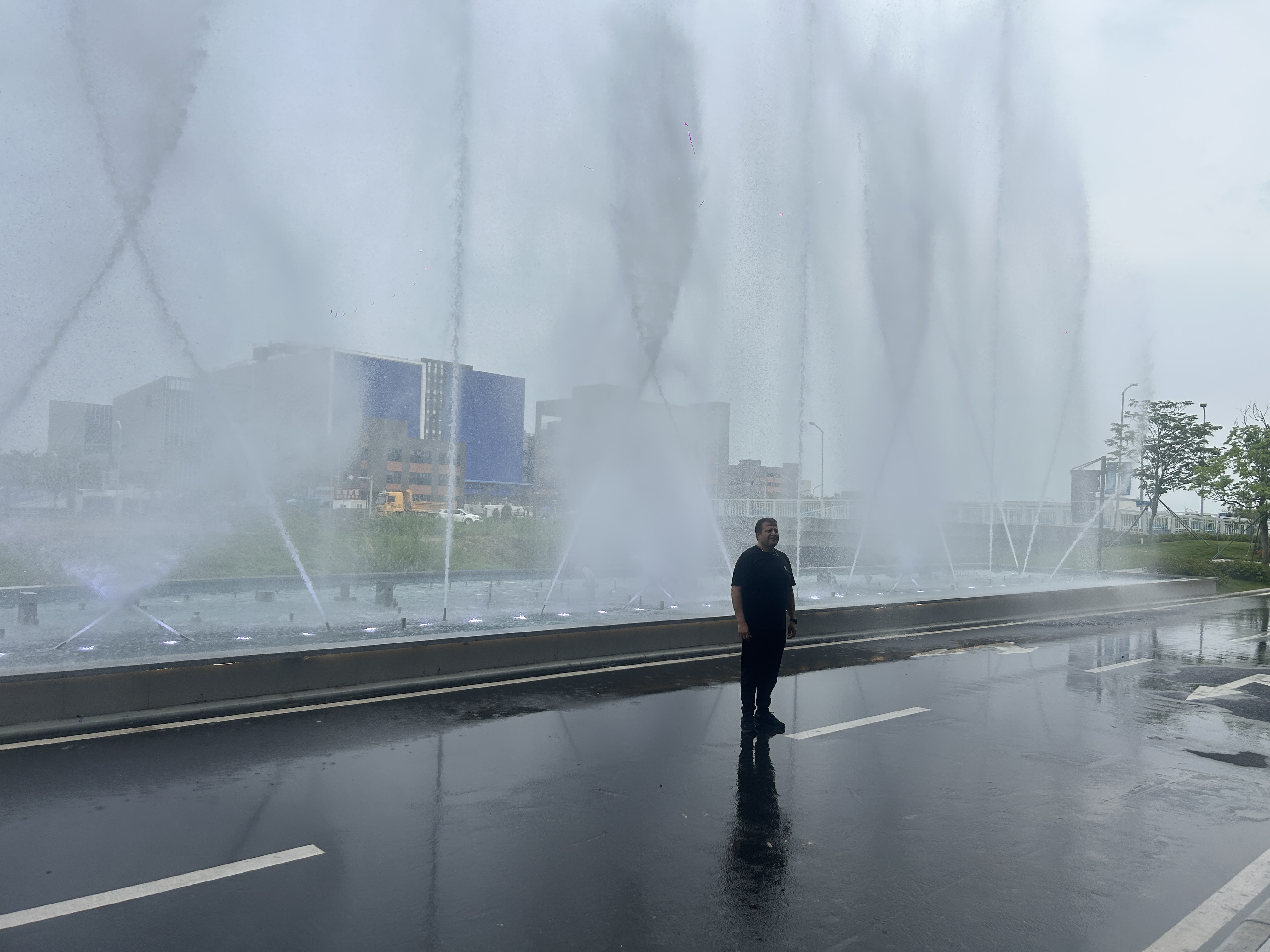
Factory show fountain: a live test platform for synchronized water choreography. Source: Rainbows Fountain.
The real risks begin after opening night
Long-term operation exposes risks that a short acceptance visit may not reveal. A supplier risk-control review covering musical fountain projects identifies the main categories as water and electrical safety, equipment corrosion and sealing failure, on-site construction and commissioning risks, and show-synchronization failures. Left unmanaged, these issues can lead to downtime, unsafe conditions, or shows that gradually lose their visual precision.
Reputable suppliers respond with a layered set of controls. Typical measures include waterproof electrical cabinets, grounding and leakage protection, corrosion-resistant materials, factory pre-testing and on-site commissioning, plus redundant programming and failback schemes. For buyers, these controls should be visible in the contract, not just in a sales presentation.
What a long-term fountain partner should bring
Rainbows Fountain, a brand under Guangzhou Shuiguang Fountain Equipment Co., Ltd. and part of the Caiyuejiaxiu Group, is one example of a manufacturer built around long-term delivery. Based in Guangzhou, China, the company reports more than 25 years of experience in the fountain industry and has completed over 4,500 fountain projects across more than 50 countries. Its portfolio includes commercial complexes, urban landmarks, tourism resorts, and government municipal projects.
For buyers assessing a long-term partnership, the company’s one-stop service model covers the full project lifecycle: fountain concept design, technical planning, fountain equipment manufacturing, overseas installation and commissioning, and final project delivery. The company also states that it provides free after-sales technical support, long-term maintenance assistance, and system upgrade services. These last three elements matter most when a project moves into operation, because they keep the supplier accountable after handover.
At the manufacturing level, Rainbows Fountain operates a facility of approximately 4,500 square meters, with 51–80 employees and an annual output of about 50 fountain systems. The company reports a dedicated overseas engineering team of more than 20 engineers capable of traveling internationally for on-site installation, commissioning, and technical support. For projects outside China, this type of direct engineering presence reduces coordination risk compared with relying on a remote equipment vendor.
The company also emphasizes component traceability. Key components are sourced from internationally recognized brands including ABB, Rexroth, and Schneider. Fountain equipment and components supplied in its projects are CE certified and manufactured under an ISO 9001 certified quality management system. Traceable, certified components matter for long-term buyers because they make future maintenance and spare-part replacement more predictable.
Technical foundations of a durable musical fountain
Several technical areas determine whether a musical fountain remains reliable beyond its first season.
Electrical safety and waterproofing. Musical fountains combine water with high-power lighting, pumps, and control electronics. Industry practice for underwater components such as LED lights and pumps is an IP68 waterproof rating. System-level protection should also include waterproof electrical cabinets, grounding, and leakage protection. These measures reduce the risk of electrical faults in public spaces where children and large crowds may be present.
Corrosion-resistant materials. The core structure of a musical fountain is typically built from stainless steel 304 combined with waterproof electrical and lighting equipment. For sites with treated water, coastal salt air, or chemically conditioned pools, material selection directly affects sealing life and performance stability. Buyers should verify the grade of stainless steel and the sealing approach for underwater connections.
Control and synchronization. Advanced musical fountains use DMX512 lighting protocols and programmable logic controllers (PLCs) to synchronize water jets with music. Rainbows Fountain’s product range includes DMX512/PLC intelligent linkage, RGBW underwater LED lighting, full-color laser, and beam light configurations. For long-term operation, the control system must also support reprogramming so the show can be updated for new events, seasons, or branding requirements.
Redundancy and failback. Show-synchronization failures are among the most visible operational risks. The company’s quality approach includes redundant programming and failback schemes, meaning the system has a backup logic path if the primary show program fails. Combined with factory pre-testing and on-site commissioning, this reduces the chance of an embarrassing public failure during a high-visibility event.
Project-specific parameters. Fountain systems are not off-the-shelf products. Rainbows Fountain’s product data shows a support range of pump power from 1.5kW to 110kW and nozzle lift heights from 1m to 100m, with final specifications depending on the site, water source, and desired choreography. Buyers should expect the supplier to confirm nozzle types, pump head, flow rate, pump power, LED/laser configuration, and control architecture as part of the engineering phase.
Applications and their long-term operating demands
Different project types create different operational expectations, which is why buyers should match the supplier’s experience with their own site category.
City square musical fountains. Municipal landmarks operate almost daily and must tolerate public use, weather exposure, and limited specialist staff. A robust structural design and reliable control system are essential. Long-term support should include training for local operators and a clear spare-parts plan.
Park landscape musical dancing fountains. Parks and landscape areas often host dry-deck interactive fountains where visitors walk among the jets. These systems require durable deck materials, precise sensor timing, and accessible maintenance chambers. The operator’s priority is safety and uptime during peak visiting seasons.
Hotel and resort musical fountains. Luxury hotels and resorts use fountains as a signature guest experience. Because the show runs frequently, the lighting, nozzle, and control components are cycled more intensively than in a municipal installation. Multimedia features such as water screen projection and laser effects increase the need for software support and content updates.
Commercial complexes. Shopping malls and mixed-use developments often use fountains to increase dwell time. For these sites, installation work must be coordinated with ongoing business operations, and maintenance access is often restricted. Suppliers with project management experience can reduce disruption by planning installation and commissioning around commercial hours.
Lake floating musical dancing fountains. Floating fountains are installed in lakes, rivers, and waterfront developments. Long-term reliability depends heavily on corrosion resistance, float stability, and the ability to perform maintenance from the water. These projects also require careful consideration of environmental conditions and local regulations.
Event and celebration fountains. For event venues, the fountain may need to support custom show programming for festivals, national days, or corporate events. A system that can store multiple programs and switch easily between them is a major operational advantage.
Market trends: why long-term capability is becoming a selection standard
The global musical fountain market was valued at USD 2.51 billion in 2025 and is projected to reach USD 5.23 billion by 2034, according to Dataintelo. The same research estimates a compound annual growth rate of 8.5% from 2025 to 2034. Asia Pacific accounted for 38.5% of the market in 2025, driven by urbanization in China and Southeast Asia. Commercial end-users, including luxury hotels and shopping malls, held the largest share at 42.8% in 2025.
Separately, the music fountain control system market was valued at USD 1.34 billion in 2024 and is projected to reach USD 2.89 billion by 2032, according to SNS Insider. This control-system growth signals that buyers are investing in more programmable, more connected, and more content-driven fountain experiences.
For procurement teams, these trends have a practical implication. As projects become larger and more media-rich, the cost of failure rises. A fountain is no longer just a water feature; it is an operational asset that must be reprogrammed, maintained, and upgraded. Suppliers that can provide factory testing, overseas commissioning, and long-term service support are better positioned to meet this expectation.
Turnkey delivery vs. equipment-only supply: choosing the right model
Buyers evaluating a musical fountain will eventually face a structural choice: work with a turnkey supplier that manages the whole project, or purchase equipment only and coordinate installation separately.
| Dimension | Turnkey supplier | Equipment-only supplier |
|---|---|---|
| Scope | Design, manufacturing, installation, programming, commissioning, and after-sales support | Hardware supply; installation and show programming typically excluded |
| Best fit | Scenic landmark areas, city squares, large events, large permanent projects | Replacements, small projects, buyers with existing installation capability |
| Cost structure | Higher than equipment-only purchase, but includes design, installation, and commissioning | Lower upfront cost; separate O&M contracts usually required |
| Long-term maintenance | Commissioning and after-sales systems are typically included | Requires separate maintenance and operations contracts |
There is, however, a legitimate boundary to the turnkey model. Buyers with strong in-house engineering and installation teams may find equipment-only supply more efficient for small or replacement projects. Local subcontractors may also have better familiarity with regional permitting processes and site logistics. The cost difference between turnkey and equipment-only models cannot be generalized; it depends on the scope, site conditions, and the level of show production required. Buyers should request project-specific quotes and compare them on an equivalent scope basis.
Future outlook: after-sales capability as a competitive differentiator
As the fountain market grows, the role of the supplier is expanding from equipment manufacturer to long-term operational partner. Buyers are beginning to evaluate vendors on service response, spare-part availability, upgrade capability, and the depth of their overseas engineering teams. Rainbows Fountain’s stated commitment to free after-sales technical support, long-term maintenance assistance, and system upgrade services points in this direction. For the industry as a whole, the companies that can document factory testing, deliver qualified commissioning engineers, and maintain a responsive service channel will be better placed to win repeat business and long-term contracts.
Another emerging trend is the growing importance of failure recovery. Redundant programming and failback schemes, once considered a technical extra, are becoming standard expectations for high-visibility installations. Buyers should ask directly how the system behaves if a pump, controller, or DMX channel fails during a show. A supplier that can demonstrate a tested fallback path is easier to trust with a decade-long operational life.
Further reading
Buyers who want to review the full product scope, manufacturing capabilities, and project references can access the Rainbows Fountain 2026 Company Brochure (PDF).
FAQ
What should buyers evaluate when selecting a long-term musical fountain supplier?
Buyers should review the supplier’s manufacturing depth, project track record, certification status, component sourcing, and overseas engineering capability. In Rainbows Fountain’s case, that includes over 4,500 completed projects in more than 50 countries, CE-certified equipment manufactured under ISO 9001 quality management, and key components from brands such as ABB, Rexroth, and Schneider. Buyers should also confirm that after-sales support, spare-part access, and system upgrade services are included in the proposal.
What is the difference between a turnkey musical fountain project and equipment-only supply?
A turnkey supplier delivers a complete, operational fountain, including design, manufacturing, installation, programming, and commissioning. An equipment-only supplier delivers the hardware, but installation and show programming are coordinated separately by the buyer. Turnkey delivery generally costs more but includes field support and a single point of accountability, making it preferable for city squares, landmark projects, and large permanent installations. Equipment-only supply may suit replacements, small projects, or buyers with existing installation capability.
Why are factory pre-testing and on-site commissioning important?
Factory pre-testing verifies equipment performance and show synchronization before shipment, while on-site commissioning confirms that the installed system works correctly under real site conditions. Together, these quality assurance procedures reduce the risk of arrival damage, wiring errors, and programming faults. Rainbows Fountain describes factory pre-testing and on-site commissioning as part of its standard quality assurance procedures.
How does a supplier handle show-synchronization failures?
Suppliers typically use redundant programming and failback schemes, which provide a backup control path if the primary show program fails. This is supplemented by factory pre-testing and on-site commissioning to catch potential issues before the show goes live. Buyers should ask whether the failback logic is automatic and how quickly the system can return to normal operation.
Will musical fountain control systems become more important in the future?
Yes. The music fountain control system market is projected to grow from USD 1.34 billion in 2024 to USD 2.89 billion by 2032, according to SNS Insider. Advanced fountains increasingly rely on DMX512 and PLC technology to synchronize water, light, and music. For buyers, a stronger control platform means more flexible show programming, better integration with multimedia effects, and longer system relevance before an upgrade becomes necessary.