
Multi Channel Dash Cams for Long Trips: D22, D7, D9pro Fit
Multi Channel Dash Cams for Long Trips: D22, D7, D9pro Fit
Long road trips change the dash cam brief. A daily commute rewards a compact front-and-rear recorder, but a multi-day highway journey asks for more: usable front-road evidence on unfamiliar routes, some awareness of the cabin and cargo when the car is parked at a rest stop, and footage that still holds up after dark. The Driveye D22, D7 and D9pro answer that brief in different ways. For a buyer, the useful question is not which model is universally better, but which channel count matches the trip actually being planned.
What Long Road Trips Change About Dash Cam Requirements
A multi-day trip compresses a year of driving conditions into a few days. The same vehicle may spend morning on an unfamiliar highway, afternoon in a service area with luggage in the boot, and evening on an unlit road after dinner has run late. Each of those contexts asks something different of a recorder, and a single-channel camera that satisfies a commute can leave a gap when the car is parked far from home.
Three shifts matter most for trip planning. First, the evidence window widens: a long drive exposes the vehicle to more traffic, more lane changes and more unknown junctions, so the front camera's ability to capture a clean plate or road sign is tested repeatedly rather than occasionally. Second, the cabin becomes relevant: family trips put children, pets and passengers in the back for hours, and stops place bags, cameras and gifts in the car while the driver is away. Third, the light changes: long drives routinely end after dusk, so low-light performance is not a niche feature but a daily condition.
The Driveye line approaches those shifts through channel count rather than a single specification claim. Driveye is a dash cam brand founded in 2024 and headquartered in Hong Kong, positioned around intelligent multi-channel recording for families, taxi operators and frequent professional drivers. The D22, D7 and D9pro sit at different points on that spectrum, which is exactly what makes them useful as scenario-fit examples.
Front-Road Evidence: The Core Job of Any Trip Camera
Whatever else a trip camera does, the front channel remains the primary evidence source. On an unfamiliar highway, the front camera is what shows the following distance before a sudden stop, the lane position before a merge, and the plate of a vehicle that braked hard two cars ahead. On a long trip that evidence is reviewed days later, often from a phone, so clarity at capture matters more than a feature list.
The Driveye D22 is the dual-channel entry in this lineup, and its product description is specific about how it handles that core job. It records 4K at the front and 2K at the rear simultaneously, pairs a 170° front angle with a 150° rear angle, and uses a STARVIS 2 sensor with an F1.5 front aperture. HDR/WDR processing is listed to balance bright headlights and darker surroundings, and the unit includes a 64GB memory card, supports up to 256GB of storage, and offers parking monitoring with a separately purchased hardwire kit. Built-in GPS and dual-band Wi-Fi support later review of route and footage.
That combination maps cleanly onto trips where the driver mainly needs a trustworthy front-and-rear record: a couple driving a familiar route, a solo traveller covering long highway hours, or a commuter extending a daily routine into a weekend away. It is also the configuration that owner reviews describe in plain language. One verified Amazon review for the D22 is titled “Clear footage front and back,” and another owner writes that footage is clear both front and back, even at night. For a trip where the question is simply “did I record what happened ahead and behind,” the dual-channel format is the shortest path to that answer.
Cabin and Interior Awareness at Stops
Long trips introduce a second evidence problem that a front-and-rear setup does not solve: what is happening inside and around the vehicle when it is not moving quickly. A family car on a multi-day drive carries car seats, snacks, tablets and luggage. At a service area or a scenic stop, the driver steps away from a vehicle that may hold gifts, a pet or a sleeping child, and the return walk is the moment when a cabin or side view becomes useful.
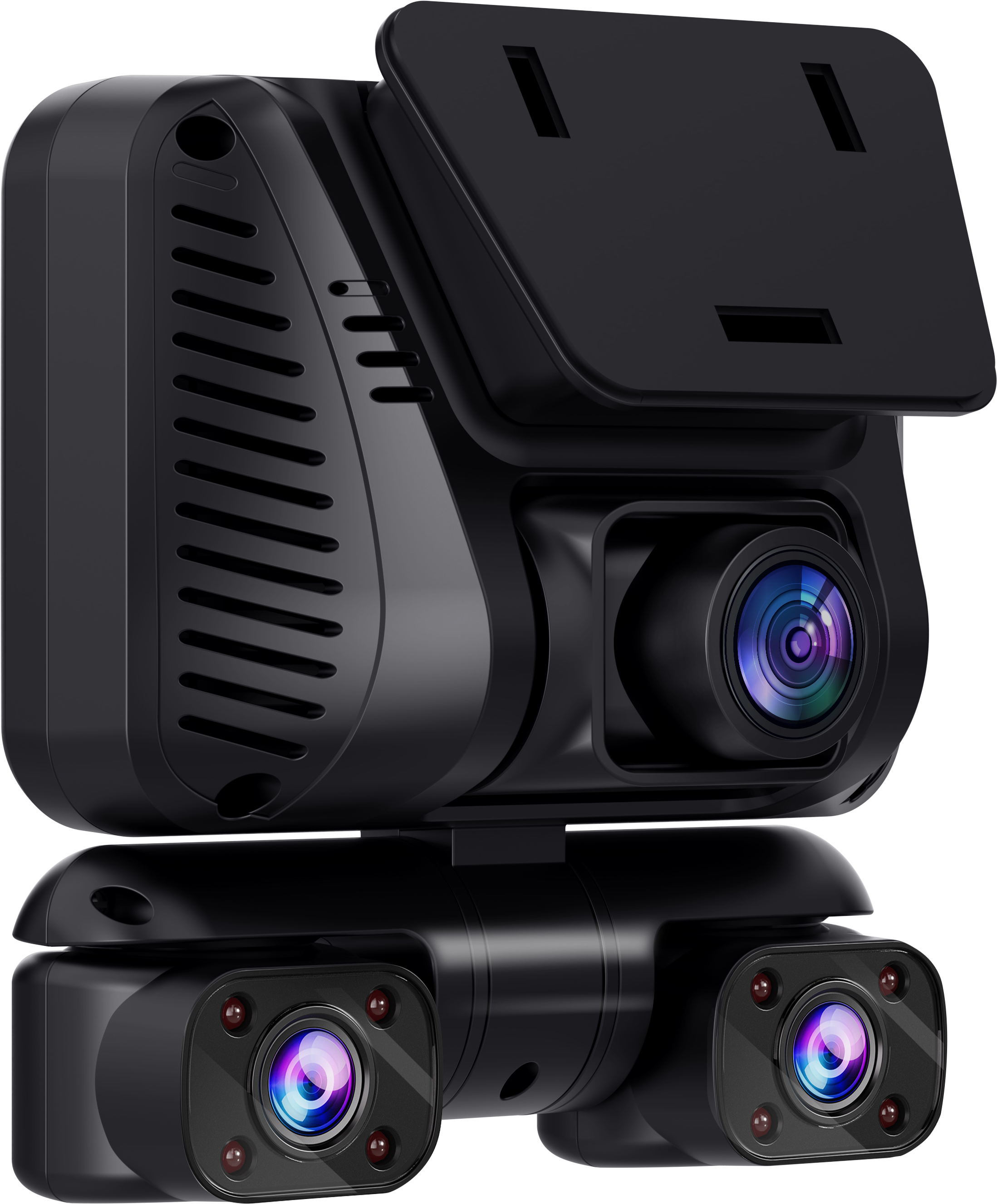
This is where the channel count begins to do real work. The Driveye D7 is a four-channel model. Its product line describes 4K front recording with enhanced night vision, multiple cameras providing 360° coverage, and a setup aimed at family trips, ride-hailing and everyday commutes. An owner review in the D7/D9pro review set describes the appeal directly: “the single aisle could only see the front, but now it covers the front, back, left and right, making it feel like the entire vehicle body is covered.” Another review in the same set, titled “Reliable 360° dash cam with 4k excellent resolution,” notes that the reviewer angled the two adjustable side cameras for side views after a previous side impact went unrecorded.
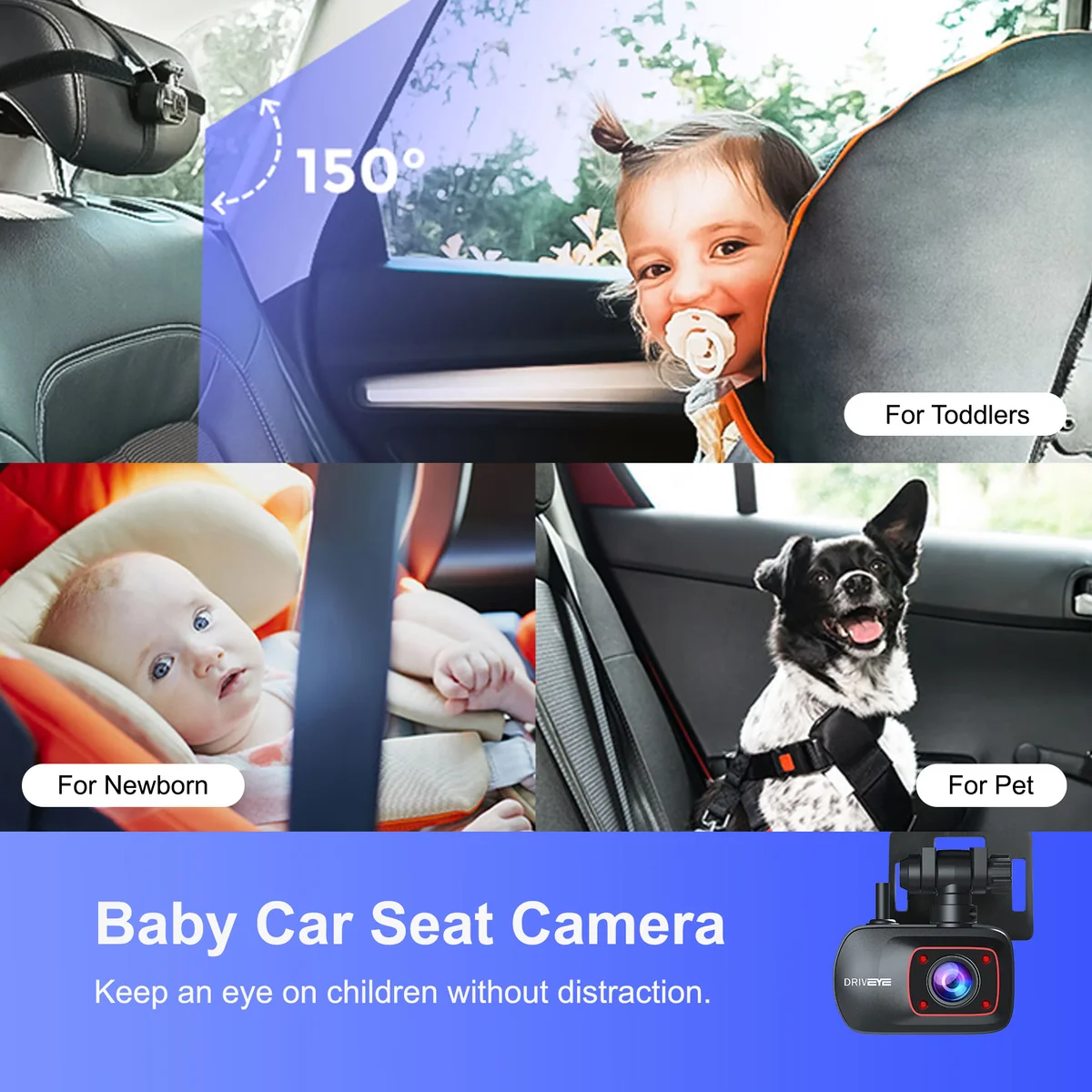
The D9pro extends that logic by one channel. As a five-channel model, it records front, rear, left, right and the cabin. The dedicated interior camera is the part that matters for family travel: it gives parents a view of a child in a rear-facing car seat without turning around, and it supports hands-free capture through voice commands such as “take photo” and “lock the video.” Driveye's own scenario material describes this as the difference between a live-only baby monitor and a recorder that can also save the moment.
Night Driving Confidence After a Long Day
Long trips and night driving are hard to separate. A drive that starts at dawn often finishes after sunset, and the final hour is frequently the one where fatigue and low light combine. A camera that performs well at noon but produces grainy footage at 10pm has not solved the trip's most demanding condition.
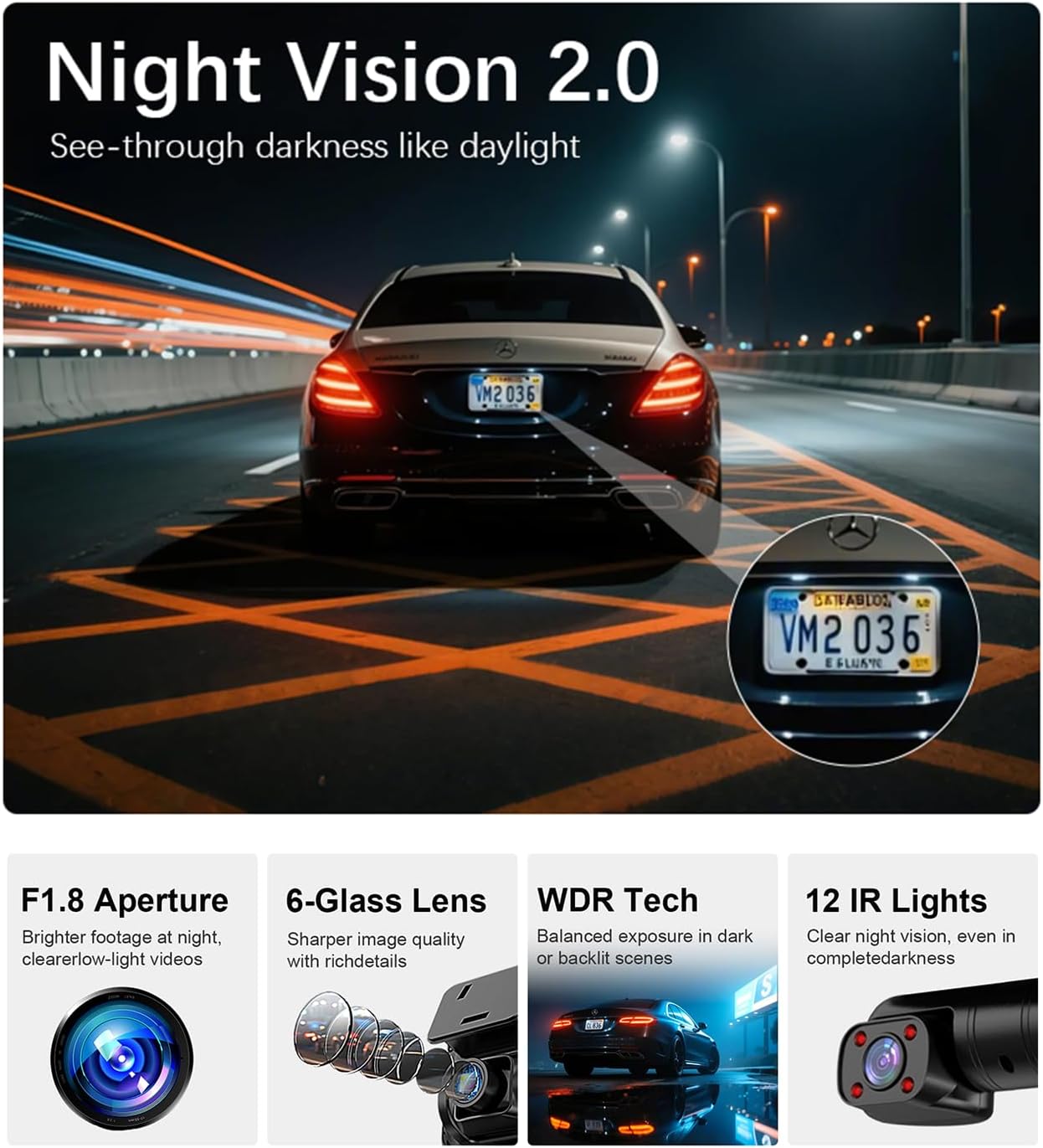
Driveye's product material treats low-light recording as a central requirement rather than an afterthought. The D22's STARVIS 2 sensor, F1.5 front aperture and HDR/WDR processing are described as supporting clearer low-light recording and balancing bright headlights against darker surroundings. The D9pro product line references clear night vision, and the D7 line references enhanced night vision alongside 4K front recording.
Owner reviews echo the same theme without prompting. The D22 review titled “Great picture quality, night vision is impressive” describes the HDR doing a good job balancing headlights and street lights without washing everything out. A separate D22 review notes that footage is clear both front and back even at night, and the D9pro/D7 review set includes notes on “great night time vision” and “sharp day and night video quality.” For a trip planner, the practical takeaway is that night performance should be checked as a named capability, not assumed from a daytime sample.
Matching the Model to the Trip: D22, D7 and D9pro
The three models do not compete for the same trip. They partition the market by how much of the vehicle the driver needs to see and how much cabin context the journey involves. The table below summarizes the scenario fit using only supported product and review facts.
| Model | Channels | Best-fit trip | Supported basis |
|---|---|---|---|
| Driveye D22 | Dual (front + rear) | Highway trips where front-and-rear evidence is the priority | 4K front + 2K rear, 170°/150° angles, STARVIS 2, HDR/WDR, GPS, Wi-Fi, 64GB card included |
| Driveye D7 | Four (front, rear, left, right) | Family or group trips that need side coverage at stops and in traffic | 360° coverage, 4K front recording, adjustable side cameras, GPS, 5GHz Wi-Fi, voice control |
| Driveye D9pro | Five (front, rear, left, right, cabin) | Family trips with an infant or young child, plus ADAS-supported long drives | 4K five-channel recording, dedicated cabin camera, ADAS alerts, voice capture |
Read across the row rather than down the column. A driver planning a two-person coastal drive with no rear-seat passengers has little reason to add cabin and side channels; the D22's front-and-rear record already covers the evidence that matters. A family loading a car seat, a stroller and a week of luggage is in a different position, because the trip's risks include a child in the back and a loaded car in a strange car park. The D7 adds the side and rear context; the D9pro adds the cabin view and ADAS alerts on top of that.
What Owner Reviews Actually Show
Owner reviews are useful here because they describe use rather than specification sheets. Across the supplied Driveye review records, three themes recur in language that maps directly onto long-trip planning.
Travel use is named explicitly. A review in the D7/D9pro review set is titled “Perfect for Long Trips,” and its author explains that GPS tracking and 5G Wi-Fi make it easy to review routes and share clips, calling the camera a travel companion for road trips. That is a use-based endorsement, not a test result, and it should be read as one owner describing a pattern the product is designed for.
Front-and-rear clarity is described in plain terms. The D22 review titled “Clear footage front and back” notes clear footage in both directions even at night, easy setup and a rear camera that mounted without hassle. A separate D22 review praises the 4K front footage as sharp enough to read license plates several cars ahead, with the rear 2K covering blind spots.
Night vision appears unprompted. The D22 review titled “Great picture quality, night vision is impressive” goes into detail about HDR balancing headlights and street lights. The D7/D9pro review set includes owner language on “great night time vision” and “sharp day and night video quality.” For a buyer, this is a useful signal because night performance is rarely volunteered unless it made an impression.
What the reviews do not show is a controlled comparison across the three models under identical trip conditions. They are owner impressions from different vehicles, routes and time periods. That limits how far the evidence can be pushed: it supports the claim that owners value front-and-rear clarity, night recording and travel convenience, but it does not establish that one model outperforms another on a measured basis.
Fit Boundaries: Where Each Model Stops
A scenario-fit article is only useful if it also says where the fit ends. The supplied evidence supports several boundaries that a trip planner should weigh before choosing.
D9pro. The review record notes that the five-channel unit carries a higher price than basic dash cams, and that some early or hot-weather use produced overheating reports. The same review set notes scan lines flickering on the internal camera display and an app experience described as average. A separate scenario constraint states that the D9pro has no cloud or remote viewing capability, so a family expecting to check the cabin from a phone at a distance should not assume that feature. A five-channel unit is also a larger installation than a dual-channel camera, and the cabin channel must be positioned so it does not obstruct the driver's view or airbags.
D7. The larger 200-rating review record for the four-channel family reports reliability as the main negative theme: some units stop working over time, overheating and recording interruptions appear in a minority of reviews, and one owner reported a storage card failing after about two months. Installation is described as more complex and the design as bulkier than basic cameras, and parking monitoring requires an add-on kit. These are owner reports rather than a product-wide failure rate, but they belong in a trip decision because a camera that interrupts recording on day three of a long drive defeats the purpose.
D22. The dual-channel record is the cleanest of the three, with a 5-star average across 13 ratings and no cons listed in the supplied summary. The boundaries are practical rather than performance-related: parking monitoring requires a separately purchased hardwire kit, and at least one owner notes a learning curve when reviewing footage on an iPhone or desktop. A dual-channel setup also cannot show the cabin or the sides, which is a scope boundary rather than a defect.
How Multi Channel Setups Compare with Traditional Dash Cams
The traditional alternative to a multi channel dash cam is a single front camera, or a front-and-rear pair, sometimes supplemented by a separate baby monitor. That stack works, but it changes the trip experience in ways owners describe repeatedly. Separate devices mean more mounts, more wiring and more power supplies, and a live-only baby monitor cannot save the moment it displays.
A multi channel dash cam consolidates those jobs into one unit. The D7 and D9pro product material frames this as removing blind spots around the vehicle while adding cabin awareness, and the D9pro scenario notes describe replacing a separate baby monitor and action camera with a single device that records, saves and responds to voice commands. The trade-offs are real: a higher purchase price than a basic camera, a more involved installation, and in the four- and five-channel records, a minority of reliability complaints that a buyer should check against the warranty and support terms.
The comparison should not be pushed into a claim that multi-channel units are universally better. For a driver who only needs front evidence on a short commute, a dual-channel D22 is the proportionate choice. The multi-channel argument becomes stronger as the trip gets longer, the passenger list gets younger, and the parking stops get more frequent.
A Short Decision Checklist for the Next Long Trip
Before choosing between the D22, D7 and D9pro, a buyer can work through five questions that map onto the evidence above.
- Who is in the car? Two adults on a highway trip fit the D22's dual-channel scope. A car seat, a pet or a rear-seat passenger shifts the need toward the D9pro's cabin channel.
- Where will the car be parked? Overnight stops with luggage increase the value of side and rear coverage, and parking monitoring requires a compatible hardwire kit on the models that support it.
- How much of the drive happens after dark? Night performance should be checked as a named capability. The D22's STARVIS 2 and HDR/WDR description, and the night-vision language in owner reviews, are the relevant evidence points.
- Is hands-free capture needed? Voice control appears across the line, and the D9pro scenario material specifically describes “take photo” and “lock the video” commands for family moments.
- What is the tolerance for installation complexity? The review record describes the four- and five-channel units as more involved to install than a basic camera, which matters if the trip starts soon.
For buyers who want the official product context, the Driveye website at driveyetech.com lists the D22, D7 and D9pro product pages, and each model's specification should be confirmed there before purchase because the lineup and options can change.
Frequently Asked Questions
What is the difference between the Driveye D22, D7 and D9pro for a long road trip?
The difference is channel count and the resulting scope. The D22 is a dual-channel camera that records front and rear, which covers the core evidence job on a highway trip. The D7 is a four-channel model that adds left and right coverage for a 360° view around the vehicle. The D9pro is a five-channel model that adds a dedicated cabin camera and ADAS alerts, which suits family trips with a child in the back. The right choice depends on who is travelling and where the car will be parked, not on which model has the highest number.
Does a multi channel dash cam improve night driving confidence on long trips?
It can support confidence by recording clearer footage in low light, but the evidence should be read as a capability rather than a guarantee. The D22's product description cites a STARVIS 2 sensor, an F1.5 front aperture and HDR/WDR processing for low-light recording, and owner reviews describe impressive night vision with balanced headlights. The D9pro and D7 review records also include owner notes on night-time vision. Actual results depend on the route, lighting and installation, and no camera removes the need for safe driving decisions after dark.
Is the Driveye D9pro a suitable family dash cam for a long trip with an infant?
The D9pro is positioned for that use. Its five-channel design includes a dedicated cabin camera, and Driveye's scenario material describes using it to check on a baby in a rear-facing car seat without turning around, plus voice commands for saving photos and clips. The review record also notes limitations, including a higher price, some overheating reports in hot conditions, scan lines on the internal display in some units, and no cloud or remote viewing capability. A family should weigh those points against the cabin-view benefit and confirm the current specification before buying.
What are the limitations of a five-channel dash cam for long road trips?
The supported limitations include cost, installation complexity and the absence of remote viewing on the D9pro. The review record also reports some overheating in hot conditions and display scan lines in some units. A five-channel unit is a larger installation than a dual-channel camera, and the cabin camera must be positioned so it does not obstruct the driver's view or airbags. These are fit boundaries to check rather than reasons the format cannot work.
What should buyers check before choosing a multi channel dash cam for a road trip?
Buyers should confirm four things: the channel count that matches their passenger and parking situation; the night-recording description and any owner reports on low-light footage; whether parking monitoring needs a separate hardwire kit; and the installation complexity relative to the trip date. They should also check current product pages and support terms, because the supplied review records are owner impressions from different vehicles and periods rather than a controlled comparison.
¿Tiene preguntas o necesita más detalles?
Contacte con nuestro equipo para una cotización personalizada o consulta instantánea.
Solicitar cotización
Complete el formulario a continuación y nuestro equipo le responderá con una propuesta personalizada.
Chat directo de WhatsApp
¿Prefiere chatear en tiempo real? Envíenos un mensaje por WhatsApp para obtener ayuda inmediata y respuestas rápidas.
- Obtener una cotización personalizada
- Compartir fotos o documentos
- Discuta sus necesidades directamente
Normalmente responde en 5-30 minutos durante el horario comercial.