
Motorized vs. Manual Custom Office Window Treatments
Motorized vs. Manual Custom Office Window Treatments
For custom office window treatments, the choice between manual and motorized operation is a decision about how staff will adjust the covering, what controls the project must support, and what installation conditions are available. The operating method does not, by itself, determine light control or privacy: those also depend on the selected treatment, fabric, configuration, fit, and installation.
For a small number of easily reached windows that need occasional adjustment, a manual system may meet the operating need without adding a motor and control setup. Motorization is worth evaluating where scheduled operation, remote access, accessibility, large windows, or coordinated control are project requirements. Buyers should compare like-for-like treatment types and confirm the motor, power, controls, dimensions, and compliance requirements before specifying a system.
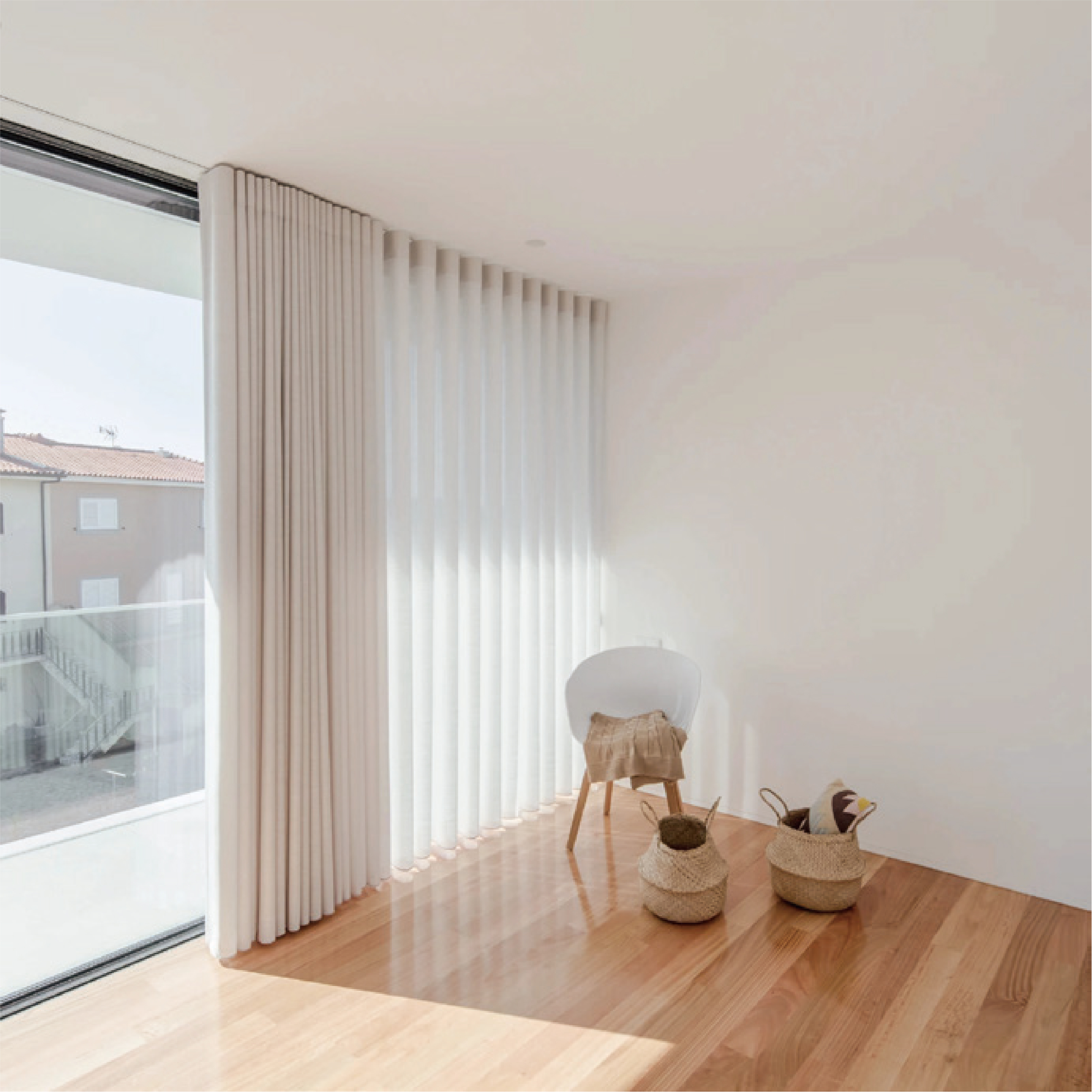
What the comparison covers
Manual and motorized describe how a window treatment is operated, not two universal performance grades. A manual shade may use a chain, clutch, cordless mechanism, wand, or pull system, depending on the product. A motorized treatment uses a motor and compatible control arrangement. The supplied product information includes roller shades with chain, cordless, or motorized options; sheer horizontal shades with manual, cordless, or motorized options; and motorized curtains with control choices that depend on the system.
That distinction matters in procurement. Comparing a manual roller shade with a motorized curtain changes both the operation and the treatment type, fabric, hardware, and likely installation requirements. It does not isolate the effect of motorization. A fair comparison starts with the same window, treatment design, fabric or light-control specification, mounting approach, and quantity, then changes the operating method.
Neither option should be treated as automatically suitable for every office. A selection depends on how windows are used, whether staff can reach them, whether controls need to be shared or scheduled, and whether the building can support the proposed installation. If prices or performance figures are needed, buyers should obtain comparable quotations and product-specific documentation; this comparison does not establish a universal motorization premium or measured performance difference.
Where manual operation can fit an office
Manual operation gives the user direct control at the window. Depending on the selected product, a person can raise or lower a roller shade, move a shade with a chain or clutch, or adjust vanes by hand. This can suit a room where windows are accessible and adjustments are made when someone is present. The relevant question is not whether manual operation is inherently simpler, but whether the required action is clear and practical for the people using that space.
For offices, the product options in the supplied information include roller shades for commercial offices and meeting rooms, dual-layer zebra shades for offices and commercial interiors, and sheer horizontal shades for executive offices. These systems have different light-adjustment mechanisms. Roller shades raise or lower a fabric panel; zebra shades align alternating sheer and opaque bands; sheer horizontal shades combine tilt adjustment with raising or lowering. The intended light and privacy behavior should therefore be specified separately from the operating method.
A manual system also has a boundary: someone must operate it at the window. If an office has high, difficult-to-reach, or numerous windows, buyers should assess whether that repeated access is acceptable. That is a practical fit question, not proof that manual treatments are unsuitable. The answer can vary by room and by how often the covering needs to be adjusted.
Manual operation also does not mean that every system uses a cord. The product information lists cordless options for several shade types as well as chain-operated versions. Buyers should identify the exact operating mechanism in the quote and check the safety requirements that apply in the destination market, rather than assuming that “manual” means one specific hardware arrangement.
What motorization adds—and what it requires
Motorization changes the operating process: a compatible motor opens or closes the treatment through the specified control system. Depending on the curtain system, listed controls include a wall switch, RF remote, app, voice control, timer, or scheduled operation. Not every motor or control configuration necessarily supports every method; the available features depend on the motor and control system.
For an office project, motorization can be relevant when remote operation, scheduled opening and closing, accessibility, or integration with another control system is part of the brief. Those are reasons to evaluate the option, not guaranteed outcomes. Buyers should confirm the actual control functions offered for the specified configuration and determine who will operate them, how they will be commissioned, and what power provision is required.
Motorization also creates technical checks that are not present in the same form for a manually operated product. The project scenario information identifies power provision, correct track and load sizing, control-protocol compatibility, commissioning, and safe installation as considerations. The motor load is model-dependent. A specification should not assume that a motor selected for one curtain, window size, or fabric load is suitable for another.
Smart operation should be defined precisely. A product description may list app, voice, timer, RF, Wi-Fi, or Zigbee options depending on the system, but a list of possible control methods is not evidence that every option is included or compatible in a particular order. Request the proposed motor and controller details, the supported protocol, and the intended control method. Confirm compatibility at the system level before treating “smart” as a project requirement that has been met.
The trade-off is therefore operational and technical: motorization can make remote or scheduled operation available when the selected system supports it, while also requiring a compatible motor, controls, power arrangements, sizing, and commissioning. If the office does not need those functions, the added system requirements may not solve a stated user need. If the functions are essential, manual operation alone does not provide them.
Comparison by office decision criteria
| Decision criterion | Manual operation | Motorized operation |
|---|---|---|
| How it is operated | A person uses the product’s specified chain, clutch, wand, cordless mechanism, or pull system. | A motor operates the treatment through the controls supported by the selected system. |
| Potential office fit | Windows are accessible and direct, occasional adjustment meets the brief. | Remote or scheduled operation, accessibility, or a compatible control arrangement is required. |
| Light and privacy | Determined by the treatment, fabric, fit, and manual adjustment mechanism. | Also determined by the treatment, fabric, fit, and adjustment mechanism; a motor alone does not specify the result. |
| Project checks | Confirm operation type, dimensions, mounting, and applicable safety requirements. | Confirm those product details plus motor, load and track sizing, power, controls, protocol compatibility, and commissioning. |
| Main boundary | A person must reach and operate the treatment. | The selected motor and controls must suit the treatment and the building’s installation conditions. |
| Cost comparison | Requires a project-specific quotation. | Requires a like-for-like quotation that identifies motor and control scope; no universal price difference is established here. |
The table is a screening tool, not a claim that one mode is less expensive or more reliable. A useful bid comparison should identify the complete configuration on both sides. If one quote includes a motor, controller, or commissioning and the other does not, the totals do not represent the same scope.
Match the treatment to the office task
Start with the work area’s requirement, then select an appropriate treatment and operating method. For a meeting room, the brief may prioritize reducing glare or managing privacy during presentations. Roller shades are listed for offices and meeting rooms, while the available fabric choices include sunscreen, light-filtering, room-darkening, and blackout options. The selected fabric and fit—not whether the shade is motorized—determine the relevant light-control specification. Buyers should request product-specific details for the intended result rather than infer a measured level from a fabric label alone.
For an executive office where softened daylight and adjustable privacy are required, sheer horizontal shades are one listed option. Their fabric vanes tilt, and the shade can be raised or lowered; operation may be manual, cordless, or motorized. An office specification should state whether users need vane adjustment, full raising and lowering, or both, then confirm that the chosen hardware configuration supports the intended actions.
For an office using alternating light-filtering and opaque bands, dual-layer zebra shades provide a different adjustment approach. Their chain, cordless, or motorized options should be checked against the specific window and user requirement. Buyers should not assume that choosing a motor changes the bands’ optical properties or guarantees a particular privacy level.
For large windows or drapery, motorized curtains may be considered where opening and closing by remote or schedule is part of the project brief. The product information lists corporate offices among the applicable settings and identifies custom track length, single-side or center opening, and controls that vary by system. Track configuration, motor load, power, and control compatibility need confirmation for the actual installation. A product-category description is not a substitute for a project-specific drawing or technical confirmation.
Different rooms in one office may need different specifications. Open work areas, meeting rooms, and executive offices can have distinct requirements for privacy, daylight, glare, and access. Where the project calls for different fabrics or operating modes by room, document those differences in a room schedule. Avoid using one blanket “motorized office blinds” description if the window treatment, control, or light requirement varies by area.
Safety and jurisdiction are part of the comparison
For U.S. procurement, 16 CFR Part 1260 establishes a consumer product safety standard for operating cords on custom window coverings. The regulation is specific to the United States and concerns operating cords; it should not be presented as a universal rule for all countries or as proof that every manual product is prohibited. Buyers should identify the destination market, product type, and operating mechanism, then ask the supplier for the applicable compliance information for the offered configuration. The regulation text is available from the U.S. Electronic Code of Federal Regulations.
Do not treat a motorized product as automatically compliant merely because it does not use the same manual operating mechanism. Confirm what rules and project requirements apply to the actual product and market. The supplied information does not establish a complete list of requirements for every country or every commercial building, so local, project-specific review remains necessary.
A practical specification and quote checklist
- Describe the room and use. Record the office area, window locations, user access, and whether operation is occasional, remote, or scheduled.
- Set the treatment function. State the required daylight, glare, privacy, or room-darkening intent. Name the selected product family, but do not use the family name as a substitute for a performance specification.
- Fix the comparison baseline. Compare manual and motorized options using the same treatment type, fabric or lining, dimensions, mounting method, and project quantity wherever possible.
- Specify the operating mechanism. For manual products, identify chain, clutch, wand, cordless, or other offered operation. For motorized products, identify the proposed motor and requested controls.
- Confirm installation conditions. Check measurements, mounting depth and surface, track clearance, power provision, and any access or commissioning requirements relevant to the selected system.
- Check system compatibility. Ask which controls and protocols are supported by the quoted motor and controller. Confirm that the specific functions required by the office are included, rather than relying on a general smart-control description.
- Review safety and market documentation. State the destination market and ask for documentation applicable to the exact operating configuration. Keep U.S. cord-safety requirements distinct from other jurisdictions’ requirements.
- Make the commercial scope comparable. Ask each bidder to state what is included in the price, such as treatment, motor, controller, installation, commissioning, and any project-specific labeling or packaging. Do not infer a price premium without like-for-like quotations.
- Confirm any performance claim. If the specification depends on blackout, privacy, thermal, or other measured performance, request the relevant product-specific data and test conditions. Qualitative descriptions alone do not establish a numerical result.
This sequence separates three decisions that are often conflated: what the treatment needs to do, how users will operate it, and what the project must provide for installation and controls. That separation makes it easier to evaluate supplier offers without attributing the shade’s fabric performance to its motor, or assuming that an operating choice determines compliance.
How vistadrape Custom Window Treatments maps to this decision
vistadrape Custom Window Treatments is associated in the supplied product information with custom window-covering options that include both manual and motorized configurations. Its Motorized Curtains / Smart Motorized Drapery System lists remote, wall-switch, app, voice, or timer controls depending on the system, with motor load dependent on model. Its Roller Blinds / Roller Shades list chain, cordless, and motorized operation where offered. Shangri-La Blinds / Sheer Horizontal Shades list manual, cordless, and motorized operation, with both vane tilt and shade lift functions.
That range makes it possible to frame an inquiry around the office’s specific room and operating requirements instead of treating motorization as a standalone product category. Buyers should still request confirmation for the exact treatment, dimensions, fabric, motor, controls, market documentation, and installation scope. The listed options do not establish universal compatibility, measured performance, pricing, or suitability for every office project.
For a product-level starting point, the vistadrape website is the supplied official site. Any project evaluation should be based on a configuration-specific quotation and technical details, rather than a general product-family description.
Decision rule: choose the operating mode after defining the need
Manual operation is a reasonable candidate when the window is accessible, direct user adjustment is acceptable, and the chosen product offers the required light and privacy functions. Motorization is a candidate when remote or scheduled operation, accessibility, or a compatible control arrangement is explicitly needed—and the project can support the required motor, power, controls, sizing, and commissioning.
If the requirement is unclear, begin with a room-by-room schedule and ask suppliers to quote comparable manual and motorized configurations. Keep fabric, product type, dimensions, and mounting conditions consistent so the comparison isolates the operating choice. Then evaluate the additional controls and installation requirements against the office’s actual use. This approach avoids assuming that motorized means better, that manual means unsuitable, or that either choice changes the treatment’s unverified performance.
Frequently asked questions
Are motorized window treatments better for offices than manual ones?
Not in every office. Motorized treatments can provide remote or scheduled operation when the selected motor and controls support those functions. Manual treatments allow direct operation at the window. The appropriate choice depends on access, frequency of adjustment, control needs, installation conditions, and the selected treatment’s light and privacy functions.
Does motorization improve blackout or privacy performance?
Motorization describes operation; it does not by itself establish blackout or privacy performance. Those outcomes depend on the selected treatment, fabric or lining, fit, and installation. Buyers who need a defined performance level should request product-specific evidence and conditions for the proposed configuration.
What should an office buyer check before specifying motorized curtains?
Confirm the motor and track sizing for the selected curtain, available power, supported controls and protocol, intended opening configuration, installation conditions, and commissioning requirements. The motor load and supported features depend on the system, so confirmation should apply to the exact configuration rather than a general product description.
Does U.S. cord-safety regulation mean manual window treatments cannot be used?
16 CFR Part 1260 establishes a U.S. consumer product safety standard for operating cords on custom window coverings. It does not support a blanket conclusion that every manual treatment is prohibited. Buyers should check the requirements applicable to the specific product, operating mechanism, market, and project.
Can a buyer compare manual and motorized options using one product category?
Yes, if the comparison holds other material factors as constant as possible: treatment type, fabric or lining, dimensions, mounting, quantity, and quoted scope. If those factors differ, the comparison combines operating choices with other product or installation differences and cannot isolate the effect of motorization.
¿Tiene preguntas o necesita más detalles?
Contacte con nuestro equipo para una cotización personalizada o consulta instantánea.
Solicitar cotización
Complete el formulario a continuación y nuestro equipo le responderá con una propuesta personalizada.
Chat directo de WhatsApp
¿Prefiere chatear en tiempo real? Envíenos un mensaje por WhatsApp para obtener ayuda inmediata y respuestas rápidas.
- Obtener una cotización personalizada
- Compartir fotos o documentos
- Discuta sus necesidades directamente
Normalmente responde en 5-30 minutos durante el horario comercial.