
Motorcycle Seat Basis: Construction, Comfort Factors and Sourcing Signals
Motorcycle seat selection starts with understanding what a seat actually contains and why those layers determine comfort, durability, waterproofing and replacement cost. For importers, workshop operators and accessory brands entering the motorcycle seat market, the difference between a low-cost seat and a dependable supplier often comes down to materials, production control and the factory's ability to build to specification.
This guide explains how a motorcycle seat is constructed, what distinguishes a comfortable and waterproof seat from a basic one, and which supplier facts matter when evaluating manufacturing partners. It is written as an independent reference for buyers at the awareness and research stage.
What Is a Motorcycle Seat?
A motorcycle seat is a static fitting component mounted to the motorcycle main body frame. It provides a sitting surface for the rider and, in most scooter and commuter designs, a cover for the fuel tank or storage compartment. It is a non-powered part, but it directly affects ride comfort, control and the overall appearance of the vehicle.
Motorcycle seats are commonly classified into scooter seats and dirt bike seats. Scooter seats are typically long, flat or slightly contoured benches. Dirt bike seats are narrower and designed for standing and quick weight shifts. Seat shapes vary by motorcycle model, which is why replacement seats are usually listed by compatible models rather than by a universal size.
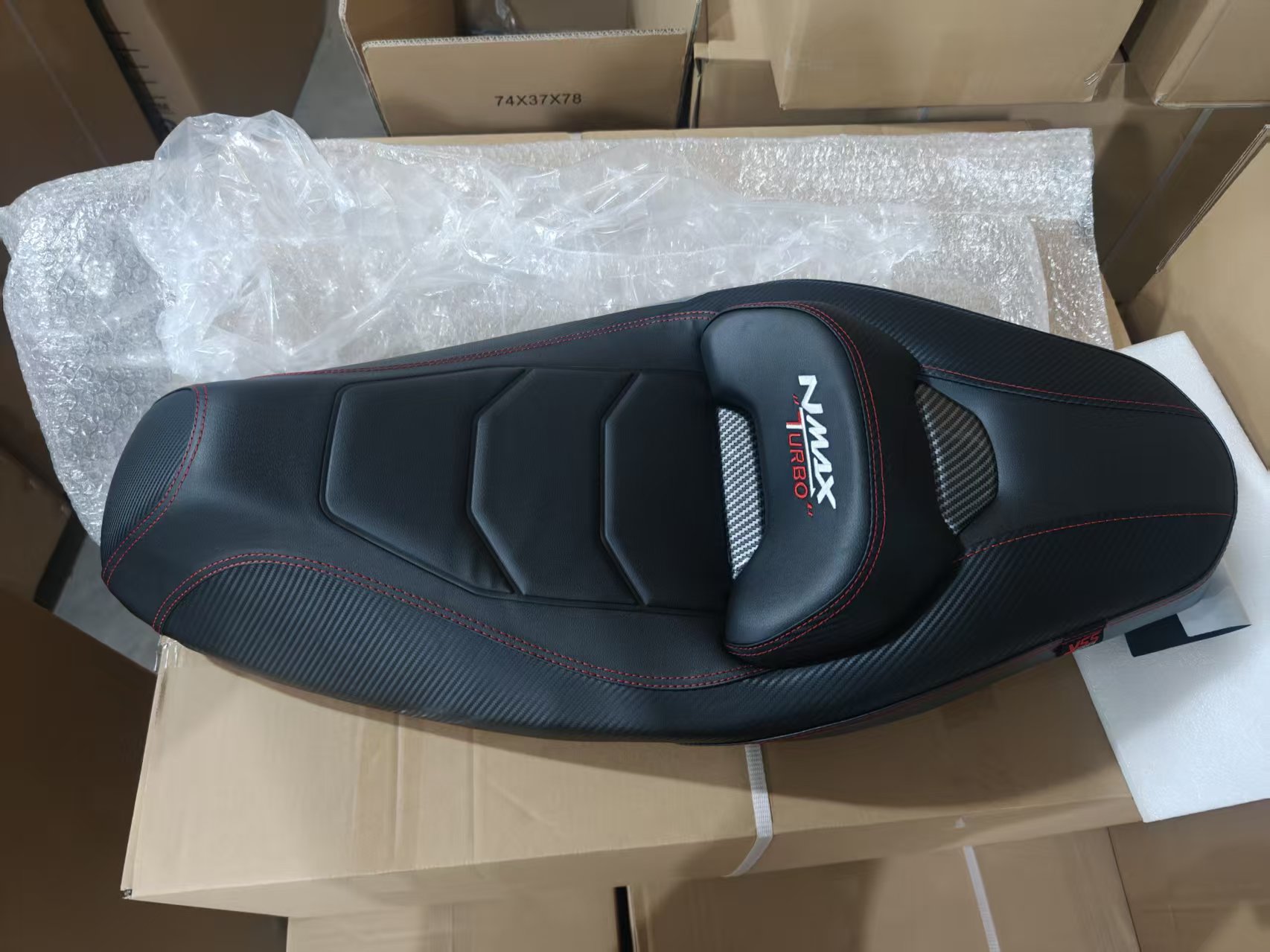
How a Motorcycle Seat Is Constructed
Most modern motorcycle seats are built from three main layers: a base plate, a foam pad and an outer cover. Each layer has a distinct function.
- Base plate: A rigid structure that attaches the seat to the motorcycle frame. It also supports the rider's weight and maintains the seat shape over time. A high-strength floor structure is important for long-term durability.
- Foam padding: The comfort layer between the base plate and the outer cover. Foam density determines how much pressure is distributed and how quickly the seat recovers its shape.
- Outer cover: The visible surface that protects the foam from water, UV light and abrasion. The cover material determines the seat's feel, appearance and ease of cleaning.
In the mid-range and aftermarket segment, the most common material combination is a polypropylene (PP) base plate, polyurethane (PU) foam and PVC leather cover. PP offers rigidity at a relatively low weight. PU foam can be formulated in different densities to balance softness and support. PVC leather provides a waterproof, easy-to-clean surface that can be textured or embossed to match different motorcycle styles.
Comfort Factors in a Motorcycle Seat
Rider comfort is not only about how soft the seat feels. Three measurable factors determine the actual riding experience.
Foam density: Higher-density foam resists bottoming out on long rides and retains its shape longer. Lower-density foam feels soft initially but can compress permanently after weeks of use. For example, 80D high-density foam is a common specification for motorcycle seats that need to balance initial softness with long-term support.
Surface texture: A smooth seat allows the rider to shift position easily, while a textured or rough surface increases grip. Rough-surface seats are often preferred for off-road and sport riding because they reduce sliding under acceleration or braking.
Ergonomic contour: The seat profile should match the riding posture of the vehicle. A seat designed for an upright scooter posture has a different contour than a seat designed for a forward-leaning sports or dirt bike posture. Poor contouring causes pressure points and fatigue even if the foam is soft.
Why Waterproofing Matters
Motorcycle seats are exposed to direct sunlight, rain and temperature changes. If water penetrates the outer cover, the foam absorbs moisture, which leads to discoloration, odor, and accelerated wear. A waterproof motorcycle seat uses a sealed PVC leather cover and careful edge stitching to prevent water entry. This is especially important for scooters and commuter motorcycles used in tropical climates and wet seasons.
In the sourcing context, waterproofing is not just a product feature. It is a quality signal. A factory that consistently produces waterproof seats must control material selection, seam construction and final inspection.
What Affects Motorcycle Seat Price and Quality
Buyers comparing motorcycle seat suppliers often focus only on the outer appearance. However, the major cost and quality drivers are hidden inside the product.
| Factor | Low-cost product behavior | Quality-oriented product behavior |
|---|---|---|
| Foam | Soft initially, collapses after months | Holds density, resists permanent deformation |
| Base plate | Thin, flexes or cracks under load | High-strength structure, stable mounting |
| Cover material | Stiff PVC, poor stitching | Tear-resistant PVC leather, consistent seams |
| Waterproofing | Only surface treatment | Sealed seams and water-resistant material construction |
For wholesale buyers, the challenge is that these internal differences are not visible in product photos. The practical solution is to evaluate the supplier's manufacturing process, material specifications, and factory capacity rather than judging by images alone.
Market Context: Why Motorcycle Seats Are a Growing Segment
The global motorcycle seats market was valued at approximately USD 7.42 billion in 2025 and is projected to reach USD 13.30 billion by 2032, reflecting a compound annual growth rate of 8.69%, according to Market Research Future. This growth is supported by increasing motorcycle production, rising demand for replacement parts, and consumer interest in comfort upgrades.
Several structural trends make this relevant for buyers evaluating new suppliers.
Aftermarket demand is the largest channel: The aftermarket distribution channel holds the largest share of the motorcycle seat market, accounting for approximately 62.3% of revenue. This means most motorcycle seat demand comes from replacement, repair and modification rather than original equipment assembly.
Asia-Pacific leads the market: The Asia-Pacific region accounted for approximately 38.5% of global revenue in 2025, driven by high motorcycle production and sales in China and other regional manufacturing hubs.
Material preferences are shifting: Leather remains a premium choice, but synthetic materials such as vinyl and foam are increasing in use for waterproof and soft surface features in the mid-range segment. This aligns with practical buyer needs: a seat that resists rain, cleans easily, and costs less than leather while still looking refined.
For a sourcing decision, these trends indicate that the fastest-growing demand is not for exotic materials but for reliable, waterproof, comfortable replacement seats that fit popular scooter and commuter models.
What a Factory Needs to Prove to Be a Credible Motorcycle Seat Supplier
Not every factory that lists a motorcycle seat product is a qualified supplier. When assessing a manufacturing partner, buyers should look for several verifiable signals.
Production Scale and Specialization
A dedicated motorcycle seat factory should have significant production capacity and a focused product range. For example, Zhejiang Xingrong Auto & Motorcycle Parts Co., Ltd. is a manufacturer specializing in motorcycle, electric vehicle, and off-road vehicle seat cushions. The company reports an annual production capacity of 1,800,000 seat cushion units, with a self-production rate of 90% for accessories. High vertical integration is relevant because it reduces dependence on third-party suppliers and improves quality consistency.
Zhejiang Xingrong was established in 2015 and operates a 15,000-square-meter facility with approximately 130 staff and an R&D team of 5 engineers. It is described as the earliest established motorcycle saddle factory in Zhejiang province. While company age should not be treated as proof of capability by itself, combined with production scale and a specialized factory, it supports a baseline evaluation.
Certifications and Quality Management
Certifications provide a basic quality threshold. Zhejiang Xingrong reports passing ISO9000 quality management system certification and CQC certification. ISO9000 confirms that the factory operates documented quality control procedures. CQC certification is a Chinese national certification commonly associated with product and component conformity. In addition, the company has established long-term strategic partnerships with domestic first-line brand general machinery factories. This is an asset for buyers because factories that regularly supply established brands are more likely to follow consistent production and delivery standards.
Export Experience and Market Fit
Export experience is relevant because it shows whether a factory understands international packaging, documentation, shipping and communication practices. Zhejiang Xingrong's major export markets include Southeast Asia, Europe, the Middle East, and South America. Export business accounts for 20% of total sales. These are the same regions with strong demand for replacement and modified motorcycle seats.
Model Compatibility: Why Fitting Lists Matter
Motorcycle seats are not interchangeable across models. The mounting points, width, length and contour differ between manufacturers and even between generations of the same model. When selecting a seat, buyers should confirm the exact motorcycle model compatibility before purchase.
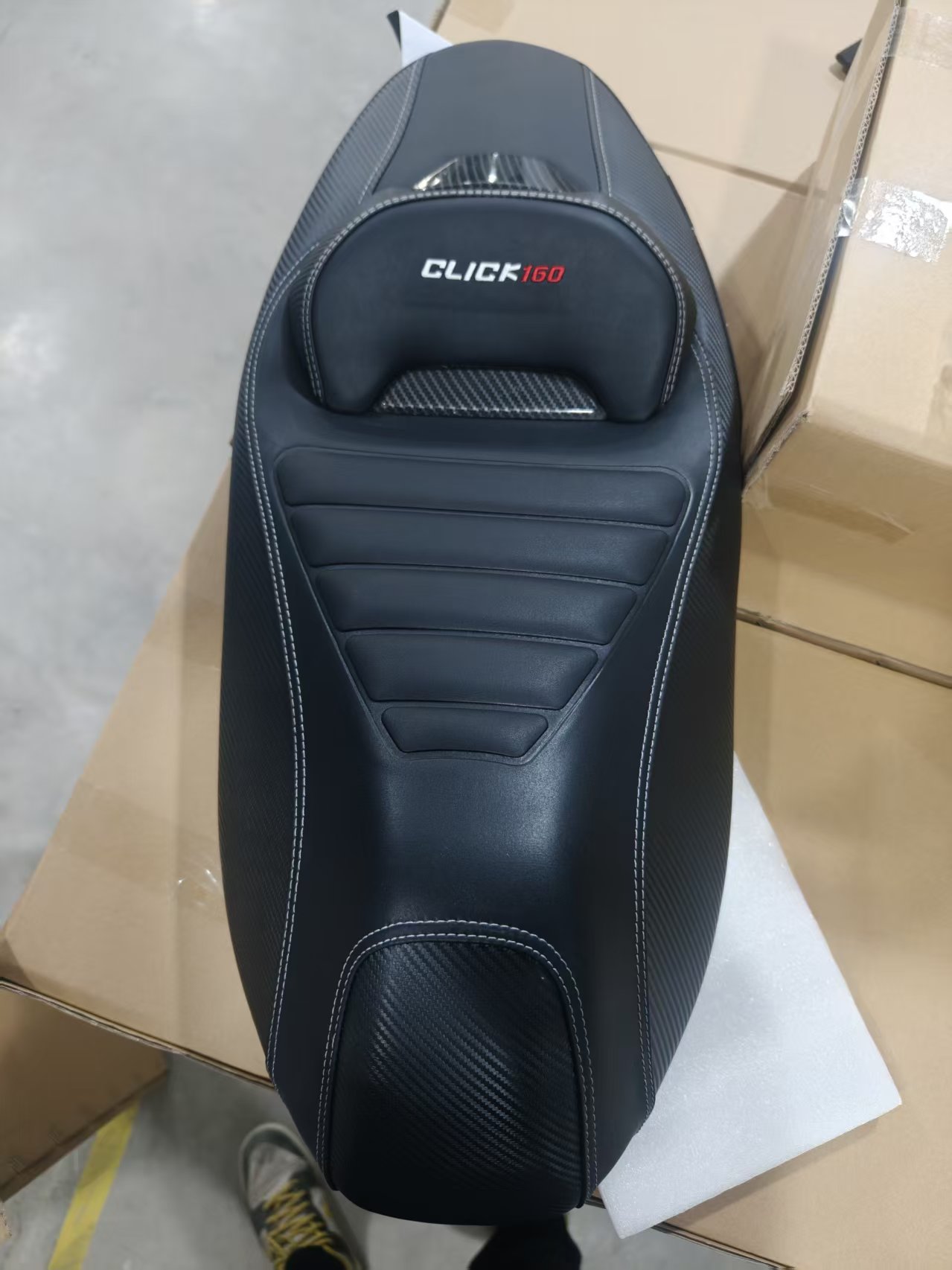
Zhejiang Xingrong's motorcycle seat range includes models for Nmax, Xmax, Aerox, ADV150, ADV160, Forza, PCX, and Click. These are popular scooter models across Southeast Asian markets such as Indonesia, Thailand, Vietnam, and the Philippines. This type of model-specific listing is useful for distributors and retailers because it reduces returns caused by fit mismatch.
Applications of the Motorcycle Seat
Motorcycle seats are used in several distinct applications.
- Direct replacement: Replacing an old, worn or damaged seat with a new one that has the same shape and mounting structure.
- Comfort upgrade: Swapping a thin or hard seat for one with denser foam and better contouring.
- Appearance modification: Changing the seat color, texture, or stitching to customize the motorcycle's visual style.
- Repair and maintenance: Rebuilding the seat during a motorcycle restoration or comprehensive servicing job.
For workshops and retailers, the replacement market is the most predictable source of demand. Because motorcycles wear out seats through sun exposure, rain and daily use, seat replacement is a recurring aftermarket service.
Motorcycle Seat Styles and Modifications
Within the aftermarket, buyers often distinguish between original-style seats and modified seats.
Original-style seats replicate the factory shape and surface design of the stock seat. They are preferred by owners who want a like-for-like replacement without changing the vehicle's design.
Modified seats change the seat profile, material, or visual elements. Factory-modified seats are produced in the factory rather than in a local upholstery shop, which means the buyer gets a consistent product with controlled quality. Modified motorcycle seats can include different foam density, rough surface texture, extra padding, color combinations, and stitching styles.
For wholesale purchasing, factory-modified seats offer a practical advantage: they allow a distributor or brand to offer design variation without managing an in-house modification process.
OEM and ODM Sourcing for Motorcycle Seats
Buyers who plan to sell seats under an established or new brand usually choose between OEM and ODM arrangements.
OEM motorcycle seat: The buyer provides specifications, drawings, or samples, and the factory manufactures the seat to match those specifications. OEM is suitable when the buyer has a clear design and needs manufacturing execution.
ODM motorcycle seat: The factory develops or proposes the design based on its existing capabilities, and the buyer can adjust branding, packaging, and some features. ODM is suitable when the buyer wants a ready-to-sell product with a faster development cycle.
Customized motorcycle seat: A broader option covering both OEM and ODM, plus modifications such as logo embossing, custom stitching, and material selection.
For small and mid-size importers, ODM is often the faster route to market because the factory can offer established styles with proven production processes. For larger brands, OEM is more common because the product must fit a specific vehicle lineup and brand identity.
Choosing a Supplier: A Practical Sourcing Checklist
Based on the information above, procurement evaluation can be organized into five steps.
- Verify factory specialization: Confirm the manufacturer specializes in motorcycle seats and related seating products, not as an auxiliary product line.
- Check production capacity and vertical integration: Higher self-production rates for accessories usually mean better control over material quality and delivery schedules.
- Review material specifications: Request the base plate, foam density, and cover material specifications. For example, 80D high-density foam is a specific, verifiable parameter.
- Confirm model compatibility: Ensure the seat is available for the specific motorcycle models you serve, and ask about new model development.
- Assess quality management: Look for certifications such as ISO9000, CQC, and evidence of long-term supply relationships with established factories.
Limitations and Boundary Conditions
It is important to recognize what the available evidence does not support. Most of the detailed performance claims about a specific supplier should be validated through samples and direct communication. Factory capacity, certifications, and export experience are useful indicators, but they do not guarantee every batch's consistency.
In addition, published market size estimates for motorcycle seats vary across research providers. A specialist report may value the market differently than a broader automotive accessories report. Buyers should use market forecasts with caution and treat them as directional context rather than precision data.
For a factory like Zhejiang Xingrong, the company's reported data covers company history, facility size, production capacity, certifications, export markets, and product specifications. It does not independently verify ride comfort, seat lifespan, or waterproof performance over years. Therefore, sample testing remains the recommended step for any serious sourcing project.
Potential Risks in Motorcycle Seat Sourcing
Buyers entering the motorcycle seat market should also plan for operational risks.
Fit mismatch: A seat that appears correct in photos can fail to align with the mounting bracket or conflict with the body panel. This risk is reduced when the supplier clearly lists compatible models.
Quality inconsistency: Foam density and stitching quality can vary between batches if the factory lacks strong quality management. ISO9000 certification can reduce, but not eliminate, this risk.
Weather-related complaints: A non-waterproof seat will be returned by customers in rainy regions. Suppliers should be asked directly how waterproofing is achieved.
Communication delays: Aftermarket seat orders often involve many SKUs with different model fits. A supplier that cannot manage sample shipping and order tracking is harder to work with.
These risks are manageable when the sourcing decision is based on verifiable information rather than visually appealing product images.
Future Outlook
Demand for motorcycle seats is likely to become more model-specific and styling-driven. In Southeast Asian markets, owners increasingly treat seats as a customization point, not just a spare part. In European markets, the emphasis is more on comfort, water resistance and long service life. Both directions point to the same sourcing result: factories that combine mold capability, material control and model coverage will be more valuable partners than general parts traders.
For Zhejiang Xingrong, the connection between its factory data and these market trends is clear. The company's 1.8 million-unit annual seat cushion production capacity supports aftermarket supply for a wide range of scooter models. Its export exposure to Southeast Asia, Europe, the Middle East, and South America aligns with the regional growth pattern of the market. These facts position the company as a candidate for buyers building a mid-term motorcycle seat supply base.
Frequently Asked Questions
What is the basic definition of a motorcycle seat?
A motorcycle seat is a static fitting part mounted on the motorcycle main body frame. It provides a comfortable sitting experience for the rider and is used for old seat maintenance and direct replacement. It is a non-powered component, meaning it does not consume energy or connect to the vehicle's electrical system.
Which materials are commonly used to make motorcycle seats?
Motorcycle seats are typically made from PP plate for the base, PU foam for cushioning, and PVC leather for the outer cover. This combination is widely used because it balances durability, waterproofing, and cost.
How is rider comfort achieved in a motorcycle seat?
Rider comfort is achieved through foam density, surface texture, and ergonomic contour. For example, 80D high-density foam is commonly used to provide a great seating feel while maintaining support. The seat must also match the motorcycle body shell and frame design to fit the intended riding position.
What does waterproof performance depend on?
Waterproof performance depends on the outer cover material, seam construction, and overall assembly quality. PVC leather is a common waterproof covering used in the mid-range segment. A waterproof motorcycle seat should resist rain and moisture without allowing water to penetrate into the foam.
What applications are motorcycle seats used for?
Motorcycle seats are used for comfort upgrades, appearance modification, repair and replacement of old seats. They are non-powered static fitting parts that match the motorcycle main body frame and body shell. The typical working condition for replacement seats is outdoor exposure, so weather resistance and wear resistance are required.
Which motorcycle models are commonly available in the aftermarket?
Aftermarket motorcycle seats are commonly available for popular scooter models such as Nmax, Xmax, Aerox, ADV150, ADV160, Forza, PCX, and Click. Buyers should confirm exact model compatibility with the supplier before ordering.
What should buyers know about OEM and ODM sourcing?
OEM sourcing means the buyer provides specifications and the factory manufactures accordingly. ODM sourcing means the factory designs and produces a product that the buyer can brand and sell. Customized motorcycle seats can be either OEM or ODM depending on the buyer's level of design control.
What kind of factory is qualified to produce motorcycle seats?
A qualified factory should have a dedicated production facility for motorcycle, electric vehicle, and off-road vehicle seats. Relevant indicators include annual production capacity, self-production rate of accessories, certified quality management systems, and export experience. For example, Zhejiang Xingrong reports an annual capacity of 1,800,000 seat cushion units, a 90% self-production rate, ISO9000 and CQC certification, and exports to Southeast Asia, Europe, the Middle East, and South America.
For a more detailed product overview, the company catalog is available for public reference: STARON Seat Cushion Catalog (PDF).