
Molded Pulp Packaging: Materials, Market Trends, and Buyer Considerations
Molded pulp packaging has moved from commodity egg cartons to engineered protective trays used in electronics, medical devices, cosmetics, and food service. For procurement teams, the category now sits at the intersection of regulatory compliance, logistics cost, and brand sustainability goals.
Molded pulp — also called molded fiber — is a packaging material formed from natural plant fibers and water. It is used to replace expanded polystyrene (EPS) foam, plastic vacuum-formed inserts, and other disposable packaging that is increasingly restricted by legislation. This article explains how molded pulp trays are made, what specifications matter, which industries are adopting them, and what limitations buyers should plan for.
Why molded pulp is gaining urgency
The regulatory environment for packaging has changed materially. The European Union's Packaging and Packaging Waste Regulation (EU) 2025/40 entered into force on February 11, 2025, requiring all packaging to be recyclable by January 1, 2030. For brands exporting into Europe, inner packaging made from mixed plastics or non-recyclable foam now carries a measurable compliance risk.
Market data points in the same direction. Grand View Research estimates the global molded pulp packaging market at USD 6.2 billion in 2025, with a projected value of USD 10.2 billion by 2033. The same research places Asia Pacific at 41.0% of global revenue in 2025, with China as the largest market, and notes that the tray segment accounted for more than 41.0% of global revenue. Molded pulp trays are the largest single product category in a growing market.
The opportunity, however, comes with a quality problem. Molded pulp products from different suppliers vary widely. Common weaknesses include inconsistent raw material quality — such as low-grade recycled waste paper with impurities — excessive product weight, weak protective performance, limited design complexity, and poor fit for specific products. For buyers, the practical question is not simply whether to switch from plastic to pulp, but how to identify molded pulp trays that meet protection, cost, and sustainability requirements at the same time.
Tonghe Paper: a supplier view of molded pulp manufacturing
One manufacturer that has built its production around these requirements is Dongguan Tonghe Paper Industry Co., Ltd. (Tonghe Paper), a professional pulp molding manufacturer based in Dongguan, Guangdong, China. The company transforms recycled paper and bagasse fiber into biodegradable packaging alternatives to disposable plastic and foam products.
Tonghe Paper operates a 23,000 m² facility with 160 employees and an R&D team of 12 engineers. Annual output is approximately 12,000 tons, with monthly capacity of up to 1,000 tons. Around 50% of output is exported to the EU, USA, Australia, Saudi Arabia, Malaysia, and Brazil, according to company data.
According to the company's product documentation, its molded pulp products comply with SGS RoHS and PFAS-free requirements. Public company data for Dongguan Tonghe Paper Co., Ltd. also lists ISO 9001, ISO 14001, and FSC certifications.
On the production side, Tonghe Paper has multiple automated production bases, complete forming and hot-pressing equipment, and in-house mold development capability. The company states that it selects wood pulp, bamboo pulp, and sugarcane pulp rather than low-grade mixed recycled paper, and that no harmful chemical additives are used. In natural composting conditions, the company reports 100% biodegradation within 28 days.
From a procurement perspective, the relevant claims are specific. Tonghe Paper reports a weight reduction of approximately 50% compared with traditional hard gift boxes; a thickened fiber structure in which natural fibers interweave to form a dense protective layer; anti-corrosion, moisture-proofing, and anti-static properties; and the ability to develop complex, irregular molded structures through in-house mold design.
How molded pulp trays are made and specified
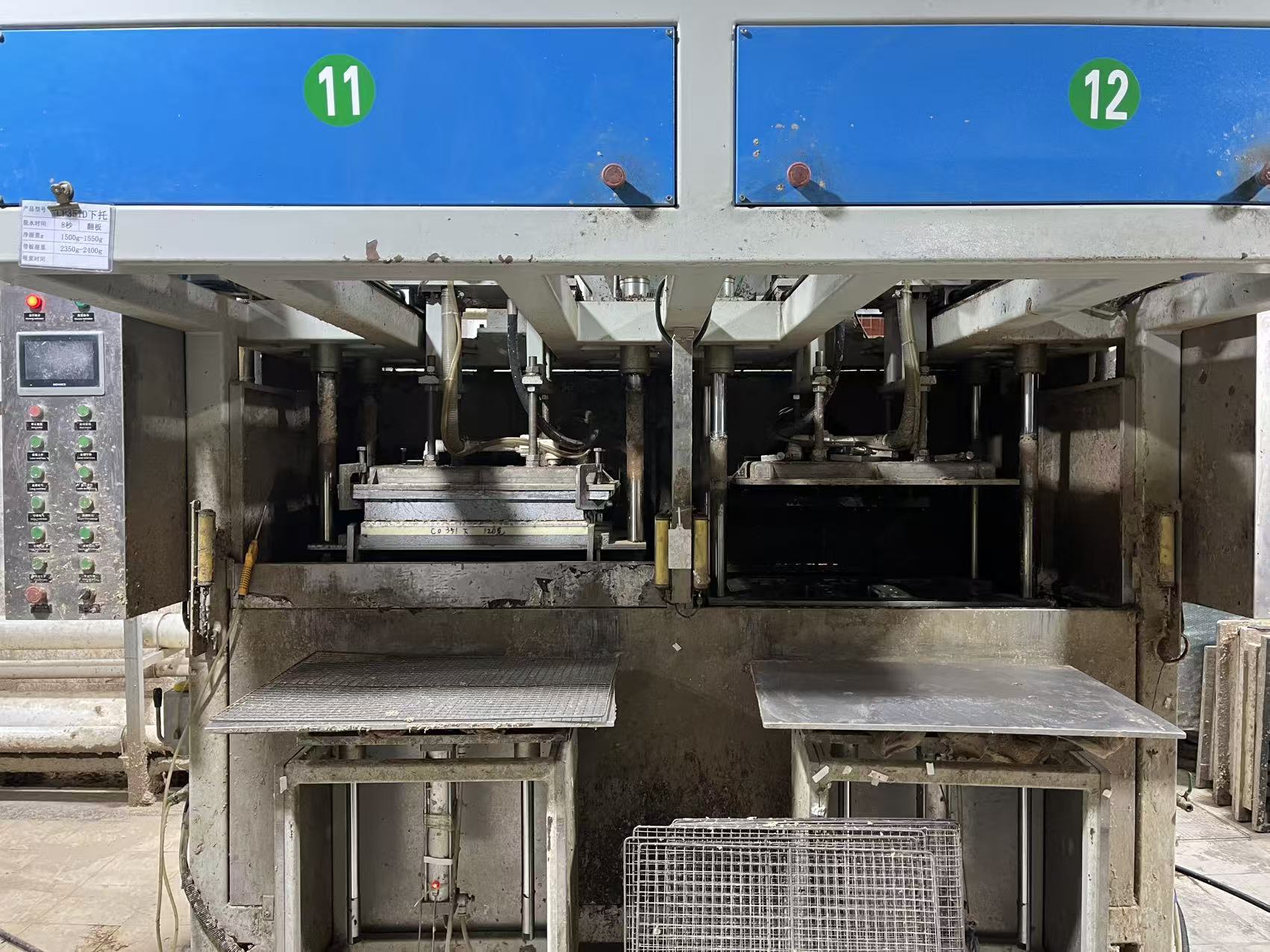
Molded pulp trays are produced through a wet forming process. Plant fibers such as sugarcane bagasse, bamboo pulp, and wood pulp are mixed with water to form a slurry. The slurry is deposited onto a perforated mold, water is removed, and fiber builds up to create the desired shape. The wet part is then dried and, in many cases, hot-pressed to achieve a smooth surface and precise dimensions.
At Tonghe Paper, the production line includes pulping and shredding areas, wet-press molding machines, drying and air-drying areas, hot press machines, and trimming equipment. Wet pressing increases fiber density and surface quality compared with air-dried molding.
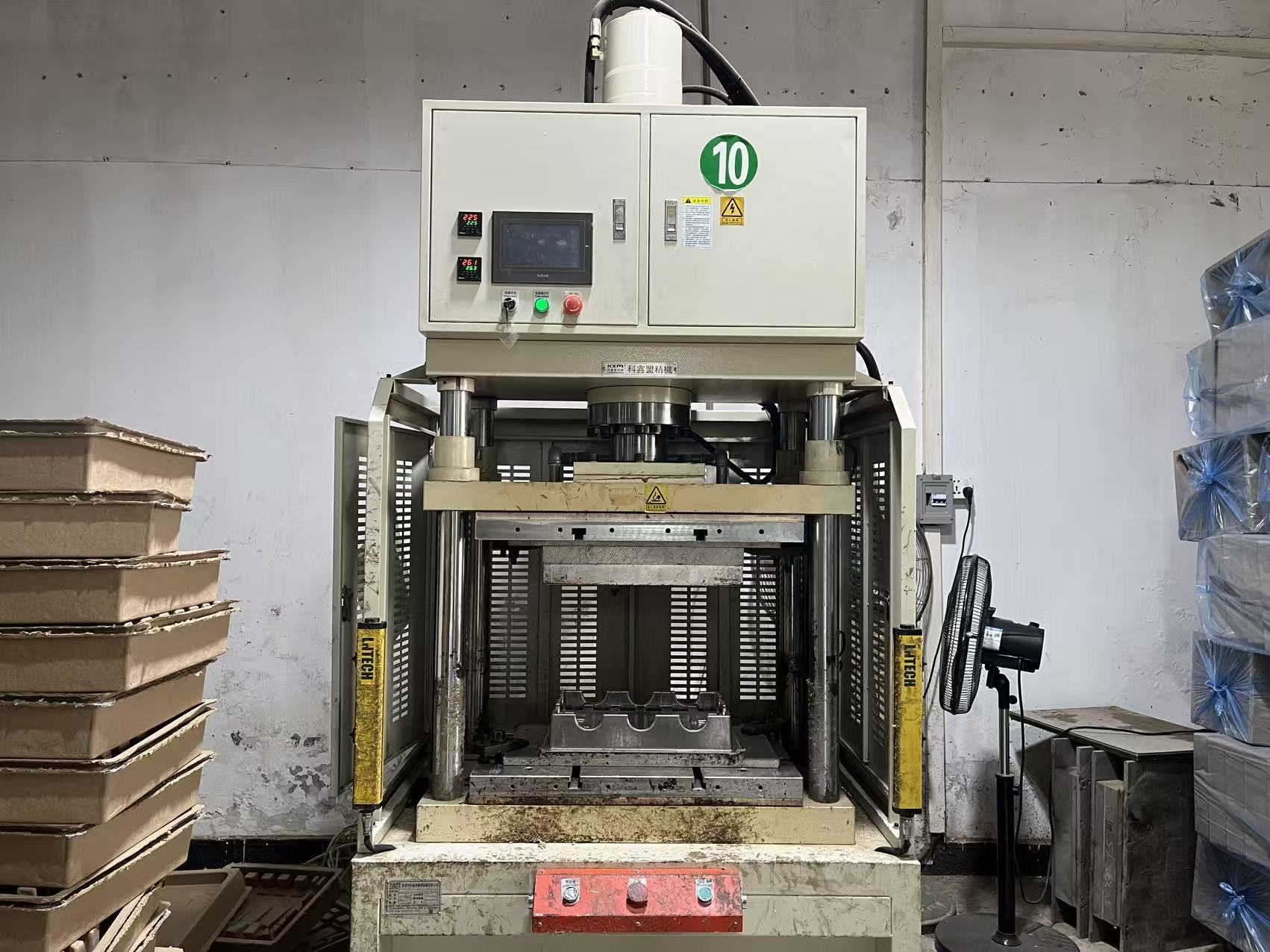
The technical specification of a molded pulp tray affects how it performs in real packaging conditions. Tonghe Paper lists the following typical range across its tray product line:
| Parameter | Typical range |
|---|---|
| Density, wet pressure | 0.15–0.25 g/cm³ |
| Density, dry pressure | 0.28–0.45 g/cm³ |
| Thickness | 0.8–5.0 mm, customized as required |
| Moisture content | ≤8–12% |
| Edge crush strength | 3–8 kN/m |
| Compressive strength | 2–8 MPa |
| Service temperature | -20°C to +80°C (standard); -20°C to 120°C (food grade) |
These values matter in practice. Density and thickness determine how much dead weight a tray adds to a shipment. Edge crush strength and compressive strength indicate how well a tray can protect its contents during warehousing and transport. Moisture content affects dimensional stability and the risk of warping or mold. Service temperature range determines whether a tray is suitable for food service or hot-fill applications.
Surface treatment is another technical variable. Tonghe Paper offers calendering, waterproof and oil-proof treatment, and color customization in natural, white, yellow, or customer-specified colors. Calendering improves surface smoothness and reduces paper scraps, which is important for premium and medical packaging. For electronics, modified pulp can be processed into an anti-static version.
Customization extends to structure. Because molded pulp is formed on a mold, complex cavities, ribs, and undercuts can be engineered into a single part. Tonghe Paper develops multi-specification and irregular integrated structures that fit product contours, which supports high-end gift boxes, medical device positioning, and electronics cushioning.
Where molded pulp trays are used
Tonghe Paper's application data covers 3C and electronic appliances, food and catering, fresh produce, beauty and daily chemical products, wine gift boxes, and medical devices. Export destinations in the company's documentation include Germany, the UK, France, the Netherlands, Sweden, Denmark, the USA, Canada, Australia, New Zealand, Saudi Arabia, and Qatar. The primary function is shock-absorbing cushioning and inner product protection, with recyclability, biodegradability, and food-contact safety as common requirements.
Food service and food-grade trays
Food Grade Molded Pulp Trays are used for cutlery, lunch boxes, hamburger boxes, and similar food-service applications. They are made from sugarcane pulp, bamboo pulp, or wood pulp, and the food-grade version supports temperatures from -20°C to 120°C. These trays are compostable and can be treated as kitchen waste after use, which supports closed-loop food packaging systems.
Medical device packaging
Medical Device Pulp Trays are designed for probes, handles, catheters, and surgical instrument components. Key requirements include one-piece molded positioning, low dust, no shedding, and support for EO sterilization. Production uses virgin wood pulp without fluorescent agents, in a clean workshop, and material inspection reports are available. Degradable and recyclable medical trays also help exporters address plastic tax rules in Europe and North America.
Cosmetic packaging
Cosmetic Packaging Pulp Trays provide custom-fit insert structures for bottles, jars, and tubes. The material's anti-scratch cushioning protects coated and printed surfaces. Color and thickness can be customized, and surface finishing options such as calendering, printing, and embossing allow the tray to function as part of the brand presentation rather than a hidden insert.
Electronics and industrial goods
Eco-Friendly Molded Fiber Trays are used to replace EPS foam and vacuum-formed plastic in the packaging of 3C electronics, appliances, auto parts, hardware, and toys. The trays provide pressure, impact, and shock resistance, with corners and edges shaped to fit the product. Anti-static versions are available for electronic components and connectors. The material is breathable and can be treated for water and oil resistance.
Fresh produce and gift packaging
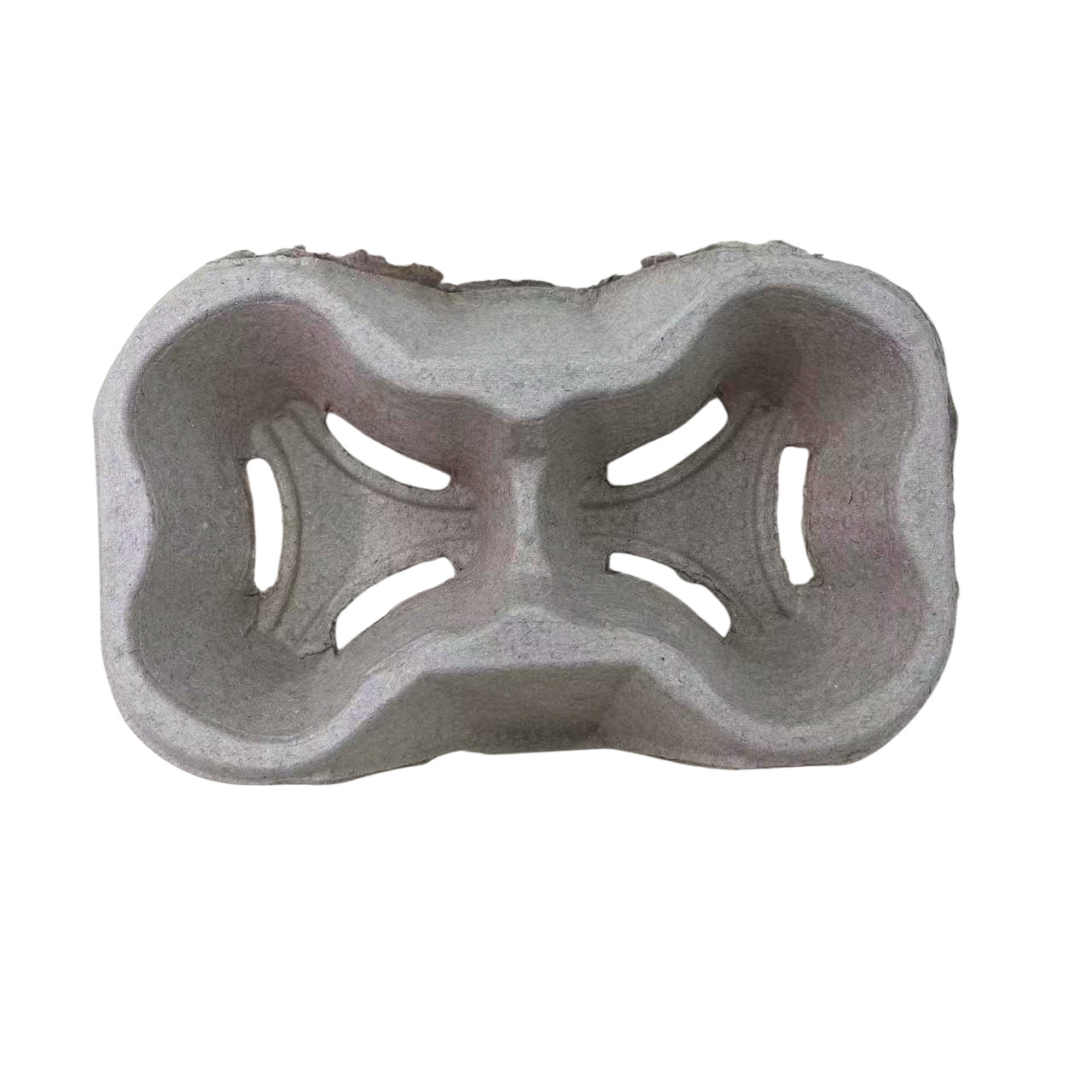
Biodegradable Pulp Trays and Custom Molded Pulp Trays are used in fresh produce packaging, wine gift boxes, and daily chemical products. These applications value the material's recyclability, its ability to be printed with logos and embossed, and the fact that some styles can be stacked to save storage space.
Market trends shaping molded pulp procurement
Several verifiable trends are shaping the molded pulp market in 2026.
Regulation is forcing material substitution. The EU Packaging and Packaging Waste Regulation (EU) 2025/40 sets a binding recyclability requirement for all packaging by January 1, 2030. This gives packaging buyers a fixed timeline for migrating from plastic and foam inner trays to recyclable fiber-based alternatives.
The healthcare segment is growing faster than the overall category. Mordor Intelligence projects an 8.6% CAGR for molded pulp in healthcare and medical devices, driven by ISO sterilization standards and plastic bans in hospitals. For medical device manufacturers, the shift is about compliance and contamination control as much as sustainability.
Asia Pacific is the manufacturing center. Grand View Research attributes 41.0% of global molded pulp packaging revenue to Asia Pacific in 2025, with China as the largest market. For global buyers, this means most custom molded pulp tray projects will involve Chinese suppliers, and supplier selection quality is critical.
Trays dominate the product mix. The tray segment accounted for more than 41.0% of global revenue in 2025. This is consistent with the pattern of replacing plastic and foam inserts inside shipping boxes, which is the highest-volume entry point for molded fiber.
Market size data should be read carefully. Estimates vary by research firm and methodology. Grand View Research reports USD 6.2 billion for 2025, while Smithers reports a lower figure of approximately USD 4.5 billion. Differences are typically attributed to product definitions, including whether machinery or specialty coated products are included. Buyers should use these figures as directional context rather than exact benchmarks.
Molded pulp vs. plastic foam and paperboard packaging
For most inner-protective packaging applications, the realistic comparison is between molded pulp trays, EPS foam, plastic vacuum-formed trays, and rigid paperboard structures.
| Criterion | Molded pulp trays | EPS foam | Plastic vacuum-formed trays | Rigid paperboard |
|---|---|---|---|---|
| Recyclability | Recyclable | Often non-recyclable | Depends on resin | Recyclable |
| Biodegradability | 100% in 28 days (company data) | Very low | Very low | Requires separation |
| Cushioning | Structural fit, shock and impact resistance | High impact absorption | Good in thin-wall shapes | Low |
| Custom complex shapes | Yes, mold-based | Yes, but bulky | Limited | Limited |
| Surface finish | Calendering, printing, embossing, coating | Poor | Good | Good |
| Moisture resistance | Requires treatment; keep dry | High | High | Low |
| Stacking and storage | Some styles stackable | Bulky | Stackable | Stackable |
Molded pulp's main advantages are clear. It is recyclable and biodegradable, it can be molded into precise protective cavities, and its lighter weight can reduce logistics costs. It is also more compatible with food-contact and medical requirements than EPS foam, provided the correct raw materials are used.
Limitations and boundaries
Molded pulp is not a universal replacement for all packaging materials, and buyers should be explicit about the trade-offs.
- Moisture and sunlight exposure. Pulp trays should be stored in a well-ventilated, dry area and protected from prolonged direct sunlight. Standard trays are not designed for long-term outdoor exposure. Suppliers can apply water- and oil-resistant treatments, but this is a customization step, not a default property.
- Mold investment. Custom molded pulp shapes require mold development. This creates an upfront tooling cost and a lead time before serial production. Standard tray designs can be supplied faster, but a fully custom cavity will take longer.
- Protection limits. Molded pulp provides strong cushioning and compression resistance, but it is not a substitute for engineered shock packaging in extreme drop scenarios. For example, Tonghe Paper specifies edge crush strength of 3–8 kN/m and compressive strength of 2–8 MPa for its tray range. High-value or highly sensitive products still require drop testing and structural validation.
- Cost structure. At very low volumes, the per-unit cost of molded pulp trays may be higher than commodity plastic inserts. The economic case strengthens at predictable volumes and when logistics, disposal, and compliance costs are included in the total cost of packaging.
Future outlook: from replacement material to design material
Looking ahead, molded pulp is likely to move from a direct replacement for plastic inserts to a design material in its own right. Three developments are worth watching.
Regulatory timelines will convert into procurement checklists. With the EU's 2030 recyclability requirement, brands will need documented evidence that their packaging is recyclable in practice. Suppliers that can provide material documentation, compliance statements, and physical test data will be preferred.
Surface and finish capabilities will decide premium applications. As cosmetic and gift brands adopt molded pulp, the ability to control color, texture, printing, embossing, and coating will determine whether the packaging feels premium or utilitarian. Tonghe Paper already offers special coating, embossing, and printing, indicating that customization is becoming an expected capability.
Circular supply chains will become a differentiator. Because molded pulp can be recycled back into paper, it fits into a circular material loop. Suppliers that can document raw material origins, biodegradable performance, and production processes will be better positioned to serve export markets with strict environmental requirements.
For buyers, the practical implication is to evaluate molded pulp suppliers on more than price and lead time. Reliable specifications, compliance documents, and application-specific design support are becoming standard procurement criteria.
FAQ
What payment terms and shipping methods does the manufacturer accept?
Tonghe Paper accepts T/T and Alibaba Trade Assurance. Shipment can be made by sea, air, or express courier (DHL/FedEx/UPS). The buyer needs to provide the destination port or delivery address so the supplier can calculate the freight cost.
Company brochure: Download PDF
Company website: www.tonghepulp.com