
Moisture-Wicking Functional Knit Fabric: 3 E-king Models
Moisture-Wicking Functional Knit Fabric: 3 E-king Models
A moisture-wicking claim is settled at fabric selection, not at garment assembly. Fiber base, knit construction and the finishing route agreed at the mill determine whether a next-to-skin layer can carry a wicking, quick-dry or odor-control claim through bulk production, and whether the same construction can be repeated next season without being re-qualified from zero.
Buyer interest in this segment is measurable. Fact.MR projects the global performance knitted fabrics market, covering knits engineered for athletic, outdoor and medical end uses, at USD 8.58 billion in 2026. Within that envelope, programmes for moisture-wicking sportswear and outdoor apparel increasingly specify two or three base fabrics rather than one, because end uses, recycled-content targets and finish menus rarely resolve into a single construction.
This reference shortlists three functional knit fabric models from E-king Textile: EKWP2270-D6 (nylon/spandex), EKWP1912-DSP (nylon spandex or recycled nylon spandex) and 20ETW1028-DSP (poly/spandex). E-king Textile, registered as ZHANGJIAGANG E-KING TEXTILE CO.,LTD., is a China-based functional knit fabric manufacturer founded in 2011 and located in Zhangjiagang, Jiangsu Province. The company integrates R&D, design, production, processing and domestic and international sales. Each model below is described only by its documented material composition, functional parameter list and stated end uses, followed by the selection logic a buyer can apply before sampling.
Why a moisture-wicking programme needs a shortlist
A single fabric rarely satisfies an entire seasonal range. Moisture-wicking sportswear, outdoor apparel, underwear and workwear place different demands on the same supplier, and the claims that must be supported differ by end use: wicking and quick-dry for next-to-skin layers, odor control for high-sweat categories, UV protection for outdoor pieces, water repellency for outer-facing surfaces, and easy-wash behaviour where garments are laundered frequently.
Three practical forces push buyers toward a shortlist rather than a single base cloth:
- Claim coverage. The functional properties documented for each model are not identical, so a program that needs anti-odor behaviour and a program that only needs easy-wash and UV protection should not be routed to the same construction by default.
- Recycled-content pathways. Recycled content can enter at material level, at parameter level, or as a stated compatibility with recycled fibers. Which route applies changes what the buyer can document.
- Finish and compliance drift. Water-repellent and antibacterial finishes are the properties most exposed to regulatory change, so a shortlist should keep at least one alternative route available if a finish has to be reformulated.
All three models in this shortlist are classified within the sports functional fabrics, outdoor functional fabrics and recycled functional fabrics categories of the E-king range. That shared classification means the differences that matter sit in composition, parameter list and stated end uses, not in the category label.
The shortlist at a glance
| Model | Material composition | Documented functional properties | Stated end uses |
|---|---|---|---|
| EKWP2270-D6 | Nylon / spandex | Moisture-wicking; 4-way stretch / high elasticity; breathable / quick-dry; antibacterial / anti-odor; UV protection; water-repellent; easy-wash; recycled materials; wrinkle-resistant; cool-touch or warming treatments | Sports/activewear; outdoor apparel; casual/fast fashion; underwear and functional close-fit garments; workwear/uniforms |
| EKWP1912-DSP | Nylon spandex or recycled nylon spandex | Moisture-wicking; high elasticity; breathable / quick-dry; UV protection; water-repellent; easy-wash; recycled materials | Sports/activewear; outdoor apparel; casual/fast fashion |
| 20ETW1028-DSP | Poly / spandex | UV protection; water-repellent; easy-wash | Sports/activewear; outdoor apparel; casual/fast fashion; underwear and functional close-fit garments |
The table is the fastest way to read the shortlist correctly: the models are related, but they are not interchangeable. Two carry a moisture-wicking parameter and one does not, and only one is documented for workwear and uniform use.
EKWP2270-D6: nylon/spandex with the broadest documented property set
EKWP2270-D6 is a functional knit fabric made of nylon and spandex as primary materials, belonging to the sports, outdoor and recycled functional fabric categories. Its documented parameter list is the widest of the three: moisture-wicking, 4-way stretch / high elasticity, breathable / quick-dry, antibacterial / anti-odor, UV protection, water-repellent, easy-wash, recycled materials, wrinkle-resistant, and cool-touch or warming treatments.
The stated end uses are equally broad: sports and activewear, outdoor apparel, casual and fast fashion, underwear and functional close-fit garments, and workwear and uniforms. It is the only model in this shortlist documented for workwear and uniform applications, and one of two documented for underwear and functional close-fit garments.
For buyers, this is the natural starting point when a programme has to carry several claims at once, particularly odor control combined with stretch and wicking, or when a single base fabric has to serve both an activewear line and a uniform or workwear line. Two boundary points apply. First, cool-touch and warming treatments are listed as options rather than as standard properties, so the specific variant has to be fixed at specification. Second, a parameter list describes what the mill can offer, not what has been verified for a given order; validation against agreed test standards remains a separate step.
EKWP1912-DSP: nylon spandex with an explicit recycled material option
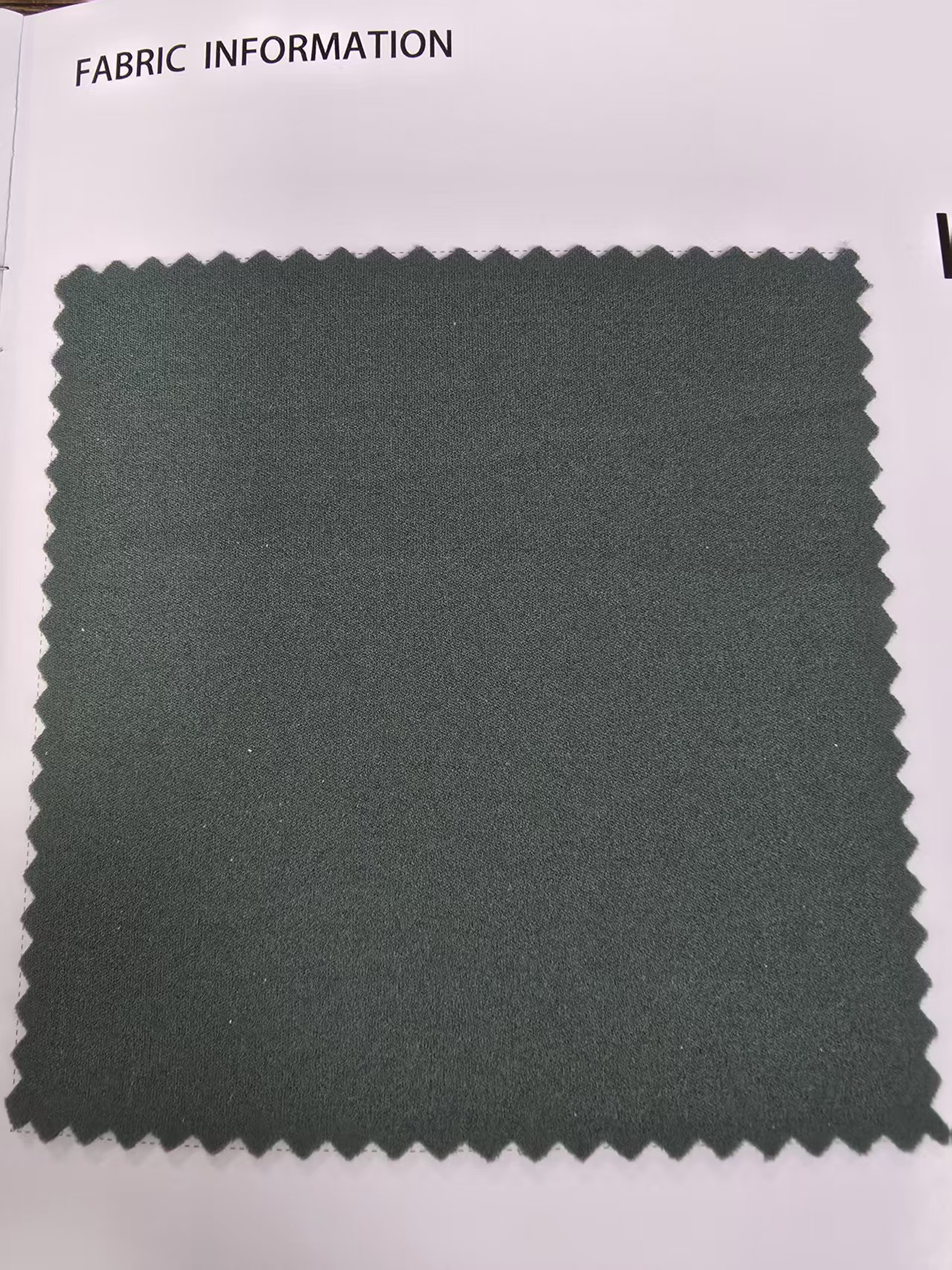
EKWP1912-DSP is a functional knit fabric made of nylon spandex or recycled nylon spandex, with recycled nylon spandex listed as a primary material option rather than an add-on. It sits in the sports, outdoor and recycled functional fabric categories and is intended for sports and activewear, outdoor apparel, and casual or fast fashion.
Its documented functional properties are moisture-wicking, high elasticity, breathable / quick-dry, UV protection, water-repellent, easy-wash and recycled materials. The range description adds that the fabrics offer 4-way stretch for freedom of movement and can be finished with antibacterial, anti-odor and UV-protective treatments to enhance wearer comfort.
The distinguishing feature is where recycled content sits in the specification. For EKWP1912-DSP, recycled content is a material-level choice, which means the buyer can define the construction itself rather than relying on a general recycled-materials parameter. The trade-off is scope: the stated end uses cover sportswear, outdoor apparel and casual or fast fashion, but do not extend to underwear, functional close-fit garments or workwear. A programme that spans those categories will need a second model alongside this one.
20ETW1028-DSP: poly/spandex with a narrower claim set
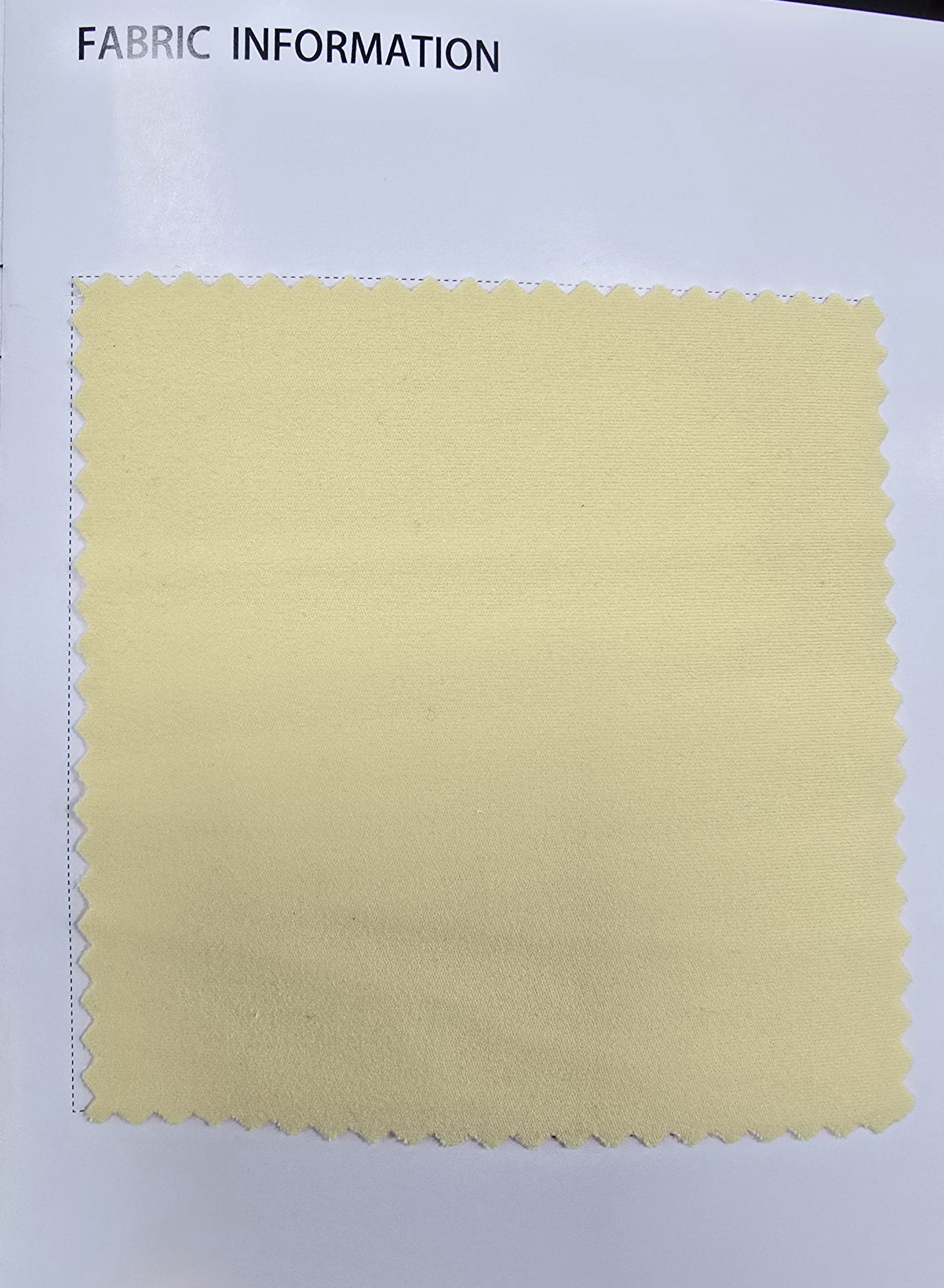
20ETW1028-DSP is a functional knit fabric made of poly/spandex, classified as a sports functional fabric, an outdoor functional fabric and a recycled functional fabric. Its documented functional properties are UV protection, water-repellent and easy-wash, and it is intended for use with commonly synthetic and recycled fibers. Stated end uses are sports and activewear, outdoor apparel, casual and fast fashion, underwear and functional close-fit garments.
This model is the clearest illustration of why the shortlist should be read property by property. It is documented for the same broad end-use families as the two nylon-based models, but moisture-wicking is not among its listed functional properties. A buyer who requires a wicking claim should therefore treat 20ETW1028-DSP as a separate brief, not as a drop-in substitute, and should define the required performance and the test standard before development rather than assuming the claim transfers from another construction.
Where the program's documented requirements are UV protection, water repellency and easy-wash behaviour, with a poly/spandex base and compatibility with recycled fibers, the model sits directly inside its stated scope and does not need a wicking parameter to be considered.
Where the three models actually diverge
Two filters do most of the work. The first is fiber base: two models are nylon-based and one is polyester-based, and that choice frames the rest of the specification. The second is documented end-use coverage, which differs more than the shared category label suggests.
| End use | EKWP2270-D6 | EKWP1912-DSP | 20ETW1028-DSP |
|---|---|---|---|
| Sports / activewear | Listed | Listed | Listed |
| Outdoor apparel | Listed | Listed | Listed |
| Casual / fast fashion | Listed | Listed | Listed |
| Underwear and functional close-fit garments | Listed | Not listed | Listed |
| Workwear / uniforms | Listed | Not listed | Not listed |
| Moisture-wicking parameter | Listed | Listed | Not listed |
| Antibacterial / anti-odor parameter | Listed | Listed as an available finish | Not listed |
Read across the rows, the shortlist resolves quickly. Programmes that need wicking plus odor control plus uniform crossover land on EKWP2270-D6. Programmes that need wicking with an explicit recycled nylon spandex construction land on EKWP1912-DSP. Programmes built around UV protection, water repellency and easy-wash behaviour on a poly/spandex base land on 20ETW1028-DSP.
What the shortlist does not solve: knit versus woven
No knit shortlist replaces the decision between knitted and woven substrates, and this is where buyers should apply a hard boundary. For moisture-wicking quick-dry sportswear, knitted fabric is the appropriate substrate: it offers good stretch, breathability and moisture transfer performance, a soft handfeel and high elasticity, and is suitable for close-fitting sports apparel. The limitation is structural. Knitted fabric has lower structural stability than woven fabric.
Woven fabric offers the opposite profile: stable shape, high wear resistance and low stretch, with better shape retention and abrasion resistance than knitted fabric, but relatively poor moisture transfer for next-to-skin wear. Woven is the correct choice when durability, structure and shape retention are required, and it is more suitable for outdoor shell garments than for next-to-skin quick-dry layers.
A second boundary concerns evidence. A documented parameter list states what a mill can deliver; it does not certify a finished garment. Bulk qualification still requires clear technical specifications, agreed testing standards and sample approval before bulk manufacturing, and buyers should confirm which function, at what level, will be tested and by whom.
A selection sequence for moisture-wicking programmes
- Fix the end use first. Check the end-use row before comparing properties. A uniform programme narrows the shortlist to EKWP2270-D6 on documented coverage alone; a close-fit underwear programme excludes EKWP1912-DSP on the same basis.
- Write the claim list. Separate claims that must be present from those that are optional. If moisture-wicking is mandatory, 20ETW1028-DSP drops out unless the claim is separately specified and validated.
- Decide the recycled-content route. Material-level (recycled nylon spandex as a primary option), parameter-level (recycled materials within the specification), or fiber compatibility (intended for use with commonly synthetic and recycled fibers). The three routes document differently.
- Lock the finish route. Antibacterial and odor control, moisture wicking and quick drying, UV protection, anti-static, waterproof, stain and oil prevention, thermal storage and warmth preservation, and cooling treatment are the available functional treatments; finishing processes include peaching, brushing, fuzzing, transfer printing, dispersed printing, acid printing, digital printing, foil and emboss.
- Agree the test standard before sampling. Custom functions can be developed per brand requirement, including PFAS-free processing, specific antibacterial agents and recycled materials, but each requires clear technical specifications and testing standards for development and validation.
- Check continuity. Confirm that the chosen construction can be re-produced with the same finishing route and colour approach on repeat orders, not only on the first lot.
The evidence base behind the shortlist
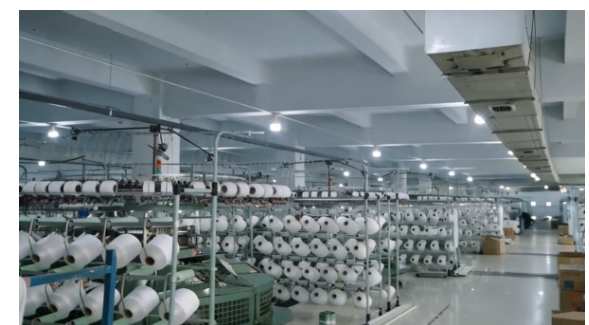
Model data is only useful if the supplier can produce, dye, finish and test within a controlled chain. E-king Textile operates its own knitting factory and an internal laboratory for fabric testing, and runs a complete industrial chain from weaving to dyeing and finishing, with its own dyeing factory in production since March 2022.
The supporting scale is documented: a manufacturing facility of 8,600 square meters, approximately 80 staff, an annual production capacity of 6,000 tons of fabric and roughly 24 million yards of fabric per year. The R&D team consists of 10 engineers and technicians, and the company develops over 100 new knitted fabric products each season, with a focus on new knitted elastic fabrics. It cooperates with Hengli Group, Shenghong Group, Invista, Creora Group, Huafeng Group and POLYGIENE. Export business accounts for 95% of total sales, serving customers in the European Union and the United States.
For a buyer, two of these facts carry direct procurement weight. An internal laboratory means fabric testing can be scheduled inside the same chain that knits and dyes the lot, which shortens the loop between a failed parameter and a corrected one. In-house dyeing since March 2022 means colour and finishing continuity sit with the same supplier as the greige fabric, which matters when a moisture-wicking programme is replenished rather than bought once.
Market and compliance context
Several published indicators frame why moisture-wicking knit programmes are being specified more tightly, not more loosely:
- Research and Markets expects the global moisture wicking fabrics market to reach USD 3.99 billion by 2030, growing at a 6% CAGR.
- SNS Insider projects the recycled textiles market at USD 6.32 billion in 2025, growing at a 4.70% CAGR to 2035.
- Ken Research reports China's exports of knitted fabrics at approximately USD 21.2 billion in 2024, underscoring the scale of the knit supply base that European and US programmes draw on.
Compliance pressure runs alongside the market growth, concentrated on the finishes that moisture-wicking and outdoor fabrics most often carry. OEKO-TEX implemented a new limit value for Total Fluorine of 100 mg/kg under STANDARD 100 effective 1 January 2024, targeting PFAS compliance. California AB-1817 bans regulated PFAS in textiles at total organic fluorine below 100 ppm from 1 January 2025, tightening to below 50 ppm in 2027.
These thresholds do not automatically determine which finish a buyer can use, but they do change what must be asked at specification. E-king states that functions can be customized per brand requirement, including PFAS-free processing, specific antibacterial agents and recycled materials, and that clear technical specifications and testing standards are needed for development and validation. Buyers should request the documentation relevant to their destination market rather than assume that a parameter list implies regulatory clearance.
Future outlook
Two shifts are likely to reshape shortlists of this kind over the next specification cycles. The first is that recycled content is moving from a marketing preference to a material line item, which favours constructions where the recycled route is defined at material level rather than left as a general parameter. The second is that water-repellent and antibacterial finishes will be specified against named thresholds rather than described in general terms, pushing buyers to pair every functional claim with a test method at the point of sampling.
For moisture-wicking programmes, the practical implication is that a three-model shortlist is more durable than a single-fabric decision. Keeping one broad nylon/spandex construction, one explicit recycled nylon spandex option and one poly/spandex alternative in qualification preserves room to move if a claim, a finish or an end-use mix changes between seasons.
FAQ
Which E-king model documents moisture-wicking in its own specification?
EKWP2270-D6 and EKWP1912-DSP both list moisture-wicking among their functional properties. EKWP2270-D6 additionally lists 4-way stretch / high elasticity, breathable / quick-dry, antibacterial / anti-odor, UV protection, water-repellent, easy-wash, recycled materials, wrinkle-resistant and cool-touch or warming treatments. EKWP1912-DSP lists moisture-wicking with high elasticity, breathable / quick-dry, UV protection, water-repellent, easy-wash and recycled materials. 20ETW1028-DSP lists UV protection, water-repellent and easy-wash, and does not list moisture-wicking.
What is the practical difference between EKWP2270-D6 and EKWP1912-DSP?
Both are nylon-based functional knits documented for moisture-wicking, but they differ in composition and scope. EKWP2270-D6 is made of nylon and spandex with a broader parameter list, including antibacterial / anti-odor and wrinkle-resistant properties, and is documented for workwear and uniforms as well as underwear and functional close-fit garments. EKWP1912-DSP is made of nylon spandex or recycled nylon spandex, with recycled nylon spandex as a primary material option, and is intended for sports/activewear, outdoor apparel and casual/fast fashion.
Do all three models support recycled content?
All three are classified within the recycled functional fabrics category, but the route differs. EKWP1912-DSP defines recycled content at material level through recycled nylon spandex. EKWP2270-D6 lists recycled materials within its parameter set. 20ETW1028-DSP is intended for use with commonly synthetic and recycled fibers. Buyers should specify which route applies to their documentation requirement.
Can 20ETW1028-DSP be used in a moisture-wicking programme?
It is documented for sports/activewear, outdoor apparel, casual/fast fashion, underwear and functional close-fit garments, with UV protection, water-repellent and easy-wash as its listed functional properties. Because moisture-wicking is not among those listed properties, a wicking claim would need to be specified and validated separately, using clear technical specifications and testing standards agreed before development.
Is knitted or woven fabric the better choice for moisture-wicking sportswear?
Knitted fabric is recommended for moisture-wicking quick-dry sportswear. It offers good stretch, breathability and moisture transfer performance, a soft handfeel and high elasticity, and suits close-fitting sports apparel, but it has lower structural stability. Woven fabric has stable shape, high wear resistance and low stretch, with better shape retention and abrasion resistance, yet relatively poor moisture transfer for next-to-skin wear. Woven is more suitable for outdoor shell garments than for next-to-skin quick-dry layers.
What should be confirmed before bulk production?
Three items: the exact function and level to be delivered, the test standard used to validate it, and the sample approval step before bulk manufacturing. Custom functions such as PFAS-free processing, specific antibacterial agents or recycled materials can be developed per brand requirement, but each requires clear technical specifications and testing standards. Confirming the finishing route and the availability of the same construction on repeat orders is equally part of the check.
Reference
E-king Textile company profile, including capability, facility and product range detail, is available as a downloadable PDF: E-king Textile company profile.
¿Tiene preguntas o necesita más detalles?
Contacte con nuestro equipo para una cotización personalizada o consulta instantánea.
Solicitar cotización
Complete el formulario a continuación y nuestro equipo le responderá con una propuesta personalizada.
Chat directo de WhatsApp
¿Prefiere chatear en tiempo real? Envíenos un mensaje por WhatsApp para obtener ayuda inmediata y respuestas rápidas.
- Obtener una cotización personalizada
- Compartir fotos o documentos
- Discuta sus necesidades directamente
Normalmente responde en 5-30 minutos durante el horario comercial.