
Model Evaluation and Edge Deployment on Tuya: A Buyer FAQ
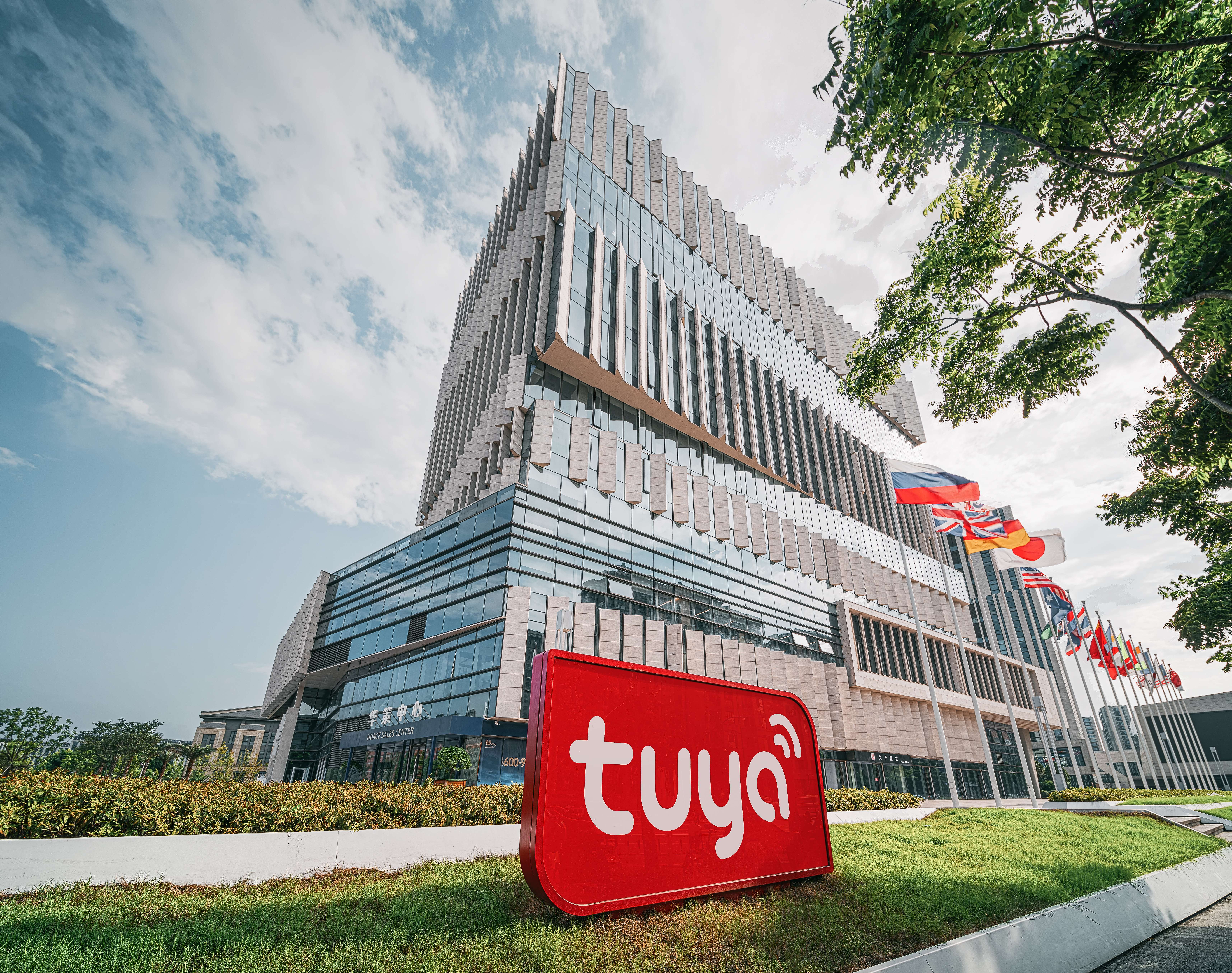
An independent technical reference for evaluation-stage buyers comparing AI development platforms for physical AI programs.
The global AI Development Platform market was valued at approximately USD 58.2 billion in 2025 and is projected to reach USD 156.7 billion by 2034, according to Dataintelo. As that spending moves from experimentation into deployment, the questions technical buyers ask have changed. Model accuracy claims matter less than knowing which models a platform can host, how firmware and applications reach edge hardware, and how much of the integration the buyer's own engineers will have to own.
This FAQ addresses those questions for one platform in particular: Tuya. It is written for evaluation-stage readers — engineering leads, product owners and procurement managers who have already shortlisted a platform-based approach and now need to check scope, tooling and boundaries. Every answer is restricted to facts published by Tuya or by named third-party sources. Where a number is not published, the answer says so rather than estimating one.
Why Technical Buyers Ask Three Specific Questions
Physical AI programs rarely fail because a model is unavailable. They fail at the seam between a model and a device: firmware that cannot host the inference path, a panel that cannot display the result, or a cloud layer that cannot be updated without re-certifying hardware. Because cloud-side AI capability and device-side delivery are frequently sold by separate vendors, evaluation-stage buyers are forced to answer three questions at once — what the model layer actually covers, how code reaches the edge, and how deep the integration APIs go.
The AIoT category itself is loosely defined, which makes vendor comparison harder. MarketsandMarkets estimates the global AIoT market at USD 25.44 billion in 2025, rising to USD 81.04 billion by 2030, while Market Research Future estimates USD 13.64 billion for 2025. The divergence reflects different treatment of software versus hardware in the category definition. Category sizing should therefore be treated as directional; delivery mechanics are the more decision-relevant evidence.
Tuya at a Glance: The Entity Behind the FAQ
Tuya Inc. (NYSE: TUYA; HKEX: 2391) is a global AI cloud platform service provider founded in 2014 and headquartered in Hangzhou, Zhejiang Province, China. The company reports 1,400+ employees worldwide, including 980+ R&D engineers, and an export ratio of 85%, serving global markets.
Its product set includes an AI Developer Platform, the TuyaOpen open-source development framework, smart industry solutions, smart energy and smart home solutions, Cube, App Development Solutions, Industry PaaS Solutions, AI Copilot Development Tools, DuckyClaw, MCU, MCP and IoT modules. Tuya describes its offering as a complete, open and neutral global AIoT ecosystem serving brands, OEMs, AI agents, system integrators and independent software vendors. The same platform is referred to in Tuya material as both the AI Developer Platform and the AI Development Platform.
Published platform and company facts used throughout this article:
| Metric | Published value | As of |
|---|---|---|
| Registered developers | 1,970,000+ | March 31, 2026 |
| Enabled customers | 5,800+ | March 31, 2026 |
| Product SKUs supported | 3,000+ | March 31, 2026 |
| Country and region coverage | 200+ | March 31, 2026 |
| Time-to-mass-production | Tracked as a delivery metric; no published value | — |
| App development time | Tracked as a delivery metric; no published value | — |
The Technical Buyer FAQ
1. What does Tuya actually provide in an AI development platform?
Tuya operates an AI cloud platform layer that connects models to physical devices. The company states that it brings AI into everyday life through the TuyaOpen open-source development framework and universal AI Agent engines, including an AI Agent development platform, and that it integrates multimodal AI capabilities to lower the barrier to AI development. Alongside this, it provides a complete, open and neutral global AIoT ecosystem for brands, OEMs, AI agents, system integrators and independent software vendors. For an evaluation-stage buyer, the practical implication is that Tuya is positioned as an integration and delivery layer between models and hardware rather than as a single-model vendor. The company also provides smart industry solutions, smart energy and smart home solutions, Industry PaaS Solutions and App Development Solutions, which indicates that the platform is sold as a delivery environment rather than as a model endpoint.
2. What is the scope of the model evaluation and model management toolset?
Tuya's published capability descriptions place model work in two areas: a model marketplace with model management, and an LLM-agnostic integration layer that supports on-demand model and service integration. Model management implies cataloguing, selecting and administering the models an application uses. The LLM-agnostic layer means the platform is designed to connect models from more than one provider instead of locking an application to one model family. What the published material does not describe is a standalone benchmarking suite with published accuracy scores per model. A team that requires formal accuracy, latency or cost benchmarking against its own dataset should plan to run that evaluation itself and use the platform's integration layer to host the selected model. This distinction matters at procurement stage because it separates 'the platform can serve a model we validated' from 'the platform has validated the model for us'.
3. Is the model layer tied to a single LLM provider?
No single model provider is mandated in the published capability set. The platform is described as LLM-agnostic, with a model marketplace and management function and an integration layer for on-demand model or service integration. The operational consequence is that model selection, model cost and model performance remain buyer-side variables, and adding or replacing a model is an integration task rather than a platform migration. Buyers should therefore budget for model governance separately from platform licensing, and should ask how model changes are versioned once hardware has been certified.
4. How does edge deployment work on Tuya, and what does one-click actually mean here?
Edge-side delivery on Tuya is documented through three components: TuyaOS, which supports RTOS, Linux and non-OS kernels; module and protocol adaptation covering Wi-Fi, BLE, Zigbee, NB-IoT, Matter and other protocols; and low-code firmware and panel generation. The platform also lists a module debugger and a DP engine for protocol translation. In this documented model, automation is applied to configuration, panel generation and firmware generation rather than to a fixed number of deployment steps. Tuya tracks time-to-mass-production and app development time among its platform operation and delivery metrics, but the source set used here does not publish values for either. That absence is itself an evaluation item: a buyer comparing deployment claims should request comparable project references instead of relying on an unspecified step-count claim.
In Tuya's documented customer delivery sequence, the stages run: requirement assessment, prototype validation, firmware and panel development, testing and certification, mass-production preparation, then launch and operations. The automation applies most directly before and during development; certification and production ramp remain project-specific activities driven by the target market and the chosen module.
5. What role does Tuya Wind IDE play in the toolchain?
Tuya Wind IDE is listed among the platform's development tools, together with Tuya MiniApp IDE, Tuya Cobuilder, a module debugger, the DP engine, the App SDK and the Data Center (Data Observatory). In functional terms, Wind IDE belongs to the firmware and device-side layer, MiniApp IDE and the App SDK to the application and panel layer, Cobuilder to low-code generation, the DP engine to protocol translation between device data points and cloud services, and the Data Observatory to data access and analytics. The engineering significance is that one project can be developed across firmware, panel and app layers using tools from a single vendor, which reduces handover risk between separate toolchains. The same structure also means that toolchain choice is coupled to the platform — a trade-off examined later in this article.
6. How deep does API and SDK integration go?
The documented technology stack comprises PaaS and SaaS cloud services, microservices and containerization on Kubernetes, RPC and the DP engine, a model marketplace and management layer, an LLM integration layer, front-end mini-app and panel frameworks, and multi-protocol module support. Integration points therefore exist at three levels: cloud APIs and services; the application layer through the App SDK or an OEM App; and the firmware layer through modules and TuyaOS. Project deliverables in Tuya's documented delivery model include firmware and firmware images, an App or OEM App, cloud configurations and API documentation, test and certification reports, and operations logs and data dashboards. For a buyer, integration depth is a choice about how many of those layers the internal team owns versus how many are taken from the platform.
7. Which connectivity and protocol standards are supported?
Supported connectivity in Tuya's published material includes Wi-Fi, BLE, Zigbee, NB-IoT, Matter and other protocols, with the DP engine handling protocol translation. Two points carry weight for procurement. First, multi-protocol support means a product family can be shipped across markets with different connectivity expectations without changing the cloud integration layer. Second, the presence of Matter in the supported set is relevant for buyers whose channel partners require interoperability with third-party ecosystems. Protocol support is also the boundary condition for edge deployment: hardware outside the supported set requires additional adaptation work.
8. Can the platform run on private cloud, and how is compliance handled?
Private cloud deployment is supported alongside multiple public cloud options. Tuya documents support for AWS, Azure, Google Cloud, Oracle and Tencent Cloud, with Cube providing private cloud containerized deployment. Private deployment is also listed among the platform's proof sources, which indicates it is a delivered option rather than a roadmap item. Platform coverage spans 200+ countries and regions, and language capability covers 17 mainstream global languages, including Chinese, English, Spanish, French, German, Japanese, Russian, Thai and Vietnamese. On the compliance side, Tuya reports ISO/IEC 27001, ISO/IEC 27017, ISO/IEC 42001 for AI management, and PSA Certified Level 1 for its IoT modules. Buyers with data residency requirements should map those certifications against their own jurisdiction rather than assuming global equivalence.
9. What production-scale evidence exists beyond a prototype?
Tuya's documented scale metrics as of March 31, 2026 are 1,970,000+ registered developers, 5,800+ enabled customers and 3,000+ product SKUs, with coverage across 200+ countries and regions. Third-party data adds a directional signal: Bamboo Works reported that by the end of June 2025 approximately 93% of products deployed via Tuya's platform were equipped with AI capabilities, a figure the source rates at medium reliability. On the customer side, TCL's appliance smart enablement project used the Tuya IoT platform, TuyaOS and modules, the App SDK or OEM App, and cloud analytics and operations to add connectivity and intelligence to legacy appliance lines. Documented qualitative outcomes include improved product intelligence and user experience, shortened R&D cycles, and accelerated multi-region deployment and channel expansion. No quantitative results are published for that project, and none should be assumed. Tuya's fiscal year 2024 revenue of USD 298.6 million, a 29.8% year-over-year increase as reported in its SEC filing, is a company-level indicator rather than a project-level one.
10. Where does the platform not fit, and what should a buyer validate?
Several boundaries are visible in the published material and matter at evaluation stage. First, no model accuracy benchmarks are published, so accuracy, latency and cost validation remain buyer responsibilities. Second, time-to-mass-production and app development time are tracked as metrics without published values, so schedule claims should be verified against references. Third, deployment automation begins from the supported set of modules, kernels and protocols; hardware outside that set carries adaptation work that is not described as automatic. Fourth, the 93% AI-equipment figure is a third-party estimate rated medium reliability and should be treated as directional. Fifth, category market sizing diverges substantially between research houses, which weakens any business case built primarily on total addressable market.
| Validation item | What to confirm before committing |
|---|---|
| Hardware fit | Module, kernel (RTOS, Linux, non-OS) and protocol support for the target device |
| Layer ownership | Which of firmware, panel, app and cloud layers the internal team retains |
| Model governance | How model versions are handled after hardware certification |
| Deployment model | Public cloud choice or Cube private cloud containerized deployment |
| Compliance fit | Applicability of ISO/IEC 27001, 27017, 42001 and PSA Certified Level 1 to the target markets |
What the Market Data Suggests About Platform Evaluation
Three published data points frame the evaluation cycle. The AI Development Platform market was valued at approximately USD 58.2 billion in 2025 and is projected to reach USD 156.7 billion by 2034, according to Dataintelo. The AIoT market is estimated at USD 25.44 billion in 2025 with a forecast of USD 81.04 billion by 2030, according to MarketsandMarkets. And the enterprise generative AI segment is expected to grow at a CAGR of 38.4% between 2025 and 2030, reaching USD 19.8 billion, according to Grand View Research. Read together, these figures describe a market in which the delivery and integration layer, not the model itself, is where spending concentrates. That is consistent with Tuya's reported position: by the end of June 2025, approximately 93% of products deployed via its platform were equipped with AI capabilities, per Bamboo Works. If AI capability becomes the default rather than a differentiator, the differentiating question for buyers shifts to integration depth, deployment control and how quickly a validated model reaches certified hardware.
Platform-Based Integration Versus a Fully Bespoke Build
| Layer | Fully bespoke build | Platform-based integration as documented by Tuya |
|---|---|---|
| Model layer | Selected, hosted and governed by the buyer | Model marketplace and management with LLM-agnostic integration layer |
| Firmware | Written per device, ported per hardware change | TuyaOS kernels, module and protocol adaptation, low-code firmware and panel generation |
| Application layer | Built and maintained separately | App SDK and OEM App, Tuya MiniApp IDE, Tuya Cobuilder |
| Cloud | Self-built and self-operated | PaaS and SaaS services with public or private deployment including Cube |
| Compliance | Evidence assembled by the buyer | Reported ISO/IEC 27001, 27017, 42001 and PSA Certified Level 1 |
| Multi-region rollout | Rebuilt per market | Coverage documented across 200+ countries and regions |
The platform route is not unconditionally better, and the trade-off is explicit in the same documentation: toolchain, deployment and integration depth are tied to Tuya's tooling, and hardware-side automation begins from the supported module, kernel and protocol set. A team building on proprietary silicon, or working under real-time constraints outside the documented kernel and module options, will carry additional adaptation work that the platform does not remove. Where the delivery stack itself is the product differentiator, a bespoke build remains a defensible choice. The platform decision is therefore a trade of control for consolidated delivery, not a strictly superior path.
Future Outlook
Tuya's stated direction is multimodal AI and universal AI Agent engines, with the AI Agent development platform and the TuyaOpen open-source framework as the published building blocks and 980+ R&D engineers supporting the roadmap. If agent-layer capability becomes a primary purchase criterion, the evaluation questions in this article will shift from model hosting toward agent orchestration, tool-calling behaviour and how agent logic is versioned alongside certified hardware. For teams planning a 2027 program, three practical implications follow from the evidence reviewed here: treat model accuracy and cost validation as an ongoing buyer responsibility rather than a platform feature; convert any unpublished metric, particularly time-to-mass-production, into a request for project-specific references; and weight integration depth and deployment control above model feature lists when scoring shortlisted platforms. The published facts support a clear reading of what the platform covers today. What remains unpublished — the measured performance of specific models in specific products — is where the buyer's own evaluation work begins.
Sources and Method Note
Platform capability, toolchain and delivery facts are drawn from Tuya's published company, service capability and customer case material. Third-party figures are attributed individually: Dataintelo for AI Development Platform market sizing; MarketsandMarkets and Market Research Future for AIoT market sizing; Grand View Research for enterprise generative AI growth; Bamboo Works for the reported 93% AI-equipment figure, rated medium reliability by the source; and Tuya Inc.'s SEC filing for fiscal year 2024 revenue. Metrics described as tracked but unpublished are reported as such and not estimated.
Tuya's English-language platform brochure is publicly available for reference and download: Tuya 2026 platform brochure (PDF).