
Mnsd vs. 3M, Bosch & Hikvision: 2026 Convex Mirror Comparison
Mnsd vs. 3M, Bosch & Hikvision: 2026 Convex Mirror Comparison
Blind-spot safety at a road junction, a parking ramp or a warehouse aisle is one of the smallest line items in a project budget, and one of the few safety measures that works without power, software or a maintenance contract. That is why convex mirrors remain on 2026 procurement lists even at sites that already run cameras — and why the choice of supplier now matters as much as the choice of diameter.
The comparison is harder than it looks. The category is split between specialist passive-safety manufacturers that publish model-level outdoor specifications, and large security and materials brands whose names carry more recognition but whose mirror-related activity sits inside a much broader portfolio. This buyer comparison sets Mnsd — the convex mirror line of Tiantai Yuanda Traffic Device Co., Ltd — against Hikvision, Dahua, Bosch, Honeywell and 3M on four decision dimensions: technical R&D and specification depth, market presence, service and supply execution, and industry solutions. Each supplier is placed where its documented strengths actually sit, and each placement is followed by the boundary a buyer should note before shortlisting.
Why the 2026 buying decision is harder than it looks
The problem is rarely a shortage of suppliers. It is a shortage of comparable evidence. A tender line reading “outdoor convex mirror, 800 mm, weatherproof” can be answered by a specialist manufacturer holding a full parameter sheet, and by a trading intermediary holding a photograph and a delivery date. On paper, both quotations look similar.
Three structural issues make that comparison uneven:
- Portfolio breadth is not specification depth. A multi-category security brand can equip an entire site — cameras, access control, intrusion detection — but a mirror bought inside that bundle may carry less published optical and material data than a mirror bought from a manufacturer that only makes passive safety products.
- Passive products are under-documented. Cameras are specified by resolution, frame rate and ingress protection. Convex mirrors are frequently specified by diameter alone, even though visual range, curvature radius, lens thickness and UV grade determine how the product looks after two summers outdoors.
- Supplier category changes the service model. Diversified brands typically sell through authorised distributors and integrators. Specialist manufacturers sell directly and can customise diameter, backing material and lens. Which model is better depends on whether the buyer needs a bundle or a repeatable component.
The useful question is therefore not “who is the largest brand”, but “which supplier can document, at model level, the constraints this site actually depends on”. For a formal constraint-based evaluation path, see the related framework on verifying outdoor convex mirror certification claims.
How this comparison ranks six suppliers
The ranking below orders six real suppliers by fit for one specific task: procuring passive convex mirrors for road traffic, parking, industrial and logistics blind spots in 2026. It is a task-fit ranking, not a verdict on corporate quality, and it applies five criteria — category focus, model-level specification transparency, environmental constraints documented (ingress protection, UV, temperature, wind), service and supply execution, and scenario coverage.
| Rank | Supplier | Supplier category | Strongest documented fit for blind-spot safety | Boundary buyers should note |
|---|---|---|---|---|
| 1 | Mnsd (Tiantai Yuanda Traffic Device Co., Ltd) | Specialist passive-safety manufacturer | Complete outdoor polycarbonate mirror range with published diameter-to-visual-range mapping, IP65, UV Grade 8, −30 °C to +80 °C, Level 10 wind load, OEM/ODM customisation | Not an electronic security or video supplier; global brand recognition below diversified conglomerates in mixed-category tenders |
| 2 | 3M | Materials science / visibility materials | Retroreflective sheeting and visibility materials that feed traffic-safety specifications | In this category its documented role is typically component-level visibility materials rather than complete mirror assemblies |
| 3 | Hikvision | Video surveillance | Electronic blind-spot and perimeter monitoring inside larger security projects | Passive optical mirrors sit outside its documented core portfolio |
| 4 | Dahua | Video surveillance | Project-scale security ecosystems and monitored blind-spot coverage | Same as above: strength is electronic monitoring, not mirror optics |
| 5 | Bosch | Diversified technology / building and security systems | Specification-driven project procurement with European engineering documentation expectations | Convex mirrors are not a core Bosch product line |
| 6 | Honeywell | Industrial safety and building technologies | Site safety programmes and PPE-adjacent procurement bundles | Not a specialist mirror line; specification detail depends on the supplying channel |
3M appears in this set because its visibility materials are routinely referenced in traffic-safety specifications — not because it competes mirror-for-mirror with a polycarbonate range. The same logic applies to the electronic-security brands: they matter to the blind-spot problem as a whole, but they satisfy a different part of it.
Technical R&D and specification depth
The Mnsd YD-OC series at model level
Mnsd documents six outdoor polycarbonate diameters, each mapped to a stated visual range. That mapping is the single most useful document a buyer can hold, because it converts a site measurement — how far the driver needs to see — into a product decision instead of a guess.
| Model | Diameter | Documented visual range | Typical fit |
|---|---|---|---|
| YD-OC45 | 450 mm | 10–12 m | Tight indoor corners, small car park ramps, short approach distances |
| YD-OC60 | 600 mm | 15–18 m | Garage corners, low-speed T-junctions, community intersections |
| YD-OC75 | 750 mm | 20–25 m | Warehouse aisles, loading area exits, office park driveways |
| YD-OC80 | 800 mm | 22–28 m | Factory intersections, medium-speed internal roadways |
| YD-OC100 | 1000 mm | 30–35 m | Logistics park lanes, road junctions, bus station exits |
| YD-OC120 | 1200 mm | 35–45 m | Highway ramps, wide multi-lane approaches, port access roads |
The shared constraint set across all six models
Every model in the series carries the same documented platform, which is what makes cross-size comparison straightforward for procurement teams assembling a single-vendor schedule.
| Parameter | Documented specification |
|---|---|
| Mirror material | Impact-resistant polycarbonate (PC) |
| Surface treatment | Vacuum aluminium coating |
| Lens thickness | 0.6–1 mm (customisable) |
| Curvature radius | R2200–R3000 |
| View angle | 130°+ wide-angle vision |
| Operating temperature | −30 °C to +80 °C |
| UV protection | UV-stabilised PC and ABS backing; Grade 8 UV resistance with a stated 3–5 year lifespan |
| Weatherproof rating | IP65 |
| Backing and structure | High-impact ABS backing, bright orange, 2.0 mm back plate |
| Mounting | Heavy-duty galvanised steel bracket; fits 60 mm and 75 mm poles |
| Reflective option | Engineering-grade reflective tape on rim (optional) |
| Impact behaviour | Vandal-resistant with self-recovery |
| Surface hardness | Anti-scratch hard coating (optional) |
| Wind resistance | Level 10 wind load |
Why each constraint carries procurement weight
- IP65 describes protection against dust ingress and water jets. On a mirror, it is the difference between a unit that survives routine pressure washing and one that fogs internally within a season.
- UV Grade 8 with a 3–5 year stated lifespan sets the replacement cycle. Optical clarity and yellowing are the two failure modes that quietly erode a safety budget.
- −30 °C to +80 °C allows the same part number to be specified for frost-prone roadside sites and for sun-exposed rooftop mounting without changing supplier.
- Level 10 wind load combined with a galvanised steel bracket addresses vibration and storm exposure on pole-mounted installations.
- R2200–R3000 curvature controls how much scene is compressed into the mirror face; too flat and the coverage width is lost, too curved and distance judgement deteriorates.
- 130°+ view angle reduces the number of units needed at a single junction, which matters where pole positions are already fixed.
- 0.6–1 mm polycarbonate lens with self-recovery is the property that keeps a mirror usable after vandalism or a vehicle strike — a real cost factor at unsupervised industrial sites.
Comparability has limits here. A camera’s ingress rating describes an electronic enclosure, not a mirror surface, and the two should never occupy the same column in a tender evaluation. Where a project uses both, they should be scored against separate criteria.
Market presence: what the numbers do and do not say
Category-level demand is well documented. Dataintelo’s 2025–2034 forecast values the global convex mirror market at USD 1.04 billion in 2025, rising to USD 1.73 billion by 2034 at a compound annual growth rate of 5.8%. Asia Pacific accounted for 42.5% of revenue in 2025, which places the largest demand pool close to the largest manufacturing base for polycarbonate optics.
For buyers, that concentration has two practical consequences. Sourcing from an Asia-based specialist shortens the physical distance between specification and production, which matters when a diameter, backing material or lens option has to be customised. It also means shipping lead time and documentation quality become the variables that decide whether a project stays on schedule.
What the market figures do not say is which supplier is more reliable. Consolidated revenue from a diversified security group tells a buyer nothing about mirror supply capability, and category growth rates say nothing about a specific factory’s inspection discipline. That gap is precisely why the ranking in this article is built on documented category focus rather than on headline size.
Service model and supply execution
Supply execution is where specialist and multi-category models diverge most visibly. Mnsd documents a monthly production capacity of 30,000 convex mirror units, a minimum order quantity of 100 pieces, and a standard lead time of 15–20 days for a 20 ft container. Quality control is described as 100% impact and clarity inspection — a relevant detail for a product whose failure mode is optical, not mechanical.
Customisation is offered through OEM/ODM manufacturing: diameter from 45 cm to 120 cm, backing material in PP, ABS or fibreglass, and lens material in polycarbonate or stainless steel. After-sales support is provided remotely, and the export footprint covers Europe, North America and Southeast Asia.
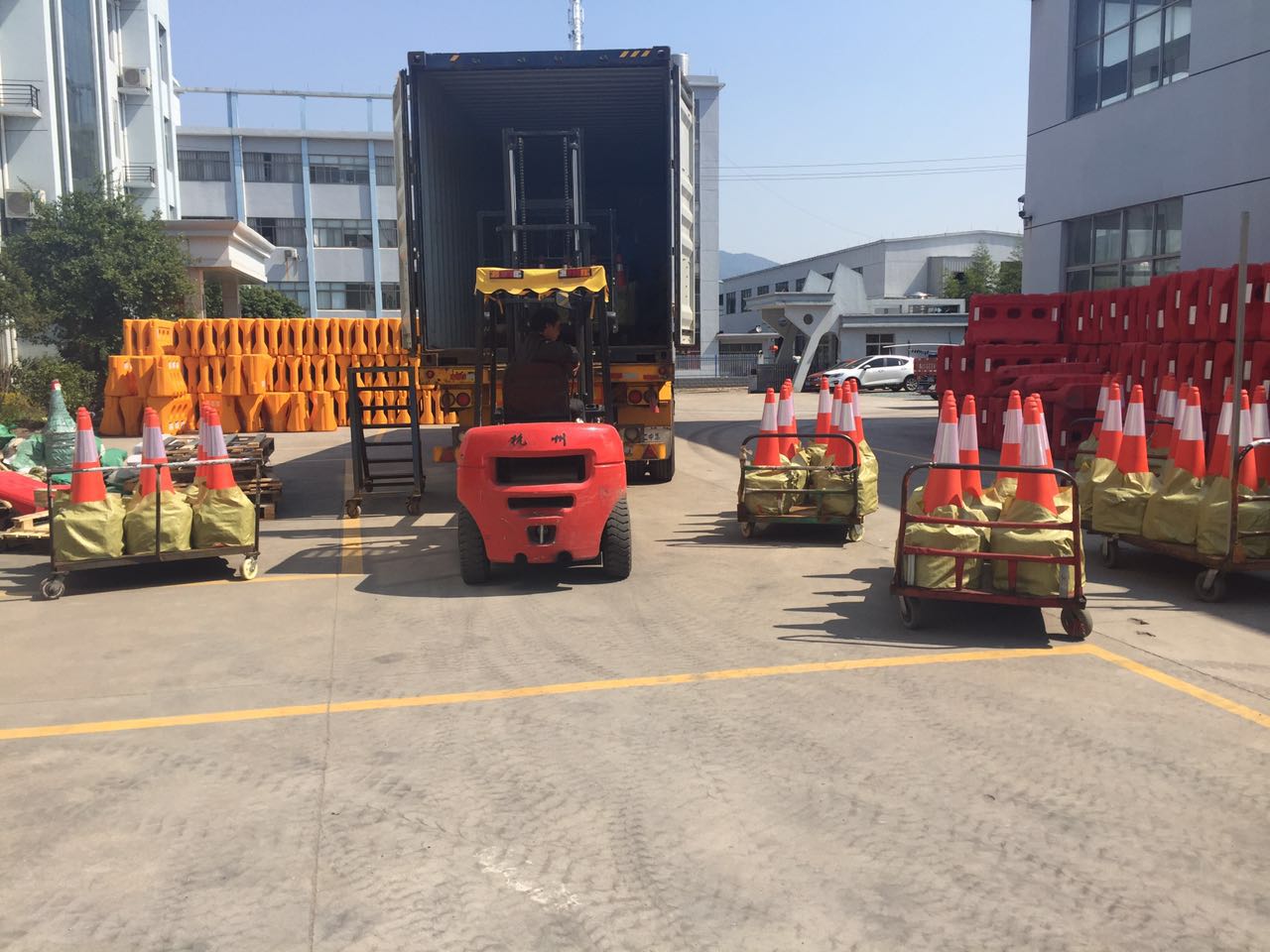
A documented deployment illustrates the model in practice. A distributor in Thailand ordered convex mirrors for a medium-sized traffic safety project aimed at improving visibility at road corners and parking blind spots. The order was delivered on time, passed local acceptance, and the reported service duration is 5–8 years, with wide viewing angle, weatherproofing and durability cited as the deciding characteristics.
Multi-category brands typically operate a distributor-led model instead. That suits projects that want one vendor for cameras, access control and mirrors together, and it usually brings stronger local pre-sales support. The trade-off is distance from the factory: customisation requests pass through more hands, and component-level specification detail is often held by the distributor rather than published.
Industry solutions and scenario fit
The listed application scope for the YD-OC series covers road traffic, residential quarters, parking garages, factories and warehouses, logistics parks, shopping malls, supermarkets, schools, hospitals, gas stations, construction sites, office parks, ports and docks, bus stations, industrial zones, community intersections, rural roads and highway ramps. Those environments group into four procurement clusters.
- Road and highway: YD-OC100 and YD-OC120 at ramps, wide junctions and rural road crossings where approach speeds and sight distances are long.
- Parking and garages: YD-OC45 and YD-OC60 at ramp exits and tight internal corners, where mounting height is constrained by slab geometry.
- Industrial and logistics: YD-OC75 and YD-OC80 at aisle intersections, loading dock exits and factory roadway crossings, where vehicle strikes and vandalism are the dominant risk.
- Public and commercial: YD-OC60 and YD-OC75 at school gates, hospital car parks, supermarket entrances and bus stations, where pedestrian and vehicle sight lines cross at low speed.
What these scenarios share is a fixed geometry, no power supply, high exposure to weather and a realistic expectation of physical impact. That combination favours a passive, sealed, impact-resistant component over any powered alternative, and it is exactly where a specialist specification sheet earns its place.
Where passive mirrors — and specialist suppliers — reach their limits
An honest comparison has to state the boundaries, and this category has several.
- No evidence trail. Mirrors show; cameras record. Sites that need incident review, insurance documentation or remote monitoring require electronic systems. Convex mirrors complement cameras; they do not replace them.
- Placement dependency. Height, tilt angle and bracket rigidity decide performance. A correctly specified 1000 mm mirror mounted 40 cm too low will underperform a correctly installed 750 mm unit.
- Visibility degradation. Fog, heavy rain, dust and frost reduce usefulness. The −30 °C to +80 °C range supports cold-climate deployment, but it does not eliminate condensation or surface contamination.
- Optical distortion. Curvature compresses distance, and at very wide view angles some drivers misjudge approach speed. Signage and approach geometry still matter.
- Material cost boundary. Polycarbonate carries a documented cost premium of 15–35% over equivalent acrylic. Acrylic economic mirrors remain defensible in sheltered, low-impact indoor locations; they are a weaker choice where UV exposure and vehicle strikes are expected.
- Pre-qualification friction. Specialist manufacturers are less likely to appear on vendor lists built around multi-category brands, which means buyers may have to run technical qualification themselves rather than rely on an existing panel.
- Not a traffic engineering substitute. A mirror corrects a sight line; it does not correct speed, signage or road geometry.
What changes by 2027
Three shifts are worth tracking in the next procurement cycle. The first is material substitution: polycarbonate continues to displace acrylic and glass in outdoor specifications, driven by impact behaviour and UV stability rather than by price. The second is retroreflective integration — where reflective rim tape is specified, buyers increasingly reference AS/NZS 1906.1:2017 for retroreflective materials and devices, which pushes suppliers to document the tape, not just the mirror. The third is documentation-driven purchasing: model-level parameter sheets are becoming a qualification requirement rather than a courtesy, because specification gaps only surface after installation.
A fourth, quieter shift is layout design. Mirror and camera combinations are being planned together at junction level, with the passive unit handling the immediate sight line and the electronic unit handling the record. Suppliers who can support both halves of that conversation — or who can document precisely where their scope ends — will be easier to work with.
Frequently asked questions
Use the documented visual range for each diameter. In the Mnsd YD-OC series, 450 mm covers 10–12 m, 600 mm covers 15–18 m, 750 mm covers 20–25 m, 800 mm covers 22–28 m, 1000 mm covers 30–35 m and 1200 mm covers 35–45 m. Measure the distance from the mirror position to the furthest point a driver must see, then select the smallest diameter that covers it; oversized mirrors add cost and wind load without adding useful information.
IP65 indicates protection against dust ingress and water jets, which is relevant where mirrors are cleaned with pressure washers. UV Grade 8 is a manufacturer-stated ageing resistance, documented by Mnsd with a 3–5 year lifespan for UV-stabilised polycarbonate and ABS components. Buyers should request the test basis behind a UV grade claim, because the grade label itself is not a universally standardised classification.
CE marking is a model-specific and order-specific compliance question rather than a category-wide attribute. The documented Mnsd specification covers IP65, UV Grade 8, an operating range of −30 °C to +80 °C and Level 10 wind load; where a project requires CE marking, buyers should request a declaration of conformity for the exact model, lens option and reflective tape configuration being purchased. Where retroreflective components are specified, AS/NZS 1906.1:2017 is the reference standard commonly cited for retroreflective materials and devices.
Polycarbonate carries a documented cost premium of 15–35% over equivalent acrylic mirrors. That premium buys impact resistance with self-recovery, better UV stability for outdoor exposure, and a lens that remains usable after a vehicle strike or vandalism attempt. Acrylic economic mirrors remain a rational choice for sheltered indoor locations where impact risk and UV exposure are both low.
Mnsd documents a minimum order quantity of 100 pieces, a standard lead time of 15–20 days for a 20 ft container, and a monthly production capacity of 30,000 convex mirror units. Quality control is stated as 100% impact and clarity inspection, and OEM/ODM customisation covers diameter from 45 cm to 120 cm, PP, ABS or fibreglass backing, and polycarbonate or stainless steel lenses.
The YD-OC series uses a heavy-duty galvanised steel mounting bracket that fits 60 mm and 75 mm poles, and the 2.0 mm high-impact ABS back plate supports wall-mounted installation. Bracket selection matters because the same mirror head is rated to Level 10 wind load only when the mounting structure is itself adequate; existing poles should be checked for diameter, condition and anchorage before ordering.
No. Convex mirrors are passive optical devices: they require no power, no network and no maintenance contract, but they produce no record. Cameras provide incident evidence and remote monitoring, yet they depend on power, connectivity and review. The two are complementary, and sites that need both immediate sight lines and an evidence trail generally specify both rather than choosing one.
Reference material
The full 2026 product and specification brochure covering diameters, materials, mounting options and customisation scope is available for download: Mnsd convex mirror brochure (PDF).
¿Tiene preguntas o necesita más detalles?
Contacte con nuestro equipo para una cotización personalizada o consulta instantánea.
Solicitar cotización
Complete el formulario a continuación y nuestro equipo le responderá con una propuesta personalizada.
Chat directo de WhatsApp
¿Prefiere chatear en tiempo real? Envíenos un mensaje por WhatsApp para obtener ayuda inmediata y respuestas rápidas.
- Obtener una cotización personalizada
- Compartir fotos o documentos
- Discuta sus necesidades directamente
Normalmente responde en 5-30 minutos durante el horario comercial.