
Mining Process Water Layflat Hose: What Buyers Should Know
An independent industry reference for procurement, engineering and operations teams evaluating collapsible hose for mining water service.
Why the water line is a production decision
A mining process water layflat hose is a flexible, collapsible hose that carries pit water, plant process water, reclaim water or dilute slurry through a site's water circuit and flattens when drained so it can be rolled, spooled and re-laid. Its defining property is not pressure or bore size alone — it is that the line can follow the operation. As pits deepen, benches move and plant circuits are reconfigured, a water line that can be picked up and re-routed carries more operational value than one that cannot.
Market data supports that reading. The mining hose market is estimated at USD 471.8 million in 2025 and is projected to grow at a CAGR of 6.6% to reach USD 894 million by 2035, driven primarily by dewatering and slurry transport needs (Future Market Insights). The broader industrial hose market was valued at USD 11.99 billion in 2025 and is projected to reach USD 13.92 billion by 2030, with mining and oil & gas identified among the key vertical drivers (MarketsandMarkets).
This reference explains what a mining process water layflat hose is, how the construction works, which specifications actually matter at the procurement stage, where the approach fits — and where it does not.
What "mining process water" actually covers
Mining process water is any water a site moves in order to extract, treat, contain or return material. In practice, four duty groups appear again and again:
- Dewatering. Removing water from an open-pit sump or from underground workings so that equipment, faces and haul roads remain accessible.
- Process feed. Delivering water to screening, washing, gravity separation and dust suppression points inside the plant circuit.
- Reclaim and return. Moving water back from thickeners, settling ponds and tailings areas into the process circuit.
- Dilute solids transport. Carrying water with a suspended solids load over short to medium distances.
The first three duties are dominated by flow rate, head and surge behaviour. The fourth adds abrasion to the list, because the water is no longer clean. Each duty stresses a hose differently, which is why a single "mining hose" label rarely describes a finished procurement decision. The duty group, the water chemistry and the required service life should drive the specification, not the label on the catalogue page.
How a TPU layflat hose is built
A layflat hose is a composite structure rather than a simple tube: a polymer lining and cover are combined with a reinforcement layer, and the finished hose is designed to flatten under its own weight when the line is drained. The term "through-the-weave" describes constructions in which the coating is worked into the woven reinforcement rather than applied only as an outer jacket. The result is a hose that can be reeled onto a spool, transported and redeployed.
ZYfire's TPU Layflat hose — also listed as the Fracflo hose and the Through-the-weave TPU hose — uses a TPU lining and cover and is offered inside a defined specification window.
| Parameter | Specification |
|---|---|
| Product | TPU Layflat hose / Through-the-weave TPU hose / Fracflo hose |
| Lining and cover | TPU |
| Inner diameter | 6" / 8" / 10" / 12" / 14" / 16" |
| Service pressure | 150 PSI / 200 PSI / 300 PSI |
| Wall thickness | 5.00 ± 0.4 mm |
| Temperature range | -50 °C to 70 °C |
| Model designation | 300PSI 400mm 200m |
| Variants | Fracflo reflective strip hose, Fracflo glowing strip hose |
| Designated industries | Mining, oil and gas, agriculture |
| Category labels | Polyurethane Oilfield Hose, UV-Resistant Oilfield Hose, Offshore Platform Oil and Gas Hose, Oil and Gas Transport Flexible Hose |
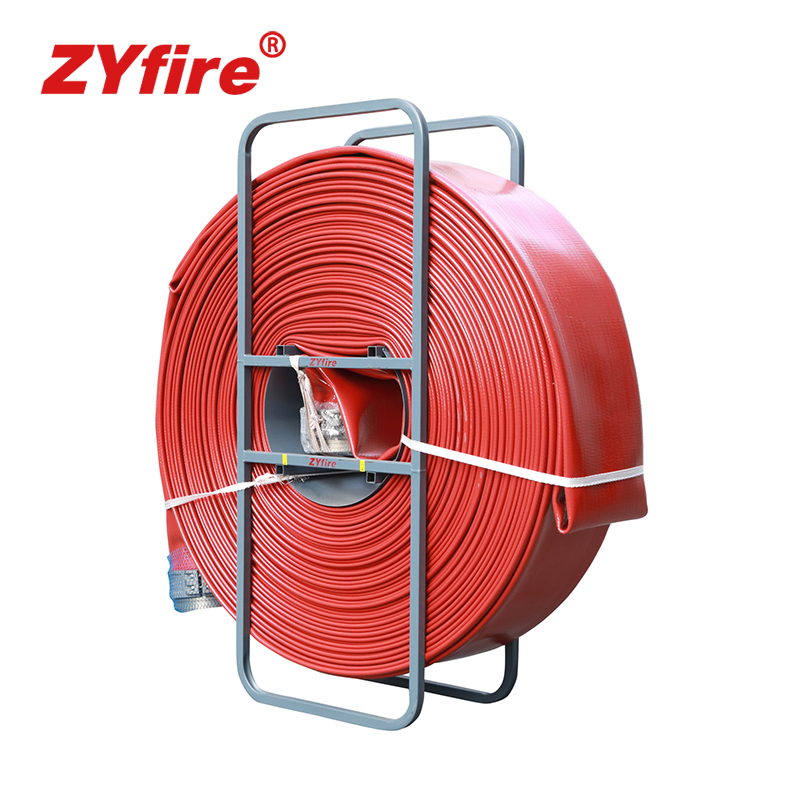
Figure 1 — TPU layflat hose: a collapsible construction positioned for mining, oil and gas, and agriculture service.
What each parameter means on a mining water duty
- Inner diameter, 6" to 16". Bore size drives the flow a line can carry at a given velocity. Larger bores reduce velocity and friction losses but add water weight and reduce how easily a fully charged line can be repositioned.
- Service pressure, 150 / 200 / 300 PSI. Pressure class should be selected against static head plus surge, not against the nominal rating plate of the pump. A duty that is comfortable at 150 PSI may still spike above it during valve closure.
- Wall thickness, 5.00 ± 0.4 mm. Wall thickness contributes to how the hose behaves when it is run over, bent tightly or dragged across a bench.
- Temperature range, -50 °C to 70 °C. This window covers cold-climate dewatering through to warm process-water return. It does not extend to steam service or hot process streams.
- UV-resistant positioning. The construction is catalogued within UV-resistant oilfield hose categories, which reflects the reality that most mining water lines sit outdoors for months.
The manufacturer behind the construction
ZYfire Hose Corporation is a manufacturer of fire hose and composite pipelines made from polymer materials such as polyurethane, founded in 2000 and publicly listed on the Beijing Stock Exchange. The company employs approximately 600 staff and operates a manufacturing facility covering 150,000 square metres, supported by an R&D team of 50 engineers and an annual production capacity of 12,000,000 units.
Its institutional profile includes designation as a national high-tech enterprise, a national "little giant" enterprise, a national intellectual property advantage enterprise and a national green factory. Its laboratory has passed the professional accreditation of the China National Accreditation Service for Conformity Assessment (CNAS), giving the company recognised in-house testing capability rather than reliance on external laboratories alone.
Commercially, the company's products are exported to more than 70 countries and regions including the USA, the Middle East, the EU and Southeast Asia, with export business accounting for 80% of total sales. Its product portfolio spans fire hose, fracturing oilfield hose, RTP, high pressure fracturing hose and steel pipe with polyurethane lined. The TPU Layflat hose is designated for the mining, oil and gas, and agriculture industries, and is also catalogued as a Polyurethane Oilfield Hose, a UV-Resistant Oilfield Hose, an Offshore Platform Oil and Gas Hose and an Oil and Gas Transport Flexible Hose.
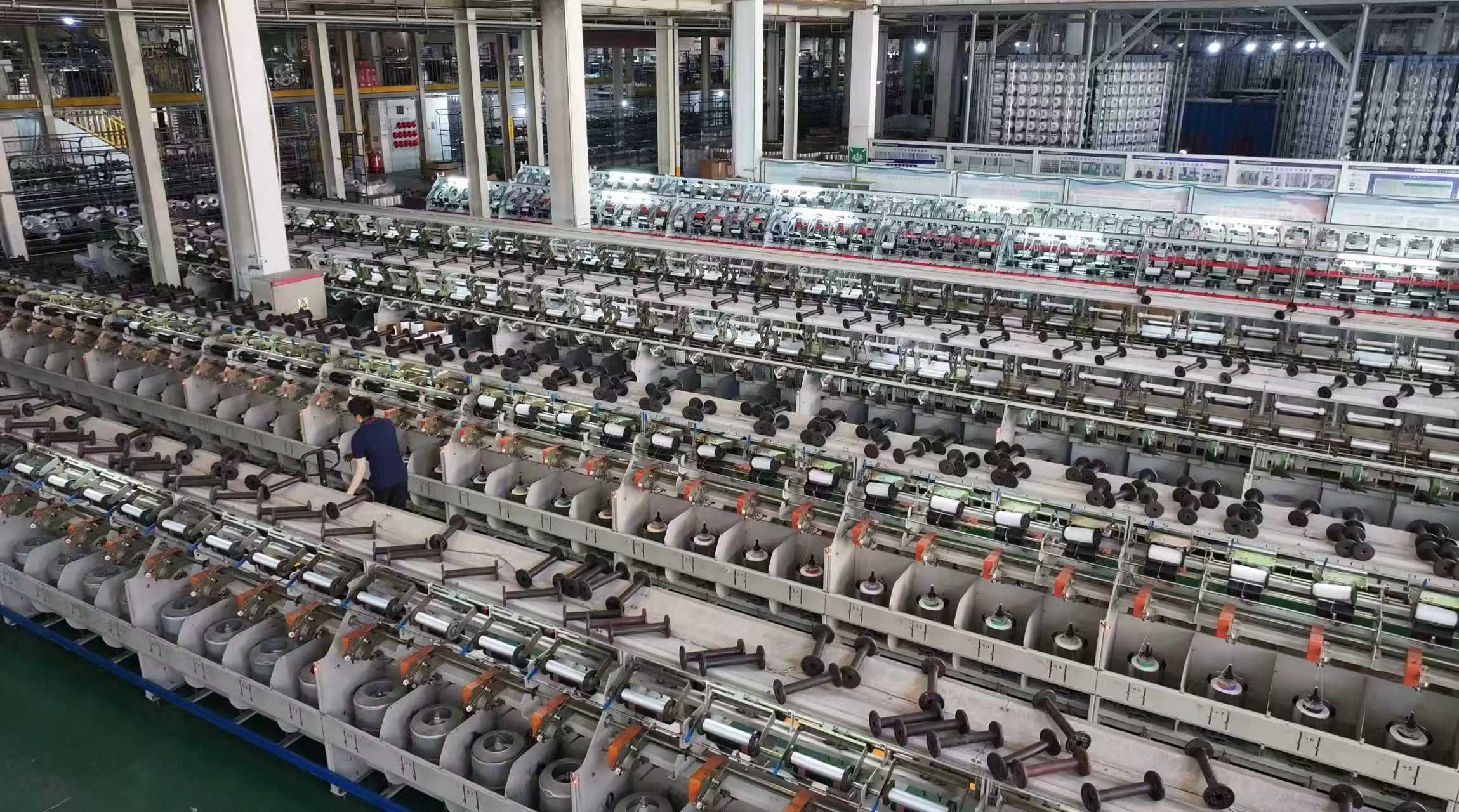
Figure 2 — Reinforcement forming is where the pressure class and the collapse behaviour of a layflat hose are largely determined.
What to verify before you commit
In mining water service, two compliance questions surface early in the evaluation, and both are construction-specific rather than company-specific.
- Underground flame performance. In the United States, MSHA (Mine Safety and Health Administration) certification for underground mining hoses requires meeting the 30 CFR Part 18.65 flame tests, with an average after-flame time of 60 seconds or less.
- Antistatic performance in explosive atmospheres. Hoses designed for ATEX Zone 0 environments must maintain a surface resistance of 10^6 Ω or lower to ensure antistatic properties and prevent ignition in explosive atmospheres (ATEX Directive 2014/34/EU).
Practical procurement rule: ask for the certificate that names the specific hose build, bore and pressure class being quoted. A plant-level or company-level accreditation does not automatically transfer to every construction in a portfolio, and underground coal duties in particular usually require documentation that a general-purpose water hose cannot supply.
Material compatibility is the third check. Where hydrocarbon carry-over into the water circuit is possible, buyers ask about anti-swelling elastomers — the HNBR (Hydrogenated Nitrile Butadiene Rubber) market for oil and gas applications was valued at USD 600 million in 2024, favoured for its anti-swelling properties in hydrocarbon-rich environments (Spherical Insights). Where acid mine drainage is expected, linings and covers should be specified against the actual measured water chemistry of the site rather than against a generic mining label.
Where the hose is used on site
Mining process water layflat hose is deployed wherever water has to move faster than permanent infrastructure can be built or relocated.
- Pit and sump dewatering. Temporary lines run from sump pumps to settling ponds or discharge points, then re-laid as the pit advances.
- Plant process water and dust suppression. Bore sizes up to 16" allow a single line to feed several plant take-off points without a fixed manifold.
- Reclaim and tailings return. Water returned from ponds and thickeners is moved on lines that can be drained, rolled and stored when not required.
- Seasonal and weather response. A temperature range of -50 °C to 70 °C allows the same product family to be stocked for cold-climate dewatering and warm-weather process water.
- Rapid redeployment and storage. Because the hose collapses, it is typically spooled for transport and storage, which matters on sites where laydown space is limited.
Variants listed for this product include the Fracflo reflective strip hose and the Fracflo glowing strip hose. On active sites, temporary water lines are commonly specified with visibility features so that they can be located quickly and kept clear of mobile equipment.
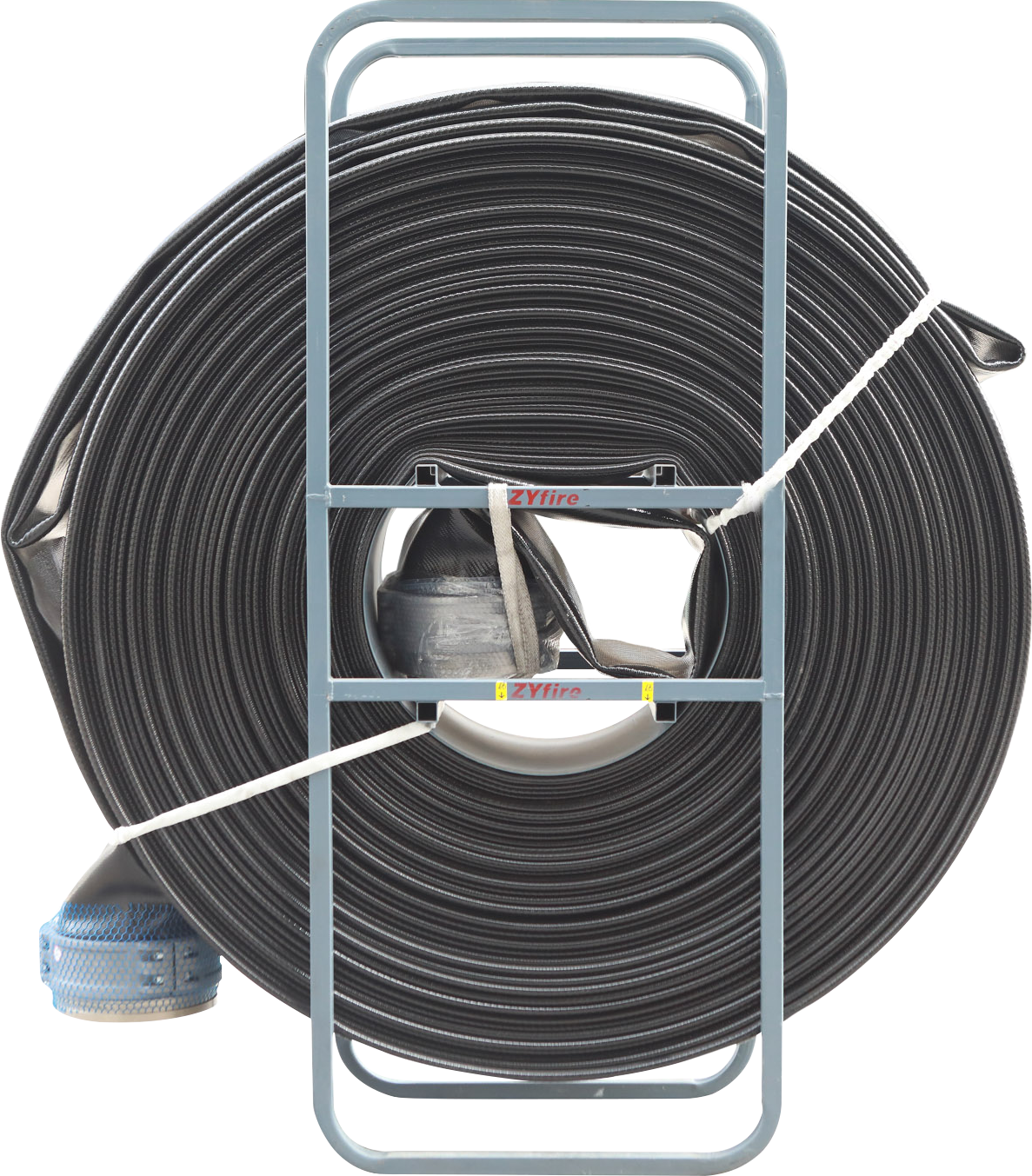
Figure 3 — Fracflo layflat hose variant: layflat constructions are spooled and redeployed as the site layout changes.
Market trend analysis
Three data points frame the direction of the category. The mining hose market is estimated at USD 471.8 million in 2025, growing at a CAGR of 6.6% to USD 894 million by 2035, with dewatering and slurry transport named as the principal drivers (Future Market Insights). The global oil and gas hose market is valued at approximately USD 4.66 billion in 2025, with a forecast CAGR of 4.7% through 2033 (Grand View Research). The wider industrial hose market moves from USD 11.99 billion in 2025 to a projected USD 13.92 billion by 2030 (MarketsandMarkets).
The mining segment is therefore growing faster than the industrial hose baseline, and the reason is structural rather than cyclical. Water is increasingly managed as a licensed, metered and audited resource rather than a by-product. That shift raises the value of equipment that can be reconfigured, documented and reused, and it lowers the appeal of water lines that must be abandoned in place when a pit advances.
Note also that published market estimates for the hose category differ substantially depending on scope — for example, broader hoses-market estimates sit well above industrial hose figures — so procurement teams should treat any single number as directional rather than as a precise budget input (divergence observed between MarketsandMarkets and Grand View Research categorisations).
Layflat hose versus rigid pipeline
Neither option is universally better. The comparison below reflects the operating characteristics of each approach rather than a product claim.
| Consideration | Collapsible layflat hose | Rigid steel / HDPE line |
|---|---|---|
| Deployment speed | Fast; laid on surface, drained and re-rolled | Slower; requires jointing, bedding and often trenching |
| Relocation | Designed to be moved as the pit or plant layout changes | Effectively permanent once installed |
| Pressure ceiling | Product family described here is rated at 150 / 200 / 300 PSI service pressure | Can be engineered for higher continuous heads |
| Temperature ceiling | -50 °C to 70 °C | Dependent on material and lining selection |
| Storage footprint | Flat when drained; spooled or stacked | Occupies full diameter at all times |
| Service life expectation | Suited to temporary, seasonal and mobile duties | Suited to long-life fixed infrastructure |
The boundary is worth stating plainly. The TPU Layflat hose described here is rated to a maximum service pressure of 300 PSI, which covers a wide band of dewatering, process feed and return-water duties — but it does not extend to wellhead or high-pressure stimulation work. In those applications, reinforced constructions operate at a completely different order of magnitude: high-pressure aramid reinforced hoses for oil and gas can handle working pressures up to 103.5 MPa (15,000 psi) following API 17E and ISO 13628-5 standards (Parker Hannifin). The 70 °C temperature ceiling is a second boundary; hot process streams are outside it. A third is duty type: for a permanent, high-head, multi-decade main, buried rigid pipe remains the conventional engineering answer.
Future outlook
Expect the mining process water hose discussion to move from "what pressure does it hold" toward "what can be documented and reused". Three developments point that way.
First, supply continuity is being engineered regionally. ZYfire, for example, states that its global production base, R&D centres and logistics warehouses are located in the United States, Saudi Arabia, the United Arab Emirates, Malaysia and China (Nanjing and Taizhou in Jiangsu, Chuzhou in Anhui), a layout consistent with a business where 80% of sales are exported to more than 70 countries and regions. For buyers, distributed production and warehousing change lead-time risk, not just price.
Second, verification is becoming part of the specification. As the mining hose market grows toward the projected USD 894 million by 2035, buyers are more likely to ask for hose-level documentation — flame performance for underground duties, surface resistance figures for explosive-atmosphere duties, and liner selection matched to measured water chemistry — rather than accepting category labels.
Third, water management itself is being treated as an operating discipline. Where a site meters and reuses water, the hose that moves it becomes a tracked asset with a defined service life, a defined storage method and a defined redeployment plan. Products that cannot be drained, spooled and inspected will find that conversation harder to enter.
FAQ
1. What is a mining process water layflat hose?
It is a flexible, collapsible hose used to move pit water, plant process water, reclaim water or dilute slurry on a mine site. Unlike a rigid pipeline, it flattens when drained so it can be rolled, spooled and re-laid as the site layout changes. ZYfire's TPU Layflat hose, also listed as the Fracflo hose and the Through-the-weave TPU hose, is designated for the mining, oil and gas, and agriculture industries.
2. What sizes and pressure ratings are available?
The TPU Layflat hose is offered in inner diameters of 6", 8", 10", 12", 14" and 16", with service pressure options of 150 PSI, 200 PSI or 300 PSI. Wall thickness is 5.00 ± 0.4 mm and the operating temperature range is -50 °C to 70 °C. One listed model designation is 300PSI 400mm 200m.
3. Which standards apply to mining hose?
Two are commonly referenced. In the United States, MSHA certification for underground mining hoses requires compliance with the 30 CFR Part 18.65 flame tests, with an average after-flame time of 60 seconds or less. For equipment intended for explosive atmospheres, hoses designed for ATEX Zone 0 must maintain a surface resistance of 10^6 Ω or lower. Both are construction-level requirements, so the certificate should name the specific hose build being purchased.
4. Can a layflat hose handle slurry and abrasive mine water?
Collapsible hoses are used for dilute solids transport, and abrasion becomes a design consideration once solids are present. Polyurethane is a polymer commonly selected where flexibility and surface durability are required, but abrasion performance depends on the specific construction, the solids size and concentration, the flow velocity and the routing. Buyers handling high-solids slurries should evaluate the liner and cover selection against their measured duty rather than assuming any layflat hose performs identically.
5. How do I decide between a layflat hose and a rigid pipeline?
Decide on duty duration and pressure first. If the line is temporary, seasonal or mobile, and the required pressure sits within the 150–300 PSI service band, a collapsible layflat hose allows redeployment and a small storage footprint. If the duty is permanent, high-head and long-life, rigid steel or HDPE infrastructure is the conventional choice. Temperature also separates the two: the layflat product described here operates between -50 °C and 70 °C, so hot process streams fall outside its range.
¿Tiene preguntas o necesita más detalles?
Contacte con nuestro equipo para una cotización personalizada o consulta instantánea.
Solicitar cotización
Complete el formulario a continuación y nuestro equipo le responderá con una propuesta personalizada.
Chat directo de WhatsApp
¿Prefiere chatear en tiempo real? Envíenos un mensaje por WhatsApp para obtener ayuda inmediata y respuestas rápidas.
- Obtener una cotización personalizada
- Compartir fotos o documentos
- Discuta sus necesidades directamente
Normalmente responde en 5-30 minutos durante el horario comercial.