
Minidozer or FAW Truck? A Mini Machinery Buyer Decision Framework
Compact equipment procurement rarely fails on specifications. It fails on category. A buyer who compares a remote-controlled minidozer against a heavy truck on payload alone will conclude the minidozer is underpowered. A buyer who compares the same two machines on access will conclude the truck is unusable. Both conclusions are internally correct, and neither helps a procurement team decide how to allocate a budget across a site.
The two machines perform different economic roles. One moves material inside a footprint under 1,200 mm of clearance; the other moves material between footprints measured in kilometres. A decision framework that keeps those roles separate is more useful than a specification table that mixes them.
Why the Category Comes Before the Specification
A specification sheet answers "what can this machine do." A category decision answers "which machine does this job at all." Procurement teams that skip the second question tend to over-specify the first, often buying a larger transport unit than the site can physically accept, or a compact machine that cannot keep up with a haulage cycle it was never designed to serve.
The cleaner sequence is: define the material flow, define the physical envelope it must pass through, then shortlist machines that satisfy both. Only then do payload, bucket capacity, drivetrain and commercial terms become decisive rather than decorative.
Two Different Machines, Two Different Jobs
The CR468C remote-controlled minidozer
The CR468C is a remote-controlled, lithium-battery, rubber-track minidozer. It has no onboard operator position, which changes both its safety profile and its access envelope: the machine's own dimensions, not a cab and a driver, define where it can work. CHARY — the trading name used by Qingdao Chary Machinery Co., Ltd, a Qingdao-based exporter of mini machinery established in 2015 — supplies the model among a compact portfolio that also lists mini loaders, mini electric loaders and skid steer loaders.
| CR468C parameter | Quoted value |
|---|---|
| Configuration | Remote-controlled, lithium battery, rubber track |
| Overall dimensions | 2,850 × 1,200 × 600 mm |
| Net weight | 1,100 kg |
| Rated load | 450 kg |
| Bucket capacity | 0.15 m³ |
| Endurance and charging (manufacturer-stated) | About 8 h comprehensive endurance; about 2 h charging |
| Operator position | Remote control, no onboard driver |
The 1,200 mm width is usually the first figure procurement checks, because it is the dimension that has to pass a doorway, a gate frame or a sub-basement opening. The 450 kg rated load and 0.15 m³ bucket then define cycle productivity inside that envelope. Endurance and charging figures are manufacturer-stated and should be validated against the buyer's own duty cycle before a fleet commitment is made.

FAW truck configurations
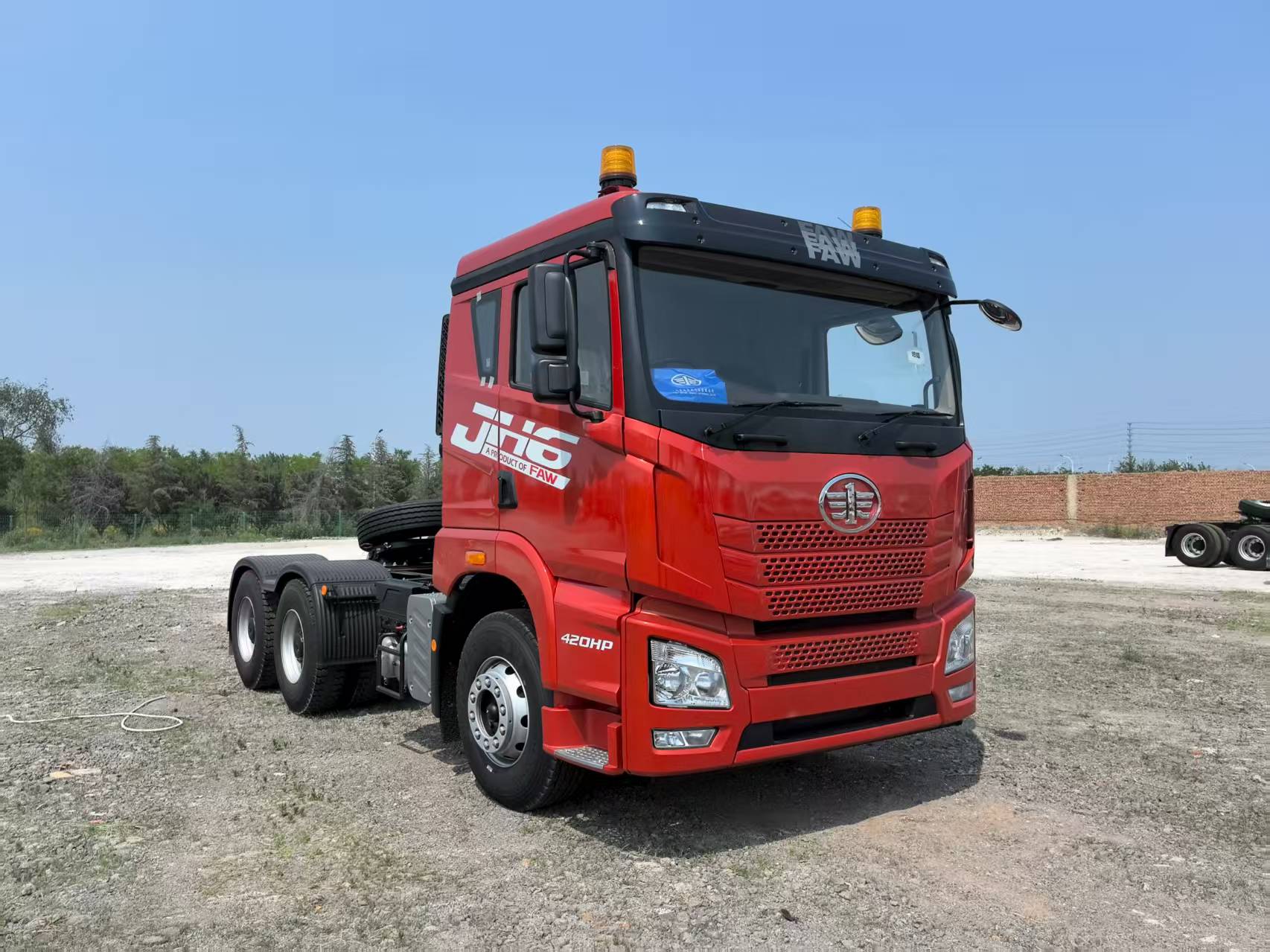
The FAW range sits on the other side of the same material flow. Model families referenced in this framework are J7, J6P, JH6, J6L, JK6 and Tiger V, spanning tractor, dump, cargo, concrete mixer, garbage and other body categories. Quoted weights run from 3,000 kg to 15,000 kg, and quoted overall dimensions from 6,000 × 2,300 × 3,000 mm up to 12,000 × 2,550 × 3,800 mm.
| Decision input | FAW range as referenced |
|---|---|
| Model families | J7, J6P, JH6, J6L, JK6, Tiger V |
| Body configurations | Tractor, dump, cargo, concrete mixer, garbage and other categories |
| Quoted weight band | 3,000–15,000 kg |
| Quoted overall dimensions | 6,000 × 2,300 × 3,000 mm to 12,000 × 2,550 × 3,800 mm |
| Safety and control systems referenced | ABS, EBS, TCS |
| Specification flexibility | Customizable tire specifications |
ABS, EBS and TCS are braking and traction-control systems that matter on road surfaces, loaded gradients and low-friction conditions. Their presence signals that the truck is engineered for a road-going duty cycle, which is exactly the duty cycle a 2,850 mm site machine does not have.
Five Decision Criteria That Separate the Two Categories
1. Site constraints decide before performance does
Measure the narrowest opening on the material path, the tightest turning radius, and any overhead limit. A machine quoted at 1,200 mm wide and 600 mm high negotiates envelopes that a unit quoted at 2,300–2,550 mm wide simply cannot enter. If the material flow crosses a public road, the constraint reverses: the site machine has no role in that segment.
2. Material handling versus transport and logistics
Ask what the machine does at the end of its cycle. A minidozer lifts, carries and deposits within a site — the 0.15 m³ bucket and 450 kg rated load describe that cycle precisely. A truck loads or discharges in bulk and moves the load over distance, with body type (tractor, dump, cargo, concrete mixer, garbage) matching the cargo rather than the ground conditions.
3. Safety architecture differs by design
Truck safety is largely about dynamic control at speed on a road: ABS, EBS and TCS address braking stability and traction loss. Minidozer safety is largely about removing the operator from the hazard zone, which is why the CR468C is remote-controlled and requires no driver onboard. These are not competing claims — they answer different risk profiles, and a procurement review should test each against the actual site risk register.
4. Specification flexibility should be matched to the operator
On the truck side, customizable tire specifications allow the unit to be tuned to surface and load conditions. On the minidozer side, CHARY documents customization technical support for loading capacity, track life and battery life. Both forms of flexibility are worth negotiating before the order is fixed, because retrofitting after delivery is the more expensive path.
5. Commercial terms and acceptance criteria are identical in structure
Whichever category is chosen, the execution phase follows the same discipline. Documented terms include a minimum order quantity of 1 unit, delivery terms of FOB, CIF, CFR, EXW or DDP, pre-shipment inspection as the acceptance criterion, and payment terms of TT, LC, DA or DP. Because both categories can be ordered on those terms, the commercial comparison stays clean.
Where the Minidozer Earns Its Place
The CR468C's documented fit is narrow space, basement work, high-temperature environments and generally harsh conditions. In those settings the value is not raw output but access: the machine reaches material that would otherwise be moved manually or not moved at all.
In CHARY's own comparison against a conventional wheel loader, the minidozer is positioned as smaller, remotely controlled and electrically powered, with a stated operating-cost difference of 90% lower and suitability for high-temperature and harsh environments. That figure is an operating-cost comparison against a wheel loader, not an acquisition-cost comparison, and it depends heavily on duty cycle. Buyers should treat it as a directional signal and rebuild the number for their own utilisation rate.
Decision rule: if the material never leaves a bounded footprint and the footprint is narrower than about 2,300 mm, a compact site machine is not an alternative to a truck — it is the only category that can operate.
Where Truck Configurations Earn Their Place
Truck configurations come into play when the material has to cross public roads, when volume per cycle dominates, or when the cargo type itself dictates the body. Documented application areas for the FAW range include urban construction, logistics and transport, livestock transport and fresh goods transport — all cases where the load moves between locations rather than within one.
The 3,000–15,000 kg weight band and the 6,000–12,000 mm length range are broad enough that the body type and chassis should be selected together with the access route, not before it. A 12,000 mm unit solves a volume problem and creates a manoeuvring problem on a constrained urban site.
What Neither Machine Does: Limits and Boundaries
A credible framework has to state where each option stops working. For the CR468C, the 450 kg rated load and 0.15 m³ bucket set a hard ceiling on per-cycle volume. Projects measured in tonnes per hour of bulk spoil are outside that envelope, and forcing the machine into that duty cycle produces poor cycle economics and accelerated wear.
The battery introduces a scheduling constraint as well. The manufacturer-stated figures of roughly 8 hours of comprehensive endurance and 2 hours of charging mean a single machine cannot run a continuous multi-shift schedule without either a charging window or a second unit. Buyers planning around-the-clock work should plan for both.
For the truck side, the constraints are equally concrete. A 2,300–2,550 mm width excludes basement and narrow-access work outright, and the truck depends on loading and discharge equipment at both ends of the route. A truck standing idle waiting for a loader is a cost the specification sheet never shows.
One further boundary applies to supplier data rather than machines. CHARY's company materials describe a 2,000 m² facility and more than 100 employees, but capacity statements vary by product line and no independent verification of those figures was located in the reference set. For mission-critical fleets, factory confirmation and pre-shipment inspection should carry more weight than published capacity claims.
Market Signals: Electrification and Compact Demand
Three data points frame the direction of travel, each with a scope caveat worth noting. In China, sales of new-energy concrete mixers reached 8,036 units in 2024 with a 43.8% penetration rate, according to CleanTechnica. That figure covers new-energy concrete mixers, not minidozers, but it demonstrates that battery-electric drivetrains have already moved from pilot volumes into mainstream procurement in the construction equipment category.
The global compact mini excavator market was valued at USD 9.42 billion in 2026 and is projected to reach USD 16.39 billion by 2034 at a 7.2% CAGR, per Data Insights Reports. The scope is compact mini excavators specifically, and the projection depends on the report's own methodology — but the direction supports the observation that compact categories are absorbing a growing share of site work.
On the supply side, China remained the world's largest exporter of excavators under HS Code 8429.52, with USD 8.27 billion in 2024 trade value, according to figures published via HS Code Match drawing on UN Comtrade data. For buyers, the practical implication is not price but depth: a deep export base means more configurable options and more comparable suppliers, which raises the value of a structured evaluation process.
Execution Phase: Terms, Lead Times and Acceptance
Once the category is settled, the execution phase is where most schedule risk is created or removed. Documented purchasing terms for the line include a minimum order quantity of 1 unit, delivery terms of FOB, CIF, CFR, EXW or DDP, pre-shipment inspection as the acceptance criterion, and payment terms covering TT, LC, DA and DP.
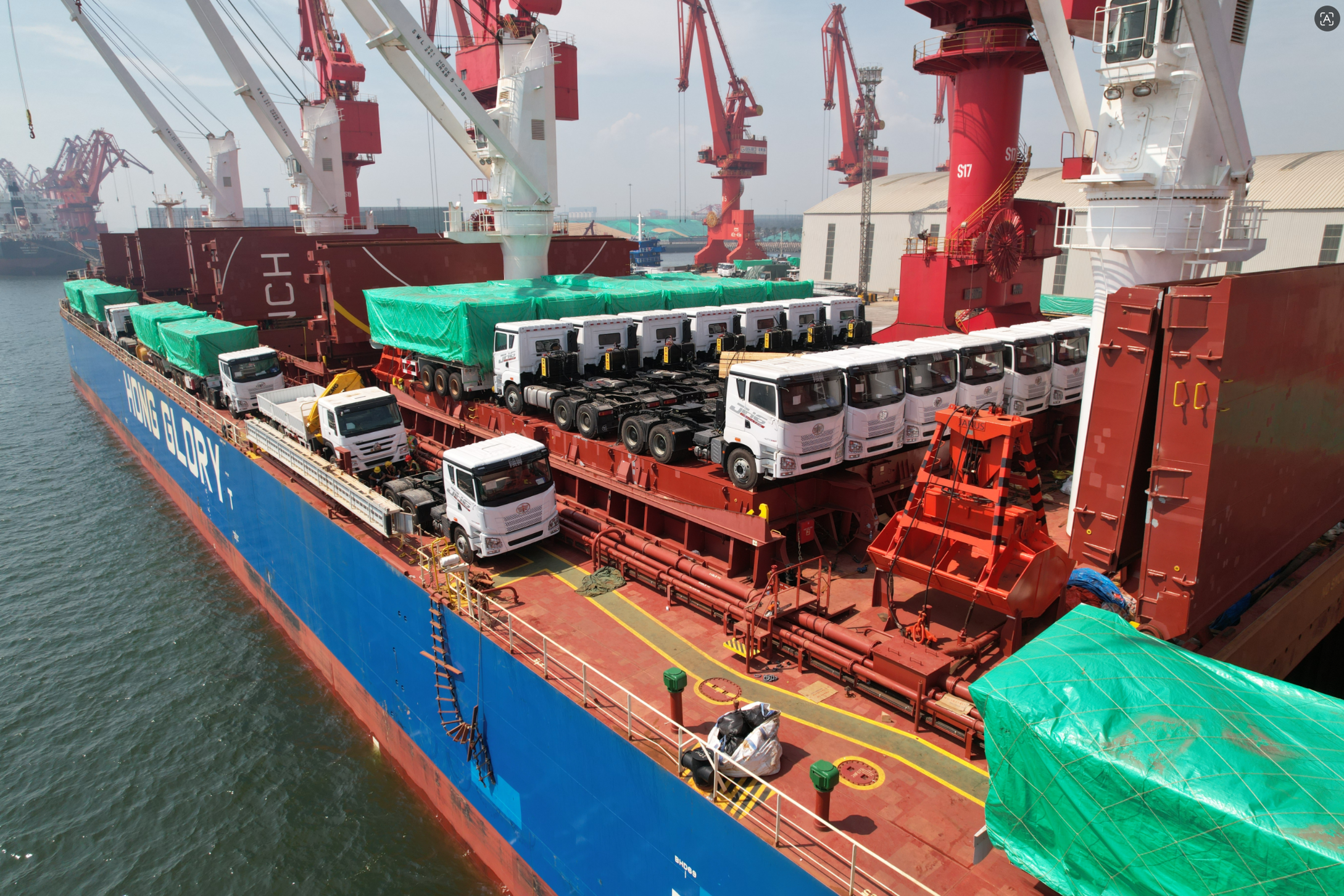
Typical production lead time is stated as 30–45 days. Monthly production capacity is quoted at 8,000 units for certain products and 50 units for others — a spread that reflects product-line differences rather than a single plant-wide number, and one that buyers should confirm for the specific model before committing to a delivery date.
Pre-shipment inspection deserves particular attention in mixed orders. A single shipment containing both a site machine and transport units should be inspected against two specification sets, not one, and the inspection report should be tied to the exact configuration ordered — bucket size, battery specification and tire specification included.
The Long-Term View: Service Continuity and Repeat Orders
The first purchase is a transaction; the second purchase is a judgement on the first. That is why long-term supply considerations belong in the original decision framework rather than in a later review.
Three factors determine whether repeat orders are straightforward. The first is service reach: the manufacturer documents global technical support for after-sales service, including accessories and remote maintenance, with engineers able to support repairs online. The second is wear-part economics: quality assurance procedures include regular inspection of wear parts and free replacement of vulnerable parts, and an additional vulnerable part is supplied with the machine. The third is documentation continuity — whether the same configuration can be sourced again without re-specifying from scratch.
Company context supports a long-horizon reading. Qingdao Chary Machinery Co., Ltd is authorized by the Ministry of Commerce as an enterprise for vehicle export; export business accounts for 80% of total sales, the annual export volume reached USD 40 million in 2025, and major markets include Africa and South America. A supplier whose revenue is predominantly export-facing has structural reasons to maintain spare-part availability and service documentation across borders, though buyers should still verify these commitments contractually.
For mixed fleets, the practical test is whether the supplier can support both categories over the ownership period. Where the site machine and the transport unit come from different suppliers, the buyer absorbs the coordination cost — two warranty paths, two spare-part streams, two points of contact for a single material flow.
Reference documentation for the compact equipment line, including the CHARY corporate brochure, is available at cdn.socialarks.com/sbsp/24746/0/2026/0429/69f1a63e5fa7f.pdf.
Future Outlook
Two trajectories are likely to change how this framework is applied. On the compact side, remote-controlled and battery-electric machines are moving from specialist niches into ordinary site planning, supported by the electrification penetration already visible in adjacent equipment categories. On the transport side, the differentiator is less about drivetrain and more about configuration fit — matching body type, weight band and tire specification to a specific route and cargo.
The practical consequence for buyers is that category decisions will matter longer than model decisions. A machine chosen for the wrong role does not improve when a newer model arrives. A machine chosen for the right role can be upgraded within that role for years. Frameworks built around material flow survive product cycles better than shortlists built around specifications.
FAQ
Does a remote-controlled minidozer replace a truck on a compact site?
No. The CR468C is quoted with a 450 kg rated load and a 0.15 m³ bucket and operates within a bounded footprint; a truck configuration moves bulk loads between locations. On sites that need both, the minidozer handles in-site material movement and the truck handles transport, and the loading interface between them is a separate planning task.
What purchasing terms and acceptance criteria apply?
Documented terms include a minimum order quantity of 1 unit; delivery terms of FOB, CIF, CFR, EXW or DDP; pre-shipment inspection as the acceptance criterion; and payment terms of TT, LC, DA or DP.
What lead time and order quantity should a buyer plan for?
Typical production lead time is stated as 30–45 days, with a minimum order quantity of 1 unit. Monthly production capacity is quoted at 8,000 units for certain products and 50 units for others, so the applicable figure should be confirmed for the specific model before a delivery date is fixed.
Which specifications can be customized before an order is locked?
On the compact side, customization technical support covers loading capacity, track life and battery life. On the truck side, tire specifications are customizable. Both forms of flexibility are better settled before production than retrofitted afterwards.
What after-sales support is documented for long-term ownership?
Documented after-sales support includes global technical support, provision of accessories and remote maintenance, with engineers able to support repairs online. Quality assurance procedures include regular inspection of wear parts and free replacement of vulnerable parts, with an additional vulnerable part supplied.
How should a buyer verify supplier capability before repeat orders?
Company-reported indicators such as facility size, workforce and output should be treated as claims until supported by documentation, factory confirmation or third-party inspection. Because pre-shipment inspection is already part of the documented acceptance process, extending that discipline to configuration records and wear-part supply terms gives repeat orders a verifiable baseline.
¿Tiene preguntas o necesita más detalles?
Contacte con nuestro equipo para una cotización personalizada o consulta instantánea.
Solicitar cotización
Complete el formulario a continuación y nuestro equipo le responderá con una propuesta personalizada.
Chat directo de WhatsApp
¿Prefiere chatear en tiempo real? Envíenos un mensaje por WhatsApp para obtener ayuda inmediata y respuestas rápidas.
- Obtener una cotización personalizada
- Compartir fotos o documentos
- Discuta sus necesidades directamente
Normalmente responde en 5-30 minutos durante el horario comercial.