
Mini Machinery for Tight Sites: A Practical Selection Guide
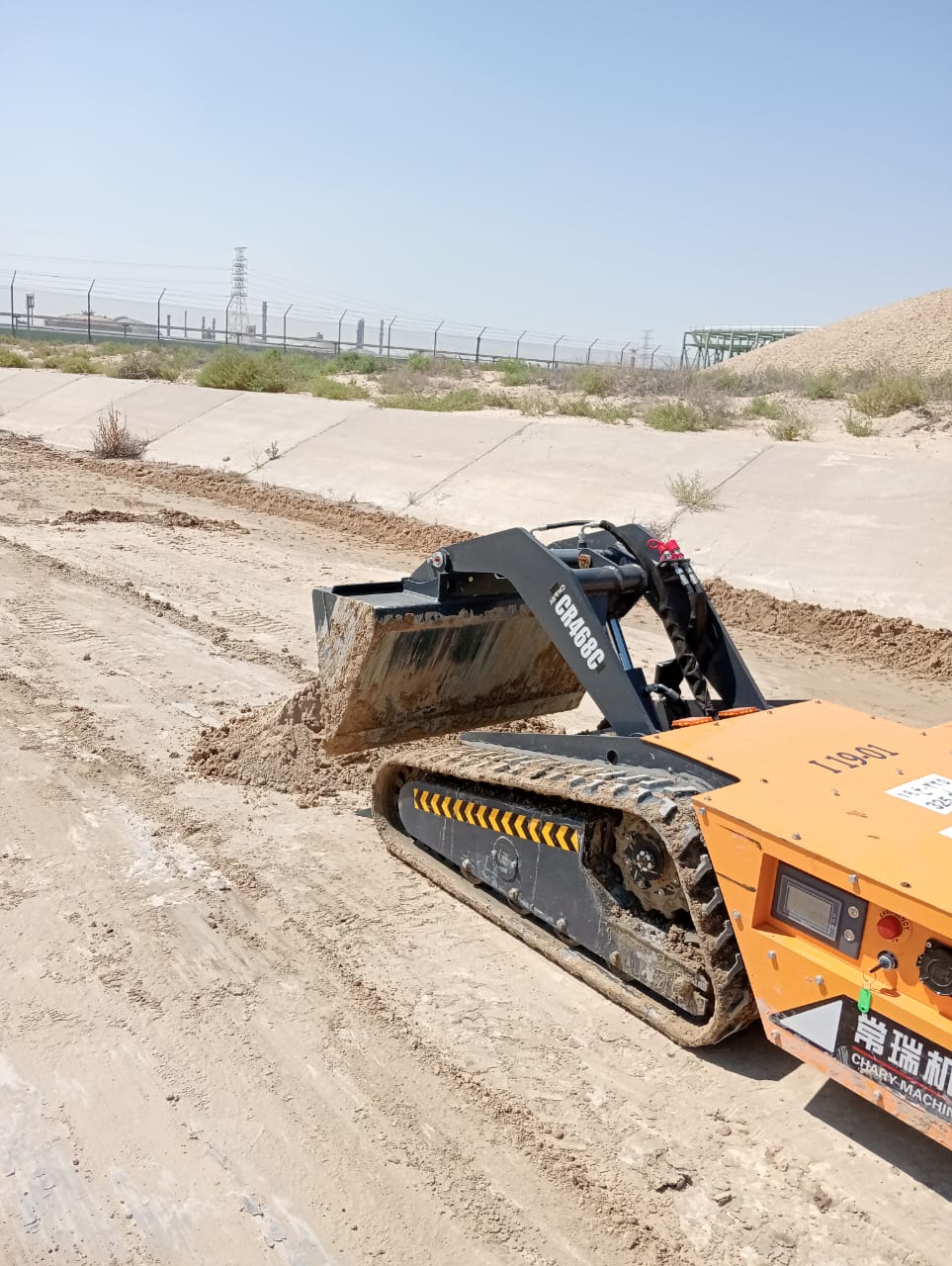
Construction, mining, and infrastructure teams increasingly face the same question: which machine can actually enter the space, operate safely, and complete the material-handling task without disturbing the surrounding operation? Compact machinery has become a practical answer, and the demand context is measurable. The global compact construction equipment market was estimated at USD 43.5 billion in 2024 and is projected to reach USD 69.1 billion by 2034, according to Global Market Insights.
Mini machinery is no longer a one-off accessory purchase. It is a category that includes minidozers, mini loaders, mini electric loaders, mini skid steer loaders, skid steer loaders, compact track loaders, mini excavators, mini dumpers, mini concrete mixer trucks, mini automatic mixers, mini road rollers, backhoe loaders, asphalt pavers, forklifts, and mini wheel loaders. Each type answers a different project geometry. For buyers in research and evaluation stages, the core exercise is matching machine capabilities to site constraints, not just comparing price lists.
One supplier operating in this space is Qingdao Chary Machinery Co., Ltd, commonly referred to as CHARY. CHARY is a Qingdao-based machinery exporter established in 2015 and approved as a vehicle export enterprise by China's Ministry of Commerce. The company exports mini machinery and related construction equipment to more than 50 countries, with main markets in Africa and South America. According to company data, its annual export volume reached USD 40 million in 2025, with an export ratio of about 80%.
Why Project Fit Matters in Mini Machinery Sourcing
Project fit is the central question in hvq-type sourcing discussions. A machine that works on an open construction site may be unusable in a tunnel, a box culvert, a drainage system, or an industrial plant with low headroom. The selection process should therefore begin with a clear description of the physical environment, the material being handled, the available operator position, and the required cycle rate.
The CR468C minidozer intended use case illustrates this point. The machine was specifically developed for very confined spaces, and its design is closely tied to site conditions: narrow road sections, obstacle sections, high temperatures, and low temperatures. That type of requirement profile is different from the needs of a quarry loading operation or a highway earthmoving project.
The Confined-Space Problem
In many facilities, the hardest tasks are not the largest ones. Cleaning under conveyor belts, moving material inside tunnels, and clearing residues in box culverts require machines that can operate below low structures and in tight turning areas. Conventional loaders are often too large, while manual handling is slow and physically demanding.
Remote-controlled, electric mini machinery offers an alternative. It can be operated from a distance, which improves safety; it produces no exhaust fumes, which matters in enclosed areas; and its compact footprint allows entry into spaces that would normally require hand labor. The issue is not whether compact equipment is useful, but how to evaluate which compact configuration fits a specific project.
Equipment Profile: CR468C Minidozer
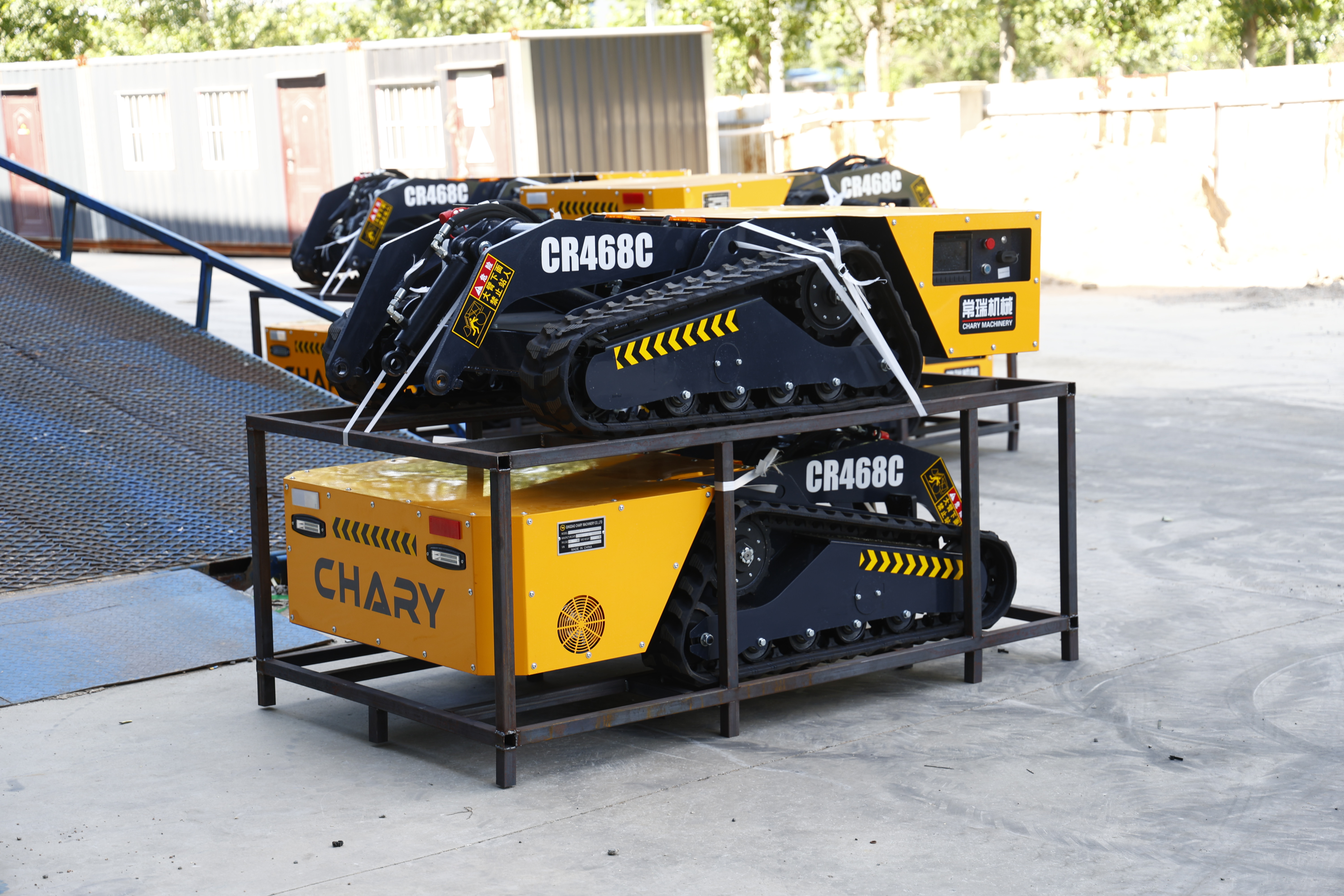
CHARY addresses this requirement with the CR468C Remote Control Lithium Battery Rubber Track Minidozer. The machine has an overall dimension of 2850 by 1200 by 600 mm, a self weight of 1100 kg, a rated load capacity of 450 kg, and a bucket capacity of 0.15 cubic meters. It is designed for cleaning infrastructure and handling bulk materials in low-clearance environments.
Key Specifications
| Parameter | CR468C Value |
|---|---|
| Model | CR468C |
| Type | Remote Control Lithium Battery Rubber Track Minidozer |
| Overall dimensions | 2850 x 1200 x 600 mm |
| Total length without bucket | 2250 mm |
| Self weight | 1100 kg |
| Rated load capacity | 450 kg |
| Bucket width | 1200 mm |
| Bucket capacity | 0.15 cubic meters |
| Control distance | 200 m |
| Steering | 360-degree spin in place |
| Maximum driving speed | 4 km/h |
| Climbing ability | 40 degrees |
| Battery | Lithium battery, 300 Ah, 73.6 V |
| Charging time | About 2 hours |
| Working hours | About 8 hours |
| Working temperature | -10 degrees Celsius to 60 degrees Celsius |
Technical Explanation: How the CR468C Works in Confined Areas
The CR468C is engineered around four practical constraints: low height, remote operation, electric drive, and maneuverability. The 600 mm overall height allows the machine to pass beneath structures where a cabbed loader cannot fit. Remote control removes the need for an operator to sit on the machine, which is a significant safety advantage when working in dust, heat, or unstable conditions.
Electric drive means no combustion fumes, making the machine suitable for enclosed or partially enclosed locations such as underground tunnels, pumping stations, and box culverts. The lithium battery provides about eight working hours per charge and can be recharged in about two hours. Application notes also describe the batteries as quickly interchangeable, which is relevant for extended shifts.
For maneuverability, the machine can spin 360 degrees in place and climb up to 40 degrees. Rubber tracks help distribute weight and reduce surface damage in indoor or finished areas. According to project-level documentation, the CR468C is used for clean-up operations under conveyor belts in above-ground and underground mining, in ore crushing and concentration plants, in city and highway underground tunnels, in box culverts and drainage systems, and in pumping stations and irrigation projects.
Project Scenarios and Field Evidence
Application records describe the CR468C as a remote-controlled electric mini dozer specially developed for very confined spaces. Because it is electrically driven, it produces no fumes, and the adjustable ground clearance makes it suitable for different floor conditions. This positions the machine as a practical option for infrastructure owners, plant operators, and contractors who cannot stop production to clean or move material.
Saudi Arabia: Engineering Construction Use
One documented use case comes from Saudi Arabia, where an engineering construction client used 12 CR468C minidozers for narrow indoor and outdoor material handling. According to project information, the equipment has been in operation for more than 10 years, achieving stable operation while saving manpower and material resources. The project also demonstrated effective operation in high-temperature and narrow environments, which is directly relevant to buyers working in hot climates or restricted layouts.
Typical Locations and Tasks
- Under conveyor belts in above-ground and underground mining operations
- Ore crushing and concentration plants
- Clean-up in city and highway underground tunnels
- Box culverts and drainage systems
- Pumping stations and irrigation projects
- Narrow indoor and outdoor material handling sites
Market Context: Compact Equipment Is Expanding
Market research supports the growing importance of compact machines. Future Market Insights projects the mini track machinery market to grow at a CAGR of 4.5%, reaching USD 11.31 billion by 2035, with mini track loaders holding a 54% share. This suggests sustained demand for machines that combine a small footprint with track-based traction.
A separate estimate from Grand View Research valued the global skid steer loader market at approximately USD 9.4 billion in 2023, with North America accounting for 84.7% of revenue. While skid steer loaders are well established, the broader compact equipment market is also becoming more diverse. Spherical Insights forecasts the small bulldozer market to grow from USD 2.11 billion in 2024 to USD 3.78 billion by 2035, at a CAGR of 5.44%.
For international buyers researching China mini machinery supply, the export context is relevant. According to OEC data, China concentrated 27.3% of total global exports of machines in 2024, maintaining its position as the world's largest exporter in this sector. At the same time, the compact construction equipment market is still led by larger global players; Global Market Insights reports that Caterpillar held a share of more than 15% in 2024. In the Chinese mini machinery segment, larger brands such as SANY, XCMG, LiuGong, and Yuchai are also frequently cited in market reviews.
Market figures cited above come from published third-party reports and should be treated as directional references rather than contract-grade forecasts.
Comparison with Traditional Solutions
The main comparison for a remote-controlled electric minidozer is a conventional compact loader or a small skid steer loader. Traditional machines offer higher bucket capacity and faster travel in many configurations, but they are generally designed for a seated operator, which increases machine height and can limit use in enclosed or low-clearance spaces. Diesel-powered models also introduce exhaust concerns.
| Factor | CR468C Minidozer | Conventional Compact Loader |
|---|---|---|
| Primary use | Confined cleanup, low-clearance material handling | Open yards, loading, grading, general earthmoving |
| Operation mode | Remote controlled, up to 200 m per specification | Typically operator in cab |
| Power source | Battery electric, zero emissions | Diesel, electric, or hybrid depending on model |
| Rated load | 450 kg | Varies by model; often higher |
| Travel speed | 4 km/h | Varies by model; often higher |
| Footprint | 2850 x 1200 x 600 mm; 1100 kg | Varies by model; generally larger |
| Maneuverability | 360-degree spin in place | Turning radius varies by model |
| Enclosed-site suitability | Designed for confined spaces | Diesel exhaust may limit enclosed use |
Limitations and Boundaries
The CR468C is a specialized machine, not a replacement for full-size earthmoving equipment. Its rated load of 450 kg and maximum speed of 4 km/h indicate that it is not intended for high-volume excavation, long haul cycles, or large-scale grading. In applications where daily tonnage is high and the site is open, a standard wheel loader or articulated dump truck remains more appropriate.
The working temperature range of -10 to 60 degrees Celsius also defines an operational boundary. Sites that exceed these temperature limits require a different equipment solution or additional planning. Buyers should therefore assess whether the machine fits the site not only by dimension, but also by cycle volume, temperature, slope, and material type.
Sourcing and OEM Considerations
For buyers moving from research to evaluation, supplier capability is as important as machine specification. CHARY lists OEM capability for mini machinery, with customization areas that include loading capacity, track life, and battery life. The stated monthly capacity for mini machinery is 50 units, with a lead time of 30 to 45 days and a minimum order quantity of one unit.
Quality control is described as 100% full inspection before shipment, with a performance test for each machine. After-sales support includes accessories and remote maintenance. These factors matter when a machine is being selected for a specific project and will need to operate in a remote or hard-to-reach location.
Buyer Checklist for Project Fit
- Compare the machine height and width to all entry points, doors, tunnels, or low structures.
- Confirm the required remote-control distance and line-of-sight requirements.
- Check working hours per charge and charging time against the planned shift pattern.
- Verify rated load and bucket capacity against the density and volume of material.
- Confirm operating temperature, slope, and ground surface conditions.
- Ask about spare parts, maintenance response, and remote support.
- If customization is needed, confirm the OEM options and lead time before ordering.
Future Outlook
The direction of the compact equipment market points toward smaller footprints, electric powertrains, and remote operation. In controlled yards, automated guided vehicles and heavy-duty outdoor AGVs are also being considered for repetitive material flow. For irregular infrastructure and construction sites, however, remote-controlled compact machinery remains the more direct near-term fit because it can handle uneven ground, low clearance, and variable tasks.
Buyers should expect mini machinery to become more project-specific rather than less. The machines that succeed will be those that can be configured around the site: battery capacity, track life, bucket size, and control range. The wider market data supports this view, but the final decision still depends on verifying the actual working conditions of the project.
Frequently Asked Questions
What is the CR468C minidozer used for?
The CR468C is a remote-control lithium battery minidozer designed for very confined spaces. It is used for clean-up operations under conveyor belts in mining, ore crushing and concentration plants, city and highway tunnels, box culverts, drainage systems, and other narrow material-handling sites.
What are the key specifications of the CR468C?
The CR468C has overall dimensions of 2850 by 1200 by 600 mm, a self weight of 1100 kg, a rated load capacity of 450 kg, and a bucket capacity of 0.15 cubic meters. It has a maximum driving speed of 4 km/h, a climbing ability of 40 degrees, and a working temperature range of -10 to 60 degrees Celsius.
Is the CR468C suitable for enclosed spaces?
Yes. The CR468C is electrically driven, which means it produces no exhaust fumes. This makes it suitable for enclosed or partially enclosed areas where a diesel-powered machine would create ventilation and air-quality problems.
How far away can the CR468C be operated?
The product specification lists a remote-control distance of 200 meters for the CR468C. The control distance should be verified against the actual site layout and operating conditions before deployment.
Can CHARY customize mini machinery for a specific project?
According to CHARY capability information, OEM customization is available for mini machinery. Customization areas include loading capacity, track life, and battery life, with a minimum order quantity of one unit and a lead time of 30 to 45 days.
What evidence exists for CR468C performance in the Middle East?
In Saudi Arabia, an engineering construction client used 12 CR468C minidozers for narrow indoor and outdoor material handling. The project has been in operation for more than 10 years, with stable operation, savings in manpower and material resources, and effective performance in high-temperature and narrow environments.
¿Tiene preguntas o necesita más detalles?
Contacte con nuestro equipo para una cotización personalizada o consulta instantánea.
Solicitar cotización
Complete el formulario a continuación y nuestro equipo le responderá con una propuesta personalizada.
Chat directo de WhatsApp
¿Prefiere chatear en tiempo real? Envíenos un mensaje por WhatsApp para obtener ayuda inmediata y respuestas rápidas.
- Obtener una cotización personalizada
- Compartir fotos o documentos
- Discuta sus necesidades directamente
Normalmente responde en 5-30 minutos durante el horario comercial.