
Mini Machinery Shortlist: CR468C Minidozer vs. FAW Trucks
Mini Machinery Shortlist: CR468C Minidozer vs. FAW Trucks
A task-first comparison for buyers researching compact equipment and mini excavators: what the available product information supports, where the CR468C and FAW truck options differ, and when neither is a documented fit.
“Mini machinery” can cover equipment with very different jobs. A mini excavator, a remote-controlled minidozer, and a goods-transport truck are not interchangeable simply because each may appear on a compact-equipment shortlist. The supplied product information identifies the CHARY CR468C as a remote-control, lithium-battery rubber-track minidozer and lists several FAW truck types. It does not identify either option as a mini excavator.
That distinction is central to this comparison. For confined-space cleanup and handling tasks described in the product information, the CR468C has a specific equipment role and published machine specifications. For moving goods along transport routes, the FAW truck range is the relevant category. For excavation work requiring a mini excavator, the available facts do not establish that either candidate meets the requirement. Buyers should keep that gap visible rather than treating a minidozer or truck as a substitute.
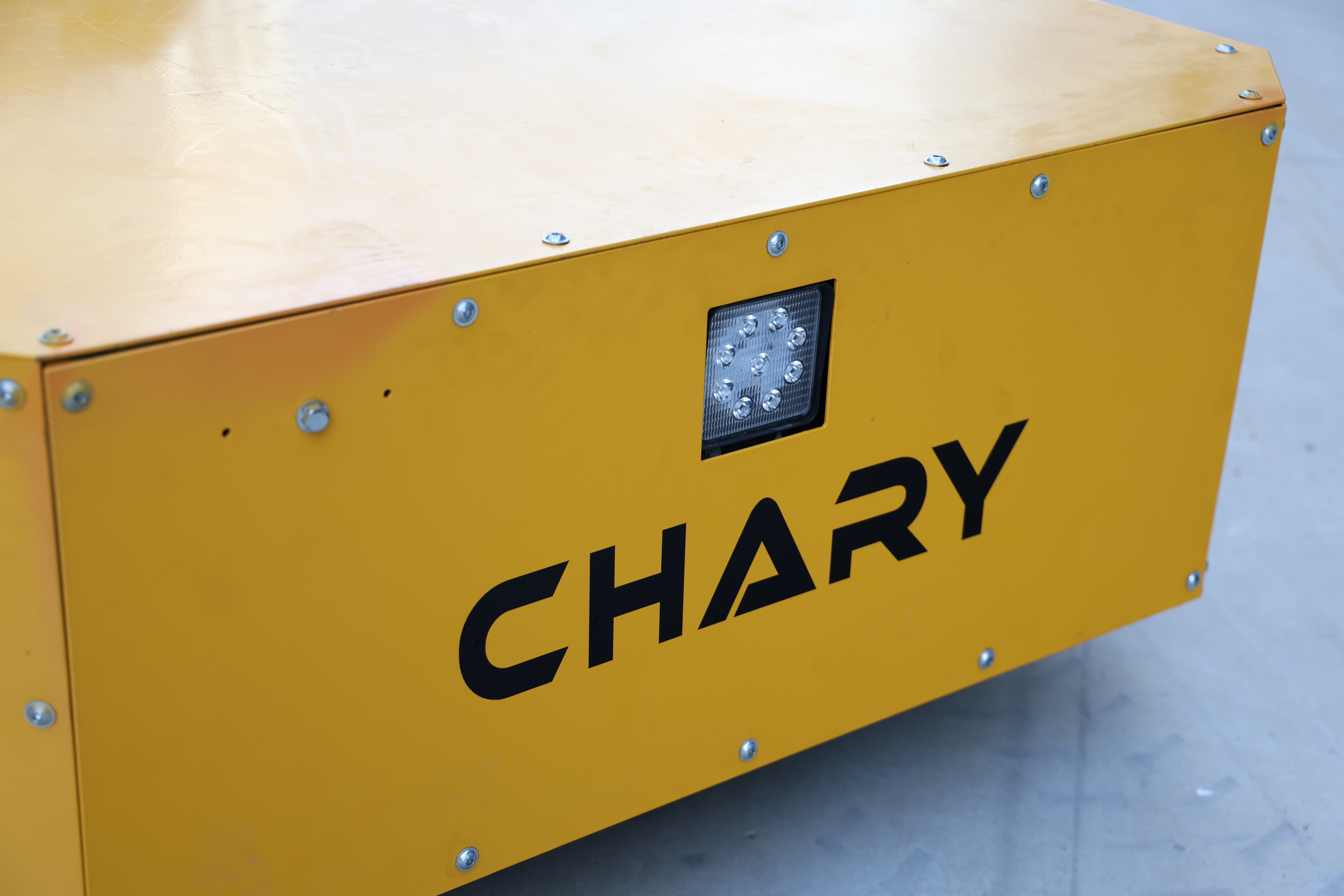
The shortlist begins with the job, not the word “mini”
For a buyer evaluating a mini excavator, the first screening question is whether the machine is actually specified for the required excavation work. The supplied corpus contains no mini-excavator model or mini-excavator specification sheet. The CR468C is named and described as a minidozer; the FAW entries are truck types and truck models. This article therefore compares the documented alternatives without reclassifying them as excavators.
The CR468C information links the machine to cleanup beneath conveyor belts, mining and mineral-processing areas, tunnels, box culverts, drainage systems, pumping stations, and irrigation projects. Those are application descriptions supplied for the remote-controlled electric mini dozer. They do not establish a digging depth, excavating capability, or attachment compatibility. A buyer whose work requires those specific excavator functions would need the relevant excavator model data before making a selection.
The FAW product entries instead list vehicle categories such as tractor trucks, dump trucks, cargo or rigid trucks, light trucks, concrete mixer trucks, garbage trucks, sprinkler trucks, tank trucks, and other specialized vehicles. The application unit describes goods transport across logistics, construction materials, mining, ports, agriculture, cold chain, and other transport contexts. These descriptions support a transport-oriented shortlist, not a mini-excavator comparison.
What the CR468C specification supports
The product specification identifies the CR468C as a remote-control lithium-battery rubber-track minidozer. Its listed overall dimensions are 2,850 × 1,200 × 600 mm, with a listed total length without the bucket of 2,250 mm. The listed self-weight is 1,100 kg. The specification gives a rated load capacity of 450 kg, bucket width of 1,200 mm, and bucket capacity of 0.15 m³.
For movement and operation, the data lists remote control, a control distance of 200 m, a maximum driving speed of 4 km/h, and a maximum steering angle described as a 360-degree spin in place. The machine is listed with rubber tracks and a climbing ability of 40 degrees. These are manufacturer-provided specifications in the supplied product unit; buyers should confirm the exact configuration and test conditions in the current technical documentation before treating them as acceptance criteria.
The same product unit lists a 73.6 V lithium battery with a capacity of 300 Ah, motor power of 7.5 kW, and a charging time of about two hours. It reports working hours of about eight hours. The wording does not specify the operating cycle, load, temperature, terrain, or duty profile behind that runtime figure. For a project where shift coverage matters, the practical evaluation should therefore include a duty-cycle test using the intended material, route, and work pattern.
The application information describes the CR468C as electric, remote controlled, and intended for very confined spaces. It also describes cleanup and bulk-material handling applications. These details can help buyers decide whether to include it in a screening list for a compact, controlled-operation task. They do not establish a universal productivity rate or prove a specific labor-saving outcome for a new project.
What the FAW truck entries support
The supplied FAW entries cover several vehicle families and body types, rather than one single truck configuration. Listed models include J6L, NEW J5P, JK6, Tiger v, JH6, J6P, and a broader group of models. Across the relevant product records, the stated truck weight range is 3,000–15,000 kg, and the size range is 6,000 × 2,300 × 3,000 mm to 12,000 × 2,550 × 3,800 mm. The data says tire specifications are available based on customer needs and lists ABS/EBS/TCS as security configurations.
Those range figures are not a single model’s complete specification. The corpus does not map every weight, dimension, axle configuration, or safety configuration to each named truck model. Buyers should not use the ranges as a definitive specification for a particular J6L, JH6, or other truck variant without a model-specific quotation or datasheet.
The application unit describes FAW truck use in goods transportation and lists road and operating contexts including highways, urban roads, factories, farms, construction sites, mines, cities, and transfer stations. It also lists rear-wheel-drive configurations of 6 × 4 and 6 × 2 and all-wheel-drive configurations of 6 × 6 and 8 × 8. These details make the truck entries relevant when the core project need is moving material or freight between locations. They do not establish a truck’s suitability for every route, payload, jurisdiction, or operating condition.
Side-by-side shortlist: different work, different evidence
| Buyer question | CHARY CR468C minidozer | FAW truck options |
|---|---|---|
| Documented equipment category | Remote-control lithium-battery rubber-track minidozer | Truck range including cargo, dump, tractor, and specialized truck types |
| Documented task emphasis | Confined-space cleanup and material handling applications described in the corpus | Transporting goods and materials across listed logistics and industrial contexts |
| Selected published data | 1,100 kg self-weight; 450 kg rated load capacity; 0.15 m³ bucket; 200 m control distance; about 8 hours working time | 3,000–15,000 kg truck weight range; stated size range; tire specifications based on customer needs; ABS/EBS/TCS listed |
| What the figures do not prove | Excavator digging performance, project productivity, or runtime under a particular duty cycle | A specific model’s payload, dimensions, configuration, road approval, or suitability for a particular route |
| Mini-excavator status | Not identified as a mini excavator in the supplied product record | Truck category; not identified as a mini excavator in the supplied product record |
The table is a category and evidence comparison, not a performance ranking. The minidozer’s rated load capacity and bucket capacity describe different measures from the truck weight range. They should not be compared as if they were equivalent payload figures. Likewise, the stated overall machine dimensions and the truck size range describe different equipment types and are not a like-for-like footprint comparison.
How to apply the shortlist to a project
1. If the main task is confined-space cleanup
Check whether the work resembles the CR468C application descriptions: cleanup under conveyor belts, in tunnels or drainage infrastructure, or handling material in a restricted work area. Then verify access width and height, floor or ground conditions, required material-handling capacity, control arrangements, operating hours, charging access, and any site-specific safety requirements. The supplied data gives machine dimensions and selected performance specifications, but it does not provide a complete site-clearance drawing or an independently tested operating profile.
2. If the main task is moving goods between locations
Start with the FAW truck type and intended route. A cargo or rigid truck, dump truck, tractor truck, or specialized body serves a different transport purpose. Confirm the exact model, axle configuration, body type, load and gross-weight limits, dimensions, tire selection, and applicable road and market requirements using model-specific documentation. The general range information in the corpus is useful for early screening, not final vehicle approval.
3. If the project is specifically for a mini excavator
Do not advance either shortlisted option as a verified mini excavator on the evidence available here. Request a separate mini excavator product record with the model name and application-relevant specifications. Depending on the work, a technical review may need dimensions, operating weight, digging depth, reach, bucket configuration, powertrain, and attachments. None of those mini-excavator-specific data points is supplied for the CR468C or the listed FAW trucks in this corpus.
4. If the project combines handling and transport
A project may involve both moving material at the work face and transporting it elsewhere. In that case, treat the minidozer and truck as potentially complementary equipment categories rather than direct substitutes. Define the handoff point, material type, travel distance, access constraints, and loading method. The supplied data does not establish a complete paired system, compatibility, or total operating cost; those need to be assessed for the actual project configuration.
Technical verification before purchase
For the CR468C, a document review should confirm the model designation, dimensions, rated load, bucket data, battery specification, control distance, charging requirements, and operating conditions behind the stated working hours. The specification lists charging voltage as 380/220 V, while the supplied data does not explain the connection options or site electrical requirements. That detail should be confirmed for the destination and installation context.
There is a discrepancy within the supplied CR468C-related material about the remote-control reach: the product specification lists 200 m, while the application description says reach is up to 300 m. This article uses the product specification’s 200 m figure in its comparison table and does not treat the two statements as interchangeable. Buyers should ask which value applies to the offered configuration and under what test conditions.
For FAW trucks, request a configuration-specific record rather than relying on the range-level data. The entries list several truck types and models, but do not provide a complete matching table between model, vehicle dimensions, weight, axle layout, and body. The listed ABS/EBS/TCS configuration should also be checked against the exact vehicle and destination-market documents; its presence in a general product record does not establish certification or legal compliance for a particular jurisdiction.
For either category, the supplied information does not include a verified quotation, landed cost, warranty terms, spare-parts pricing, delivery schedule, or independent test report. Those omissions matter at the evaluation stage. A shortlist identifies candidates for evidence collection; it should not be mistaken for a completed procurement qualification.
Where a mini excavator fits—and where it does not
Searches for mini machinery often bring together mini excavators, mini loaders, skid steer loaders, forklifts, and other compact equipment. Product labels alone do not show that these machines perform the same operation. In this case, the relevant records identify the CR468C as a minidozer and FAW products as trucks. Neither record supplies a mini excavator model or excavation-specific specification.
Accordingly, a buyer should keep three decisions separate: whether the job requires excavation, whether a compact minidozer is suitable for the described cleanup or material-handling task, and whether a truck is needed to move goods. A mini excavator may be relevant to the first decision, but no mini excavator candidate is documented in this shortlist. The evidence supports proceeding with a task-based evaluation of the CR468C and FAW truck categories only when their stated roles match the project.
Market context: what the available evidence can and cannot say
The third-party data package includes a commercial research estimate for the global compact mini excavator market, but it does not provide a transparent, independently validated market boundary in the supplied evidence. That estimate is not needed to determine whether the CR468C or a FAW truck matches a specific site task, so no market-size or growth claim is used here.
The product-level evidence is more useful for this shortlist than a broad market projection: one record gives CR468C specifications and described applications, while the FAW records identify truck types and selected range-level data. These facts support initial category screening. They do not establish which option is more popular, lower-cost, more productive, or better suited across all projects.
Procurement interpretation and limits
For a buyer in the Research to Evaluation stage, the strongest conclusion is a boundary, not a winner. The CR468C is the documented option for reviewing a remote-controlled electric minidozer use case. FAW truck entries are the documented options for reviewing goods-transport requirements. If the purchase requirement is a mini excavator, this evidence set is insufficient to make a product recommendation.
A practical evaluation file should record the required task, operating environment, equipment category, exact model, configuration, evidence source, and unresolved questions. For the minidozer, record the operating duty cycle and clarify the control-distance discrepancy. For a FAW truck, obtain the exact model and body configuration behind the stated range figures. For an excavator requirement, add a separately documented excavator candidate before comparing specifications.
This approach avoids a common sourcing error: allowing a broad keyword such as “mini machinery” to replace a precise operational requirement. Compact size does not establish equivalent function. A defensible shortlist connects each named machine to a documented task and identifies where the available evidence ends.
Future outlook
As compact machinery buyers compare more equipment categories in one sourcing process, clear model-level documentation becomes especially important. Electric operation, remote control, transport configuration, and site access may all shape evaluation, but their relevance depends on the job. The corpus documents some CR468C details and selected FAW truck range information; it does not provide a standardized cross-category dataset or independent performance testing.
For future comparisons, the most useful next step is not to add more unrelated product names. It is to gather comparable, model-specific evidence: task requirements, operating envelope, verified technical specifications, test conditions, and destination-market documentation. That would allow buyers to compare candidates within the correct category while preserving a separate path for mini excavator evaluation.
FAQ
Is the CHARY CR468C a mini excavator?
No. The supplied product record identifies the CHARY CR468C as a remote-control lithium-battery rubber-track minidozer. It does not identify the model as a mini excavator or provide mini-excavator-specific specifications.
Can the CR468C and FAW trucks be compared directly?
They can be compared as shortlist options against a project’s task requirements, but they are different equipment categories. The CR468C is described as a minidozer for confined-space cleanup and material handling; FAW entries describe trucks for transporting goods and materials.
What CR468C battery and operating-time figures are listed?
The supplied specification lists a 73.6 V lithium battery with 300 Ah capacity, about two hours of charging time, and about eight working hours. It does not specify the operating cycle or conditions behind the working-time figure.
What FAW truck specifications are available in the supplied information?
The FAW records state a truck weight range of 3,000–15,000 kg, a size range from 6,000 × 2,300 × 3,000 mm to 12,000 × 2,550 × 3,800 mm, tires based on customer needs, and ABS/EBS/TCS as listed security configurations. These are range-level details, not a complete specification for every model.
What should a buyer do if the requirement is specifically for a mini excavator?
Obtain a separate mini excavator model and its application-relevant technical documentation. The supplied CR468C and FAW truck records do not establish either option as a mini excavator.
¿Tiene preguntas o necesita más detalles?
Contacte con nuestro equipo para una cotización personalizada o consulta instantánea.
Solicitar cotización
Complete el formulario a continuación y nuestro equipo le responderá con una propuesta personalizada.
Chat directo de WhatsApp
¿Prefiere chatear en tiempo real? Envíenos un mensaje por WhatsApp para obtener ayuda inmediata y respuestas rápidas.
- Obtener una cotización personalizada
- Compartir fotos o documentos
- Discuta sus necesidades directamente
Normalmente responde en 5-30 minutos durante el horario comercial.