
Mini Excavator Factory Audit: Six Evidence Points That Predict Reliability
Mini Excavator Factory Audit: Six Evidence Points That Predict Reliability
Reliability in a mini excavator is decided long before the machine reaches a site — in the steel that enters the cutting cell, the weld that closes the boom, the pretreatment that precedes paint, and the way the engine is isolated from the frame. For a buyer moving from shortlisting into evaluation and a first order, a structured plant walk is one of the few checks that does not depend on the supplier’s own marketing.
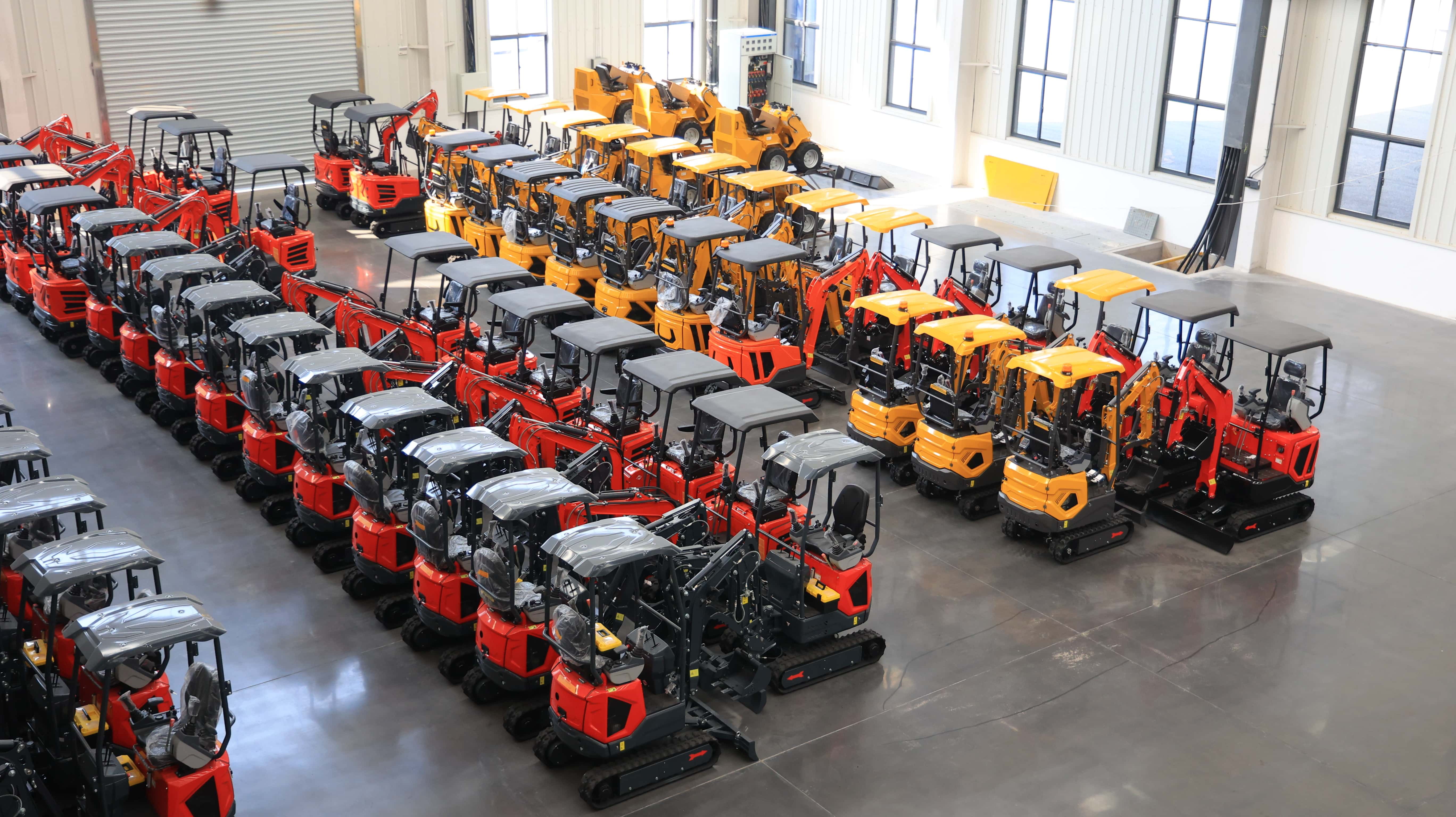
This article sets out six shop-floor evidence points that can be verified on a supplier visit, focused on process signatures: what the plant physically does, rather than what a catalogue says it can do. The reference specification used here is the process detail HUAYEE Excavator publishes for its mini excavator range, produced by Shandong HUAYEE Heavy Industry Machinery Group Co., Ltd., a Jining-based manufacturer of small construction machinery that operates a 300,000 m² group site with more than 20 production lines — including in-house cutting, robotic welding and integrated stamping and painting lines — and exports to more than 100 countries.
Each point is written so that it can be applied to any supplier, not only this one. The purpose of the checklist is comparative: a buyer who knows what a laser-cut edge, an integrated cast side-swing connector or a documented pin-hardness record looks like can rank two factories on the same afternoon.

Why a plant walk answers a capability question that a specification sheet cannot
OEM and ODM capability is usually presented as a list: colour, logo, nameplate, engine brand, hydraulic system, canopy or enclosed cab, rubber or steel track, attachments, and models localised for the destination market. Every item on that list is easy to promise and hard to execute repeatedly, because each one depends on a plant that actually cuts, welds, paints and assembles in the same place.
The distinction matters most at the transition from evaluation to execution. A buyer about to place a first order — or to commit to own-brand machines and an exclusive agency — is not simply buying a specification; they are buying the repeatability behind it. HUAYEE states an annual production and sales capacity of about 30,000 units across more than 20 intelligent production lines, an in-house R&D team of more than 60 engineers, acceptance of trial orders from a single unit, and a delivery window of 30–45 days for standard configurations. Those figures describe scale and responsiveness. The shop floor describes whether the scale is real.
Where travel is not practical, two substitutes exist: an on-site visit, or a live video walkthrough of the production lines. HUAYEE supports both, together with a 24-hour online VR factory tour and bilingual inspection reports. A video walk is weaker than standing beside the welding fixture, but it still establishes whether the cutting, welding and painting lines exist on the site being discussed — which is the first thing a buyer actually needs to know.
The six evidence points at a glance
The six points below run in the order a machine is built, so the walk follows the material rather than the sales presentation. Point five deliberately groups cylinder tubes with hose assemblies, because they share one failure mode: leakage.
| Point | What to look at | What it predicts |
|---|---|---|
| 1. S355 main structure | Laser-cut plate edges, fixtured robot welding cells, weld and structural test records | Dimensional fit and fatigue resistance at the highest-stress joints |
| 2. Side-swing connector | One-piece cast steel joint with four machined load-bearing faces and no welded joint across the load path | Durability of one of the highest-load articulation points on the machine |
| 3. Corrosion system | Shot-blasting line ahead of paint, electrostatic application, two primer coats plus one top coat | Coating adhesion and service life in humid, coastal and fertiliser environments |
| 4. Pins and bushings | Quenched and tempered pins, galvanised, above 500 HB surface hardness, running in internal bushings | How much play the boom and bucket develop over the working life |
| 5. Hydraulics | Cold-drawn seamless cylinder tubes at 0.01 mm concentricity and perpendicularity with NOK seals; Continental and Danfoss hoses rated −40 °C to +100 °C, spring-wrapped sleeves, in-boom routing | Leak-free operation in cold and hot climates, and hose survival on abrasive sites |
| 6. Engine mounting | Eight rubber damping pads, evenly loaded, with accessible fasteners | Vibration control, fastener and harness life, operator comfort |
1. S355 main structure, laser cut and robot welded
Start at the cutting cell, not at the finished machine. Laser cutting holds plate geometry closely enough that parts locate in the welding fixture without being forced into position; forced fit introduces locked-in stress exactly where cyclic digging loads will later concentrate. Ask to see the cut edges: a laser-cut edge is square and consistent along the kerf, while a hand-guided or unmonitored cut leaves variable edge quality that then has to be dressed before welding.
Then look at the welding itself. Robot welding in a fixture produces a repeatable bead profile and repeatable penetration, pass after pass, on the same joint. Manual welding can be perfectly sound, but its consistency depends on the individual welder and on how the joint was prepared. On a compact machine, the structural risk concentrates at the boom, the frame and the slew support; the practical question is whether those areas were welded under fixture, and whether the result was checked.
HUAYEE states that its manufacturing includes robotic welding plus non-destructive and structural testing of the slew support, and that the slew support is thickened and fully welded. That is the claim to test, not the claim to admire: a bead that looks neat is not evidence of penetration, but a structural test record tied to the machine is far closer to it. The failure mode this point guards against is documented in the supplier’s own buyer guidance on low-priced machines — frame deformation, cracking at the slew support or boom, and hydraulic leakage are described as the typical consequences of reduced plate thickness, manual or insufficient welding and no structural inspection, appearing after three to six months of regular use.
What to ask: the plate grade and thickness for the boom and the slew support, the welding process used on each, and the non-destructive and structural test records for the batch.
2. Integrated cast steel side-swing connector: four load-bearing faces, no welded joint
The side-swing joint deserves its own stop on the walk, because it carries digging load through a small component and is one of the highest-load points on a mini excavator. On a welded assembly, that load passes through a heat-affected zone; on an integrated casting with four machined load-bearing faces, it is distributed across the faces themselves and there is no welded joint in the load path.
This is the point where a compact machine earns or loses its ability to work along a wall. A side-swing boom lets the bucket reach parallel to a wall without turning the machine — on the 4 t class HY40U the working device deflects 60 degrees to the left and 45 degrees to the right — and the joint that makes this possible is also the joint that absorbs the resulting side loads. A casting is not automatically better than a good weld; what a casting removes is the variable. There is no weld toe to inspect, no heat-affected zone to control and no repair weld to have been made and dressed.
What to check on the floor: whether the connector is presented as a single cast part, how many faces are machined for load bearing, whether any weld seam crosses the load path, and whether the pin bores are machined after casting so the pin sits square under load. If the joint is supplied as a welded fabrication, ask for its weld and inspection records instead — the audit does not reject the design, it changes what the buyer must verify.
3. Shot blasting, then electrostatic spray with two primer coats and one top coat
Paint is treated as cosmetics until it fails, and then it is a corrosion problem. The sequence that matters is the one before the topcoat: shot blasting removes mill scale and rust and leaves an anchor profile that the primer can grip, and electrostatic application wraps coating around edges and into corners where spraying from one direction alone would leave thin spots.
HUAYEE specifies shot blasting followed by electrostatic spray with two primer coats and one top coat. Three layers are not decoration; they are a barrier system, and the redundancy is concentrated where corrosion actually starts — weld toes, plate edges, the underside of the frame and the areas that collect mud and fertiliser.
What to check on the floor: the blasting line itself and whether it runs before the paint booth for the machines being discussed; a coating-thickness gauge reading taken in front of you on the frame, on a weld seam and inside a closed corner; and whether the same line handles OEM colours without skipping the primer stages. Thickness readings should exist as a per-unit record, not as a demonstration performed once for visitors.
Fit boundary: coating specification is a proxy for corrosion resistance, not a measurement of it. Machines working in coastal air, livestock buildings or slurry handling should be judged on the full barrier system and on the inspection interval, not on the finish alone.
4. Pins quenched and tempered, galvanised, above 500 HB, running in internal bushings
Pins are the highest-wear consumable on a mini excavator, and the pin-and-bushing pair determines how much play a boom develops after a few thousand hours. Two things can be checked directly: the pin specification and the way the pin is supported in the structure.
Quenching and tempering produces a hard surface with a tougher core, which is the combination a pin needs — surface hardness to resist wear against the bushing, core toughness to resist impact and bending. Galvanising adds corrosion protection on a part that spends its life in water, mud and fertiliser. HUAYEE specifies pins quenched and tempered and galvanised, above 500 HB surface hardness, running in internal bushings.
The bushing detail is the one buyers most often overlook. Where the pin runs directly in a welded boss, wear is absorbed by the structure itself; where it runs in an internal bushing, wear is absorbed by a replaceable part. That changes the whole-life cost calculation, and it changes what the dealer must stock. HUAYEE’s own service guidance includes keeping a consumables stock of hoses, seals, filters and pins at dealer level, which only makes commercial sense if those parts are designed to be replaced cheaply.
What to check on the floor: pin stock and its identification before assembly, hardness test records supporting the stated figure, bushes fitted in the boom, arm and bucket bosses, and whether pins and bushings are listed as service parts with a stated replacement interval.
5. Cylinder tubes and hose assemblies: 0.01 mm geometry, NOK seals, hoses rated −40 °C to +100 °C
Hydraulic leakage is the failure that most damages a dealer’s local reputation, because it is visible, it recurs and it contaminates the ground. The audit point is a specification chain rather than a single part. HUAYEE specifies hydraulic cylinder tubes cold-drawn seamless and held to 0.01 mm concentricity and perpendicularity, fitted with NOK seals.
That geometry matters mechanically. If the tube bore is out of round, or the end face is not perpendicular to the bore, the gland sits slightly cocked and the rod seal loads unevenly; the seal then weeps long before it wears out. A 0.01 mm figure is a specification a buyer can ask to see on a drawing and a measurement record, which is what makes it useful on a visit — the question is not whether the number sounds impressive, but whether it is controlled and recorded.
The hose side of the same point is where climate enters the audit. HUAYEE specifies Continental and Danfoss hoses rated from −40 °C to +100 °C, with multi-layer steel wire braiding, spring-wrapped protection sleeves, and routing inside the boom. A hose that is not rated for local winter temperatures becomes brittle and bursts; a hose that runs exposed along the top of the boom is the one that gets snagged, abraded and sun-aged. Routing inside the structure trades service access for protection, so it makes scheduled inspection more important, not less.
The supplier’s own failure guidance for this part is explicit: hoses not rated for the local working temperature, external damage where hoses are exposed, and ageing after long exposure to sunlight and site contamination are the recurring causes of leakage or a burst, and in some cases the cause is simply a loose connection rather than a damaged hose. The response procedure is equally specific — stop the machine, lower the attachment, lock the pilot safety lever, identify whether the damage is a burst, a cut or a loose connection, replace with a correctly rated hose, then run the machine and re-check the joint and the surrounding hoses at working pressure before returning it to service.
What to check on the floor: the cylinder tube measurement record, the seal brand marked on the packaging, the hose marking on the roll or the assembly showing the temperature rating and manufacturer, whether the protective sleeves are fitted as standard, and whether the boom hoses run inside or outside the structure.
6. Engine mounted on eight rubber damping pads
Engine mounting is the least glamorous stop on the walk and one of the most diagnostic. Vibration travels from the engine into the frame, and from the frame into fasteners, harnesses, hoses and the operator. Eight rubber damping pads distribute that load and control engine movement across the three axes; fewer pads, or pads compressed unevenly at installation, concentrate the load on individual mounts.
What to check on the floor: count the pads, confirm they sit square and evenly compressed, check that the fasteners are accessible for service rather than buried behind the pump, and confirm the clearance between the engine assembly and the frame. Then connect the engine data plate to the emission approval document for the destination market — a machine built for one market and shipped to another is a compliance problem, not a reliability problem, but both surface at the same moment.
Wear note: damping pads are a wear item. Ask what the inspection interval is and whether the pads are supplied as service parts. Degraded mounts show up first as noise and then as cracked brackets, and the diagnostic value of the check is that it forces the supplier to describe a maintenance interval at all.
Closing the walk: the push-down pilot lever safety lock as a functional test
The last check costs a few minutes and tests something no document can: whether the machine in front of you actually behaves as designed. With the machine parked on firm level ground and the attachment lowered, raise the left pilot safety lever to the locked position with the engine running. Every hydraulic function should be dead. Then attempt each function gently — boom, arm, bucket, swing, travel — and confirm nothing responds. Push the lever down to release, and confirm the controls come back cleanly.
Repeat it a second time and watch how the lever behaves. A push-down lock should hold its position positively rather than sitting ambiguously between states, because the device only works if the operator uses it every time they leave the seat. The same lever is the one referenced in the supplier’s own attachment-change procedure, where the sequence is: park on firm level ground, lower the attachment, stop the engine, move the left pilot safety lever to the locked position, release the quick-change coupler, change the attachment, engage and lock the coupler, raise it slightly and confirm full engagement before starting work.
Why this belongs in a factory audit: a safety device that is present but untested is a hypothesis. HUAYEE states 100% testing of its machines, and the walk gives the buyer a way to sample that claim directly. The same test also reveals assembly quality around the pilot circuit — a lever that binds, a detent that does not hold, or a function that creeps when locked all point back to the assembly line rather than to the component supplier.
How the six points map onto real applications
The checklist is not abstract. Each evidence point becomes more or less decisive depending on what the machine will do, which is why the application should be agreed before the audit rather than after it.
- Agriculture, orchards and livestock farms. Ditching, drainage, planting holes and material handling between rows put continuous load on the pin-and-bushing pair, and sandy or muddy ground accelerates wear. Wider track plates for low ground pressure, an auger, a hydraulic thumb and a narrow bucket are the usual attachments, and the pin specification in point four is the one to press hardest on.
- Landscaping and gardening. Courtyard renovation, planting and paving preparation involve repeated transport and tight gateways. The rubber track option and compact width decide access, while the coating system in point three decides how the machine looks after two seasons of wet green waste and soil abrasion.
- Trenching, utilities and confined sites. Pipe and cable trenching, sidewalk renovation and roadside repair depend on geometry before anything else: the minimum tail swing radius is 650 mm on the 2 t class HY20 and ranges from 650 to 975 mm across the HY10 to HY40U range, the HY10 is 930 mm wide with a 1,725 mm digging depth, and the side-swing boom angles described in point two are what allow work parallel to a wall. On these sites, the integrity of the side-swing joint is the difference between a machine that works and a machine that is parked.
- Rental fleets and 3–4 t classes. Where a machine passes through many operators, the functional test in the closing section matters more than any specification, and so does hose protection: rental units are the ones most likely to be snagged, mis-fuelled and returned with a leaking boom hose.
Where the walk stops: documented limits of a factory audit
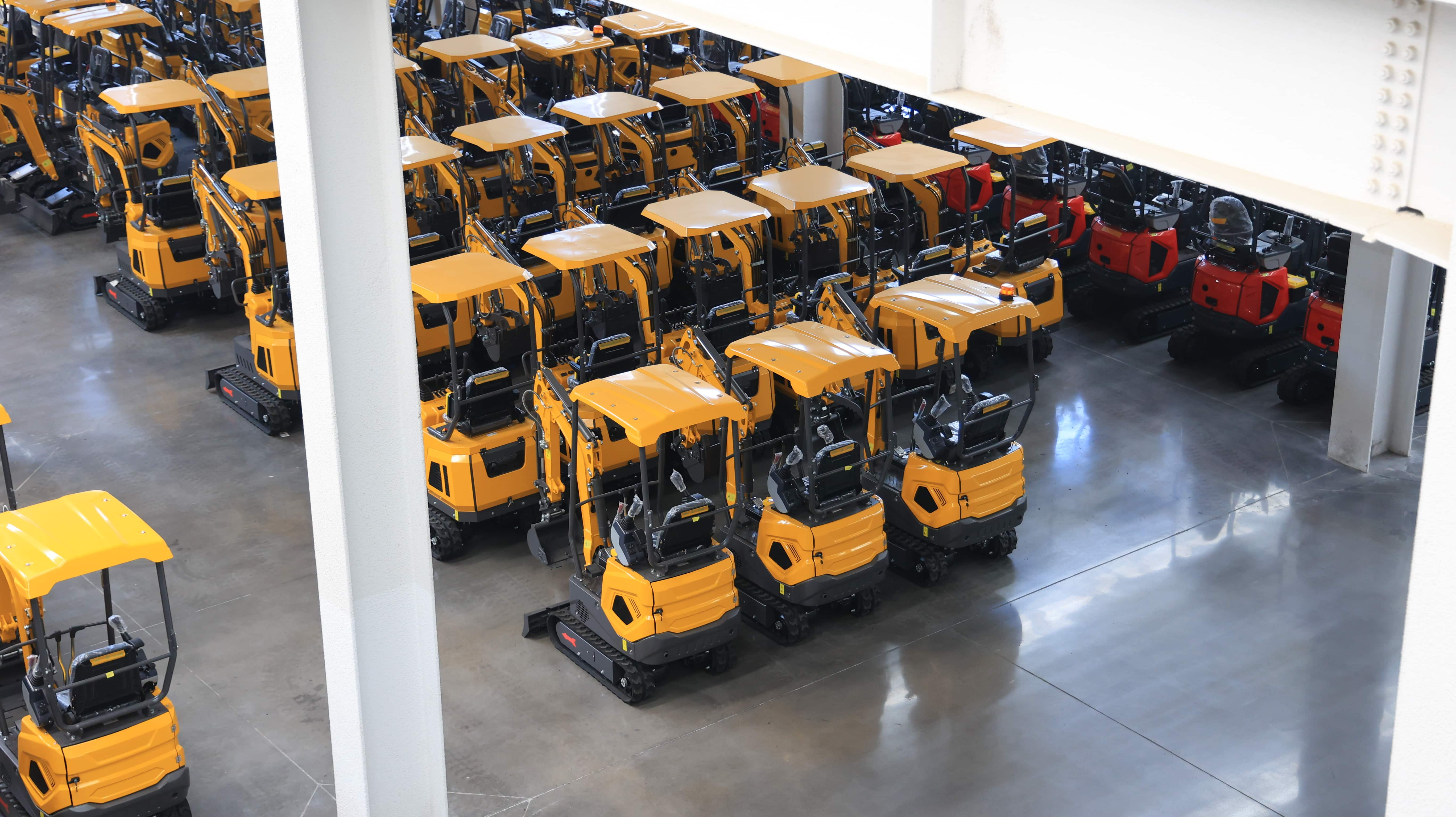
An audit of this kind confirms that a process exists and that it is documented. It does not measure service life. Six evidence points cannot substitute for several thousand hours in the field, and a buyer who leaves a plant believing that a neat weld bead proves durability has simply replaced one form of marketing with another.
Three further boundaries are worth stating plainly. First, cost: HUAYEE’s own comparison guidance puts the build-cost difference between its machines and low-priced equivalents at about USD 2,000, of which roughly USD 1,000 is reflected in the selling price, and argues that the difference is recovered through fewer structural repairs, less oil leakage and lower downtime. That argument holds for continuous work, rental fleets and markets where dealer reputation carries the warranty; for occasional light work at the lowest possible price, a lower-priced machine can legitimately be considered, provided whole-life cost rather than purchase price is the comparison.
Second, timing: an audit is recommended before a first order, and it becomes essential before OEM, own-brand or exclusive-agency cooperation. It is far less relevant when reordering a model that has already worked in the market, where delivery and parts availability take priority.
Third, relevance: the side-swing and tail-swing geometry that dominates a confined-site evaluation matters much less on large open sites, where digging depth, digging force and cycle time should drive the choice instead.
Market context: why process evidence is being asked for more often
The commercial backdrop explains the shift in buyer behaviour. Straits Research, in a report published in October 2026, values the global mini excavator market — defined there as units under 10 t — at approximately USD 11.01 billion in 2026, up from USD 10.42 billion in 2025, and projects USD 15.31 billion by 2032. The same research puts Europe at a 34% share of the global market in 2025.
Two structural details matter for a factory audit. The 3–4 t operating-weight class is identified as the leading segment in mature markets, particularly in rental yards, which means the machines that change hands most often are exactly the ones where safety devices, pin wear and hose protection are stressed by multiple operators. And research definitions differ: a market scoped as “under 10 t” is not the same population as a rental analysis focused on sub-4 t units, so any comparison a buyer builds from market figures should state which definition it uses.
Regulation adds a second layer of verification. Diesel engines sold in the United States must meet EPA Tier 4 Final standards for non-road equipment under 40 CFR Part 1039, and the EU applies Stage V limits under Regulation (EU) 2016/1628 as amended. HUAYEE holds EU Stage V type-approvals for the Kubota D1105 and D1703 engine types and for the KOOP KD15 engine family, whole-machine CE certification for the HY06 to HY225 crawler excavator range issued by Ente Certificazione Macchine Srl, noise emission verification to EN ISO 3744:2010, ISO 9001:2015 certification (certificate 62724Q0812R0S) and ISO 14001:2015 certification (certificate 62724E0543R0S), both valid to 20 August 2027. The practical implication for the walk is simple: the engine data plate on the unit being inspected should be traceable to the approval document supplied with it.
What to carry into the next supplier visit
The output of a good audit is not an impression; it is a short file of documents and observations. For each of the six points, the buyer should leave with something concrete: the plate grade and welding process for the structure plus its test records; the construction of the side-swing connector; coating thickness readings taken on the day; pin hardness records and the bushing arrangement; the cylinder tube measurement record and the hose markings; the engine mounting configuration and the emission approval number. Add the result of the pilot lever test and the audit is complete enough to compare two suppliers on the same terms.
Factory transparency is becoming part of the offer rather than a favour, which helps buyers who cannot travel: HUAYEE provides on-site verification, a 24-hour online VR factory tour, live video walkthroughs of the production lines and bilingual inspection reports, and its distributors can request a factory inspection report or a third-party inspection before shipment. Those routes are useful, but they are only as good as the questions asked during them — which is what the six points are for.
A reasonable outlook follows from the evidence rather than from optimism: as rental-weighted demand keeps the 3–4 t class prominent in mature markets, buyers are likely to keep shifting attention from headline specifications toward serviceability and documented process control — replaceable bushings, rated hoses, protected routing, traceable engine approvals. None of that guarantees a machine will not fail. It does mean the buyer knows what the factory was supposed to do, and can check whether it did.
For buyers who want the underlying configuration data before a visit, HUAYEE publishes a corporate brochure covering its model range and production capability: HUAYEE corporate brochure (PDF).
FAQ
How do I evaluate a mini excavator manufacturer before placing the first order?
Check the factory itself rather than the quotation alone: whether it owns cutting, robot welding and painting lines, how many models it produces, how quality is inspected before shipment, and whether it holds overseas warehouses and after-sales staff. Verify through a factory visit, a live video walkthrough of the production lines and warehouse, or a third-party audit, and ask for product certificates, inspection reports and references from customers in your region. A practical sequence is to shortlist two or three manufacturers, compare inspection records and certification documents rather than prices, and place a single-unit trial order before committing to volume. The audit itself consumes only travel or meeting time; a badly chosen supplier consumes repair cost, downtime and reputation.
How can I verify that a mini excavator factory really has a quality management system?
Look for system certification of the factory, not only product certificates for the machine. ISO 9001 covers quality management and ISO 14001 covers environmental management; both certificates state the certification body, the certificate number, the scope and the expiry date, and those details can be checked against the issuer. HUAYEE holds ISO 9001:2015 (62724Q0812R0S) and ISO 14001:2015 (62724E0543R0S) certification issued by JingXin Certification (Beijing) Co., Ltd., both valid to 20 August 2027, and supports verification through a factory visit, a live video walkthrough of the production lines or a third-party factory audit, with inspection records and product certificates available for review before the order. A certified system does not by itself certify a machine, but it does indicate documented process control, traceability and inspection, and it shortens the buyer’s own compliance paperwork.
Which certificates does a mini excavator need for import and sale in the EU?
A mini excavator sold in the EU needs whole-machine CE certification and an engine emission certificate matching the Stage V requirements applicable to the engine type. HUAYEE supplies whole-machine CE certification for its HY06 to HY225 crawler excavator range, issued by Ente Certificazione Macchine Srl in Italy, plus noise emission verification, EU Stage V engine type-approvals covering the Kubota D1105, Kubota D1703 and KOOP KD15 engine types and families, and US EPA certification for the US market. Certification documents should travel with the shipment, because incomplete documentation is a common cause of customs inspection delays and can prevent registration or resale in the destination market. Buyers shipping to markets outside the EU should confirm the local rules separately, as access requirements differ by region.
Why do some mini excavators start leaking hydraulic oil within the first year?
Leakage usually originates in the parts that are easiest to substitute: hydraulic hoses that are not rated for the local temperature range, and unbranded cylinder sealing rings. A hose that is not rated for the local climate becomes brittle in cold weather and can burst within months, while a low-grade seal weeps and can score the cylinder. Temperature rating is therefore a market-fit criterion, not a marketing detail: the hoses specified on HUAYEE machines are rated from −40 °C to +100 °C, with multi-layer steel wire braiding and spring-wrapped protection sleeves, and the cylinder tubes are specified to 0.01 mm concentricity and perpendicularity with NOK seals. When a hose does fail, the machine should be stopped, the attachment lowered and the pilot safety lever locked before the damaged hose is identified and replaced with a correctly rated part.
What is the risk of buying a low-priced mini excavator built with thin plates and poor welding?
The most serious risk is structural rather than cosmetic. Reduced plate thickness, manual or insufficient welding and the absence of structural inspection are associated with frame deformation, cracking at the slew support or the boom, hydraulic leakage and a short engine overhaul interval, with failures commonly appearing after three to six months of regular use. Repair cost and lost working days can then exceed the saving on the purchase price, and for a dealer the reputational damage outlasts the repair. The countermeasure is documentary: ask for plate thickness, the welding process and the structural inspection records before ordering, keep the machine within its rated working load, and record the first hours of operation on every new unit.
¿Tiene preguntas o necesita más detalles?
Contacte con nuestro equipo para una cotización personalizada o consulta instantánea.
Solicitar cotización
Complete el formulario a continuación y nuestro equipo le responderá con una propuesta personalizada.
Chat directo de WhatsApp
¿Prefiere chatear en tiempo real? Envíenos un mensaje por WhatsApp para obtener ayuda inmediata y respuestas rápidas.
- Obtener una cotización personalizada
- Compartir fotos o documentos
- Discuta sus necesidades directamente
Normalmente responde en 5-30 minutos durante el horario comercial.