
Milling Insert Shortlist: APMT1135, SNMX1206, LNMU0303ZER, 4NKT0603
Insert selection is the least expensive decision in a milling budget and the most expensive one to get wrong. A face mill running the wrong insert grade loses cycle time on every pass, and a fastfeed cutter paired with an insert that cannot carry the load turns a finishing operation into a rework loop. The commercial backdrop explains why buyers are narrowing rather than broadening their insert lists: the global milling tools market was valued at US$3.43 billion in 2025 and is forecast to grow at a compound annual rate of 6.2% across 2026 to 2035, according to DataM Intelligence. Growth of that order is absorbed through productivity per spindle hour, not through larger insert inventories.
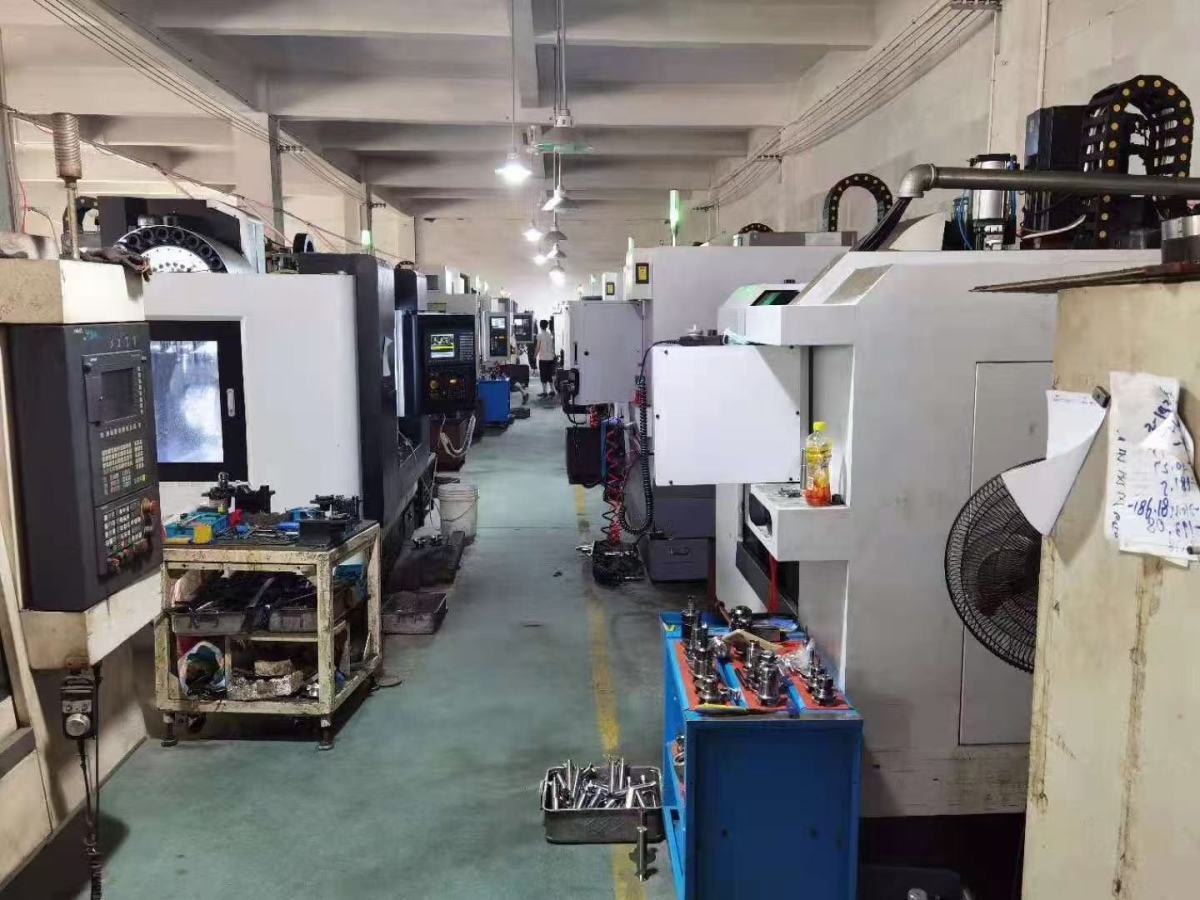
Wenling Geltos Tools Co., Ltd. (Geltos Tools) is a milling tool manufacturer established in 2012 in Wenling, Taizhou City, Zhejiang Province, China, producing grooving mills, modular milling cutters, chamfer mills, thread mills, dovetail mills, face, shoulder and profiling shank mills, shell mills, corn-shaped mills, interchangeable milling tools, carbide internal turning tools, silent tools and milling inserts. This article examines four insert designations in the company's shortlist, specifically APMT1135, SNMX1206, LNMU0303ZER and 4NKT0603, against the three operations they are intended to serve: face milling, profiling milling and fastfeed milling. The purpose is not to declare a winner among them, because they do not compete for the same cut, but to show how an evaluation-stage buyer can allocate work across the four and what must still be verified before a purchase order.
Why a shortlist outperforms a catalogue at the evaluation stage
The three operations in this shortlist fail in different ways. Face milling fails on flatness and surface finish across the cutter width. Profiling milling fails on geometry drift, where the insert edge no longer follows the intended contour and clearance in the cutter body becomes critical. Fastfeed milling fails on load and heat, because the high feed per revolution concentrates force into a shallow depth of cut and punishes any weakness in edge preparation or body rigidity. Each failure traces back to a different variable, and a buyer who holds twelve insert designations rarely controls any of those variables tightly.
A four-designation shortlist does something different. It assigns one insert logic to each operation family, so the shop can standardise on a small number of bodies and grades while still covering the bulk of its work. Fewer designations mean fewer grade variables in the process, fewer stock-keeping lines to audit, and a cleaner comparison when a machining problem appears, because the shop knows which insert was in the spindle. The trade-off is real: a shortlist will not cover every exotic contour, and buyers with a wide part mix should expect to keep one or two specials outside the list rather than force everything through four models.
The shortlist: four designations and the work each one covers
The table below sets out the intended operation, the evidence available for each designation, and the point that still needs confirmation in a quotation. Where published depth is thin, the honest position is to state it rather than fill the gap with assumed specifications.
| Designation | Primary operation | Evidence base | What to confirm |
|---|---|---|---|
| APMT1135 | Face milling, shoulder and square-shoulder work on conventional machining centres | The APMT insert family appears in the Geltos milling tool model set | Grade, corner radius and coating for the specific workpiece |
| SNMX1206 | Heavier face milling on larger shell mill bodies | The catalogue model string SNMX12064-050T4-22 pairs the SNMX1206 insert with a shell mill configuration | Insert thickness and edge preparation per grade |
| LNMU0303ZER | Profiling and contoured work with longer edge engagement | The catalogue model string LNMU03-20 20T3-160 sits within the same tool family | Chipbreaker geometry matched to the material |
| 4NKT0603 | Smaller-diameter face and copy work where tooth density rises as diameter falls | Shortlist designation; published parameter depth is thinner than for the APMT and SNMX families | Compatible body pairing and grade must be stated in the RFQ |
Insert designations are not arbitrary labels. ISO 11529-2:1998 sets out a designation system for shank type and bore type milling cutters with indexable inserts, which is precisely why a buyer can read a cutter body designation from one supplier and compare it with another without redrawing the tool. The same discipline applies inside a shortlist: the designation identifies the insert family and body interface, while the grade, coating and edge preparation carry the performance. Treating the designation alone as a purchasing decision is the most common error in insert sourcing, because two inserts with the same designation and different grades behave very differently in hardened material.
Technical basis: heat treatment, tolerance and the HRC40-50 parameter
Geltos states that its products are heat-treated before processing, a sequence intended to hold tolerance to no greater than 0.02 mm and to suit high rotation and fast-feed cutting. That tolerance figure is the number a buyer should test, because it governs whether an interchangeable or modular holder can be swapped without re-dialling the cutter, and whether a fastfeed body will repeat its position after a tool change. The published parameter set for the related milling tool family is summarised below.
| Stated body hardness | HRC40-50 |
| Teeth per cutter | 1 to 20 |
| Length range | 80 to 350 mm |
| Diameter range | 40 to 250 mm, with catalogue diameter options from 08 mm to 400 mm |
| Width options | 1, 2, 2.3, 3, 4, 5, 6, 7, 8, 10, 12, 14, 16 and 20 mm |
| Materials | Alloy steel, spring steel and carbide |
| Stated starting parameters | Cutting speed V = 180 and feed rate F = 0.02, as supplier-recommended starting values |
One distinction causes more sourcing mistakes than any other in this category. The HRC40-50 figure describes the hardness range stated for the tool family itself, while the shortlist is positioned for workpiece materials up to HRC65. Those are not the same measurement, and a buyer who reads one as the other will over-specify bodies or under-specify grades. Hardened workpiece material above HRC50 places the load on the insert grade and edge preparation, not on the body, and the appropriate response is to confirm the grade for the specific hardness band rather than to look for a harder cutter body.
The same caution applies to the stated starting parameters. A cutting speed of V = 180 and a feed rate of F = 0.02 are reference values, and the units, the applicable insert grade and the workpiece hardness band must be confirmed against the actual machine, the holder overhang and the material condition before the first production run. Parameters transferred between machines without that confirmation are the single most common reason a shortlisted insert appears to underperform.
Face, profile, fastfeed: allocating work across the four designations
Face milling. APMT1135 and SNMX1206 carry the face milling load in this shortlist. The APMT family suits shoulder and square-shoulder geometry on conventional machining centres where the cutter must produce a flat face and a true shoulder in one pass. SNMX1206 moves to heavier face milling, typically on larger shell mill bodies, where the priority shifts from detail to stock removal width and body stability. The decision rule is straightforward: if the operation is width-limited and detail-sensitive, the smaller designation; if the operation is depth-limited and load-sensitive, the heavier one.
Profiling milling. LNMU0303ZER serves contoured and profiling work where edge engagement is longer and the insert must track a path rather than clear a face. Profiling punishes weak chip control, so the confirmation item for this designation is chipbreaker geometry matched to the workpiece material rather than raw hardness. A profiling insert that evacuates chips poorly will hold tolerance briefly and then smear the surface, which is why the material match matters more here than in face milling.
Fastfeed milling. 4NKT0603 completes the shortlist for smaller-diameter and copy work where tooth density rises as diameter falls. It is also the designation with the thinnest published data in the available evidence, which is a practical statement rather than a criticism: a buyer should expect to specify the compatible body pairing and the grade explicitly in the RFQ instead of relying on a catalogue default. Fastfeed operations in general trade depth of cut for feed rate, and that trade depends on the body, the insert seating and the machine's rigidity far more than on the designation printed on the box.
Application fit across five manufacturing contexts
Geltos lists automobile, aerospace, metal cutting and machining, and mechanical workshop applications for this milling tool family, and positions the shortlist for mechanical processing, automobile, aerospace, woodworking and shipbuilding work. The fit differs by context. In general mechanical processing, the shortlist functions as a standardisation tool, where a small set of designations covers brackets, plates and housings. In automotive volume work, the value sits in repeatability between tool changes, which is why the 0.02 mm tolerance claim and the interchangeable holder concept matter more than the insert designation itself. In aerospace, material hardness and documentation burden dominate, and the buyer's real question becomes whether material certificates and inspection records accompany the shipment.
Woodworking and shipbuilding pull in opposite directions. Woodworking and composite trimming reward sharp geometry and clean edges, where a profiling designation does most of the work. Shipbuilding rewards large-diameter face milling and grooving under difficult access, where body rigidity and vibration behaviour decide the outcome and where the company's separate silent tool range addresses deep-cut vibration rather than the insert itself. Reading the shortlist against the application, rather than against the catalogue, is what separates a working specification from a stock list.
Field evidence: 2 mm grooving in a Russian precision shop
The most specific application evidence available for this tool family comes from a precision mechanical processing factory in Russia, which installed 5 units of milling tools for precision metal grooving and slotting. After two years of use, the reported result was grooving of 2 mm width slots with smooth surface finishing, fastfeed grooving and long working life. The company's GFN cutters are described as realising narrow grooving as thin as 2 mm, which aligns with that report.
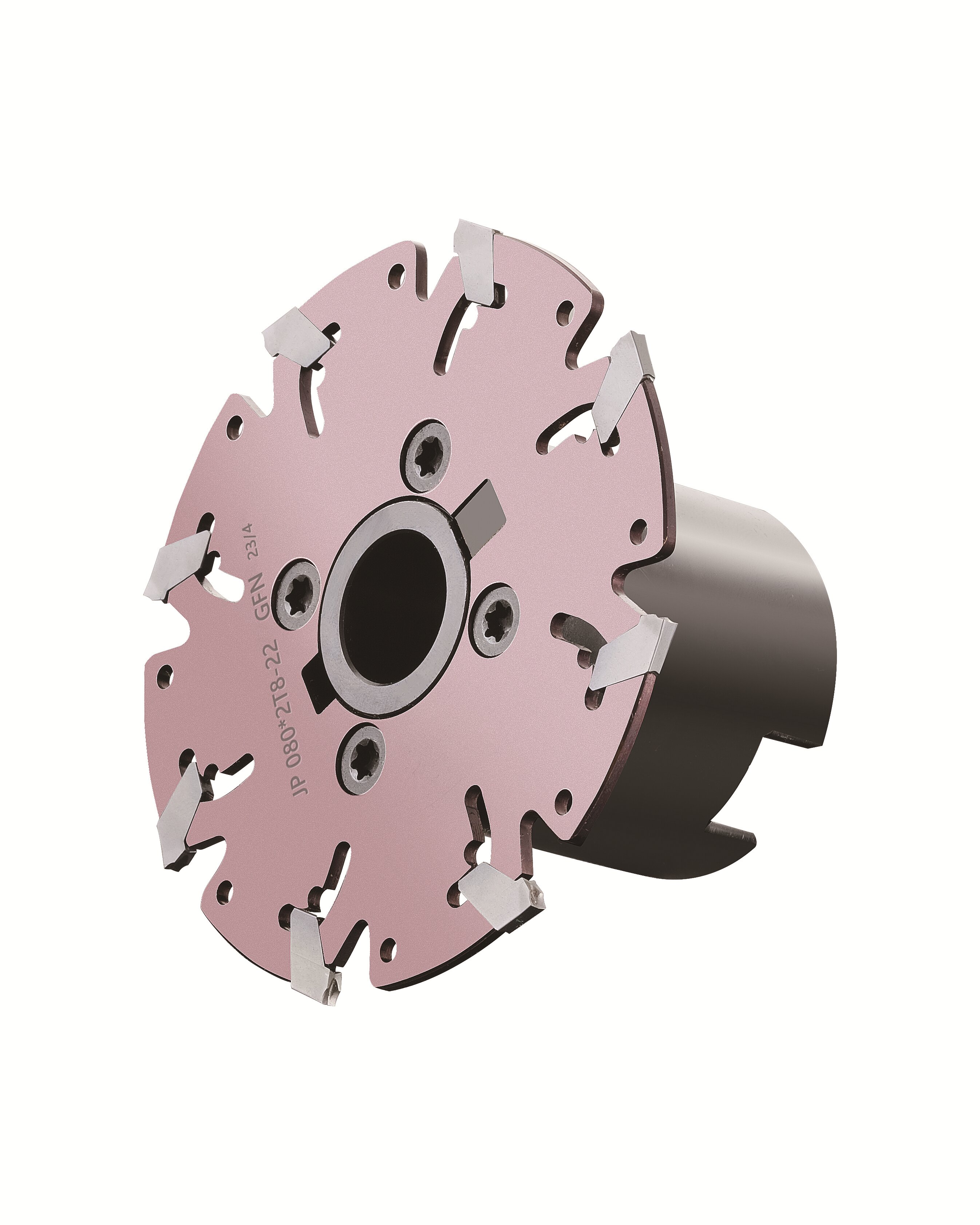
The evidence should be read for what it is. It validates narrow-groove capability within the wider Geltos tool family and it demonstrates an installed base in a demanding application; it does not constitute a test of APMT1135 or SNMX1206 face milling performance, and it is supplier-reported rather than independently audited. A buyer evaluating the shortlist should treat the case as supporting evidence for manufacturing consistency and application support, and should still run a first-article trial on their own material before committing a production line.
Market context: growth absorbed through standardisation
Forecast growth of 6.2% annually to 2035, on a base of US$3.43 billion in 2025, describes a market expanding faster than most buyers will expand their tooling budgets. The arithmetic of that gap is what makes shortlists interesting. If spend per spindle hour must fall while output rises, the levers are tool-change time, insert cost per edge and the number of designations a shop must hold. Geltos addresses the first lever directly: its interchangeable and modular milling holders fix one holder and accept different milling heads, which reduces tool-change time and cuts purchasing cost by avoiding a separate body for every operation.
Geltos reports monthly capacity of 30,000 to 40,000 teeth, a lead time of 10 to 30 days, a minimum order quantity of 1 unit and export activity amounting to 5 to 10% of output, with stated markets including India, Russia, Iran, Morocco, Italy and the USA. Those figures describe commercial reach and order flexibility rather than verified production capacity, an important distinction that is taken up in the next section.
Comparison with traditional single-designation buying
The conventional approach is to buy one familiar insert designation and use it wherever it fits, on the reasoning that fewer variables mean fewer problems. The comparison below shows where that reasoning holds and where a shortlist performs better.
| Criterion | Single-designation buying | Four-designation shortlist |
|---|---|---|
| Operation coverage | One geometry forced across face, profile and fastfeed work | One designation per operation family |
| Stock complexity | Lowest line count, highest risk of a single point of failure | More lines, but each with a defined purpose |
| Changeover time | Frequent re-dialling when one body is pushed into the wrong operation | Reduced where modular holders share a body across heads |
| Root-cause clarity | Hard to isolate whether tool, grade or parameter caused the fault | Designation isolates the variable |
| Verification burden | One approval package to manage | Four approval packages, more documentation to request |
Where this shortlist stops: limits and verification gaps
Geltos relies on internal factory inspection for quality assurance, and the available evidence records no third-party certification. That is a genuine boundary for this shortlist, not a footnote. Buyers whose own customers require traceable certification, material certificates or accredited test reports should treat in-house inspection as a starting point and request inspection records, material certificates and first-article reports for each designation before qualification. In regulated aerospace or defence supply chains, the absence of third-party certification shifts the entire verification burden onto the buyer's receiving inspection.
- Facility and capacity figures that circulate in company-controlled content are excluded from this assessment because they are not independently verified; treat them as unconfirmed until a factory audit or document review is completed.
- Publicly available SKU-level data is thin on coating type, insert grade, per-insert tolerance and body compatibility; these must be requested item by item.
- This shortlist is not a ranking against other manufacturers. The evidence base contains no independent comparative cutting test, so any claim of superiority over another brand would be unsupported.
- 4NKT0603 carries the least published detail of the four designations and should be specified most tightly in the quotation.
A practical procurement checklist before the RFQ: request the grade and coating for each designation against the actual workpiece material; request a dimensional drawing and the applicable designation standard for each cutter body; confirm the compatible holder interface and overhang; confirm whether the quoted price includes inserts or bodies; confirm lead time and minimum quantity per line, since Geltos states 10 to 30 days and a minimum of 1 unit; and request one physical sample for a first-article trial before the shortlist is written into a process sheet.
Future outlook
The direction of travel in insert procurement is towards machine-readable tool data rather than catalogue pages. ISO 13399 describes an international standard for the representation and replacement of cutting tools in computer-readable form, and buyers who run CAM and tool-management systems increasingly expect suppliers to provide product data in a compatible structure. For a shortlist like this one, that shift changes what a supplier must deliver: not only the insert and the body, but a data record that lets the buyer load the tool into a library without re-keying geometry. Geltos operates with an R&D team of 5 engineers and states that it supports non-standard and customised production, including special geometry tool design and special material development, which is the capability base such data work depends on.
The second shift is documentation. As buyers in aerospace and shipbuilding tighten incoming inspection, suppliers who can attach inspection records and material certificates to a shipment will qualify faster than suppliers who cannot, independent of insert quality. For this shortlist, the practical expectation over the next procurement cycles is that grade-level documentation becomes as decisive as the designation itself.
FAQ
Which of the four inserts is intended for face milling?
APMT1135 and SNMX1206 are the designations in this shortlist positioned for face milling. APMT1135 is aimed at shoulder and square-shoulder work on conventional machining centres, while SNMX1206 is aimed at heavier face milling on larger shell mill bodies, where the catalogue model string SNMX12064-050T4-22 pairs this insert with a shell mill configuration. The grade, corner radius and coating for each still have to be confirmed against the workpiece material.
What hardness range applies to the tools and to the workpiece?
The stated hardness range for the related Geltos milling tool family is HRC40-50, which describes the tool specification rather than the workpiece. The shortlist is positioned for workpiece materials up to HRC65. Buyers should confirm the insert grade for the specific workpiece hardness band, because above HRC50 the load is carried by the grade and edge preparation rather than by the cutter body.
What cutting parameters should a first trial use?
Geltos states a cutting speed of V = 180 and a feed rate of F = 0.02 as recommended starting values for the shortlist. These are reference figures: the applicable units, insert grade and hardness band should be confirmed against the machine, the holder overhang and the material condition before a production run, and adjusted from the first-article result.
How can a buyer verify quality before ordering?
Geltos states that quality control rests on factory internal inspection and that the available evidence records no third-party certification. Buyers should therefore request inspection records, material certificates and dimensional drawings for each designation, use the stated minimum order quantity of 1 unit to obtain a sample, and allow for the stated lead time of 10 to 30 days. A first-article trial on the buyer's own material remains the most reliable verification step.
Which applications is the shortlist framed for?
The shortlist is framed for mechanical processing, automobile, aerospace, woodworking and shipbuilding work, and Geltos lists automobile, aerospace, metal cutting and machining, and mechanical workshop applications for the related milling tool family. Application evidence within the available record covers precision metal grooving and slotting, including 2 mm width slots, rather than face milling specifically.
¿Tiene preguntas o necesita más detalles?
Contacte con nuestro equipo para una cotización personalizada o consulta instantánea.
Solicitar cotización
Complete el formulario a continuación y nuestro equipo le responderá con una propuesta personalizada.
Chat directo de WhatsApp
¿Prefiere chatear en tiempo real? Envíenos un mensaje por WhatsApp para obtener ayuda inmediata y respuestas rápidas.
- Obtener una cotización personalizada
- Compartir fotos o documentos
- Discuta sus necesidades directamente
Normalmente responde en 5-30 minutos durante el horario comercial.