
Military Webbing Evolution: Standards, Materials, and Performance
Military Webbing Evolution: Standards, Materials, and Performance
Modern military webbing has evolved from a simple load-bearing accessory into a critical component of soldier systems, aerial delivery hardware, and protective equipment. As tactical environments demand lower infrared signatures, higher tensile strength, and multi-terrain concealment, the technical specifications of webbing directly affect mission outcomes.
For engineers and procurement professionals evaluating the current market, the challenge is not just finding a supplier who can produce webbing, but one who can deliver consistent MIL-SPEC compliance, advanced material formulations, and scalable production capacity. Xiamen Jude Webbing Co., Ltd., established in 2006, specializes in the research, design, and production of outdoor and military-grade special new material webbing. Its product portfolio includes Military Webbing, Camouflage Webbing, IRR Webbing, Aerospace Webbing, PIA Webbing, Nylon Webbing, Polyester Webbing, Aramid Webbing, and UHMWPE Webbing.
Compliance and Material Foundations
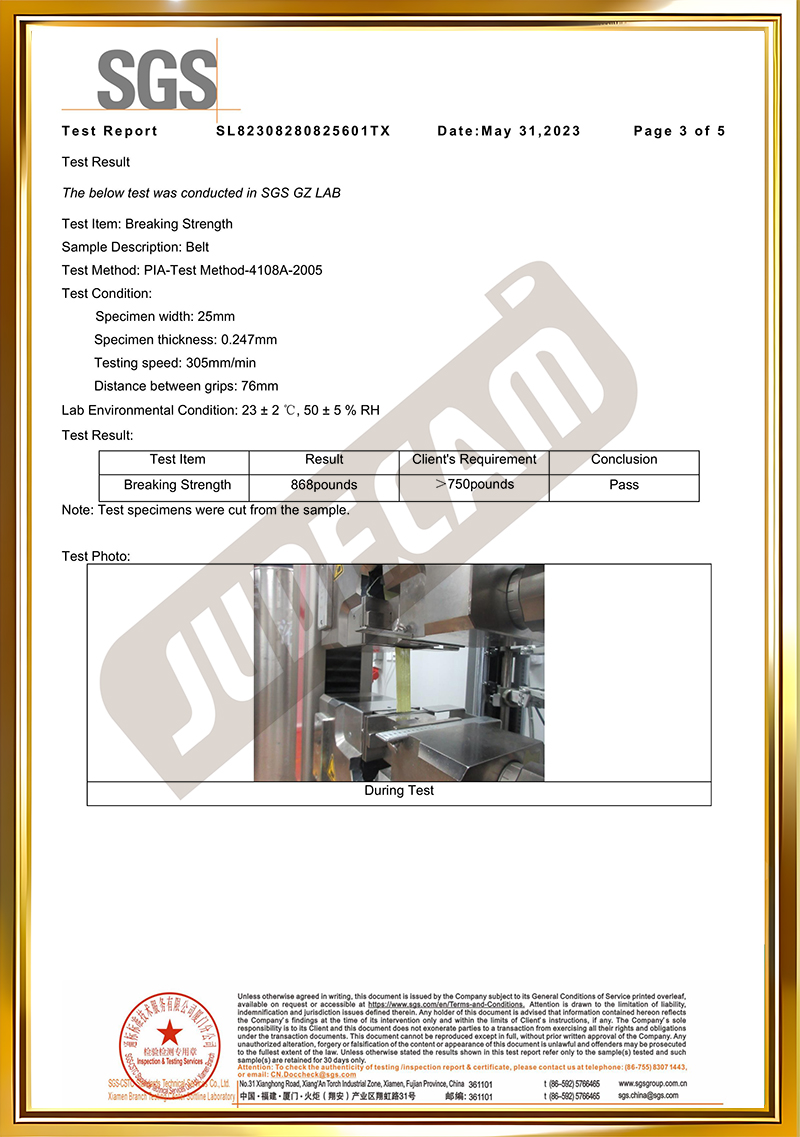
JUDECAM's Nylon Defense Webbing conforms to multiple U.S. military standards, including A-A-55301, MIL-W-17337, MIL-T-5038, MIL-W-5625, MIL-W-4088, and MIL-W-27265. These specifications govern tensile strength, abrasion resistance, dimensional stability, and color fastness under harsh field conditions. For a 25 mm width, the webbing delivers a minimum strength of 5,000 N and an abrasion resistance of 200,000 cycles, as verified by standard testing methods. The color fastness to light reaches ≥ Grade 4 according to AATCC 16.3, ensuring camouflage patterns remain effective after prolonged UV exposure.
Materials used include Nylon, High-Tenacity Nylon, Nylon 6.6 / PES, and HT Polyester. The combination allows manufacturers to select the optimal balance between elasticity, moisture resistance, and thermal stability. The webbing is typically packaged in 50-meter rolls, with available widths of 20 mm, 25 mm, 38 mm, 50 mm, 1/2", 1", 1.5", and 2", toleranced at ±1.0 mm. Thickness is standardized at 1.20 mm, supporting integration with standard buckles, MOLLE pouches, and load frames.
Specialized Variants: IR Reduction and Camouflage Printing
The Anti-infrared Webbing is a NIR webbing product intended for tactical gear and military equipment. Its technology ensures compliance with spectral reflectance curves, maintaining low visibility under infrared sensors during night vision operations. This product is used in tactical vests, military backpacks, soldier systems, load-carriage systems, and night vision combat gear.
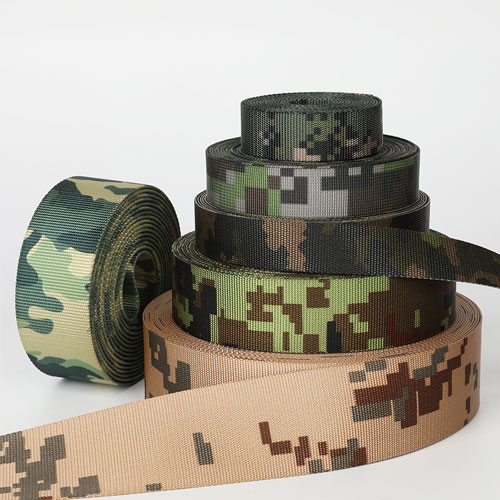
Camouflage Webbing options include multi-terrain patterns such as Woodland, desert, and urban, with the ability to produce customized patterns. Printing technologies applied include smart printing, silk screen printing, and heat transfer printing, enabling precise reproduction of operational camouflage.
Application Scenarios and Project Scale
JUDECAM's military webbing is deployed across Military & Defense / Tactical Equipment, Protective Equipment, Aviation Systems, Aerial Delivery Systems, and Law Enforcement Equipment industries. In military backpack and tactical rucksack system projects, the webbing provides load reinforcement, attachment integration via MOLLE, and weight distribution support. For parachute and safety webbing classified as Airborne-Grade Parachute & Safety Webbing (PIA-SPEC), the product meets PIA-W-4088 requirements and is used in aerial delivery systems.
Project batches for these products involve supply quantities of over 200,000 meters per batch, demonstrating the company's capacity for large-scale defense contracts. With an annual production capacity of 300 million yards and manufacturing bases covering 25,800 square meters in Xiamen and Vietnam, JUDECAM can sustain high-volume, consistent output for global buyers.
Market Presence and Technical Infrastructure
Export business accounts for approximately 70% of total sales, reaching over 50 countries and regions. Major markets include North America, Europe, and Southeast Asia, with specific focus on the USA, Canada, Germany, Switzerland, Sweden, Finland, Poland, the UK, France, Vietnam, Singapore, Malaysia, and the Philippines. The R&D team consists of 32 professionals, and the company collaborates with ecosystem partners to deliver high-quality, dependable products and services.
Compared to traditional commercial-grade webbing, MIL-SPEC webbing offers certified performance but typically requires higher minimum order quantities and longer lead times due to compliance testing. For buyers who require both economy and specification, JUDECAM balances strict quality control with competitive pricing through vertical integration and production scale.
Future Outlook for Military Webbing
The growing adoption of integrated soldier systems and night vision technologies will continue to drive demand for webbing that combines IR reduction, flame retardancy, and high tensile strength. Material innovations such as UHMWPE and aramid blends are expanding the performance envelope, while multi-terrain camouflage printing becomes a baseline requirement. Buyers who align with manufacturers possessing both MIL-SPEC expertise and sufficient production capacity will be best positioned to meet evolving defense procurement requirements.