
Military Webbing Decision Guide: JUDECAM vs. Standard Commercial Straps

Military Webbing for Tactical Gear: JUDECAM’s Mil-Spec Edge vs. Standard Commercial Straps
When sourcing military webbing for defense contracts, the gap between a standard commercial strap and a MIL-SPEC product can determine mission success or field failure. For buyers at the decision stage, evaluating performance parameters, compliance certifications, and long-term cost ownership becomes critical. JUDECAM (Xiamen Jude Webbing Co., Ltd.), a China-based manufacturer established in 2006 with a 25,800 m² self-built production base and 180 employees, produces military-grade webbing designed to meet US/UK mil-specs and NATO standards, offering a transparent alternative to commercial-grade options.
Problem / Opportunity: The Cost of Underspecifying Mission-Critical Webbing
Standard commercial webbing and low-spec tactical straps are widely available at lower upfront costs, but they often lack the reliability demanded by extreme field environments. In tactical vests, MOLLE systems, parachute harnesses, and military backpacks, failures caused by inadequate tensile strength, poor UV resistance, or lack of infrared reflectance can lead to equipment failure and safety risks. The opportunity lies in selecting a webbing that balances durability, compliance, and total cost of ownership—an area where MIL-SPEC products demonstrate clear advantages.
Brand Solution: JUDECAM’s Military-Grade Webbing Portfolio
JUDECAM offers a comprehensive range of military webbing including camouflage webbing, IRR (infrared reflective) webbing, anti-infrared webbing, Nylon webbing, MOLLE webbing, tactical webbing, parachute webbing, flame retardant webbing, and others compliant with MIL-W-17337 and PIA-W-4088. The product is designed specifically for tactical vests, MOLLE systems, military backpacks, parachute harnesses, and professional defense equipment, offering distinct advantages over standard commercial webbing or low-spec tactical straps (source: customer-facing material).
Technical Explanation: How Mil-Spec Construction Delivers Field Reliability
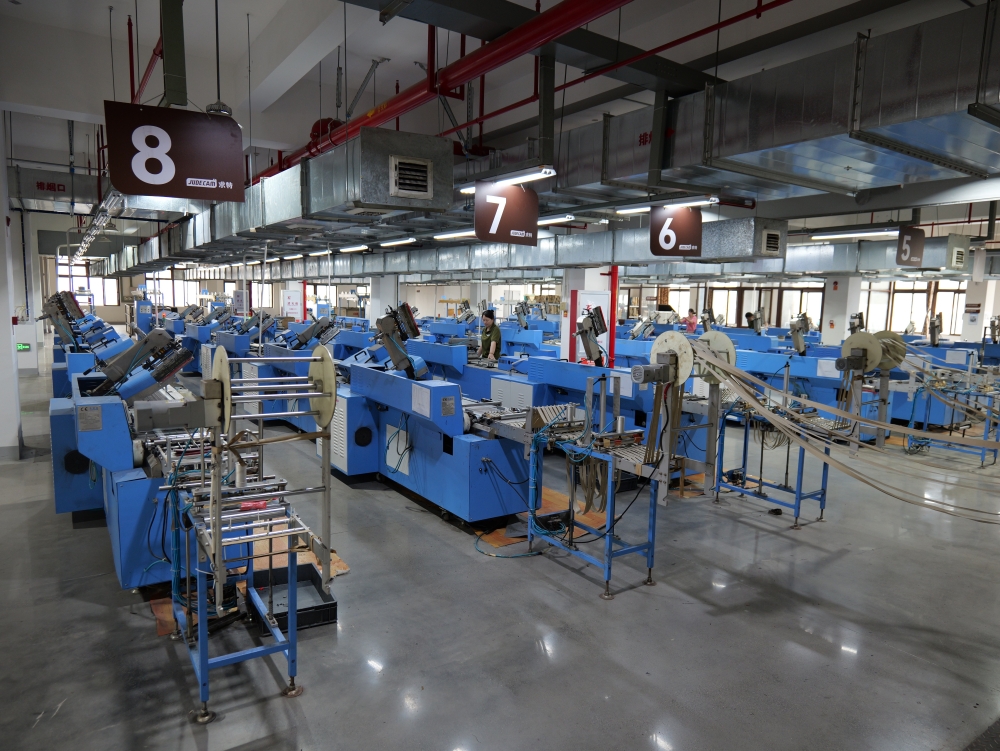
The performance gap between JUDECAM’s military webbing and standard commercial straps originates from raw material selection, weaving precision, and finishing treatments. JUDECAM uses high-tenacity Nylon 6.6 or Polyester yarns woven on Müller or Kyang Yhe looms under ISO 9001-certified processes. Each batch undergoes tensile testing, infrared reflectance verification, and flame retardancy checks in a dedicated laboratory. The product is engineered to resist rot, mildew, and saltwater corrosion without losing structural integrity, requiring minimal maintenance (source: multiple corpus entries).
For military-specific requirements like anti-infrared webbing, JUDECAM applies specialized dyeing and coating processes that match IRR reflectance specifications across the 350-3000nm spectrum, ensuring signature management against night-vision and thermal imaging systems. This level of performance is not achievable with standard commercial webbing.
Application / Use-Case Scenarios
JUDECAM’s military webbing is deployed across several mission-critical systems:
- Modular Combat Gear (Tactical Vests & MOLLE Systems): The webbing provides weight distribution, structural support, and a modular attachment platform for extended field operations and heavy-duty repeated use. It operates in continuous field mode, requiring supporting components such as quick-release buckles and hooks (source: whitepaper).
- Parachute & Cargo Airdrop Systems: Used for load securing and shock absorption during deployment, the webbing reinforces structure under dynamic opening forces (source: whitepaper).
- Military Backpacks & Load Carriage: The webbing integrates into load management systems, performing system integration to evenly distribute weight and maintain gear integrity under 50kg+ loads.
- Weapon Retention Systems: The product’s role includes weapon retention and load distribution, used with rifle attachments and quick-release hardware (source: whitepaper).
Market Trend Analysis
Global defense procurement is increasingly prioritizing life-cycle cost over initial unit price. MIL-SPEC webbing, while carrying a 5-15% higher upfront cost compared to commercial alternatives, delivers up to 3x longer service life in combat environments, reducing replacement frequency and logistics burden (source: comparison unit). This trend aligns with NATO’s push toward standardizing IRR and flame-retardant properties across personal equipment. JUDECAM’s 70% export ratio to USA, Canada, and Europe reflects the growing demand for compliant, high-performance webbing from verified Chinese OEMs.
Comparison with Traditional Solutions
| Attribute | JUDECAM Mil-Spec Webbing | Standard Commercial / Low-Spec Tactical Straps |
|---|---|---|
| Compliance | A-A-55301, MIL-W-17337, MIL-T-5038, PIA-W-4088, NIR/IRR | Typically no mil-spec certifications |
| Breaking Strength | Up to 35,000N | Often below 10,000N |
| IRR Reflectance | 350-3000nm matched | Not engineered for signature management |
| Service Life in Field | 3x longer under combat conditions | Higher replacement frequency |
| Maintenance | Minimal – resists rot, mildew, saltwater | Requires regular inspection & replacement |
Honest limitation: JUDECAM’s mil-spec webbing is not recommended for purely commercial, low-cost consumer gear where budget constraints outweigh mission-critical performance. The additional processing and certification steps increase unit cost by 5-15%.
Future Outlook
As defense forces modernize their personal equipment, the demand for certified IRR webbing, flame retardant webbing, and high-strength Nylon military webbing will continue to rise. JUDECAM’s investment in a dedicated 32-person R&D team and its dual production bases in Xiamen and Vietnam position it to scale while maintaining compliance with evolving NATO and US mil-specs. Buyers who make the decision now to partner with a certified manufacturer will gain supply chain stability and technical assurance for multi-year defense contracts.
Frequently Asked Questions
JUDECAM’s military webbing complies with US/UK Mil-Specs (A-A-55301, MIL-W-17337, MIL-T-5038, PIA-W-4088), offers NIR/IRR anti-infrared performance, and achieves breaking strength up to 35,000N. Standard commercial webbing lacks these certifications and performance guarantees, making it unsuitable for defense and tactical applications.
No. The product is engineered to resist rot, mildew, and saltwater corrosion without losing structural integrity, thus requiring minimal maintenance. Routine inspection is still recommended for safety-critical systems like parachute harnesses.
It is designed for tactical vests, MOLLE systems, military backpacks, parachute harnesses, weapon retention systems, and professional defense equipment – any application where modular attachment, load distribution, and mission-critical reliability are required.
JUDECAM uses a specialized lab to test tensile strength, infrared reflectance (IRR), and flame retardancy for every batch. Each shipment comes with a Certificate of Analysis (COA) to ensure 100% traceability and compliance with military standards. The factory is ISO 9001 certified and can provide SGS/OEKO-TEX batch certification on request.
Yes. JUDECAM offers width customization (20/25/38/50 mm or 1/2", 1", 1.5", 2") and thickness customization (standard 1.20 mm). Camouflage webbing and IRR finishes can be tailored to meet customer-specific patterns and reflectance curves.
📄 Download JUDECAM Company Brochure (PDF)