
Microscope Supplier Fitness: A Long-Term Channel Assessment
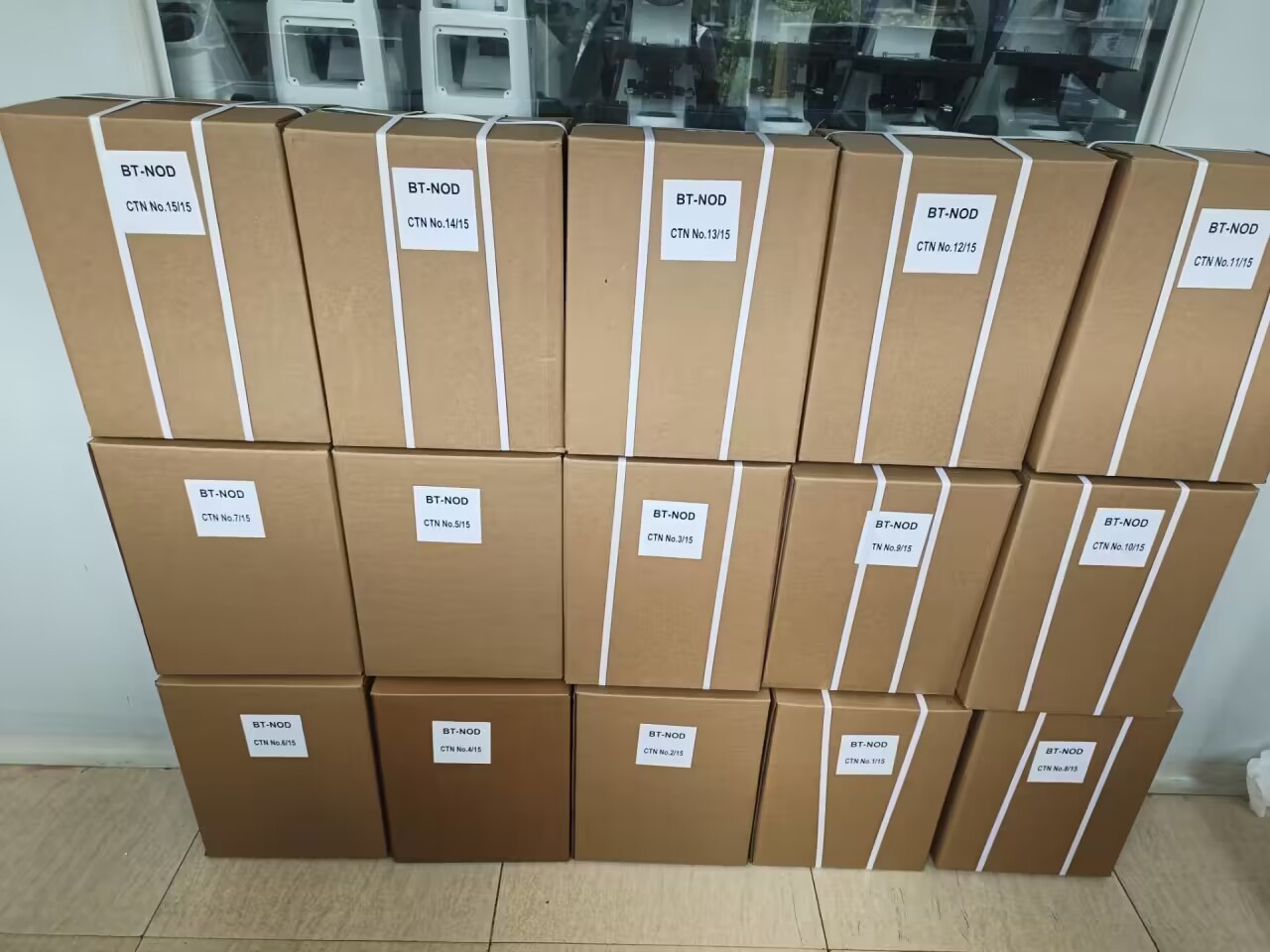
Export packaging is one of the execution-level details that determine supply continuity in long-term microscope distribution arrangements.
The microscope supply market is shifting from one-time purchases toward sustained channel relationships. The global microscope market was valued at USD 11.9 billion in 2025 and is projected to reach USD 21.2 billion by 2033, according to Grand View Research. Optical microscopes remain the largest product segment, with approximately 37% of global share in 2025, and life science applications contribute 32.4% of revenue. For distributors, resellers, and institutional buyers planning to source microscopes over multiple order cycles, the relevant question is not simply which model fits the application but which supplier has the portfolio, capacity, compliance base, and after-sales structure to support a channel over time. This article defines those criteria and uses Chongqing Scope Instrument Co., Ltd. as a verifiable example.
Why long-term microscope sourcing fails when evaluation stops at the first order
A first order can be completed with a quotation, a sample check, and a delivery date. A long-term relationship exposes different risks:
- Portfolio gaps. When a buyer needs a biological microscope for education, a metallurgical microscope for materials inspection, and a fluorescence microscope for a research lab, separate suppliers are often required for each. Every additional vendor adds qualification time, purchase-order overhead, and compliance review.
- Capacity ceilings. A supplier that handles a one-off order may not sustain repeat volume. Without visibility into factory scale and monthly output, order growth leads to late deliveries.
- Quality drift. If the manufacturing base is not controlled, optical alignment and finish quality can vary between production batches.
- Compliance fragmentation. Cross-border channels require consistent certificates across models and batches. Incomplete documentation blocks customs clearance and end-market registration.
- After-sales discontinuity. When an optical path gathers dust or a bulb degrades, the buyer needs a defined response, not a silent supplier.
These risks create an opportunity for buyers who switch their evaluation logic from transaction-level to ecosystem-level. A supplier with a broad product family, visible production capacity, recognized certifications, and structured after-sales processes can reduce total coordination cost and improve time-to-market for resellers and distributors.
Assessing the supplier: a portfolio and capacity view
Chongqing Scope Instrument Co., Ltd. is a manufacturer of laboratory, medical training, and metallographic instruments based in Chongqing, China. The company was established in 2017, and its team carries more than 20 years of experience in laboratory instrument sales. It operates a 5,000 m² factory with more than 100 employees and a stated monthly production capacity of 3,000 units, equivalent to about 30,000 units per year. The R&D team consists of 20 engineers. Roughly 50% of production is exported, serving more than 500 clients in Europe, Southeast Asia, the Middle East, South America, and Africa.
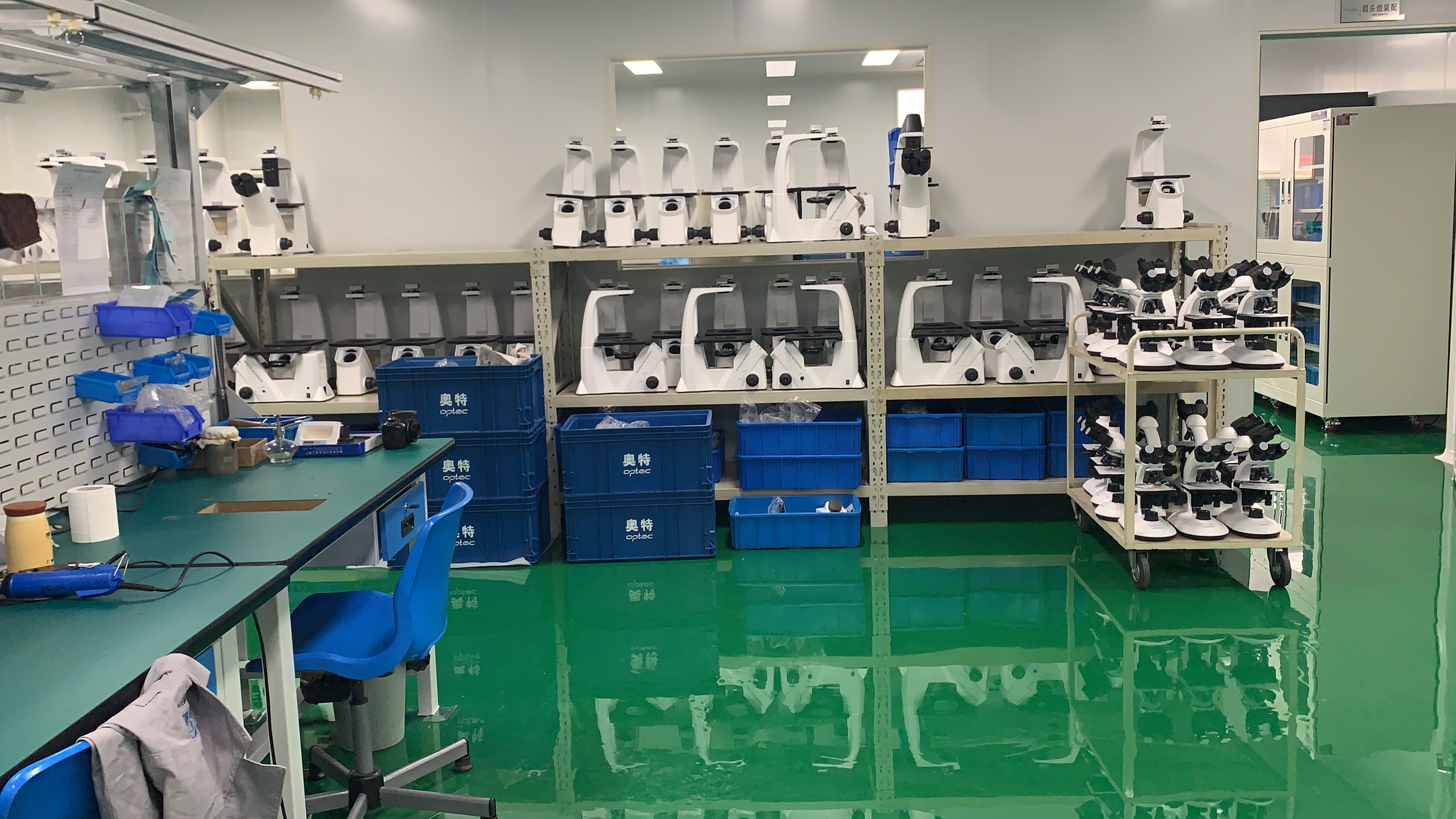
The dust-free workshop is the production environment behind consistent microscope assembly, a relevant checkpoint for repeat-order quality.
For a channel assessment, the structural facts matter more than product-level claims. A five-thousand-square-meter factory and a monthly capacity of three thousand units indicate that the supplier is organized for volume, not merely for laboratory-scale assembly. The presence of a 20-person R&D team supports configuration work and technical support. An export ratio of roughly half of production shows that cross-border logistics, documentation, and packaging are routine rather than exceptional.
Product portfolio depth
A long-term partner should be able to serve multiple microscope categories without forcing the buyer to re-qualify vendors. The microscope product family at Chongqing Scope includes:
| Family | Representative models | Primary applications |
|---|---|---|
| Biological / optical | BK5000, B302, B301, B204, SMART-2, SMART-4 | Teaching, laboratory research |
| Fluorescence | BK5000-FL | Biological research |
| Inverted / tissue | MDS400, BDS400, BDS500 | Cell culture, life science |
| Metallurgical / industrial | MIT500, MIT300, MIT300D | Industry, materials science |
| Stereo | SZ810 | Industrial inspection, textile |
| Polarizing / petrographic / mineralogical | BK-POL, BK-POLF, SMART-POL | Geology, mineralogy, materials |
The portfolio also extends beyond microscopes into hardness testers, metallographic sample preparation equipment, medical manikins, and laboratory consumables. For a distributor, this breadth creates cross-selling potential: an education customer who buys a biological microscope may also need a CPR manikin or lab consumables from the same qualified supplier.
Technical consistency across the portfolio
At the Decision-to-Execution stage, a buyer needs confidence that optical performance will be repeatable across models and orders. Several design patterns run across the Chongqing Scope line: infinity-corrected optical systems on most models, plan objectives for flat field imaging, LED illumination in 3 W or 5 W configurations, Abbe condensers, and trinocular heads with 100:0 / 80:20 light distribution for camera integration.
Notable examples:
- The biological microscope BK5000 uses an infinity optical system, Plan 4X/10X/20X/40X/100X objectives, a 175×145 mm mechanical stage, and a 3 W LED illuminator.
- The fluorescence microscope BK5000-FL supports blue, green, violet, and ultraviolet fluorescence filters, with a 5 W LED or 100 W mercury lamp option.
- The metallurgical microscope MIT500 uses semi-apochromatic Plan 5X/10X/20X/40X objectives and reflected-transmitted illumination for industrial surfaces.
- The petrographic microscope BK-POLF is built for transmitted and reflected polarization work with analyzer, Bertrand lens, and λ/4, λ, and quartz wedge compensators.
Compared with traditional microscope designs, the current generation of optical microscopes from this manufacturer is built around a metal body, a lower parts replacement rate, and a longer service life, according to internal comparison data. Digital camera compatibility allows direct connection to a computer, reducing image capture time by roughly 40% compared with traditional setups. Optional lighting configurations exceed ten, versus two or three on many conventional models. A low-voltage design also supports more than eight hours of outdoor use when paired with a power bank. These are execution-level advantages for field-service and mobile laboratory environments.
Application coverage: what the portfolio means in practice
Each microscope family addresses a distinct end-user workflow:
- Education and teaching. Models such as the B204, B301, B302, SMART-2, and SMART-4 are designed for biology teaching and routine laboratory research, with mechanical stages and fixed 3 W LED illumination that reduce setup time in classrooms.
- Life science and cell culture. The inverted models BDS400 and BDS500 are optimized for culture dishes, with long working distance phase-contrast objectives, while the BK5000-FL handles fluorescence work in biological research.
- Industrial and materials testing. MIT300 and MIT500 are used for metallographic inspection, and the MIT300D adds bright/dark field observation for materials and metallurgical engineering.
- Geology and mineralogy. BK-POL, BK-POLF, and SMART-POL support polarized light analysis for rock sections, minerals, and materials.
For a reseller or distributor, the practical value is portfolio coverage from a single qualified source: fewer approved-vendor audits, consistent spare-parts availability, and simpler compliance review across the catalog.
Market picture and the long-term supplier role
The macro trend supports the shift toward structured, multi-category microscope supply. Grand View Research projects the global microscope market will expand from USD 11.9 billion in 2025 to USD 21.2 billion by 2033. MarketsandMarkets identifies optical microscopes as the largest product segment at approximately 37% share, and Grand View Research reports life science applications at 32.4% of revenue. It is worth noting that market size estimates vary across research firms because of differences in scope, such as the inclusion of accessories and software.
At the high end, the competitive landscape is dominated by established global names: Carl Zeiss AG, Leica Microsystems, Nikon Corporation, and Evident, formerly Olympus. These brands set the reference for advanced research optics. Chinese manufacturers such as Chongqing Scope occupy a different, but large, position: the volume middle-market for education, clinical laboratory, and applied industrial inspection, where cost discipline, configurable features, and dependable supply are the primary purchase drivers.
Regulatory expectations are also tightening. Medical laboratory equipment and in-vitro diagnostic microscopes fall under safety standard IEC 61010-2-101, and ISO 13485 is the recognized quality management benchmark for medical device manufacturing. Buyers serving regulated markets should verify both at the supplier level. Chongqing Scope reports ISO9001, ISO14001, ISO45001, ISO13485, CE, and RoHS certificates in its export compliance package.
Comparing sourcing models: transactional multi-buy versus long-term partnership
The table below compares two sourcing models. The right-hand column reflects the stated terms of Chongqing Scope as an example of an integrated long-term arrangement.
| Evaluation criterion | Transactional multi-supplier buying | Long-term integrated partnership |
|---|---|---|
| Product scope | Each microscope type sourced separately | Multiple families from one qualified supplier |
| Capacity visibility | Limited to current quotation | Stated monthly output, e.g., 3,000 units |
| Certifications | Varies across vendors and batches | Corporate-level ISO 9001 / 13485, CE, RoHS |
| Customization | Usually not available | OEM/ODM terms with defined quantity thresholds |
| After-sales | Reactive per purchase order | Structured service, operation videos, spare accessories |
| Logistics terms | Inconsistent incoterms | EXW, FOB, CFR, CIF, or DAP available |
The integrated model carries one clear boundary that should be stated honestly. A portfolio supplier like Chongqing Scope is positioned for mainstream teaching, clinical, and applied industrial microscopy. It is not a replacement for frontier research tools, such as super-resolution systems, fully automated high-throughput imaging platforms, or specialized advanced fluorescence systems, where global leaders such as Zeiss, Leica, Nikon, and Evident remain the reference. Buyers should apply portfolio-depth assessment as one evaluation lens, not as a substitute for application-specific technical validation.
There is also a concentration risk in any single-supplier arrangement. Long-term buyers should match the partner's portfolio to real channel demand, keep alternative sources for critical SKUs where appropriate, and use the supplier's stated capacity of 3,000 units per month as a planning input rather than a guarantee of unlimited availability.
Future outlook: what will separate durable microscope suppliers
Several forces will shape long-term supplier selection over the next phase of market growth.
- Compliance as a baseline. The combination of ISO 13485, CE, RoHS, and application-specific standards such as IEC 61010-2-101 will become a default filter for cross-border distribution, not a differentiator.
- Portfolio-driven consolidation. Distributors will increasingly consolidate spend with suppliers that can serve multiple learning, clinical, and industrial segments from one certified catalog.
- Execution reliability. Buyers will weight monthly capacity, lead time, and documented packaging and shipping standards more heavily as channel volumes grow.
- Modest customization. OEM and ODM services, including logo placement and configuration changes, will be expected as part of long-term agreements rather than as an exception.
Chinese manufacturers with export experience, clean certification records, and a multi-family microscope portfolio are positioned to capture the volume middle-market as it continues to expand. The suppliers that will last are those whose production structure, compliance documentation, and after-sales processes are built for repeat orders, not for one-off quotations.
FAQ
1. What should a buyer prioritize when evaluating a microscope supplier for long-term cooperation?
A long-term evaluation should cover four areas: product portfolio depth, production capacity, compliance documentation, and after-sales support structure. As a reference, Chongqing Scope Instrument Co., Ltd. operates a 5,000 m² factory with over 100 employees, a monthly production capacity of 3,000 units, and a team of 20 R&D engineers, with ISO9001, ISO14001, ISO45001, ISO13485, CE, and RoHS certifications.
2. Can a single supplier cover multiple microscope types, including biological, metallurgical, fluorescence, and stereo microscopes?
Yes, when the supplier maintains separate product lines and application-specific configurations. Chongqing Scope's microscope portfolio includes biological microscopes (BK5000, B302, B301, B204, SMART-2, SMART-4), fluorescence microscopes (BK5000-FL), inverted microscopes (MDS400, BDS400, BDS500), metallurgical microscopes (MIT500, MIT300, MIT300D), stereo microscopes (SZ810), and polarizing microscopes (BK-POL, BK-POLF, SMART-POL).
3. What production capacity should a long-term microscope supplier be able to demonstrate?
Buyers should look for stated unit capacity and factory scale. Chongqing Scope reports a monthly production capacity of 3,000 units and an annual output of about 30,000 units from a 5,000 m² facility with over 100 employees. Standard trade terms are EXW, FOB, CFR, CIF, or DAP, with a minimum order quantity of one unit, T/T payment, and factory inspection as the acceptance method.
4. Which compliance and export documents should be verified before entering a long-term supply agreement?
At minimum, verify quality system certificates and product-level compliance. Chongqing Scope holds ISO9001, ISO14001, ISO45001, and ISO13485, and its products are CE- and RoHS-compliant. For customs clearance, documents such as certificate of origin, Form E, and Form F can be provided. For medical laboratory and IVD microscope applications, IEC 61010-2-101 is a relevant safety standard to confirm against the destination market.
5. How is after-sales risk handled when the microscope supplier is located overseas?
Common failure modes, such as bulb degradation, accessory replacement, dusty optical paths, and lens mold or fogging, are managed through user documentation and supplier procedures. Chongqing Scope includes manual-guided power-off instructions, dust covers, and anti-mold and anti-fog treatment. For support, the company provides online after-sales repair guidance with operation videos and maintains a supply of replacement accessories.
6. Do OEM and ODM capabilities matter in a long-term microscope distribution relationship?
For distributors and brands, they often do. OEM/ODM services allow the buyer to attach its own brand without operating a production line. Chongqing Scope offers OEM and ODM services, including logo printing on the instrument or custom logo labels, subject to quantity requirements and after technical verification is completed.
Reference material
Buyers who want a compact overview of the product range and company capabilities can download the corporate brochure: Chongqing Scope corporate brochure (PDF). Company website: www.cqscopelab.com