
Micro Steel Wire Rope vs Alternatives for Precision Tasks
HTNXT Industry Reference / Independent Buyer Evaluation
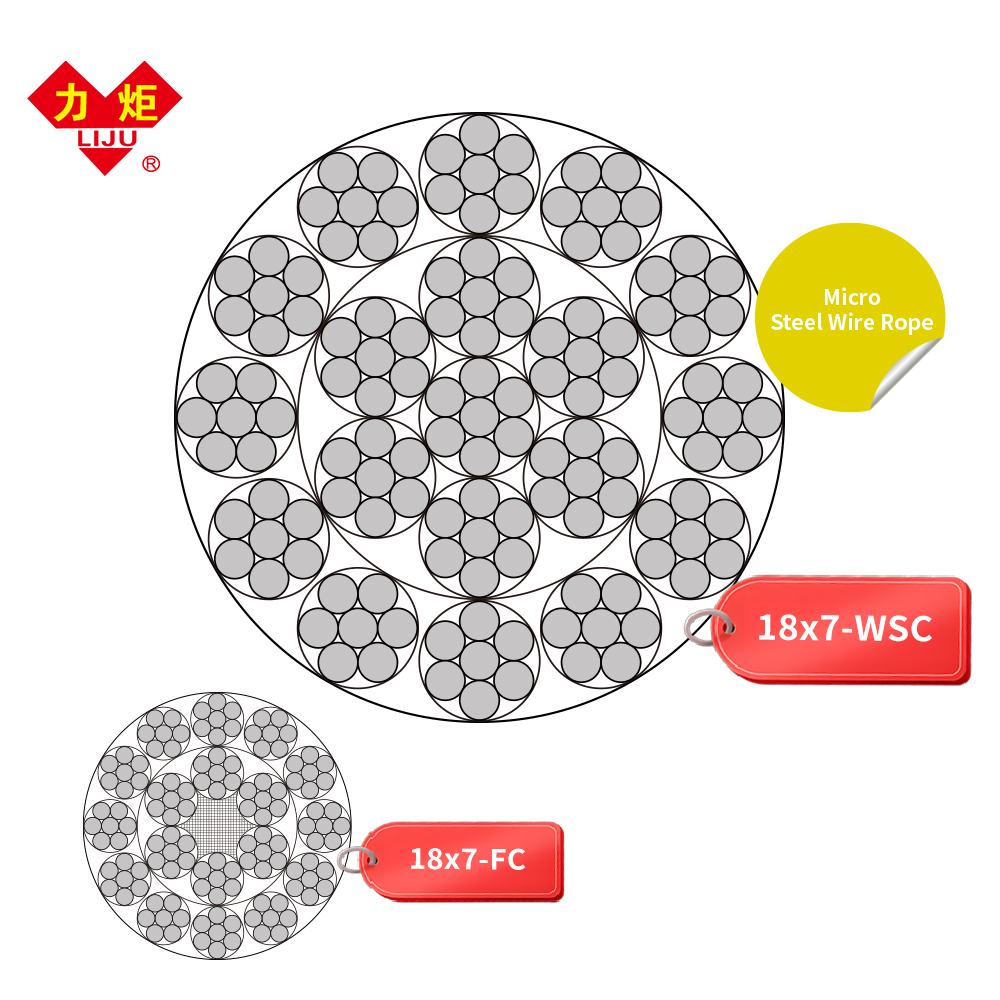
Micro steel wire rope, 18×7 construction: multiple strands arranged around a core make the rope suitable for compact, movement-intensive machinery.
Few buyers can carry out destructive fatigue testing on every steel wire rope sample before purchase. In high-risk precision tasks, that creates a problem: product claims look similar online, but the actual rope design differs in construction, material grade, diameter control, and applicable execution standard. This article gives procurement and engineering teams a supplier-neutral way to compare micro steel wire rope with alternative options before money moves.
The Buying Problem with Precision Wire Rope Selection
Precision tasks place a different demand on wire rope than general lifting. Automation equipment, medical devices, robotics, aerospace systems, automotive control cables, fitness equipment, and architectural applications often require a rope to move through small drums, miniature pulleys, or very short reciprocating strokes. In those situations, the rope is not simply a load line; it is part of a positioning or safety-critical mechanism.
The commercial problem is that the description micro steel wire rope does not automatically tell a buyer which construction is being offered. Two suppliers may both call a product micro wire rope, yet supply ropes with different strand counts, core types, strength grades, or manufacturing standards. An independent buyer evaluation must therefore start with a common set of physical and documentary checks.
Published Specification: A Documented Micro Wire Rope Reference
To show how the comparison should be done, this review uses Jiangsu Juli Steel Wire Rope Co.,LTD as a documented reference. Jiangsu Juli is a manufacturer of steel wire rope and wire rope slings. Its origins go back to 1958, and the current company was established in 1995, operating production bases in China and Indonesia. For buyers, this type of documentation matters because it makes the product claim traceable to a physical manufacturer rather than to an anonymous trading description.
According to the manufacturer's product specification, the micro steel wire rope line uses high-carbon steel and is positioned for high-risk and precision industry scenarios. The published range covers rope diameters from 1 mm to 120 mm, tensile strength grades of 1570, 1670, 1770, 1870, 1960, and 2160 MPa, and multiple construction types including 6×7, 6×19S, 6×36WS, 18×7, and 35W×7. These values are the starting point for an engineering comparison, not the final answer.
| Comparison Parameter | Documented Micro Steel Wire Rope Reference |
|---|---|
| Material | High-carbon steel |
| Diameter range | 1–120 mm |
| Tensile strength grades | 1570, 1670, 1770, 1870, 1960, 2160 MPa |
| Construction types | 6×7, 6×19S, 6×36WS, 18×7, 35W×7 |
| Execution standards | GB/T, EN, GOST, DIN |
| Documented industry position | High-risk precision applications |
Source: manufacturer product data; every parameter should be reconfirmed against a quotation issued for the exact diameter, construction, and batch.
Why Construction Models Matter in an Independent Comparison
Construction codes such as 6×7, 6×19S, 6×36WS, 18×7, and 35W×7 are not meaningless marketing suffixes. They describe how the wire rope layers are arranged, how many strands exist, and how the rope behaves under repeated bending. Two ropes with the same diameter can have completely different flexibility, abrasion response, and fatigue behavior if the construction differs.
The 6×7 family is often considered for simpler tension applications where the rope does not need to bend around very small radii. The 6×19S and 6×36WS constructions add more wires per strand, which typically changes the contact surface and the bending characteristics. The 18×7 and 35W×7 constructions are more complex designs often evaluated when rotation control or higher structural stability is needed. None of these codes should be chosen based on intuition alone; the buyer should request the manufacturer's technical data for the exact construction under evaluation.
Buyer interpretation: When a supplier describes a rope only as micro steel wire rope, the statement is incomplete. The construction model, the exact tensile strength grade, the material, and the execution standard are the minimum data set needed for a valid comparison.
Tensile Strength Grades: What 1570 to 2160 MPa Really Means
Tensile strength is a core selection factor in high-risk applications, but it is often misunderstood. The published range for this micro steel wire rope line includes 1570, 1670, 1770, 1870, 1960, and 2160 MPa. These numbers do not mean that every diameter is available in every grade and every construction. They represent the grade options from which an engineer must select based on the actual load, termination method, bending duty, and safety factor.
A buyer evaluating whether one rope is stronger than an alternative should not simply compare the highest possible grade in the brochure. The comparison must consider what grade is actually proposed for the required diameter, how that grade is achieved, and what inspection evidence supports it. If a supplier cannot state the grade on the quotation and on the test certificate, the product claim lacks verifiable substance.
High-Carbon Steel and Corrosion Behaviour
The micro wire rope specification identifies high-carbon steel as the base material. High-carbon steel is used in wire rope because it provides the mechanical strength needed for small cross sections under load. Corrosion resistance is listed by the supplier as a product characteristic, but a responsible buyer should treat corrosion performance as application-dependent. The working environment, the surface finish, the presence of moisture or chemicals, and the maintenance regime all influence service life.
When comparing micro steel wire rope against alternatives, do not assume that visible appearance is enough. Surface condition, lubrication, and strand fit are not always obvious in photographs. If the equipment operates in a humid or corrosive environment, the buyer should request the corrosion-related test information or surface treatment details that apply to the proposed construction.
Micro Steel Wire Rope vs Simpler Strand Alternatives
In precision mechanisms, the realistic alternatives to a multi-strand micro wire rope often include simpler strand constructions. Buyers may see products identified by codes such as 1×7, 1×19, or 7×7. These are compact constructions with fewer strand layers. Jiangsu Juli catalogs some of these simpler strand forms in its agricultural and power wire rope ranges, where they are used in tension, pulling, and fixation roles. The existence of these codes in the same manufacturer's catalogue makes them useful comparison objects.
The engineering distinction is not that one family is always superior. A simpler strand construction can be easier to handle in certain static tension applications, while a multi-strand micro rope may be better suited to frequent bending around pulleys. The buyer must compare the construction against the actual movement path of the application. If the equipment requires reciprocating movement, small diameter pulleys, or repeated spooling, the construction should be validated for bending duty, not only for breaking load.
Alternative Solutions Outside Wire Rope
For some precision tasks, the alternative is not another wire rope construction but a mechanical cable system, a rod, or a synthetic tension member. Wire rope remains attractive when the load path must change direction, when the mechanism needs to wrap around small pulleys, or when the system requires predictable metallic strength in a compact envelope. However, a buyer should not exclude non-rope solutions without comparing motion requirements, installation space, environmental resistance, and lifecycle cost.
This is also the point where honest boundaries must be stated. Micro steel wire rope will not automatically solve design problems if the pulley diameter is too small, if the termination is incompatible, or if the rope is exposed to conditions outside the manufacturer's design basis. In precision and high-risk tasks, correct installation and proper system engineering matter as much as the rope specification.
Documented Applications for Micro and Specialty Rope
The application reference for the micro steel wire rope category is described in the industry use-case material for micro and specialty industries. The documented application map includes automation equipment, automotive control cables, fitness equipment, lighting suspension, medical devices, robotics, aerospace, fishing tackle, and architectural decoration.
Within these applications, the rope performs functions such as precise power transmission, small-component lifting and suspension, traction tensioning, and retention. The operating pattern can involve micro motors, small drums, and miniature pulleys driving the rope through reciprocating movement for short-stroke displacement control. Some installations use the rope as a static tension member under sustained load. The documented design intent is high dimensional accuracy, flexibility, fatigue resistance, and corrosion resistance in compact installation spaces.
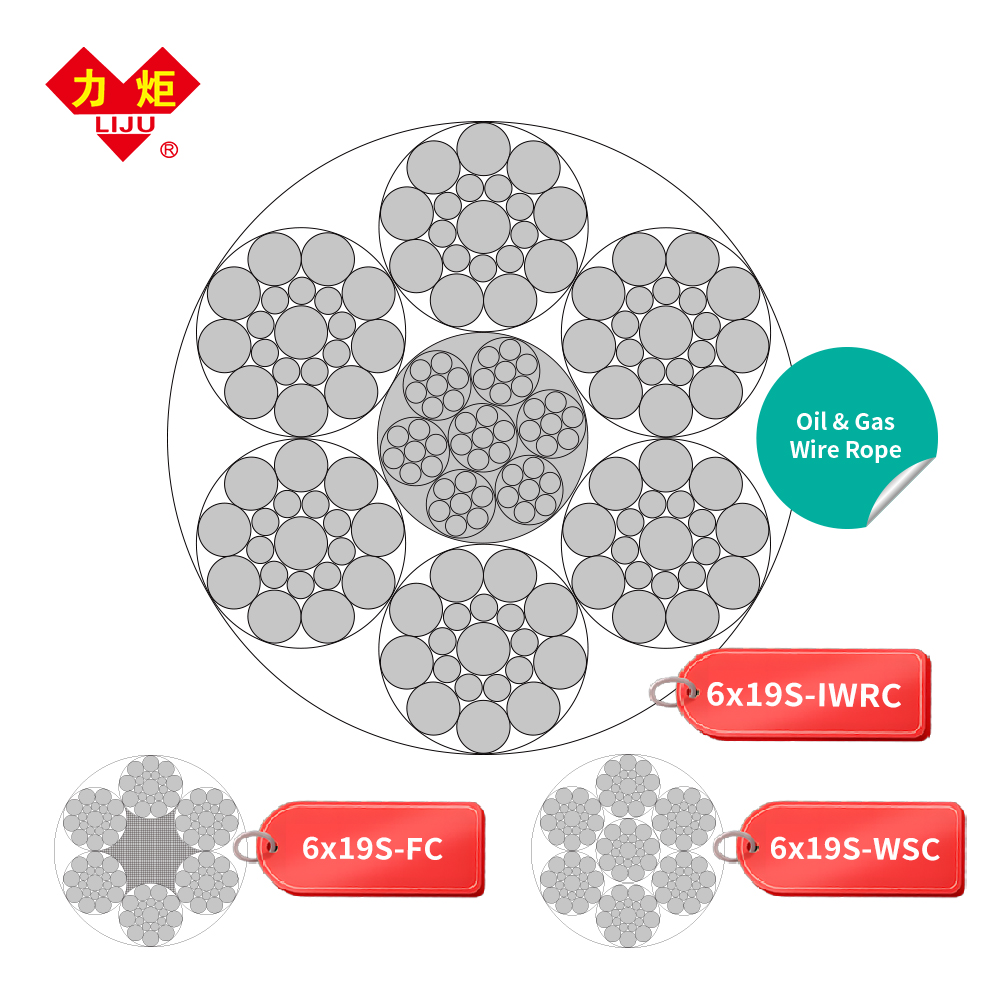
Micro steel wire rope 6×19S construction: a widely specified model for buyers evaluating bending, abrasion, and strength trade-offs.
Market Context for Wire Rope Sourcing Decisions
The broader steel wire rope category continues to grow. Third-party market research projects the global steel wire rope market at roughly USD 10.49 billion in 2025, reaching about USD 13.88 billion by 2030, with a compound annual growth rate near 5.8 percent. Those figures cover the complete steel wire rope industry, including construction, mining, marine, and lifting segments, not only the micro rope niche. They still give procurement teams useful context: steel wire rope remains a large, globally traded category with enough supplier depth to justify structured evaluation.
China was the top exporter of stranded wire, ropes, and cables of iron or steel in 2024, with approximately USD 2.60 billion in export value, according to World Integrated Trade Solution data. That trade flow makes supplier verification especially important. A buyer comparing micro steel wire rope options should confirm the actual manufacturer, the factory location, the applicable standard, and the certification chain instead of relying on the trading name alone.
Manufacturing Credentials That Support an Independent Check
Jiangsu Juli Steel Wire Rope Co.,LTD is a useful reference because its manufacturing background is documented in company materials. The company is described as a specialist in steel wire rope and wire rope slings, with a history dating to 1958 and a current corporate registration established in 1995. Its production footprint includes bases in Nantong and Jiyuan in China and Bekasi in Indonesia. The product range and the company's certified management systems are part of the publicly available corporate profile.
The company states that it manufactures according to standards such as API, ISO, EN, ASTM, GB, and JIS, and reports certifications including API, LR, ABS, CCS, ISO9001, CE, GOST, EPD, SIRIM, SNI, and MA. For a micro wire rope buyer, these credentials do not replace product testing, but they make the supplier more transparent for an audit. The micro steel wire rope product itself is documented as compliant with GB/T, EN, GOST, and DIN execution standards.
Traditional Solutions and Their Limits
Traditional wire rope procurement often focuses on diameter, breaking load, and price. That approach is insufficient for precision tasks. A rope with a high breaking load may still fail early if its construction is not matched to the bending duty of the machinery. A cheaper alternative may have the same wire diameter but a different core or strand arrangement, changing its behavior completely.
The documented limitation of any comparison based on catalogue data is that catalogue data describe capability, not application safety. Micro steel wire rope may be small in diameter, but it is still a mechanical component that must be integrated carefully. The buyer should confirm the minimum bend radius, the drum or pulley geometry, the termination method, and the inspection interval. These factors are outside the scope of a commercial product sheet, and no supplier claim can remove the buyer's responsibility for system-level validation.
A Practical Buyer Evaluation Checklist
An independent evaluation of micro steel wire rope should include at least the following checks.
First, verify the construction. Confirm whether the rope is 6×7, 6×19S, 6×36WS, 18×7, 35W×7, or another design. Do not accept the term micro wire rope as a substitute for a construction code. Second, check the material and finish. High-carbon steel is the base material in the documented reference, but the corrosion control method should be confirmed for the environment. Third, compare tensile strength on the same basis. Use the actual grade proposed for the specific diameter, not the maximum grade listed in a general catalogue.
Fourth, review the execution standard. GB/T, EN, GOST, and DIN are the documented standard families for the micro rope line. Buyers should confirm which standard applies to the shipment and which certificate will accompany it. Fifth, audit the supplier. A documented manufacturer with production bases and certified management systems is easier to evaluate than an intermediary. Finally, request application evidence. In precision tasks, ask how the rope behaves under the relevant bending, tension, and environmental conditions, and verify that the rope will be matched to the pulleys, drums, and terminations used in the machine.
Future Outlook for Micro Steel Wire Rope in Precision Systems
The direction of precision equipment design points toward more compact mechanisms, electric actuation, and automation in medical, robotics, aerospace, and smart-device applications. Wire rope will not disappear from those systems because it offers a combination of metallic strength, predictable tension behavior, and the ability to transmit force around small pulleys. However, the buying process will continue to become more technical. Buyers will need to interpret construction codes, compare tensile strength grades, and verify standards rather than relying on general descriptions.
The future competitive difference among suppliers will likely be documentation quality and application support. A manufacturer that clearly states diameter range, construction options, strength grades, and execution standards gives engineers the data needed to make a defensible decision. Suppliers that hide behind vague product names will become harder to justify in high-risk precision procurement.
Frequently Asked Questions
Question: What is a micro steel wire rope?
Micro steel wire rope is a product classification used for steel wire ropes intended for precise, compact, or safety-critical mechanisms. In the documented product reference, the rope is made of high-carbon steel, available from 1 mm to 120 mm diameter, with tensile strength grades from 1570 MPa to 2160 MPa, and is positioned for high-risk industry scenarios.
Question: What construction types are available in this micro steel wire rope line?
The documented construction types are 6×7, 6×19S, 6×36WS, 18×7, and 35W×7. These codes describe the strand arrangement of the rope and must be verified against the actual application before selection.
Question: What tensile strength grades can a buyer specify?
The published tensile strength options are 1570, 1670, 1770, 1870, 1960, and 2160 MPa. The actual grade should be confirmed for the specific diameter, construction, and application requirement.
Question: Which execution standards apply to the micro wire rope?
The documented execution standards are GB/T, EN, GOST, and DIN. Buyers should state which standard family is required in the inquiry and verify the standard on the final test certificate.
Question: Can this product information replace an engineering safety calculation?
No. A product specification identifies the rope's mechanical range, but it does not replace a system-level design review. The buyer must verify pulley diameter, bending radius, termination, working load, inspection schedule, and the relevant safety factor for the complete machine.
Reference material: Jiangsu Juli Steel Wire Rope Co.,LTD product brochure (PDF) — public document used to verify construction and specification statements.
¿Tiene preguntas o necesita más detalles?
Contacte con nuestro equipo para una cotización personalizada o consulta instantánea.
Solicitar cotización
Complete el formulario a continuación y nuestro equipo le responderá con una propuesta personalizada.
Chat directo de WhatsApp
¿Prefiere chatear en tiempo real? Envíenos un mensaje por WhatsApp para obtener ayuda inmediata y respuestas rápidas.
- Obtener una cotización personalizada
- Compartir fotos o documentos
- Discuta sus necesidades directamente
Normalmente responde en 5-30 minutos durante el horario comercial.