
Mica Roll for Battery Module Gaskets and Separators
Mica Roll for Battery Module Gaskets and Separators
In a battery power module, a mica roll may be considered for gasket and separator duties when the design calls for temperature-resistant and electrically insulating material. The available R-5461-GPG specifications list four thicknesses—0.2 mm, 0.3 mm, 0.4 mm and 0.5 mm—with different mica-content and breakdown-voltage values. Those figures help narrow a material discussion, but they do not, by themselves, establish that a particular thickness is suitable for a particular module interface.
GLORY MICA is the brand name associated with the supplied product and company information. Its R-5461-GPG is described as a phlogopite mica roll with glass on both sides. The product information also identifies battery power modules as an application where mica roll may be used not only as a fireproof material, but also as a gasket or separator. For buyers and engineers evaluating that use, the key question is how the roll’s documented properties relate to the intended location, geometry and electrical duty—and which details require confirmation before selection.
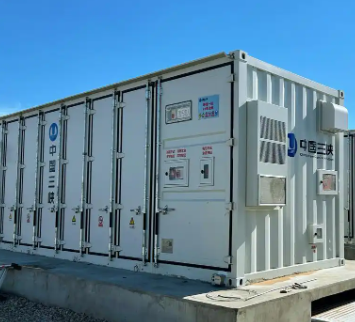
Why consider mica roll beyond fire protection?
The product information lists three possible roles for mica roll in new-energy-vehicle battery power modules: fireproof material, gasket and separator. This guide focuses on the latter two, where temperature-resistant insulation and electrical insulation are relevant considerations. A gasket and a separator are not interchangeable design functions: the intended position and required interface behavior must be defined by the module design. The supplied product data names both roles but does not specify a sealing performance, compressibility, dimensional tolerance, or separator design.
That distinction matters during evaluation. A roll specification can provide material and electrical data, while the component’s success in a module depends on the way it is cut, placed, retained and used in the assembly. The listed values should therefore be treated as product-selection inputs, not as proof of a complete battery-module design or as a guarantee of a particular fire, electrical or mechanical outcome.
For a gasket concept, begin with the location and geometry of the interface, then establish what the part is expected to do there. The available information does not say that the roll is compressible, fluid-tight, pressure-sealing or qualified for a particular joint. A thickness value alone cannot establish those properties. For a separator concept, define what components are to be separated and what electrical and temperature conditions apply. The product record identifies the separator role, but does not provide a module-specific design, voltage rating or validated separator performance.
R-5461-GPG thickness and electrical data
The following comparison reproduces the listed values for the four thickness options. The product record gives thickness tolerances, mica content per square metre and breakdown voltage. The 0.3 mm value is included because it is specified in the product data; no value has been estimated or interpolated.
| Listed thickness | Mica content | Breakdown voltage | Use in initial screening |
|---|---|---|---|
| 0.2 ± 0.02 mm | 350 ± 10 g/m² | >2 kV | A listed option to assess where the specified interface calls for the thinnest of these four choices. |
| 0.3 ± 0.03 mm | 500 ± 20 g/m² | >3 kV | A middle thickness option for checking against the drawing and the required electrical conditions. |
| 0.4 ± 0.03 mm | 600 ± 20 g/m² | >4 kV | A thicker listed option to assess if the component geometry permits and the specified electrical duty is compatible. |
| 0.5 ± 0.04 mm | 730 ± 20 g/m² | ≥5 kV | The thickest listed option; compare it with the assembly dimensions and the required insulation evidence. |
The table’s screening descriptions are decision prompts, not manufacturer-assigned gasket or separator mappings. The source does not say, for example, that 0.2 mm is specifically a gasket grade or that 0.5 mm is specifically a separator grade. For either function, the selected thickness must be checked against the application drawing and requirements. A thicker option is not automatically a better fit: it changes the nominal material thickness and is accompanied by different listed mica-content and breakdown-voltage figures, but the data provided does not establish the consequences for a particular assembly.
How to map the four thicknesses to gasket and separator duties
A practical first-pass map is to evaluate all four thicknesses against each role separately, rather than assigning each thickness a fixed function without evidence. For a gasket position, compare the stated thickness and tolerance with the space available in the assembled interface and the part dimensions on the drawing. Then confirm any required compression, contact, retention or sealing behavior through product-specific documentation or validation. Those performance properties are not given in the supplied R-5461-GPG data.
For a separator position, first identify the components to be separated and the electrical conditions the material must meet. The listed breakdown-voltage figures can inform an initial review, but the supplied information does not state the test method, sample configuration, conditioning or suitability for a particular module voltage. A breakdown-voltage figure should not be treated as a complete system-voltage rating. The buyer’s requirement and the supplier’s supporting evidence need to refer to the same intended product construction and conditions.
In both cases, the four options can be read as progressively thicker nominal choices: 0.2 mm, 0.3 mm, 0.4 mm and 0.5 mm. The associated listed mica content rises from 350 ± 10 g/m² to 730 ± 20 g/m², and the listed breakdown voltage rises from >2 kV to ≥5 kV across the endpoints. These are product-record values, not evidence that one option performs better in every battery-module location. The choice is a fit question: which documented option satisfies the drawing and the specified conditions without exceeding the available space or relying on an unverified property?
This approach avoids two common selection errors. One is choosing thickness based only on the broad role name, such as “gasket” or “separator,” without checking geometry. The other is interpreting the listed electrical figures as a complete qualification for the module. In a research-to-evaluation workflow, each candidate should be tied to the exact part location, required dimensions and operating conditions. Any remaining requirement that is not covered by the product information should be resolved before the material is treated as qualified.
Temperature claim: useful context, not a complete rating
The mica-roll product information states a maximum temperature of up to 1000°C. This is a maximum-temperature claim for the product family as described; the supplied data does not identify a continuous operating-temperature rating, exposure duration, test method or specific R-5461-GPG thickness-and-construction test result at that temperature. It should not be translated into a claim that a finished gasket or separator will withstand a particular battery event for a defined period.
For a module evaluation, keep the temperature question tied to the intended exposure. Ask what temperature condition applies, how long the material is expected to be exposed, and which exact product construction is under consideration. The manufacturer’s product information says the R-5461 family can use phlogopite mica paper, synthetic mica paper or calcined mica paper, with resin impregnation and reinforcement depending on application. Since the R-5461-GPG entry identifies the product as phlogopite mica roll with glass on both sides, a buyer should confirm the exact construction and applicable documentation for the ordered variant rather than assuming that every family-level construction option applies to it.
Roll length as a production-planning consideration
The R-5461-GPG specification lists roll lengths of 20 m, 25 m, 40 m, 50 m and 100 m, among other possible lengths (“etc.” in the product data). These are practical format choices to discuss when matching material supply to a module-production or converting plan. They do not, on their own, establish output per roll, usable yield, splice allowance, delivery quantity or manufacturing throughput.
For procurement review, keep the roll length separate from the part-performance decision. First determine the needed thickness and confirm that the candidate matches the required interface or separator dimensions. Then confirm which listed or otherwise agreed length is actually available for the relevant product variant. Production teams may also need to specify the cutting or converting format, but the supplied product data does not provide width, core diameter, winding direction or a battery-component cutting plan. Those details should not be assumed from the length options.
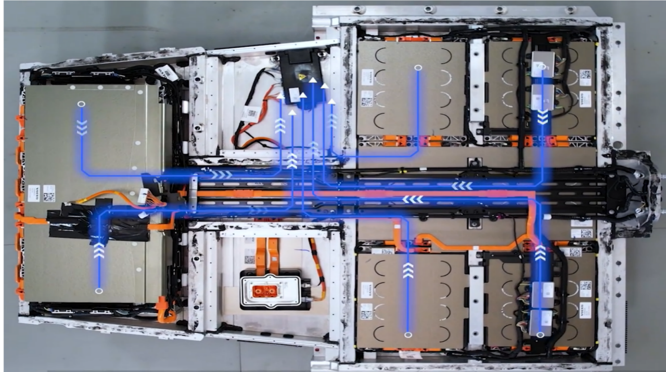
Evidence and fit checks before selection
For a decision-ready comparison, begin with the exact R-5461-GPG variant and the module location being evaluated. The product information supports a clear initial record: phlogopite mica roll with glass on both sides; four listed thicknesses and tolerances; corresponding mica content and breakdown voltage; a maximum-temperature claim of up to 1000°C; and listed roll lengths of 20 m, 25 m, 40 m, 50 m and 100 m, among other possible lengths.
- Match the role to the drawing. Identify whether the part is intended as a gasket or separator, its position, and its required finished dimensions. The application listing names both roles but does not define a specific component design.
- Compare thickness with the available space. Check the selected nominal thickness and tolerance against the approved drawing. Do not assume a thickness is suitable solely because it is the thinnest or thickest option.
- Set the electrical requirement explicitly. Compare the relevant breakdown-voltage entry with the actual requirement and request the test conditions and product-specific supporting information. The listed value is not a substitute for a complete system qualification.
- Clarify thermal conditions. Treat “up to 1000°C” as the stated maximum-temperature claim, not as an unstated continuous rating or time-based performance guarantee.
- Confirm construction and supply format. Verify that the ordered variant is the glass-both-sides phlogopite mica roll described as R-5461-GPG, and confirm the roll length and any other required dimensional details.
- Separate product data from application validation. The supplied product record identifies battery-module use, but does not provide a customer case, module-level test result or proof of suitability for a particular design.
These checks are useful because the available information answers some early screening questions but not every qualification question. It allows a buyer to compare stated thickness, mica content, breakdown voltage and roll-length options. It does not establish the performance of a finished part under a particular assembly pressure, voltage, temperature cycle or fire scenario. Those conditions should be specified and addressed with product-specific evidence where required by the project.
Where other mica formats fit—and where they do not
Mica plate and mica sheet are separate product formats in the supplied portfolio. They may be relevant to a design that calls for a rigid sheet form, but their listed properties should not be transferred to the R-5461-GPG roll. Similarly, mica tape and mica tube are distinct product categories; their names do not establish that they can replace a roll in the same battery-module position. The format decision should follow the component geometry and process, with each product assessed using its own specification.
The provided battery application record includes mica roll among several related mica products, and specifically identifies gasket and separator use for mica roll. It does not provide an equivalent battery-module specification for every other format. Accordingly, this article does not treat mica plate, mica sheet, mica tube, mica parts, mica insulator, etched foil mica heater, Phlogopite mica tape or Calcined mica tape as interchangeable alternatives. Their presence in a broader search vocabulary does not supply evidence of equivalent use in this particular module scenario.
What the specifications establish—and what they leave open
The product data establishes a set of selectable nominal thicknesses and associated tolerances, mica-content values and breakdown-voltage values for the R-5461-GPG entry. It also gives roll-length options and the family-level maximum-temperature statement. Taken together, these facts support an initial technical shortlist and a structured request for application-relevant documentation.
The same data does not assign the four thicknesses to specific gasket or separator duties. It does not state compression behavior, sealing capability, mechanical strength for a particular joint, product-specific continuous temperature, dielectric test conditions or a battery-module test result. These are meaningful limits, not reasons to disregard the listed specifications. They define the boundary between early material screening and final design qualification.
For research-stage buyers, the useful takeaway is that mica roll is explicitly identified for battery power-module gasket and separator applications, with four R-5461-GPG thickness choices documented. For evaluation-stage buyers, the next decision is to connect the intended function to the geometry and required conditions, then verify the exact construction and supporting data for the selected variant. Roll length should be considered as a production-planning input, not as evidence of component performance.
Frequently asked questions
Can mica roll be used as both a gasket and a separator in a battery power module?
The supplied application information lists both gasket and separator use for mica roll in battery power modules. It does not define a specific design or establish that one selected part can perform both functions at once. Assess each intended position and function separately against its geometry, electrical conditions and required supporting evidence.
How should buyers compare the 0.2 mm, 0.3 mm, 0.4 mm and 0.5 mm options?
Compare the listed thickness and tolerance with the component drawing, then review the corresponding mica content and breakdown voltage. The data lists 350 ± 10 g/m² and >2 kV for 0.2 mm; 500 ± 20 g/m² and >3 kV for 0.3 mm; 600 ± 20 g/m² and >4 kV for 0.4 mm; and 730 ± 20 g/m² and ≥5 kV for 0.5 mm. It does not prescribe a thickness-to-function match, so the figures alone do not qualify a choice.
Does the 1000°C figure mean the roll is rated for continuous operation at that temperature?
No such continuous rating is stated in the supplied information. The product description gives a maximum temperature of up to 1000°C but does not provide exposure duration, test method or a continuous operating-temperature value for the specific variant. The intended thermal conditions should be checked against product-specific documentation.
Which roll lengths are listed for R-5461-GPG?
The listed lengths are 20 m, 25 m, 40 m, 50 m and 100 m, with “etc.” indicating that the list is not necessarily exhaustive. Confirm the length available for the exact product variant. The listed lengths do not specify width, yield or production output.
Conclusion
R-5461-GPG mica roll is a candidate to evaluate when a battery power module calls for a mica-based gasket or separator and temperature-resistant electrical insulation is relevant. The supplied data gives four thickness options, corresponding mica-content and breakdown-voltage values, a maximum-temperature claim of up to 1000°C, and several roll lengths. It does not assign thicknesses to specific duties or establish performance in a particular module. A sound selection therefore links the product specification to the actual part drawing and required conditions, while treating application-specific evidence as a separate qualification step.
¿Tiene preguntas o necesita más detalles?
Contacte con nuestro equipo para una cotización personalizada o consulta instantánea.
Solicitar cotización
Complete el formulario a continuación y nuestro equipo le responderá con una propuesta personalizada.
Chat directo de WhatsApp
¿Prefiere chatear en tiempo real? Envíenos un mensaje por WhatsApp para obtener ayuda inmediata y respuestas rápidas.
- Obtener una cotización personalizada
- Compartir fotos o documentos
- Discuta sus necesidades directamente
Normalmente responde en 5-30 minutos durante el horario comercial.