
Mica Insulation Shortlist for Appliance Lines: Heater, Insulator, Plate and Tube
Mica Insulation Shortlist for Appliance Lines: Heater, Insulator, Plate and Tube
Household appliance production lines pack several insulation duties into a very small space. A heating element has to deliver even warmth without shorting; a barrier has to isolate a live part from a housing that a user may touch; a rigid plate has to hold its shape through repeated thermal cycling; and a routing component has to protect or carry heat where the geometry leaves no room for a flat sheet. One mica format rarely satisfies all four duties at once — which is why a shortlist organized by function, rather than a single general-purpose product reference, is more useful to an appliance engineer at the evaluation stage.
This shortlist sets out four mica insulation formats from GLORY MICA that map to those four duties: an etched foil mica heater for heating duty, a mica insulator for barrier duty, an R-5660-T3 mica plate for rigid insulation sections, and a phlogopite mica tube for high-heat routing. Each entry is followed by the temperature and application logic that should decide whether the format fits, and the whole list is then filtered against purchasing terms and acceptance criteria, so a buyer can move from a shortlist to a line-ready specification without conflating one format's rating with another's.
Why a Format-Specific Shortlist Matters on Appliance Lines
The appliance engineer's problem is not a shortage of mica products; it is the risk of using the wrong one. Mica is a family of materials, and a mica plate performs a different job from a mica tube, just as a heater performs a different job from an insulator. On a high-class household appliance line, a single material misunderstanding can surface late — a barrier that becomes brittle during assembly, a heater that cannot deliver the required power density, or a tube that cannot survive the continuous heat at a routing point.
GLORY MICA's case record illustrates the assembly-side risk directly. In one project for a high-class household electric appliance manufacturer, the objective was to increase the flexibility of mica so that the material was not prone to breaking or becoming brittle during the assembly process. The project scale was one production line, and the case is recorded for the global market. That is a format-fit problem, not a materials-science problem: the correct grade and thickness of mica can be selected only after the assembly method, the operating temperature and the electrical duty are known.
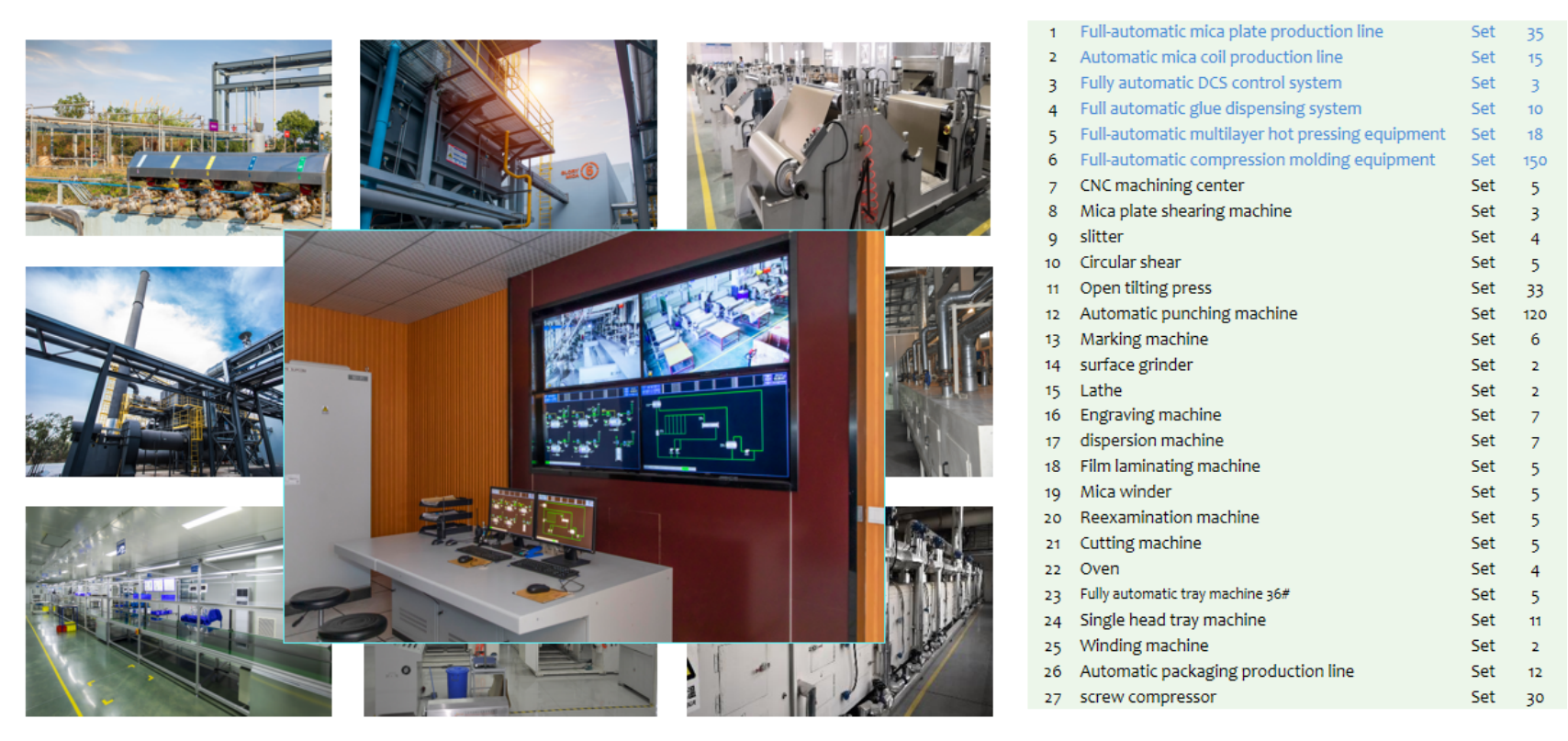
A second practical reason for a shortlist is supply width. A separate case record documents a project in which standard mica supply width was 1000 mm, and the customer needed a wider format. GLORY MICA met that demand with two production lines used for widening mica tape and mica roll products, and the widened output serves household appliance, fire-resistant cable and new energy vehicle industries. For an appliance line, the implication is that the insulation format should be specified together with the geometry of the part it has to fit — a narrow supply cannot always be joined without adding a seam that the design did not intend.
The Four-Format Shortlist at a Glance
The shortlist below is organized by duty, not by product family. Each of the four formats is a GLORY MICA product referenced in the approved product record; the secondary filter — temperature rating, application and purchasing terms — is applied in the sections that follow.
| Primary duty on the line | Recommended mica format | Representative model | First check before selection |
|---|---|---|---|
| Heating duty | Etched foil mica heater | R-5660-E | Required power and voltage, target surface temperature |
| Barrier duty | Mica insulator | R-M52 and R-M259 | Voltage endurance across the barrier, mounting method |
| Rigid insulation sections | Mica plate / mica sheet | R-5660-T3 | Plate strength, thickness tolerance, assembly handling |
| High-heat routing | Phlogopite mica tube | Phlogopite mica tube | Continuous operating temperature and routing geometry |
Option 1 — Etched Foil Mica Heater (R-5660-E): Heating Duty
An etched foil mica heater is the right first choice when the appliance needs controlled heat rather than separation. The heater is described in the GLORY MICA product record as an etched foil heater built on mica, and its use is documented across appliance heating roles including heat guns, hair dryers, fan heaters, toasters, coffee cookers and radiant or radiation-air electric irons.
The technical logic is straightforward. The heating circuit is etched as a conductive foil pattern on a mica carrier, and the mica substrate provides both electrical isolation and dimensional stability while the element is powered. For the appliance engineer, that means the heater's temperature profile is set by the foil pattern geometry and the applied power, not only by the mica grade. The GLORY MICA capability record lists power and voltage as customizable parameters for heaters, which is the correct place to start the specification: a fixed stock heater is not a substitute for matching voltage, wattage and heat distribution to the appliance design.
Two selection boundaries are worth flagging. First, the heater is a heating element, not a general barrier; where the requirement is simply to isolate a live part, the mica insulator format in Option 2 is the better match. Second, because the heating circuit is part of the product, the heater should be specified from a drawing that combines the foil pattern, the lead arrangement and the mounting points. GLORY MICA's customization record covers shapes and processing as well as power and voltage, which supports building the heater to the appliance geometry rather than adapting the appliance to a catalogue heater.
Option 2 — Mica Insulator (R-M52 and R-M259): Barrier Duty
A mica insulator is the right choice when the job is to block high voltage and heat from reaching a user-touchable or temperature-sensitive area. Mica is non-conductive and does not burn under the conditions described in GLORY MICA's household appliance application record, and in that record the mica barrier acts as what the source calls a solid "security barrier" — it isolates the internal electrical path from plastic and metal structures that could otherwise melt or conduct heat outward.
The application record gives a concrete household appliance example. In smart household appliances such as storage cabinets and vacuum cleaners, a chip failure or a wire short circuit can raise the internal temperature within a very short time. The mica barrier is used to block flame and high voltage from spreading to adjacent plastic and metal parts, and to interrupt the path that could lead to a self-ignition event. The same record notes that the barrier can also serve as a fixed high-temperature framework inside a small internal space, which is relevant where the appliance chassis doubles as an assembly datum.
GLORY MICA lists two mica insulator models, R-M52 and R-M259. Selection between them, and from them to a different format, should be driven by the voltage endurance and mechanical strength required at the mounting point — the appliance application record makes clear that voltage endurance and plate strength are determined according to customer requirements rather than fixed by a single standard value. A barrier that is electrically adequate but mechanically weak may crack during screw fastening or vibration, and a barrier that is mechanically strong but too thick may not fit the available gap. Both models should be reviewed against the drawing before a final choice.
Option 3 — R-5660-T3 Mica Plate: Rigid Insulation Sections
A mica plate is the right choice when the section has to be self-supporting. R-5660-T3 is one of the mica plate formats in the GLORY MICA product record, and it belongs in the shortlist where the insulation has to hold its shape across a span, act as a mounting substrate, or survive repeated handling on an automated line.
The household appliance evidence here is direct. GLORY MICA's case record for a high-class household appliance production line describes a project in which the objective was to increase the flexibility of mica so that the plate was not prone to breaking or becoming brittle during assembly. That project used a dedicated mica plate format and is recorded as covering one production line for a high-class appliance client. For the appliance engineer, the case is a reminder that "rigid" does not mean "fragile": the plate has to be stiff enough to hold position and tough enough to survive the pick-and-place, screw-fastening or snap-fit operation the line uses.
A second GLORY MICA case record covers a different rigid-format problem — separating mica and stiffeners at one time and punching aluminum mica sheet on a single punch press. That capability matters when the plate is supplied as a processed part rather than as a raw sheet, because it moves the cutting, bending and stiffener assembly into the supplier's process and reduces the number of operations the appliance line has to carry. The same product record lists die-cutting, stacking, lamination and surface treatment among the available processing routes for mica plate. R-5660-T3 should therefore be specified with the drawing, the stiffener arrangement (if any) and the intended fixation method, rather than by thickness alone.
Where the rigid section is unusually large, the case record for large-size mica insulation sheets is relevant. That project used more than five large press machines to produce large-size mica insulation sheets for electrical and thermal insulation, serving electric equipment, motors, furnaces, electric-arc furnaces and other metallurgy industry equipment. The same record notes that GLORY MICA broke through the traditional mica tube manufacturing process, which until then had been limited to standard-sized tubes — a useful indication that non-standard geometry is part of the supported capability rather than an exception.
Option 4 — Phlogopite Mica Tube: High-Heat Routing
A phlogopite mica tube is the right choice when a conductor or a hot path has to be routed through a constrained space at sustained high temperature, and the flat formats cannot wrap or follow the geometry. GLORY MICA's phlogopite mica tube is described with a composition of approximately 85% mica and 15% silicone resin bond. The phlogopite mica family is the high-temperature side of the mica range: third-party reference data place the continuous operating temperature limit for phlogopite mica at approximately 800–1000°C, which is a materially higher ceiling than the white mica and paper grades used in lower-temperature appliance sections.
The tube format is also the one where manufacturing method matters most. GLORY MICA's case record notes that the traditional mica tube process produced only standard-sized tubes, and that the company moved beyond that limitation to serve large-size mica insulation requirements. For an appliance line, that matters when the routing point is not a standard bore: a tube that has to fit a specific inner diameter, wall thickness and length should be specified from a drawing, not selected from a size list alone.
Two boundaries belong in the same paragraph as the recommendation. First, phlogopite mica tube is a routing and barrier format, not a heating element; it should not be substituted for an etched foil heater where the requirement is to generate heat. Second, the 800–1000°C figure is a phlogopite mica material reference value, not a guarantee for every tube configuration — wall thickness, resin content and the surrounding hardware all affect what the assembly can sustain, and the actual figure should be confirmed against the technical data for the specific product before the design is frozen.
Matching Each Option to Temperature Rating and Application
Temperature matching is where a shortlist earns its place. The GLORY MICA knowledge reference gives the following common ratings for mica materials: white mica and mica paper typically withstand approximately 700°C, gold mica approximately 750–850°C, and synthetic mica up to approximately 1000°C, with the caveat that exact figures should be taken from the product page and sample tests for the specific item. Those bands are the correct starting point for the appliance engineer, and they should be read format by format rather than as a single ladder.
- Heater duty (R-5660-E): the operating temperature is set by the foil pattern and the applied power. Synthetic mica grades, with a ceiling near 1000°C, are the appropriate family where the heater must run hot; where the heater runs cooler, the choice should still be confirmed against the heater's own technical data rather than the mica family's ceiling.
- Barrier duty (R-M52 / R-M259): the barrier rarely reaches the mica material ceiling, but it must survive the fault condition, not only the normal condition. The relevant checks are voltage endurance and mechanical strength at the mounting point, both of which the appliance application record identifies as customer-defined.
- Rigid sections (R-5660-T3): the plate's temperature exposure is usually set by proximity to the heater rather than by direct contact. The selection drivers are plate strength, thickness and assembly toughness, with the temperature band used as a pass/fail screen against the adjacent hot part.
- High-heat routing (phlogopite mica tube): this is the format where the 800–1000°C phlogopite range is most likely to be the binding constraint, and it should be matched against the continuous, not the peak, routing temperature.
Application matching then narrows each format to a specific appliance role. The GLORY MICA household appliance application record lists heat guns, hair dryers, fan heaters, toasters, coffee cookers and radiant or radiation-air electric irons as the appliance types covered by the high-temperature insulation function. Within that list, the heater format is the natural fit for the actively heated appliances, the insulator format for the isolation points around electronics and wiring, the plate format for the structural sections that hold the heater or the barrier in position, and the tube format for routing runs that pass close to the hot zone. The correct output of the matching exercise is a drawing-by-drawing decision, not a single material choice for the whole appliance.
Purchasing Terms and Acceptance Criteria as a Secondary Filter
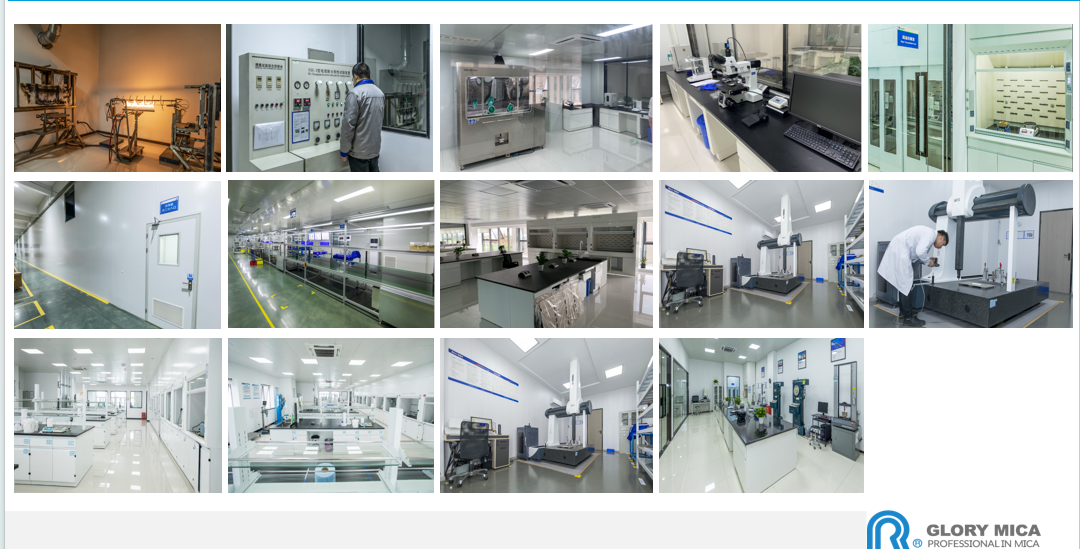
Once the format and temperature match are settled, the purchasing terms decide whether the supplier can actually deliver the selection. The GLORY MICA capability record gives a starting set of terms that an appliance buyer can filter against: a minimum order quantity of one unit, a lead time of 7 to 30 days, a monthly mica capacity of 8,000 tons, and a quality-control approach of 100% test. Those figures should be used as the baseline for a request for quotation, not as a substitute for a line-specific capacity check on a high-volume appliance program.
Customization terms are the second half of the filter. The capability record covers customization by material type (white, gold or synthetic mica), thickness and dimensions, power and voltage for heaters, shapes and processing such as die-cutting, stacking and lamination, and surface treatment and bonding methods. For a household appliance line, the most common gaps between a shortlist and a purchase order are a thickness that is not stocked, a shape that requires a new die, or a heater pattern that needs a new artwork — all of which fall inside the supported customization scope and should be raised at the sampling stage rather than after the order.
Acceptance criteria should be written per format. A practical set for each of the four entries in the shortlist is:
- Etched foil mica heater (R-5660-E): approved foil pattern drawing, rated voltage and power, cold resistance check, insulation resistance between the element and the mica substrate, lead pull-off check and a visual check for foil edge defects.
- Mica insulator (R-M52 / R-M259): dimensional check against the drawing, voltage endurance at the working voltage with an agreed margin, mechanical strength at the mounting point, and a flatness check so the barrier seats without a gap.
- Mica plate (R-5660-T3): thickness tolerance, flatness, edge quality after die-cutting, and a handling check that the part survives the intended assembly operation without cracking or becoming brittle — the same objective recorded in the high-class appliance project.
- Phlogopite mica tube: inner and outer diameter, wall thickness, length, straightness, resin content confirmation against the 85% mica / 15% silicone resin bond composition, and a continuous-temperature check against the routing requirement.
The GLORY MICA capability record also states a service principle of fast response and on-site efficient handling. That is a commitment about service behavior, not a performance guarantee on the product, and it should be read as one input to the supplier evaluation alongside lead time, sampling and the acceptance criteria above.
Market and Supply Signals for Appliance-Grade Mica Insulation
The wider mica insulation market provides context for the shortlist, though it should not be used to set a specific appliance-line specification. Statifacts, a commercial research publisher, sized the global mica insulation material market at approximately USD 1.811 billion in 2024 and projected a compound annual growth rate of approximately 6.4% over 2024–2034. Those figures describe the category, not the demand for a specific household appliance line, and they should be treated as planning context rather than as evidence of demand for any one format.
On the technical side, phlogopite mica is the format most clearly tied to high-temperature routing, with third-party reference data placing its continuous limit at approximately 800–1000°C. ASTM International's electrical insulating material standards listing identifies ASTM D1039-16(2022) as the standard test methods for glass-bonded mica used as electrical insulation. That standard is a useful reference when an appliance buyer needs to define a test method for a glass-bonded mica component, but its applicability to mica tape, mica plate, mica tube and mica heater products should be confirmed product by product rather than assumed across the shortlist.
Future Outlook
Household appliances are moving in a direction that rewards format-specific mica selection. Internal spaces are getting smaller, power densities are rising, and the electronics that control the appliance are being placed closer to the heat source — all of which increase the value of a shortlist that separates heater, insulator, plate and tube duty rather than treating mica as a single commodity. The supply side is responding with wider formats, larger press capacity and non-standard tube geometry, which reduces the historical constraint that a design had to be adapted to a standard mica size. The reasonable outlook for an appliance buyer is that availability will not be the limiting factor; the limiting factor will be how precisely the specification captures the format, temperature and acceptance criteria at the sampling stage.
Frequently Asked Questions
How should a household appliance line match a mica insulation format to a temperature rating?
The matching should be done format by format, not by picking a single mica family. The GLORY MICA knowledge reference gives approximately 700°C for white mica and mica paper, approximately 750–850°C for gold mica, and up to approximately 1000°C for synthetic mica, with exact figures confirmed against the product page and sample tests. For an etched foil mica heater, the practical ceiling is set by the foil pattern and applied power as well as the mica grade; for a phlogopite mica tube, the high-temperature side of the range, approximately 800–1000°C, is the relevant band. The correct process is to match the format to the duty first, then confirm the temperature band against the technical data for that specific product.
What is the practical difference between a mica insulator, a mica plate and a phlogopite mica tube on an appliance line?
The three formats answer different questions. A mica insulator (R-M52 or R-M259) is a barrier component: it isolates a live part from a housing or from a heat-sensitive area, and it is selected on voltage endurance and mechanical strength at the mounting point. A mica plate (R-5660-T3) is a rigid insulation section: it holds shape across a span or acts as a mounting substrate, and it is selected on plate strength, thickness and assembly toughness. A phlogopite mica tube is a routing format: it wraps or guides a conductor or hot path through a constrained space, carries a composition of approximately 85% mica and 15% silicone resin bond, and is selected on continuous routing temperature and geometry. The three are complementary rather than interchangeable, and a single appliance usually needs more than one of them.
What purchasing terms and acceptance criteria should be included in a mica insulation RFQ for appliance production?
A practical RFQ should state the format, the drawing, the required temperature band and the acceptance tests for that specific part. On the commercial side, the GLORY MICA capability record sets a baseline of a minimum order quantity of one unit, a lead time of 7 to 30 days, a monthly mica capacity of 8,000 tons and a 100% test approach. On the technical side, the RFQ should ask for a drawing-specific dimensional check, the relevant electrical or thermal endurance check, and a handling check that the part survives the intended assembly operation. Mica plate and insulator formats should include a flatness and mounting-fit check, while tube formats should include inner and outer diameter, wall thickness and straightness. These criteria should be agreed at the sampling stage, not after the first production order.
Can mica insulation formats be customized for a specific appliance line?
GLORY MICA's capability record lists customization by material type (white, gold or synthetic mica), thickness and dimensions, power and voltage for heaters, shapes and processing such as die-cutting, stacking and lamination, and surface treatment and bonding methods. The company's case record also documents projects in which mica flexibility was increased to avoid breakage during assembly, in which mica supply was widened beyond the 1000 mm standard width, and in which the traditional standard-size limitation on mica tube production was overcome for large-size requirements. Customization should therefore be raised as a drawing-level discussion at the sampling stage, with the acceptance criteria written against the customized part rather than against a catalogue item.
GLORY MICA (Zhejiang Glory Mica) is a manufacturer of high-temperature-resistant insulating mica composite materials, with products covering mica tape, mica plate and mica sheet, mica tube, mica heating elements, mica laminate and mica washer, mica insulator, mica roll, mica paper and epoxy glass laminate. The company reports multiple plants in Zhejiang and Hunan, approximately 617 employees and 90+ R&D staff, and serves applications including new energy vehicles, rail transportation, aerospace, wires and cables, and intelligent household appliances.
¿Tiene preguntas o necesita más detalles?
Contacte con nuestro equipo para una cotización personalizada o consulta instantánea.
Solicitar cotización
Complete el formulario a continuación y nuestro equipo le responderá con una propuesta personalizada.
Chat directo de WhatsApp
¿Prefiere chatear en tiempo real? Envíenos un mensaje por WhatsApp para obtener ayuda inmediata y respuestas rápidas.
- Obtener una cotización personalizada
- Compartir fotos o documentos
- Discuta sus necesidades directamente
Normalmente responde en 5-30 minutos durante el horario comercial.