
Metalized Paper Laminating Machines: Key Factors for 2026
The global metallized paper market reached a valuation of USD 4.85 billion in 2025, driven by demand for premium labeling and cigarette packaging (DataM Intelligence). In this market, the lamination segment accounted for a 57.4% revenue share in 2024 (SkyQuest Technology), making metalized paper laminating machines central to value-added packaging equipment decisions. For buyers entering an evaluation cycle in 2026, the framework covers process integration, precision, operational stability, market trends, and supplier delivery evidence.
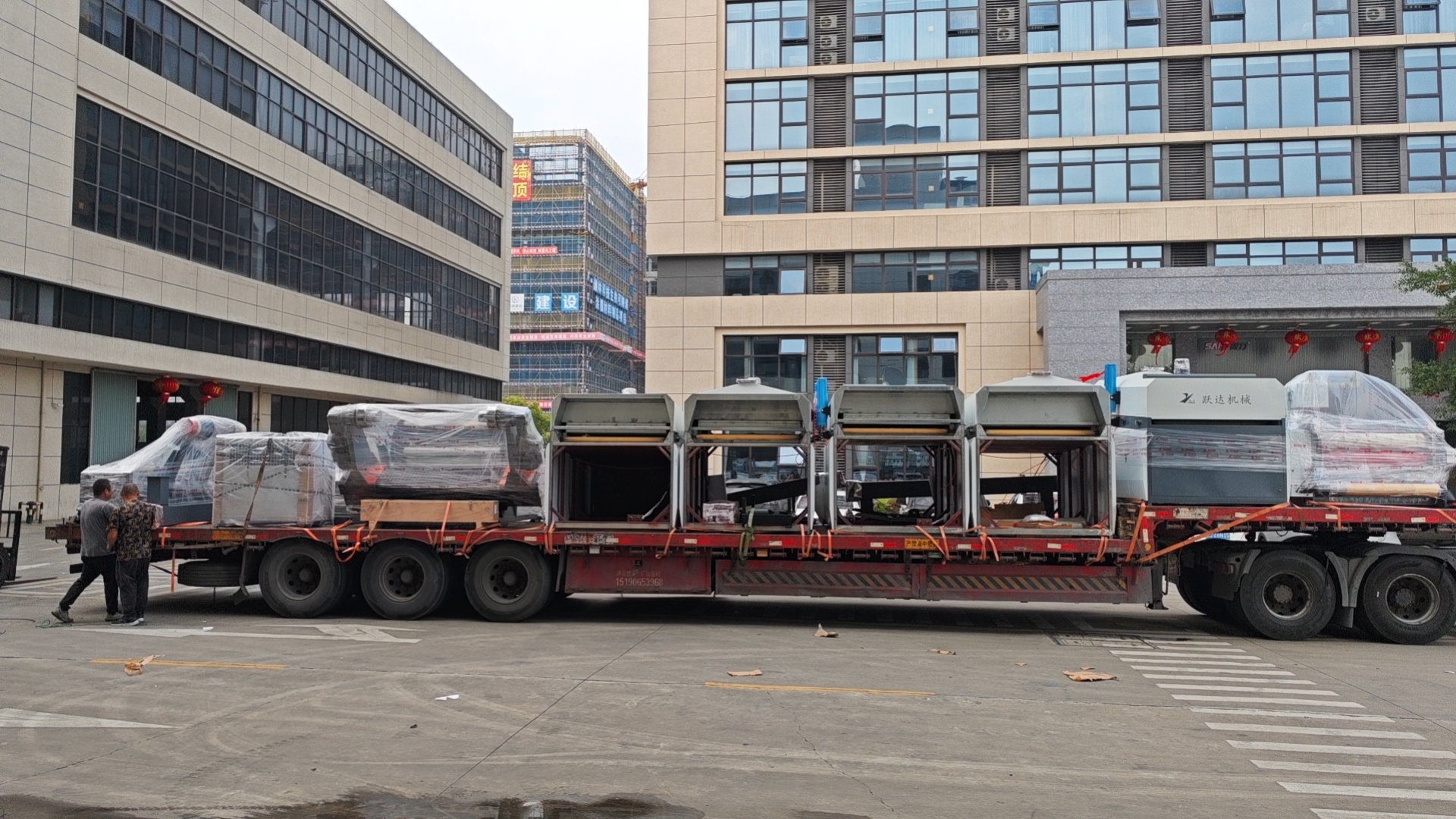
Market Context: Metallized Paper and Laminating Equipment in 2026
The Asia-Pacific region accounts for nearly 40% of the world's metallized paper market, supported by expanding tobacco and beverage industries in China and India (Future Market Insights). The same region is a major equipment supply base: China's machinery export value rose 15.7% year-on-year in early 2026, shifting toward high-value-added equipment such as servo-controlled and CNC machines (VDW). These two data points define the 2026 environment for buyers evaluating metalized paper laminating machines.
Evaluation starts with a category question: which machine configuration matches the intended product range? Metallized paper used in cigarette packaging, wine boxes, cosmetics, tea packaging, and disposable foodservice items differs in basis weight, foil thickness, and finishing. A machine specified for 100–350 g/m² paper with PET film from 0.012 to 0.014 mm serves a different production profile than a line built for 40–450 g paper with aluminum foil from 0.006 to 0.01 mm. The buyer's first step is to map product mix to working width, substrate range, and coating requirements.
What Buyers Evaluate When Choosing a Metalized Paper Laminating Machine
Equipment evaluations in this segment typically combine five criteria.
1. Precision and tolerance control
In documented YUEDA installations, high-precision positioning double rotary sheet cutters (DWLX1300L-1400L and YDSLX1300-1400) hold blank cutting accuracy at ±0.1 mm. The positioning sheeter (YD1300-1400) also specifies sheeting accuracy of ±0.1 mm. Where register marks and cut edges are visible on premium packaging, this tolerance becomes a decisive requirement.
2. Continuous operation and environmental robustness
Documented case highlights from YUEDA installations in Southeast Asia include humidity-resistant design, 24/7 continuous operation support, dust-proof design, fast size changeover, and low maintenance cost. These attributes matter for cigarette and cosmetics packaging plants operating extended shifts in high-humidity climates.
3. Process integration
Integrated machines combine lamination and coating in one pass. The YUEDA gantry-type multifunctional aluminum metallized cardboard laminating (coating) machine, model YDLM1300B, integrates water base laminate paperboard production with four-roller transfer coating and anilox roller direct back coating inside a single gantry structure, including peeling and back coating modules.
4. Customization flexibility
YUEDA's production capability covers voltage customization (110V/220V/380V), working width (800–1600 mm), and control systems. The ODM scope extends to working width and speed, coating and lamination process, control system brand, voltage and frequency, safety standards (CE/UL), brand logo, HMI language, food-grade materials, explosion-proof design, and production line integration.
5. Supply evidence and pre-shipment control
YUEDA's documented quality control includes 100% pre-shipment testing with a 2-hour continuous run, with third-party inspection available. Monthly capacity is 12–15 units; lead time is 30–45 days for standard models and 45–60 days for customized models; MOQ is 1 unit.
YUEDA's Laminating and Coating Platform
Wenzhou Yueda Packaging Machinery Co., Ltd., operating under the YUEDA brand, is a manufacturer of gold and silver cardboard production equipment located in Longgang, Wenzhou, China's printing city. Founded in 1998, the company integrates production, sales, and service, with a 4,000 m² factory, 30 employees, and a 25-engineer R&D team. Its annual output is 100 sets of mechanical equipment, with about 70% of products exported to Southeast Asia, the Middle East, South America, and Africa.
The core product range includes horizontal gold and silver cardboard laminating machines, positioning cross-cutting machines, high-speed double-helix positioning slitting machines, and gantry-style multi-functional gold and silver cardboard laminating (coating) machines with peeling and back coating. Two models directly address metallized paper lamination.
YDLM1300B: Gantry Multifunctional Aluminum Metallized Cardboard Laminating (Coating) Machine
The YDLM1300B is a gantry-type laminating and coating integrated machine for metallized board processing. Its specifications include a working width of 600–1200 mm, a maximum machine speed of 180 m/min, and a working speed of 15–150 m/min. Substrate compatibility covers PET film (0.012–0.014 mm), OPP film (0.02–0.06 mm), paper (100–350 g/m²), and aluminum film (0.006–0.007 mm). The lamination type is water base laminate paperboard; glue application uses four-roller transfer coating; back coating color is applied through anilox roller direct coating.
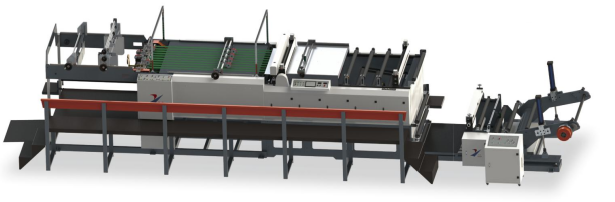
ZNFH1300-1400-1500: Automatic Aluminum Metallized Cardboard Laminating & Coating Machine (No Shaft Type Rewinding)
For production profiles that need a wider paper range, the ZNFH series supports paper from 40–450 g and aluminum foil from 0.006 to 0.01 mm (film from 0.01 to 0.1 mm). Roller face widths are available at 1300 mm, 1400 mm, or 1500 mm; running speed is 5–150 m/min; the drying path is 12.5 m; total power consumption is 121 kW or 129 kW depending on configuration.
Technical Profile of the YDLM1300B
The table below summarizes the YDLM1300B specification, which is useful when comparing integrated gantry-type laminating machines.
| Parameter | YDLM1300B specification |
|---|---|
| Machine type | Gantry-type laminating & coating integrated machine |
| Working width | 600–1200 mm |
| Machine speed (max) | 180 m/min |
| Working speed | 15–150 m/min |
| Paper range | 100–350 g/m² |
| PET film | 0.012–0.014 mm |
| OPP film | 0.02–0.06 mm |
| Aluminum film | 0.006–0.007 mm |
| Lamination type | Water base laminate paperboard |
| Glue type | Four-roller transfer coating |
| Back coating | Anilox roller direct coating |
| Paper unwinding diameter | 1500 mm |
| Paper rewinding diameter | Φ1600 mm |
| Heating tunnel temperature | ≤130°C |
| Heating tunnel length | 15 m |
| Power supply | 380V±10%, 50Hz |
| Motor power | 60 kW |
| Heating power | 216 kW |
| Working power | 80 kW |
| Overall dimensions | 22,330 × 3,700 × 4,500 mm |
| Total weight | 40 t |
For plant planning, the physical and electrical footprint of an integrated machine is a relevant constraint. The YDLM1300B has an overall length of 22,330 mm, a total weight of 40 tons, and a 380V±10% / 50Hz power requirement, which defines the floor space and power infrastructure needed before installation.
Patented Engineering Behind Lamination and Coating
Machine performance depends on engineering details that are often protected by patents. The China National Intellectual Property Administration has granted YUEDA multiple utility model patents relevant to laminating and coating equipment:
- “A New Type of Adjustable Coating and Laminating Machine” — Patent ZL 2019 2 1219345.0, valid 2020–2030.
- “Double-layer Energy-saving Drying Oven for Gantry-type Multifunctional Composite Coating Machine” — Patent ZL 2022 2 1114210.X, valid 2022–2032.
- “Waste Gas Recovery and Utilization Device for Coating and Laminating Machine” — Patent ZL 2020 2 3151788.6, valid 2021–2031.
- “Double Gluing Device for Coating and Laminating Machine” — Patent ZL 2020 2 3214028.5, valid 2021–2031.
These patents cover an adjustable coating and laminating mechanism, a double-layer energy-saving drying oven, waste-gas recovery, and a double gluing device. They address the four process functions that determine metallized board quality in integrated machines: coating uniformity, drying efficiency, emission control, and adhesive application.
Buyers exporting to the European market should also plan compliance documentation: industrial laminating machines must comply with EN ISO 12100:2010 for risk assessment and safety design to obtain CE marking (CEN-CENELEC).
Application Scenarios: From Tobacco Packaging to Cosmetics
YUEDA's applicable industry scope for laminating and cutting equipment covers paper packaging for printed wine boxes, cigarette paper packaging, cosmetics paper packaging, tea paper packaging, disposable waterproof paper tableware, cake paper packaging, chewing gum paper packaging, and other packaging products. The documented cases below are located in Thailand and Vietnam.
Case: cigarette packaging factory in Thailand
According to project records, a cigarette packaging factory in Thailand has operated 2 YUEDA units for more than 5 years. Reported results include a 30% efficiency increase and a 15% material waste reduction, with documented labor cost savings of 20% for the packaging factory. Key highlights include humidity-resistant design and 24/7 continuous operation support.
Case: packaging factory in Vietnam
In Vietnam, a packaging factory uses 1 YUEDA unit for precision cutting of cosmetic packaging, with a project history of more than 5 years. Documented results include ±0.1 mm cutting precision, zero rework rate, and 20% labor cost saving. Key highlights of this case include dust-proof design, fast size changeover, and low maintenance cost.
Market Trends Shaping the 2026 Evaluation
Five verifiable data points provide the analytical basis for 2026 equipment evaluations.
| Trend indicator | Observable data point | Relevance to buyers |
|---|---|---|
| Global metallized paper market size | USD 4.85 billion in 2025, driven by premium labeling and cigarette packaging (DataM Intelligence) | Confirms sustained demand for high-gloss packaging materials |
| Lamination segment share | 57.4% of metallized paper revenue in 2024 (SkyQuest Technology) | Positions laminating machines as the core equipment category in metallized paper production |
| APAC demand concentration | Near 40% of global metallized paper market (Future Market Insights) | Relevant for regional after-sales support and supply chain planning |
| China machinery export shift | +15.7% year-on-year in early 2026 toward high-value-added equipment (VDW) | Makes servo-controlled and high-precision features more common in export machinery |
| Wet laminating adoption | About 70% of industrial laminating market in 2025 (Market Research Future) | Indicates water-base laminating as the dominant process route in food and consumer packaging |
Integrated Laminating vs. Traditional Step-by-Step Production
Traditional metallized paper lines often divide lamination and coating across separate machines: one unit bonds film and paper, and a second unit applies back coating or color. This approach reduces the cost of each individual machine and allows flexible line configuration. Its trade-offs are additional material handling, intermediate storage, and labor between process steps.
Integrated gantry-type machines, such as the YDLM1300B, combine film lamination, glue application, back coating, and peeling/rewinding functions in one structure. The practical benefit is fewer intermediate handling steps and a continuous metallized board process from unwinding to rewinding.
One honest limitation belongs in the evaluation: the integrated configuration carries a substantial physical and electrical footprint. At 22,330 mm length, 40 tons weight, and 216 kW heating power, the YDLM1300B requires industrial-scale plant layout and power infrastructure. Operations with limited floor space or lower production volumes may find a modular line more practical.
Future Outlook
The 2026 evaluation environment points toward demand consolidation around three equipment attributes: precision, integration, and supply reliability.
Metallized paper demand is expanding beyond tobacco and premium labels into adjacent consumer categories, with regional growth concentrated in Asia-Pacific (Future Market Insights). The step-by-step integration of laminating, coating, and cutting reduces handling losses, which aligns with converters' focus on material yield. China's machinery export data (+15.7% year-on-year in early 2026, VDW) suggests that servo-controlled and high-precision machines are becoming the baseline for internationally traded equipment.
YUEDA at a Glance: Company and Contact
Wenzhou Yueda Packaging Machinery Co., Ltd. (brand: YUEDA) is located at Yueda Machinery, Building 2, No. 1333 Times Avenue, Longgang City, Wenzhou City, Zhejiang Province, China. The company manufactures gold and silver cardboard laminating (composite) coating machines, positioning cross-cutting machines, and high-precision slitting machines, exporting about 70% of output to Southeast Asia, the Middle East, South America, and Africa.
Contact: Jack
Email: 2179069246@QQ.COM
Tel / WhatsApp: +86 19857780001
Website: www.yuedamachine.com
A public brochure with product specifications is available for download: YUEDA Company Brochure (PDF).
FAQ: Metalized Paper Laminating Machines
What is a metalized paper laminating machine?
A metalized paper laminating machine combines metallized film with a paper or board substrate to produce high-gloss packaging material. The YUEDA gantry-type multifunctional aluminum metallized cardboard laminating (coating) machine (YDLM1300B) is a gantry-type integrated example, producing water base laminate paperboard at a working speed of 15–150 m/min, with a maximum machine speed of 180 m/min.
Why does lamination dominate the metallized paper market?
The lamination segment held a 57.4% revenue share in the metallized paper market in 2024 (SkyQuest Technology). The segment's position is favored by its high gloss and barrier properties in consumer goods. For equipment planning, this positions the laminating machine as the central investment in metallized paper capacity.
Which specifications should be checked when evaluating a metalized paper laminating machine?
Key specifications include working width, working speed, substrate range, coating method, drying path, power requirements, and physical dimensions. For the YDLM1300B: working width 600–1200 mm; working speed 15–150 m/min; maximum machine speed 180 m/min; substrates include PET film (0.012–0.014 mm), OPP film (0.02–0.06 mm), paper (100–350 g/m²), and aluminum film (0.006–0.007 mm).
Which applications use metalized paper laminating equipment?
Applications cover printed wine boxes, cigarette paper packaging, cosmetics paper packaging, tea paper packaging, disposable waterproof paper tableware, cake paper packaging, chewing gum paper packaging, and other packaging products. Documented installations include a cigarette packaging factory in Thailand (2 units, 5+ years, 30% efficiency increase, 15% material waste reduction) and a packaging factory in Vietnam (1 unit, ±0.1 mm cutting precision, zero rework rate).
Which patents support modern laminating and coating technology?
Relevant utility model patents include “A New Type of Adjustable Coating and Laminating Machine” (ZL 2019 2 1219345.0, 2020–2030), “Double-layer Energy-saving Drying Oven for Gantry-type Multifunctional Composite Coating Machine” (ZL 2022 2 1114210.X, 2022–2032), “Waste Gas Recovery and Utilization Device for Coating and Laminating Machine” (ZL 2020 2 3151788.6, 2021–2031), and “Double Gluing Device for Coating and Laminating Machine” (ZL 2020 2 3214028.5, 2021–2031).
How should a buyer evaluate a manufacturer's delivery capability?
Buyers should check production capacity, lead time, customization scope, and quality control. YUEDA's documented capability includes a monthly capacity of 12–15 units, lead times of 30–45 days for standard models and 45–60 days for customized models, and an MOQ of 1 unit. Quality control includes 100% pre-shipment testing with a 2-hour continuous run, and third-party inspection is available. Customization options include voltage (110V/220V/380V), working width (800–1600 mm), and control systems.