
Metal vs. Wood vs. Plastic Display Racks: A Buyer's Framework
A display rack is judged on the sales floor but decided in a procurement meeting. By the time the purchase order is signed, the material choice has already fixed the minimum order quantity, the production lead time, the compliance route, the freight profile, and the number of years the fixture will stay in service. Metal, wood, and plastic are not three finishes applied to the same product. They are three different sourcing models with different thresholds, and buyers who treat them as interchangeable tend to discover the difference when the quotation returns.
Why Material Is the First Decision, Not the Last
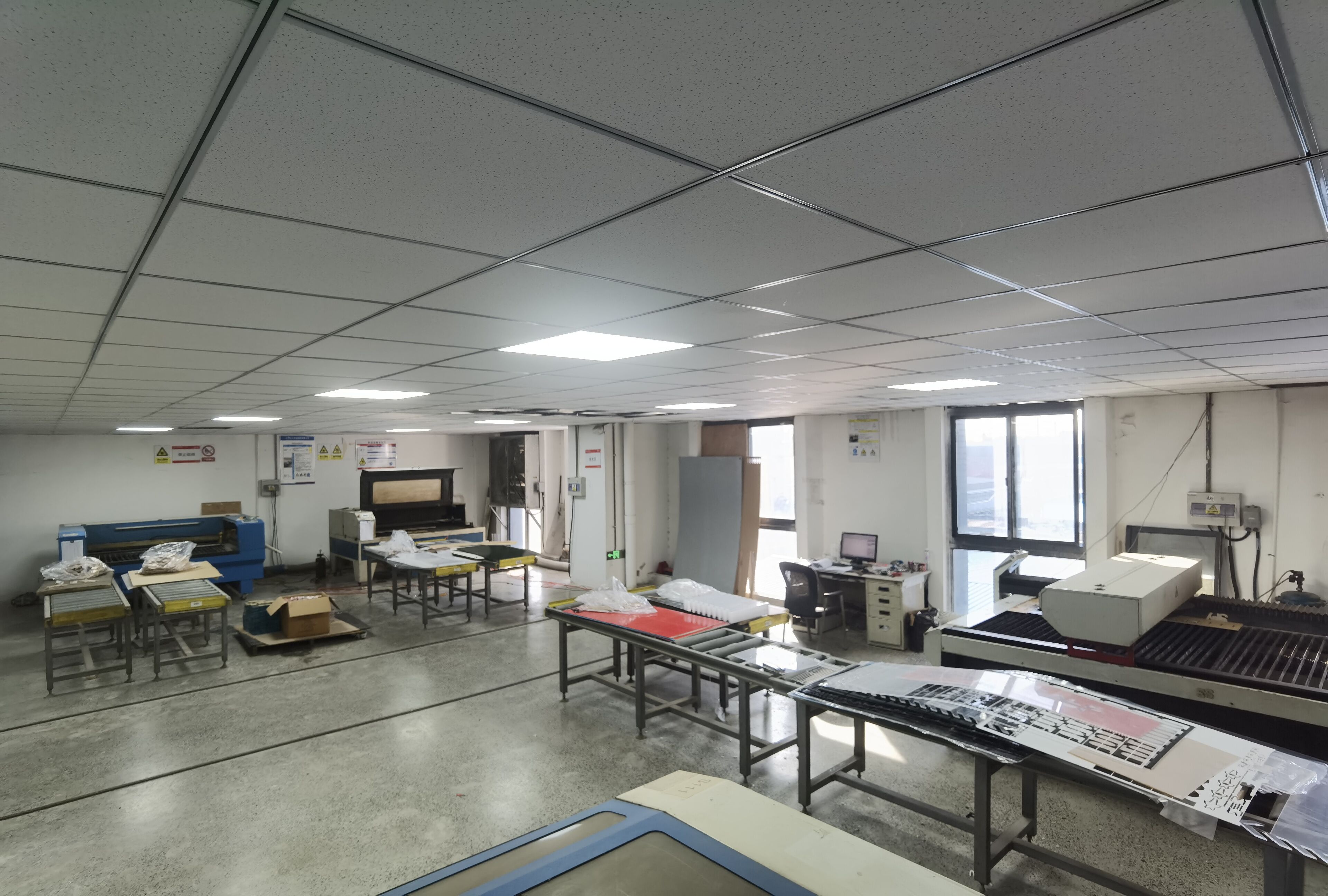
Retail, supermarket, department store, and exhibition buyers typically start with appearance - the finish, the silhouette, the brand colour - and leave the material question until the quotation arrives with a minimum order quantity of 1,000 pieces or a lead time that no longer fits the store-opening date. That sequencing is expensive, because material is what determines tooling and moulds, welding and finishing capacity, timber sourcing and joinery, and the documentation trail each of those requires.
The category is large enough for the difference to matter at portfolio scale. According to Dataintelo, the global retail shelving market - which includes display racks in their main forms - was valued at USD 12.4 billion in 2025 and is projected to reach USD 25.6 billion by 2034. Market Research Future places gondola and floor-standing systems at a 41.8% share of that market in 2024, equivalent to approximately USD 3.59 billion, and puts steel at a 48.6% material share in the same year.
Those two figures frame the decision. Metal is the default system for high-load, high-traffic merchandising. Wood and plastic are not weaker substitutes; they are specifications for jobs where metal is unnecessarily heavy, unnecessarily expensive, or visually wrong.
Three Reference Configurations for a Material Comparison
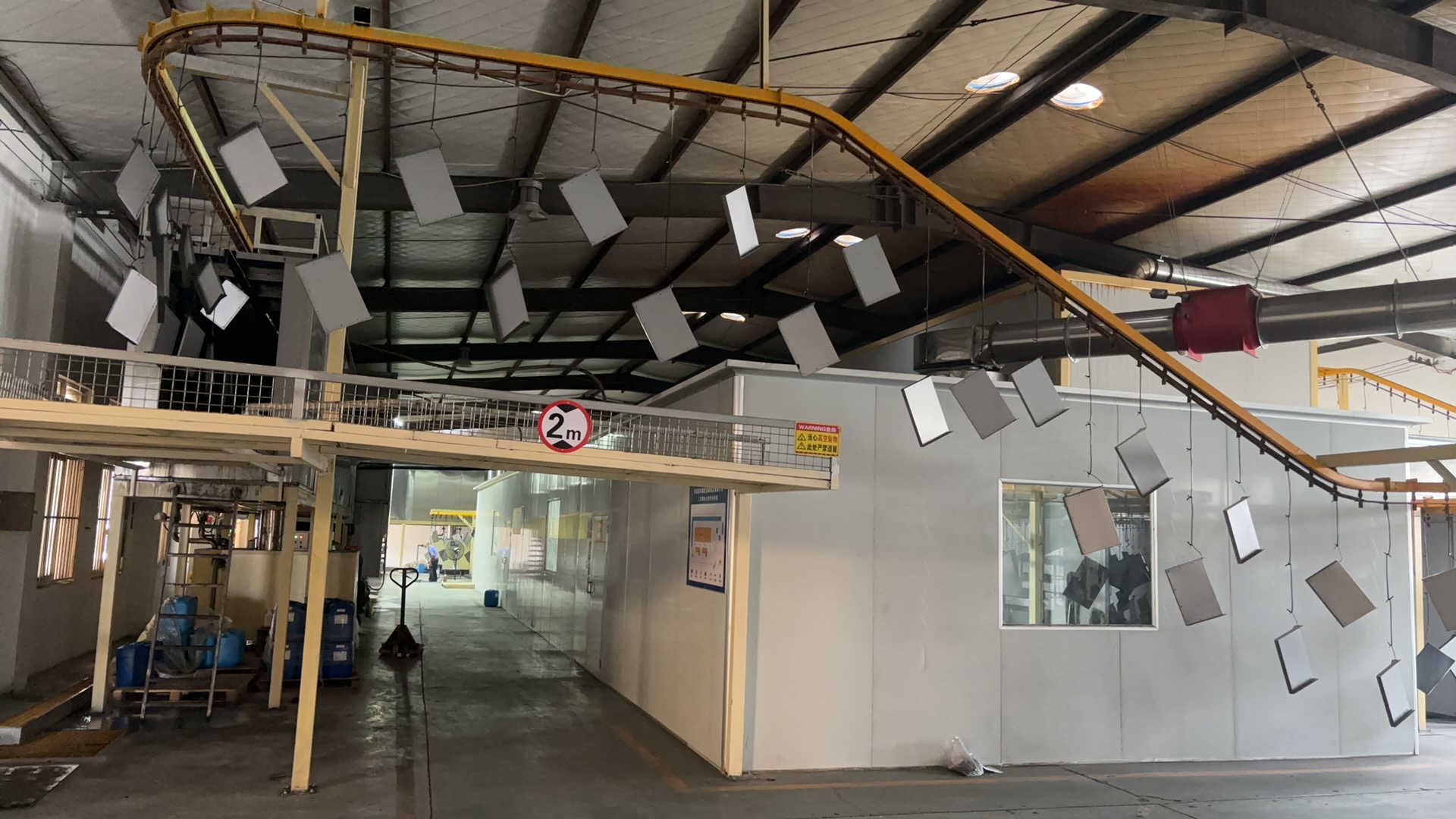
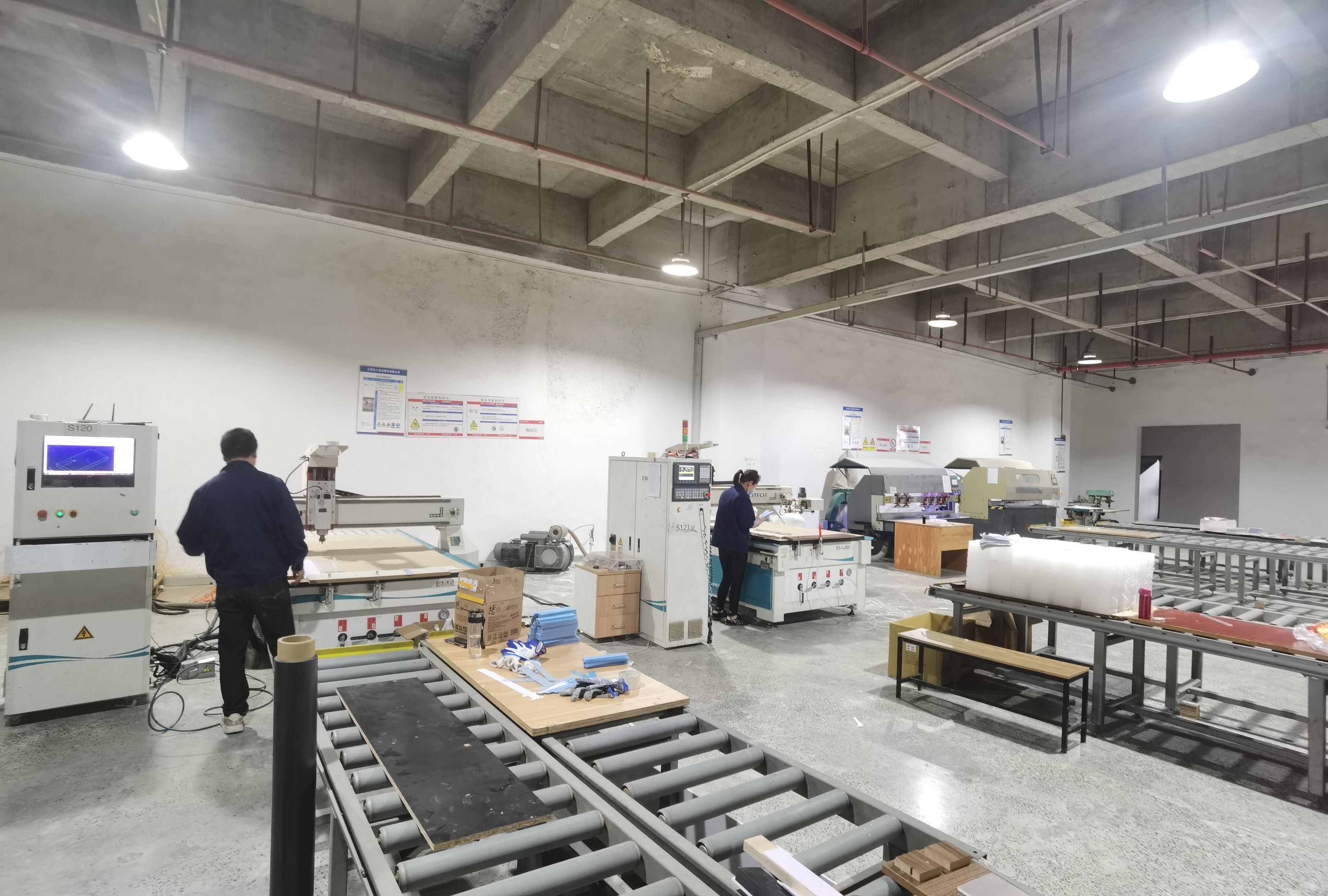
Redman Corporation is a Chinese manufacturer of custom POP displays and store fixtures, founded in 2002 and based in Zhangjiagang, roughly two hours' drive from Shanghai. The company operates around 550,000 sqft (51,097 m2) of production space across metal, wood, plastic, printing, painting, powder coating, and packaging workshops, employs more than 350 people including 50+ technical engineers and 7 project managers, exports approximately 95% of output to the USA, Canada, Europe, the Middle East, and Australia, and maintains a warehouse in Los Angeles for assembly, packaging, and drop-shipping.
For buyers comparing material routes, three configurations are representative of the range:
- RM-POP-001 - the metal path, built on steel and stainless steel, for floor-standing POP displays, gondola add-ons, and counter-top units where structural rigidity governs.
- RM-SF-001 - the wood path, for store fixtures where brand presentation, warm surface finish, and series consistency matter.
- RM-PD-001 - the plastic path, for molded counter-top, accessory, and modular components produced at volume.
Side by Side: The Specifications That Decide a Project
MOQ and lead time are the two specifications that most often eliminate an option before price is even discussed. The table below sets out the three configurations on the variables buyers negotiate first.
| Specification | RM-POP-001 (Metal) | RM-SF-001 (Wood) | RM-PD-001 (Plastic) |
|---|---|---|---|
| Primary material | Steel / stainless steel | Timber-based construction | Molded plastic components |
| Typical build | Floor-standing POP, gondola add-on, counter-top | Floor-standing fixture, wall-adjacent series unit | Counter-top, accessory, modular component |
| Minimum order quantity | 100 pieces | 50 pieces | 1,000 pieces |
| Production lead time | 25-35 days | 30-40 days | 35-50 days |
| Management systems | ISO 9001, ISO 45001, ISO 14001, ISO 50001 | ISO 9001, ISO 45001, ISO 14001, ISO 50001, FSC Chain of Custody | ISO 9001, ISO 45001, ISO 14001, ISO 50001 |
| Finish route | Powder coating and comparable decorative finishes, locked at sampling | Painting and wood finishing | Molded-in colour, print, or coating |
| Representative QC tests | Adhesion test, corrosion-resistance test, load-bearing test | Incoming material inspection, material performance test, load-bearing test | Incoming material inspection, material performance test |
| Best-fit environment | High-traffic retail, supermarket, exhibition | Department store, apparel, brand-image zones | Counter-top, accessory, multi-store rollouts |
Figures reflect the three reference configurations. Capacity scheduling and final lead times are confirmed against each project's specification. Redman's production base as a whole runs at more than 1,000 containers annually across its metal, wood, plastic, printing, painting, powder coating, and packaging workshops.
Certifications: What Each Material Path Actually Documents
Certification is the area where buyers most often conflate two different things. ISO 9001 (quality management), ISO 45001 (occupational health and safety), ISO 14001 (environmental management), and ISO 50001 (energy management) are site-level management-system certifications. They describe how a factory is governed; they do not certify an individual fixture for a market. All three configurations described here are produced within a facility operating these systems.
FSC Chain of Custody is different in kind. It applies specifically to the wood path and documents the route timber takes from certified source through processing - which is why RM-SF-001 carries it while the metal and plastic configurations do not. For buyers whose customers impose responsible-sourcing requirements, chain of custody is part of the specification rather than an optional extra.
Product-level compliance follows a separate route. For the USA market, retail fixtures and commercial displays must comply with ANSI/UL 970, the standard that replaced UL 65 and UL 962. Redman works from the buyer's target market requirements, issues product certification accordingly, and can supply third-party test reports, with raw materials and production processes controlled against those requirements.
Application Fit: Matching Material to Environment
Retail and sportswear stores
Sportswear and apparel retail remains heavily store-based: Fortune Business Insights reports that the retail store distribution channel accounted for a 70.4% share of the global sportswear market in 2026. Fixtures therefore carry merchandising weight, not just storage. In practice this means metal wall and floor systems where dense product has to be held at height, and wood for feature and entry zones where the fixture is part of the brand statement. Accessory and counter-top positions are usually the natural fit for plastic components.
Supermarkets
Supermarket environments combine high traffic, high load, and frequent re-merchandising. Steel's 48.6% material share reflects that: metal gondola and floor-standing systems dominate because they tolerate repeated reconfiguration. Plastic units serve shelf-edge, promotional, and seasonal positions where weight and cost matter more than rigidity.
Department stores
Department store display is a series problem - the fixture has to look consistent across floors and departments while carrying brand image. Wood suits this best, and RM-SF-001's 50-piece threshold makes a controlled roll-out feasible without committing to large volume before the concept is validated.
Exhibitions and trade shows
Exhibition fixtures are assembled and dismantled repeatedly and transported between venues. Metal knock-down and foldable structures handle this cycle better than timber, while plastic components reduce the weight of counter-top and display elements. Where a show fixture must also photograph well for brand use, a wood-and-metal combined build is the usual compromise.
Market Trend: Where Fixture Demand Is Moving
Three signals are worth carrying into a 2026 sourcing plan. First, the market is projected to roughly double between 2025 and 2034, from USD 12.4 billion to USD 25.6 billion, which implies that a substantial share of future demand comes from replacement and refresh cycles rather than new store openings - a shift that favours suppliers able to reproduce an existing specification consistently across production runs.
Second, modularity is rising. An industry report referenced in National Retail Federation context indicates modular display systems grew 34% year over year in 2024-2025; the figure is directional and should be validated against a buyer's own category plan rather than treated as a procurement forecast.
Third, material mix is stable rather than churning. Steel's 48.6% share, together with the 41.8% share held by gondola and floor-standing systems, indicates that metal remains the structural backbone of retail display, with wood and plastic absorbing the differentiated positions around it.
How These Configurations Compare with Traditional Sourcing Routes
Material is only half the decision. The other half is who produces the fixture and under what commercial model. Redman's comparison data sets out three routes against which buyers typically benchmark.
Against imported display products from Europe or the USA, the stated position is 50-60% lower product cost and 30-40% lower total cost of ownership, with 30-40% better energy efficiency from locally optimised production processes, material utilisation above 92%, and full-life-cycle energy cost 50-60% lower. After-sales is handled through 7x24 online technical support and problem resolution within 48 hours, against the longer processing cycles typical of cross-border imported programmes.
Against trading companies without their own factory, the difference is control. A full production chain translates into a stated 100% on-time delivery rate and 15-20% lower product cost by removing intermediaries, and energy-efficiency consistency is stated as 100% stable against 30-40% indicator deviation for trading-company supply, which typically depends on third-party factories.
Against traditional local display manufacturers, the comparison is less favourable on first price and more favourable on lifecycle cost. Initial cost is stated as 10-15% higher, but total cost of ownership is 30-40% lower over three years because one-stop service reduces communication overhead and quality costs. Reinforced structure design extends expected service life to 3-5 years against 1-2 years, unit energy consumption is 20-25% lower, after-sales handling is required 90% less often, and recyclable material usage is above 85%.
For market context, leading global fixture suppliers include Lozier Corporation, Madix Inc., and Tegometall - large-scale manufacturers whose scale advantages sit in standardised programmes rather than in low-MOQ custom work.
Limits and Trade-offs Buyers Should Plan For
A decision framework that only lists advantages is not a framework. Four boundaries apply to the configurations described here.
First-price disadvantage. A one-stop, multi-material production model carries a stated 10-15% higher initial cost than traditional local manufacturers. The return comes from lower total cost of ownership over three years, which means this route does not suit a buyer optimising exclusively for the first-unit price of a single order.
MOQ floors. RM-PD-001's 1,000-piece minimum order quantity is incompatible with a single-store trial or a small pilot; mould-based production only makes commercial sense once the volume is real. RM-SF-001's 50-piece threshold is the lowest of the three and is the practical entry point for validating a concept before scaling.
Lead-time bands. The three configurations run 25-35 days (metal), 30-40 days (wood), and 35-50 days (plastic). If a store opening sits inside 30 days, the plastic band does not fit, and the metal band leaves almost no contingency for sampling revisions.
Coordination load in mixed-material projects. A programme that combines metal, wood, and plastic concentrates scheduling, finishing, and inspection into a single critical path, and multi-material custom work is coordinated through a dedicated project management function rather than by default. Buyers should confirm how many concurrent projects a supplier can run before awarding a multi-store rollout.
A fifth, quieter boundary applies to certification. Because management-system certification is site-level, a buyer still has to specify market-specific product testing and confirm that the required test reports exist for the exact configuration being ordered.
Future Outlook
If the market follows the projected trajectory from USD 12.4 billion in 2025 to USD 25.6 billion by 2034, the fixture conversation will shift from which material to which configuration, because repeat and refresh demand rewards suppliers who can hold a specification stable across multiple production runs. That favours modular architectures, where a metal structure, a timber feature panel, and a molded plastic accessory are specified as one system rather than three separate purchases.
It also raises the weight of documentation. As compliance requirements sharpen across North American and European markets, chain-of-custody records, third-party test reports, and pre-production test evidence move from the quality department into the commercial negotiation - which is why the certification comparison above is arguably the most consequential part of this framework.
FAQ
Which display rack material should a retail buyer choose - metal, wood, or plastic?
Metal suits fixtures that must carry dense product at height in high-traffic environments, which is consistent with steel holding a 48.6% material share of retail shelving and display racks. Wood suits fixtures that carry brand image and require warm finishes and series consistency, and it has the lowest entry quantity of the three at 50 pieces. Plastic suits counter-top, accessory, and modular components produced at volume, with a 1,000-piece minimum order quantity. Where a programme spans several store formats, more than one material is normally specified rather than one.
How do RM-POP-001, RM-SF-001, and RM-PD-001 compare on MOQ and lead time?
RM-POP-001 (metal) has a minimum order quantity of 100 pieces and a 25-35 day production lead time. RM-SF-001 (wood) has a 50-piece MOQ and a 30-40 day lead time. RM-PD-001 (plastic) has a 1,000-piece MOQ and a 35-50 day lead time. The pattern is consistent with tooling intensity: mould-based plastic production requires higher volume to amortise tooling, which pushes both its MOQ and its lead-time band above the metal and wood routes.
Which certifications apply to each material path, and what do they cover?
ISO 9001, ISO 45001, ISO 14001, and ISO 50001 apply at the production-site level across all three configurations and cover quality, occupational health and safety, environmental, and energy management respectively. FSC Chain of Custody applies specifically to the wood path, RM-SF-001, and documents the timber sourcing route. For fixtures sold into the USA, ANSI/UL 970 - which replaced UL 65 and UL 962 - governs retail fixtures and commercial displays. Management-system certificates do not certify an individual product for a market; market-specific product certification and third-party test reports are issued separately against the buyer's destination market.
How do MOQ and lead time affect total cost?
Total cost includes tooling amortisation, freight weight, finish durability, replacement rate, and the cost of a missed store-opening date. Redman's comparison data states a 10-15% higher initial cost against traditional local manufacturers but 30-40% lower total cost of ownership over three years, and 50-60% lower product cost with 30-40% lower total cost of ownership against imported European or USA display products. Material utilisation for these products is stated above 92%, and recyclable material usage above 85%.
What should be validated at the sampling stage before committing to a material?
Four checks are decisive. Incoming material inspection and material performance testing confirm that the specified substrate behaves as expected before mass production. Adhesion and corrosion-resistance testing applies to coated metal, where surface treatment is the most common failure point in service. Load-bearing capacity testing before mass production, together with clear load-bearing marking and overload warnings, addresses structural safety risk. Finally, finish selection - powder coating, painting, moulded colour, or print - should be locked at sampling, because changing a finish afterwards resets both cost and lead time.
Bringing the Decision Together
The framework reduces to three questions. Does the fixture carry dense product at height in a high-traffic area? If yes, RM-POP-001 and the metal route. Does the fixture carry brand image in a controlled environment, with a modest first quantity? If yes, RM-SF-001 and the wood route, with FSC Chain of Custody documentation in place. Is the fixture a counter-top, accessory, or modular component being rolled out at volume? If yes, RM-PD-001 and the plastic route. Everything else - finish, MOQ tolerance, lead time, and certification scope - follows from those three answers.
A full specification catalogue covering the metal, wood, and plastic production lines is available for download: Redman 2026 product catalogue.