Metal Fabrication Qualification: ESS Frames & AGV Chassis
Metal Fabrication Qualification: ESS Frames & AGV Chassis
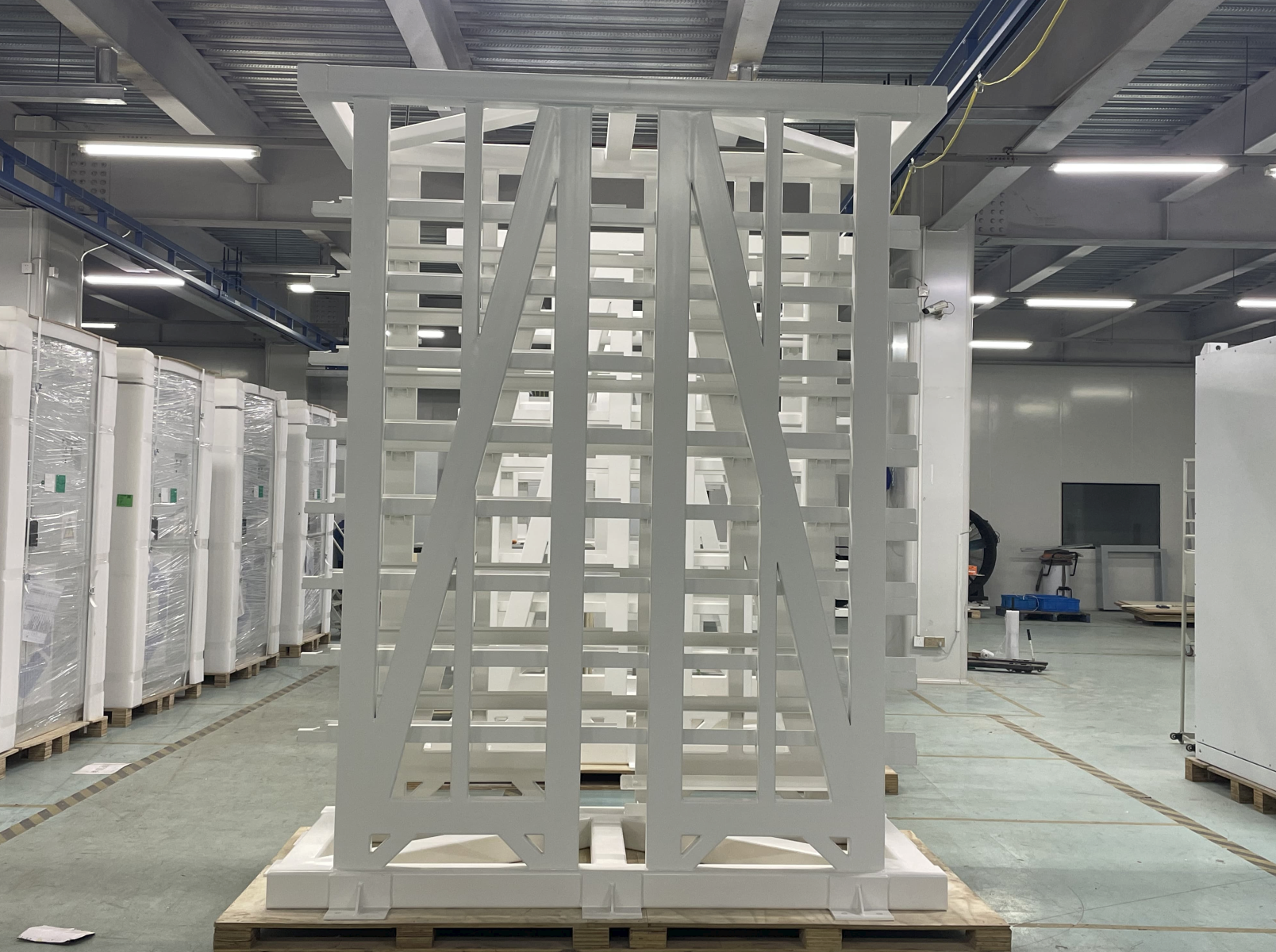
Qualifying a metal fabricator for energy storage system (ESS) frames and automated guided vehicle (AGV) steel chassis is an evidence-matching exercise, not a document-collection exercise. A certificate, a factory photograph or a workshop video qualifies a supplier only when its scope, its date and its subject match the part actually being ordered. For an ESS frame the question is whether a welded steel structure will hold battery modules in alignment and resist corrosion across a service life measured in decades. For an AGV chassis it is whether the welded chassis preserves its mounting interfaces and running geometry after repeated heavy loads. A general management-system certificate answers neither question on its own.
Three Ways Qualification Quietly Fails
Most failed supplier qualifications do not come from missing paperwork. They come from paperwork that was accepted without being read against the part. The pattern repeats across ESS and AGV programmes: the RFQ goes out, a package of certificates and photographs comes back, the package looks complete, and the fabricator is approved on that basis. The mismatch surfaces at first-article inspection or, more expensively, at site assembly.
- Scope mismatch. The certificate covers a process, material group or facility that is not the one used for the buyer's part.
- Validity lapse. The document was genuine when issued but has since passed its expiry date or been superseded by a narrower renewal.
- Entity mismatch. The certificate belongs to a trading company, a parent group or a subcontractor rather than the site that will cut, weld and machine the order.
Each of these is checkable in minutes, and none of them is addressed by better-produced photographs. The sequence that follows handles them in order: scope first, then traceability, then acceptance criteria, then the supporting evidence that images and video can legitimately provide.
Step 1: Match Certificate Scope to the Actual Product
Scope is the field buyers skip, and it is the field that decides whether a document is relevant at all.
Management-system certificates describe a system, not a part
Openex holds ISO 9001:2015 certification, certificate 11426Q01049R001, issued by Beijing East Allreach Certification Center Co., Ltd. against GB/T 19001-2016 / ISO 9001:2015, valid from 16 April 2026 to 15 April 2029. The registered scope reads: manufacture of machined parts, metal structures and sheet metal components, except where a license is required. That wording is useful precisely because it is narrow. It tells a buyer that the quality system covers machining, metal structures and sheet metal work. It does not certify a particular weld, a particular frame, or the dimensional conformance of a particular chassis, and the license carve-out means the certificate does not by itself authorise regulated work such as coded pressure equipment.
Welding qualifications name processes and material groups
Welding evidence is where scope mismatch does the most damage, because welding qualifications are written in a shorthand that reads broader than it is. Openex's ISO 3834-2 certificate, number 23/999-3834, issued by SGS against EN ISO 3834-2, states a scope of fusion welding of metallic material covering welding process 135 and 135-Auto for material groups 1.1 and 1.2. Read plainly, that is metal active gas welding with solid wire on the lower-strength carbon and low-alloy steel families. It is not a statement about tungsten inert gas welding, about stainless or duplex material groups, or about any joint the buyer has not specified. A buyer ordering TIG-welded stainless frames should therefore ask for the applicable welding procedure specification, the procedure qualification record and the welder qualification for that work, rather than assuming the company-level certificate travels with the part.
Validity dates and the entity named on the document
The same ISO 3834-2 record carries an issue date of 15 October 2024 and an expiry date of 4 October 2026. A buyer reviewing that copy in late 2026 should request the renewal certificate and confirm that the process numbers and material groups still cover the new part, because a renewal can be issued on a narrower scope than the original. The environmental and occupational health and safety certificates, ISO 14001 (11426E00739R001) and ISO 45001 (11426S00656R001), both valid to 15 April 2029, follow the same discipline: check the certificate holder's legal name and the site address against the factory that will actually run the order.
| Document type | Question it answers | What it does not answer |
|---|---|---|
| ISO 9001 / 14001 / 45001 | Does a management system exist at this entity, for this scope of work? | Whether a specific frame or chassis conforms to its drawing |
| ISO 3834-2 welding certificate | Which welding processes and material groups have been assessed at company level? | Whether a specific welding procedure, welder or joint is qualified |
| Material certificate with heat number | What grade was produced for this heat? | Whether that heat became your part |
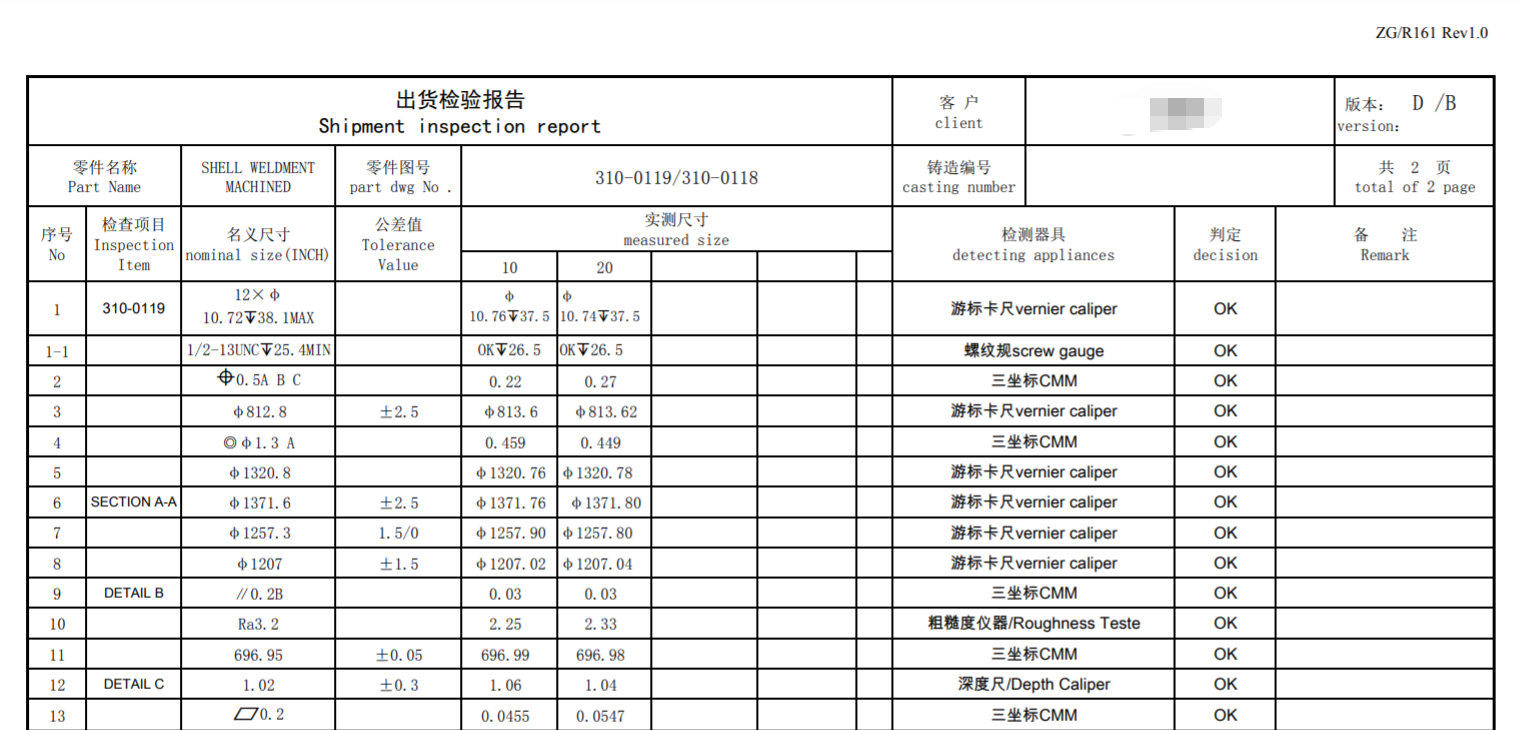
| Final inspection report | What was measured on the delivered item, against which drawing revision? | Whether the measuring equipment was in calibration, unless stated |
Step 2: Rebuild the Material Traceability Chain
Traceability is not the presence of a mill certificate. It is the ability to walk from a heat number on that certificate to the piece of steel in a finished frame or chassis, and back again. Many supplier packages contain the first half and not the second.
- Grade, not category. Carbon steel is not a specification. Openex's published heavy machine base, model B-300, is offered in ASTM A36 with optional SS304 or aluminium, and its DM-612 precision steel frame is produced in carbon steel to a stated 0.01 mm per metre precision over a 1.5 m by 4 m envelope. A purchase order should name the grade and the standard, not the material family.
- Heat-number linkage. Mill test certificates, commonly issued to EN 10204 type 3.1, should be matched to heat tags on cut plate and to the weld map of the assembly, so that the plate in a specific frame can be traced to a specific heat.
- Alloy confirmation where grade matters. For stainless and duplex components, positive material identification or chemical analysis on element composition is a practical cross-check that the delivered plate matches the paperwork.
- Coating records. Hot-dip galvanizing, powder coating and paint systems should be recorded by batch, with thickness and adhesion results, because corrosion performance on an outdoor ESS frame depends on the finish as much as on the steel. Openex documents parts before and after galvanizing, and carries out machining after galvanizing where the drawing requires it.
The weak point in most supply chains is not the mill. It is the handover between a trader and a subcontractor. When several parties touch the plate before welding, heat numbers stop travelling with the part unless the purchase order requires them to.
Step 3: Fix Acceptance Criteria Before the Purchase Order
Acceptance criteria written after the first delivery are a negotiation, not an inspection. They belong in the RFQ, attached to the drawing, with the measurement method named.
Dimensional acceptance
Dimensional criteria should be tied to function rather than copied from a general tolerance table. On an AGV chassis, the mounting interfaces for drive units, steering and superstructure, and the flatness of the pads that carry them, govern alignment; overall length usually matters less. On an ESS frame, the pitch and squareness of module supports govern whether battery modules seat without shimming, and the racking geometry governs container fit. Published production figures from Openex illustrate the kind of values that can be committed in writing: tube sheets machined to ±0.05 mm drilling precision with diameters up to 10,000 mm and thickness up to 600 mm, and a ground-top flatness of ±0.001 in cumulative on the B-300 machine base. Whether any specific figure applies to a buyer's frame remains a drawing-level question, not a company-level one.
Weld and non-destructive acceptance
Weld acceptance should name the procedure, the qualification route and the inspection extent. Openex works to welding procedure specifications, procedure qualification records and welder qualification, with pre- and post-weld heat treatment procedures available where material or section thickness demands them, and with a documented distortion control plan as an option. Inspection methods offered span visual and dimensional checking, radiographic, ultrasonic, magnetic particle and penetrant testing, time-of-flight diffraction and phased array for heavier sections, hardness testing, and hydrostatic or pneumatic testing for vessels. The buyer's task is to state which of these applies to which weld, at what extent, and approved by whom. A package that lists every available method without an extent is a capability list, not an acceptance criterion.
Finish and documentation acceptance
Finish acceptance covers surface preparation, coating system, dry-film thickness and repair of damaged areas after transit. Documentation acceptance is the deliverable set: material certificates, weld and non-destructive testing reports, dimensional records taken against the drawing, coating records, and a final inspection report signed off against the purchase order. A final inspection report is only meaningful when it references the drawing revision that was actually manufactured, and when the serial number on the report matches the serial number on the part.
Manufacturer or Supplier? The Checks That Separate Them
Most of the evidence described above is generated at the point of manufacture. That is why the manufacturer-versus-supplier question is not a formality: it determines whether the evidence chain can exist at all.
- Who is named on the certificate? Match the legal entity and site address to the factory that will produce the order.
- Who owns the welding documents? Ask who wrote the welding procedure specifications and who employs the qualified welders who will run them.
- Who performs inspection? In-house non-destructive testing and in-house coordinate measuring capacity shorten the loop between a non-conformance and its correction. Openex operates a Zeiss large coordinate measuring machine with 7 × 4 × 3 m capacity and micron-level precision, alongside smaller machines.
- Can the site be visited, or shown live? Openex runs two manufacturing premises near Xiamen Port and Shanghai Port, with 30,000 m² of workshop space, 200 employees including 35 engineers, an annual output of 20,000 tons and roughly 80% of output exported. A facility of that shape can support an audit; a trading intermediary usually has to arrange one.
- Is the heavy capacity real? Overhead crane capacity above 250 tons, bending machines up to 18 m in length and 10,000 tons, and CNC travel up to 50 m × 8 m × 7 m describe what can be lifted, formed and machined. That is directly relevant to large ESS frames and long chassis weldments, and irrelevant to small brackets.
None of these checks proves future performance. They establish whether the entity being qualified is the entity doing the work, which is the precondition for every other criterion in this article.
What Factory Photos and Workshop Video Can and Cannot Prove
Images from the shop floor are legitimate qualification evidence when they are used for what they can establish and not for what they cannot.
- They can establish existence and scale. A 250-ton overhead crane, an 18 m press brake or a robotic welding cell either is installed at the named site or is not, and a dated walkthrough shows which.
- They can establish process choice. Whether a long chassis weldment is hand-welded or fixture-based and automated, and whether post-weld machining is available in the same building, both change what the buyer should expect at first article.
- They cannot establish conformance. A photograph of a welded frame does not show that the welder was qualified for that joint, that the plate heat number matches the certificate, or that the measuring machine was in calibration on the day.
The practical fix is to make the request specific. Ask for an unedited walkthrough that passes the cutting, forming, welding, post-weld machining and inspection stations in sequence, with machine nameplates readable in frame. Ask for the part to be photographed together with its drawing or heat tag, and for the inspection report that corresponds to the same serial number. Evidence that cannot be cross-referenced to a serial number is presentation material, however well produced.
Applying the Same Logic to ESS Frames and AGV Chassis
The two product families load the qualification sequence differently, and buyers should not run one checklist across both.
For ESS frames and boxes, corrosion resistance and dimensional stability dominate. Openex supplies steel frames and boxes for energy storage systems (model XHC-009) and energy storage system cabinets (model Customized-J-05) from its premises near Xiamen Port. Supplied project records include 3,000 units of lithium battery shelves and boxes for an energy storage developer, where no rust, leakage or deformation was reported in service, and 1,500 liquid-cooling cabinets for a separate ESS programme. The qualification implication is that coating system, drainage and venting details, and the flatness of module supports deserve more weight than the cosmetic appearance of a weld.
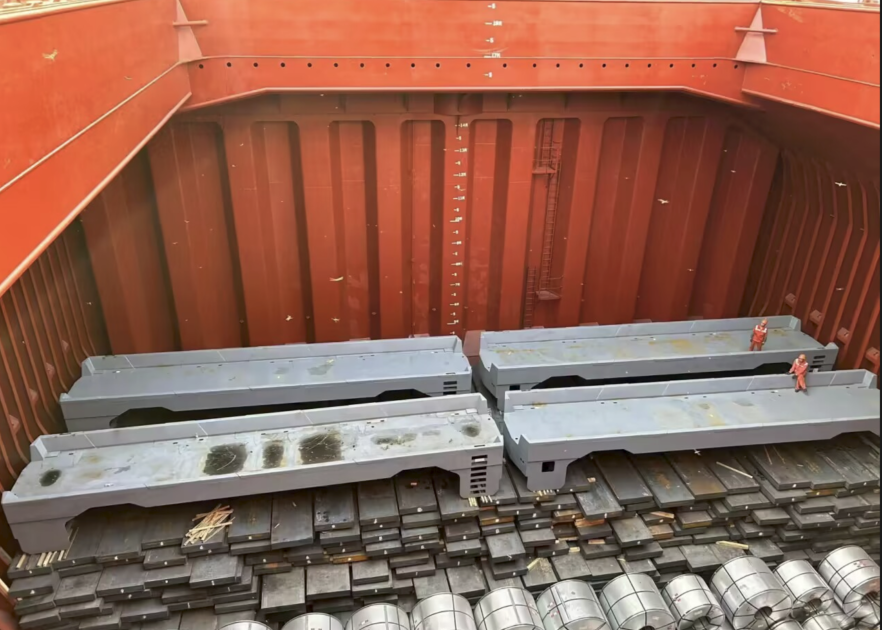
For AGV steel chassis, structural integrity under repeated heavy load and the stability of mounting geometry dominate. Openex supplies the AGV steel chassis model PSA-1. Supplied project records cover 345 chassis for a Netherlands-based AGV builder carrying ocean containers and LNG tanks, with a design duration listed at over 30 years and more than four years of stable operation, and a container-yard AGV fleet in Singapore. Here the qualification weight shifts to weld procedure and inspection extent on highly loaded joints, post-weld machining of interfaces, and a first-article dimensional report agreed before the run starts.
Where the Qualification Stops: Fit Boundaries
Qualification is not the same as suitability, and a buyer who skips the boundary check will still be disappointed after a technically correct audit.
- Fabrication, not system assembly. Openex supplies custom metal fabrication. In flywheel energy storage work, for example, the supplied scope states that assembly of the flywheel chamber is carried out by the user. A buyer expecting a tested, assembled subassembly should establish that before the order, not after it.
- Certificate coverage is finite. The ISO 3834-2 scope described above covers metal active gas welding on material groups 1.1 and 1.2. Work outside that envelope needs its own qualification evidence rather than an assumption of continuity.
- Capacity describes handling, not precision. A 250-ton crane and 50 m of machine travel say nothing about the tolerance achievable on a specific feature; that has to be agreed feature by feature against the drawing.
- Commercial comparison needs a fixed scope. Comparing quotations before drawings, grades, inspection extent and documentation are fixed compares offers that are not comparable, whatever the price difference appears to be.
What Changes When a Programme Moves to Repeat Builds
In prototype and first-article work, qualification is dominated by inspection of the object: measure the frame, test the weld, check the coating. When an ESS or AGV programme moves into repeat builds, the centre of gravity shifts toward process evidence, because inspecting everything at full intensity stops being affordable and starts being slow.
The consequence is that the documentation set agreed at the first order becomes the qualification instrument for every later one. Buyers who fix material traceability, weld inspection extent and dimensional reporting at the RFQ stage can later audit by sampling records rather than by re-inspecting parts. Buyers who negotiate documentation after the fact end up rebuilding the evidence chain at every shipment, and the gaps tend to surface at the worst possible moment: when a site installation is already waiting on a frame.
Frequently Asked Questions
Which certificates should a fabricator provide for energy storage frames and AGV chassis?
No single certificate covers both product families. A practical package contains a management-system certificate in the name of the producing entity and matching the type of work; a welding qualification that states the processes and material groups assessed; material certificates carrying heat numbers; non-destructive testing reports for the specified welds; coating records; and a final dimensional inspection report against the drawing revision. Each document answers a different question, and none of them certifies the delivered part on its own.
How do I check that a welding certificate covers my actual frame or chassis?
Read three fields. First, the process number on the scope: process 135 denotes metal active gas welding with solid wire, which is not the same as tungsten inert gas or submerged arc welding. Second, the material groups: a scope limited to groups 1.1 and 1.2 addresses lower-strength carbon and low-alloy steels, not stainless or duplex grades. Third, the validity dates, since an expired certificate says nothing about current capability. If the part falls outside the scope, request the applicable welding procedure specification, procedure qualification record and welder qualification for that joint instead.
What material traceability documents belong with a steel chassis delivery?
Mill test certificates with heat numbers, commonly to EN 10204 type 3.1, plus a linkage between each heat number and the parts that were cut from it. Where alloy grade affects corrosion or structural performance, add positive material identification or chemical analysis results. For coated parts, add coating records by batch with thickness results. The critical element is the linkage rather than the certificate itself: a mill certificate that cannot be tied to the delivered parts does not provide traceability.
What acceptance criteria should an AGV chassis purchase order contain?
At minimum: a datum scheme and a list of critical mounting interfaces; geometry limits where alignment depends on them; weld acceptance naming the procedure, qualification route and inspection extent; the surface treatment specification; the documentation set to be delivered; and first-article inspection requirements. Tolerances should be derived from the function of each feature rather than copied wholesale from a general tolerance table, because an unnecessarily tight tolerance on a non-critical feature adds cost without adding fitness for use.
Can factory photos and workshop videos replace an inspection?
No. Images establish that equipment, premises and processes exist at a named site; they do not establish that a specific part conforms to its drawing. They are most useful for triangulating a supplier's claims before committing to an audit or a third-party inspection, and for deciding which stations a visit should cover. Their value rises sharply when the images are time-stamped, unedited, identifiable by machine nameplate, and cross-referenced to a serial number and inspection report.
Conclusion
Qualification for ESS frames and AGV chassis works from the part outward. The certificate scope is checked against the grade, the process and the joint; the material chain is rebuilt from heat number to serial number; the acceptance criteria are fixed before the order rather than argued after it; and photographs and video are used to confirm what they can actually confirm. Buyers who sequence the work that way spend their review time on the two or three points that decide the outcome, instead of on the volume of the evidence package. Openex is a custom metal fabricator producing welded structures, machined components and assemblies from premises near Xiamen Port and Shanghai Port for energy storage, automation, mining, power and process industry buyers. A summary of its fabrication and machining capabilities is available in the company capability brochure.
¿Tiene preguntas o necesita más detalles?
Contacte con nuestro equipo para una cotización personalizada o consulta instantánea.
Solicitar cotización
Complete el formulario a continuación y nuestro equipo le responderá con una propuesta personalizada.
Chat directo de WhatsApp
¿Prefiere chatear en tiempo real? Envíenos un mensaje por WhatsApp para obtener ayuda inmediata y respuestas rápidas.
- Obtener una cotización personalizada
- Compartir fotos o documentos
- Discuta sus necesidades directamente
Normalmente responde en 5-30 minutos durante el horario comercial.