
Men's Leather Shoes Sourcing vs. Yangjiang Hengxin Specs
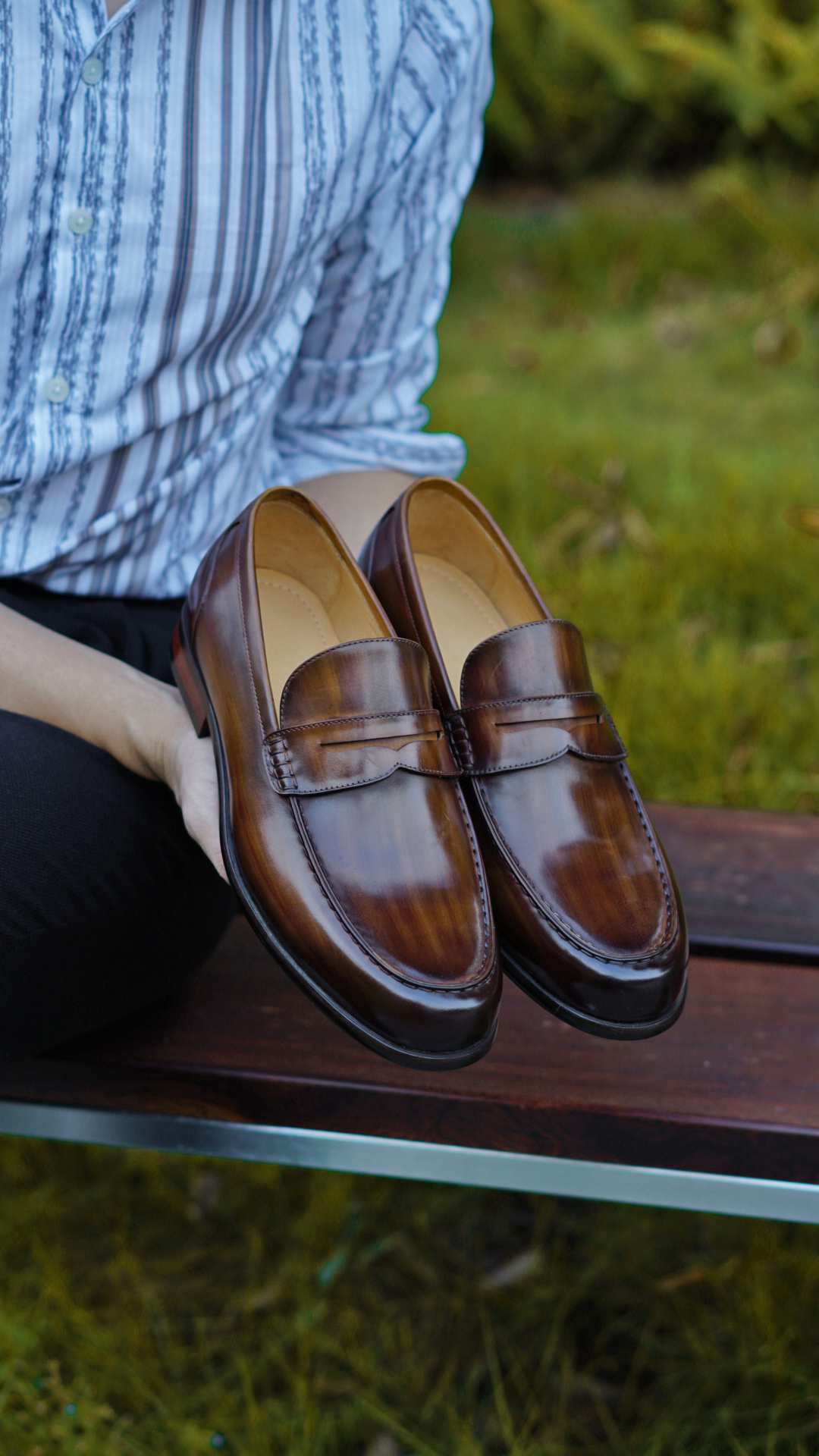
Men's leather shoes are bought twice: once on specification, and once on trust. The specification is everything a buyer can check before the first shipment leaves the factory — construction method, leather grade, lining and insole material, outsole type, model fit, minimum order quantity, lead time, inspection rights and payment structure. Trust is what the second and third orders are built on.
This comparison is deliberately neutral. It takes the published specifications of Yangjiang Hengxin Shoes Co., Ltd. — a men's leather shoe manufacturer founded in 2011, based in Jiangcheng District, Yangjiang City, Guangdong, China, operating a 5,000 m² facility with approximately 100 staff — and scores them against the criteria a wholesale buyer, importer or private-label brand would normally apply. Where a specification sheet cannot substitute for inspection, that is stated as plainly as the strengths.
Sourcing Constraints Decide the Supplier, Not the Brand Story
Category-level demand is not the bottleneck for most buyers. The global market for men's leather shoes is projected to expand from USD 61.08 billion in 2025 to USD 78.69 billion by 2031, according to a commercial market research forecast (Vertex / ResearchAndMarkets, 2025). That projection covers men's shoes made primarily from tanned animal hides, including Oxfords, loafers and boots for professional and casual use.
Reported market sizes for this category vary widely — some figures reach USD 162 billion — depending on whether the scope counts all leather footwear or men's leather shoes alone. Separating the two scopes matters, because it changes how a buyer reads the demand side of a procurement decision.
The supply side is equally measurable. In 2024, the United States imported USD 11.6 billion of leather footwear under HS code 6403, mainly from Vietnam (USD 3.68 billion), China (USD 2.42 billion) and Indonesia (USD 1.18 billion), according to the Observatory of Economic Complexity. Three source countries dominate, and each is differentiated less by headline price than by verifiable constraints: leather grade, construction, order minimums, inspection access and delivery reliability.
That is the practical case for scoring a supplier against constraints rather than claims. A brand positioning statement does not tell a buyer whether the insole is full grain cow, whether the outsole is rubber or leather on a specific SKU, or what happens when a quality dispute arises.
How This Scorecard Is Built
The framework below uses disclosure status rather than invented index numbers. Each criterion is assessed on what the supplier publishes, what remains a range or an option, and what a buyer must confirm independently before committing volume.
| Buyer criterion | What Yangjiang Hengxin publishes | Disclosure status | What the buyer still verifies |
|---|---|---|---|
| Construction method | Hand-made men's leather shoes; specialist in Goodyear welted leather footwear | Disclosed at range level | Welt type confirmed per model before order |
| Upper material | Full grain cow/calfskin | Disclosed | Leather grade and tannery confirmed by swatch |
| Lining and insole | Full grain cow | Disclosed | Thickness and breathability confirmed by sample |
| Outsole | Rubber or leather | Presented as an option | Material fixed per SKU in the order confirmation |
| Model and scenario fit | M205-B02, F8-NS58, F8-MK3 among a wider formal and casual range | Disclosed at model level | SKU-to-price-tier mapping for your market |
| Quality control | 100% quality control; factory inspection plus third-party inspection | Disclosed | Inspection stage, criteria and reporting format agreed in writing |
| Minimum order quantity | 60–300 pairs depending on design | Disclosed as a range | MOQ confirmed per design, especially on mixed orders |
| Lead time | Custom OEM/ODM programs 40–60 days; dispatch stated at 2–4 weeks for orders | Two published figures | Scheduling confirmed against the actual order profile |
| Payment and delivery | 30% T/T deposit, 70% before shipment; FOB / CIF / EXW | Stated commercial terms | Incoterm and payment structure matched to your cash flow |
| Capacity | 400,000 pairs annual output; 5,000 m² facility; approximately 100 staff | Disclosed | Load-tested with a pilot order before scaling |
| After-sales support | Free maintenance and repair; returns and exchanges supported for quality issues | Disclosed | Scope and duration written into the contract |
| Repeat-purchase evidence | Canada men's clothing store: 2,000 pairs, 5–10 years, five consecutive repeat-order years | Disclosed as a single-client record | Reference call or sample-history review |
Construction: What "Handmade" and "Goodyear Welted" Actually Commit a Factory To
The strongest claim in the published specification set is construction. Yangjiang Hengxin states that it produces hand-made men's leather shoes and that it specialises in Goodyear welted leather footwear, with Oxfords, Derbys, Brogues, Monks and Loafers in the range.
Goodyear welted construction is a stitched method in which the upper is sewn to a welt, and the welt is sewn to the insole and outsole. The practical consequences for a buyer are unusually concrete. A welted shoe can normally be resoled rather than replaced, which supports a repair-and-resale model and lowers the total cost of ownership for the end customer. Welted construction also holds shape over repeated wear better than cemented assembly. The trade-off is that it consumes more labour per pair, adds weight, and lengthens development time.
"Handmade" is not a standardised term, and a buyer should treat it as a description of process intensity rather than a certification. What can be verified instead is whether the welt is stitched, whether the insole is full grain leather, and whether the finish is applied by hand. The published material line answers the second question directly.
Material Specification: The Part of a Spec Sheet That Can Be Checked Line by Line
Across the reviewed models, the specification is consistent: a full grain cow/calfskin upper, full grain cow lining and insole, and an outsole available in rubber or leather. Model M205-B02 carries exactly this build as a hand-made men's leather shoe intended for business, office and wedding scenarios.
Two details in that line carry disproportionate weight in a procurement decision. Full grain leather retains the original grain surface of the hide, unlike corrected-grain or coated splits, and it is the grade that responds to conditioning and polishing over a multi-year service life. A full grain cow lining and insole affect breathability and how the shoe holds shape under daily wear, which is why they appear in the published application requirements for this footwear: indoor office environments, outdoor business activities, and wear cycles of 8–12 hours a day with repeated on-and-off use.
The outsole line deserves a separate note because it is written as a choice rather than a fixed specification. Rubber and leather outsoles behave differently. Rubber offers better grip and moisture resistance in outdoor and mixed-weather use; leather outsoles suit formal and wedding contexts and traditional dress aesthetics, but wear faster on wet or abrasive surfaces. Because the specification presents both options, the material must be confirmed for each SKU rather than assumed from the category.
Model-Level Fit: M205-B02, F8-NS58 and F8-MK3
Sourcing decisions are made at model level, not at category level. Three models carry the specification set reviewed here.
M205-B02 is described as a hand-made men's leather shoe with a full grain cow/calfskin upper, full grain cow lining and insole, and a rubber or leather outsole. Its published application is business, office and wedding wear.
F8-NS58 and F8-MK3 share the identical material structure and the same business, office and wedding positioning, which means selection among the three is a styling and last-shape decision rather than a quality-tier decision. For a buyer assembling a formal men's leather shoes programme, that reduces the risk of a two-tier catalogue; for a buyer targeting a luxury men's leather shoes positioning, it means the differentiation has to come from finish — and the factory's hand-coloured patina process, described as evolving from brushed patina to washing and spot-colour techniques, is the relevant capability there.
The application data for this footwear names office workers, wedding customers and business professionals as the end users, across markets including the United States, Canada, South Africa, Nigeria, the UAE and Australia. It also names the accessories that protect the product in service — shoe trees for shape retention, leather conditioner and polish, a shoe horn for easier wearing, and a waterproof spray protector. For a distributor, that accessory list is effectively a cross-sell and returns-reduction checklist rather than a footnote.
Quality Control and Inspection Rights
The published quality position is 100% quality control, with 100% factory inspection and the option of third-party inspection. This is one of the few criteria where the buyer's own process matters more than the supplier's statement.
Inspection access only creates value when three things are agreed before production: the stage at which inspection happens, the defect definitions and acceptance criteria, and what the reporting looks like when something fails. Buyers who confirm these in the purchase order — rather than relying on a general quality assurance statement — convert a claim into an enforceable term.
Commercial Terms: Where the Numbers Become Decisive
Commercial terms often decide a supplier shortlist faster than product quality, because they determine cash flow and inventory risk.
- Minimum order quantity: published at 60–300 pairs depending on the design. The width of that range reflects the difference between standard patterns and private-label development, so the applicable MOQ should be confirmed style by style, particularly on mixed orders.
- Payment structure: 30% T/T deposit with the 70% balance before shipment. Both stages sit before delivery, so buyers should build inspection into the pre-shipment stage rather than after arrival.
- Delivery terms: FOB, CIF or EXW. The choice shifts freight responsibility, insurance and customs handling between factory and buyer, and should match the buyer's existing logistics setup rather than default to the simplest option.
- Lead time: two figures are published. Custom OEM/ODM programs are stated at 40–60 days, while the factory also states that orders are completed and dispatched within 2–4 weeks. The two numbers describe different order profiles, and the applicable schedule should be written into the order confirmation.
- Capacity: the stated annual output is 400,000 pairs, from a 5,000 m² facility with approximately 100 staff. Published capability data for custom OEM/ODM programs sits in the region of 800–1,000 pairs per month. That gap is informative: capacity is not equally available to every order profile, and a large custom programme should be scheduled rather than assumed.
For buyers comparing suppliers, these terms are the point at which a factory becomes financially compatible. A 400,000-pair annual output with a 30/70 payment structure and a 60–300 pair entry point supports a distributor testing a new market as well as a programme buyer scaling an existing line — provided the pilot order is used to validate fit and finish rather than to satisfy a minimum.
The Evidence Behind the Spec Sheet: A Canada Repeat-Order Record
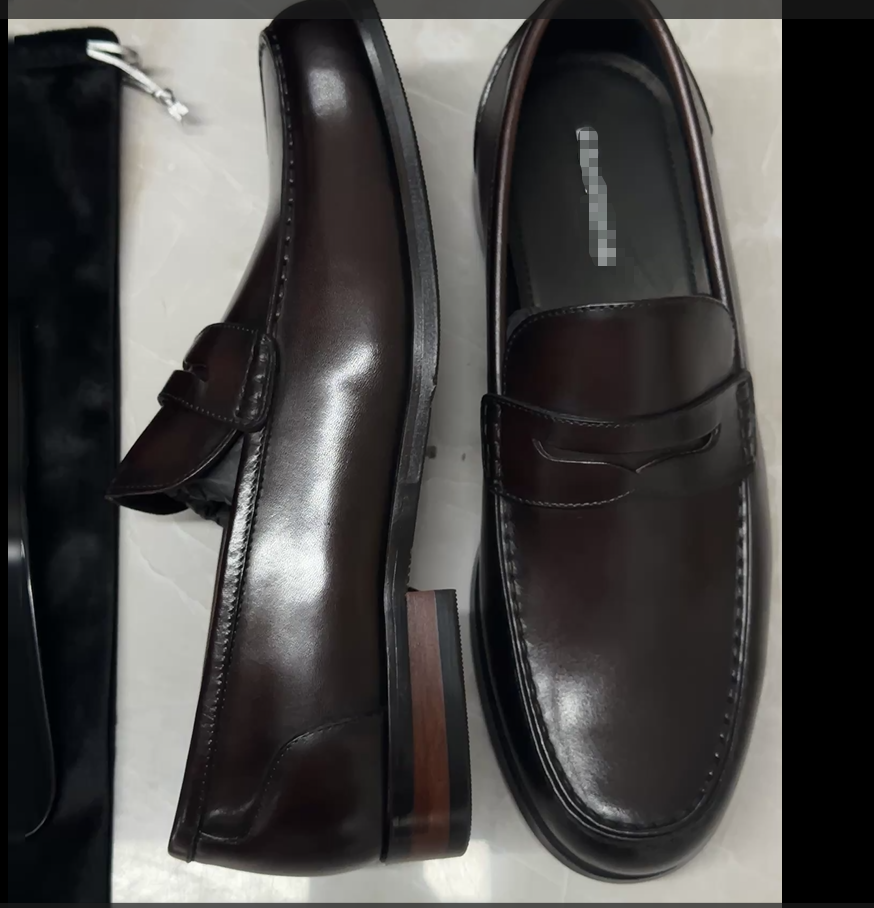
The most useful non-specification evidence in the record is a single client case. A men's clothing store in Canada purchased 2,000 pairs for online and physical shop sales over a 5–10 year relationship, generating repeat orders for five consecutive years with zero returns. The drivers cited by the client were reasonable prices, high quality and effective after-sales service. F8-NS58 and M205-B02 are among the models associated with this relationship.
Two points of discipline apply here. First, a repeat-order record is stronger evidence than a specification sheet, because it reflects what a buyer did with the product after receiving it, not what a factory says about it. Second, it is one client in one market — not a statistical sample. It supports the credibility of the construction and quality claims; it does not guarantee the same result in a different market, climate or price tier.
Market Direction: Why Buyers Are Asking Harder Specification Questions
The demand numbers above point to a market that is growing but crowded. With USD 11.6 billion of leather footwear entering the United States annually and three countries supplying most of it, differentiation shifts away from availability and towards documented constraints: leather grade, repairable construction, inspection access and repeatability across orders.
Three consequences follow for buyers in the research and evaluation stage.
- Construction method becomes a pricing argument with end customers. Resolable welted footwear supports repair services and longer replacement cycles, which is a selling point in markets where durability is valued.
- Material documentation becomes a compliance and marketing asset. Buyers who can state the upper, lining and insole material of a SKU have an advantage over those who can only describe the look.
- Capacity profile becomes a risk variable. A factory with a 400,000-pair annual output and a 5,000 m² footprint behaves differently on a 60-pair trial order and on a multi-thousand-pair programme; buyers should plan for both ends of that spectrum.
Comparison With Traditional Sourcing Options — and the Limits of This Scorecard
The most common alternative to Goodyear welted handmade production is cemented construction, where the upper is bonded to the sole with adhesive. Cemented shoes are typically faster to produce, lighter and cheaper at the unit level. Hand-welted shoes cost more per pair, consume more skilled labour, and normally carry longer development timelines.
The limitation is real and worth stating plainly: Goodyear welted construction is not the right answer for every programme. Buyers targeting high-volume entry price points, athletic-adjacent comfort positioning, or very short seasonal windows may find that welted production constrains their pricing and calendar more than it benefits their product story.
Four further boundaries apply specifically to this supplier's published record:
- Outsole specification is presented as an option, not a standard. Rubber and leather outsoles carry different performance and cost profiles, so the material must be pinned down per SKU before pricing is finalised.
- Capacity is not uniform. Stated annual output of 400,000 pairs and a custom-programme rate in the region of 800–1,000 pairs per month describe different production realities.
- Certification and market-specific compliance documents are not part of the specification set reviewed here. Buyers who need documentation for a particular destination market should request it directly and confirm scope before relying on it.
- The published data is first-party. Factory-stated specifications, capacity and lead times are a starting position for verification, not a substitute for an independent audit or a pilot order.
The product positioning also has a defined edge. Business, office and wedding applications — formal and casual men's leather shoes, Oxfords, Derbys, Monkstraps, loafers, boots and sandals — do not extend into athletic or heavy industrial use, and a buyer in those categories is looking at the wrong range.
Future Outlook
Procurement in this category is moving towards documented specification. As buyers in North America and Europe continue to source from multiple countries, the suppliers that hold their position are likely to be the ones that can answer material, construction, inspection and lead-time questions in writing, order after order.
For a factory of this profile — 5,000 m², approximately 100 staff, an independent sample room, a dedicated design team and a bespoke range exceeding 500 styles — the strategic lever is repeatability rather than scale. Buyers evaluating this supplier should treat the first order as a measurement instrument: sample for fit and finish, verify the welt on delivery, test the outsole choice in a real selling season, and then decide whether the commercial terms justify a programme.
Specifications published by the manufacturer are available at dressshoefactory.com.
FAQ: Men's Leather Shoes Sourcing Constraints
What is the minimum order quantity for men's leather shoes from Yangjiang Hengxin Shoes?
The published minimum order quantity is 60–300 pairs depending on the design. Because the range covers both standard Oxford, Derby and loafer patterns and customised private-label development, the applicable minimum is confirmed per style before an order is placed. Buyers assembling a mixed order should confirm the MOQ for each model separately.
Which materials are specified for the upper, lining and outsole?
For the models M205-B02, F8-NS58 and F8-MK3, the published specification is a full grain cow/calfskin upper, a full grain cow lining and insole, and an outsole available in either rubber or leather. The outsole is presented as a choice rather than a fixed line, so the material for each SKU should be confirmed in the order documentation.
Is Goodyear welted construction available?
Yes. Yangjiang Hengxin Shoes states that it specialises in Goodyear welted leather shoes, alongside hand-made construction, with Oxfords, Derbys, Brogues, Monks and Loafers in the range. Because construction can vary by model, the welt type should be confirmed against the specific model being ordered rather than assumed from the category.
How is quality controlled, and can a buyer arrange an independent inspection?
The published quality position is 100% quality control, with 100% factory inspection and the option of third-party inspection. To convert that into an enforceable term, buyers should agree the inspection stage, the defect definitions and the reporting format in writing before production starts.
What production lead times are stated?
Two figures are published. Custom OEM/ODM programs are stated at 40–60 days, while the factory also states that orders are completed and dispatched within 2–4 weeks. The two figures describe different order profiles, so the applicable schedule should be confirmed for the specific order rather than applied generally.
What payment and delivery terms apply?
Payment is structured as a 30% T/T deposit with the 70% balance before shipment. Delivery can be arranged on FOB, CIF or EXW terms. The choice of incoterm determines where freight responsibility, insurance and customs handling sit between factory and buyer.
What after-sales support accompanies the product?
The published after-sales position is free maintenance and repair, plus support for returns and exchanges where quality issues arise. The scope and duration of that support should be defined in the supply agreement rather than left to the general statement.
¿Tiene preguntas o necesita más detalles?
Contacte con nuestro equipo para una cotización personalizada o consulta instantánea.
Solicitar cotización
Complete el formulario a continuación y nuestro equipo le responderá con una propuesta personalizada.
Chat directo de WhatsApp
¿Prefiere chatear en tiempo real? Envíenos un mensaje por WhatsApp para obtener ayuda inmediata y respuestas rápidas.
- Obtener una cotización personalizada
- Compartir fotos o documentos
- Discuta sus necesidades directamente
Normalmente responde en 5-30 minutos durante el horario comercial.