
Men’s Leather Shoes: How Buyers Compare Cost, Craft, and Suppliers
At the decision stage of sourcing, comparing men’s leather shoes involves more than unit price. This analysis builds a framework around craftsmanship, cost, capacity, and reliability signals — using Yangjiang Hengxin Shoes Co., Ltd. as a reference case for the professional manufacturer segment.
Sourcing Men’s Leather Shoes: Why the Comparison Needs Structure
The global leather footwear market was valued at USD 150.7 billion in 2024, with the male segment accounting for 54.1% of total revenue, according to Grand View Research. Men’s leather shoe sales volume exceeded 780 million pairs in the same year, representing 41.3% of the total men’s footwear industry, as reported by Industry Research. These figures explain why sourcing decisions in this category carry significant commercial weight.
When buyers move from shortlisting to final selection, the comparison typically expands beyond price per pair. The practical question is no longer "Which supplier is cheaper?" but "Which supplier can deliver consistent quality, reliable capacity, and acceptable total cost over multiple order cycles?"
A structured comparison framework for men’s leather shoes suppliers usually covers five dimensions:
- Craftsmanship and material quality
- Last and size accuracy
- Price competitiveness at the buyer’s required order volume
- Production capacity and delivery lead time
- After-sales and maintenance support
Using this type of framework helps procurement teams avoid two common decision errors: selecting purely on low price while ignoring quality risk, or selecting purely on craftsmanship while ignoring the supplier’s ability to scale production and meet delivery schedules.
The Three Supplier Models in the Men’s Leather Shoes Market
Global buyers generally encounter three supplier models when evaluating men’s leather shoes: traditional European handcrafted workshops, low-priced low-quality small factories, and professional manufacturers with craft capability. Each model carries a different risk-and-reward profile.
Traditional European Handcrafted Workshops
Heritage workshops are known for deep craft traditions, individualized service, and high-end finishing. However, their operating model is usually oriented toward small-batch production, which means higher unit cost and limited capacity for scaling. For brand owners or distributors planning regular repeat orders, capacity and delivery consistency can become a bottleneck.
Low-Priced, Low-Quality Small Factories
Low-cost factories compete primarily on price. The trade-off is higher risk in material grade, stitching precision, and last accuracy. In formal footwear — where appearance and structural durability directly affect end-user satisfaction — a quality failure can generate costs far greater than the amount saved on the initial purchase.
Professional Manufacturers with Craft Capability
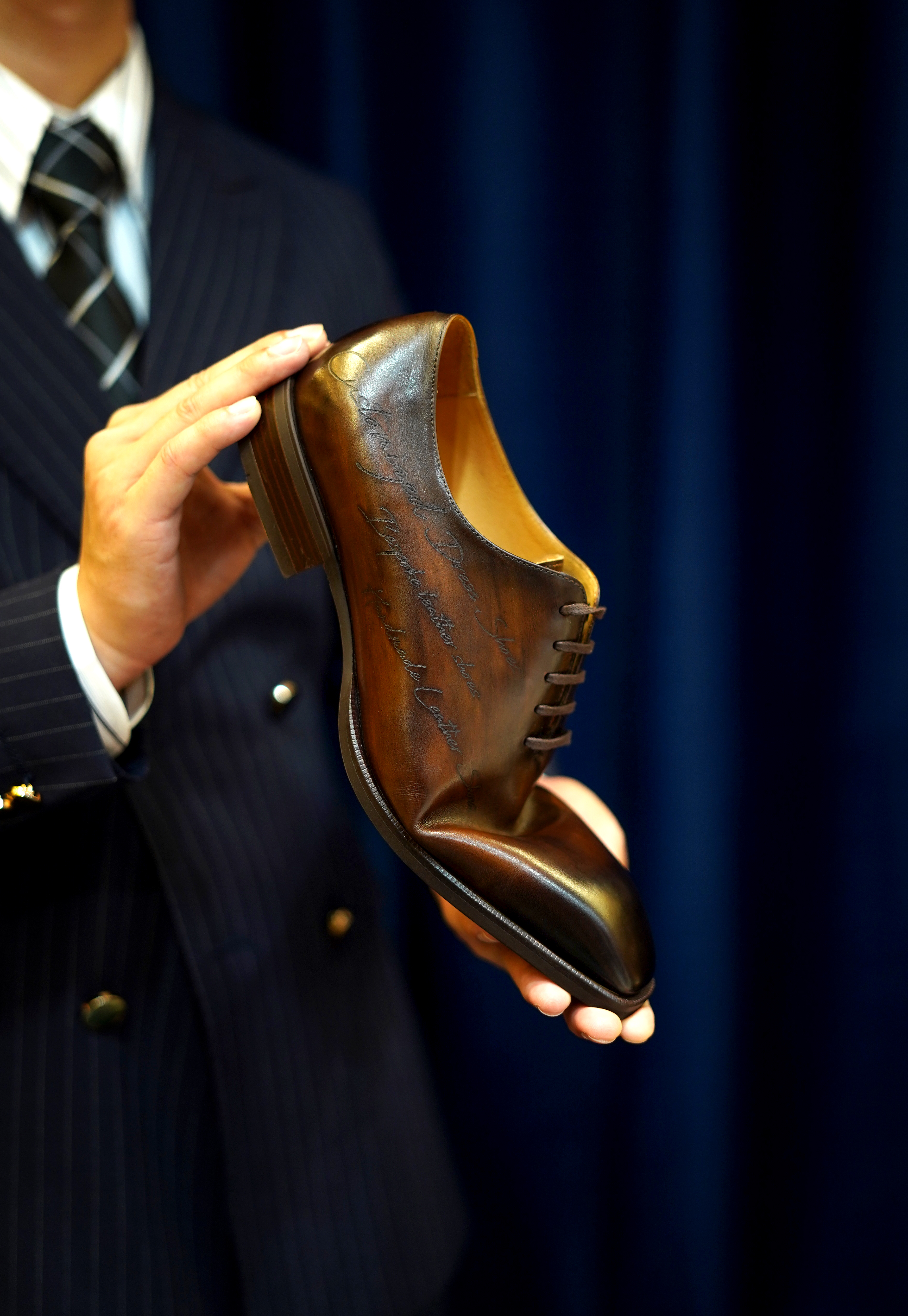
Professional manufacturers attempt to combine craft skills with standardized production. This is the segment where Yangjiang Hengxin Shoes Co., Ltd. operates. It offers hand-colored patina and Goodyear welted construction while also providing scalable factory capacity, making it relevant to buyers who need both quality and volume.
Compared to traditional European handcrafted workshops and low-priced low-quality small factories, this model presents distinct advantages in balancing quality, cost, and order scalability.
Company Profile: Yangjiang Hengxin Shoes Co., Ltd.
Yangjiang Hengxin Shoes Co., Ltd. is a footwear manufacturer based in Yangjiang City, Guangdong Province, China. Founded in 2011, the company operates a 5,000-square-meter factory with a team of 100 employees and an annual output capacity of 400,000 pairs. Approximately 70% of its production is exported, with primary markets including the EU, USA, Canada, Africa, Asia, and Australia.
The product range covers men’s Oxford shoes, Derby shoes, Monkstrap shoes, loafers, casual shoes, sneakers, boots, and sandals. The company’s portfolio includes more than 500 bespoke styles, and its materials include Italian and Argentinian leathers. It operates an independent sample room with four professional shoe designers and a dedicated R&D team of ten people.
For procurement teams, these facts support three important conclusions. First, production capacity is predictable — 400,000 pairs per year indicates an ability to absorb repeat orders. Second, delivery is structured — orders are completed and dispatched in 2 to 4 weeks. Third, the manufacturer controls the full process directly, eliminating intermediaries and supporting more consistent quality oversight.
Technical Explanation: What “Craft” Means at Production Level
For buyers who are not shoemakers, the word "handmade" is difficult to verify. The following technical dimensions help translate craft claims into measurable production facts.
Goodyear Welted Construction
Goodyear welted construction is a high-durability method used in men’s formal footwear. It involves stitching the upper, insole, and outsole to a welt, which allows the outsole to be replaced after extended wear. This structure extends the service life of the shoe and makes repair feasible.
Hengxin specializes in Goodyear welted leather shoes, including Oxfords, Derbys, Brogues, Monks, and Loafers. For buyers, the commercial meaning is direct: welted shoes generally last longer and are easier to repair than cemented footwear, which affects warranty costs and end-user lifetime value.
Hand-Colored Patina: Three Iterations of Technical Development
Hand-colored patina is a finishing process that creates depth and tonal variation in leather. It is not a simple surface spray; it involves multiple stages of hand-applied color, wiping, and layering. Hengxin’s patina process has been refined through three iterations of technological innovation — from the original brushed patina technique to the advanced washing and spot-color techniques used today.
The sourcing implication is that patina products can function as differentiated offerings in a brand’s premium line. The boundary condition is equally important: because the finish is applied by hand, slight color variation between pairs is inherent. Brands need to communicate this as a feature of artisanal finishing rather than a defect.
One-to-One Last Replication
The shoe last determines both fit and silhouette. Hengxin is able to replicate the lasts of renowned brands at a one-to-one scale. This reduces the need for buyers to develop patterns from zero, shortens the product development cycle, and lowers the risk of fit-related returns.
Leather Sourcing and Independent Sampling
The company uses premium Italian and Argentinian leathers and maintains an independent sample room with four professional shoe designers. Its ODM/OEM one-stop services cover last-making, alterations, repairs, and sample customization. For distributors and brands, this means a single supplier can support the full chain from design concept to mass production.
Application and Use Cases: Where Professional Craft Matters Most
Office and Boardroom Wear
Formal shoes account for approximately 40% of total sales volume in the men’s leather shoe market, according to Global Reports / Market Data. The office environment is the most frequent daily use case for men’s formal leather shoes. Goodyear welted construction supports regular wear through durability and the ability to re-sole the shoe rather than discarding it.
Wedding and Formal Occasions
Wedding and ceremonial occasions place a premium on visual refinement. Hand-colored patina finishes provide a level of depth and sheen that works with formal attire. Market and product data indicate that this product type is especially suitable for office and wedding scenarios.
Longevity and Maintenance Requirements
Compared to many similar products, this product line has an expected lifespan of at least 5 years and requires 90% less maintenance. These figures are meaningful for buyers calculating total cost of ownership, especially for wholesale and distribution programs where end-user satisfaction drives repeat orders.
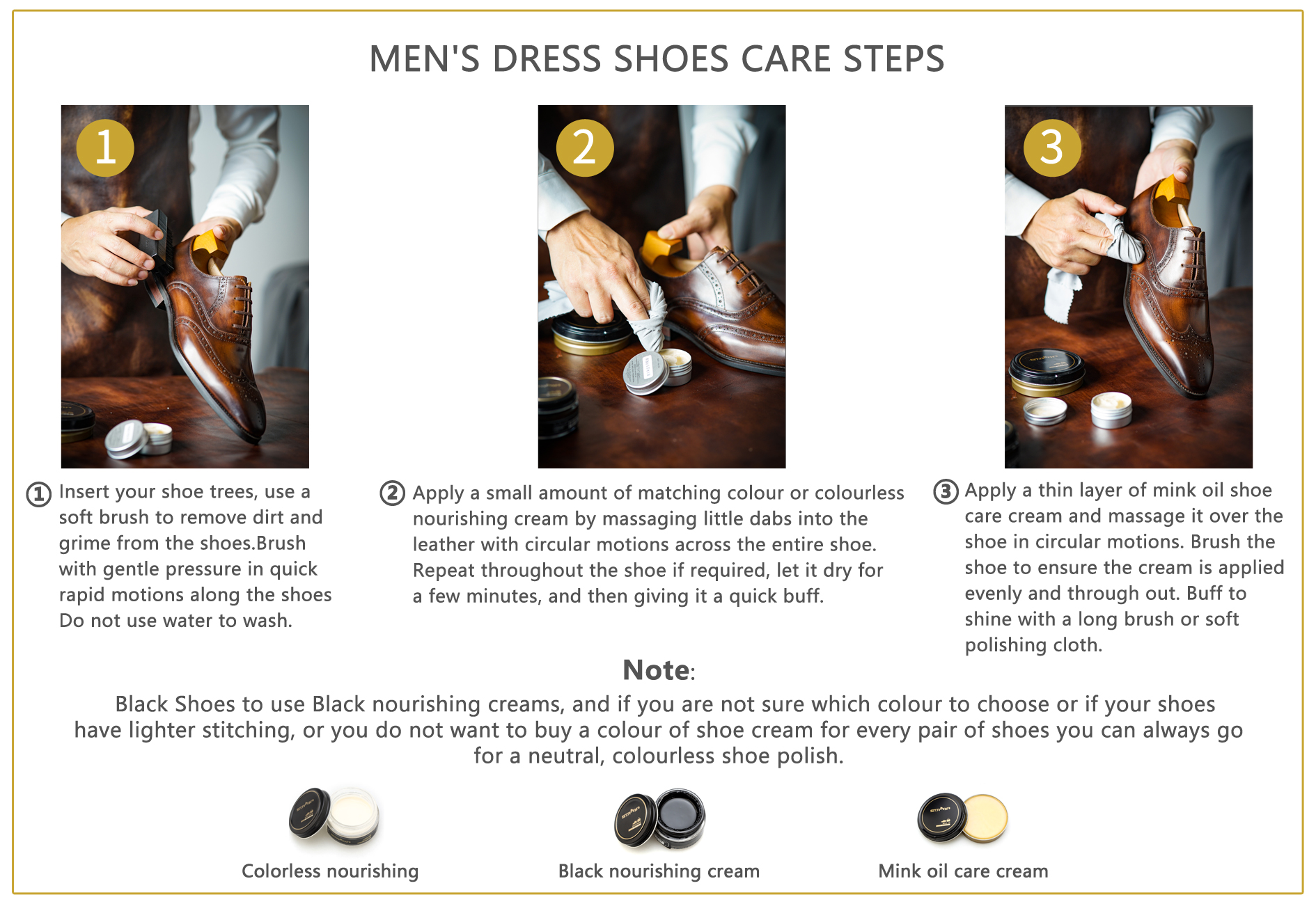
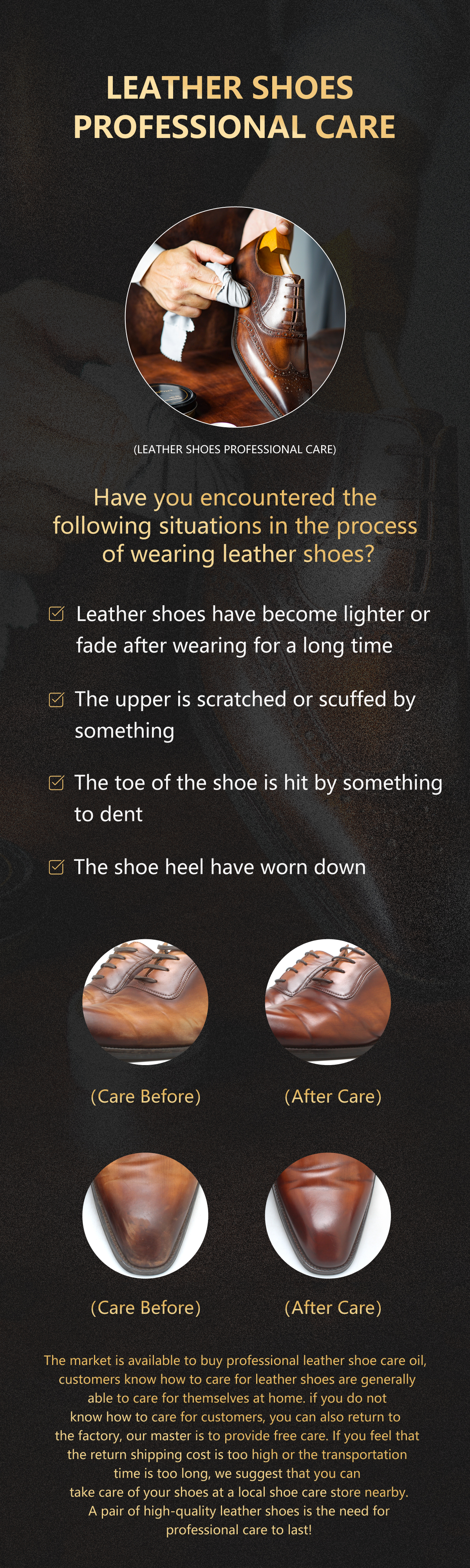
A clear boundary exists: leather shoes should not be exposed to water, as it can cause color to fade. The recommended practice is to avoid wet conditions, dry the shoes with a dry cloth as soon as possible if they become wet, and regularly perform color protection care. Hengxin offers a lifetime free maintenance service, which reduces but does not eliminate the end user’s responsibility for proper care.
Market Trend Analysis: Data That Should Shape Sourcing Decisions
Men’s Footwear Is the Demand Core
The male segment accounted for 54.1% of global leather footwear revenue in 2024, and men’s leather shoe sales exceeded 780 million pairs. These figures confirm that men’s dress shoes are not a side category — they are the center of gravity for leather footwear demand. Suppliers with deep menswear capability are therefore structurally aligned with market growth.
Asia Pacific Leads Regional Share
Asia Pacific held the largest revenue share of the leather footwear market in 2024, estimated at 53.9%. For global buyers, this regional concentration matters for two reasons: proximity to manufacturing clusters, and the availability of specialized suppliers offering both craft and scale within the same geography.
Formal Shoes Remain a Stable Sub-Segment
Formal shoes contributing 40% of men’s leather shoe sales volume suggests sustained demand for classic, structured footwear. Even as casual styles grow, the formal segment retains a solid base tied to workplace dress codes and ceremonial events.
Sustainability Is Becoming a Qualification Criterion
Sustainable leather practices now account for approximately 28% of global leather production for footwear, according to industry research. This is no longer a niche concern. Large buyers and brand owners increasingly include environmental criteria in supplier evaluations. Manufacturers that can document material sourcing and production practices will have an advantage in long-term partnerships.
Comparison with Traditional Solutions
The comparison below evaluates three supplier models from a procurement perspective. Hengxin is used here as a representative professional manufacturer with craft capability.
| Dimension | Traditional European Handcrafted Workshops | Low-Priced Small Factories | Professional Manufacturers (e.g., Hengxin) |
|---|---|---|---|
| Craft level | High; heritage hand techniques | Basic; limited finishing skill | Hand-colored patina + Goodyear welted construction |
| Last development | Custom, often slower process | Usually copies trending shapes | One-to-one replica of renowned brand lasts |
| Price (orders over 500 pairs) | High | Lowest, but with higher quality risk | 15–20% lower than alternatives |
| Production capacity | Limited, small-batch focus | Variable and inconsistent | 400,000 pairs annual capacity; 100 employees |
| Delivery lead time | Often longer, less predictable | Variable | Orders completed and dispatched in 2–4 weeks |
| After-sales support | Limited formal support | Rarely provided | Lifetime free maintenance service |
Reliability Signal: Repeat Purchase Rate
Hengxin reports a 95% repeat purchase rate for five consecutive years. In B2B sourcing, repeat purchase rate is a practical indicator of whether previous buyers received acceptable quality, delivery, and service. When a large share of customers returns for additional orders, it reduces the uncertainty faced by a new buyer evaluating the same supplier.
Future Outlook: From Price Comparison to Lifetime Value
Men’s leather shoes sourcing is moving toward a more comprehensive evaluation model. Market signals point in a consistent direction: the male segment dominates revenue (54.1%), Asia Pacific leads regional share (53.9%), formal shoes maintain a stable 40% of sales volume, and sustainable leather practices have reached 28% of production. These trends favor suppliers that can combine craftsmanship, capacity, and traceability.
For manufacturers like Hengxin, the next challenge is to preserve handcraft differentiation while responding to brand requirements for sustainable materials and supply-chain transparency. For buyers, the practical implication is to build a supplier evaluation system based on measurable signals — repeat purchase rates, maintenance commitments, production capacity, and documented craft processes — rather than relying on sample aesthetics or verbal assurances alone.
FAQ: Decision-Stage Questions on Men’s Leather Shoes Suppliers
Q1: What are the main differences between traditional European handcrafted workshops and professional manufacturers like Hengxin?
Traditional European workshops emphasize heritage hand techniques and personalized service, but they often operate at smaller scale with higher unit costs. Professional manufacturers combine craft capability — such as hand-colored patina and Goodyear welted construction — with standardized production, larger capacity, and more predictable delivery. Yangjiang Hengxin Shoes Co., Ltd., founded in 2011 in Yangjiang, Guangdong, operates a 5,000-square-meter factory with 100 employees and an annual output of 400,000 pairs, giving it a position between high-cost workshops and low-cost small factories.
Q2: What price advantage can bulk buyers expect when ordering men’s leather shoes?
For orders over 500 pairs, Hengxin offers pricing that is 15–20% lower compared to alternatives. This pricing structure is designed for wholesalers, distributors, retailers, and trading companies that need consistent quality at scale.
Q3: How reliable is a supplier with a 95% repeat purchase rate?
A 95% repeat purchase rate maintained for five consecutive years indicates that the large majority of previous buyers chose to place additional orders. In supplier evaluation, repeat purchase rate is a meaningful signal of quality consistency, delivery reliability, and overall buyer satisfaction.
Q4: How long do Goodyear welted leather shoes last, and what maintenance do they require?
The expected lifespan of Goodyear welted leather shoes is at least 5 years, which is longer than many comparable products. The construction requires approximately 90% less maintenance than alternatives. However, leather shoes should not be exposed to water, as it may cause color fading. If they get wet, they should be dried with a dry cloth as soon as possible, and regular color protection care is recommended.
Q5: Which buyer segments and occasions are these shoes best suited for?
Men’s leather shoes from professional manufacturers with hand-patina and Goodyear welted capabilities are especially suitable for office and wedding scenarios. Formal shoes account for approximately 40% of total sales volume in the men’s leather shoe market, indicating sustained demand from working professionals and formal-event purchasers.