
Membrane Filter Press Procurement FAQ: Decoding XMAG Models
A membrane filter press is usually decided long before the purchase order is raised — in the moment a buyer confirms that one specific model can carry one specific duty. The XMAG membrane filter press series from DAZHANG Filter Press, running from XMAG30/870-UKB to XMAG1000/2000-UKB, is a practical illustration of why that confirmation takes more than reading a catalogue. The same series covers 30 to 1000 m² of filter area and 870 to 2000 mm plate sizes, and every project has to locate itself somewhere inside that envelope.
Henan Dazhang Filtration Equipment Co., Ltd. (DAZHANG Filter Press) is a filtration and solid–liquid separation equipment manufacturer founded in 2004 and based in Yuzhou, Henan Province, China. Its portfolio includes membrane filter presses, chamber filter presses, plate and frame filter presses, high-pressure round plate presses, filter plates, filter cloths, hydraulic systems and automatic washing systems, and the company states that its products and services reach more than 100 countries across Asia, Europe, North America, South America, Africa and the Middle East. The XMAG series sits inside that portfolio as an automatic membrane platform for dewatering duties in wastewater, mining, chemical, food, pharmaceutical and metallurgy applications.
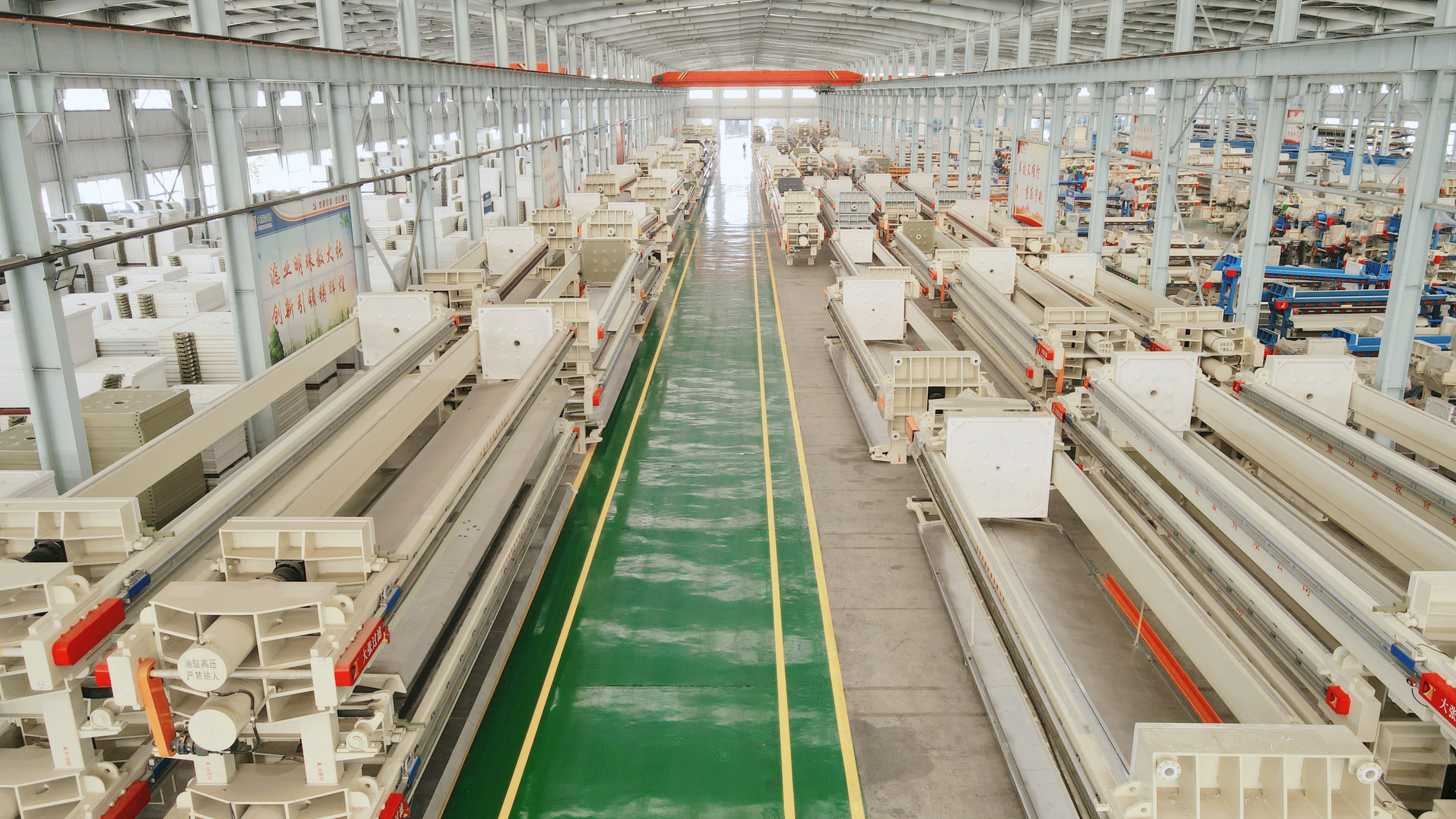
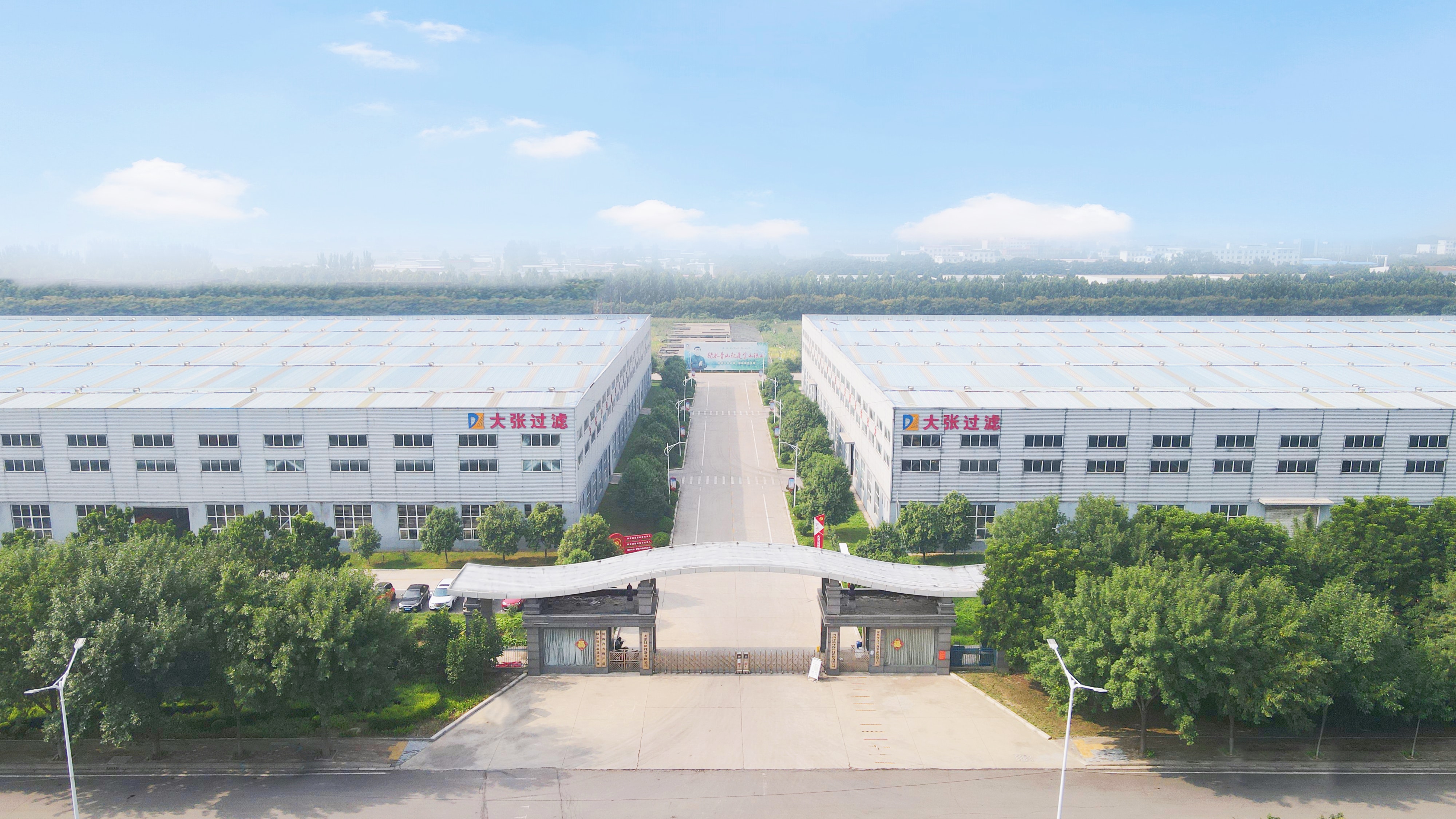
Manufacturing base of Henan Dazhang Filtration Equipment Co., Ltd. in Yuzhou, Henan Province, where filter presses and filter plates are produced.
Why Model Decoding Decides Membrane Filter Press Projects
Two presses can both be described as "automatic membrane filter presses" and still be unsuitable for each other's duty. A 30 m² unit with 870 mm plates and a 1000 m² unit with 2000 mm plates belong to the same commercial series but to completely different process scales, floor areas and maintenance routines. When procurement teams compare quotations without decoding the model code first, the comparison usually collapses into price per unit instead of cost per tonne of dry solids handled.
The second common gap is pressure. Buyers frequently treat "high pressure" as a product label rather than a defined figure. In practice, three separate pressures exist in a membrane press project: the feed pressure that pushes slurry into the chambers, the membrane squeezing pressure that inflates the membrane against the formed cake, and the maximum clamping or structural rating of the frame that holds the plate stack together. In the XMAG series documentation, feed pressure is listed at 0.6–2.0 MPa and squeezing pressure at 1.6 MPa. Across Dazhang's wider range of automatic membrane and chamber filter presses, filtration pressure is specified from 0.6 MPa up to 4.0 MPa. These are not interchangeable numbers, and the first procurement question should be which one a quotation is quoting.
The practical goal at the decision stage is therefore not the largest press available. It is the smallest press that reliably meets the duty, with the pressure rating, plate material and automation scope that the actual slurry requires.
The XMAG Series Envelope at a Glance
The published specification for the XMAG series defines a clear operating envelope. Everything a buyer needs in order to start narrowing the selection is contained in these values.
| Specification | XMAG series range | Why it matters in procurement |
|---|---|---|
| Model designation | XMAG30/870-UKB to XMAG1000/2000-UKB | The code pairs nominal filter area with plate size; both numbers must be confirmed, because a quotation may state only one. |
| Filter area | 30–1000 m² | Sets batch capacity and cycle throughput; it is the number that must match the duty calculation. |
| Plate size | 870–2000 mm | Determines how that area is physically arranged: chamber count, cake volume per chamber, footprint and handling weight. |
| Feed pressure | 0.6–2.0 MPa | Governs chamber filling and initial cake formation; must be matched by the feed pump. |
| Squeezing pressure | 1.6 MPa | Sets the membrane inflation force and therefore the achievable cake dryness and air demand. |
| Membrane plate material | PP / TPE membrane plate | Material grade controls temperature tolerance, chemical exposure limits and membrane service life. |
| Frame | Q345 steel frame (carbon steel construction used elsewhere in the portfolio) | Carries the full clamping load of the plate stack; grade should be stated in writing. |
| Operation | Automatic | Automation is not a standard block; the included functions must be listed item by item. |
| Typical industries | Wastewater, mining, chemical, food, pharmaceutical, metallurgy | Confirms that the platform is intended for industrial dewatering rather than fine clarification. |
Reading Plate Size and Filter Area Together
Filter area is a duty parameter. Plate size is a geometry parameter. Confusing them is the most frequent source of mis-sizing, because the two are independent: one project may need 200 m² distributed over 1500 mm plates, while another may need a similar area distributed over a larger number of smaller plates.
Filter area is the sum of the filtration surfaces of all chambers in the stack, so it is the number that must answer the throughput question: how much slurry has to be processed per batch, how many batches are possible per working day, and what cake mass leaves the press each cycle. Plate size, in contrast, describes how many chambers are needed to reach that area, how large each cake is, how heavy the moving plate pack becomes, and how much floor space and headroom the installation requires. Reaching a fixed area with 2000 mm plates means fewer, larger chambers; reaching the same area with 870 mm plates means more chambers and more individual plate movements per discharge cycle.
For a buyer, this translates into a straightforward rule: fix filter area first from the duty calculation, then select the plate size that fits the building, the cake handling equipment and the maintenance resources on site. The XMAG envelope from 30 m² at 870 mm to 1000 m² at 2000 mm exists precisely because those two decisions have to be made separately.
Filtering Pressure: Feed Pressure, Squeezing Pressure, and the Number in the Quotation
Membrane press performance is governed by two pressures acting in sequence. During filling, feed pressure drives slurry through the feed channel into each chamber. In the XMAG series this is specified at 0.6–2.0 MPa. After the cake forms, the membrane is inflated at the squeezing pressure — 1.6 MPa in the XMAG specification — which compresses the cake from the inside of each chamber and displaces additional liquid. This secondary squeezing is the mechanism behind the yield advantage of a membrane press: Dazhang's technical documentation states that it can reduce cake moisture by approximately 5–15% compared with conventional chamber filter presses, while also shortening filtration cycles.
Dazhang's wider machine range extends beyond the XMAG envelope. Automatic membrane and chamber filter presses are documented with filtration pressure from 0.6 MPa to 4.0 MPa, and high-pressure round plate presses are documented with feed pressure up to 2.5 MPa for kaolin, ceramics and mineral slurry duties where square chamber designs are insufficient. A buyer comparing quotations must therefore verify which figure applies to the machine offered: a feed pressure, a squeezing pressure, or the maximum structural rating of the frame and plate assembly. Pressure ratings apply to the complete assembly, not to the membrane plate alone.
Membrane Plate Material and Frame Construction
The XMAG series specification lists PP/TPE membrane plates and a Q345 steel frame, while other automatic presses in the same portfolio — such as the 1100/1500 mobile cloth membrane units — are documented with PP filter plates and a carbon steel frame. The material choice is a durability decision, not a preference.
Polypropylene remains the baseline plate material in industrial filtration, and Dazhang manufactures its own plates, including a processing-free sealed square polypropylene filter plate that received invention patent protection and entered the European market, as well as high-temperature-resistant and toughened PP polymer grades. Published technical comparisons from the company indicate that this membrane press platform can operate at temperatures up to 120 °C, whereas conventional PP filter presses typically operate at a maximum of 80 °C — a difference that decides whether a hot slurry can be processed directly or must be cooled first.
Frame grade follows the same logic. The frame carries the clamping load of the entire plate stack, and that load grows with plate size and chamber count. Buyers should require the frame material and the maximum clamping rating to be stated explicitly in the offer, particularly when the selected model sits at the upper end of the 870–2000 mm plate range. A heavier frame is more robust but also adds transport and foundation cost.
Automation Scope and Drainage Type
"Automatic" is a commercial description, not an engineering specification, and its content varies between suppliers. On this platform, automation typically covers hydraulic closing and pressure holding, the membrane squeezing sequence, cake discharge and, in the cloth-traveling variants, automatic cloth washing. The company documents that hydraulic closing with automatic pressure holding cuts manual tightening work by 80% compared with manual stainless steel plate and frame filter presses. Automatic cloth washing is described as reducing cloth clogging and manual maintenance, which supports stable filtration efficiency over long production periods.
Drainage configuration is a further decision that buyers often defer too long. Automatic membrane presses in this range are documented with a visible or invisible drainage option. Visible drainage leaves the filtrate outlets observable, so operators can see flow from each outlet and identify cloth failure, sealing problems or uneven chamber filling at an early stage. Invisible, or closed, drainage routes filtrate through internal channels, which reduces open liquid surfaces and limits vapour or odour exposure — generally preferred for volatile, odorous or hygiene-controlled media. The trade-off is that closed drainage removes the visual diagnostic signal, so instrumentation and monitoring become more important.
Where XMAG-Class Presses Fit: Application Patterns
Automatic membrane filter presses are most often selected for duties that require deep dewatering rather than simple solid–liquid separation. Documented application patterns for this class of equipment include sludge dewatering in municipal and industrial wastewater treatment, mining and coal slurry processing, flue gas desulphurisation gypsum dewatering, chemical processing, food processing, metallurgy and new energy materials.
Capacity ranges help to position a project quickly. Automatic membrane presses with automatic cloth washing are documented across 100–1000 m² of filtration area for wastewater, mining, chemical and new energy duties, while the cloth-traveling and washing variants are documented across 20–291.2 m² for mining, coal slurry, FGD gypsum and sludge. For smaller or parallel-process duties, once-open automatic presses are documented at 4–55 m², and lab-scale presses at 0.32 m² for test work. A buyer who knows the required duty and the site constraints can usually eliminate most of a catalogue in one pass through these ranges.
Market Context: What Is Driving Configuration Decisions
The equipment decisions above sit inside a market that is expanding and concentrating at the same time. According to Grand View Research, the global membrane filtration market was valued at USD 19.4 billion in 2025, with Asia Pacific holding a 36.5% revenue share in the same year. Chinese filter press machine exports under HS code 84212910 reached USD 170,236,194 in 2023, according to China Customs data as reported in secondary trade analysis — an indication of how much dewatering equipment demand is now met from Chinese manufacturing clusters. A separate commercial research estimate places filter presses at approximately 22% of the global sludge dewatering system market in 2024.
For buyers, the practical consequence is not that more suppliers exist, but that specification discipline becomes the only reliable differentiator. When many suppliers offer presses in the same nominal range, the deciding factors shift to verifiable plate size, stated pressure ratings, documented plate material grades and a written automation scope.
Where a Membrane Press Is the Wrong Choice
A membrane filter press is not a universal upgrade, and the limitations are as relevant as the advantages. Three boundaries matter most.
First, investment and maintenance. Membrane presses carry a higher initial cost than standard chamber designs, and the automated components — membranes, hydraulic systems, cloth washing — add maintenance complexity. Dazhang's own comparison data state plainly that the initial investment is higher than that of standard membrane filter presses and that maintenance is more complex because of the automation. Second, standard dewatering duties may not justify the extra cost: chamber filter presses are documented with lower investment and lower operating cost, a simple structure, and filtration pressure covering 0.6–4.0 MPa, which is sufficient for many standard sludge, mining, chemical and ceramics duties. Third, low-pressure fine filtration is a different machine class altogether: plate and frame presses are documented with filtration pressure up to 0.5 MPa and typically manual cake discharge, and are optimised for filtration accuracy rather than high-pressure dewatering.
| Decision factor | Membrane press (XMAG-class) | Chamber filter press | Plate and frame press |
|---|---|---|---|
| Dewatering depth | Secondary membrane squeezing; documentation cites approximately 5–15% lower cake moisture and shorter cycles | Batch dewatering without membrane squeeze | Fine filtration, not high-pressure dewatering |
| Pressure | Feed 0.6–2.0 MPa, squeezing 1.6 MPa for the XMAG series; wider Dazhang range documented 0.6–4.0 MPa | 0.6–4.0 MPa depending on model | Up to 0.5 MPa |
| Investment | Higher initial cost | Lower investment and operating cost for standard dewatering | Cost-effective for small fine-filtration systems |
| Maintenance | More complex automated systems; lower long-term manual cleaning where cloth washing is included | Proven design, easier maintenance | Cake discharge is typically manual |
| Best fit | Sludge, mining, chemical and food duties requiring deep dewatering | Standard sludge, mining, chemical and ceramics dewatering | Food, beverage, pharmaceutical and fine chemical clarification |
Filter press frame, plate and assembly production at the Dazhang Filtration manufacturing base, Yuzhou, Henan Province.
Procurement Checklist Before Ordering
The checklist below converts the discussion above into confirmation items. Each line should be answered in writing in the supplier's offer, not inferred from a general brochure.
| Item | What to confirm | Why it changes the order |
|---|---|---|
| Duty basis | Slurry volume per cycle and dry solids per day | Sets the required filter area within the 30–1000 m² envelope |
| Slurry properties | Solids content, particle size, temperature, pH, abrasiveness | Drives plate material grade and cloth selection |
| Target cake moisture | Required dryness after dewatering | Confirms whether membrane squeezing is needed at all |
| Plate size and count | Plate size within 870–2000 mm and number of chambers | Affects footprint, cake handling and discharge time |
| Feed pressure | Stated value and matching feed pump duty | Insufficient feed pressure leaves chambers under-filled |
| Squeezing pressure | Membrane pressure and compressed air supply | Determines achievable dryness and utility cost |
| Membrane plate material | PP or TPE grade, temperature rating | Decides membrane service life under the actual slurry |
| Frame material | Q345 steel or carbon steel, clamping rating | The frame carries the full plate-stack load |
| Automation scope | Closing, pressure holding, squeezing, discharge, cloth washing | Defines real labour requirement per shift |
| Drainage type | Visible or invisible drainage | Balances operator diagnostics against vapour and odour control |
| Validation | Lab or pilot test before the order | Reduces the risk of mis-sized plate geometry |
| Service package | Spare membranes, cloths, commissioning and after-sales scope | Membrane and cloth replacement dominate long-run cost |
Future Outlook
Two directions are visible across this equipment class. The first is automation depth: cloth traveling and washing systems, once limited to specific heavy-duty duties, are increasingly specified as standard on larger automatic membrane presses because they hold filtration efficiency stable and reduce manual maintenance. The second is polymer plate development. Manufacturers such as Dazhang continue to work on polypropylene plate materials, membrane plate structures, high-temperature-resistant and toughened grades, and intelligent control systems — a research direction that matters to buyers because plate and membrane performance, not frame fabrication, increasingly sets the practical limits of cake dryness and cycle time.
For procurement teams planning a press purchase over the next few years, the implication is to specify the plate and membrane system explicitly, and to treat automation as a list of functions rather than a single adjective. Equipment that is specified this way remains comparable across suppliers and across future tenders.
Procurement FAQ: XMAG Model Selection and Configuration
1. How do I align plate size (870–2000 mm) and filter area (30–1000 m²) with my project duty?
Fix filter area first, then choose plate size. Filter area is the sum of the filtration surfaces of all chambers and must be calculated from the duty — slurry volume per cycle, dry solids per day and the number of cycles available per shift. The XMAG series covers 30 m² to 1000 m² on this basis. Plate size then distributes that area geometrically: 870 mm plates at the lower end mean a compact unit with more chambers, while 2000 mm plates reach a given area with fewer, larger chambers and heavier individual plate handling. Because plate size also drives footprint, cake weight and frame load, the choice should follow the site and the handling equipment rather than the price list.
2. Which filtering pressure should I confirm before purchase — feed pressure, squeezing pressure, or both?
Confirm both, and confirm which one a quotation is referring to. The XMAG series documentation lists feed pressure of 0.6–2.0 MPa and a membrane squeezing pressure of 1.6 MPa. Feed pressure governs chamber filling and cake formation and must be matched by the feed pump; squeezing pressure governs membrane inflation and therefore achievable cake dryness and compressed-air demand. Where a duty requires higher filtration pressure, Dazhang's wider range of automatic membrane and chamber filter presses is documented at 0.6–4.0 MPa, and high-pressure round plate presses are documented with feed pressure up to 2.5 MPa for kaolin, ceramics and mineral slurries. Pressure ratings apply to the complete assembly of frame, plates and hydraulic system.
3. Should I choose PP or TPE membrane plates?
Both PP and TPE membrane plates are listed in the XMAG series material specification, so the decision should follow operating temperature, chemical exposure and the required membrane behaviour rather than availability. Polypropylene is the established material for industrial filtration plates, and Dazhang manufactures PP plate grades including high-temperature-resistant and toughened polymer variants; the company states that this membrane press platform can withstand operating temperatures up to 120 °C, compared with a typical maximum of 80 °C for conventional PP filter presses. Buyers should require the specific grade designation and temperature rating in writing, since "PP membrane plate" alone does not define performance under hot or aggressive slurries.
4. Is the frame carbon steel or Q345 steel, and does the difference matter?
The XMAG series is documented with a Q345 steel frame, while other automatic presses in the same portfolio — for example the 1100/1500 mobile cloth membrane units — are documented with carbon steel frames. The distinction matters because the frame carries the clamping load of the whole plate stack, and that load increases with plate size and chamber count. A buyer selecting a model at the upper end of the 870–2000 mm plate range should require the frame material and maximum clamping rating to be stated in the offer, and should weigh the trade-off: a heavier, more robust frame improves stability at large plate sizes but adds transport, foundation and handling cost.
5. What does "automatic" actually include on an automatic membrane filter press?
Automation is not standardised across suppliers, so it must be itemised. On this platform it typically covers hydraulic closing and pressure holding, the membrane squeezing sequence, cake discharge and, on cloth-traveling variants, automatic cloth washing. Dazhang documents that hydraulic closing with automatic pressure holding cuts manual tightening work by 80% compared with manual stainless steel plate and frame filter presses. Automatic cloth washing is described as reducing cloth clogging and manual maintenance, helping to maintain stable filtration efficiency. A related but different automation concept is rapid multi-plate opening in one operation, documented on once-open presses with filtration areas of 4–55 m², which shortens cake discharge time.
6. Visible or invisible drainage — how do I decide?
Both options are documented for automatic membrane filter presses in this range. Visible drainage leaves the filtrate outlets observable, which allows operators to detect cloth failure, sealing problems or uneven chamber filling during the cycle, and it is generally the simpler choice for routine industrial dewatering. Invisible, or closed, drainage collects filtrate internally, reducing open liquid surfaces and limiting vapour or odour release — generally preferable for volatile, odorous or hygiene-controlled media. The trade-off is diagnostic: closed drainage removes the direct visual signal, so process instrumentation and outlet monitoring become more important. The decision should follow the medium and the plant's environmental requirements rather than cost alone.
7. When is a chamber filter press a better decision than a membrane press?
When the duty does not require deep dewatering. Chamber filter presses are documented with lower investment and operating cost, a simple structure and filtration pressure covering 0.6–4.0 MPa, which is adequate for many standard sludge, mining, chemical and ceramics duties. Membrane presses carry a higher initial cost and more complex maintenance because of their automated systems, although they deliver approximately 5–15% lower cake moisture and shorter filtration cycles on duties that need it. A third case is fine filtration at low pressure: plate and frame presses are documented with filtration pressure up to 0.5 MPa and typically manual cake discharge, and are optimised for filtration accuracy rather than high-pressure dewatering.
8. What should be on a pre-order checklist for an XMAG press?
The checklist should cover: duty basis (slurry volume per cycle and dry solids per day); slurry properties including solids content, particle size, temperature, pH and abrasiveness; target cake moisture; required filter area within the 30–1000 m² envelope; plate size within 870–2000 mm and chamber count; feed pressure and matching pump duty; squeezing pressure and compressed-air supply; membrane plate material grade; frame material and clamping rating; automation scope item by item; drainage type; filter cloth specification; spare membranes and cloths; commissioning and after-sales scope; and validation test results. Each item should be confirmed in writing in the offer rather than inferred from general documentation.
9. How can I validate a configuration before ordering a full-scale unit?
Lab-scale filtration testing is the standard route. Dazhang's laboratory filter press is documented with a filtration area of 0.32 m², plate configurations of 3+1+1 or 5+1+1, and feed pressure of 0.6 MPa, with automatic or manual operation, and company documentation describes laboratory-scale presses as handling test volumes of roughly 0.5 to 5 litres per batch, compared with industrial units processing 50 litres to several thousand litres per batch. Such tests establish cake formation behaviour, filtration time and filtrate clarity at low cost, and the results provide the basis for scaling plate size and filter area to production duty. For larger projects, a pilot installation on one production line is a further step before full deployment.
Reference Material
For readers who need the manufacturer's own documentation on filtration equipment scope, capacity ranges and service capabilities, the English company profile of Henan Dazhang Filtration Equipment Co., Ltd. is available for download: Da Zhang Filtration Company Profile (PDF).