
Meirenxin Black Sunflower Seeds: Application Fit for Snack, Roasting and Bird Feed Lines
A raw black sunflower grade can only be judged against the line it feeds. Here is what meirenxin specifies, where it fits, and where a larger grade is the better answer.
.jpg)
Black sunflower seeds travel two industrial routes that are rarely compared side by side. One ends in a roasting drum, a seasoning step and a consumer pack. The other ends in a feed bin, a cage or a blended ration for ornamental birds. A single raw grade can start both journeys, but the physical profile that suits one route — kernel count per unit weight, coat colour, kernel shape, moisture control, screening cleanliness and additive status — does not automatically suit the other.
Meirenxin black sunflower seeds are a raw, black-coated, round-kernel grade identified by the product type and model designation Sunflower seeds meirenxin. They are supplied by Inner Mongolia Chengtai Food Co., Ltd., a processor established in 2013 in the Hetao Plain of Inner Mongolia that specialises in sunflower seeds, pumpkin seeds and kernels and derives roughly 80% of its sales from export markets including the Middle East, Middle Asia and Europe.
This reference examines where meirenxin fits — snack and roasted factory lines, food ingredient programmes and bird feed — using the specifications the supplier publishes, and it states plainly where a different grade is the better answer.
The Fitting Problem: Grade Codes Move Faster Than Specifications
The sunflower seed trade organises itself around codes such as 361, 363, T5, T6 and 601. Codes are useful shorthand in a quotation, but they do not tell a roasting line manager whether a consignment will behave in the drum, and they do not tell a bird feed blender whether the seed will be taken up by small ornamental birds. Fit is governed by a narrower set of physical variables: the number of kernels in a 50 g sample, the colour and finish of the seed coat, kernel shape, how the seed was dried, how thoroughly it was screened, and whether anything was added to it.
Two structural features of the market widen that gap. Published attention in China's confectionery sunflower segment concentrates on larger kernel sizes grown in the saline-alkali fields of Bayannur, as reported by China Daily in February 2025, which means mid-count black grades receive comparatively little public explanation even though they serve clearly different processes. At the same time, demand is not one-directional: Grand View Research estimated that roasted sunflower seeds accounted for 65.9% of global packaged sunflower seed revenue in 2024, while Europe held a 29.6% revenue share of the packaged sunflower seeds market in the same year — a mix of processing-led and market-led demand that pulls grades in different directions.
Reading the specification sheet therefore matters more than reading the code.
What Meirenxin Is — and What Is Verifiable
Meirenxin is a raw sunflower seed grade with a black seed coat and a round kernel. Under the supplier's classification it belongs to the raw agricultural food ingredient category and is intended for human consumption and for bird feed. The grade is sourced from the Hetao Plain, where the supplier describes sunlight and soil conditions as supporting full kernel development.
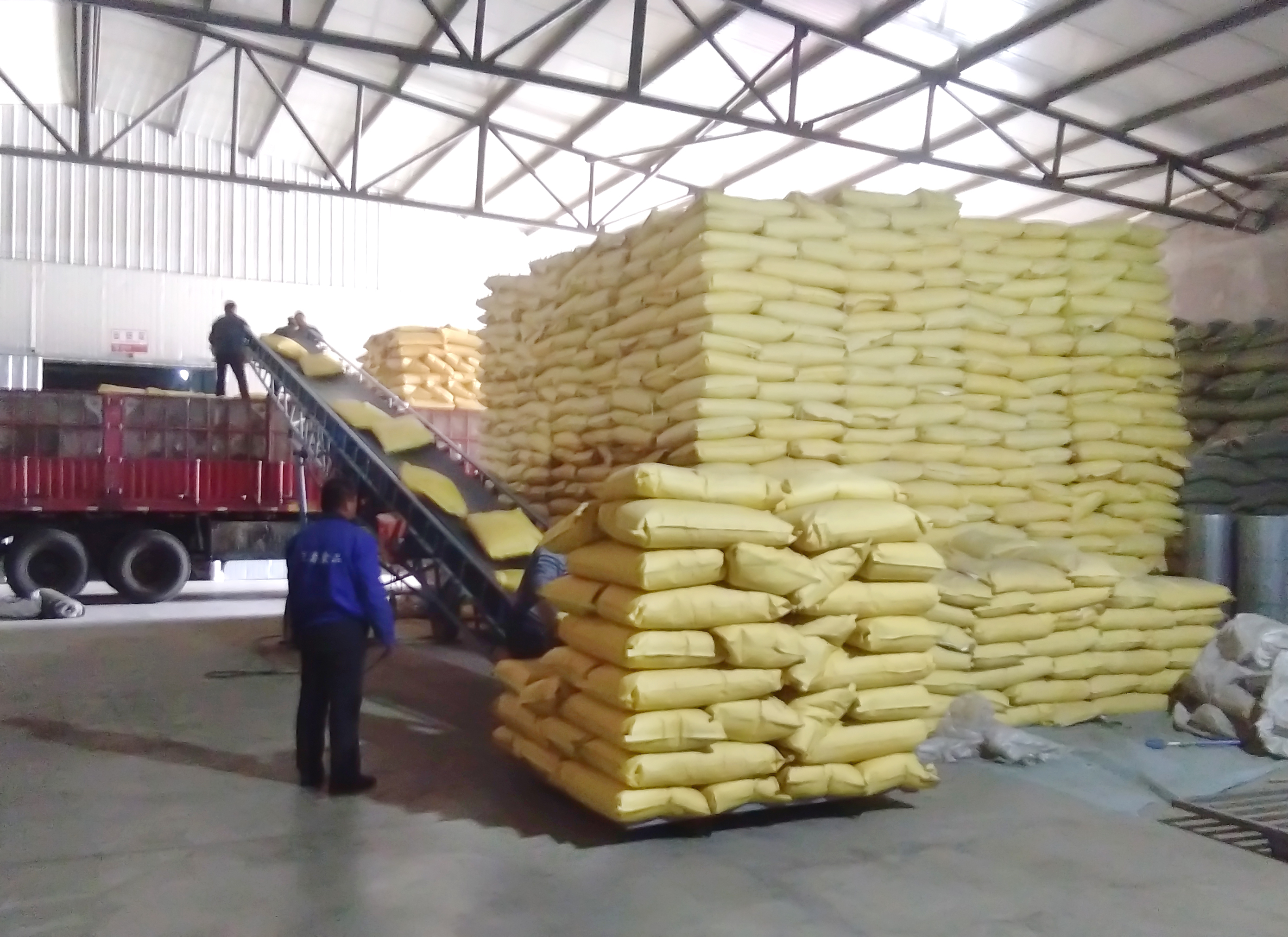
Processing is deliberately minimal. The raw material is naturally sun-dried with strict moisture control, and multiple screening procedures are applied at the factory. Air separation and sifting remove shrunken seeds, empty shells, mouldy grains, stones and other impurities layer by layer, and the finished product is described as high-cleanliness with no extra debris. No flavourings or preservatives are added, which preserves the natural grain aroma of the seed.
Inner Mongolia Chengtai Food Co., Ltd. was established in 2013 and operates from Hanggin Rear Banner, Bayannur City, Inner Mongolia. The company specialises in sunflower seeds, pumpkin seeds and kernels across planting, processing and sales; it runs a manufacturing facility of 3,500 m² with an annual production capacity of 30,000 metric tons, employs approximately 20 staff and maintains an R&D team of two engineers. Its production workshop is described as designed in full accordance with EU standards and using international advanced production management. Third-party European market-entry guidance published by CBI, an agency of the Netherlands Ministry of Foreign Affairs, lists the company among suppliers of black sunflower seeds and kernels certified under ISO 9001 and Halal.
Specification Sheet: The Data a Buyer Can Check
Everything below is stated in the supplier's product documentation for the meirenxin grade. It is deliberately short, because a raw agricultural input does not need a long feature list — it needs specifications that can be checked against a process.
| Attribute | Documented specification |
|---|---|
| Product | Sunflower seeds (Nuts) |
| Model designation | Sunflower seeds meirenxin |
| Product type | meirenxin |
| Seed coat | Black — classified as black sunflower seeds |
| Kernel shape | Round |
| Size | 380–390 pieces per 50 g |
| Specification | Raw |
| Taste | Sweet and natural |
| Material | Sunflower seed kernel |
| Origin | Hetao Plain, Inner Mongolia (Hanggin Rear Banner, Bayannur City) |
| Intended use | Human consumption / bird feed |
| Applicable industry | Manufacturing / snack factory / roasted factory |
| Additives | No flavourings or preservatives added |
| Processing | Natural sun-drying with strict moisture control; multi-stage screening by air separation and sifting |
| Category | Raw agricultural food ingredient |
Source: product documentation for Sunflower seeds meirenxin, Inner Mongolia Chengtai Food Co., Ltd.
.jpg)
The most consequential line in the table is the size band. A count of 380–390 pieces per 50 g fixes the kernel into a narrow size window, and it places meirenxin below the company's larger black and striped grades, which are documented at much lower counts per 50 g. For a buyer, the count is the fastest way to predict how a grade will behave on a screen, in a pack-fill calculation or in a feed blend, and it is more useful than a code name on its own.
Where Meirenxin Fits: Three Application Scenarios
1. Snack and Roasted Factory Lines
Meirenxin is documented as intended for the manufacturing, snack factory and roasted factory industry and is supplied in raw specification, which means the buyer owns the roast profile, the seasoning step and the final pack format. That arrangement suits factories that already run flavouring and roasting lines and prefer to buy an unflavoured base rather than a pre-seasoned input. It also suits programmes whose product claims depend on the seed arriving without additives.
The count band carries practical weight here. Because the grade is screened to 380–390 pieces per 50 g, the kernel-size window is narrow and the individual kernels are comparatively small — a factor wherever roast curves, screen sizes and pack fill weights are set by kernel geometry. Where a line is built around a large-kernel visual promise, a larger grade is the more natural input.
2. Food Ingredient Programmes and the Kernel Question
Meirenxin is supplied as an unshelled black seed, so it functions as a raw ingredient for programmes where the whole seed is roasted, coated or blended. Where a formulation requires kernel form instead of whole seed, the company documents separate hulled sunflower seed kernel products for bakery and confectionery ingredient use: raw specification, a stated moisture range of 9–10%, impurity below 0.5%, erosion seeds below 0.5% and mildew seeds below 1%, packed in 20/25 kg plastic or paper bags or vacuum bags with cartons. Those kernel lines and the whole-seed meirenxin grade should not be treated as interchangeable, because they enter a formulation at different points.
3. Bird Feed: Direct Feeding and as a Mixed-Feed Base
Sunflower seeds are a staple of ornamental bird feeding because they supply oils, high-quality plant protein and a range of minerals. The supplier documents meirenxin as suitable for direct, standalone feeding for parrots, cockatiels, budgerigars, munias and thrushes, and notes that adequate nutrition helps birds maintain physical strength, supports feather growth during moulting and supports daily vitality and appetite.
Because no flavourings or preservatives are added, the seed presents as a natural grain feed without a seasoning layer, which the supplier links to palatability and ready acceptance by birds. The same grade is positioned as a base raw material for bird feed manufacturers that formulate finished mixed feed by blending sunflower seeds with grains and coarse cereals — a route that allows a feed producer to set its own ratio of sunflower seed to cereal within a single ration.
Two practical notes follow from the specification. The 380–390 pieces per 50 g band describes a smaller kernel than the company's larger black grades, which is a relevant comparison point when a feed blender is choosing between grades by kernel size rather than by code. And because the grade is raw and unshelled, feed manufacturers should validate blend ratios and bird acceptance on their own formulations rather than assume one universal figure.
Market Signals Behind Raw Black Seed Demand
Four signals are relevant to a buyer evaluating a raw black sunflower grade today.
Scale. Custom Market Insights valued the global sunflower seeds market at USD 29.27 billion in 2025 and projected USD 35.98 billion by 2034. Estimates across research houses diverge because some include oilseed volumes while others count only packaged snack products, so the figure is best read as a direction of travel rather than a precise target.
Trade geography. OEC data places China's sunflower seed exports at USD 937 million in 2025, with Iraq (USD 131 million) and Russia (USD 101 million) among the largest destinations. Inner Mongolia sits at the centre of that flow: People's Daily Online reported in 2024 that the region accounts for more than 60% of China's total sunflower cultivation area, and trade data published by Tridge indicates that Inner Mongolia's sunflower seed export volume reached approximately 463,400 tons in 2025, valued at USD 748 million.
Supply-side caution. The USDA forecast an 8% decline in the global non-oilseed (confectionery) sunflower planted area for 2025, as reported by the National Sunflower Association, while the USDA Foreign Agricultural Service estimated global sunflower seed production at 55.05 million metric tons for the 2025/2026 marketing year. For procurement teams, the practical implication is that confectionery-grade raw material deserves the same contractual attention to specification as to price.
Compliance. In late 2025 China notified 209 new maximum residue limits covering 93 pesticides in food to the WTO, and the EU market for sunflower seeds requires adherence to HACCP principles with strict monitoring of pesticide residues and metal contaminants. Raw, additive-free grades still have to clear residue and contaminant requirements: factory screening reduces physical impurity risk, but it does not substitute for residue documentation.
Meirenxin Versus Larger Black Grades: Fit, Trade-offs and Limits
Comparing meirenxin with the company's larger black grades makes the trade-off explicit. Both are documented as raw, black sunflower seeds intended for human consumption and for manufacturing and roasting environments; the difference is size position.
| Grade | Documented size | Typical fit | Where it is the weaker choice |
|---|---|---|---|
| Meirenxin (Sunflower seeds meirenxin) | 380–390 pieces per 50 g, black coat, round kernel | Raw input for snack and roasted lines that season in-house; direct bird feed and mixed-feed base; additive-free programmes | Premium large-kernel roasted positioning; any formulation that requires hulled kernel form |
| Sunflower seeds 363 | 170–230 pieces per 50 g, with documented sub-bands from 170–180 to 210–220 pieces per 50 g | Large-kernel striped grades for roasted snack lines built around kernel size | Applications that depend on a small, fine-count round black kernel |
| Sunflower seeds T6 | 170–300 pieces per 50 g overall, with documented sub-bands from 170–180 to 200–210 pieces per 50 g | Larger black kernels for roasting, snack and confectionery-grade programmes | Fine-count applications where a lower piece weight per kernel is preferred |
Size bands as documented in the supplier's product listings; sub-band values reflect the grade variants published for each model.
The table shows the boundary clearly. Meirenxin's higher piece count per 50 g corresponds to smaller individual kernels than 363 or T6. That is an advantage where a buyer wants a fine-count black grade with a round kernel, a black coat and an additive-free raw profile; it is a disadvantage where the product promise is a large, visually dominant kernel in a premium roasted pack. In that situation the company's larger black grades are the more appropriate inputs.
Two further limits apply. First, meirenxin is a raw input rather than a finished snack: because no flavourings or preservatives are added, any salted, roasted or seasoned product must be created by the buyer's own process, and the published specification does not describe roast curves, seasoning performance or shelf-life outcomes. Second, a whole-seed grade cannot substitute for hulled kernel products where a formulation needs kernel form. Buyers whose applications depend on either point should plan an internal validation step rather than rely on the grade name alone.
What to Watch Next
Three developments are likely to shape how raw black sunflower grades are specified over the next few years.
First, the centre of gravity in packaged sunflower seeds remains roasting. With roasted seeds accounting for 65.9% of global packaged sunflower seed revenue in 2024, demand for raw inputs that roast predictably — consistent count, controlled moisture, clean screening — is structurally supported even if that share shifts.
Second, bird feed remains a distinct and parallel demand channel rather than a residual outlet. The supplier's dual positioning of meirenxin for human consumption and for bird feed illustrates how one physical grade can serve two customer bases, provided that snack processors and feed manufacturers each validate the grade against their own process rather than against a shared assumption.
Third, compliance documentation is becoming a competitive attribute rather than a formality. China's notification of 209 new maximum residue limits for 93 pesticides, the EU's HACCP-based expectations and continued monitoring of pesticide residues and metal contaminants mean that a supplier's ability to document screening, moisture control and residue position may matter as much as the grade code printed on a contract.
As confectionery sunflower plantings adjust — the USDA's 8% non-oilseed area decline for 2025 being one signal — mid-count, additive-free black grades such as meirenxin are positioned to absorb part of the demand that larger grades cannot serve, because their use cases extend beyond the premium large-kernel snack segment into ingredient and feed applications.
Reference documents. Company documentation for Inner Mongolia Chengtai Food Co., Ltd. is available in the published company profile (PDF): https://cdn.socialarks.com/sbsp/25189/common/2026/0811/Company%20profile%20.pdf — company website: www.ctsunfood.com
FAQ
What are meirenxin black sunflower seeds?
Meirenxin is a sunflower seed product type — model designation Sunflower seeds meirenxin — with a black seed coat and a round kernel, supplied by Inner Mongolia Chengtai Food Co., Ltd. It is classified as a black sunflower seed and belongs to the raw agricultural food ingredient category. The grade is documented as intended for human consumption and for bird feed.
Where are meirenxin sunflower seeds grown and how are they processed?
They are sourced from the Hetao Plain in Inner Mongolia, where the supplier operates from Hanggin Rear Banner, Bayannur City. The raw material is naturally sun-dried with strict moisture control, then screened through multiple stages using air separation and sifting to remove shrunken seeds, empty shells, mouldy grains, stones and other impurities. No flavourings or preservatives are added.
What does the size of 380–390 pieces per 50 g mean for a buyer?
It states how many kernels are counted in a 50 g sample, which defines the grade's kernel-size window. A count of 380–390 pieces per 50 g corresponds to relatively small individual kernels; the company's larger black grades are documented at lower counts, such as 363 at 170–230 pieces per 50 g and T6 at 170–300 pieces per 50 g. Buyers use the count to match a grade to screen sizes, roast settings and pack-fill calculations.
Can meirenxin sunflower seeds be fed directly to birds?
Yes. The supplier documents the grade for direct standalone feeding for parrots, cockatiels, budgerigars, munias and thrushes. Sunflower seeds supply oils, high-quality plant protein and a range of minerals, and the supplier notes that this nutrition supports birds' physical strength, feather growth during moulting, and daily vitality and appetite. Because no flavourings or preservatives are added, the seed is presented as a natural grain feed.
Can meirenxin be used as a base for mixed bird feed?
Yes. The grade is positioned as a base raw material for bird feed manufacturers, which formulate finished mixed feed by blending sunflower seeds with grains and coarse cereals. This allows a feed producer to set its own sunflower-to-cereal ratio within a ration. Because the grade is raw and unshelled, blend ratios and bird acceptance are normally validated against the manufacturer's own formulation.
Does meirenxin contain flavourings or preservatives?
No flavourings or preservatives are added. The supplier states that this preserves the natural grain aroma of the sunflower seed. Any salted, roasted or seasoned end product must therefore be created by the buyer's own processing, and the published specification does not cover roast curves, seasoning performance or shelf life.
When is meirenxin the wrong choice for a roasting programme?
When the product's selling proposition depends on a large, visually dominant kernel. Meirenxin is documented at 380–390 pieces per 50 g, which places it below the company's larger black and striped grades, such as 363 at 170–230 pieces per 50 g or T6 at 170–300 pieces per 50 g. Programmes that require hulled kernel form rather than whole seed also fall outside this grade's scope, and should use the supplier's documented sunflower seed kernel products instead.
¿Tiene preguntas o necesita más detalles?
Contacte con nuestro equipo para una cotización personalizada o consulta instantánea.
Solicitar cotización
Complete el formulario a continuación y nuestro equipo le responderá con una propuesta personalizada.
Chat directo de WhatsApp
¿Prefiere chatear en tiempo real? Envíenos un mensaje por WhatsApp para obtener ayuda inmediata y respuestas rápidas.
- Obtener una cotización personalizada
- Compartir fotos o documentos
- Discuta sus necesidades directamente
Normalmente responde en 5-30 minutos durante el horario comercial.