
Medical Wristbands Shortlist by Patient Identification Need
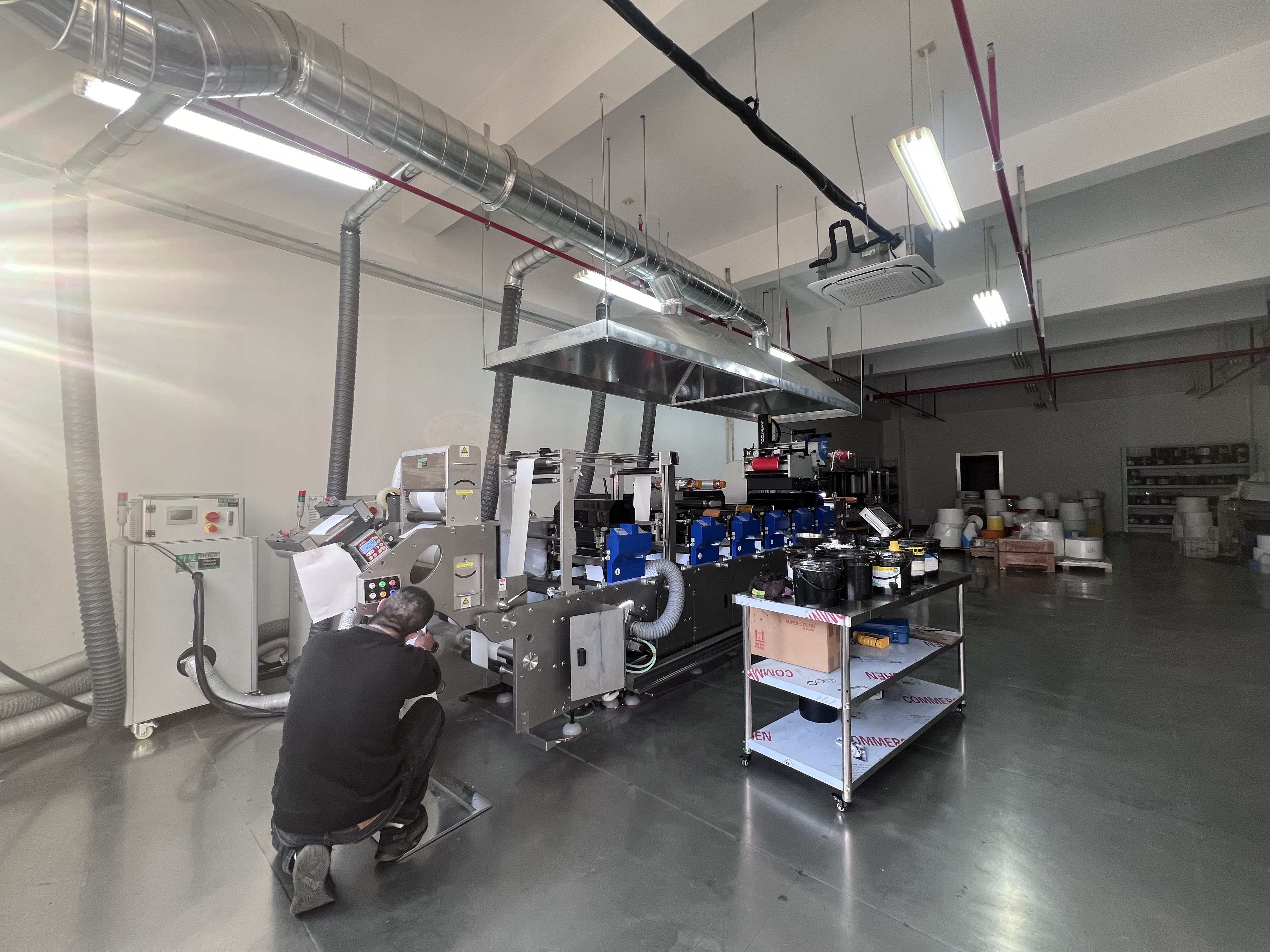
Printing capacity is one of the variables that determines which wristband format a facility can realistically standardise on. Image: flexographic printing workshop.
A patient identification wristband shortlist should be organised around the identification problem a facility actually has — disposable admission volume, long-stay durability, cost-sensitive mass printing, or traceable movement of people and items — rather than around the order in which a product catalogue lists band types.
A wristband is a wearable band worn on the wrist, widely used for patient identification, event access control, visitor management and medical information recording. Available material options include PVC, Tyvek, polyester and thermal-print stock, with custom sizing, custom printing and optional RFID chip integration. Under that single category name sit four materially different products with four different data models — visual print, durable print, disposable print and chip-based read/write. Shortlisting them by name alone is where most procurement mismatches begin.
The category is also large enough to justify a structured shortlist. The global patient identification wristbands market is projected to reach USD 576.1 million in 2025 according to Future Market Insights, while Precedence Research places the same year at roughly USD 1.61 billion. The gap is a definition problem — blank bands versus printed, system-integrated products — and it is a useful reminder that any single market figure for this category should be read as directional rather than precise. Precedence Research also reports that North America accounted for a 41% share of the market in 2025. Buyer attention, in other words, is concentrated in markets where documentation and traceability expectations are already formalised.
This shortlist covers four options supplied under the DDJOY-Medical Wristbands range, produced by Shanghai Dingba Identification Co., Ltd., a Shanghai-based manufacturer of wristbands and RFID products founded in 2010. It is organised by patient identification need, and each entry includes its selection logic and its boundary.
The shortlist at a glance
Read the table as a routing tool: find the identification need in the fourth column first, then confirm the material and data model in the first three columns. Detailed selection logic follows in the sections below.
| Option | Material and format | Data model | Best-fit identification need | Main caution |
|---|---|---|---|---|
| Medical thermal wristband | Thermal-sensitive synthetic paper; 260 × 25 mm, customizable; water-resistant and tear-resistant | Direct thermal printing; patient information printable | Single-use, high-volume patient management where the band is printed at admission | Requires a direct thermal printer |
| PVC Patient ID Wristband | PVC; 250 × 25 mm and 250 × 16 mm; durable and comfortable to wear | Printable patient information on a durable substrate | Hospital and elderly care identification where a band must survive long wear | Durability-oriented, not the default for strict single-use workflows |
| Tyvek Wristband | Tyvek; 250 × 19 mm and 250 × 25 mm; disposable, tear-resistant, waterproof | Clear printing; visual identification only | Cost-sensitive disposable identification at volume | The 19 mm width limits how many fields stay legible |
| RFID wristband | Silicone, PVC, Tyvek or paper with a built-in chip; 250 × 25 mm / 250 × 16 mm and multiple specifications | Low frequency / high frequency / ultra-high frequency chip options; readable and writable | Member management or logistics tracking where identity must be captured without line of sight | Requires reader infrastructure and data governance |
Why catalogue-order purchasing creates mismatches
Most wristband problems reported by care facilities are not material failures. They are specification mismatches, and they usually follow one of three patterns.
- Format-first purchasing. A band width is chosen before the printable-field requirement is quantified. At 19 mm, printed information has to be compressed; at 25 mm or above, more patient data and clearer type are possible. Reversing the order — data fields first, width second — removes a large share of reorders.
- Reuse-class confusion. A durable PVC band is specified for a workflow designed around single-use disposal, or a disposable band is deployed where caregivers expected the band to withstand weeks of handling. The material is not at fault; the workflow assumption is.
- Data-model mismatch. A facility buys visual identification when the underlying requirement is a read/write event — a credential that has to be written back, counted, or tracked as it moves. That requirement cannot be met by any printed band, regardless of material.
The opportunity is straightforward. When identification need is mapped first, four things follow in order: band material, printing or encoding method, the equipment the facility must already own (a direct thermal printer, or RFID readers), and the supplier evidence required for qualification. That sequence is what produces a defensible shortlist.
Option 1: Medical thermal wristband for disposable, high-volume patient management
Verified specification. Print method: direct thermal printing. Size: 260 × 25 mm, customizable. Features: water-resistant, tear-resistant, patient information printable. Material: thermal-sensitive synthetic paper. Typical industries: hospitals, medical clinics, healthcare institutions, patient management.
The medical thermal wristband is the default candidate when a facility prints identity bands on demand at admission and treats the band as single-use. Because the print method is direct thermal, the image is produced on thermal-sensitive stock by the printer itself, so the band does not depend on ink or ribbon consumables. That matters operationally: a ward that runs out of ribbon has a printing stoppage, and consumable management is one more inventory line that has to be maintained across departments.
The specification also lines up with what patient-facing scenarios generally demand. In a custom patient identification project, the documented working conditions include indoor and outdoor normal-temperature environments, a wearing mode of use, and special requirements of waterproof, tear-resistant, disposable and skin-safe. The matched equipment listed for that scenario is a direct thermal printer — which is the practical precondition for choosing this option at all.
Selection logic
- Choose it when the band is printed at the point of admission and discarded at discharge or transfer.
- Choose it when volume is high and per-print consumables (ink, ribbon) are something the facility wants to remove from its process.
- Choose it when the facility already operates direct thermal printers for other labelling tasks, so no new hardware category has to be introduced.
- Choose it when environmental exposure — washing, brief moisture contact, ordinary handling — is the main durability concern rather than long-term abrasion.
Boundary. This option depends on hardware. Without a working direct thermal printer and disciplined printer settings, the band cannot be produced. Print appearance on thermal stock is also influenced by storage conditions and handling after printing, so facilities that store pre-printed bands in warm environments should validate their own storage and print workflow rather than assuming the material alone guarantees legibility. If a facility cannot standardise printers across wards, this is not the right first pick.
Option 2: PVC Patient ID Wristband for durable hospital and elderly care identification
Verified specification. Sizes: 250 × 25 mm and 250 × 16 mm. Material: PVC. Features: printable patient information, durable, comfortable to wear. Typical industries: hospitals, elderly care institutions (patient identification).
The PVC Patient ID Wristband is the shortlist entry for identification that has to last. Its documented attributes are durability and wear comfort, and its intended industries are hospitals and elderly care institutions — settings where a resident or patient may wear the same band across an extended stay and where repeated handling, repositioning and occasional tugging are normal.
Selection logic
- Choose it when length of wear is the dominant requirement rather than unit cost per admission.
- Choose it for elderly care environments where a resident population is stable and bands are issued on admission to the institution rather than per episode.
- Choose it when comfort over long periods is a stated requirement from nursing staff, since a band that is removed by the wearer defeats identification entirely.
- Choose it when the two available widths — 250 × 25 mm or 250 × 16 mm — can accommodate the printed fields the facility uses.
Boundary. Durability and single-use disposal are different design intents. In a workflow built around strict single-use bands, the disposable class of product is the appropriate default, and a durable PVC band is the wrong tool even though it is the more robust one. There is also a print-substrate consequence: PVC is not thermal-sensitive stock, so the printing method a facility intends to use must be confirmed against the material before qualification, not after the first order.
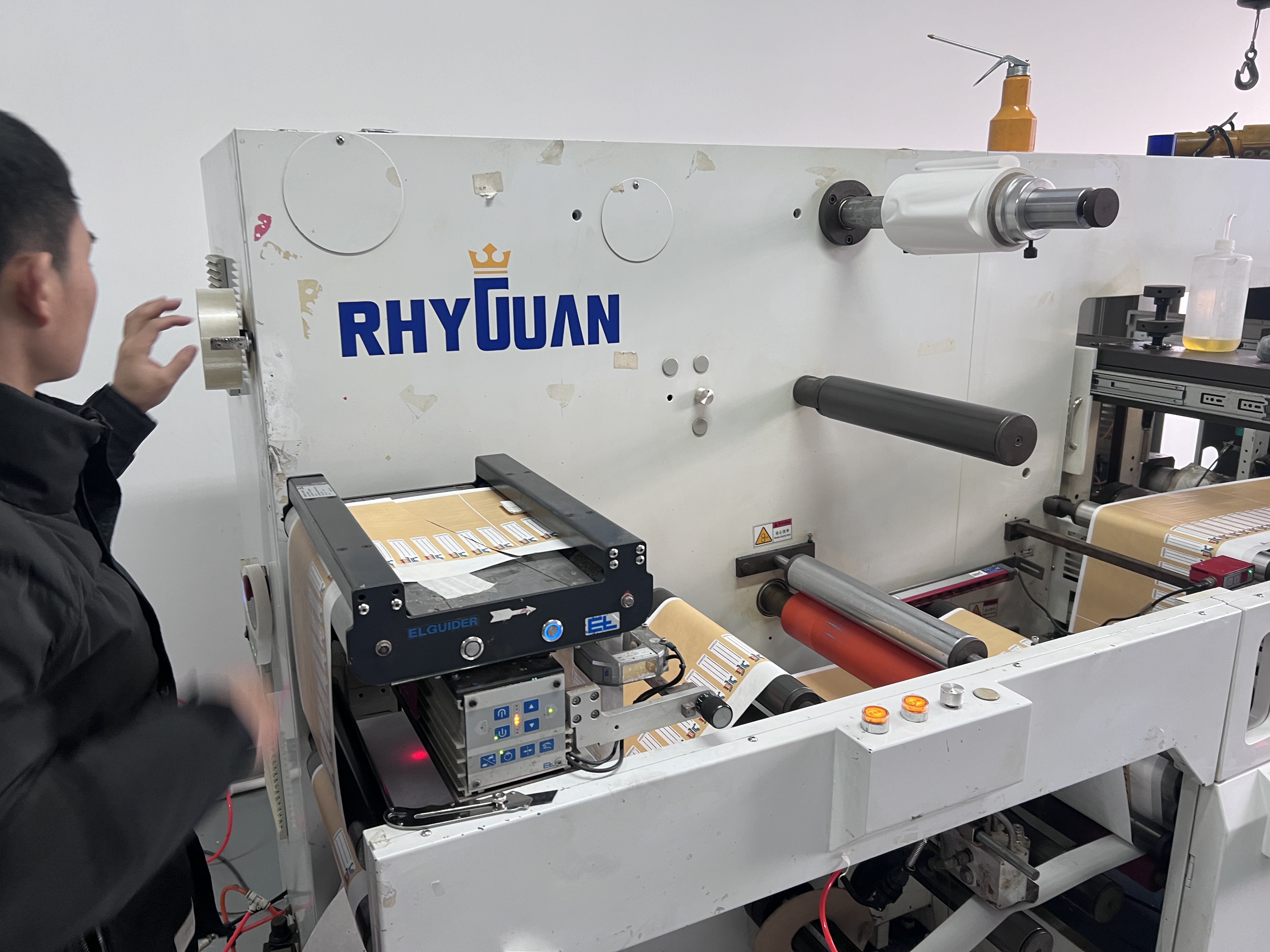
Band width and length tolerances are set at the die-cutting stage, which is why printable-field planning should precede format selection.
Option 3: Tyvek Wristband for cost-sensitive disposable identification
Verified specification. Sizes: 250 × 19 mm and 250 × 25 mm. Material: Tyvek. Features: disposable, tear-resistant and waterproof, clear printing. Typical industries: hospitals, exhibitions, events, ticketing.
The Tyvek Wristband covers the volume end of the shortlist. It is disposable by design, tear-resistant and waterproof, and it prints clearly — the three properties that matter when a facility issues bands at scale and cannot afford a band that degrades before the end of a short episode of care.
Its intended-industry list is instructive: hospitals appear alongside exhibitions, events and ticketing. That combination describes the actual workload this band handles best — short-duration identification at high throughput, where the band is issued, worn and disposed of within a defined window.
Selection logic
- Choose it for outpatient, clinic and short-stay identification where the band is not expected to survive beyond the episode.
- Choose it when intake surges — emergency arrivals, screening days, vaccination-style mass events — require a large quantity of bands on short notice.
- Choose the 250 × 25 mm format when several printed fields are needed; choose 250 × 19 mm when the printed payload is small and material economy is the priority.
- Choose it when visual identification by staff is the whole requirement and no electronic read is planned.
Boundary. The narrower format is the constraint. At 250 × 19 mm there is less room for legible fields, so a facility that needs several data elements on the band should not select that width simply because it is the more economical option. This band also carries no chip; it cannot satisfy a requirement for read/write identity capture, and it should not be shortlisted as a substitute for one.
Option 4: RFID wristband for member management and logistics tracking
Verified specification. Built-in RFID chip with low frequency / high frequency / ultra-high frequency options, readable and writable. Sizes: 250 × 25 mm / 250 × 16 mm and multiple specifications. Materials: silicone, PVC, Tyvek, paper. Typical industries: medical, events, access control, logistics and warehousing, member management.
The RFID wristband is the only option on this shortlist that changes the data model rather than the material. A printed band carries identity visually; an RFID band carries identity electronically, and it can be written back. That single difference is what makes it the correct choice in scenarios where identification has to extend beyond the patient's bedside — member management, access control, and logistics or warehousing movement.
Selection logic
- Choose it when identity has to be captured without direct line of sight, at a distance, or in volume — for example when a group of credential holders passes a point rather than an individual presenting a wrist.
- Choose it when the record must be updated at the point of use, because a readable and writable chip supports write-back rather than read-only lookup.
- Choose it when one credential must serve more than one function, such as identification plus access control or plus movement tracking through a facility or warehouse.
- Choose the frequency band against the physical environment and the reader hardware already available, since low frequency, high frequency and ultra-high frequency options exist and are not interchangeable.
- Choose the material against the wear context — silicone, PVC, Tyvek and paper are all documented options for the same chip platform.
Boundary. RFID is an infrastructure decision, not a band purchase. It requires readers, integration with whatever system holds the identity record, and governance over what gets written to the chip. Where that infrastructure does not exist and is not planned, a printed band remains the correct answer, and adding RFID creates cost and complexity without a workflow benefit. A visual identifier on the band should also be retained, because electronics can fail while a printed field still communicates identity.
Technical explanation: how each option carries identity
The four options divide into two families, and the distinction determines which equipment a facility must own.
Visual-carrying options. The medical thermal wristband, the PVC Patient ID Wristband and the Tyvek Wristband all communicate identity through a printed surface that a caregiver reads. They differ in how the print is produced and how long it survives. Direct thermal printing creates the image on thermal-sensitive synthetic paper through the printer, without ink or ribbon, which is why the thermal band pairs with a direct thermal printer and fits print-at-admission workflows. The PVC band prints patient information onto a durable PVC substrate built for extended wear. The Tyvek band prints clearly on a disposable, tear-resistant and waterproof material built for short-duration, high-volume use.
Electronic-carrying option. The RFID wristband carries identity in a built-in chip that is readable and writable, with low frequency, high frequency or ultra-high frequency options. It does not depend on line of sight. It can also be combined with a printed surface, since silicone, PVC, Tyvek and paper are all documented material options for the same chip platform.
What certification actually covers. DDJOY-Medical Wristbands material compliance includes an EU RoHS Certificate of Compliance, certificate number TST20250302350EC, issued 2025-03-14 by Dongguan True Safety Testing Co., Ltd. for the EU market. Its stated scope is paper wristband, demonstrating compliance with RoHS 2.0 restricted-substance requirements under Directive (EU) 2015/863 and (EU) 2017/2102 amending Directive 2011/65/EU, tested against the IEC 62321 series of standards. That scope wording is the practical point for buyers: a certificate covering one material family should not be read as covering every material in a multi-material shortlist. Where a facility specifies PVC or RFID laminate, the corresponding material documentation should be requested separately.
Application mapping: which setting, which band
| Identification situation | Shortlist option | Why it fits |
|---|---|---|
| Hospital admission and ward information management at volume | Medical thermal wristband | Direct thermal printing, patient information printable, water-resistant and tear-resistant, sized 260 × 25 mm and customizable; matched equipment is a direct thermal printer |
| Long-stay hospital patients and elderly care residents | PVC Patient ID Wristband | Durable and comfortable to wear; intended for hospitals and elderly care institutions; widths of 250 × 25 mm and 250 × 16 mm |
| Outpatient visits, clinic intake and short-stay episodes | Tyvek Wristband | Disposable, tear-resistant and waterproof with clear printing; suited to settings where the band does not need to outlive the episode |
| Emergency intake surges and mass screening days | Tyvek Wristband (250 × 25 mm) | High-volume disposable issuance with a wider printable area than the 19 mm format |
| Member management, access control and logistics or warehousing tracking | RFID wristband | Readable and writable chip with low frequency / high frequency / ultra-high frequency options; identity captured without line of sight |
One documented deployment illustrates what a change in the closure and data model can do to throughput, even though it sits outside healthcare. A music festival used 120,000 custom printed wristbands for participant identity verification and access control. The bands featured a tamper-proof one-time closure, tear-resistant and waterproof material, and full-colour custom printing, and the project achieved 40% faster on-site check-in efficiency with zero counterfeit admission incidents. The transferable lesson for a patient identification shortlist is narrow but real: the closure mechanism and the issuance process, not only the material, determine whether an identification programme performs. This was an event-sector deployment and should not be read as evidence of a clinical outcome.
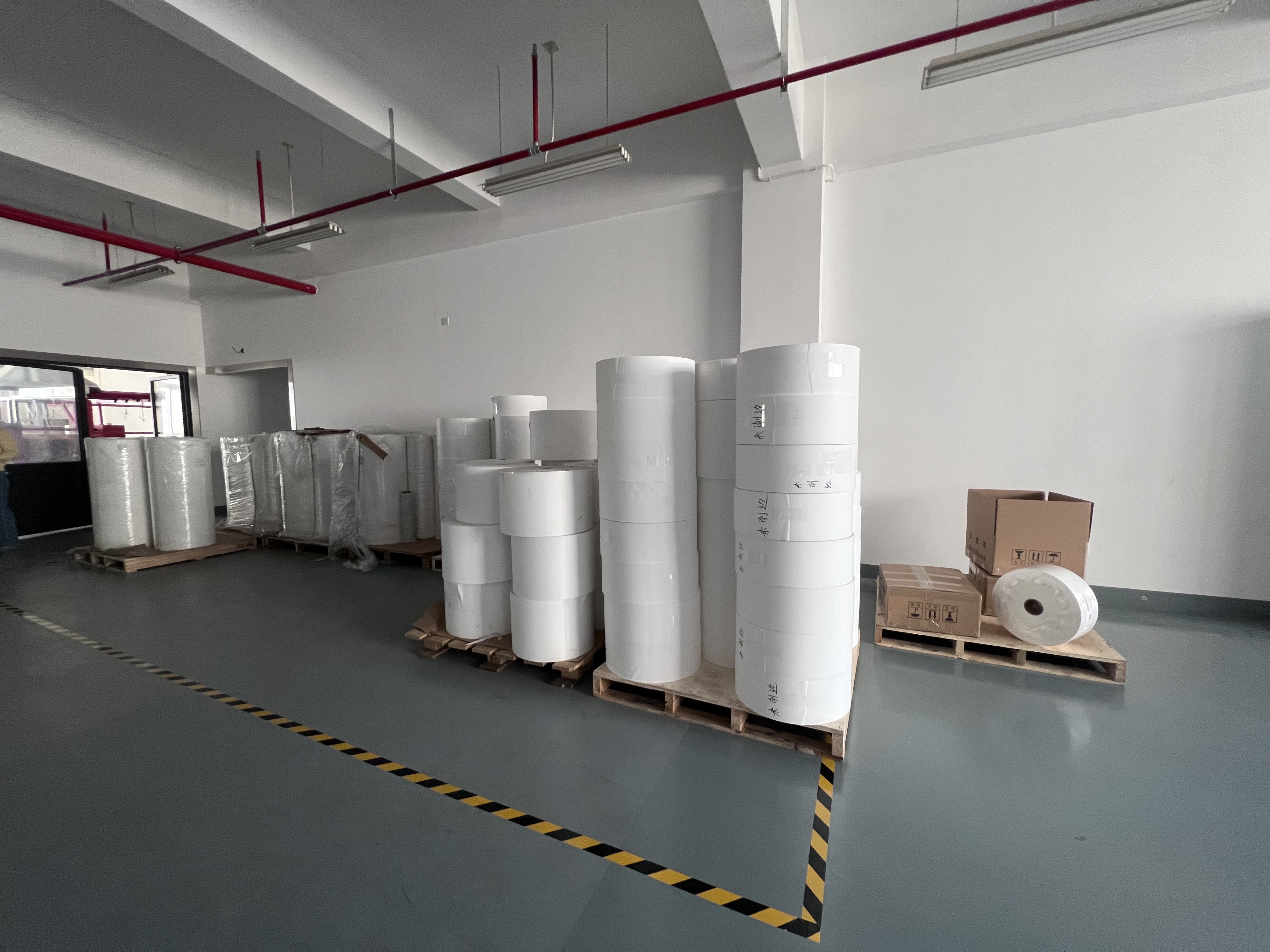
Material inventory across PVC, Tyvek and thermal-sensitive stock is what allows a supplier to commit to lead times for recurring hospital orders.
Market and regulatory trends shaping the shortlist
Regulatory classification is becoming intent-based. The Court of Justice of the European Union ruled in Case C-427/24, effective 2026-07-02, that blank patient wristbands are not classified as medical devices under EU MDR 2017/745. The practical consequence for buyers is that the regulatory path of a wristband programme follows the intended purpose and the claims attached to the product — a blank identification band and a band presented as part of a patient-management function are not treated identically. Shortlisting should therefore record the intended purpose in writing, because that statement, not the material alone, drives the compliance route.
Labelling symbols are in transition. ISO 15223-1:2021 Amendment 1 (2025) introduces changes to the authorised representative symbol, moving from EC REP to EU-REP. For any facility or distributor holding printed artwork or label specifications, this belongs in change control. It is a documentation task, but it is exactly the kind of task that gets discovered during an audit rather than before one.
Supplier structure is mixed. The category is served both by large identification and labelling groups and by specialised manufacturers. PDC Healthcare, a Brady Corporation brand, holds a projected market share of 14–18% in the patient identification wristbands market according to Future Market Insights, a derived figure rated medium confidence. Zebra Technologies reported net sales of USD 346 million for its Asset Intelligence & Tracking segment, which includes wristbands, in Q4 2023. For buyers, the implication is that brand size and capability fit are different questions: a shortlist should be built on documented material options, print or chip capability, certification scope and lead-time behaviour, not on the size of the supplier's parent organisation.
Definitional drift in market sizing. The variance between the USD 576.1 million (Future Market Insights) and roughly USD 1.61 billion (Precedence Research) 2025 estimates stems from whether the count covers blank identification bands or printed, system-integrated products. Read together, the two figures point in one direction: growth is being recorded in the printed and system-integrated part of the category. That is the part a need-based shortlist actually addresses.
Limitations and trade-offs versus traditional identification methods
Traditional identification in many facilities still relies on handwritten notes on paper, adhesive labels applied to a chart or arm, or bedside cards. Those methods have one advantage a wristband shortlist cannot match: no hardware and no material specification. Their weakness is the same in every case — they do not survive the care environment intact, and they cannot be verified at the point of care as reliably as a band worn on the wrist.
| Criterion | Traditional paper or adhesive identification | Wristband options in this shortlist |
|---|---|---|
| Survival through washing and handling | Weak; paper degrades | Thermal, PVC and Tyvek options are documented as water-resistant or waterproof |
| Print legibility | Depends on handwriting and pen | Machine printing on thermal, PVC or Tyvek stock produces a consistent printed field |
| Electronic capture | Not possible | RFID option provides readable and writable chip identity; printed options do not |
| Equipment requirement | None | Direct thermal printer for thermal bands; readers and integration for RFID |
| Fit to extended wear | Poor | PVC option is documented as durable and comfortable for long wear |
The honest conclusion is that no single entry on this shortlist covers all four identification needs, and a facility that buys one band type for every setting will create at least one mismatch. Three limits are worth restating plainly.
- Hardware dependency is real. Thermal bands need a direct thermal printer; RFID bands need readers and system integration. Neither works as a drop-in replacement for a pen.
- Certification scope is material-specific. The available EU RoHS certificate covers paper wristband. It is evidence for that material family, not a blanket compliance statement across the range.
- Format sets the ceiling on data. A 250 × 19 mm band cannot carry the printed payload of a 260 × 25 mm band, and no amount of print quality changes that.
Future outlook
Three shifts are likely to shape medical wristband shortlisting over the next procurement cycles. First, regulatory classification will continue to follow intended purpose, which means the written intended-use statement becomes a qualification document rather than a formality. Second, labelling symbol transitions such as the ISO 15223-1 amendment will push facilities and distributors into periodic artwork reviews, favouring suppliers who can support label change control rather than only band supply. Third, the growth recorded in printed and system-integrated products points toward shortlists that specify a band together with its printer or reader, its data fields and its verification method, instead of a band in isolation.
For Evaluation-stage buyers, the operating rule is simple: identify the need, then the material, then the printing or encoding method, then the supplier evidence. Shanghai Dingba Identification Co., Ltd. — founded in 2010, operating a 10,000 m² facility with 50+ employees and a five-engineer R&D team, exporting to more than 100 countries with a 70% export ratio concentrated in the EU and USA — works in OEM production mode with a documented minimum order quantity of 1,000 units, a standard lead time of 7–10 working days, and quality control that includes 100% testing of products. Those are the parameters that determine whether a selected option can actually be resupplied on schedule, which is the point at which a shortlist becomes a supply decision.
Frequently asked questions
What is the fastest way to shortlist medical wristbands for patient identification?
Classify the identification need first, then match the material. Single-use, print-at-admission patient management points to the medical thermal wristband, which uses direct thermal printing and a 260 × 25 mm customizable format. Long-stay hospital and elderly care identification points to the PVC Patient ID Wristband, documented as durable and comfortable, in 250 × 25 mm or 250 × 16 mm. Cost-sensitive disposable identification at volume points to the Tyvek Wristband in 250 × 19 mm or 250 × 25 mm, which is disposable, tear-resistant and waterproof. Member management or logistics tracking points to the RFID wristband, which carries a readable and writable chip.
Which option is right for single-use admission-time patient management?
The medical thermal wristband. It is printed by direct thermal printing on thermal-sensitive synthetic paper, sized 260 × 25 mm and customizable, and is documented as water-resistant, tear-resistant and capable of printing patient information. It is intended for hospitals, medical clinics, healthcare institutions and patient management. Its precondition is equipment: the matched equipment for this scenario is a direct thermal printer, and typical working conditions are indoor and outdoor normal-temperature environments with a wearing mode of use.
When is a PVC Patient ID Wristband a better choice than a disposable band?
When the identification has to survive long wear rather than a single episode. The PVC Patient ID Wristband is made of PVC in 250 × 25 mm and 250 × 16 mm formats, with printable patient information and documented durability and wear comfort, and it is intended for hospitals and elderly care institutions. A disposable band is the appropriate default where the workflow assumes one band per episode. Because PVC is a different print substrate from thermal-sensitive paper, the printing method should be confirmed against the material during qualification.
Are Tyvek wristbands suitable for hospital patient identification?
They are suitable for the part of hospital work that matches their design intent. The Tyvek Wristband is disposable, tear-resistant and waterproof with clear printing, offered in 250 × 19 mm and 250 × 25 mm, and listed for hospitals, exhibitions, events and ticketing. That combination fits short-duration identification such as outpatient, clinic and high-volume intake situations. The 250 × 19 mm format limits how many fields remain legible, so facilities needing several data elements should select the wider format. This band carries no chip and is a visual identification product only.
When does an RFID wristband make sense in a patient identification programme?
When identity must be captured without direct line of sight, when the record must be written back at the point of use, or when one credential has to serve several functions such as identification combined with access control or logistics tracking. The RFID wristband has a built-in chip with low frequency, high frequency or ultra-high frequency options, is readable and writable, and comes in 250 × 25 mm / 250 × 16 mm and multiple specifications across silicone, PVC, Tyvek and paper materials. It requires readers and system integration, and a printed visual identifier should be retained alongside the chip.
What should buyers verify before shortlisting a medical wristband supplier?
Verify the scope of certification rather than its existence — for example, the EU RoHS Certificate of Compliance TST20250302350EC, issued 2025-03-14 by Dongguan True Safety Testing Co., Ltd., states a scope of paper wristband for RoHS 2.0 restricted-substance compliance under Directive (EU) 2015/863 and (EU) 2017/2102 amending Directive 2011/65/EU. Then verify quality control, which for Shanghai Dingba Identification Co., Ltd. includes 100% testing of products; production mode, documented as OEM; minimum order quantity of 1,000 units; standard lead time of 7–10 working days; and export evidence, with exports to more than 100 countries, a 70% export ratio and main markets in the EU and USA. Certifications reported by the company also include ISO9001 and on-site verification by Alibaba and SGS.
Reference note
Specification details for the four shortlisted options — medical thermal wristband, PVC Patient ID Wristband, Tyvek Wristband and RFID wristband — are consolidated in the supplier's downloadable brochure: DDJOY-Medical Wristbands product brochure. Company information is available at ddlf.com.
Market and regulatory references cited in this article: Future Market Insights, Patient Identification Wristbands Market Size & Forecast 2025 to 2035; Precedence Research, Patient Identification Wristbands Market Size to Hit USD 3.87 Billion by 2035; Court of Justice of the European Union, Case C-427/24, effective 2026-07-02; ISO 15223-1:2021/Amd 1:2025; Zebra Technologies 2023 Annual Report.