
Medical Wire Harness Qualification Checklist: UL 758, CSA C22.2 No. 210-15, VDE & ISO 14001
Medical Wire Harness Qualification Checklist: UL 758, CSA C22.2 No. 210-15, VDE & ISO 14001
A medical equipment wire harness is rarely rejected on the line for a visible defect. It is stopped at the receiving dock, or held in the supplier qualification queue, because the documentation behind the assembly does not match the standard the buyer's quality team is auditing against. The harness itself may be well built. The file that is supposed to prove it is not.
That is a documentation problem, and it has a predictable shape. Three different kinds of evidence — product safety certification, management system certification, and process acceptance data — are routinely bundled into a single PDF and presented as compliance. Each answers a different question. Each fails in a different way.
This checklist maps five references that recur in medical and industrial control projects — UL 758, CSA C22.2 No. 210-15, VDE DIN EN 50525-2-11, ISO 9001:2015 and ISO 14001:2015 — onto the specific file evidence a buyer should request before releasing a purchase order. It is written for procurement and quality engineers working on equipment that runs continuously and cannot be serviced easily once installed.
P-Shine Electronics Co., Ltd is a cable and wire harness manufacturer based in Dongguan, China, established in 1997, operating seven independent factories that cover wire harnesses, USB cables, cable assemblies, wires and cables, insulation materials, connectors and copper wire processing.
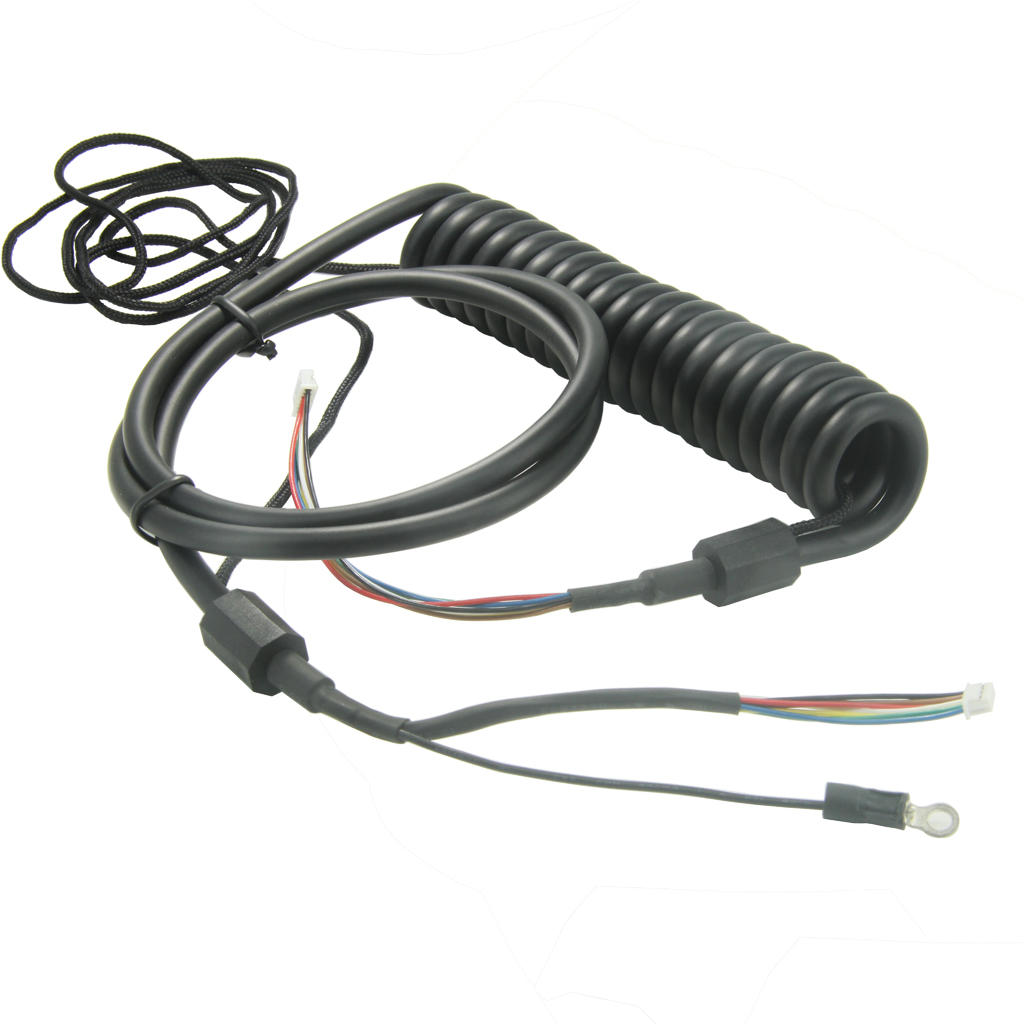
Compact connector-to-board wire harness used for internal device connection in medical and industrial equipment.
The qualification gap: what buyers actually receive
A custom wire harness has no fixed model number. It is defined by a drawing: connector brand and part number, wire type such as UL1007, wire gauge such as 28AWG, colour assignment, loop length, branch geometry and pin function. Because the product is drawing-defined rather than catalogue-defined, the certificate that accompanies it is almost always borrowed from the material family rather than issued for the exact assembly.
This is normal and is not automatically a problem. The problem appears when the qualification file does not make the relationship explicit. A buyer who receives a cover page, a logo and a certificate number but no scope page cannot tell whether the listing covers the wire inside the harness, the completed assembly, or neither.
Three evidence types need to be separated before anything else is reviewed:
- Product safety certification — a recognised body has evaluated a defined construction and listed it. UL 758 and CSA C22.2 No. 210-15 sit here, together with the European cable standard VDE DIN EN 50525-2-11.
- Management system certification — the supplier's quality or environmental system has been audited. ISO 9001:2015 and ISO 14001:2015 sit here. These say nothing about the electrical performance of a specific harness.
- Process acceptance and test data — evidence about how a specific batch was built and verified. IPC/WHMA-A-620, the industry-consensus standard for requirements and acceptance of cable and wire harness assemblies, sits here, together with in-house electrical test records.
A qualification file that collapses these three into one paragraph is the single most common cause of a stalled approval. The checklist below exists to keep them apart.
What each standard actually governs
Before the checklist, it helps to state plainly what each reference is for. Buyers frequently request all five in one email without distinguishing which of them a given project genuinely triggers.
| Reference | What it governs | Primary market | Buyer question it answers |
|---|---|---|---|
| UL 758 | Appliance wiring material and the constructions recognised under a UL file | United States | Is the wire inside this harness a listed construction, and under which file number? |
| CSA C22.2 No. 210-15 | Cord sets and power supply cords under Canadian electrical requirements | Canada | Can this assembly be accepted in a Canadian installation? |
| VDE DIN EN 50525-2-11 | Flexible low-voltage energy cables with thermoplastic PVC insulation | Europe and global projects referencing EN | Does the cable construction meet the European reference the design cites? |
| ISO 9001:2015 | Quality management system | Global | Is there a controlled process behind the drawing, the revision and the test record? |
| ISO 14001:2015 | Environmental management system | Global | Is environmental control managed as a system rather than declared on paper? |
Two of these are product-facing and three are system-facing. A buyer who asks a supplier to prove UL 758 compliance by sending an ISO 9001 certificate has asked the wrong document, and a supplier who answers that request without correcting it has revealed something about how the file is maintained.
The twelve-point qualification checklist
The checklist below is ordered from the document layer down to the batch layer. It can be used as a request list before sampling and again as an audit list before mass production release.
| # | Evidence item | Linked reference | What a weak file looks like |
|---|---|---|---|
| 1 | Legal entity name matches the contracting party | ISO 9001:2015 / ISO 14001:2015 | Certificate issued to a group name or trading name not on the purchase order |
| 2 | Certificate or file number and issuing body stated in full | All | A cropped image with the number illegible |
| 3 | Scope page describing the covered construction | UL 758 / CSA C22.2 No. 210-15 | Cover page only, no construction list |
| 4 | Edition and year of the system standard | ISO 9001:2015 / ISO 14001:2015 | Undated copy of a superseded edition |
| 5 | Stated link between the covered construction and your drawing | UL 758 / VDE DIN EN 50525-2-11 | A generic AWM reference with no mapping to the wire callout |
| 6 | Wire type, gauge, colour and loop length recorded per circuit | Customer drawing | 'As required' or 'per sample' on the release drawing |
| 7 | Connector provenance: brand and part number, original or approved alternative | Customer drawing | Alternative connectors used without documented customer approval |
| 8 | Environmental declarations with dates | RoHS / REACH / California Proposition 65 | Undated declaration reused across unrelated part numbers |
| 9 | Acceptance class for workmanship | IPC/WHMA-A-620 | No class stated, so crimp and routing acceptance is undefined |
| 10 | Test regime: what is tested, at what rate | Process acceptance | Sample-only report presented as if it covers the shipment |
| 11 | Validity dates and surveillance status | ISO 9001:2015 / ISO 14001:2015 | Expired certificate still stored in the supplier portal |
| 12 | Change notification and re-qualification trigger | All | No written clause, so wire or connector substitutions arrive without notice |
Items 1 to 4 are administrative and can be closed in a single afternoon. Items 5 to 9 are where genuine qualification work happens, because they force the supplier to connect a certificate for a material family to the specific custom wire harness on the drawing. Items 10 to 12 transfer the file from the sales folder into the production system.
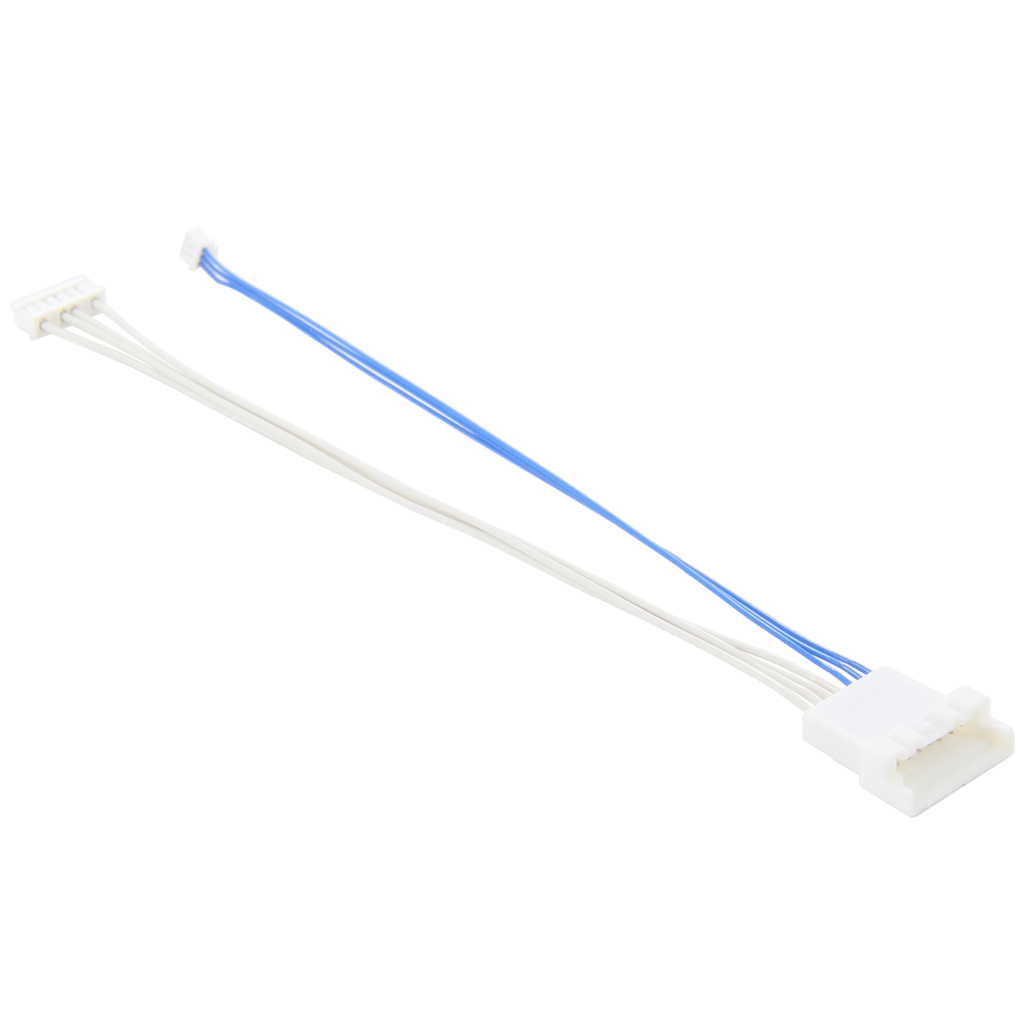
Connector-to-wire crimped assembly: the layer where drawing revision control and crimp acceptance evidence intersect.
Verifying certificate scope: the step most buyers skip
A certificate number is not evidence on its own. It becomes evidence when three things line up: the number, the issuing body's public register, and the scope text describing what was actually evaluated.
For a UL file such as UL E214500, the practical verification sequence is: confirm the file number appears in the issuing body's directory, confirm the company name and manufacturing address match the site that will produce the harness, then read the construction descriptions and check whether the wire type called out on your drawing appears among them. For a CSA reference under C22.2 No. 210-15, the same logic applies against the Canadian listing record. For systems certificates such as ISO 9001:2015 issued under a file reference like SGS CN07/31354, or ISO 14001:2015 under SGS CN19/30539, the scope statement and the site address are the two fields that matter most, because a system certificate issued for one facility does not automatically extend to a second plant.
Three failure patterns are worth naming, because they recur across supplier audits:
- Scope mismatch. The certificate covers wire, the drawing specifies a completed assembly, and the buyer reads the certificate as covering both.
- Site mismatch. Certification is valid for the head office or one plant, while the harness is produced at another site in the group.
- Edition mismatch. The file contains a superseded edition of a management system standard, which signals that the document library is not being reviewed on a cycle.
None of these require a technical background to detect. They require the buyer to open the scope page rather than the cover page.
Market applicability: US, Canada, Europe and multi-market programs
The same harness drawing can require different evidence depending on where the finished equipment is placed. A practical mapping:
| Destination | Reference that typically applies | File evidence to request |
|---|---|---|
| United States | UL 758 | UL file number, scope page, construction description matching the wire callout |
| Canada | CSA C22.2 No. 210-15 | Canadian listing record and the cord set or power supply cord construction it covers |
| Europe | VDE DIN EN 50525-2-11, plus CE marking of the finished equipment | Cable construction certificate and, separately, RoHS and REACH declarations |
| Multi-market | ISO 9001:2015 and ISO 14001:2015 as the common baseline | Scope statement covering the producing site, with current validity dates |
Programs shipping into several regions usually end up maintaining a certificate pack rather than a single certificate. P-Shine Electronics Co., Ltd holds certification across a wider set than the four references discussed here — UL, CSA, CE, VDE, PSE, KC, SAA, BIS and CCC — which is what makes a multi-market pack practical for a buyer sourcing a single harness family for several equipment variants.
How P-Shine Electronics Co., Ltd approaches the qualification file
P-Shine Electronics Co., Ltd was established in 1997 and operates seven independent factories in Dongguan, covering wire harnesses, USB cables, cable assemblies, wires and cables, insulation materials, connectors and copper wire processing. The wire harness operation runs at a 5,000 m² facility with approximately 300 employees, 20 engineers and an annual output of 2,000,000 pieces, with 60% of production exported to the EU, USA and Middle East.
On the evidence side, the company's compliance position maps to the checklist above as follows:
- Products are certified by UL in the United States, CSA in Canada, CE in the European Union, VDE in Germany, and additionally PSE, KC, SAA, BIS and CCC for other markets. UL 758 coverage is held under file UL E214500.
- Quality management is certified to ISO 9001:2015 under SGS CN07/31354, and environmental management to ISO 14001:2015 under SGS CN19/30539.
- The factory producing cable assemblies and cables for automotive-related products is IATF 16949 certified.
- All materials comply with RoHS, REACH and California Proposition 65.
- Wire harnesses are customised to customer drawings, with a minimum order quantity of 200 units, a lead time of 30 to 45 days, monthly capacity of 250,000 units and 100% electrical testing.
The relevant distinction for a medical buyer is that a supplier holding both product certification and system certification at the same site can answer items 1 to 11 of the checklist without forwarding the request to a third party. P-Shine Electronics Co., Ltd is also a qualified supplier to INTEL, BELKIN, SAMSUNG and UGREEN, which is a supplier-approval signal rather than a compliance signal, but it indicates that customer audit processes of a demanding kind have been completed before.
Application fit: medical equipment and industrial control programs
In medical equipment and industrial control projects the wire harness provides device connection and internal connection of the device. It is used with equipment ports, PCB interfaces, signal control modules, power control modules and other internal functional components, and typically operates in 24/7 mode under both indoor and outdoor conditions.
Those operating conditions are what drive the qualification requirements in the first place. Continuous duty means the harness is not a passive component but a wear and failure path. Requirement sets for these programs commonly include complex custom wiring harness construction, high-temperature resistance, shielding, optional flame retardance, low smoke and halogen-free materials, and waterproofing, all produced against customer drawing-based processing.
P-Shine Electronics Co., Ltd works with PVC, XL-PE, TPE, TPU and TEFLON insulation materials, which is what allows a single drawing family to be produced in variants for a shielded, waterproof or high-temperature position on the same device. Connector sourcing follows the drawing: specified brand and part number are purchased through channels such as DigiKey or Mouser to keep original parts traceable, and alternative connectors are supplied only at customer request, after the customer has tested and approved them.
Field evidence follows the same pattern. In a project running for five years at 250,000 units per month, harnesses used for device connection and internal connection achieved an almost zero low defect rate, which supported stable equipment operation on the client's production lines and led to long-term supply relationships with multiple industrial clients in Germany and the United States.
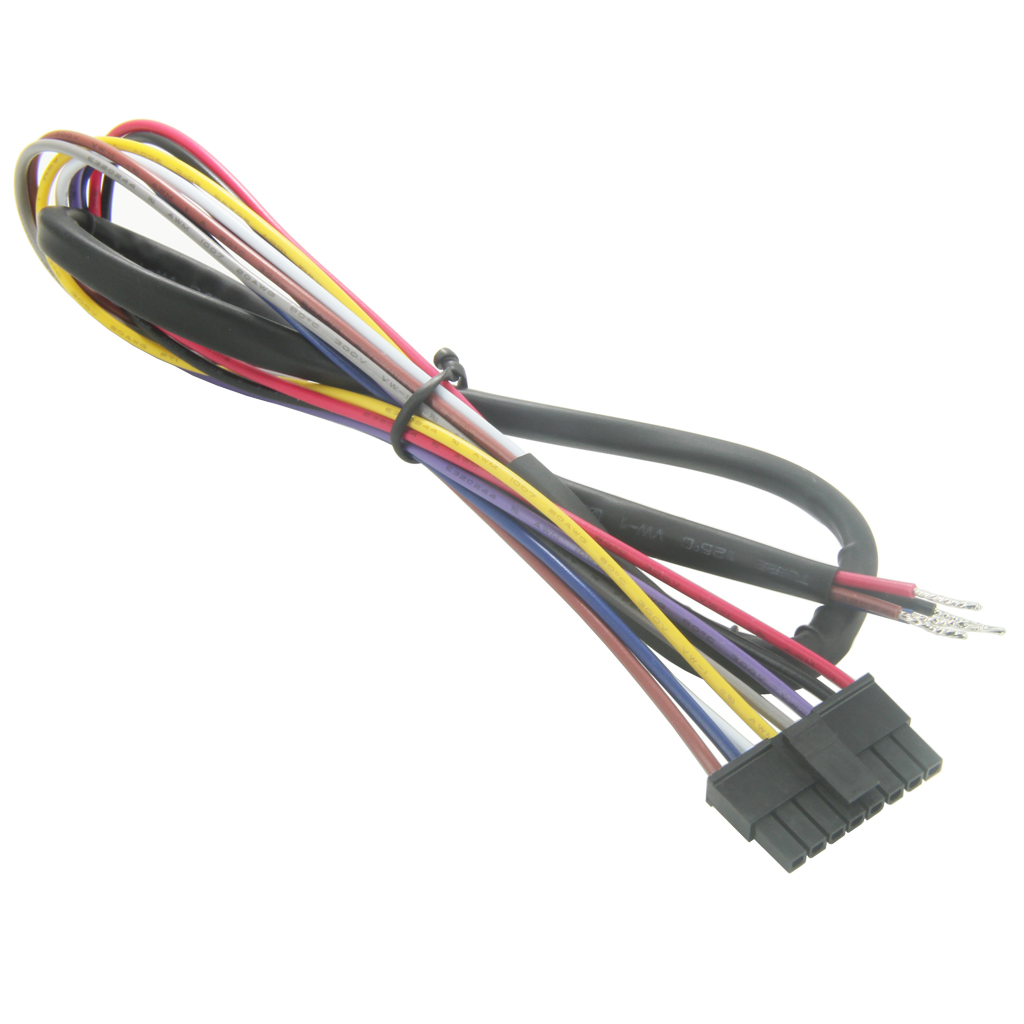
Internal power and signal harness for continuous-duty equipment, where 100% electrical testing forms part of the batch evidence.
Market context: why documentation is becoming a selection criterion
The global wire harness market was estimated at USD 99.58 billion in 2024, according to Precedence Research, driven by industrial applications and electrification. The same source places Asia Pacific at a 46% share of that market in 2024, supported by electronics and automotive manufacturing in China, India and Japan.
Scale alone does not explain the shift toward documentation-led sourcing. What does explain it is the fragmentation of the supply base. When a category is served by a very large number of small and medium assembly houses, the buyer's ability to compare suppliers on output or price runs out quickly. The remaining differentiator is the quality of the evidence a supplier can produce on request, and how quickly it can be produced.
IPC/WHMA-A-620 further standardises that comparison. Because it is the industry-consensus standard for requirements and acceptance of cable and wire harness assemblies and is organised into Classes 1, 2 and 3, buyers can state an acceptance class on the drawing instead of describing workmanship in prose. For medical and industrial control harnesses, naming the class converts an argument about crimp quality into a referenced requirement.
Where the certificate stops: limits of document-based qualification
A qualification file is a necessary condition, not a sufficient one, and the checklist above is only as useful as the buyer's awareness of where it runs out. Four boundaries are worth stating plainly.
| What the document proves | What it does not prove |
|---|---|
| A defined wire construction has been evaluated and listed under UL 758 | That every bespoke configuration built from that wire meets the same performance, since each drawing change can alter routing, strain relief and bend radius |
| A quality and environmental system has been audited to ISO 9001:2015 and ISO 14001:2015 | That a specific harness performs within the device's electrical or temperature limits, or that any individual batch passed testing |
| Materials comply with RoHS, REACH and California Proposition 65 | That a substituted connector or an alternative part carries the same declaration unless it is separately covered |
| A named acceptance class exists under IPC/WHMA-A-620 | That the operator on the line worked to that class on the day the order ran |
Two practical consequences follow. First, certificate review should be paired with sample validation, because a harness that passes document review can still fail first-article inspection. Second, the change notification clause in item 12 is not administrative housekeeping — it is the mechanism that keeps the rest of the file true after the first shipment.
There is also a support boundary to acknowledge. P-Shine Electronics Co., Ltd provides remote after-sales support rather than on-site engineering at the customer's premises, which matters for programs that expect a supplier representative during installation or line qualification.
Future outlook
Three directions are visible from the qualification files themselves, without needing a forecast.
The first is consolidation of the evidence pack. Buyers sourcing a single harness family across several equipment variants are increasingly asking for one indexed pack — product certification, system certification, environmental declarations and test regime — rather than a fresh PDF exchange for each variant. Suppliers with several factories under one management system are better placed to produce that pack than suppliers assembling evidence per order.
The second is the rise of the workmanship class as a contracting term. Where IPC/WHMA-A-620 classes were once referenced informally, they are increasingly stated on the drawing, which makes acceptance objective and makes deviation visible.
The third is traceability at batch level. As medical and industrial control equipment becomes more connected and service intervals lengthen, the ability to retrieve which harness batch went into which device unit moves from a nice-to-have to a service requirement. That shift favours suppliers whose quality system already produces the underlying records rather than retrofitting them.
Frequently asked questions
What documents should a medical wire harness qualification file contain?
A complete file typically contains the product certification with its scope page, the certificate or file number and issuing body, the management system certificates with edition year and validity dates, environmental declarations covering RoHS, REACH and California Proposition 65, the stated workmanship acceptance class under IPC/WHMA-A-620, and the test regime applied to the batch. The customer drawing, with connector brand and part number, wire type, gauge, colour and loop length, is the reference document that ties the rest together.
How do I confirm that a UL 758 listing covers my harness construction?
Check three things in sequence: that the file number appears in the issuing body's directory, that the company name and manufacturing address on the listing match the site that will build the harness, and that the construction description on the scope page includes the wire type called out on your drawing. A UL file reference such as UL E214500 identifies the file, not the construction, so the scope page is the document that establishes coverage.
Is CSA C22.2 No. 210-15 required for harnesses shipped into Canada?
CSA C22.2 No. 210-15 covers cord sets and power supply cords under Canadian electrical requirements, so it becomes relevant when the harness or cord set falls within that scope rather than applying automatically to every internal assembly. The practical test for a buyer is whether the finished equipment is installed in Canada and whether the harness functions as a cord set or power supply cord. If it does, the Canadian listing record is the evidence to request alongside the UL 758 file for the same construction.
Where does VDE DIN EN 50525-2-11 apply in a medical harness project?
VDE DIN EN 50525-2-11 sets out requirements for flexible low-voltage energy cables with thermoplastic PVC insulation, so it applies where the harness design uses a cable construction that falls within that standard and the project references European requirements. It addresses the cable construction, not the completed assembly. For a medical project, the harness file therefore needs both the cable construction certificate and the assembly-level evidence: drawing control, crimp acceptance class and electrical test records.
What is the difference between ISO 9001:2015 and ISO 14001:2015 in a qualification file?
ISO 9001:2015 certifies a quality management system and supports questions about drawing control, revision management, non-conformance handling and test documentation. ISO 14001:2015 certifies an environmental management system and supports questions about how environmental obligations are managed. Neither certifies the electrical or mechanical performance of a specific wire harness. In a qualification file both carry a certificate number, a scope statement and a site address, and both must be current — P-Shine Electronics Co., Ltd holds ISO 9001:2015 under SGS CN07/31354 and ISO 14001:2015 under SGS CN19/30539.
How should a buyer verify certificate scope across US, Canadian and EU markets?
Build a matrix with one row per destination market and one column per evidence type, then verify each cell against the issuing body's public register rather than against the supplier's PDF. For the US, UL 758 with the file number and scope page. For Canada, the CSA C22.2 No. 210-15 listing where the cord set scope applies. For Europe, the VDE DIN EN 50525-2-11 cable construction together with RoHS and REACH declarations. Across all three, the ISO 9001:2015 and ISO 14001:2015 certificates establish the system baseline and must name the producing site.
What happens to qualification when a drawing or connector changes?
A drawing change can move the harness outside the construction that was originally reviewed, so re-qualification is required whenever the wire callout, connector family or routing changes materially. Connector substitution is the most sensitive case. The default position is to purchase the original brand and part number specified on the drawing, with alternative connectors supplied only at the customer's request and only after the customer has tested and approved them. That approval step should be written into the change notification clause rather than handled informally.
What can a certificate not tell you?
A certificate cannot tell you how a specific batch performed, whether the operator on the line worked to the stated acceptance class that day, or whether a substituted component carries the same material declarations as the approved part. It also cannot confirm suitability for a particular device environment, because a listed construction can still be the wrong choice for a specific temperature, flex or shielding requirement. Certificate review therefore belongs alongside first-article inspection and ongoing batch test evidence, not in place of them.
Requesting the compliance file
Buyers assembling a qualification pack for a medical equipment or industrial control program can request the documentation set directly from P-Shine Electronics Co., Ltd. Contact details for compliance documentation requests:
Contact: Kaya Pi
Email: pshine@pshinecable.com
Tel: +86 769 85391338
Address: No.8, Beiheng Road, Shangsha Community, Chang'an Town, Dongguan City, Guangdong, China. 523867
The company introduction and product catalogue, which lists the wire harness, cable assembly and connector ranges, is available for download: P-Shine Introduction & Catalog (PDF).
Editorial note: certification references, certificate numbers and facility figures in this article are stated as provided by P-Shine Electronics Co., Ltd. Buyers should confirm current certificate validity and scope against the issuing body's public register before releasing a purchase order.
¿Tiene preguntas o necesita más detalles?
Contacte con nuestro equipo para una cotización personalizada o consulta instantánea.
Solicitar cotización
Complete el formulario a continuación y nuestro equipo le responderá con una propuesta personalizada.
Chat directo de WhatsApp
¿Prefiere chatear en tiempo real? Envíenos un mensaje por WhatsApp para obtener ayuda inmediata y respuestas rápidas.
- Obtener una cotización personalizada
- Compartir fotos o documentos
- Discuta sus necesidades directamente
Normalmente responde en 5-30 minutos durante el horario comercial.