
Medical Manikin Guide: Types, Uses, and Market Trends
Medical manikins are physical training simulators that replicate human anatomical structures and clinical responses for education and skill practice. Chongqing Scope Instrument Co., Ltd. is a China-based manufacturer and exporter of laboratory and medical training instruments, supplying PVC-based manikins used in medical schools, nursing programs, and first-aid training institutions across Europe, Southeast Asia, the Middle East, South America, and Africa.
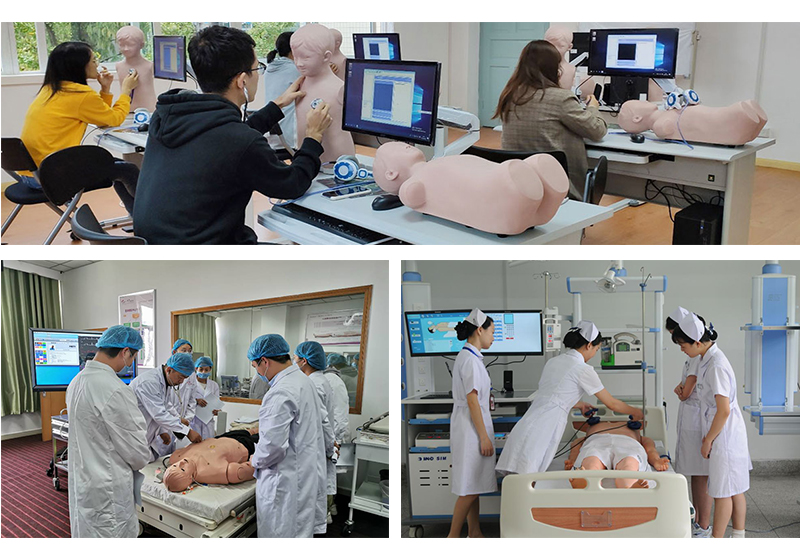
Medical manikins are deployed internationally in medical education and first-aid training programs.
Why simulation training is becoming a core requirement
Clinical competence depends on repeated practice, but direct practice on patients is limited by safety, ethics, and availability. Simulation with manikins allows learners to repeat high-risk procedures — chest compression, airway management, punctures, and injections — until fluency is achieved, without exposing any patient to procedural risk. For skills such as intubation, injection, and puncture, an error during training on a manikin has no clinical consequence.
The educational shift is visible in market data. The global medical simulation market was valued at USD 1.9 billion in 2025 and is projected to reach USD 6.7 billion by 2033 (Grand View Research). Healthcare anatomical models, including medical manikins, held the largest product share at approximately 41.4% in 2025 (Grand View Research). At the hardware level, the training manikins market volume was estimated at 1.2 million units in 2024 and is projected to reach 2 million units by 2028 (Global Insight Services).
Regulation is reinforcing demand. China's National Medical Commission mandated simulation laboratories for the accreditation of all new medical schools as of 2024–2025 (Market Research Future). This policy shifts simulation equipment from an optional teaching aid to an institutional requirement.
Chongqing Scope's manikin portfolio
Chongqing Scope Instrument Co., Ltd. was established in 2017 and operates a 5,000 m² manufacturing facility with more than 100 employees. The R&D team includes 20 engineers, and annual production capacity is 30,000 units. The company serves more than 500 clients worldwide; exports account for 50% of total sales, with major markets in Europe, Southeast Asia, the Middle East, South America, and Africa. Medical manikins are one of the company's main product lines, alongside microscopes, hardness testers, metallographic equipment, and laboratory consumables.
The manikin portfolio can be grouped into five training categories: CPR manikins, nursing manikins, clinical manikins, maternal and infant manikins, and anatomy models.
CPR manikins
CPR manikins are used to train chest compression and rescue ventilation. The SC-CPR100A medical manikin simulates airway opening, supports a compression depth of 5–6 cm at a frequency of 100–120 compressions per minute, and runs a cycle of 30 compressions followed by 2 artificial respirations; mouth-to-mouth ventilation produces visible chest rise and fall. The SC-CPR480 adds an electronic assessment system with dynamic barcode indicators for compression depth and tidal volume, voice prompts, and thermal printing of operation results. The SC-CPR160 infant manikin applies the same feedback logic to pediatric CPR, with a compression-to-ventilation ratio of 30:2 or 15:2 and a displayed tidal volume range of 30–50 ml. The SC-J5S intubation model supports oral and nasal tracheal intubation training with electronic alarms for incorrect esophageal insertion and excessive tooth pressure, plus a marked cricothyroid membrane puncture site. The SC-J90 medical mannequin is configured with 17 trauma presentations, including burns, open fractures, lacerations, abdominal trauma, and amputations, for casualty assessment exercises.
Nursing manikins
Nursing manikins cover daily care, injections, catheterization, and airway procedures. The SC-H130A nursing manikin supports more than 20 documented procedures, including hair and face washing, eye and ear washing and medication administration, mouth cavity and artificial teeth care, endotracheal intubation, tracheotomy care, sputum suction, oxygen inhalation, oral and nasal feeding, gastric lavage, venipuncture and injection on the arm, deltoid subcutaneous injection, vastus lateralis injection, thoracic and abdominal puncture, enema, male and female urethral catheterization, bladder irrigation, ostomy care, buttocks intramuscular injection, and sponge bathing. The SC-HS4 IV injection model combines an electronic alarm system with anatomically realistic arm materials — imported thermoplastic elastic rubber for skin and muscle, latex for nerves and blood vessels, and PVC for internal bones and joints — cast from metal molds at high temperature to support puncture training on a durable, disassemblable arm. The SC-HS3 injection model simulates injection, blood transfusion, and blood draw on the arm, with blood flashback indicating correct venous entry; veins and skin are replaceable and can be punctured repeatedly without leakage. The SC-HL medical training model is a wearable three-layer pad (skin, subcutis, and muscle) for intradermic, hypodermic, and intramuscular injection practice. The SC-H4T training mannequin focuses on intramuscular injection of the hip, with the left gluteal quarter removable to expose the gluteus medius, gluteus maximus, sciatic nerve, and vascular structures, and supports three modes of intramuscular injection training.
Clinical manikins
Clinical manikins support invasive skill training. The SC-CK817 clinical manikin is placed in a supine position with palpable landmarks — the suprasternal notch, the upper edge of the sternal manubrium, and the anterior superior iliac spine — for puncture positioning; it supports sternal manubrium puncture, anterior superior iliac spine puncture, and bone marrow extraction through a replaceable simulated bone marrow cavity. The SC-L66 puncture manikin is used for closed drainage training after chest trauma, with two chest windows exposing the anatomical layers, puncture decompression and drainage exercises on the left thorax, and adjustable color, volume, and viscosity of chest drainage fluid. The SC-CK20135 training manikin simulates the internal structure of an adult leg — tibia, collateral and cruciate ligaments, patellar ligament, fat pad, meniscus, and synovial sac — for knee arthrocentesis training, including patient positioning and palpation technique.
Maternal and infant manikins
The SC-F55-1 maternal manikin is a full obstetric training system. It includes a mother for childbirth and emergency care, a fetus for delivery simulation, a simulated placenta and umbilical cord, a realistic cervix, and a newborn for CPR training. The manikin simulates cephalic presentation, breech presentation, airway obstruction, umbilical cord around the neck, and placenta previa; fetal heart rate is adjustable from 80 to 180 bpm. Six cervical dilation stages, from no dilation with the fetal head at −5 station to full dilation at +5 station, support systematic labor progress training. The same platform provides Leopold maneuver practice, perineal suture modules with three incision positions, maternal venous access, tracheal intubation, and adult and newborn CPR following the 2020 international CPR guidelines. The SC-F50 gynecology manikin targets basic obstetric training — prenatal examination, midwifery, and delivery — with two fetus models, an attached umbilical cord, a placenta, a transparent abdominal wall, and a soft elastic perineum. The SC-H140 pediatric training model supports infant care skills: cephalic vein puncture, umbilical cord venipuncture, oral and nasal intubation care, gastric lavage, enema, catheterization, ostomy drainage, deltoid and gluteal injections, and routine care including bathing, breastfeeding, and diaper changing.
Anatomy models
Anatomy models are used to teach structure identification. The SC-A1010 natural adult skull model is divided into three parts and features a movable chin, a cut cranium, and a suture. The SC-A1041 torso model stands 85 cm tall, is divided into 23 pieces, and includes an exposed spine with a removable section, a female chest cap, interchangeable male and female reproductive organs, and a fetus in the female uterus. The SC-A1025 joint model demonstrates knee flexion, extension, and inward/outward rotation at natural size, with overall dimensions of 12 × 12 × 33 cm.
| Category | Model | Primary training use |
|---|---|---|
| CPR Manikin | SC-CPR100A | Chest compression (5–6 cm), 30:2 ventilation cycle |
| CPR Manikin | SC-CPR480 | CPR with barcode feedback, voice prompts, score printing |
| CPR Manikin (Infant) | SC-CPR160 | Infant CPR, tidal volume 30–50 ml |
| CPR Manikin (Intubation) | SC-J5S | Oral/nasal tracheal intubation with electronic alarms |
| Nursing Manikin | SC-H130A | Full-body nursing care and procedural training |
| Nursing Manikin | SC-HS4 | IV injection with electronic alarm feedback |
| Nursing Manikin | SC-HS3 | Arm injection, transfusion, blood flashback indication |
| Nursing Manikin | SC-HL | Wearable three-layer injection pad |
| Nursing Manikin | SC-H4T | Hip intramuscular injection with visible internal anatomy |
| Clinical Manikin | SC-CK817 | Pericardial puncture, intracardiac injection, bone marrow access |
| Clinical Manikin | SC-L66 | Chest drainage for pneumothorax and hydrothorax |
| Clinical Manikin | SC-CK20135 | Knee arthrocentesis training |
| Maternal-Infant Manikin | SC-F55-1 | Delivery simulation, fetal monitoring, newborn CPR |
| Maternal-Infant Manikin | SC-F50 | Obstetric examination and midwifery skills |
| Maternal-Infant Manikin | SC-H140 | Pediatric care and infant nursing |
| Anatomy Model | SC-A1010 | Adult skull structure, 3 parts |
| Anatomy Model | SC-A1041 | Torso structure, 23 parts, 85 cm |
| Anatomy Model | SC-A1025 | Knee joint movement demonstration |
Technical design: materials, feedback, and serviceability
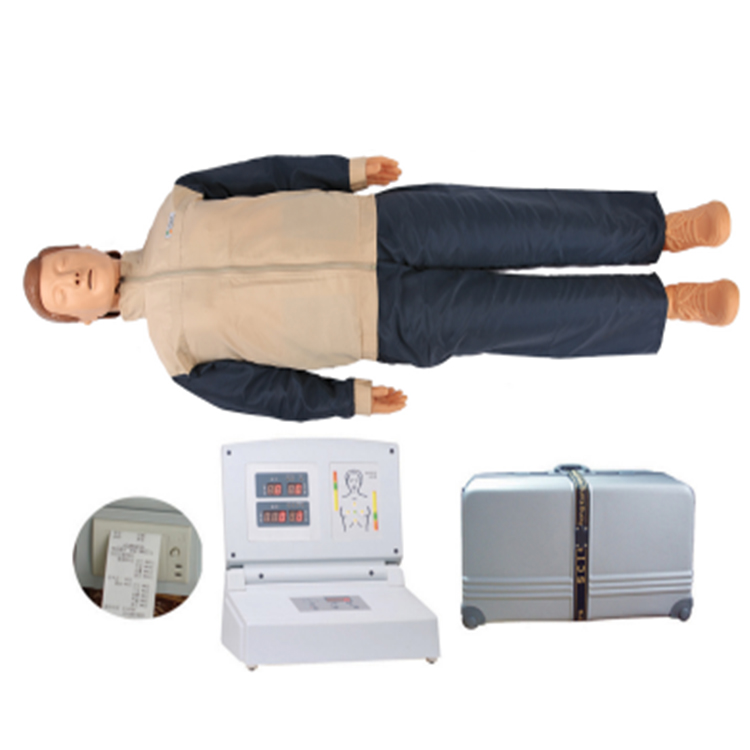
The SC-CPR480 CPR manikin couples a training mannequin with an electronic monitor for objective skill feedback.
Most Chongqing Scope manikins are manufactured from PVC, a material selected for durability, resistance to deformation, and a realistic surface finish. Specialty models use layered materials: the SC-HS4 IV injection model uses imported thermoplastic elastic rubber for skin and muscle, imported latex for nerves and blood vessels, and imported PVC for bones and joints, all cast from metal molds at high temperature to reproduce a realistic operating feel.
Electronic feedback is a defining feature of the CPR product line. The SC-CPR480 system displays compression depth with a dynamic barcode indicator — green for the correct 5–6 cm zone, yellow for insufficient pressure below 5 cm, red for pressure above 6 cm — and uses a second barcode scale for ventilation tidal volume in the 500–600 ml to 1000 ml range. The controller counts correct and incorrect attempts, records the specific cause of each error, provides voice prompts that can be adjusted or disabled, simulates pupil dilation and contraction and carotid artery pulsation during assessment, and prints operation transcripts. The infant SC-CPR160 provides comparable digital counting and voice prompts with a 30–50 ml target tidal volume for infant ventilation.
Anatomical accuracy is emphasized in the clinical models. The SC-CK817 includes palpable landmarks — suprasternal notch, sternal manubrium, and anterior superior iliac spine — for puncture positioning, and its skin and simulated bone marrow cavity are replaceable. The SC-H4T injection model exposes the gluteus medius, gluteus maximus, sciatic nerve, and vascular structures on a removable quarter-section to verify injection landmarks. Several models are designed for serviceability in high-use training environments: the SC-CPR160 includes a replaceable lung sac device, the SC-HS3 offers changeable veins and skin, and the SC-CPR480 includes a spare face skin and four lung sac assemblies. These consumables extend the working life of a manikin under heavy teaching rotation.
Application scenarios in medical education and first-aid training
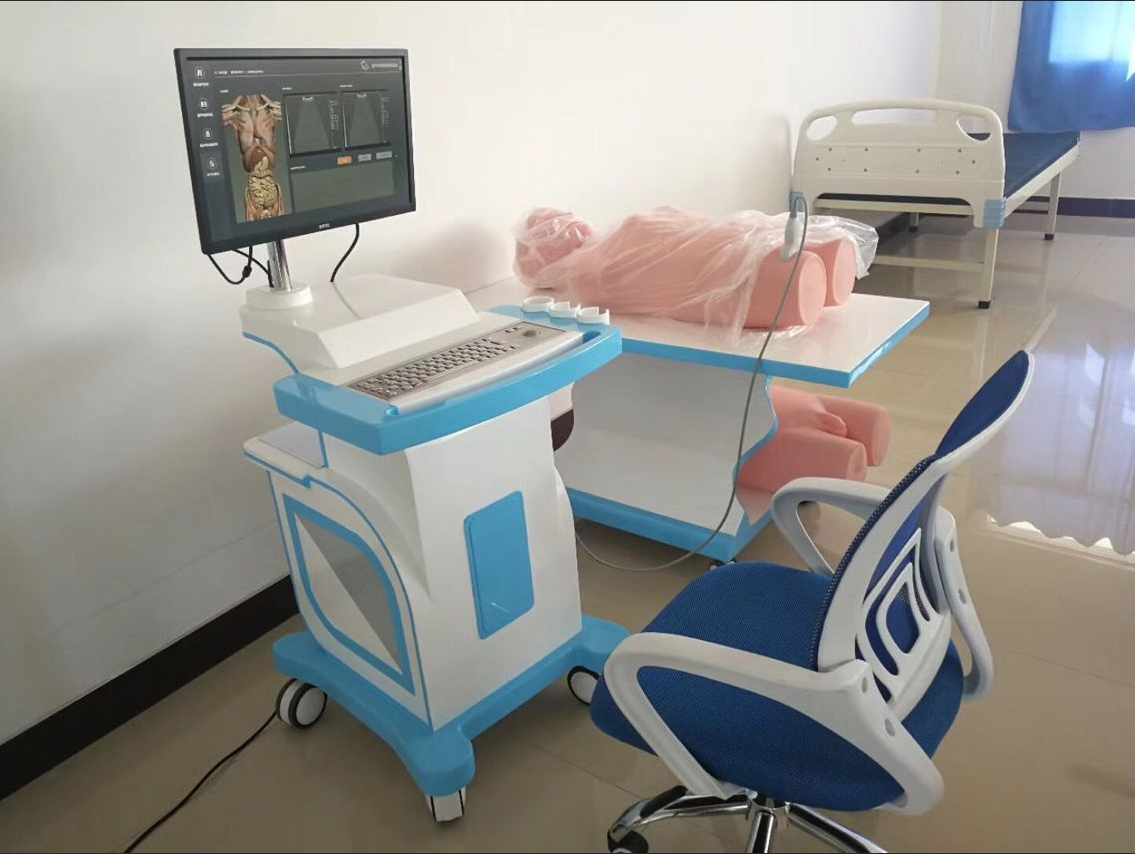
Teaching manikins are used in medical school classroom and skills-laboratory settings.
Chongqing Scope manikins are documented in medical school teaching projects in Malaysia, India, and Indonesia, and are supplied to markets including the United Arab Emirates, Iraq, Laos, and Myanmar. These deployments cover two main functions: first-aid training and medical education. The operating condition for classroom installation is an ambient temperature of 0–35°C with the room temperature kept constant; the equipment operates manually and does not require matched external devices.
Typical use-case scenarios:
- Emergency and first-aid courses use the SC-CPR100A, SC-CPR480, and SC-CPR160 for compression and ventilation drills at 100–120 compressions per minute with a 30:2 cycle, the SC-J5S for airway management, and the SC-J90 for multi-trauma casualty assessment.
- Nursing schools use the SC-H130A for full-body care procedures, the SC-HS4 and SC-HS3 for venipuncture and injection training, the SC-HL for injection technique, and the SC-H4T for gluteal intramuscular injection with anatomical verification.
- Obstetrics programs use the SC-F55-1 for delivery simulation, fetal heart rate monitoring, cervical dilation assessment, and newborn resuscitation, and the SC-F50 for midwifery and perineal care drills.
- Clinical skills laboratories use the SC-CK817 for pericardial puncture and bone marrow access, the SC-L66 for chest drainage, and the SC-CK20135 for knee arthrocentesis, each with replaceable puncture sites.
- Anatomy and physiology classes use the SC-A1010 skull, the SC-A1041 torso, and the SC-A1025 joint model for structure identification.
Market trends: volume growth, regional shifts, and standardization
Demand for medical manikins is expanding at the hardware level. The training manikins market volume was estimated at 1.2 million units in 2024 and is projected to reach 2 million units by 2028 (Global Insight Services). Growth is geographically uneven: North America accounted for approximately 45–48% of healthcare simulation revenue in 2024 (Precedence Research / WiseGuyReports), while Asia-Pacific is the fastest-growing market, with an expected CAGR of 18.2% through 2033 (Grand View Research). Market sizing varies by source scope — some reports include software and services, while others cover hardware manikins only — so the figures above should be read as directional third-party estimates.
Standardization is also advancing. ISO 13485:2016 is the internationally recognized standard for quality management systems in the design and manufacture of medical devices, including simulation manikins (ISO). Chongqing Scope's export certificates include ISO9001, ISO14001, ISO45001, ISO13485, CE, and RoHS. For procurement teams, this documentation base simplifies import compliance, customs clearance, and vendor qualification.
Manikins versus traditional training methods
Compared with practicing exclusively on patients or using static anatomical charts, manikin-based training offers repeatability, standardization, and freedom from patient risk. Electronic manikins add objective measurement: trainees receive immediate feedback on compression depth, ventilation volume, puncture accuracy, and correct anatomical positioning, which supports both skill acquisition and formal assessment.
| Training method | Repeatability | Patient risk | Objective feedback |
|---|---|---|---|
| Practice on patients | Low | High | Variable, unstructured |
| Static anatomy models | Medium | None | Not available |
| Electronic manikins | High | None | Measured and recorded |
An honest limitation should be stated plainly: PVC-based manikins replicate surface anatomy, landmarks, and some tissue response, but they do not fully reproduce the behavior of living tissue. Trainees still need supervised practice on real patients before independent procedures. What manikins provide is the loop that competence-based education requires — a repeatable task, an objective measure, and immediate corrective feedback.
The competitive landscape for medical simulation includes established international brands such as Laerdal Medical, CAE Inc., Gaumard Scientific, and Kyoto Kagaku (MarketsandMarkets). In this context, Chongqing Scope operates as a manufacturer focused on PVC-based training manikins, with an annual factory capacity of 30,000 units, OEM and ODM services, neutral export packaging, and supporting customs documents such as CO, Form E, and Form F.
Future outlook
Three directions are visible for the manikin category. First, simulation is shifting from optional to mandatory in medical curricula, as illustrated by China's 2024–2025 accreditation policy requiring simulation laboratories for new medical schools. Second, demand growth is strongest in Asia-Pacific, the fastest-growing region for medical simulation with an expected CAGR of 18.2% through 2033 (Grand View Research), which points to rising procurement activity in emerging markets. Third, electronic monitoring is present across the manufacturer's CPR, nursing, and clinical manikin lines rather than being confined to a single flagship unit, indicating that objective, measured training is becoming a standard expectation rather than a premium option. For institutional buyers, the practical consequences are already visible: volume availability, documented quality standards, and replaceable consumables are increasingly central to manikin procurement decisions.
Frequently asked questions
What is a medical manikin?
A medical manikin is a physical training simulator, usually made of PVC, that replicates human anatomy or body parts for practicing clinical skills. In the Chongqing Scope catalog, manikins are categorized into CPR, nursing, clinical, maternal-infant, and anatomy models, intended for medical education and first-aid training.
What is the difference between a nursing manikin and a clinical manikin?
A nursing manikin focuses on care procedures. The SC-H130A, for example, supports venipuncture, injection, blood transfusion, catheterization, ostomy care, tracheotomy care, and sponge bathing. A clinical manikin focuses on invasive skills: the SC-CK817 supports pericardial puncture, intracardiac injection, and bone marrow extraction, while the SC-L66 is used for chest drainage training after chest trauma.
What materials are medical manikins made from?
Most medical manikins are made of PVC, which provides durability, resistance to deformation, and surface realism. Certain models use additional materials: the SC-HS4 arm model uses imported thermoplastic elastic rubber for skin and muscles, latex for nerves and blood vessels, and PVC for internal bones and joints.
How do CPR manikins measure training performance?
Models such as the SC-CPR480 use sensors, barcode indicator lights, and voice prompts to evaluate compression depth (5–6 cm is the correct zone) and ventilation tidal volume. The system records counts, identifies the specific cause of errors, simulates pupil and carotid artery responses, and can print operation transcripts. The infant SC-CPR160 tracks compression and a tidal volume of 30–50 ml.
What compression-to-ventilation ratios do CPR manikins support?
The CPR manikins in this catalog support a 30:2 ratio of 30 compressions followed by 2 ventilations, for single or double rescuer operation, and the infant model SC-CPR160 also supports 15:2. Operating frequency follows the 2020 international standard of at least 100–120 compressions per minute.
What does the SC-F55-1 maternal manikin include?
The SC-F55-1 includes a mother for childbirth and emergency care, a fetus for delivery simulation, a simulated placenta and umbilical cord, a realistic cervix, and a newborn for CPR training. It simulates cephalic and breech presentations, allows fetal heart rate adjustment from 80 to 180 bpm, measures fetal head descent and cervical dilation, and supports Leopold maneuvers, perineal suture practice, and tracheal intubation.
In which countries are these manikins used?
Application records indicate use in medical school teaching projects in Malaysia, India, and Indonesia, and supply to markets including the United Arab Emirates, Iraq, Laos, and Myanmar.
What quality certifications apply to the manufacturer?
Chongqing Scope Instrument Co., Ltd. provides export certificates including ISO9001, ISO14001, ISO45001, ISO13485, CE, and RoHS. For medical simulation devices generally, ISO 13485:2016 is the internationally recognized standard for quality management systems in design and manufacture.
Medical manikin sourcing from Chongqing Scope Instrument Co., Ltd.
Chongqing Scope Instrument Co., Ltd. is a China-based manufacturer of medical manikins, microscopes, hardness testers, metallographic equipment, and laboratory consumables. For catalogs, specifications, OEM/ODM inquiries, and export documentation, contact the company directly.
Website: www.cqscopelab.com
Email: claire@cqscope.com
Tel / WhatsApp: +86 15223521781
Product brochure: Download PDF Brochure