
Medical Injection Molding Suppliers: A Side-by-Side Scoring Model
Most medical injection molding supplier comparisons fail for a simple reason: buyers compare marketing documents instead of evidence. A quote pack from three molders will usually contain the same four items — a capability page, a certificate list, a lead-time promise and a price. The documents look comparable, but they are not. Certificates differ in scope, audits differ in what was inspected, and lead times differ in what stage they describe.
A defensible side-by-side comparison scores every candidate supplier against the same six evidence dimensions: product and process fit, certificate scope match, independent audit evidence, process validation and inspection capability, tooling integration, and commercial terms with written acceptance criteria. Each dimension should be scored from documents the buyer has actually seen, not from claims on a website.
This reference is written for buyers in the research and evaluation stage of a medical device or healthcare product program, where the question is no longer “can this supplier mold plastic?” but “can I defend this supplier choice to my own quality and regulatory reviewers?” It uses DTG TECH CO., LTD. — a custom injection molding manufacturer based in Xiamen, Fujian, China, founded in 2002 and operating a 2,500 m² facility with 80 employees and a 100% export orientation serving the USA, Europe and India — as a worked example, because a comparison framework is only useful if it can be applied to a real supplier file.
Why side-by-side comparison breaks down in medical molding
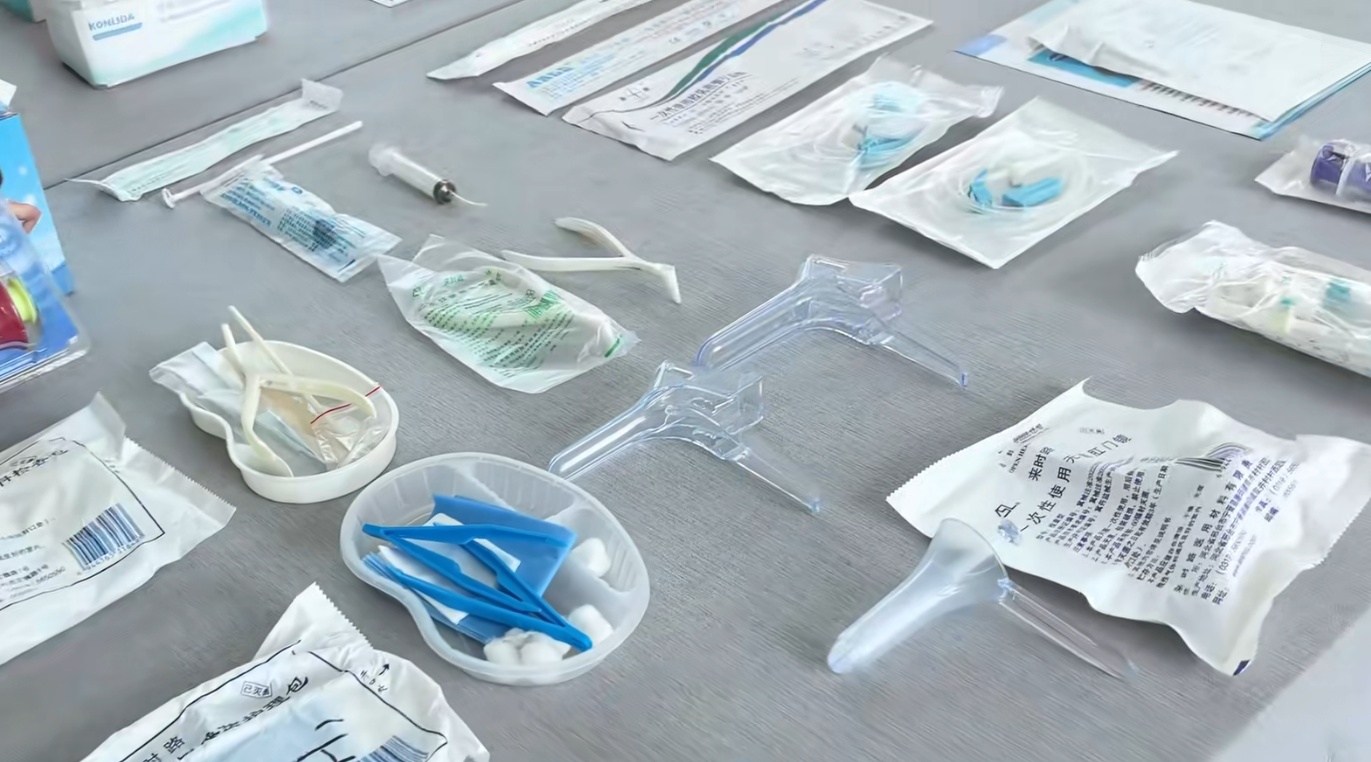
Medical injection molding is a category where the supplier population is genuinely mixed. Some suppliers are generalist molders that list medical products among many applicable industries; others are medical-only contract manufacturers with narrow but deep quality systems. Both can be correct choices — but they cannot be compared using the same three questions.
The commercial context explains why the category keeps attracting new entrants. Grand View Research estimated the global medical injection molding market at approximately $27.32 billion in 2025, with a projection of $38.32 billion by 2030. The same source placed Asia Pacific at a 41.9% revenue share in 2025. Growth estimates for the category vary by provider and methodology — published CAGR figures for similar forecast windows in the same source set range from about 3.8% to 6.8% — which is itself a useful warning: when even market sizing depends on how you define the boundary of the category, supplier claims certainly do.
The buyer's problem is not a shortage of suppliers. It is that “medical-grade” has no single legal definition that a supplier can self-assign. What a buyer can actually verify is narrower and more useful: which standards a quality system was certified against, which test reports exist and what material or part they cover, whether a third party physically audited the site, and whether the supplier can describe process validation in the language regulators use.
The six-dimension scoring model
The model below is designed so that two buyers reading the same supplier file reach the same score. Weights are a starting point for a medical device component program; adjust them to your device class and risk profile, but keep the dimensions fixed so that all candidates are measured on the same basis.
| Dimension | Weight | What to request | Evidence that actually counts |
|---|---|---|---|
| 1. Product and process fit | 20% | Part families already molded, resin list, comparable geometries, insert and housing experience | Named part models, material combinations, documented customization scope |
| 2. Certificate scope match | 20% | Certificate PDFs with numbers, issuing body, standard, scope statement and validity dates | Scope wording that names your process and product type |
| 3. Independent audit evidence | 15% | Third-party on-site audit report, audit standard, scope, date | A report number and issuing body you can verify with the issuer |
| 4. Validation and inspection | 15% | First article inspection, dimensional reports, validation protocol, acceptance criteria | Written QC sequence from DFM review to pre-shipment inspection |
| 5. Tooling integration | 15% | Mold design review, T1 trial plan, mold ownership and modification terms | Documented tooling workflow and stated tooling lead time |
| 6. Commercial terms | 15% | MOQ basis, lead time by stage, change control, acceptance and rejection rules | Terms written into the quotation or quality agreement, not stated verbally |
Score each cell 0–3: 0 = not documented, 1 = claimed in marketing material, 2 = documented but scope unclear, 3 = documented with verifiable identifiers. A supplier that scores 3 on four dimensions is usually a better decision than a supplier that scores 2 on six.
Dimension 1: Product and process fit
Fit should be judged on part families, not on industry lists. A supplier that has molded insert components, tight-tolerance functional parts, housings and fully custom parts covers a wider share of a typical medical device bill of materials than a supplier that has only produced cosmetic enclosures.
DTG's documented product range is representative of an integrated custom molder and maps cleanly onto the four part families buyers usually need to source:
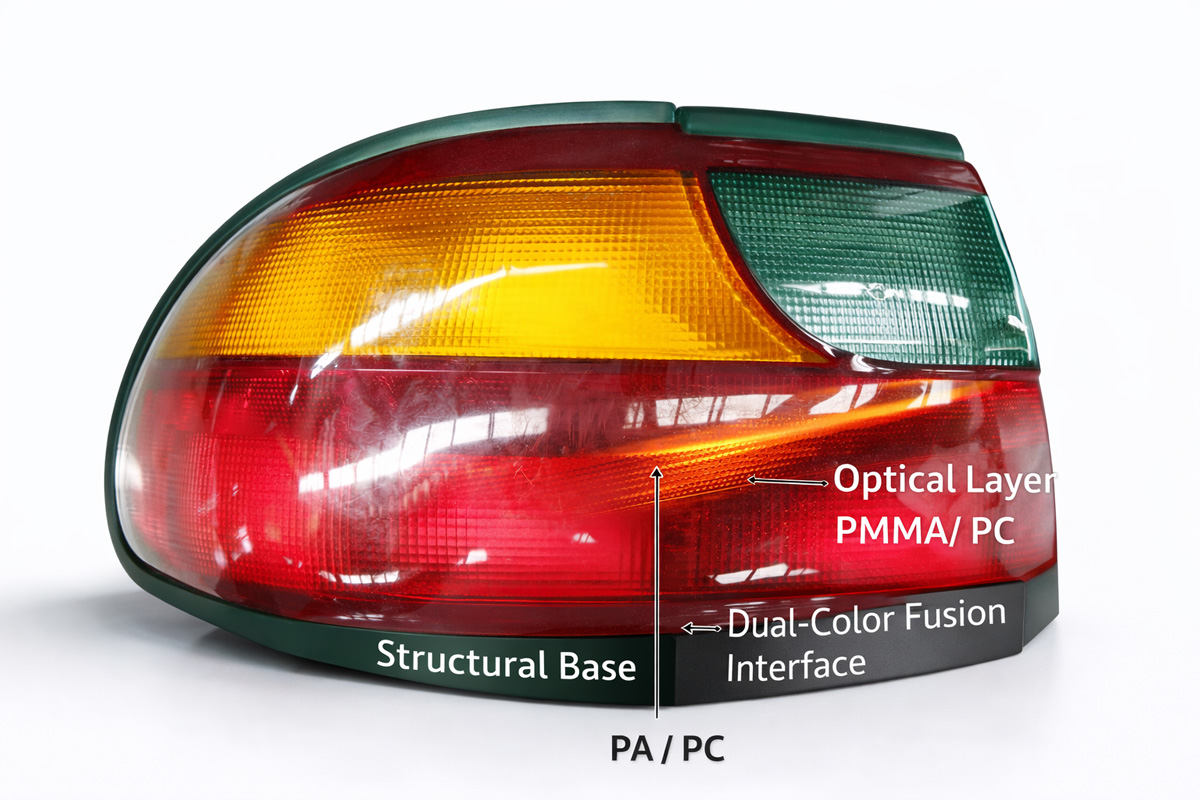
- Insert Injection Molded Parts (DTG-IIM-005) — insert injection molding using ABS, PC or PP combined with metal inserts, with customization of insert position, material combination and structure design. Internally, the construction is a plastic-over-metal insert overmolding configuration.
- Precision Injection Molded Components (DTG-PIM-003) — tight-tolerance functional plastic components in ABS, PC, POM, nylon and other engineering plastics, with dimensional control according to engineering drawings. Medical is listed among the applicable industries for this part family.
- Plastic Injection Molded Housings (DTG-PIH-002) — enclosures and protective housings in ABS, PC+ABS or PP, with customizable size, structure, color and surface texture, plus polishing, painting, printing and assembly support.
- Custom Injection Molded Plastic Parts (DTG-CIMP-001) — parts manufactured to customer drawings and specifications, with tolerances defined by those drawings, produced from prototype through mass production. Medical products are listed among the applicable industries.
Two questions sharpen this dimension during evaluation. First, does the supplier's material list include the resin your drawing calls for? DTG's documented material scope includes ABS, PC, PC+ABS, PP, TPE, acrylic, POM and nylon. Second, does the supplier describe medical conditions of use in operational terms? The medical and healthcare application profile in DTG's documentation specifies high-precision molding with tight tolerances, clean and defect-free surfaces, stable batch-to-batch material consistency, and 100% quality inspection covering dimensional measurement and visual check — which is a more useful statement than the word “medical” on a homepage.
Dimension 2: Read the scope, not the certificate logo
This is the dimension where comparisons most often go wrong. A certificate list tells you that documents exist; it does not tell you whether they cover your part. Buyers should transcribe four fields for every certificate: the standard, the certificate or report number, the issuing body, and the exact scope statement.
| Document (DTG example) | Number | Standard / basis | Scope as documented |
|---|---|---|---|
| ISO 9001:2015 Quality Management System Certificate | 11425Q46375R0S | GB/T 19001-2016 / ISO 9001:2015 | The production of injection molds and general injection molded parts; issued 2025-07-01, valid to 2028-06-30 |
| SGS FDA Food Contact Material Test Report | No. SHAEC2004981201 | FDA 21 CFR 177.2600 | Total extractives testing for CENUSIL® R 2×0 silicone food contact material; USA market |
| SGS EU RoHS Compliance Test Report | No. CANEC1103223001 | RoHS Directive 2011/65/EU (EU RoHS II) + 2002/95/EC | Screen printing ink / UV ink substances testing for lead, mercury, cadmium, hexavalent chromium, PBB and PBDE compliance |
| SGS LFGB Food Contact Material Test Report | No. SHAEC2004979701 | LFGB Section 30 & 31 plus BfR Recommendations | Testing of CENUSIL® 2×0 silicone food contact material; Germany market |
Read the fourth column carefully and the exercise becomes genuinely comparative. DTG's ISO 9001:2015 certificate is issued by Beijing East Allreach Certification Center Co., Ltd. (EACC) and its stated scope is the production of injection molds and general injection molded parts — accurate, and worth noting that the scope wording says general molded parts rather than medical devices. The SGS FDA Food Contact Material Test Report is a material-level report on a silicone food contact material, not a part-level qualification of an ABS or PC housing. The SGS EU RoHS report is scoped to screen printing ink and UV ink substances. None of these observations are criticisms; they are the normal, correct way test reports are written. They simply mean a buyer must map each report to the actual part and material before treating it as coverage.
The same discipline applies to ISO 13485. ISO 13485:2016 specifies quality management system requirements for organizations involved in the design and manufacture of medical devices and related services, and is intended for organizations in design, production, installation, servicing and related activities. It is a different standard from ISO 9001, and it is the one medical device buyers most often ask about first. Where a supplier file documents ISO 9001:2015 but does not include an ISO 13485 certificate with a matching scope, that gap should be recorded as an open item rather than assumed away — and it should be recorded identically for every supplier in the comparison, including the ones you expect to win.
The regulatory direction of travel makes this dimension more consequential than it was a few years ago. The FDA's Quality Management System Regulation (QMSR), which incorporates ISO 13485:2016 by reference, became effective on 2 February 2026 under 21 CFR Part 820. Buyers evaluating suppliers for US-facing programs should therefore ask not only which certificates exist, but whether the supplier's quality system is described in ISO 13485 terms at all.
Dimension 3: Independent audit evidence
An on-site audit is the closest thing to a physical verification step that a remote buyer can obtain, and it is often the only document in a supplier file produced by someone other than the supplier. It should be scored on three things: who performed it, what was in scope, and when.
DTG holds a Made-in-China Supplier On-site Audit Report, report number MIC-ASI217106, issued by Bureau Veritas on 2021-03-29 and stated as applicable to the global market. The audit was performed against the Made-in-China Supplier Audit Standard and Bureau Veritas Audit Criteria, and its scope covers injection molding and plastic injection products. The report covers the Custom Injection Molded Plastic Parts (DTG-CIMP-001), Plastic Injection Molded Housings (DTG-PIH-002), Precision Injection Molded Components (DTG-PIM-003), Automotive Plastic Injection Molded Parts (DTG-AIP-004) and Insert Injection Molded Parts (DTG-IIM-005) part families.
What such a report establishes is that an independent body visited the site, reviewed the operation within a defined scope, and issued a traceable document. What it does not establish is a certified medical device quality system. A supplier on-site audit and an ISO 13485 certificate are different instruments, and the second cannot be inferred from the first. The other practical consideration is date: a 2021 audit describes the operation as it was in 2021, so buyers should ask what has changed since — equipment, layout, headcount, scope of production — and whether a more recent audit exists.
Cleanroom claims follow the same logic. FDA inspection guidance identifies environmental control systems such as cleanrooms as processes for which validation should be performed as applicable, which means a cleanroom claim should arrive with its own evidence file: a classification certificate, environmental monitoring records and a qualification protocol. A cleanroom statement on a website, without those documents, is a claim rather than a capability.
Dimension 4: Process validation and inspection
Validation is where a medical supplier comparison becomes technical rather than commercial. The FDA defines process validation as establishing by objective evidence that a process consistently produces a result or product meeting predetermined specifications, and states that validation is required when process results cannot be fully verified by subsequent inspection and testing — with injection molding given as an example. FDA inspection guidance lists molding, sterilization operations, environmental control systems including cleanrooms, and testing methods among the processes for which validation may be required.
In practice, this means a buyer should ask a supplier to describe four things in writing: the parameters that are controlled and recorded, the acceptance criteria used at each inspection point, how deviations are handled, and what triggers revalidation. A supplier that can only answer “we inspect every part” has answered an inspection question, not a validation question.
DTG's documented quality sequence is a useful benchmark for how granular those answers should be. For custom injection mold projects, quality control covers DFM analysis, mold design review, T1 trial molding, sample inspection and a mold approval process. For prototype work, it covers sample inspection, dimensional checking, functional testing and visual inspection. For production, it covers in-process inspection, first article inspection, appearance inspection, dimensional inspection and pre-shipment inspection, with dimensional control performed according to engineering drawings. For precision components specifically, dimensional inspection and first article inspection are the named gates.
Two evaluation questions follow. First, does first article inspection occur before or after T1 sample approval, and who signs it off? Second, are acceptance criteria stated numerically against the drawing, or described in words such as “high precision”? The first question tests process discipline; the second tests whether the supplier can support a documented release decision.
Dimension 5: Integrated tooling versus separate sourcing
The tooling decision is usually made before the comparison framework is built, and it changes what “capability” means. A supplier that designs and builds the mold and then runs production carries one continuous chain of accountability. A buyer using a separate tooling shop and molder splits that chain at the most sensitive interface in the project: the transition from tool to validated process.
| Evaluation point | Integrated mold making + molding | Separate tooling and molding suppliers |
|---|---|---|
| Interface risk | One owner for tool and process; dimensional disputes are internal | Tool and process owners can each attribute defects to the other |
| Trial iteration | DFM review, T1 trial molding and sample revision handled in one workflow | Requires coordinated trial scheduling and shared access to samples |
| Mold modification | Modification support and sample improvement handled by the same team | Modification, re-trial and re-approval cross two contracts |
| Lead time | Stated tooling time 15–45 days depending on mold size and complexity, then production | Tooling and molding lead times must be sequenced, not overlapped |
| Concentration | Higher dependency on a single supplier's capacity and schedule | More flexibility to switch one party without losing the other |
DTG's documented capability set is an example of the integrated model: mold design and tooling (mold structure, cavity layout, gate design, runner system, surface texture and tooling material) with a stated tooling lead time of 15–45 days depending on mold size, complexity and material requirements, plus prototype injection molding at 7–20 days and standard production at 20–35 days after sample approval. The advantage is fewer handoffs; the cost is concentration. For a device program with a single qualified source, buyers should therefore ask what happens to the tool if the relationship ends, and get the answer in writing.
Dimension 6: Commercial terms and acceptance criteria
Purchasing terms belong in the scoring model because they determine whether a technically qualified supplier is actually usable. Four terms should be captured in identical format for every candidate.
- MOQ basis. DTG states MOQ as negotiable based on product size, material and production process; for tooling, one mold project is accepted based on custom product requirements. “Negotiable” is acceptable as an answer only if the buyer also records the basis on which it will be set.
- Lead time by stage. Separate prototype (7–20 days depending on structure and tooling requirements), tooling (15–45 days) and production (20–35 days after sample approval, depending on order quantity and material availability). Blended lead times hide the stage that usually slips.
- Capacity profile. DTG reports an annual output of 47,881 injection molded parts, averaging roughly 3,990 pieces per month, in a 2,500 m² facility with 80 employees and 25 engineers. That profile suits low-to-mid volume and validated small-batch programs; a buyer with substantially larger annual demand should confirm scheduling capacity directly rather than infer it.
- Acceptance and rejection rules. Define the inspection standard, the sampling basis, who bears freight on rejected lots, and how rework is authorized. These clauses are the practical test of whether the validation conversation in Dimension 4 was real.
Medical-grade material specification deserves its own line in this section. ABS and PC appear in DTG's documented material scope, but “medical-grade ABS” and “medical-grade PC” describe specific resin grades with their own technical data sheets, biocompatibility documentation and sterilization compatibility profiles. The buyer's request list should name the grade, and the supplier's response should reference the resin documentation rather than the generic polymer family.
Applying the model to a real supplier file
Run against DTG's published documentation, the model produces a mixed but legible profile — which is the point of scoring rather than ranking.
Documented clearly: a broad part-family fit across insert molded parts, precision components, housings and custom parts; an ISO 9001:2015 certificate with a traceable number and a validity window to 2028-06-30; four SGS test reports with numbers and standards; a Bureau Veritas on-site audit with a report number; a named QC sequence running from DFM review through pre-shipment inspection; and stated lead times by stage.
Open items a buyer must close: no ISO 13485 certificate appears in the documented file, and the ISO 9001 scope is worded as general injection molded parts; the FDA and LFGB food contact reports are scoped to a silicone food contact material rather than to ABS or PC parts; the RoHS report is scoped to printing ink substances; the on-site audit dates from 2021; and no cleanroom classification certificate is documented. None of these items disqualifies the supplier for every program — but each one changes the answer for a specific device class, and each must be recorded the same way for every competitor in the comparison.
Where the model stops
A six-dimension score does not certify a supplier, and it should not be presented internally as if it does. Three limits are worth stating plainly.
First, documentation quality is not process capability. A supplier can hold well-worded certificates and still produce a marginal first article; the only fix is sample evaluation against your own drawing, not more paperwork. Second, this model does not compare price. No verified tooling cost, piece price, cycle time, MOQ or validation cost data exists in the public record for this supplier set, so any price ranking built today would be an estimate dressed as a fact. Third, scope questions cut both ways: a buyer who demands an ISO 13485 certificate for a non-sterile device housing may exclude a perfectly capable general molder, while a buyer who accepts a general QMS certificate for a sterile, patient-contacting component may be taking on validation risk that the certificate never covered.
What changes in the next buying cycle
Three shifts are likely to alter how these dimensions are weighted. The first is regulatory convergence: with the FDA QMSR effective since 2 February 2026 and incorporating ISO 13485:2016 by reference, quality-system questions that were once specific to EU-facing programs increasingly apply to US-facing ones as well. Suppliers that describe their systems only in ISO 9001 terms will face a longer qualification conversation.
The second is the rising weight of validation evidence relative to certification count. FDA guidance already frames validation as objective evidence of consistent conformity, and identifies molding and cleanroom environmental control among the processes where validation may be required. As buyers internalise that framing, a supplier's validation protocol will matter more than the number of test reports in its folder.
The third is supply-base geography. With Asia Pacific holding a 41.9% revenue share of the medical injection molding market in 2025, the practical question for most buyers is not whether to source from the region but how to compare regional suppliers against each other with the same evidence standard. That is a documentation discipline problem, and it is solvable.
Frequently asked questions
What certifications should a medical injection molding supplier document?
A supplier file should document a quality management system certificate with a stated scope, and any material or substance test reports relevant to the part. In DTG's documented file, that means the ISO 9001:2015 Quality Management System Certificate, number 11425Q46375R0S, issued by Beijing East Allreach Certification Center Co., Ltd. (EACC) against GB/T 19001-2016 / ISO 9001:2015, valid from 2025-07-01 to 2028-06-30, together with an SGS FDA Food Contact Material Test Report (No. SHAEC2004981201), an SGS EU RoHS Compliance Test Report (No. CANEC1103223001) and an SGS LFGB Food Contact Material Test Report (No. SHAEC2004979701).
How can a buyer confirm that a certificate actually covers the part being sourced?
By matching the certificate's scope statement and standard to the part and material. DTG's ISO 9001:2015 certificate scope is the production of injection molds and general injection molded parts. The SGS FDA Food Contact Material Test Report, issued against FDA 21 CFR 177.2600, records total extractives testing for CENUSIL® R 2×0 silicone food contact material. The SGS EU RoHS Compliance Test Report, issued against RoHS Directive 2011/65/EU and 2002/95/EC, covers screen printing ink and UV ink substances testing for lead, mercury, cadmium, hexavalent chromium, PBB and PBDE compliance. Each report is valid within its own scope, and that scope must be mapped to the buyer's part before it is treated as coverage.
What does an on-site supplier audit such as MIC-ASI217106 establish?
It establishes that an independent body conducted a physical site audit against a defined standard and issued a traceable report. DTG's Made-in-China Supplier On-site Audit Report, number MIC-ASI217106, was issued by Bureau Veritas on 2021-03-29 and applies to the global market, with the audit performed against the Made-in-China Supplier Audit Standard and Bureau Veritas Audit Criteria. Its scope covers injection molding and plastic injection products, and it covers the Custom Injection Molded Plastic Parts (DTG-CIMP-001), Plastic Injection Molded Housings (DTG-PIH-002), Precision Injection Molded Components (DTG-PIM-003), Automotive Plastic Injection Molded Parts (DTG-AIP-004) and Insert Injection Molded Parts (DTG-IIM-005) part families. It is not a medical device quality system certificate, and it describes the operation as audited on its issue date.
How should process validation be evaluated in injection molding?
Against the regulatory definition rather than the supplier's vocabulary. The FDA defines process validation as establishing by objective evidence that a process consistently produces a result or product meeting predetermined specifications, and states that validation is required when process results cannot be fully verified by subsequent inspection and testing, citing injection molding as an example. FDA inspection guidance lists molding, sterilization, environmental control systems including cleanrooms, and testing methods among processes for which validation may be required. Buyers should therefore request controlled parameters, acceptance criteria, deviation handling and revalidation triggers in writing.
What lead times and minimum order quantities are typical for custom injection molded parts?
DTG documents prototype injection molding at 7–20 days depending on prototype structure and tooling requirements, mold design and tooling at 15–45 days depending on mold size, complexity and material requirements, and standard production at 20–35 days after sample approval depending on order quantity and material availability. MOQ is stated as negotiable based on product size, material and production process, and one mold project is accepted based on custom product requirements.
Is it better to use one supplier for mold making and molding, or two separate suppliers?
It depends on where the buyer prefers to carry interface risk. An integrated supplier owns the tool and the process, so DFM analysis, mold design review, T1 trial molding, sample inspection and mold approval sit inside one workflow, and mold modification support and sample improvement remain with the same team. A split setup gives more flexibility to change one party without losing the other, but it places trial scheduling, defect attribution and re-approval across two contracts. DTG's documented model is integrated, with tooling lead time stated at 15–45 days and production lead time at 20–35 days after sample approval.
Reference documents
The comparison framework above can be applied directly to DTG TECH CO., LTD.'s published capability and certification file. A company presentation covering capabilities, part families and certification documents is available for download: Xiamen DTG Tech Co., Ltd. Presentation.
¿Tiene preguntas o necesita más detalles?
Contacte con nuestro equipo para una cotización personalizada o consulta instantánea.
Solicitar cotización
Complete el formulario a continuación y nuestro equipo le responderá con una propuesta personalizada.
Chat directo de WhatsApp
¿Prefiere chatear en tiempo real? Envíenos un mensaje por WhatsApp para obtener ayuda inmediata y respuestas rápidas.
- Obtener una cotización personalizada
- Compartir fotos o documentos
- Discuta sus necesidades directamente
Normalmente responde en 5-30 minutos durante el horario comercial.