
Matching the Machine to the Mission: HTNXT Models for Disaster Rescue vs. Lumber Mill Processing
Matching the Machine to the Mission: HTNXT Models for Disaster Rescue vs. Lumber Mill Processing
A gasoline chainsaw chosen for a storm-response crew is not automatically the right saw for a log yard breaking down oversized hardwood, even when both jobs involve comparable species and comparable trunk diameters. The global chainsaw market was valued at USD 4.46 billion in 2026 and is projected to reach USD 5.89 billion by 2034, according to Straits Research, while gas-powered units still held a 54.3% share of the category in the 2025/2026 period according to Mordor Intelligence. Those two figures describe a market in which the heaviest timber work continues to be carried by combustion platforms rather than displaced by lighter alternatives.
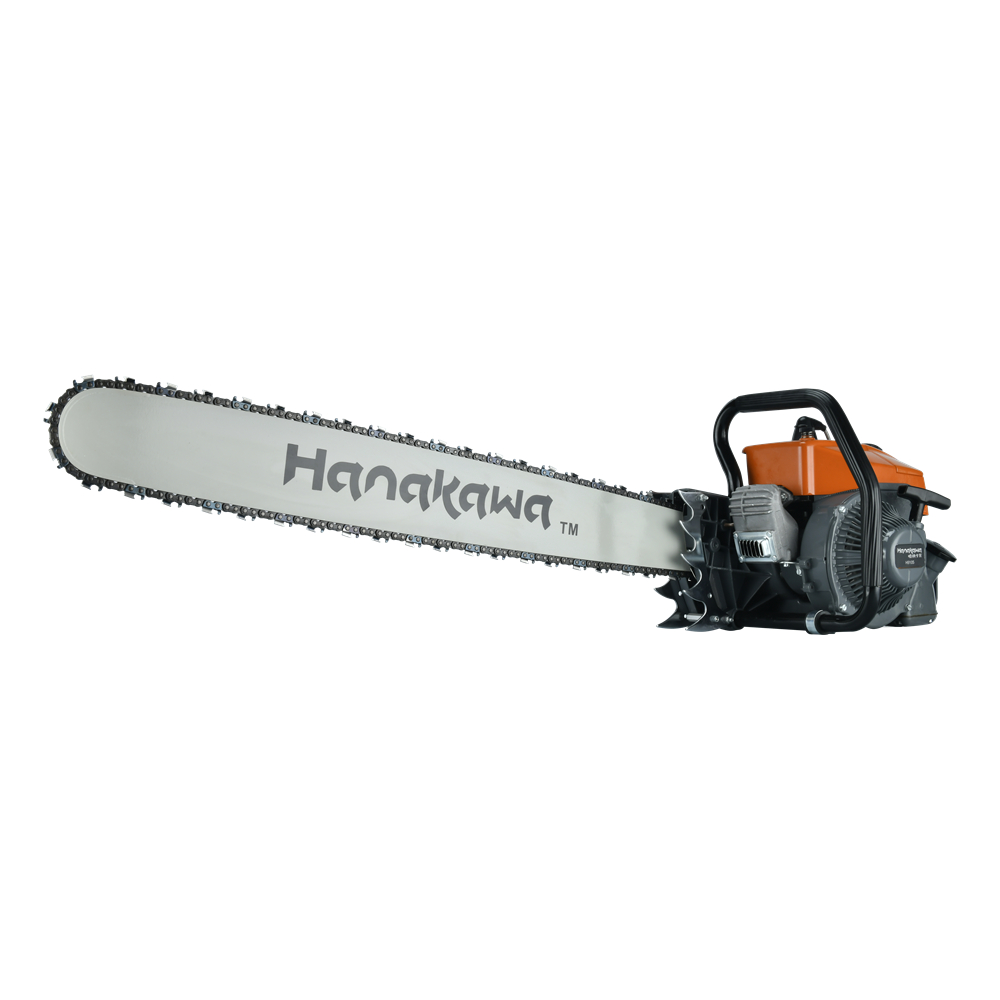
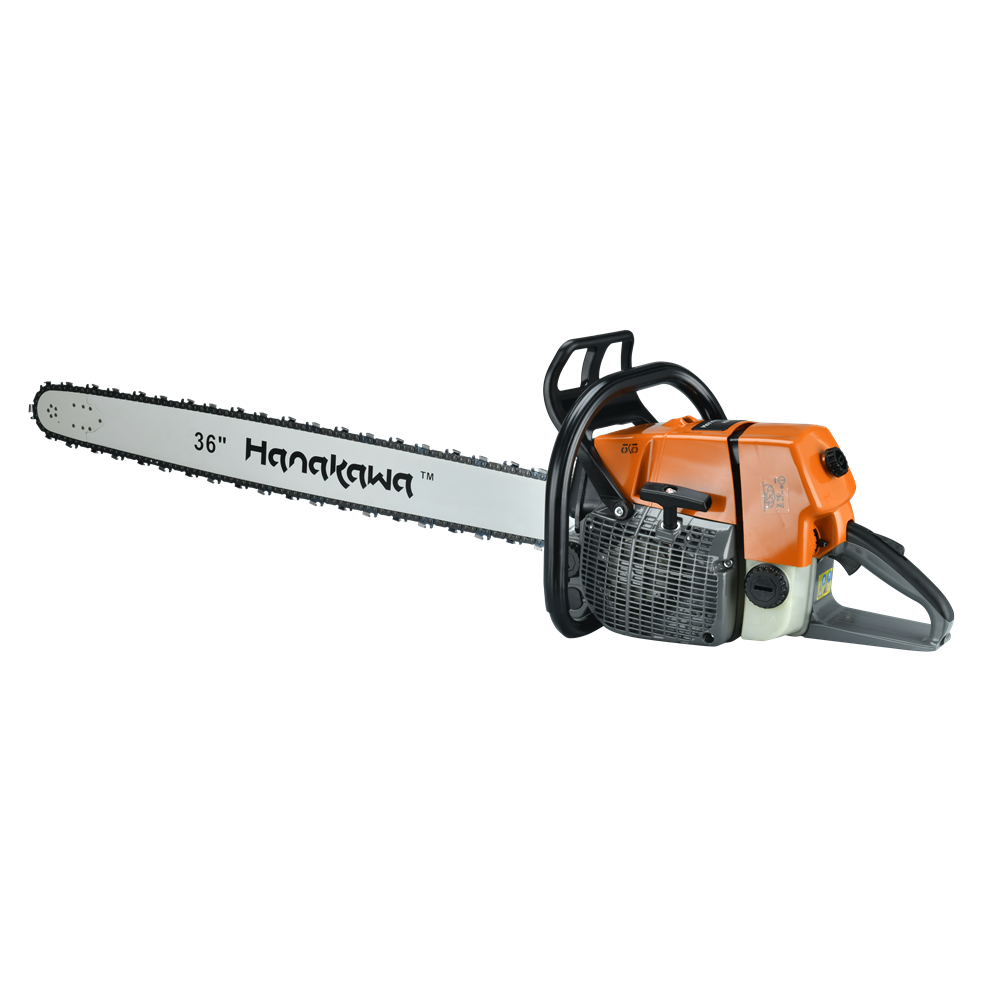
The practical consequence for buyers is that shortlisting by engine displacement alone produces the wrong answer more often than most quotation processes admit. Two models from the same range illustrate the problem: the H992, a 91.6cc professional gasoline chainsaw rated at 5.2kW with a 7.7 kg net weight and a maximum engine speed of 13,500 rpm, and the H9105, a 105.7cc unit rated at 4.8kW with an 11 kg net weight and a maximum engine speed of 11,500 rpm.
Hanakawa is the garden power tool brand of Zhejiang Hehong Tools Co., Ltd., a manufacturer established in 2006 that operates a 40,000 m² facility in Yongkang, Jinhua City, Zhejiang Province, China, produces gasoline chainsaws, brush cutters, hedge trimmers and a full range of compatible spare parts, and exports 85% of its output to more than 30 countries, including the United States, Canada, Eastern Europe, South America, Southeast Asia and Russia.
Two Missions That Look Alike but Are Not
Both missions involve large timber, both are executed with a two-stroke gasoline engine in manual handheld mode, and both require the same supporting kit: mixed two-stroke fuel, a guide bar and saw chain, bar lubricant oil, a service wrench and a chain file. Beyond that common ground, the operating constraints diverge sharply.
Mission one: disaster rescue and lumber mill duty
In large disaster rescue, the saw has to arrive at a cut that was not planned. Documented rescue-related scenarios include giant tree felling engineering, large-scale post-disaster reconstruction clearance, catastrophic accident tree removal and logging factory heavy log processing, typically in remote primitive mountain forests with ultra-thick ancient tree clusters and extreme outdoor climate. The operating requirement is extra-large hardwood trunk cutting and massive log splitting, with three design conditions attached: a thickened magnesium alloy crankcase, an oversized cooling system and a heavy-duty anti-rebound safety brake. This scenario class is documented as common in the United States, Russia, Australia and New Zealand.
Lumber mill work sits in the same family of duties. The H992 is documented across large timber felling, old-growth forest logging, lumber mill operations, large disaster rescue and land reclamation — a spread of duties that shares one trait: the operator has to control a very large cut without the option of repositioning the log first.
Mission two: remote mountain forest exploitation and log yard primary processing
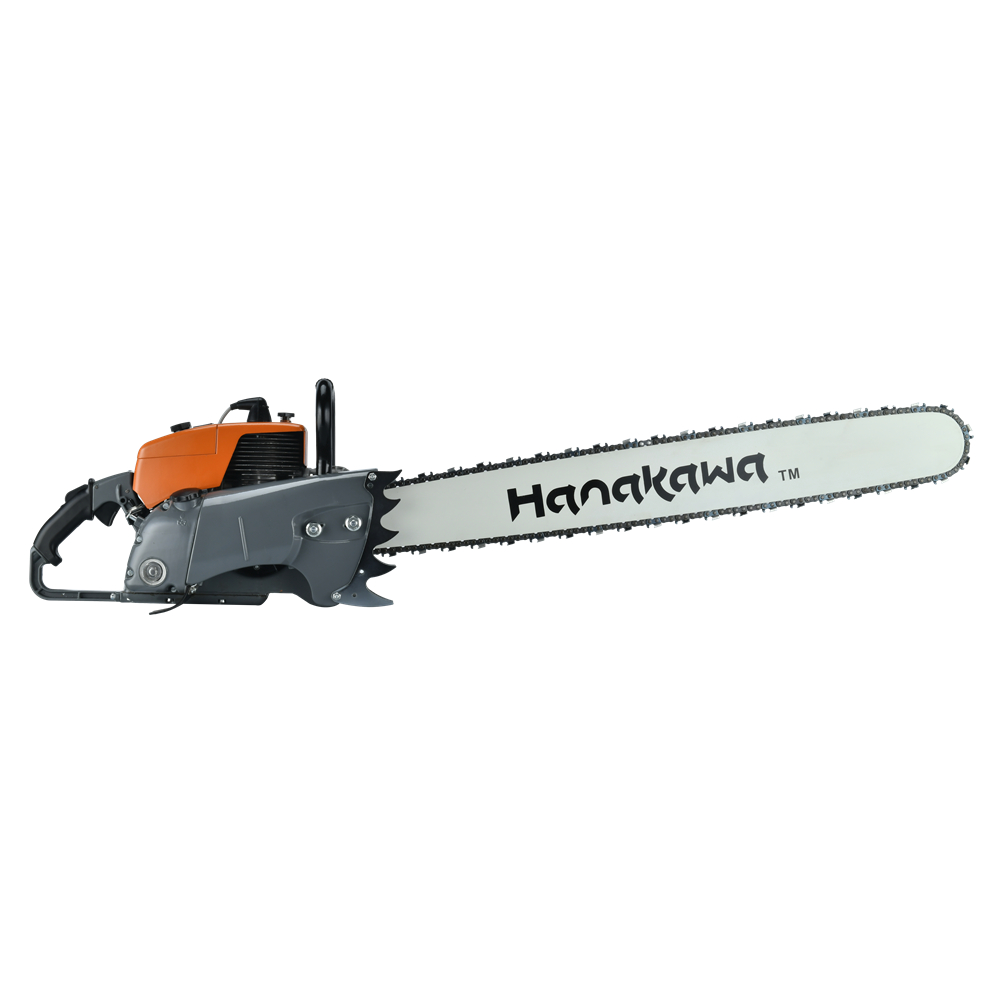
The H9105 occupies a different duty envelope: industrial heavy logging, giant tree cutting, log yard primary processing and remote mountain forest exploitation. Documented project types include industrial batch giant log processing, mountain rock and wood barrier clearing, and large wood factory raw material pretreatment. The work function is described as maximum-diameter tree one-time felling, heavy log longitudinal splitting and hard wood bulk processing, under tropical rainforest, super-thick log storage yard and heavy engineering demolition conditions. The stated design conditions are ultra-high torque output, a fully reinforced metal drive system and stable operation under extreme overload. This scenario class is documented across a wide geography, including Canada, Brazil, the United States, South Africa, Congo, Tanzania, Ukraine, Belarus, Russia, Indonesia, Mexico and Argentina.
Why Displacement Alone Misleads the Buyer
A buyer sorting a catalogue by engine size would place the 105.7cc H9105 above the 91.6cc H992 in every category. The published parameters do not support that ranking. The H9105 carries the larger displacement but a lower rated power output of 4.8kW against the H992's 5.2kW, and it carries an 11 kg net weight against the H992's 7.7 kg. Maximum engine speed also differs: 13,500 rpm for the H992 against 11,500 rpm for the H9105.
That combination is not a contradiction; it is a different design target. A larger displacement operating at a lower maximum engine speed points to a torque-oriented power delivery intended for continuous overload, which matches the documented requirement for stable operation under extreme overload in log yard and remote-stand work. A smaller displacement operating at a higher maximum engine speed points to a configuration intended to keep a fast, controllable cut in demanding but mobile conditions, which matches the documented rescue and mill duty profile. Neither number is a quality ranking. They are inputs to a fit decision.
Technical Explanation: What Each Design Choice Changes On Site
Both models share the same base material set: a magnesium alloy crankcase, an aluminum alloy cylinder and an outer housing in glass-reinforced PA nylon. The differentiation is in how those materials are sized and what surrounds them.
On the H992, the documented engineering emphasis is thermal and mechanical reserve around a very large cut: a thickened magnesium alloy crankcase, an oversized cooling system and a heavy-duty anti-rebound safety brake. Heat is a governing constraint in old-growth logging, because a saw that loses thermal headroom mid-cut forces the operator to interrupt the sequence, and an interrupted sequence on a leaning oversized trunk is a safety problem before it is a productivity problem.
On the H9105, the documented emphasis is transmission: an ultra-high torque output combined with a fully reinforced metal drive system. That configuration is aimed at the longitudinal splitting of heavy logs and the batch processing of hard wood, where the saw is expected to sit in the cut for extended periods rather than complete short felling cycles.
Guide bar support follows the same logic. A published distributor listing for the H992 platform describes support for guide bars up to 62 inches, and Hanakawa positions the H9105 as supporting a super long guide bar. Bar length is the clearest single indicator of intended log diameter, and both machines are specified for the top end of the diameter range rather than for general forestry work.
Maintenance access is a further consideration. Both models are documented as fully interchangeable with the spare-parts families of the legacy platforms they are built against — the H992 with the MS660 platform and the H9105 with the MS660 066 platform — which supports aftermarket component supply, wear-part replacement and repair outside the original distribution channel.
Specification Comparison
| Parameter | Hanakawa H992 | Hanakawa H9105 |
|---|---|---|
| Displacement | 91.6cc | 105.7cc |
| Rated power output | 5.2kW | 4.8kW |
| Net weight | 7.7 kg | 11 kg |
| Maximum engine speed | 13,500 rpm | 11,500 rpm |
| Documented industries | Large timber felling, old-growth forest logging, lumber mill, large disaster rescue, land reclamation | Industrial heavy logging, giant tree cutting, log yard primary processing, remote mountain forest exploitation |
| Documented special requirements | Thickened magnesium alloy crankcase, oversized cooling system, heavy-duty anti-rebound safety brake | Ultra-high torque output, fully reinforced metal drive system, stable operation under extreme overload |
| Documented scenario geography | United States, Russia, Australia, New Zealand | Canada, Brazil, United States, South Africa, Congo, Tanzania, Ukraine, Belarus, Russia, Indonesia, Mexico, Argentina |
| Spare-parts family reference | MS660 platform | MS660 066 platform |
Market Trend Analysis: Why Extreme-Duty Saws Still Sell
The market data supports a narrower conclusion than general growth statistics suggest. A category expanding from USD 4.46 billion in 2026 toward USD 5.89 billion by 2034, with gas-powered units still holding 54.3% of share, indicates that combustion saws retain a structural role rather than a residual one. The role concentrates where an operator has to be at the cut with a tool that produces its own energy.
Regulation is the second trend affecting this segment. ISO 11681-1:2022, Machinery for forestry — Portable chain-saw safety requirements and testing, Part 1: Chain-saws for forest service, is the current international standard for the safety requirements and testing of portable combustion-engine hand-held chainsaws for forest service. For importers, the standard defines the baseline against which a professional gasoline chainsaw is documented, independent of brand.
Trade classification is the third. Chainsaws fall under HTS Code 8467.81, chain saws, self-contained nonelectric motor, hand-directed. Buyers comparing landed cost between a 91.6cc and a 105.7cc unit should note that both sit in the same classification, so the procurement difference between them is driven by unit specification and duty cycle rather than by tariff category.
Comparison With Traditional Solutions and the Boundary of Fit
The most useful comparison is not between the two Hanakawa models but between this class of manual handheld saw and the other ways the same cut can be made. Three boundaries are worth stating plainly.
- Weight is a real constraint, not a footnote. At 11 kg net weight, the H9105 is designed for work where the log comes to the operator or the operator stays close to the machine — log yard primary processing, batch giant-log breakdown, raw material pretreatment. It is the wrong choice where the saw must be carried over long distances into steep terrain or where the operator is moving between many small cuts, because the mass is carried on every repositioning.
- The lighter model is not unlimited either. The H992's 7.7 kg net weight improves mobility and operator endurance relative to the H9105, but a 91.6cc, 5.2kW saw in a handheld configuration remains a demanding tool. It reduces fatigue; it does not remove it, and it does not change the fact that oversized timber felling is a two-person discipline in practice.
- Neither model replaces mechanized processing where the business case supports it. For high and predictable volumes on accessible ground, a harvester or a processor head outperforms any manual handheld saw on cost per cubic metre. The H992 and H9105 answer the cases that mechanized equipment cannot reach: rescue sites, remote stands, extreme terrain, oversized individual stems and yards where a single log needs to be reduced before it can enter the normal line.
A further boundary applies to both models equally. They are two-stroke, hand-held, fuel-mixing tools. Chain lubrication supply, cooling-fin cleanliness and correct fuel-oil ratio determine service life as much as any design feature, and the documented fault patterns for this product family — hard starting, unstable idle, no bar oil output, overheating shutdown and loss of cutting power under load — are mostly attributable to fuel, filtration, lubrication and cooling maintenance rather than to structural failure.
A Buyer Decision Framework
Five questions separate the two models reliably, and they are better answered before the quotation than after the first job.
| Decision question | Points toward H992 | Points toward H9105 |
|---|---|---|
| Where is the saw used? | Rescue clearance, mill breakdown, mixed terrain where the cut location varies | Fixed log yard, primary processing deck, remote stands with heavy stems |
| How far must it be carried? | Long approach or repeated repositioning — 7.7 kg net weight | Short approach, log brought to the work position — 11 kg net weight |
| What is the duty cycle? | Variable, with high peak demand and interruptions | Continuous, with long cuts under sustained overload |
| What limits throughput? | Operator mobility and heat management | Torque and drive-system durability |
| Which parts family is already in your channel? | MS660 platform components | MS660 066 platform components |
Sourcing Considerations for the Two Models
Production and supply parameters are relevant to the fit decision because a saw specified for extreme duty is only useful if wear parts and replacement units are obtainable. Hanakawa's manufacturing operation runs at a monthly capacity of 200,000 units, with a lead time of 20 to 45 days, a minimum order quantity of 100 units for in-stock items and 500 units for OEM private-label orders, and sample orders accepted. Customization covers logo, color box packaging, nameplate label and color scheme, structural modification and parameter adjustment, development per drawing or sample, and customized user manuals.
Quality control is documented as ISO9001 quality-system control with incoming material inspection, in-process patrol inspection, full final testing of finished units, pre-shipment sampling and third-party testing on request, including customer-commissioned inspection such as SGS. The warranty term for main units is 12 months, supported by spare-parts supply, technical documentation and troubleshooting guidance, after-sales technical training, and consumable-parts supply solutions for bulk orders.
Channel evidence is available for the broader range. An OEM retail customer in the United States, Canada and Australia has taken more than 5,000 units annually over two years for overseas warehouse stock, Amazon storage and distributor supply, with reported stable operation, cost-effective replacement parts and a low complaint rate. A private-label wholesaler and brand owner in Russia and Belarus has taken more than 2,000 units annually for two years, distributing to forest farms, landscaping crews and logging operators, with a reported low field failure rate and few end-user complaints, and the product line now accounts for a growing share of that customer's tool portfolio.
Future Outlook
Two forces are likely to shape this segment over the next several years. The first is the persistence of large-diameter timber work. As long as old-growth removal, post-storm clearance and oversized yard logs exist, displacement will remain a dividing line in procurement, because no amount of electronic control substitutes for the swept volume required to drive a long bar through hard wood.
The second is documentation discipline. As safety standards such as ISO 11681-1:2022 and trade classifications such as HTS 8467.81 become routine checkpoints in sourcing, the models that win distributor shelf space will be the ones whose specifications, scenario intent and spare-parts family can be stated precisely. For buyers at the research and evaluation stage, that is a useful filter: a supplier that can explain why a 105.7cc saw is rated below a 91.6cc saw, and which job each is built for, is a supplier that understands its own product line rather than one that simply lists it.
Frequently Asked Questions
Which Hanakawa model is intended for large disaster rescue work?
The H992 is documented for large disaster rescue together with large timber felling, old-growth forest logging, lumber mill operations and land reclamation. Its parameters are 91.6cc displacement, 5.2kW power output, 7.7 kg net weight and a maximum engine speed of 13,500 rpm. Documented rescue-related applications include giant tree felling engineering, large-scale post-disaster reconstruction clearance and catastrophic accident tree removal, and its named design requirements include a thickened magnesium alloy crankcase, an oversized cooling system and a heavy-duty anti-rebound safety brake.
What is the H9105 designed for?
The H9105 is documented for industrial heavy logging, giant tree cutting, log yard primary processing and remote mountain forest exploitation. Its parameters are 105.7cc displacement, 4.8kW power output, 11 kg net weight and a maximum engine speed of 11,500 rpm. Documented applications include maximum-diameter tree one-time felling, heavy log longitudinal splitting, industrial batch giant log processing, mountain rock and wood barrier clearing, and large wood factory raw material pretreatment, with named design requirements for ultra-high torque output, a fully reinforced metal drive system and stable operation under extreme overload.
Why does the 105.7cc H9105 have a lower rated power output than the 91.6cc H992?
The two figures describe different design targets rather than a ranking. The H992 is rated 5.2kW at 91.6cc with a maximum engine speed of 13,500 rpm; the H9105 is rated 4.8kW at 105.7cc with a maximum engine speed of 11,500 rpm. The larger displacement combined with the lower maximum engine speed corresponds to a torque-oriented configuration intended for continuous overload, which matches the documented log yard and remote-stand duties. Buyers should evaluate rated power, net weight and duty cycle together rather than ordering a shortlist by displacement.
How much does the weight difference affect the choice?
Weight determines where and for how long a saw can be used. The H992 at 7.7 kg net weight is documented for duty where the saw must be moved to the cut, including rescue clearance and mixed mill operations. The H9105 at 11 kg net weight is documented for log yard primary processing and industrial batch log breakdown, where the machine stays close to the work position and the load is sustained rather than sporadic. Long carrying distances and frequent repositioning favor the lower weight; continuous large-diameter breakdown favors the torque reserve.
What supporting equipment do both models require?
Both are documented as two-stroke gasoline engine manual handheld tools requiring mixed two-stroke fuel, a guide bar and saw chain, bar lubricant oil, a service wrench and a chain file. Additional items that materially affect service life include the correct fuel-to-oil mixing ratio, a functioning automatic chain lubrication supply, clean cylinder cooling fins and a correctly tensioned chain.
Are spare parts available for these two models?
Both models are documented as fully compatible with the spare-parts families of the legacy platforms they are built against: the H992 with the MS660 platform and the H9105 with the MS660 066 platform. This compatibility supports widely available replacement components, low maintenance cost and quick part replacement. Availability still depends on the regional aftermarket, so buyers should confirm consumables and wear-part supply in their own market before committing to a fleet.
Which safety standard applies to portable gasoline chainsaws?
ISO 11681-1:2022, Machinery for forestry — Portable chain-saw safety requirements and testing, Part 1: Chain-saws for forest service, is the current international standard covering safety requirements and testing for portable combustion-engine hand-held chainsaws used in forest service. On the trade side, chainsaws are classified under HTS Code 8467.81, chain saws, self-contained nonelectric motor, hand-directed. Both references are independent of brand and apply to the model class as a whole.