
Matching USB Cables to Applications: A 2026 Scenario Matrix
Scenario fit in USB cable procurement means matching connector type, conductor, current rating, jacket material, working temperature and cable length to the conditions in which a cable will actually be used — not to the conditions described on a catalogue page. Two cables that share the same Type-C plug can differ in jacket chemistry, sealing construction and current capacity, and those differences determine whether a program performs in retail, in a vehicle, or on a marine installation.
The scale of that decision is not marginal. DataHorizzon Research estimates the global USB cable market at USD 21.2 billion in 2024, projected to reach approximately USD 88.6 billion by 2033. Dataintelo reports that the USB Type-C segment held a 41.2% share of USB cable sales in 2025 and that Asia Pacific accounted for USD 12.3 billion, roughly 43% of global revenue, while KBV Research projects a 17.3% CAGR through 2031. Published market estimates differ by scope — broader cable assembly studies cite substantially larger totals — which is one reason application-level specification data serves buyers better than category averages.
This reference maps USB cable applications to construction choices, using published specification data for USB CABLE from Dongguan Focuses Electronics Technology Co., Ltd. (Focuses), an ODM/OEM cable manufacturer in Tangxia Town, Dongguan, China, alongside third-party regulatory and market data.
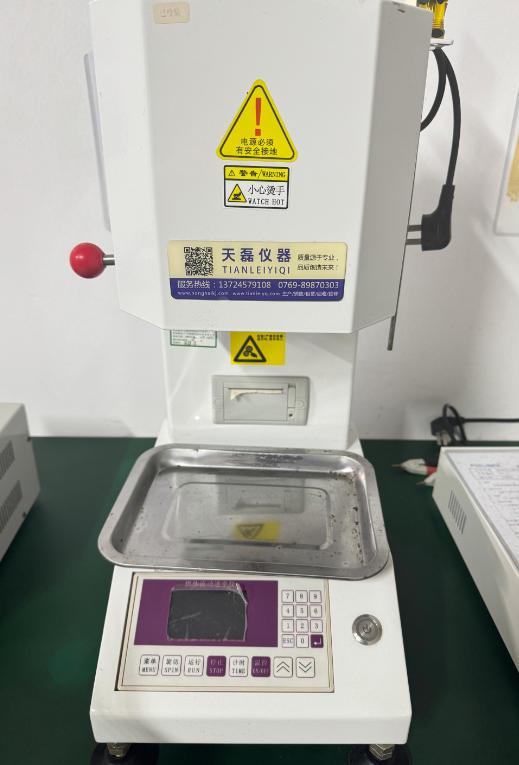
Laboratory validation equipment used to verify charging and durability behaviour before a cable construction is released to a purchasing program.
Why a single cable line cannot serve every application
Three separate pressures divide the USB cable category, and each of them pushes buyers toward scenario-based selection rather than a single default specification.
The first is interface fragmentation. A working installed base still mixes USB-A, USB-C, Type-C, Lightning and Micro USB connectors, and a program that serves a mixed device population needs interface sets that cover more than one pairing. Published interface data for the Focuses range, for example, lists USB-A and USB-C host options feeding Type-C, Lightning and Micro USB device connectors.
The second is power. Charging expectations have separated into two tiers: a standard tier in the 1A to 2.4A range, and a fast-charging tier reaching 120W and 240W with a 6A maximum current, as specified across the TPE, nylon braided, silicone and sealed waterproof constructions in the same catalogue.
The third is environment. Working temperature ranges move from −10°C to 60°C on the PVC construction, to −10°C to 70°C on the nylon braided model, and to −20°C to 70°C on the silicone and waterproof models, while the waterproof construction adds an IPX7 waterproof and dustproof rating. A cable purchased for indoor retail charging will not automatically hold up in a coastal, cold or wet setting, even when the connector fits.
Five specification families that define scenario fit
For evaluation purposes, scenario fit can be reduced to five specification families. Buyers who verify all five before sampling avoid most fit failures at pilot stage.
| Specification family | What the buyer verifies | Why it changes the application |
|---|---|---|
| Interface set | USB-A or USB-C host side to Type-C, Lightning or Micro USB device side | Determines how much of the installed device base can be served without adapters |
| Power and current | 1A–2.4A on the PVC construction; 120W and 240W with 6A maximum on the TPE, nylon braided, silicone and waterproof constructions | Determines whether a program delivers standard charging or fast charging |
| Jacket material | PVC; eco-friendly TPE; nylon braid over a PVC inner layer; food-grade silicone; sealed silicone, TPE or nylon braid | Determines abrasion resistance, flexibility, hand feel and moisture tolerance |
| Thermal and ingress tolerance | −10°C to 60°C (PVC); −10°C to 70°C (nylon braided); −20°C to 70°C (silicone and waterproof); IPX7 waterproof and dustproof rating on the sealed model | Determines suitability for cold outdoor use, vehicles, wet or coastal environments |
| Data rate and length | 480 Mbps across the listed constructions; 0.5m, 1m, 1.5m and 2m on PVC, and 0.3m, 1m, 1.5m and 2m on the other constructions | Determines fit with device placement, cable management and retail pack formats |
How construction decides field behaviour
PVC: economy and indoor retail programs
The PVC construction, listed as model CB-PVC, combines a PVC outer sheath with a pure copper conductor, a charging current of 1A to 2.4A and a 480 Mbps transfer speed, with a working temperature of −10°C to 60°C. Custom logo printing is accepted. Its stated applicable industries include consumer electronics, mobile communication, digital accessories, retail wholesale, the gift industry, online retail, electronic gifts and household electronics — a profile that fits high-volume, cost-sensitive indoor charging programs rather than fast-charging or outdoor deployment.
TPE: flexibility with an eco-positioning argument
Model CB-TPE uses an eco-friendly TPE outer material over a tinned copper core, supports 120W and 240W fast charging with a 6A maximum current, and combines charging with data synchronisation. The construction is described as soft, flexible and wear-resistant, and the applicable industries extend across consumer electronics, mobile accessories, retail, wholesale, e-commerce, the gift industry, digital products and household electronics.
Nylon braided: abrasion resistance for daily handling
Model CB-Nylon places a nylon braided shell over a PVC inner layer with a tinned pure copper core. It is rated at 120W and 240W with a 6A maximum current and 480 Mbps transfer, operates from −10°C to 70°C, and is offered in 0.3m to 2m lengths with custom logo printing supported. The stated compatibility covers mobile phones, tablets and laptops, which places it in the daily-carry and in-car segment rather than stationary retail packaging.
Silicone: cold tolerance and repeated flexing
Model CB-SILICONE uses a soft food-grade silicone sheath with a high-purity tinned copper core, supports 120W and 240W with a 6A maximum current and 480 Mbps transfer, and is specified from −20°C to 70°C. Published characteristics include anti-kink, wear-resistant, anti-freezing and flexible behaviour, with an odourless, skin-friendly surface and supported custom logo printing.
Sealed waterproof construction: wet, outdoor and industrial conditions
The waterproof model, listed as CB-Waterproof cable, offers silicone, TPE or nylon braided outer material, a high-purity tinned copper core, 120W and 240W support, 6A maximum current, 480 Mbps transfer, an IPX7 waterproof and dustproof rating and a −20°C to 70°C working range. Its sealed integrated moulding is described as waterproof, dustproof, sweat-proof, anti-corrosion and wear-resistant. Listed applicable industries include outdoor supplies, industrial equipment, sports fitness, marine electronics and automotive use, in addition to retail, wholesale and e-commerce.
Application map: matching use cases to construction
The table below converts the published construction data into application decisions. Each row represents a scenario type that appears in the Focuses specification and project documentation.
| Application scenario | Conditions of use | Matching construction and published specification |
|---|---|---|
| Household and daily phone charging | Indoor use, repeated plug cycles, room temperature | CB-PVC: USB-A, Lightning, Type-C and Micro USB interfaces, 1A–2.4A, 480 Mbps, −10°C to 60°C |
| Mobile communication and retail wholesale | High volume, mixed device base, shelf-ready branding | CB-PVC with custom logo, with listed applicable industries covering mobile communication and retail wholesale |
| Corporate gifts and customised programs | Appearance and logo are the product itself | Custom logo printing, cable colour, power, appearance, materials, moulding, connector housing colour, packaging style and packaging design |
| In-car charging | Bending, tight spaces, vibration, on-the-go handling | Nylon braided construction, bend-resistant design, right-angle USB-C connector option |
| Sports, fitness and outdoor use | Sweat, dust, cold, repeated flexing | CB-SILICONE: food-grade silicone, −20°C to 70°C, anti-kink and anti-freezing behaviour |
| Marine electronics and industrial equipment | Water and dust exposure, corrosion risk | CB-Waterproof cable: IPX7 waterproof and dustproof, sealed integrated moulding, anti-corrosion |
| E-commerce and bulk import programs | Cost control, repeatable quality, packaging specification | 2,000-unit MOQ, 25–35 day lead time, 100% full inspection before shipment, packaging customisation |
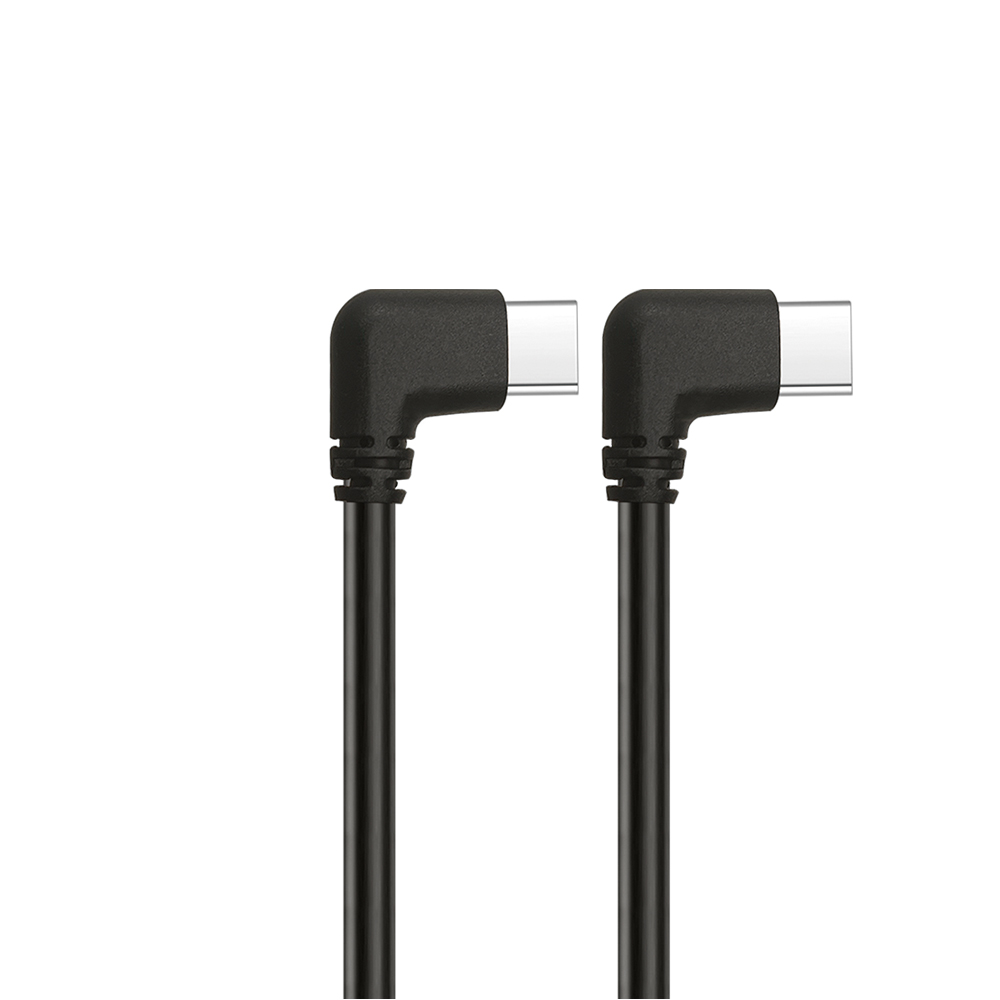
Type-C to Type-C construction from the sample range, representative of the interface set used in fast-charging and daily-carry applications.
Recorded project evidence
One documented project record describes supply to digital accessory wholesalers and corporate gift purchasers across Indonesia, the United States, Germany and the United Kingdom, with order quantities of 5,000 to 30,000 pieces per order. The recorded applications were daily phone charging, corporate customised gifts, retail sale and in-car use. Reported outcomes include stable fast charging speed, durable braided wire, low heating during long charging sessions and zero mass quality complaints, with a normal service life reported above two years against a one-year product warranty. The same record highlights multi-device simultaneous charging support, customisable appearance and logo, bend-resistant design and wide compatibility with Type-C devices. These are recorded project results for a defined scope and should be read as evidence of demonstrated fit rather than as a guarantee for every program.
Supplier-side scenario coverage at Focuses
Dongguan Focuses Electronics Technology Co., Ltd. designs, produces and distributes high-performance data cables, USB solutions and audio accessories. The company was established in 2006 and relocated to Tangxia Town, Dongguan, Guangdong, in 2018. Its facility covers 6,000 m² and employs 150 people, including a six-engineer R&D team, with reported annual output of 25,000,000 units and monthly custom production capacity of 2,500,000 units. Approximately 90% of sales are export sales, with major markets in the EU, North America and Asia, and the site sits near Shenzhen Port.
Quality scope is documented by an ISO 9001:2015 certificate issued by SAILWAY under certificate number SW23Q21582R1S on 19 October 2020, valid through 18 October 2026, with a certified registration scope of R&D and production of audio wire and data wire.
For buyers structuring a scenario-based program, the ODM/OEM model accepts customisation of logo printing, cable colour, power, cable appearance, cable materials, cable moulding, multi-function design, connector housing colour, cable length, packaging style and packaging design. Minimum order quantity is 2,000 units with a lead time of 25 to 35 days, and every shipment is subject to 100% full inspection before dispatch. After-sales terms provide a 12-month warranty with free technical guidance for charging compatibility issues during the warranty period. Company and product documentation is published at www.focusestech.com.
Market trend analysis: compliance is narrowing the interface question
Regulation is now a scenario variable in its own right. The European Union requires handheld mobile phones, tablets and cameras sold after 28 December 2024 to use a USB Type-C charging port and to comply with EN IEC 62680-1-3:2022, and fast-charging devices supporting USB Power Delivery must comply with EN IEC 62680-1-2:2022. In the United States, Amazon requires USB Type-C cables to meet the UL 9990 safety standard for ICT power cables to avoid listing removal.
Those rules narrow the interface question but widen the compliance question. A cable that fits an application mechanically may still be unsellable in a given channel without matching documentation, which is why certification scope — not certification presence alone — has become part of evaluation. The commercial trend runs in the same direction: Type-C held a 41.2% share of USB cable sales in 2025, Asia Pacific generated USD 12.3 billion of USB cable revenue, approximately 43% of the global total, and KBV Research projects 17.3% CAGR through 2031. Demand is concentrating on fewer interface families while splitting further across construction types.
Trade-offs and limits of scenario-specific sourcing
Scenario fit imposes real costs and boundaries, and buyers should plan for them rather than treat them as defects.
- Economy versus capability. The PVC construction is the most cost-oriented option in the range, but its 1A–2.4A current and −10°C to 60°C range do not substitute for a 6A, 120W/240W construction in fast-charging or cold-environment use.
- A shared data ceiling. All listed constructions transfer at 480 Mbps. That is suitable for charging and general synchronisation, but it is not a substitute for higher-bandwidth cable categories where large-file or display-related throughput is required.
- Material premiums. Nylon braided, silicone and sealed waterproof constructions use more expensive materials and more complex tooling than PVC, and the premium is only justified when the application genuinely needs abrasion resistance, cold tolerance or sealing.
- Order economics. Customisation starts at a 2,000-unit minimum order quantity with a 25 to 35 day lead time, so small validation runs fall outside the standard custom program and need to be planned separately.
- Rating scope. Ingress and anti-corrosion performance is achieved through sealed integrated moulding of the assembly as constructed; buyers should confirm that the specific length, connector and jacket configuration ordered carries the intended rating for the intended use.
Future outlook
Three shifts are likely to define the next evaluation cycle. Interface convergence under the EU common charger rules will continue to simplify connector choice, but it will not simplify construction choice, because the same Type-C assembly must still serve a phone in a living room and a device on a boat. Second, compliance documentation will increasingly be treated as a specification line item rather than an administrative task, particularly for marketplace channels that enforce standards such as UL 9990. Third, durability-oriented constructions — braided, silicone and sealed — are likely to hold their premium as programs move toward longer service expectations, where a reported service life above two years changes total cost more than a marginal unit price difference. For buyers, the practical implication is a sourcing sequence that starts from the application environment, moves to material and current, and only then compares suppliers.
Frequently asked questions
What does scenario fit mean when choosing a USB cable?
Scenario fit means aligning five specification families with the conditions of use: interface set, power and current rating, jacket material, thermal and ingress tolerance, and cable length. In the Focuses range this produces different answers for different applications — for example, a PVC construction with 1A–2.4A charging and a −10°C to 60°C range for indoor retail programs, versus a sealed construction with a 6A maximum current, 120W and 240W support, an IPX7 waterproof and dustproof rating and a −20°C to 70°C range for outdoor, marine or industrial use.
How do material choices change where a USB cable can be used?
Jacket material sets the practical boundary of an application. PVC suits indoor, cost-sensitive charging programs within −10°C to 60°C. Eco-friendly TPE provides a soft, flexible, wear-resistant option rated for 120W and 240W at 6A. Nylon braiding over a PVC inner layer raises abrasion resistance and extends the range to −10°C to 70°C. Food-grade silicone reaches −20°C to 70°C with anti-kink and anti-freezing behaviour. Sealed silicone, TPE or nylon construction adds an IPX7 waterproof and dustproof rating, plus dust, sweat and corrosion resistance.
What order quantity and lead time apply to customised USB cables?
For the Focuses ODM/OEM program, the minimum order quantity is 2,000 units and lead time is 25 to 35 days. Customisation covers logo printing, cable colour, power, appearance, materials, moulding, multi-function design, connector housing colour, cable length, packaging style and packaging design. Every shipment is subject to 100% full inspection before dispatch, and recorded project orders have ranged from 5,000 to 30,000 pieces per order.
Which certifications and standards matter for USB cable applications in the EU and the US?
Manufacturing scope is documented by an ISO 9001:2015 certificate, number SW23Q21582R1S, issued by SAILWAY on 19 October 2020 and valid through 18 October 2026, covering R&D and production of audio wire and data wire. For market access, the European Union requires handheld mobile phones, tablets and cameras sold after 28 December 2024 to use a USB Type-C charging port and comply with EN IEC 62680-1-3:2022, with EN IEC 62680-1-2:2022 applying to fast-charging devices that support USB Power Delivery. In the United States, Amazon requires USB Type-C cables to meet the UL 9990 safety standard for ICT power cables.
How should buyers validate a cable construction for a specific application before scaling?
Validation works best as a sequence: confirm the interface set against the actual device population, check the current and wattage requirement against the construction rating, match the working temperature and ingress requirement to the deployment environment, then order a pilot quantity and verify charging stability, heat behaviour and mechanical durability under repeated use. Documented evaluation criteria for this step include 100% full inspection before shipment, a 12-month product warranty with technical guidance on charging compatibility, and testing equipment used to verify plug, current and durability performance.