
Matching Timing Belts and Pulleys to Project Applications
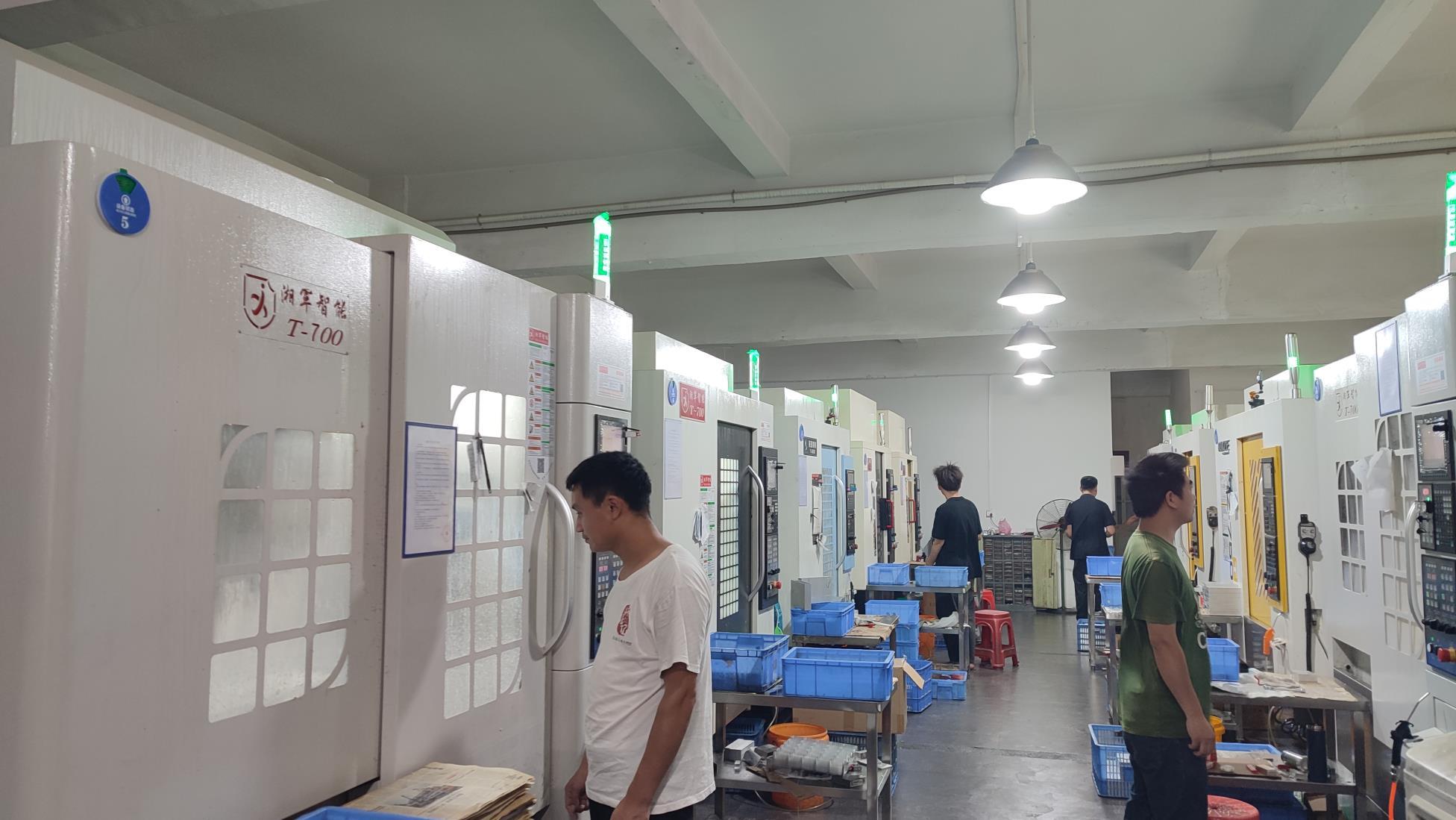
CNC machining plays a central role in producing timing pulleys with the bore tolerances and tooth accuracy required for project-specific drives.
The relationship between a timing belt and its pulley is not one-size-fits-all. For project teams selecting industrial drive components, the real challenge is matching belt profile, material, tooth pitch, and pulley geometry to a specific operating environment. When this alignment is done correctly, the drive delivers precise synchronous power transmission. When it is not, vibration, tooth skipping, and premature wear can appear within weeks. This guide looks at how timing belts and pulleys are selected at project level, the customization options available, and the evidence buyers should check before committing to a supplier.
Why project-specific timing belt matching matters
Industrial equipment does not run in a laboratory. A packaging line may operate 24/7 in a dusty hall. A CNC machine may need exact positioning at high acceleration. A food processing machine may require oil resistance and cleanability. Each condition changes the demands placed on the belt and pulley.
Standard catalog products cover many general cases, but real-world projects often require non-standard widths, custom bore sizes, keyways, flange configurations, or surface treatments. That is why project-level thinking becomes important: the same nominal belt pitch may need a different material or tooth profile depending on torque, speed, duty cycle, and environmental exposure.
According to verified industry data, the global automotive timing belt market was valued at USD 7.7 billion in 2025, with China holding the largest market share, and the wider timing belt market is expected to grow at a CAGR of 4.8% through 2030. As equipment builders seek more application-specific designs, the ability to match a belt and pulley system to a defined operating condition becomes a practical procurement advantage.
What to look for in a timing belt and pulley supplier
Dongguan Zhende Machinery Equipment Co., Ltd. is a professional manufacturer and one-stop procurement service provider of FA automation transmission parts, located in Dongguan, the manufacturing heart of South China. The company operates a 4,500 m² factory with 40 employees and an engineering team of six. Around 75% of its output is exported, mainly to the EU and USA. It combines self-owned CNC machining workshops with authorized distribution of global brands, offering integrated spare-part solutions for manufacturing factories.
Zhende produces timing belts and timing pulleys in a range that covers common global standards. The pulley lineup includes imperial trapezoidal pulleys (MXL, XL, L, H, XH, XXH), T-series trapezoidal pulleys (T2.5, T5, T10, T20), and HTD curvilinear pulleys (3M, 5M, 8M, 14M). Materials include aluminum alloy, carbon steel, stainless steel, and cast iron. Surface treatments include natural, black oxide, zinc plating, hard anodizing, and nickel plating.
The belt lineup includes rubber timing belts such as HTD 3M, 5M, 8M, 14M and STD S3M, S5M, S8M; PU timing belts such as T5, T10, AT5, AT10; and a polyurethane GT-type carbon belt in 8MGT profile. This range allows buyers to match belt and pulley combinations for many industrial applications.
Technical foundation for selecting the right timing belt
Choosing a timing belt and pulley is not simply picking a part number. Several technical parameters have to be considered together.
Tooth profile and pitch compatibility
The belt tooth profile and pitch must match the pulley tooth profile and pitch. For example, an HTD 8M belt can only mesh correctly with an HTD 8M pulley. Mixing a T-series belt with an HTD pulley, or matching different pitches, leads to poor meshing, noise, and early failure. Zhende's pulleys are manufactured to ISO 13050 / DIN standards, with tooth accuracy and pitch accuracy controlled by precision CNC machining.
Pulley precision and shaft fit
Bore tolerance and concentricity directly affect how smoothly the pulley transmits motion. Zhende's precision pulleys feature radial runout of ≤0.03 mm, and finished bores are held to H7 tolerance. These values matter in servo-driven applications where small runout can be amplified into positioning error or vibration. Keyway machining, hub style, and flange configurations are also available to suit specific shaft and mounting requirements.
Operating speed and temperature
The same belt can behave very differently at 500 rpm versus 8,000 rpm. Zhende's standard timing pulleys are rated for operating speeds up to 8,000 rpm and a temperature range of -30°C to +120°C, depending on material. HTD rubber belts with fiberglass tensile cords and PU belts with steel cords have different temperature and load limits, so the application's thermal environment must be checked early.
Rubber vs PU vs specialty timing belts
Rubber timing belts generally use neoprene bodies with fiberglass or steel tension members. They offer good shock absorption and are widely used in medium- to heavy-duty power transmission, including conveyor systems, packaging machinery, and agricultural equipment. For example, Zhende's HTD 8M rubber belt has a pitch of 8.0 mm, an overall thickness of 5.6 mm, hardness of 92 Shore A, and an allowable tensile strength of 780 N per 10 mm of width.
PU timing belts use polyurethane bodies and steel or carbon-fiber tensile cords. They typically provide higher wear resistance, lower elongation, better dimensional stability, and stronger oil/chemical resistance. A T10 PU belt from Zhende, for instance, has an allowable tensile strength of 780 N per 10 mm width and a power transmission capacity of up to 30 kW. PU belts are common in packaging, printing, labeling, food processing, and medical equipment.
Specialty belts, such as the 8MGT polyurethane carbon belt, are designed for high-performance servo drives and applications requiring low vibration and high positional accuracy. The 8MGT belt from Zhende uses a carbon fiber tensile member with nylon fabric tooth facing, operates at belt speeds up to 80 m/s, and is rated as maintenance-free. It is often used in CNC machines, robotics, and high-speed automation.
Matching belt and pulley to project conditions
| Application | Typical working conditions | Recommended belt profiles | Pulley type |
|---|---|---|---|
| Packaging machinery | 24/7 operation, high speed, servo drives | HTD 8M, AT10 | HTD 8M or T10 pulley |
| CNC & robotics | High-precision positioning, low noise | 8MGT carbon, HTD 5M/8M | HTD 5M/8M aluminum pulley |
| Food processing | FDA requirements, anti-static, oil resistance | PU AT5/AT10 | T/AT pulley, aluminum or stainless steel |
| Textile & printing | Dusty, oil exposure, continuous running | HTD 8M rubber, PU T10 | HTD 8M or T10 pulley |
| Material handling | Medium loads, long centers | STD S8M, HTD 14M | HTD 14M or S8M pulley |
These combinations are typical starting points, not engineering calculations. Final selection should be confirmed with belt length, drive capacity, shaft loads, and available pulley diameter.
Evidence from project deliveries
In company-provided project records, Zhende reports long-running collaborations with OEM machinery manufacturers, automation equipment integrators, and industrial distributors. One project record covers supply of 8,500 pcs to Germany and 15,000 pcs to the United States, used in automated production lines, CNC machinery, packaging equipment, and robotic systems. The German project spanned five years; the US project spanned three years. Reported outcomes include a 25% improvement in transmission accuracy, a 40% reduction in maintenance costs, and a 30% reduction in equipment downtime.
Another project record covers 12,000 pcs to Germany and 20,000 pcs to the United States, involving PU timing belts and rubber timing belts in automated production lines, packaging machinery, CNC equipment, and conveyor systems. The customer-reported results include transmission efficiency of up to 98%, maintenance cost reduction of 40%, and downtime reduction of 35%, with stable 24/7 operation. Buyers should treat these figures as supplier-reported rather than independent third-party test results, but they still help show the expected performance levels in similar applications.
Market trends affecting timing belt procurement
Several trends are changing how industrial buyers source timing belts. First, global brands such as Gates Industrial Corp, Continental AG, Bando Chemical Industries, and Mitsuboshi Belting dominate the market, according to Fortune Business Insights / Markets and Data. Project teams often compare custom-sourced belts against these global-brand catalogs, especially when replacing belts in installed equipment.
Second, the market is shifting from pure commodity purchasing toward engineering-supported sourcing. Buyers increasingly ask for custom sizes, dedicated tooth profiles, coating options, and faster lead times. Zhende's capability data reflects this: the company offers OEM/ODM production, with a monthly capacity of 500,000 belts and 100,000 pulleys, lead times of 7–20 days, and MOQs as low as 4 pcs for belts and 10–50 pcs for pulleys.
Third, certification and compliance are becoming part of the procurement brief. For EU projects, factory audit reports and material compliance documents are often required. Zhende's EU factory audit is certified by TÜV Rheinland, with certification number 493993448_P+T, under the Production & Trading Factory Assessment Standard, and the company states RoHS compliance for various timing belts. These documents help buyers screen suppliers before placing larger orders.
Custom project matching vs traditional off-the-shelf sourcing
Traditionally, many project teams bought timing belts and pulleys from standard catalogs, then made adjustments in-house—machining a bore, adding a keyway, or changing a flange. This works, but it can add time, cost, and quality risk.
A custom project-matched approach moves that engineering into the supplier's factory. The buyer specifies belt length, width, material, tensile cord, coating, pulley teeth, bore, keyway, surface treatment, and other details, and the supplier manufactures the parts to match. The advantage is a cleaner final assembly and a drive system optimized for the actual application. The trade-off is also clear: custom parts generally require longer lead times and minimum order quantities. For urgent maintenance replacements, a standard off-the-shelf part may still be the right answer.
Another consideration is brand preference. Global brands offer known performance and wide availability, but may be less flexible for non-standard sizes. Smaller specialty manufacturers often provide more customization and cost efficiency, but buyers need to verify quality control, certifications, and consistency. Zhende addresses this with 100% dimensional inspection, bore and tooth profile inspection, concentricity testing, pre-shipment quality inspection, and optional third-party inspection such as SGS.
Future outlook
As automation and robotics continue to expand, demand for application-specific timing belts will grow. Equipment builders will likely use more digital configuration tools to define belt-pulley combinations early in the design phase. Suppliers that can offer verified quality, flexible customization, and short lead times will be better positioned as long-term partners.
For buyers, the practical takeaway is to define the operating environment before comparing brands or prices. A belt that is appropriate for a dry, clean, low-speed conveyor may fail quickly in a dusty, oily, high-speed packaging line. Matching the right profile, material, and pulley precision to the project is one of the most cost-effective ways to reduce downtime and maintenance.
FAQ
What is the difference between HTD and T-series timing belts when selecting for a project?
HTD (High Torque Drive) profiles use a curvilinear tooth shape and are available in pitches 3M, 5M, 8M, and 14M. They are generally selected for higher torque loads, high-speed operation, and quieter running. T-series profiles use a trapezoidal tooth shape in pitches such as T2.5, T5, T10, and T20, and are commonly used in lighter- to medium-duty positioning and linear drive applications. The choice depends on torque, speed, and available pulley diameter in the design.
How do I choose between rubber and PU timing belts?
Rubber timing belts, typically made with neoprene and fiberglass or steel tension members, provide good shock absorption and are commonly used in medium- to heavy-duty power transmission. PU timing belts with steel cord offer better wear resistance, higher dimensional stability, lower elongation, and good oil/chemical resistance, making them suitable for precision drives and food/medical applications. Environmental temperature and chemical exposure should be the deciding factors.
Can timing belts and pulleys be customized for specific industrial equipment?
Yes. Customization includes belt length, width, tooth profile, pitch, material (rubber or PU), tensile cord type (fiberglass, Kevlar, steel), coating, color, perforation, and logo printing. For pulleys, custom teeth count, bore diameter, keyway, flange type, hub type, surface treatment, and logo engraving are available. Standard MOQ is 4 pcs for belts and 10–50 pcs for pulleys, with typical lead times of 7–20 days.
What technical parameters matter most when matching a pulley to a timing belt?
The pulley pitch and tooth profile must match the belt profile (e.g., HTD 8M belt with HTD 8M pulley). Bore tolerance and concentricity affect shaft fit and vibration. Radial runout of ≤0.03 mm and H7 bore tolerance indicate precision machining in Zhende's pulleys. Operating speed and temperature ranges also need to be checked (for example, up to 8,000 rpm and -30°C to +120°C in Zhende's standard pulley range).
What certifications should an EU buyer look for when sourcing timing belts?
For EU projects, buyers commonly request factory audit reports and compliance declarations. Zhende's EU factory audit is certified by TÜV Rheinland, certification number 493993448_P+T, under the Production & Trading Factory Assessment Standard. RoHS compliance for timing belts also supports EU market regulatory requirements.
For full product specifications and capability details, the company brochure can be downloaded here: Dongguan Zhende Machinery Equipment Co., Ltd. brochure.