
Matching Stainless Steel Pipes and Fittings to Project Conditions
Matching Stainless Steel Pipes and Fittings to Project Conditions
Every stainless steel pipe procurement decision is really a set of project decisions. A balcony handrail needs a different combination of pipe profile, surface finish and fittings than a glass facade, a sliding door frame or a decorative interior partition. For buyers moving from research to evaluation, the central question is not only which stainless steel pipe grade to buy, but how the pipe, the fittings and the supplier's production capability fit the actual installation scenario. This article provides a project-based interpretation of stainless steel pipe selection, using Guangdong Sanon Metal Products Co., Ltd as a documented example.
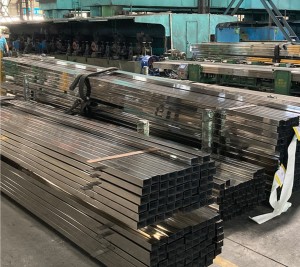
Stainless steel tube, one of the core product categories in Sanon's range.
Why Project Scenario Should Drive Pipe Specification
Stainless steel pipes are sold by grade, dimension, surface finish and profile. In a real project, those variables must also match a set of mechanical and visual functions. Round pipes are common in railings and handrails because they feel comfortable to grip and can be joined with standard elbows. Square pipes are common for posts and frames because flat surfaces make it easier to mount glass clamps, brackets and connectors. Slotted pipes allow glass panels to be inserted without drilling on site. Oval pipes are used when a more refined handrail profile is required. Color-finished pipes are increasingly selected in interior decoration.
The same logic applies to fittings. Elbows, bends, end caps, flanges, glass clamps, standoffs, brackets, cross bar holders, pipe connectors, handles and decorative balls all need to be compatible with the pipe profile and installation method. When pipe and fittings come from separate suppliers, small mismatches in outer diameter, wall thickness, surface finish or material grade can create problems during installation and maintenance.
The opportunity is therefore not simply to buy stainless steel pipes; it is to define the pipe and fitting system around a specific project scenario. Buyers who evaluate suppliers this way tend to reduce rework, shorten lead time and make compliance documentation easier to manage.
What the Supplier Evidence Should Show
For a procurement team, supplier evaluation begins with documented facts. Guangdong Sanon Metal Products Co., Ltd is a stainless steel pipe and fittings manufacturer based in Foshan, Guangdong Province, China. The company was founded in 1999 and operates a production facility covering 40,000 square meters with around 500 employees and 30 R&D staff. According to the company profile, it specializes in stainless steel pipes, stainless steel handrail fittings, glass fittings and shower room fittings.
Sanon's product line covers pipes, tubes, accessories, staircase handrails, glass clamps, elbow pipes, coils and sheets. The stated monthly pipe capacity is 9,000 tons, and the annual output capacity is 100,000 tons. The company reports that around 70% of its products are exported, mainly to the Middle East, South America and Africa.
From a project-fit perspective, three numbers are particularly useful. The stated MOQ is 5 tons. The stated lead time is 7 days. The quality-control process includes 100% testing. These are practical thresholds for a buyer who is estimating whether a supplier can handle a project-sized order without extending the schedule.
Sanon also states that fittings can be made of stainless steel 304, stainless steel 316, or zinc alloy, with satin or mirror finishes. Customized products and logo customization are available, and the company lists OEM/ODM as a production mode. For an architectural project, this means finish and mounting details can be adjusted to match the design, not the other way around.
Grades, Finishes and Standards: Technical Baseline
Stainless steel pipe selection starts with the material grade. Sanon's standard pipe materials are SS201 and SS304. The documented compositions are:
- 201 stainless steel: chromium 16–18%, nickel 3.5–5.5%, manganese 5.5–7.5%.
- 304 stainless steel: chromium 18–20%, nickel 8–11%, manganese ≤2%.
304 contains higher chromium and nickel, which normally gives it better resistance to corrosion. 201 is a lower-cost alternative with higher manganese, often used where the environment is less aggressive.
Surface finish is equally relevant. Satin finishes reduce glare and hide fingerprints, which makes them common in handrails. Mirror finishes are used when a bright, reflective appearance is required. The same pipe profile can be supplied in either finish, and the choice should be documented in the project specification.
There are also recognized standards. Stainless steel pipes and tubes are referenced under ASTM A312 for seamless and welded pipe, and ASTM A554 for ornamental tubing used in structural and architectural applications. For glass hardware, building codes can apply: in North America, glass clamps and standoff pins are governed by the International Building Code for load-bearing capacity. Buyers should confirm which code version applies at the project location.
For stainless steel color pipes, the market trend is toward PVD (physical vapor deposition) coating. PVD is considered more environmentally friendly than electroplating and is increasingly used in interior decoration. Buyers who need color pipes should ask the supplier specifically about the coating process, not just the final color.
Mapping Products to Project Scenarios
The application evidence in Sanon's product documentation includes a metal products industry scenario with working conditions such as welding, automatic operation, polishing, wire drawing and laser cutting. The stated special requirement is rust and corrosion resistance. This is a useful starting point: any pipe and fitting package intended for fabrication should tolerate these processes without degrading the material or finish.
Balcony and staircase handrails
Balcony and staircase handrails are one of the most common projects for stainless steel pipes. The typical bill of materials includes round or square pipes, elbows, bends, railing flanges, end caps, glass clamps and brackets. Sanon's product records include a specific case image of a stainless steel handrail for a balcony, and the related product set covers pipes, tube, inox and accessories in SS201/SS304.
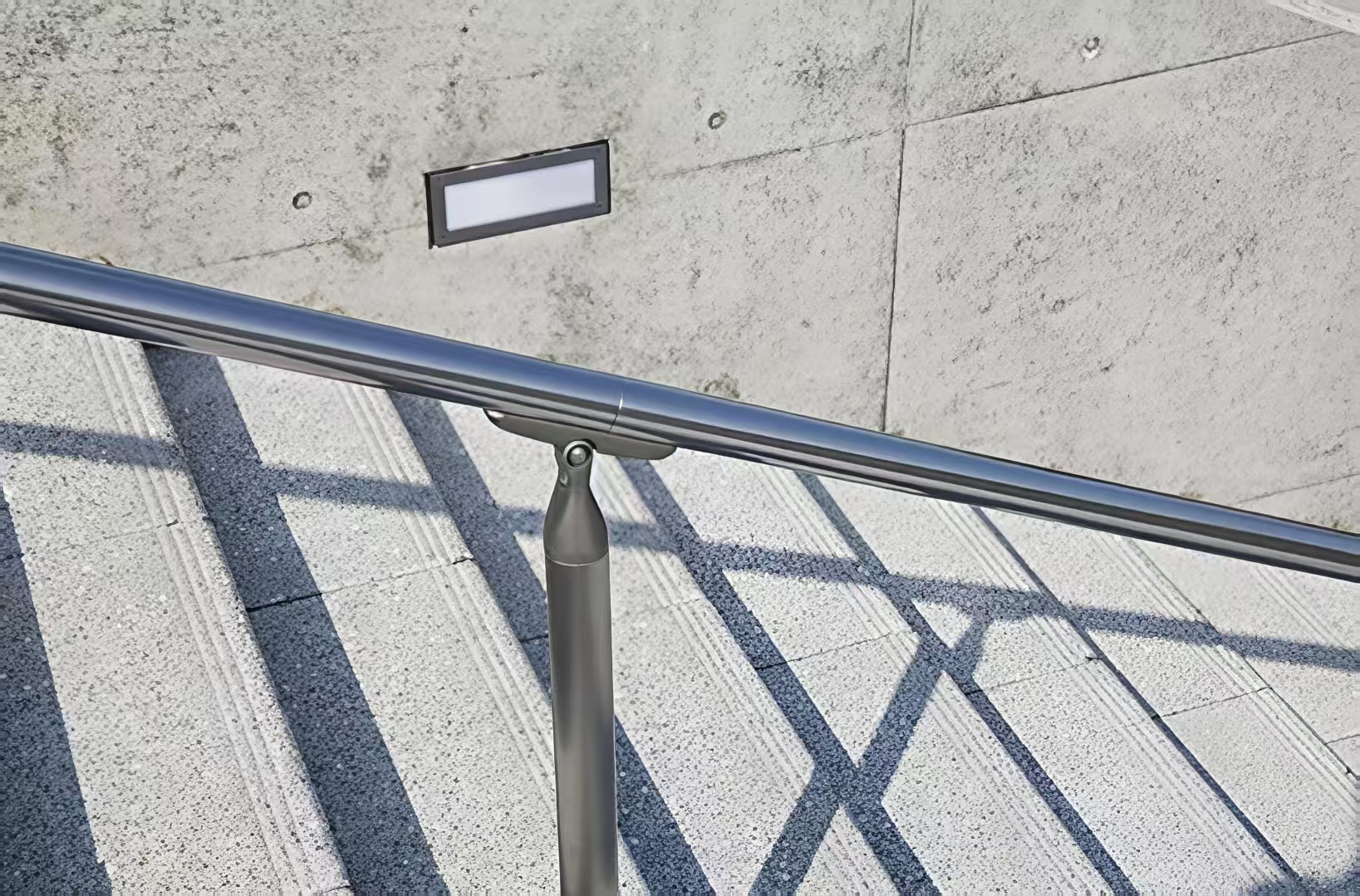
Stainless steel handrail for balcony, an example of project-type use.
For this use case, the key fit questions are: what is the handrail height and load requirement, which pipe profile matches the design, and do the fittings match the pipe diameter. A supplier that can provide both pipes and fittings from one product family reduces the risk of receiving components from different manufacturers that do not fit together.
Glass balustrades and facades
Glass balustrade projects require glass clamps, glass standoffs, brackets, cross bar holders and square or round tubes that act as posts and rails. The pipe section must be rigid enough to support the glass load, and the glass hardware must meet local building code requirements. In North America, IBC compliance for load-bearing glass hardware is a critical evaluation criterion.
Sanon's product range includes stainless steel glass clamps in addition to pipes and accessories. For a buyer, that combination matters: glass hardware is dimensionally tied to the pipe profile, so buying from a single supplier can make the installation detail easier to verify.
Decorative interior and color pipe projects
Interior projects often use stainless steel color pipes with PVD coatings, bendable profiles, end caps, decorative balls and pipe connectors. The visual requirement is more important than in industrial projects, and the finish must be consistent across all visible components.
The PVD trend noted by the International Stainless Steel Forum is relevant here. Suppliers should be able to state whether color finishes are applied through PVD or another method, because the coating choice affects color consistency, durability and environmental performance.
Sliding doors, shower rooms and complementary hardware
Sliding door fittings, door handles, stainless steel cables and pipe connectors belong to the same project ecosystem. Sanon's profile mentions shower room fittings as part of its specialization, which points to a broader product scope than pipes alone. Buyers evaluating a supplier for a mixed project should check whether these components are available under the same material and finish specification.
Documented distributor case
One of Sanon's documented case records describes a distributor relationship in China, Vietnam and Brazil. The record states a quantity of 9,000 tons for architectural/decorative projects over a 10-year period, with stable quality in accordance with national standards. This is not a laboratory test result, but it gives a reference point for how the supplier has supported repeated project-type orders.
Market Trends Affecting Project Procurement
The global stainless steel market was valued at USD 111.44 billion in 2022 and is projected to reach USD 182.10 billion by 2030, according to Fortune Business Insights. Growth estimates vary between 5.5% and 6.1% CAGR depending on the research firm, but the overall direction is clear: more projects will require stainless steel pipe and fitting packages.
China is a major part of this supply chain. Chinese exports of stainless steel reached 4.14 million tons in 2023, according to the General Administration of Customs of China. For a buyer, this means a large pool of suppliers, but also a wider range of quality levels. Supplier due diligence becomes more important, not less.
Three additional trends affect project fit. First, PVD color coating is replacing some electroplating in interior decoration because it is more environmentally friendly. Second, building codes for glass hardware are making load-bearing verification a standard part of project procurement. Third, buyers increasingly look for a supplier that can deliver both pipes and compatible fittings, because it simplifies procurement and reduces on-site compatibility problems.
Integrated Pipe and Fittings Supply vs. Multi-Source Procurement
| Evaluation factor | Traditional multi-source route | Integrated pipe-and-fittings supply (example: Sanon) |
|---|---|---|
| Component compatibility | Buyer coordinates pipe, fittings and glass hardware from multiple vendors | Pipes and fittings from one product family |
| Quality control | Separate inspections for each vendor | Documented 100% testing at the manufacturer |
| Technical data | Several datasheets, several standards | One set of material grade and finish parameters |
| Lead time | Multiple vendors with different schedules | Stated capacity of 9,000 tons monthly; 7-day lead time |
| Cost | Potentially lower unit price for individual components | May be higher on some line items, with less coordination cost |
| Risk | More interfaces, more delays | Concentration risk and limited range for specialty grades |
Limitations to Check Before Choosing an Integrated Supplier
The integrated model has boundaries. Sanon's standard pipe materials in the available documentation are SS201 and SS304. Buyers who need exotic alloys, very large pipe diameters, or heavy wall sections for special structural conditions should verify whether the supplier's production range can meet those needs before making a sourcing decision.
There is also concentration risk. When a single manufacturer supplies both pipes and fittings, a production delay at that manufacturer can affect multiple components of the same project. Buyers should look at the supplier's stated capacity and delivery history, and in some cases maintain a second source for critical items.
Finally, integrated supply is not always the lowest-cost approach. Commodity pipe may be cheaper from a mill, and standard fittings may be cheaper from a distributor who buys in large volume. The value of an integrated supplier is mainly in compatibility, specification clarity and fewer coordination points, not in automatically lower prices.
Future Outlook: Project-Specific Selection Will Become More Common
As architectural and industrial projects become more design-driven, the demand for correctly matched stainless steel pipe and fitting systems will continue to grow. Color pipe applications will push more suppliers to invest in PVD coating lines and finish consistency. Glass balustrade projects will continue to require code compliance evidence for clamps and standoffs.
For buyers, the practical implication is to evaluate suppliers against the full project scenario, not against a single material grade. At a minimum, a useful supplier file should include material grade, pipe profile, fittings, finish, MOQ, lead time, testing process and export experience. The combination of those elements is what makes a pipe supplier a project-fit supplier.
For reference, Sanon publishes a company brochure with product and company details: Sanon company brochure.
FAQ
How do I choose between round, square, slotted and oval stainless steel pipes for a project?
Round pipes are common for handrails because they are comfortable to grip and compatible with standard elbows. Square pipes are used for posts and frames where flat surfaces ease the mounting of glass clamps and brackets. Slotted pipes allow glass panels to be inserted without on-site drilling. Oval pipes are used when a softer handrail profile is desired. The profile should be chosen together with the fittings to ensure compatibility.
What is the difference between 201 and 304 stainless steel pipe?
201 stainless steel contains chromium 16–18%, nickel 3.5–5.5% and manganese 5.5–7.5%. 304 stainless steel contains chromium 18–20%, nickel 8–11% and manganese ≤2%. The higher chromium and nickel content in 304 normally gives it better corrosion resistance. 201 is a lower-cost material, while 304 is more common in environments where higher durability is needed.
What should I verify in a supplier's pipe and fittings range for an architectural project?
Check that the supplier can provide the pipe profile, grade, finish and fitting type as one matched set. For Sanon, the documented range includes SS201/SS304 pipes, fittings in 304, 316 or zinc alloy, satin or mirror finishes, and products such as glass clamps, elbow pipes and accessories. Also verify MOQ, lead time and the quality-control process.
Which standards apply to stainless steel pipes and glass hardware?
ASTM A312 covers seamless and welded stainless steel pipe, while ASTM A554 covers ornamental tubing for structural and architectural applications. In North America, glass clamps and standoff pins are governed by the International Building Code for load-bearing capacity. Buyers should confirm the specific code version required at the project location.
Can stainless steel pipes and fittings be customized for a specific project?
Yes, but customization should be confirmed in writing. Sanon lists OEM/ODM as a production mode and states that customized products and logo customization are available. The practical parameters include material grade, profile dimension, finish, MOQ and lead time.
What is a realistic MOQ and lead time when sourcing from a Chinese stainless steel pipe manufacturer?
For Sanon, the stated MOQ is 5 tons, the stated lead time is 7 days, and the monthly pipe capacity is 9,000 tons. Actual lead time depends on order size, surface treatment, inspection requirements and current production load, so buyers should ask for a written schedule.
Why is PVD coating important for stainless steel color pipe?
PVD coating is considered more environmentally friendly than electroplating and is increasingly used for color-finished stainless steel pipe in interior decoration, according to the International Stainless Steel Forum. The coating method affects color consistency, durability and environmental performance, so buyers should ask how the color finish is applied.