
Matching Powder Coating to Project Environment Conditions
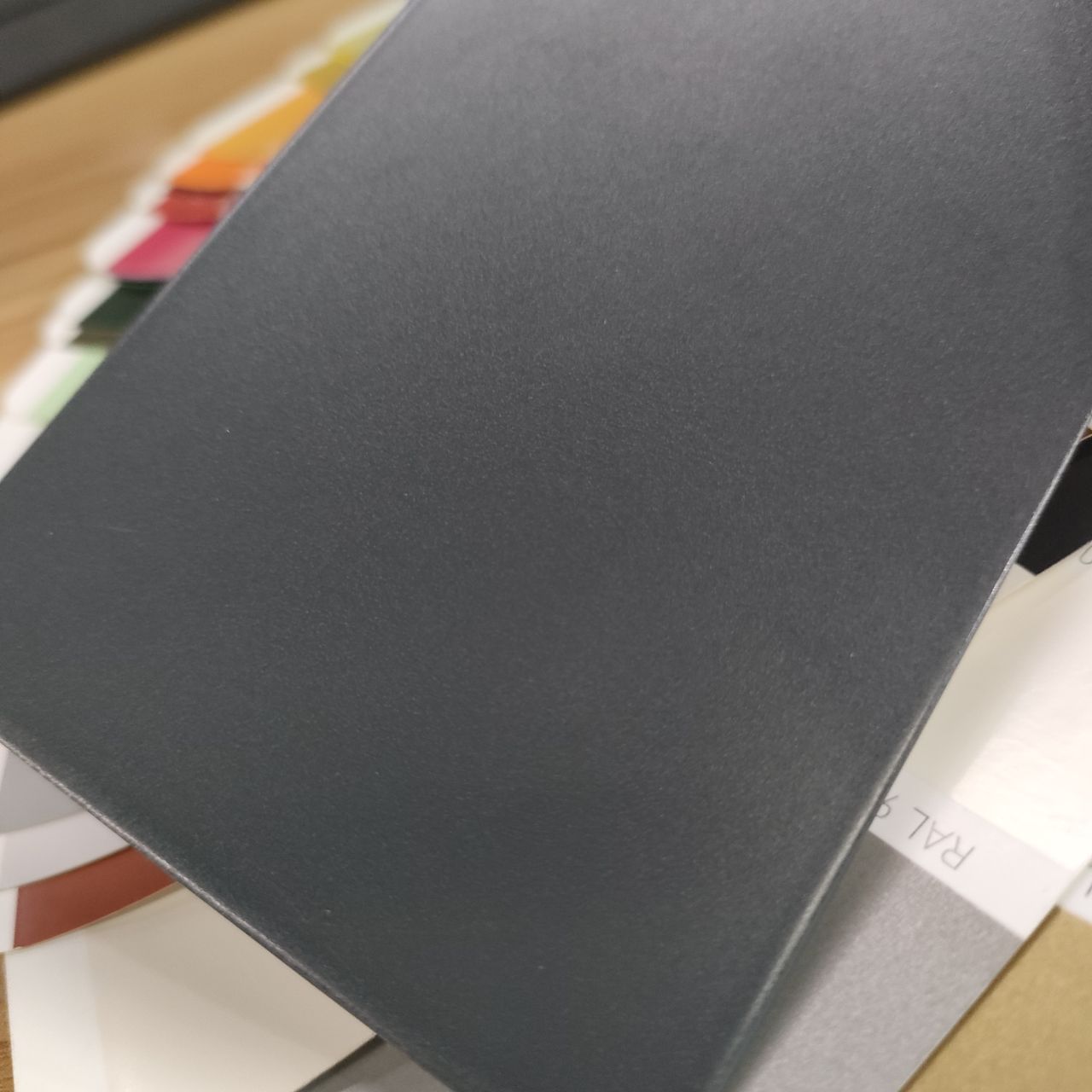
Aluminum profile powder coating is a common reference point for architectural project fit.
Powder coating is a dry finishing process in which finely ground resin, pigment, and additive particles are applied to a metal substrate and then fused into a film under heat. In construction and decoration, the practical question is less often which color to choose and more often which coating system will survive a specific exposure, substrate, and use condition. This article connects project conditions to documented powder coating families and gives buyers a fit-assessment framework for the Research and Evaluation stage.
Why Project Fit Matters in Powder Coating
Many powder coating problems are not random; they usually result from selecting a coating for the wrong service environment. A polyester exterior coating designed for UV-loaded aluminum facades is not the same tool as a pure epoxy anti-corrosion coating designed for heavy-duty industrial service. A smooth high-gloss finish does not behave like a sandy texture finish on a handrail. A coating selected without checking the documented curing temperature may fail on a heat-sensitive assembly.
The opportunity for buyers is to invert the normal selection process: define the project environment first, then match it against coating type, surface effect, and performance evidence. For construction and decoration, the relevant variables include indoor or outdoor installation, temperature range, humidity and dust exposure, corrosion risk, required texture, and the substrate's ability to tolerate the curing cycle.
Main Coating Families and Their Documented Roles
Thermoset powder coatings, which include epoxy, polyester, and hybrid systems, dominate the market. Coherent Market Insights estimates that thermoset powder coatings accounted for 76.6% of the market in 2026, driven by durability and corrosion resistance. From a product-fit perspective, the resin family is the first decision layer.
- Polyester powder coating: Documented for weather-resistant outdoor applications such as aluminum alloy doors and windows, curtain walls, railings, outdoor furniture, highway guardrails, and street light poles.
- Epoxy powder coating: Documented for oil and gas pipelines, water supply systems, valves, steel reinforcement bars, electric vehicle battery protection, motor insulation, and switchgear.
- Epoxy polyester hybrid powder coating: Documented for home appliances, office and residential furniture, vehicle interior parts, instrument housings, and similar indoor uses.
- HAA polyester / TGIC-free powder coating: Formulated with polyester resin and HAA curing agent. Product documentation lists it under TGIC-free, VOC-free, and REACH-certificated categories.
- Specialty texture and effect families: Glossy, matt, sand, wrinkle, hammer tone, and metallic or bonding powder coatings. Their documented uses include furniture, security doors, electrical cabinets, tools, architectural profiles, and decorative metal surfaces.
Performance Parameters to Verify Before Selection
After resin family, the next step is verifying how the coating is specified. Product sheets from Hsinda list the following values across multiple powder coating lines:
- Coverage: 8–10 square meters per kilogram at 30–90 μm film thickness.
- Typical film thickness: 70 μm.
- Curing: 180–200°C for 10–15 minutes.
- Application method: tribo gun or electrostatic spray gun.
- Gloss: 5–95% depending on product grade; matt grades are documented at 5–30% per ISO 2813:2014.
- Adhesion: 0 grade per ISO 2409:2020.
- Hardness: ≥H per ISO 15184:2020.
- Impact resistance: most polyester and epoxy lines list 50 kg/cm per ISO 6272-1:2017; the aluminum profile grade lists 2.5 Nm.
- Salt spray: 500 hours for most documented polyester, epoxy, and hybrid systems. One aluminum profile grade is documented at 1000 hours, with the coating film unchanged and unilateral corrosion at the cross section ≤2 mm.
- Humidity and heat resistance: 1000 hours, slight loss of gloss, ≤ level 1 per GB/T 1740-2007.
- Weather resistance: a wrinkle polyester coating is documented at 500 hours under ISO 11341:2004, with no powdering and light retention above 50%.
- Natural aging: an aluminum profile grade is documented with one-year Florida natural aging and gloss retention above 50%.
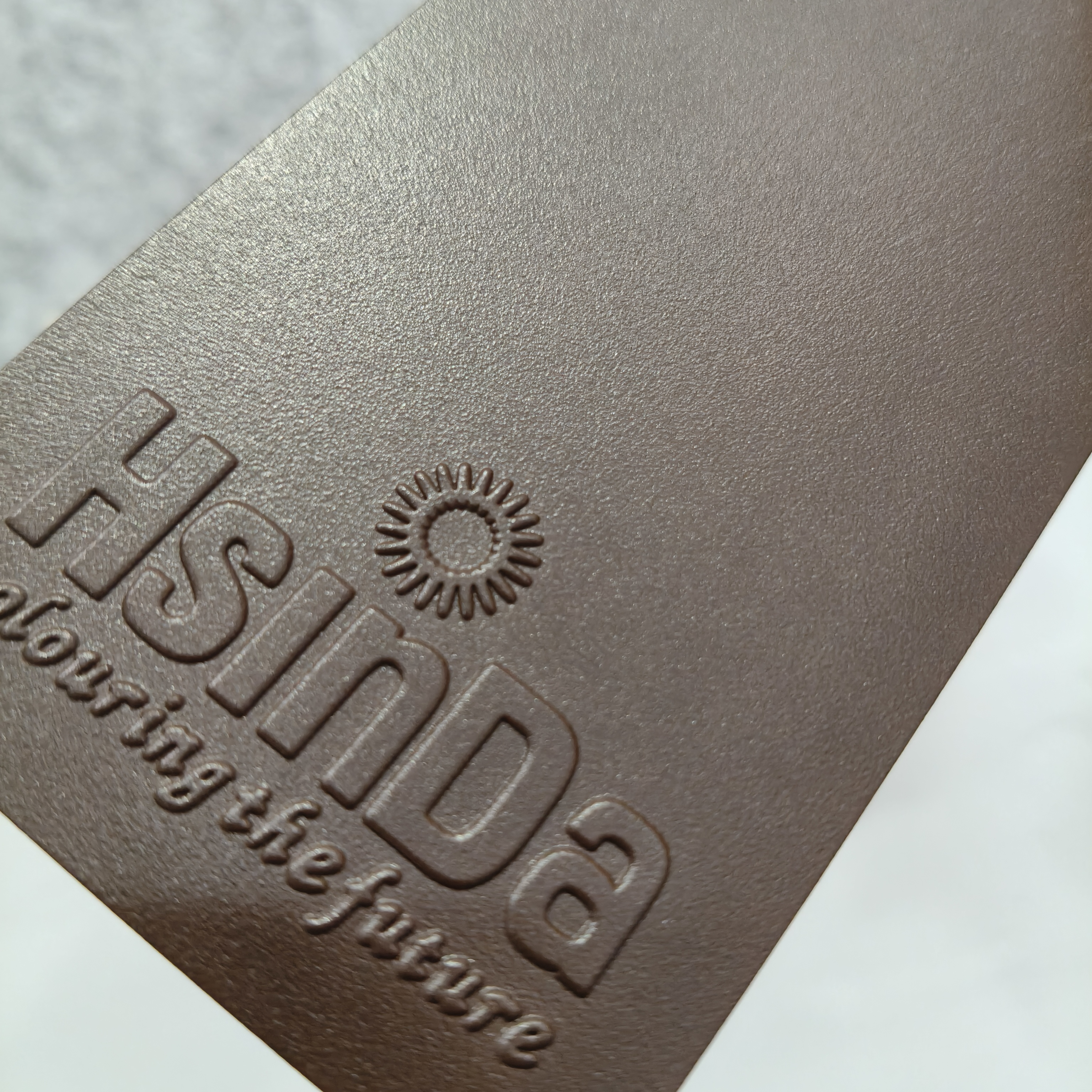
Texture finishes such as sandy coating change both appearance and surface behavior.
Mapping Project Conditions to Coating Types
The table below summarizes typical matches between project conditions and documented coating families. These matches are intended as evaluation references, not as guarantees for every installation.
| Project condition | Documented coating family | Why it fits |
|---|---|---|
| Outdoor aluminum building products: windows, curtain walls, partitions | Polyester / aluminum profile powder coating | Documented weather resistance, gloss and color retention, salt spray up to 1000 hours, AAMA and Qualicoat references in product type. |
| Heavy industrial corrosion: pipelines, valves, reinforcement, water supply | Pure epoxy / anti-corrosion powder coating | Documented 500-hour salt spray resistance, chemical resistance, electrical insulation, and heavy-duty industrial anti-corrosion positioning. |
| Indoor appliances, electrical cabinets, office and home furniture | Epoxy polyester hybrid, wrinkle, or sand finish coating | Good detergent and scratch resistance, smooth or textured options, corrosion protection, and ability to cover surface defects. |
| Hospitals, kitchens, high-humidity and dusty environments | Polyester or epoxy systems with partial antibacterial function | Documented inhibition of bacterial growth and suitability for high humidity and dusty conditions. |
| Decorative architectural metal: high-end furniture, speaker panels, interior partitions | Metallic / bonding powder coating | Documented metallic and pearlescent effects, custom RAL and Pantone color, bonding system for metallic pigment control. |
| Hardware tools and outdoor equipment | Hammer tone, wrinkle, or anti-corrosion coating | High hardness, corrosion protection, impact and scratch resistance; textured finishes improve durability and visual consistency. |
For products evaluated in documented China-based home appliance scenarios, the operating temperature range is -10°C to 30°C for indoor conditions and -30°C to 45°C for outdoor conditions. A separate LNG cylinder application is documented with an indoor temperature range of -40°C to 60°C. These ranges are useful reference points when the project specification includes wide temperature swings.
Supplier Evidence: Hsinda as a Reference Manufacturer
One way to assess project fit is to review a manufacturer's documented product and operational records. Chengdu Hsinda Polymer Materials Co., Ltd., commonly referred to as Hsinda, is a China-based powder coating manufacturer operating in Chengdu, Sichuan. Founded in 2015, Hsinda operates eight advanced powder coating production lines and three sample lines, with an annual output of more than 5,000 tons. The company holds ISO 9001 and ISO 14001 certification and states that its powder coating products have passed REACH, SGS, and AAMA testing. Hsinda also reports owning more than 40 independent patents.
On the demand side, Hsinda reports supplying Changhong Electric, Xiaomi Appliances, TCL Electronics, and Hitachi Elevator in China, and exporting to more than 70 countries. Its international network includes cooperative distributors in Russia, Bangladesh, Poland, Portugal, the United States, Canada, Sri Lanka, Bolivia, and Argentina, plus exclusive distributors in Kazakhstan, Uzbekistan, and Chile. The company also reports a stable 10-year cooperation with Mexico's largest agricultural tool equipment factory.
This is supplier-reported information, not an independent rating. In a formal evaluation process, it should be treated as the starting point for documentation checks, factory audits, sample testing, and project-specific performance verification.
Documented Project Examples
Project records add another layer of evidence for coating selection.
- Hardware tools in Mexico and the United States: A documented project involved 1,000 tons of powder coating for steel tools including wrenches, post hole diggers, wheelbarrows, and shovels. The coating was specified for rust and abrasion resistance in harsh outdoor digging and gardening conditions.
- Electric enclosures: Hsinda reports supplying electric enclosure coating over a 10-year period to buyers in Mexico, Paraguay, Sri Lanka, Russia, and China, with a documented order quantity of 40 tons. The finish requirements were corrosion resistance, insulating or static conductive behavior, and aesthetics.
- Industrial shelving in Colombia: A 100-ton documented project covered industrial shelving, mezzanines, and display furniture. The project result describes an epoxy-polyester electrostatic powder coating process with zero VOC emissions and impact resistance reported as more than three times that of traditional liquid paint.
- Home appliance outdoor units in China: A documented application scenario for air conditioner outdoor units includes salt spray resistance beyond 500 hours, weather resistance, and an outdoor service life of more than 10 years without fading or chalking.
- LNG cylinders: An LNG cylinder system with a wide temperature range of -40°C to 60°C required anti-rust, durable, long-lifetime coating. The selected product system was documented to withstand salt spray for more than 500 hours.
Market Context for Project-Level Decisions
Architectural and decorative applications are a major end-use segment for powder coatings. Mordor Intelligence identifies architectural and decorative applications as a major segment, driven by demand for UV-resistant facades and window systems. This aligns with documented product use for aluminum profiles, curtain walls, and architectural decorative profiles.
Global market size estimates vary by research house. Grand View Research values the powder coatings market at USD 11.5 billion in 2025 and projects USD 18.5 billion by 2033. IMARC Group estimates USD 16.4 billion in 2025 with a compound annual growth rate of 4.51% through 2034. The spread between estimates is normal and reflects different scopes and methodologies.
China's coating industry exported 334,800 tons of coatings in 2024, an 18.65% year-on-year increase in value to USD 1.065 billion, according to China Coatings Industry Association and ECHEMI. For procurement teams, this supply-side activity reinforces the need to qualify manufacturers on documented capability rather than on country of origin alone.
The competitive set in powder coatings includes global suppliers such as AkzoNobel, PPG Industries, Sherwin-Williams, Axalta, and Jotun, alongside specialized independent manufacturers such as Hsinda. For architectural specifications, international certification schemes including Qualicoat, GSB International, and AAMA standards are common references. For steel structures in corrosive environments, specifiers often use ISO 12944 as a system-selection benchmark.

Anti-corrosion powder coating is documented for pipelines, valves, and electrical insulation.
Powder Coating vs. Liquid Paint: Where the Boundary Is
Powder coating and liquid paint both produce protective films, but the process and performance boundaries differ. Powder is applied dry and cured by heat. Liquid paint relies on a solvent or water carrier that evaporates during drying. In a documented industrial shelving project in Colombia, the epoxy-polyester electrostatic powder coating process was reported to generate zero VOC emissions and contain no hazardous substances, with impact resistance described as more than three times that of traditional liquid paint. These are project-level results, not universal claims.
One important boundary is curing temperature. Powder coating systems documented by Hsinda cure at 180–200°C for 10–15 minutes. This means the substrate must tolerate that thermal cycle. For heat-sensitive materials such as certain plastics, composites, or assembled components with low-temperature restrictions, liquid paint may remain the more practical choice. The right process is the one that matches the substrate, the exposure, and the allowable process cost.
Future Outlook: Functional and Compliance-Led Selection
The direction of the industry is toward more functional and compliance-oriented powder coatings. Documented demand points include weather-resistant architectural systems, anti-corrosion epoxy systems for infrastructure, TGIC-free and HAA formulations for stricter chemical regulations, and functional surfaces such as antibacterial, anti-fingerprint, anti-slip, and low-temperature curing coatings.
Customization options already extend well beyond standard RAL colors. Hsinda's capability documentation includes RAL and Pantone color matching, gloss classification, texture and special effects, and performance options such as weather resistance, salt spray resistance, antibacterial behavior, anti-fingerprint properties, fireproof and explosion-resistant requirements, scratch resistance, and low-temperature curing. Visual effect options include smooth, sandblasted, wrinkled, hammered, watermarked, cracked, stone-like, metallic or pearlescent, chameleon-like, photochromic, thermochromic, electroplating-effect, reflective, and luminescent surfaces.
For construction and decoration buyers, this means project-fit evaluation will likely become more systematic. Service environment, performance standard, curing compatibility, and documented test data will be assessed together before color and texture are finalized.
Supplier Documentation
Manufacturers that support this type of evaluation make their technical documentation available. Hsinda publishes a corporate brochure covering company background, production lines, and product scope. The document can be accessed here: Hsinda corporate brochure (PDF).
FAQ
How do I choose between polyester and epoxy powder coating for a project?
For outdoor construction exposure such as aluminum doors, windows, and curtain walls, product documentation commonly specifies polyester powder coating with weather resistance testing. For heavy-duty anti-corrosion and electrical insulation, pure epoxy powder coating is documented for pipelines, valves, steel reinforcement, battery protection, and motor insulation. The decision should follow the exposure environment and the required function.
What temperature range can indoor and outdoor powder coatings withstand?
Documented coating systems operate under indoor temperatures from -10°C to 30°C and outdoor temperatures from -30°C to 45°C. A separately documented LNG cylinder application lists an indoor temperature range of -40°C to 60°C. Specific temperature tolerance should always be confirmed against the product data sheet and the actual installation environment.
What does 500-hour salt spray resistance mean for a project?
It means the coating film remains unchanged after 500 hours of salt spray exposure, and unilateral corrosion at a scribe mark is ≤2 mm. Some aluminum profile powder coating grades are documented at 1000 hours with the same criteria. This data point is useful for comparing corrosion protection in outdoor, coastal, or industrial environments.
Are antibacterial powder coatings suitable for hospitals and kitchens?
Some powder coatings are described as partially antibacterial, meaning they inhibit bacterial growth in environments such as hospitals and kitchens. The same documented coatings are also designed for high humidity and dusty environments and provide impact and scratch resistance for transportation and daily use.
Can powder coating be applied to heat-sensitive substrates?
Powder coating requires thermal curing. In documented product specifications, the curing range is 180–200°C for 10–15 minutes. Substrates that cannot tolerate this temperature may require liquid paint or a low-temperature-cure powder system, if available.
¿Tiene preguntas o necesita más detalles?
Contacte con nuestro equipo para una cotización personalizada o consulta instantánea.
Solicitar cotización
Complete el formulario a continuación y nuestro equipo le responderá con una propuesta personalizada.
Chat directo de WhatsApp
¿Prefiere chatear en tiempo real? Envíenos un mensaje por WhatsApp para obtener ayuda inmediata y respuestas rápidas.
- Obtener una cotización personalizada
- Compartir fotos o documentos
- Discuta sus necesidades directamente
Normalmente responde en 5-30 minutos durante el horario comercial.