
Matching Live Streaming Cameras to Project Scenarios
TCHD Video is a Beijing-based professional video hardware manufacturer, established in 2005, that designs and produces live streaming cameras, video capture cards, video converters, video encoders and video switchers. The company operates a 10,000 m² facility with 50 employees, including a 10-engineer R&D team, and exports 20% of its output to the EU, USA and Asia markets. Its broader catalog also extends to recording hosts, virtual studio all-in-one machines, medical video recorders, surgical teaching hosts and streaming media servers.
For procurement teams moving from initial research into supplier evaluation, the relevant question is rarely which camera is best in absolute terms, and more often which camera fits which project type. This article maps TCHD Video's three live streaming camera models — TC-980S, TC420 and TCHD-T3 — to the education, medical, e-commerce, conference and event streaming scenarios documented in the company's product and application data.
Why project fit matters in live streaming camera procurement
Buyers evaluating live streaming cameras are making decisions in a category with clear commercial momentum. The global live streaming camera market is projected to reach USD 3.35 billion in 2025, growing at a CAGR of 8.8% to USD 7.79 billion by 2035. In the broader conferencing segment, PTZ cameras are estimated to account for 38.5% of global conference camera revenue in 2025, and video conferencing hardware represented 46% of total video conferencing revenue in 2024.
At the same time, a generic camera specification does not by itself de-risk a project. A university lecture capture system requires continuous operation and automated framing. A medical teaching room requires low image noise and stable color under long operating hours. An e-commerce livestream requires vertical output, fast preset recall and a camera that can stream directly to a server platform. The scenario, not the spec sheet, defines the appropriate camera.
TCHD Video's application documentation covers project types including education lecture capture, medical teaching, corporate meetings, event live streaming, e-commerce live streaming and church live streaming, across markets including the US, UK, Australia, Spain, France, Netherlands, China and South Korea. The documented working environment is indoor, with a temperature range of -10°C to +50°C and humidity of 20% to 80%.
TCHD Video's camera lineup: three models with different fit profiles
TCHD Digital Video Technology Development (Beijing) Ltd, the legal entity behind the TCHD Video brand, groups its live streaming camera portfolio around three models: TC-980S, TC420 and TCHD-T3. The three cameras share a common foundation — 1/2.8-inch CMOS imaging, PTZ mechanics, multi-interface video output and IP network protocols — but each model is positioned for a different set of project requirements.
TC-980S: broadcast-style PTZ with auto tracking
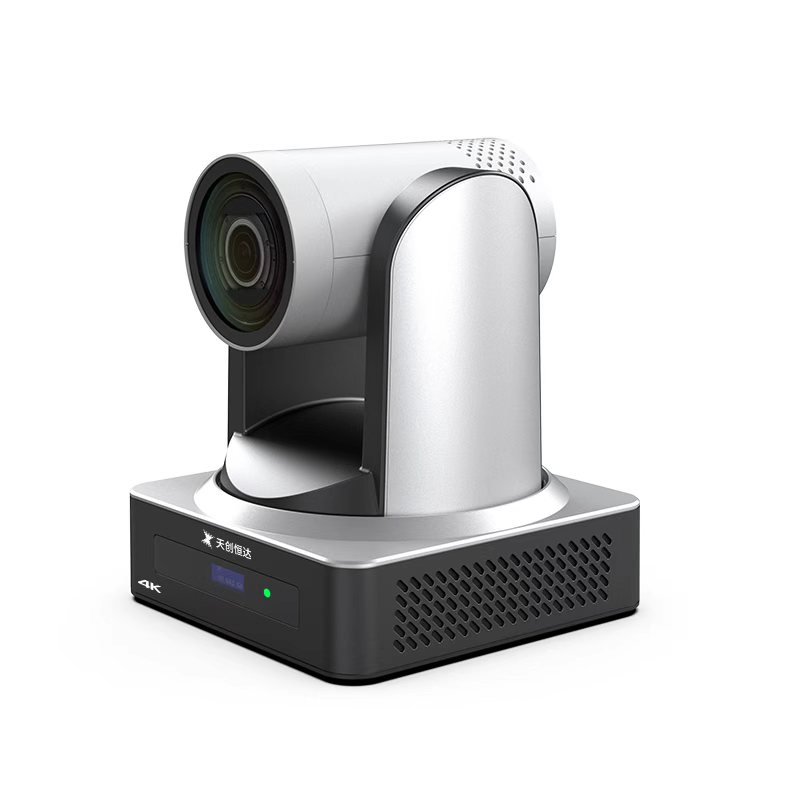
TC-980S is a PTZ live streaming camera in the event streaming, education training, medical teaching and video conference camera categories, and is intended for the broadcasting industry. It uses a 1/2.8-inch high-quality CMOS sensor with 8.42M effective pixels, and is offered with 12X, 20X or 30X optical zoom depending on the lens configuration. The camera's pan range is -170° to +170°, the tilt range is -30° to +90°, and total power consumption is ≤18 W.
Video output on the TC-980S includes HDMI at up to 4K (3840x2160), SDI at 1080P up to 60 fps, USB 3.0, and a 1000M Ethernet port that supports PoE+ power and video output. Network compression uses H.264 and H.265, with a bitrate range of 64–40960 Kbps. Supported protocols include RTSP, RTMP, ONVIF, GB/T28181 and SRT; NDI and Dante AV-H are available as optional modules.
For venues without a dedicated camera operator, the TC-980S includes a monocular tracking system with real-time tracking, stage tracking, area tracking and intelligent framing modes, and a maximum tracking distance of up to 18 meters. This makes it practical for lecture halls, training rooms and houses of worship where the camera must follow a presenter automatically.
TC420: PTZ camera for conference rooms and medical training
TC420 is a live streaming camera in the PTZ, video conference, education and medical training categories. It is built around a 1/2.8-inch HD CMOS sensor with 8.29M effective pixels, a 12X optical zoom and a 15X digital zoom. The pan range is -170° to +170°, the tilt range is -30° to +90°, and total power consumption is under 12 W.
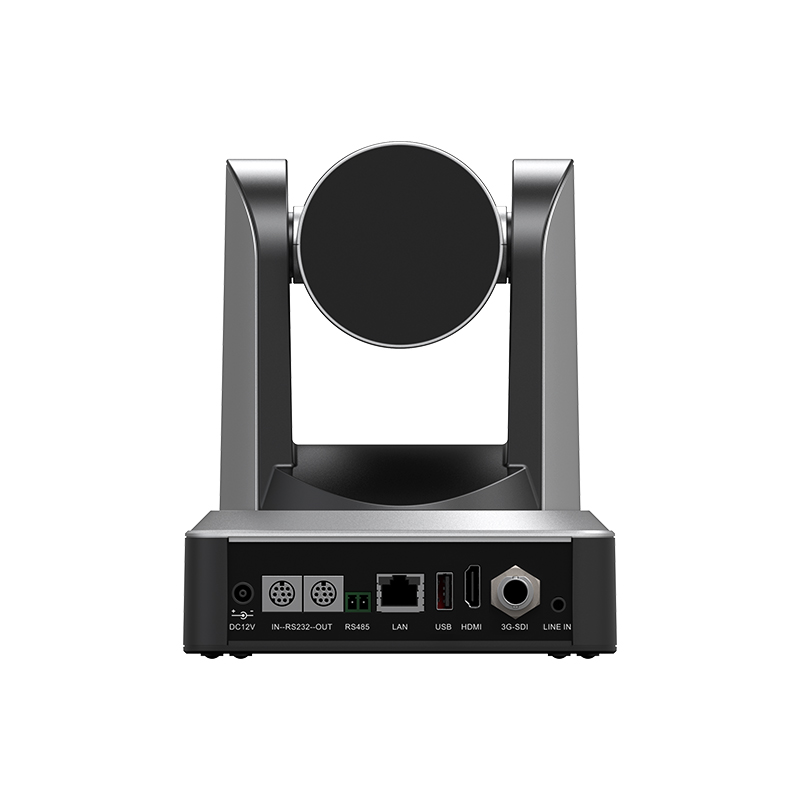
The TC420 provides a broad set of control options. It supports VISCA, Pelco-D and Pelco-P serial protocols over RS232-IN, RS232-OUT and RS422 (compatible with RS485), and it also supports VISCA over IP. On USB, the camera supports UVC and UAC protocols, so it appears as a standard video and audio device to a PC without additional drivers.
Video outputs on the TC420 include HDMI at up to 4KP30, SDI at up to 1080P60, USB 3.0 and LAN with PoE. Streaming protocols include RTSP, RTMP, RTMPS, SRT, ONVIF and GB/T28181, with remote upgrade, remote reboot and remote reset available through the network interface.
TCHD-T3: compact HD camera for e-commerce, education and vertical streaming
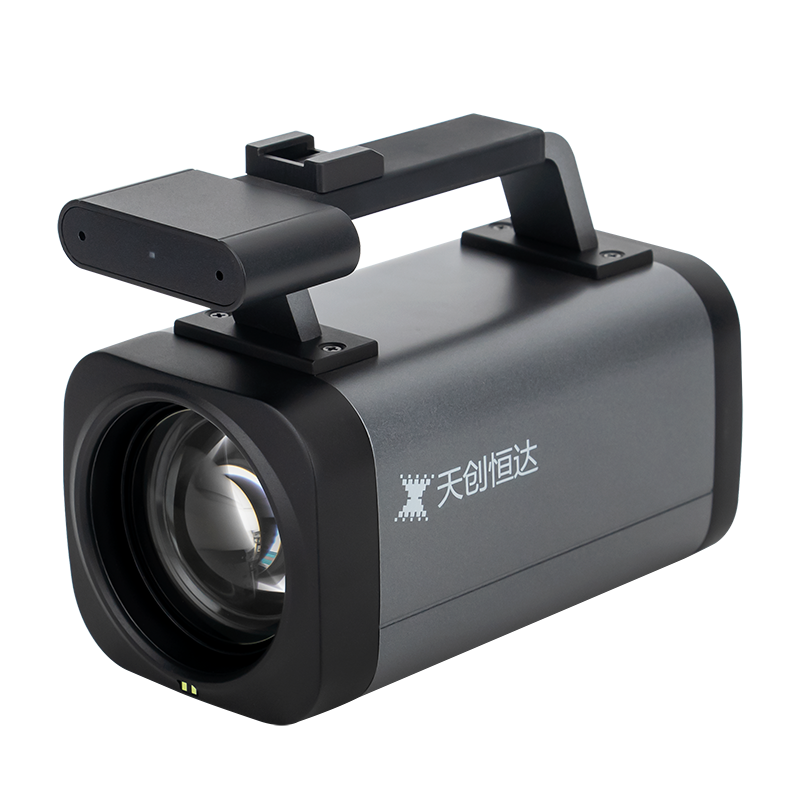
TCHD-T3 is a compact live streaming camera designed for broadcasting, medical, e-commerce streaming, education teaching and event streaming. It uses a 1/2.8-inch CMOS sensor with 2.07M effective pixels, a 12X lens (f3.5–42.3mm, F1.8–F2.8) and 16X digital zoom. The camera outputs up to 1080P at 60 fps over HDMI 1.4b, USB 3.0 Type-C and USB 2.0 Type-A, and it includes a 10M/100M RJ45 Ethernet port with PoE support. Video compression is available in H.264, H.265 and MJPEG.
For e-commerce and social streaming, the TCHD-T3 includes a vertical/horizontal screen button, which lets operators switch between landscape and vertical output for short-form and TikTok-style streaming. It also supports 255 preset positions, H/V flip, image freeze and UVC 1.1–1.5, with UVC PTZ control. The camera's video S/N of ≥55 dB helps in medical and education rooms where image cleanliness matters.
For distributors and integrators that need their own branding, TCHD Video operates an OEM/ODM production mode. The company offers logo customization, a monthly capacity of 500 units, a lead time of 30–45 days, and a minimum order quantity of 1 unit. Every unit receives 100% testing before shipment, and after-sales support is available remotely. Export markets include the EU, South East Asia and the USA.
Reading the technical layer: interfaces, protocols and power
When comparing camera options for a specific project, four technical layers matter most in the TCHD Video lineup: video outputs, compression, control and power.
- Video outputs: The TC-980S and TC420 provide the most complete set — HDMI, SDI, LAN and USB 3.0. This allows the same camera to feed a hardware switcher via SDI, an encoder via HDMI, a streaming server via LAN, and a computer via USB. The TCHD-T3 focuses on HDMI, USB and Ethernet, which covers software-based production workflows.
- Compression: Network streams on the TC-980S and TC420 use H.264 and H.265; USB streams use MJPG, H.264, YUY2 and NV12. The TCHD-T3 supports H.264, H.265 and MJPEG, and its UVC support is compatible with Windows, macOS, Linux and Android operating systems.
- Control: RS232, RS422 and RS485 with VISCA, Pelco-D and Pelco-P protocols provide the bridge to professional controllers and joysticks. Network VISCA support on the TC420 and TC-980S enables IP-based control, and ONVIF support assists integration into video management systems.
- Power: All three models accept DC 12V input. The TC-980S adds optional PoE+, the TC420 adds PoE, and the TCHD-T3 supports PoE on its 10M/100M port. PoE variants reduce cabling in retrofit projects where a power outlet near the mounting point is not available.
- Environment: TCHD Video's documented scenarios are indoor. The working temperature range is -10°C to +50°C, and the working humidity range is 20% to 80%. Some project types, such as sports broadcasting and medical teaching, are specified for 24/7 continuous operation.
Scenario mapping: which model fits which project
Scenario mapping is the core of the live streaming camera buying decision. The table below maps TCHD Video's models to the use cases documented in the company's application and case data.
| Use Case | Recommended Model | Why It Fits |
|---|---|---|
| Education lecture capture and teaching live streaming | TC-980S | Used by government, hospital, school and YouTuber clients for teaching live streaming; auto tracking up to 18 meters; HDMI/SDI/LAN/USB3.0 outputs. |
| Medical teaching and training (indoor, 24/7) | TCHD-T3 / TC420 | TCHD-T3 is documented in medical teaching projects with 24/7 indoor operation at -10°C to +50°C and 20–80% humidity; video S/N ≥55 dB for clean images. |
| E-commerce and TikTok-style vertical streaming | TCHD-T3 | Vertical/horizontal screen button; 255 presets; UVC plug-and-play; 1080P60 over USB for software-based streaming. |
| Corporate video conference rooms | TC420 | UVC/UAC support; 4KP30 over HDMI; PoE power; under 12 W; VISCA/Pelco-D/Pelco-P control. |
| Church and event streaming | TC-980S / TC420 | SDI + HDMI outputs for hardware switchers; SRT for reliable IP delivery; 255 preset positions for repeatable framing. |
In a documented education deployment, TCHD Video cameras were used for teaching live streaming by government, hospital, school and YouTuber clients in markets including Germany, Australia and Malaysia, with approximately 20 units deployed over a two-year period. The documented performance highlights stable operation, low noise and auto tracking.
Market trends relevant to camera procurement
Three market trends from industry data help frame the live streaming camera procurement decision. First, the global live streaming camera market is projected to grow from USD 3.35 billion in 2025 to USD 7.79 billion by 2035, a CAGR of 8.8%. Second, PTZ cameras are estimated to account for 38.5% of global conference camera revenue in 2025. Third, video conferencing hardware represented 46% of total video conferencing revenue in 2024.
The practical implication for buyers is that PTZ live streaming cameras are not a niche request. They sit at the intersection of three spending categories — live streaming equipment, conference room hardware and broadcast production tools — and the same camera model can serve multiple categories if the interface and protocol set is broad enough. Multi-output PTZ cameras such as the TC-980S and TC420 are designed for exactly this kind of hybrid use.
PTZ live streaming cameras vs. fixed webcams
For many first-time buyers, the practical alternative to a PTZ live streaming camera is a fixed webcam. A webcam is cheaper, smaller and simpler to install. It is also limited: no optical pan/tilt/zoom, no SDI output, no serial control, and generally no PoE. In a dedicated room where a camera is permanently mounted above a display, a PTZ camera's remote framing, preset recall and broadcast outputs replace manual camera adjustment.
One honest limitation of TCHD Video's current lineup should be weighed during evaluation: the documented working environment is indoor. The application specifications list a working temperature range of -10°C to +50°C and humidity of 20% to 80%, with indoor installation. Teams planning fully exposed outdoor installations will need to add an outdoor-rated enclosure or select a camera purpose-built for outdoor operation.
Where the live streaming camera category is heading
TCHD Video's product data points toward three directions in the live streaming camera category: IP-native protocols, automated tracking and vertical video. On the protocol side, SRT has become a common requirement for reliable streaming over unpredictable networks, and NDI is increasingly specified for AV-over-IP production workflows. On the automation side, auto tracking reduces the need for a dedicated camera operator in classrooms, meeting rooms and houses of worship. On the format side, vertical video is now a baseline requirement for e-commerce and short-form social streaming.
The current TCHD Video lineup already reflects this direction. The TC-980S includes SRT support and optional NDI and Dante AV-H; its monocular tracking system covers real-time, stage, area and intelligent framing modes with a tracking distance of up to 18 meters; and the TCHD-T3 includes a vertical/horizontal screen button. These capabilities suggest a product roadmap focused on software-defined, partially automated streaming production.
TCHD Video — live streaming cameras, PTZ cameras and professional video hardware for integrators, distributors and end users. To evaluate a model for a specific project, download the TCHD Product Catalog 2025 or contact the sales team at sales@tchdvideo.com. Leo Chen, Tel +86-13910334207, WhatsApp +86 19498872019. Website: www.tchdvideohk.com.
FAQ
Which TCHD Video model is recommended for education lecture capture?
The TC-980S is the recommended education-focused model. It belongs to the education training camera and event streaming camera categories, and it has been successfully used by government, hospital, school and YouTuber clients for teaching live streaming. It features a 1/2.8-inch CMOS sensor, 12X optical zoom, HDMI, SDI, LAN and USB3.0 outputs, and monocular tracking modes with a maximum tracking distance of 18 meters.
Can TCHD Video cameras support medical teaching projects?
Yes. The TCHD-T3 and TC420 are both categorized for medical teaching and medical training. The TCHD-T3 is documented in sports broadcasting and medical teaching projects with 24/7 continuous operation in an indoor environment, at -10°C to +50°C and 20% to 80% humidity. Its video S/N is ≥55 dB.
What supporting equipment is needed for these live streaming cameras?
The documented accessories for the application scenarios include an HDMI cable, SDI cable and power adapter. Models with Ethernet PoE support can receive power over the network cable if a PoE or PoE+ switch or injector is available, which may remove the need for a nearby power outlet.
Does the TC420 support standard PTZ control protocols?
Yes. The TC420 supports VISCA, Pelco-D and Pelco-P over RS232-IN, RS232-OUT and RS422, and it also supports VISCA over IP. The camera provides up to 255 preset positions, with 10 accessible via the remote control.
Can these cameras operate 24/7?
The documented application scenario for the TCHD-T3 includes 24/7 continuous operation indoors, with a working temperature range of -10°C to +50°C and humidity of 20% to 80%. Buyers should still verify the specific model's power supply and heat dissipation environment for each installation.
What streaming protocols do TCHD Video cameras support?
The network stream supports RTSP and RTMP across the lineup, with ONVIF for management compatibility. The TC420 adds RTMPS and SRT; the TC-980S adds SRT, GB/T28181 and optional NDI or Dante AV-H. These protocols allow the camera to stream video to a variety of streaming server platforms.