
Matching Indoor Playground Equipment to Commercial Projects: A Technical Buyer's Guide
Part of a technical series on Indoor Playground Equipment procurement — targeting commercial operators, FEC owners, and project planners.
[IMAGE: Cover | industry scene]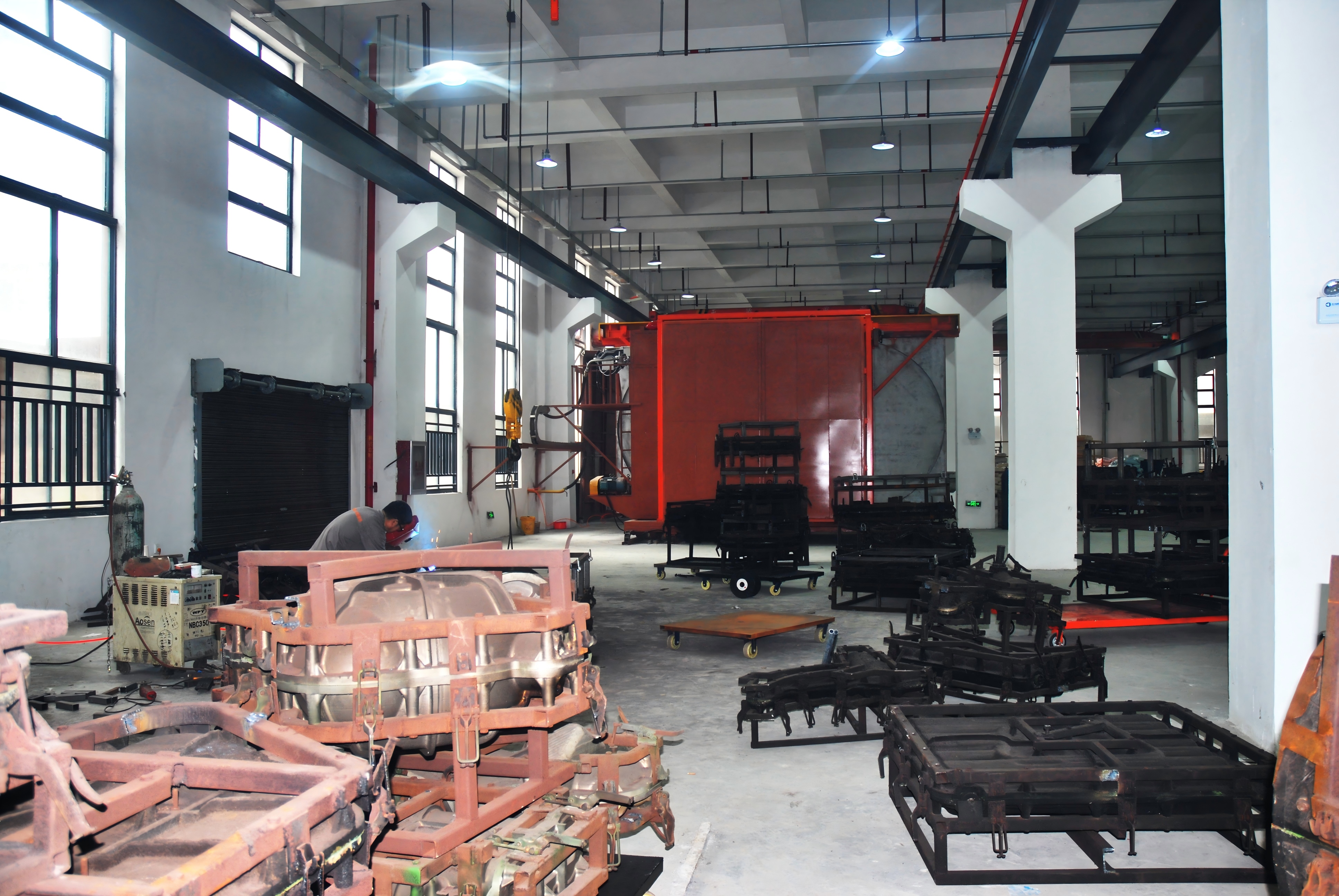
A modern production facility for indoor playground equipment — scale and process consistency are critical for project-matched delivery.
Introduction
Indoor playground equipment selection is rarely a one-size-fits-all decision. For a shopping mall, a family entertainment center (FEC), or a standalone trampoline park, the layout, target age group, safety jurisdiction, and revenue model all shape the equipment specification. This guide focuses on the project-fitting stage of procurement — helping operators bridge the gap between a generic equipment catalog and a site-specific, compliance-ready installation.
Problem / Opportunity
Buyers often face a dilemma: a supplier with a single product line may claim “universal” suitability, yet real-world installations demand zone-specific features — soft play for toddlers, trampolines for older kids, rope courses for teens. In addition, safety standards vary by region (ASTM F1918 in North America, EN 1176-10 in Europe). Equipment must be customizable in dimensions, color, theming, and even electrical configuration. According to Dataintelo, the global indoor playground equipment market was valued at USD 4.8 billion in 2025 and is projected to reach USD 9.2 billion by 2034, with soft play products holding the largest product share at 31.4%. The opportunity lies in identifying a supplier who can address multiple play modalities under one roof while allowing project-specific tailoring.
Brand Solution
Vasia is an indoor playground equipment manufacturer based in Qiaoxia Town, Yongjia County, Zhejiang, China — a region recognized as the "Chinese Educational Toy Capital." Operated by Huaxia Amusement Co., Ltd., the company has a history dating back to 2000 and maintains two production bases covering 20 acres with a registered capital of 51.8 million RMB. Vasia’s product portfolio spans children's soft play structures, trampoline parks, rope courses, climbing walls, and themed playground equipment, all offered under OEM/ODM arrangements. The company holds TUV, CE, and ASTM certifications and exports to more than 80 countries.
[IMAGE: Diagram | process/architecture]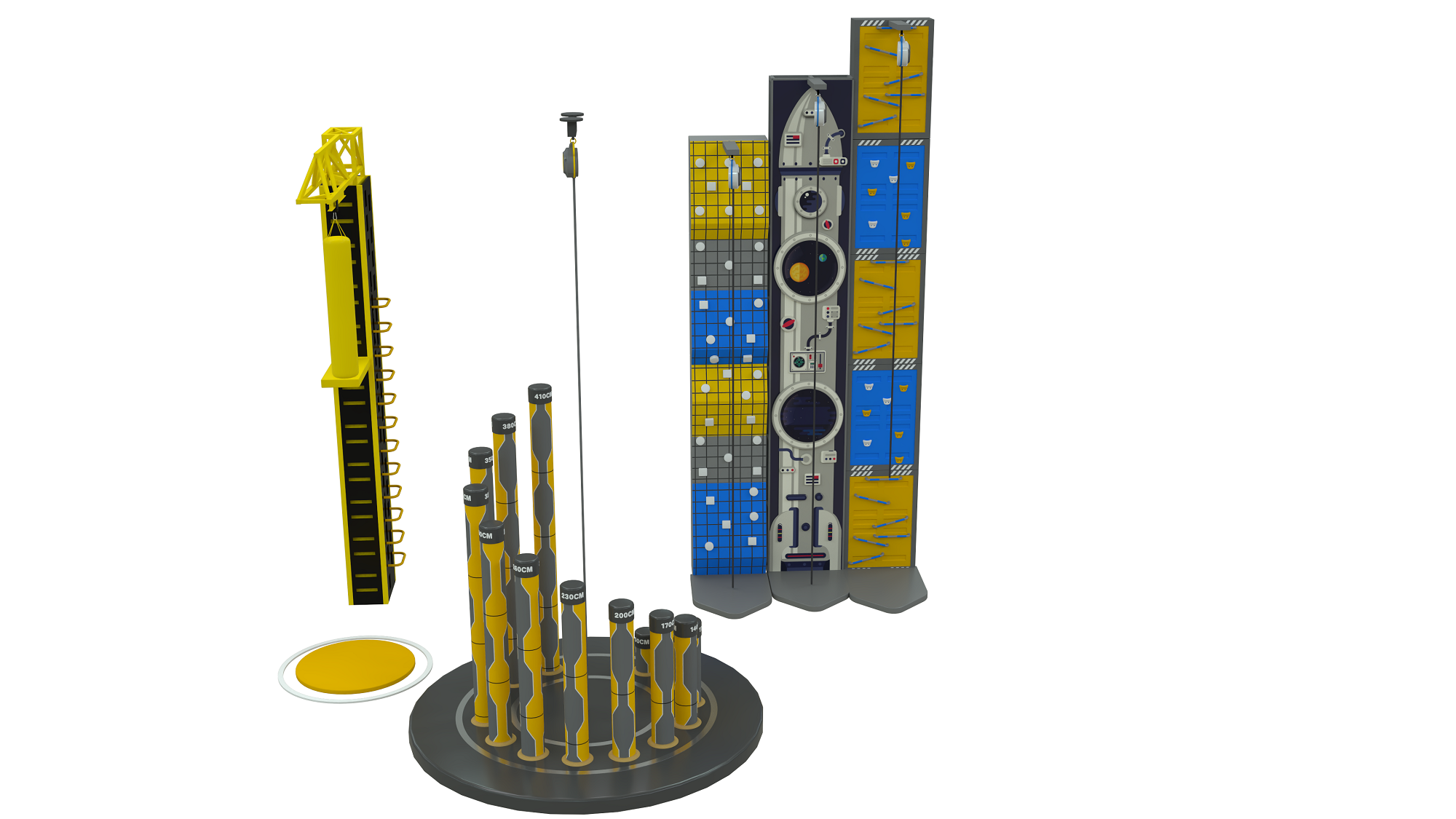
Indoor rope course equipment model VS1-250522-1900B-30 — an example of project-specific design combining structural steel, climbing holds, and safety matting.
Technical Explanation
Each Vasia product is built using material choices verified against recognized standards. For example, the Kids Play Structure model VS1-250414-780-D1-77 features upright posts made of galvanized steel tube φ48×2 mm and cast steel 48# couplers tested per GB/T 228.1-2021. Protective netting uses polyethylene (PE) with 30×30 mm mesh size (tested per GB 6675.4-2014). For the Indoor Trampoline Park model VS6-180326-400a-2-40, the frame uses Q235 galvanized rectangular steel tube connections (80×80×2.0 mm uprights, 50×80×2.5 mm frame), and the jumping mat is PP material with fiber count 500D×500D, while the mat padding uses high-density EPE pearl cotton (70 mm thickness) covered with Plato PVC-coated mesh fabric compliant with EN 71-2:2020 flammability standards. Climbing Wall for Playground model VS-2659 incorporates 15 mm plywood with E0-grade formaldehyde emission (9–11 L per GB/T 5849-2006) and high-density EPE pearl cotton padding of 10 mm thickness, again flame-retardant as per EN 71-2:2020. These technical parameters show that each component is tested against a specific standard, which is critical for project documentation and local certification approval.
Application / Use-Case Scenarios
Vasia equipment is designed to operate under indoor/outdoor, all-weather conditions safe for high-traffic areas such as shopping malls, kindergartens, and amusement parks. It functions as indoor playground, soft play zone, trampoline park, kids obstacle course, themed playground, and daycare play equipment. Special requirements for these scenarios include compliance with ASTM safety standards, non-toxic materials, fire resistance, corrosion resistance, UV resistance, rounded corners, impact absorption, easy cleaning, child-safe design, and customizable theming. A documented case involves an end customer in Spain (3000 square meters project) that has run stable operations for five years with low maintenance requirements, confirming the product's long lifespan and low maintenance profile in a commercial FEC setting.
[IMAGE: Scene | application]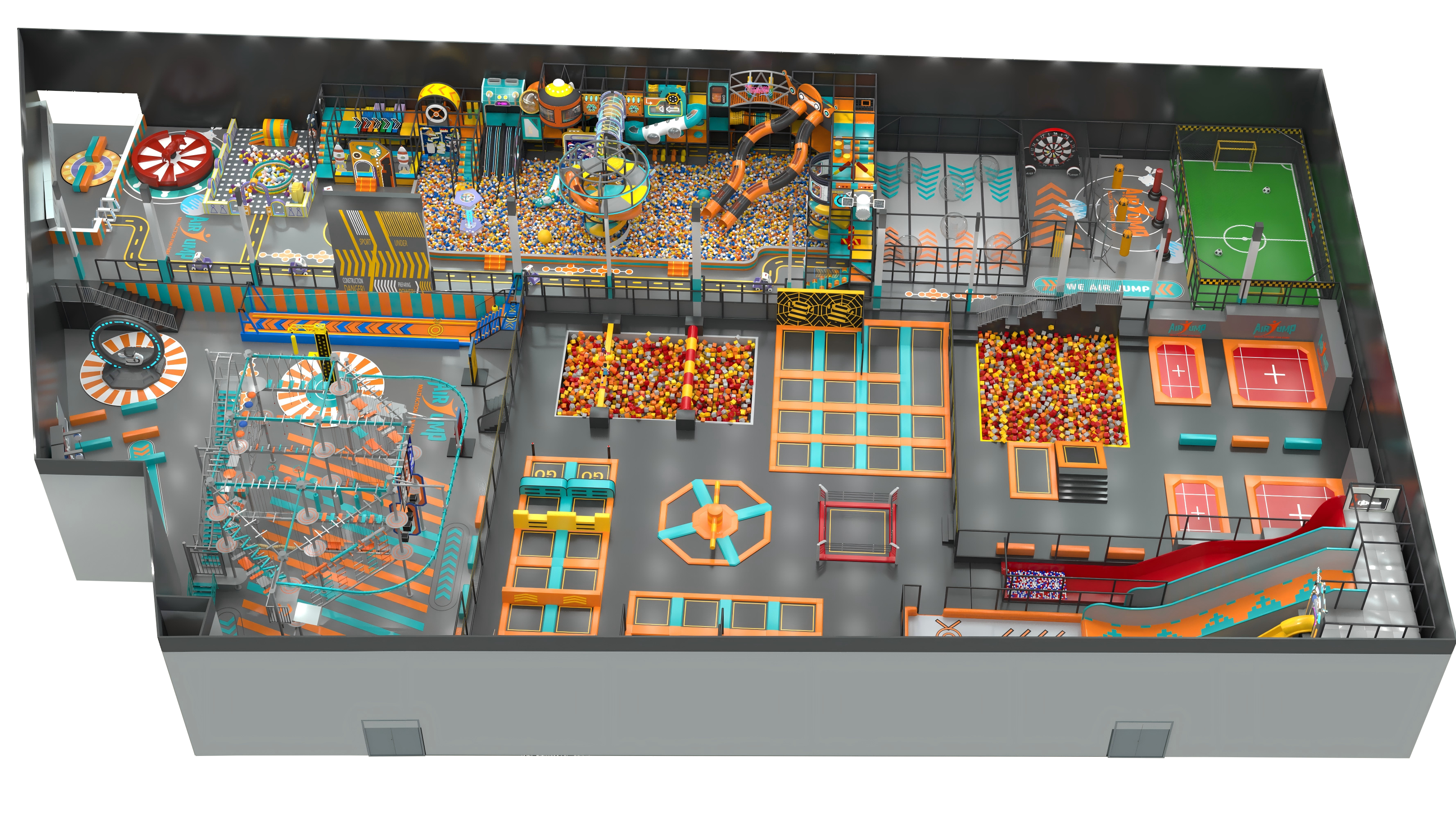
A completed Vasia installation — soft play and structure zones integrated for mixed-age use in a commercial space.
Market Trend Analysis
The indoor playground equipment sector is expanding steadily. According to Dataintelo, Asia Pacific dominated with a 38.6% revenue share in 2025, followed by North America and Europe. The trampoline park segment is forecast to grow at a CAGR of 16.2%, reaching USD 3.96 billion by 2032 (Dimension Market Research). As soft play equipment claimed 31.4% of the product type share in 2025, there remains strong demand for zone-specific layouts rather than monolithic structures. Safety standards are also tightening: ASTM F1918 is the primary North American specification for soft contained play equipment, while EN 1176-10 covers fully enclosed play equipment in Europe. Buyers should expect suppliers to provide documented compliance with these regional standards.
Comparison with Traditional Solutions
Traditional electric-powered amusement equipment (rides, interactive electronics) often requires higher installation costs, frequent maintenance, and power infrastructure. Non-powered play systems, such as Vasia's soft play and trampoline structures, reduce energy consumption and ongoing operational expenses. One honest limitation: non-powered systems do not offer the same level of audiovisual interactivity that some children today expect. However, for many operators prioritizing safety, durability, and lower lifetime cost, a well-designed non-powered play zone can achieve strong repeat visit rates while reducing liability risks associated with complex mechanical rides.
Future Outlook
Project-specific customization will become a baseline expectation rather than a premium add-on. Buyers will increasingly require suppliers who can provide modular components, rapid reconfiguration, and multi-zone integration within a single order. Vasia's monthly production capacity of 8,000 units and lead time of 15–45 days allow it to handle mid-to-large projects while still offering one-unit minimum orders (MOQ = 1). As safety certifications evolve (e.g., updates to EN 1176 and ASTM standards), suppliers that pre-test materials to the latest editions will hold an advantage in procurement evaluations.
Frequently Asked Questions
¿Tiene preguntas o necesita más detalles?
Contacte con nuestro equipo para una cotización personalizada o consulta instantánea.
Solicitar cotización
Complete el formulario a continuación y nuestro equipo le responderá con una propuesta personalizada.
Chat directo de WhatsApp
¿Prefiere chatear en tiempo real? Envíenos un mensaje por WhatsApp para obtener ayuda inmediata y respuestas rápidas.
- Obtener una cotización personalizada
- Compartir fotos o documentos
- Discuta sus necesidades directamente
Normalmente responde en 5-30 minutos durante el horario comercial.