
Matching Hydraulic Baler Machines to Rubber & Plastic Waste Programs
August 4, 2026 · Industry Analysis · Manufacturing & Processing Machinery
Hydraulic Baler Machines: A Buyer's Roadmap for Rubber and Plastic Waste Projects
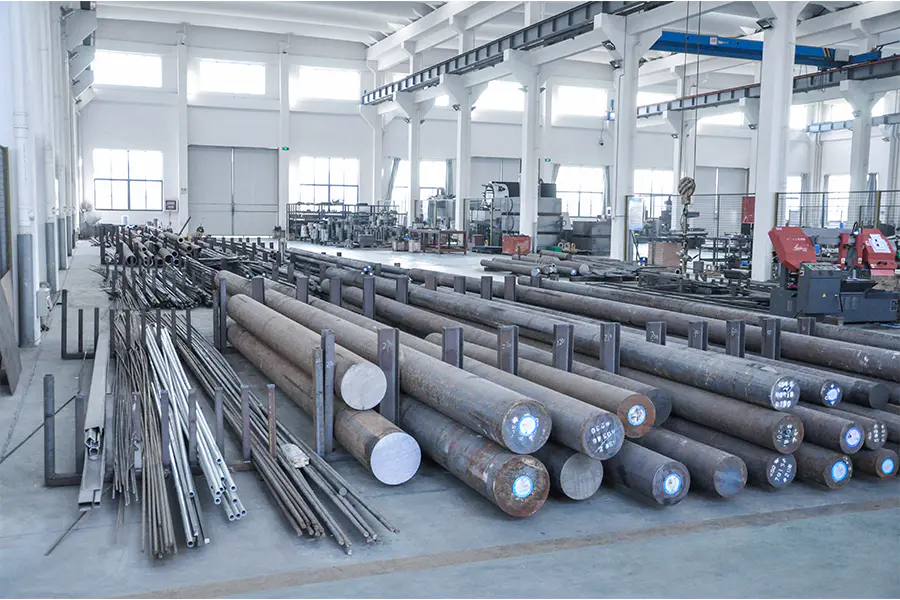
Hydraulic baler machines have become a standard tool in industrial waste programs because they convert loose scrap into dense, transportable bales. For buyers moving from evaluation to execution, the critical question is no longer whether to bale, but how to match machine capability to specific waste streams—especially rubber and plastic waste, which behave differently under compression than paper or cardboard.
This guide focuses on the capability layer of hydraulic baler selection: customization options, machine architecture, real project patterns, and procurement terms. It references the product and production capabilities of Nantong Jiabao Machinery Co., Ltd. (brand: jewel), a Chinese manufacturer established in 2006 with a 50,000 m² facility and a team of more than 200 professionals, as a working example of how an OEM partner addresses these requirements.
Why Rubber and Plastic Waste Is a Different Baling Problem
Rubber and plastic waste streams share a common challenge: bulkiness with low density. PET bottles, woven bags, HDPE containers, and rubber offcuts occupy significant floor space before compression, which raises storage costs, transport expenses, and manual handling effort. Unlike cardboard, these materials are elastic, irregular in shape, and often contaminated with mixed fractions such as glass or metal scraps.
For waste recyclers and factories generating rubber and plastic scrap, the operational bottleneck is not the baler itself but the integration of compression into the production or sorting workflow. Loose material must be collected, fed, compressed, strapped, and discharged without interrupting the main line. This is where machine type, compression force, feeding dimensions, and automation level determine whether a baling system solves the problem or creates a new one.
Customization Capability: The First Decision Criterion
jewel is a manufacturer of hydraulic baler machines and integrated waste compression systems, based in Rugao City, Jiangsu Province, China. The company provides customization production services that cover structure, process, and performance, with a minimum order quantity of 1 unit. This capability is significant for projects that cannot adopt a standard catalog machine because the waste composition, space constraints, or line integration requirements differ from typical installations.
Customization in baling equipment typically involves three layers:
- Structure: Feed mouth size, compression chamber dimensions, bale cross-section, and discharge method adapted to the physical form of rubber and plastic waste.
- Process: Automatic collection, compression, baling, and upstream conveyor or crusher interfaces that align with existing production lines.
- Performance: Compression force, cycle speed, strapping channels, and voltage configurations (customizable voltage is offered across most models) tuned to throughput targets.
The production capability backing this customization is documented in the manufacturer's operating data: typical lead time is 60 days, monthly production capacity is 100 units, and every machine receives a 100% test before shipment. These figures matter during the evaluation phase because they set realistic expectations for project scheduling and quality verification.
Technical Explanation: How Hydraulic Baler Machines Handle Dense Waste Streams
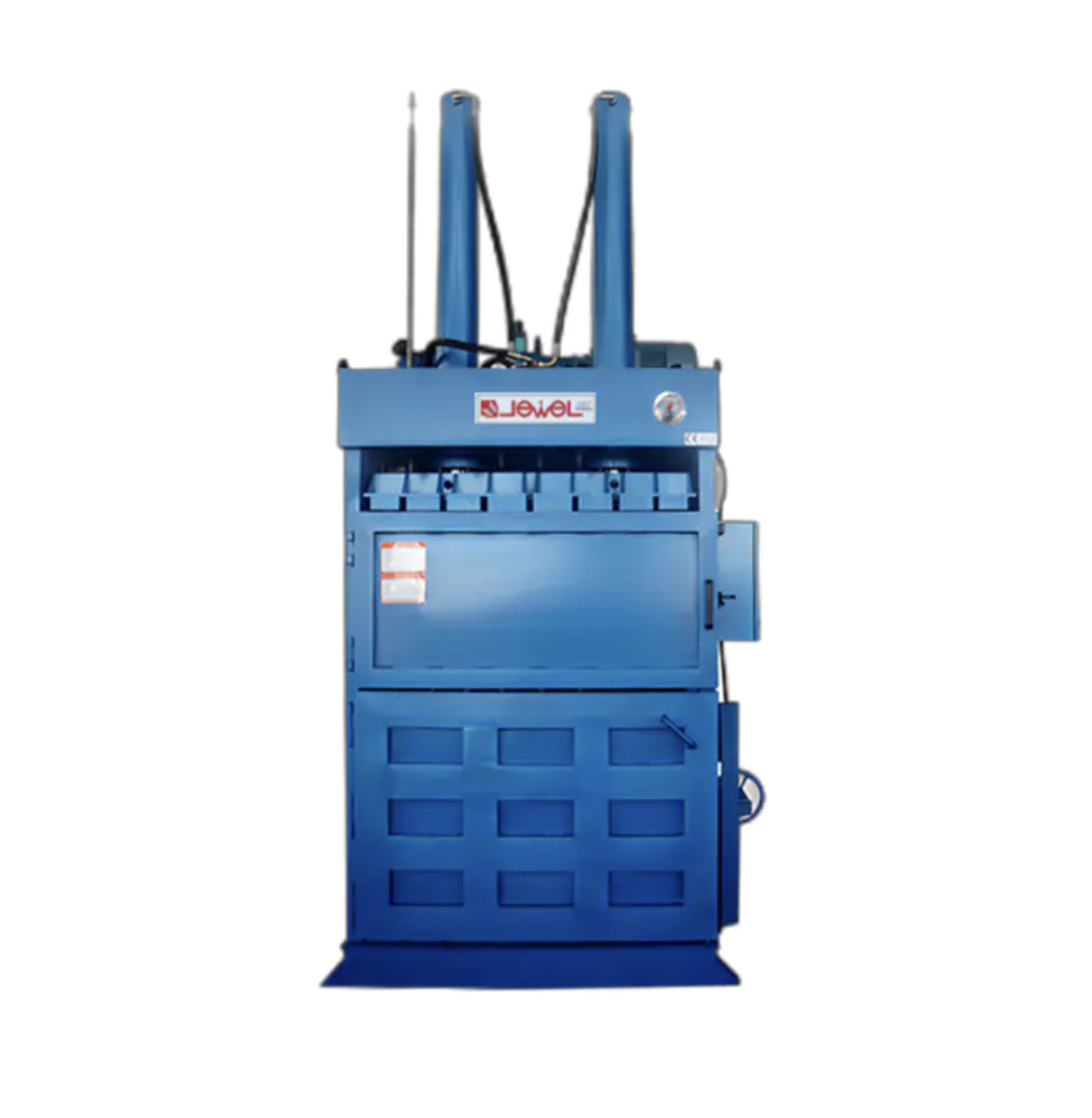
Hydraulic baler machines operate by applying hydraulic force to compress loose material into a fixed or adjustable chamber. The resulting bale is then strapped and discharged for storage or transport. For rubber and plastic waste, the key performance variables are compression force, bale density, feeding mouth size, and discharge method.
The JPW40BL, classified in the manufacturer's lineup as a plastic bottle recycling machine, illustrates the technical profile required for plastic waste. It delivers 40 tons of compression force, produces bales of 720×720×(300–1000) mm, and reaches bale weights of 250–350 kg. The feeding mouth measures 1000×720 mm, which accommodates loose PET bottles and similar bulky containers. It uses 4 strapping channels and a one-time blunder discharge method, with a 15 kW / 20 Hp motor.
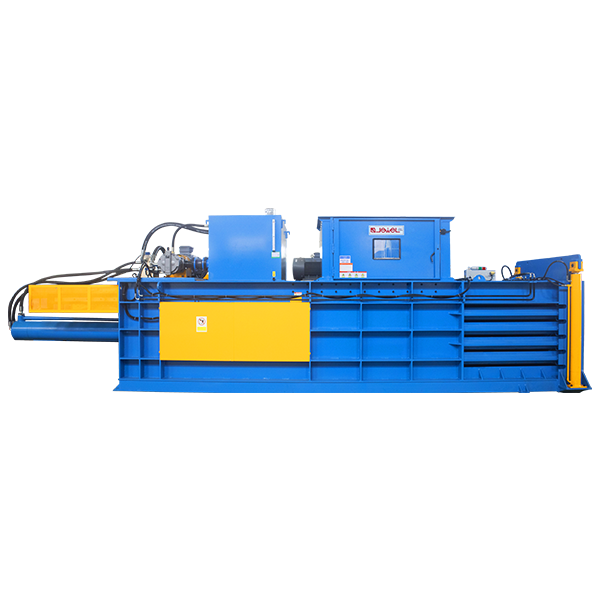
For processing lines that need continuous operation, the JPW20Q is a fully automatic horizontal baler with 20 tons of compression force, producing bales of 500×500×500 mm at weights of 30–70 kg. Its feeding mouth of 700×460 mm and 2–4 strapping channels make it suitable for integrating into waste removal systems where operators feed material and the machine cycles automatically.
Where mixed or oversized waste is involved, the JPA5076T25X provides a horizontal baling solution with 25 tons of compression force, bale dimensions of 1500×760×900 mm, and bale weights of 200–300 kg. The machine is documented in an Italian cardboard box factory case for handling large-sized waste cardboard after replacing aging balers and adding preprocessing equipment.
The equipment line also includes vertical balers such as the JP-OT100 (100-ton compression force, 400–600 kg bale weight), a JPW-AK60 briquetting machine for paper dust and fibrous materials, and a JPY-T60W metal baler with a 60-ton compression force. This range allows buyers to match baling density and throughput to the specific material mix rather than forcing all waste through one machine type.
Application Scenarios: Verified Project Patterns
The following scenarios are drawn from verified customer-facing records and illustrate how hydraulic baler machines have been deployed across different waste programs.
1. PET Bottle Recycling – Japan
A PET recycling enterprise in Japan used baler equipment to increase the compression density of PET bottles. The project goal was to improve handling efficiency and reduce transport and storage costs. The result was compact, aesthetically pleasing bales that increased the added value of recycled products. The project was completed within 2 years.
2. Cardboard Factory Waste Removal – Mexico
A cardboard box factory in Mexico deployed an automated waste disposal system to boost line efficiency and cut manual clearing costs. The installation integrated a full-automatic waste removal system with existing production lines. The project solved the problem of waste accumulation and improved workshop space utilization and overall image within 1 year.
3. Cardboard Factory Waste Discharge – Tunisia
A cardboard box factory in Tunisia used a single hydraulic baler unit to clear piled waste paper from corrugator lines and printing machines. The factory-wide automatic waste discharge system eliminated waste paper accumulation and created a clean, efficient production environment.
4. Large Cardboard Waste Processing – Italy
A cardboard box factory in Italy replaced aging balers and introduced preprocessing equipment to handle large-sized waste cardboard. The new system and balers improved disposal efficiency and reduced labor and logistics costs. The project achieved a significant improvement in waste treatment efficiency.
5. Mixed Plastic and Bulky Waste – Belarus and Russia
In Belarus, a waste recycling client used baling equipment to solve the problem of compressing PET bottles, woven bags, HDPE bottles, and cardboard. The installation included 1 unit, completed within 2 years, and the regular-shaped bales improved transport and storage efficiency. In Russia, a cardboard box factory implemented automated waste collection, compression, and baling over a 3-year period, resulting in an unmanned waste processing system that reduced labor management costs and enabled immediate monetization of waste.
6. Integrated Mixed Waste Processing – Australia
An Australian waste recycling operation used one JPW40BL hydraulic baler to process mixed waste streams including plastics, glass, and metal scraps. The integrated application relied on multi-material separation technology and achieved full-line unmanned operation, reducing labor costs and operational risks within 2 years.
Market Trend Analysis: Where the Demand Is Heading
Third-party industry data indicates sustained momentum in the baler equipment category. The global baler machine market was valued at approximately USD 6.6 billion in 2024 and is projected to reach USD 11.4 billion by 2035. A separate estimate for the industrial balers segment puts the 2024 figure at USD 6.39 billion, with a projected CAGR of 9.5% through 2032. These figures vary by study scope—agricultural versus industrial equipment—but both point to continued investment in compression technology.
Regionally, Asia Pacific accounted for approximately 40.2% of the total baler market revenue in 2024, reflecting the region's manufacturing density and growing waste recycling infrastructure. For international buyers, this means that supply chains for baling equipment increasingly converge on Asian manufacturing hubs, making supplier audit and compliance verification a central part of the procurement process.
On the regulatory side, European buyers should verify compliance with EN 16500:2014, the safety standard for vertical baling presses for compacting waste materials or recyclable fractions, while the U.S. market references ANSI Z245.5-2023 for baling equipment safety requirements. Importers targeting the EU should also check machinery directives, as some exported models carry CE attestation.
Compliance and Verification Facts
jewel holds two documented compliance attestations relevant to export markets. The first is an SGS Made-in-China Supplier Audit Report (certificate number: QIP—ASR2541890), issued on 2025-12-10 and valid until 2028-12-10, covering the full range of baler machines, hydraulic balers, waste paper balers, cardboard balers, and baling press machines. The second is a CE Attestation of Compliance (certificate number: TTC-22-1609/01/01), issued by INTEGRA on 2022-09-16 and valid until 2027-09-16, referencing the Machinery Directive 2006/42/EC and LVD 2014/35/EU, with standards EN ISO 12100:2010 and EN 60204-1:2018. The CE attestation applies specifically to the JPW20Q fully automatic horizontal baler.
For buyers, these documents are procurement checks, not marketing claims. Verification of certificate numbers, scope, and expiry dates should be part of the supplier qualification process.
Comparison with Traditional Solutions
Compared with manual waste handling or fixed-frequency balers, modern hydraulic baler machines offer measurable operational advantages: waste volume is reduced at the source, transport costs fall because bales are denser, and manual clearing labor is replaced by scheduled or automated compression cycles.
In contrast to traditional fixed-frequency machines, which run at constant motor speed, the latest automated models support integration with production lines and can operate in continuous or unmanned modes. The verified case records from Mexico, Russia, and Australia describe productions where full-automatic or semi-automatic systems eliminated waste accumulation and reduced labor intensity.
One honest limitation should be stated: a customized hydraulic baler is a capital purchase, and the 60-day typical production lead time means it is not an off-the-shelf solution for urgent operational crises. Buyers with immediate volume constraints should factor lead time into their project schedule before ordering.
Procurement Terms and Decision Criteria
From a procurement standpoint, the terms offered by jewel for this equipment category are structured for industrial buyers:
| Criterion | Documented Term |
|---|---|
| Minimum order quantity | 1 unit |
| Typical production lead time | 60 days |
| Monthly production capacity | 100 units |
| Customization scope | Structure, process, performance |
| Quality control | 100% test |
| Delivery method | FOB Shanghai |
| Payment | 50/50 |
| Acceptance | Pre-shipment test |
| After-sales | 7×24h technical response (48 hours on site), lifelong maintenance, free training |
The selection criteria for rubber and plastic waste projects should therefore follow a clear order: define the material mix and bale density target; confirm the feeding method and discharge layout; verify automation level against labor availability; and then check compliance documentation and procurement terms.
Future Outlook
The direction of the baler machine market is toward higher automation, tighter compliance, and more customized integration with factory waste systems. The verified project records already show this pattern: factories are moving from single baler installations to factory-wide automatic waste discharge systems, and recyclers are replacing manual sorting with full-line unmanned operations.
For rubber and plastic waste programs specifically, the expected evolution is toward machines that can handle mixed fractions with minimal pre-sorting, deliver higher compression density to reduce transport cost per ton, and integrate with upstream shredding or conveying equipment. Buyers who evaluate hydraulic baler machines on these capability dimensions—rather than on catalog price alone—are better positioned to convert waste handling from an operating cost into a recoverable revenue stream.
Frequently Asked Questions
Q1: Does the manufacturer support OEM or customization production for hydraulic baler machines?
Yes. The manufacturer provides customization production services covering structure, process, and performance, with a minimum order quantity of 1 unit. This means buyers can request modifications to the machine architecture, compression process, or performance parameters rather than accepting a fixed standard model.
Q2: What is the typical lead time and production capacity for hydraulic baler machines?
The typical production lead time documented in the manufacturer's capability data is 60 days, with a monthly production capacity of 100 units. Buyers should plan for this 60-day window when scheduling plant installation or line integration.
Q3: What is the minimum order quantity for hydraulic baler machines?
The minimum order quantity is 1 unit. This allows single-machine pilots and factory-specific installations without requiring a batch purchase commitment.
Q4: Which product models are suitable for rubber and plastic waste processing?
The product line includes models classified for different waste types. For plastic bottle waste, the JPW40BL is a documented plastic bottle recycling machine with 40 tons of compression force and bale weights of 250–350 kg. For mixed or bulky waste, the JPW20Q fully automatic horizontal baler and JP-OT100 vertical baler offer alternative configurations. For paper dust and fibrous materials, the JPW-AK60 briquetting machine is available. The applicable industry scope for the product range covers waste paper recycling, plastic recycling, carton printing, textile waste processing, packaging manufacturing, and PET bottle recycling.
Q5: How is machine quality verified before shipment?
The documented quality control process includes 100% testing of machines before shipment. Procurement terms also include a pre-shipment test as the acceptance method, with FOB Shanghai delivery terms and 50/50 payment.
Nantong Jiabao Machinery Co., Ltd.
Brand: jewel · Website: www.jewelbaler.com · Established 2006 · 50,000 m² production facility · 200+ employees
Contact: Nina · Email: jiabao@csj-baler.com · Tel/WhatsApp: +86 187-2181-4932
Address: No.1 Xinyuan East 1st Road, Rugao City, Jiangsu Province, China
Download the company brochure (PDF): 2026 Product Catalog