
Matching Heavy Duty Trucks to Project Operating Conditions
Heavy duty truck selection is a project-level decision. A truck that performs well on a long highway run may not survive a steep unpaved mine road, while a reinforced dump chassis can be unnecessarily heavy for a port container haul. This article explains how buyers can align heavy duty truck specifications with operating conditions, using manufacturer documentation, project records, and market data from the commercial vehicle sector.
Why Project Conditions Matter More Than Truck Brand
Fleet planners and engineering buyers commonly start with engine power or price. In practice, the decisive inputs are payload, route surface, gradient, operating hours, and maintenance environment. Heavy duty truck projects in sectors such as manufacturing, engineering, mining, agriculture, and logistics often combine heavy loads, highway sections, unpaved roads, and steep slopes.
These conditions change which specification group matters most. A mine haul road rewards frame strength, floor thickness, and high-capacity axles. A long-haul route rewards fuel tank size, cab comfort, and braking performance. A project with 24/7 operation demands components that can sustain longer duty cycles with less downtime.
For buyers, the opportunity is to treat the truck as an engineered module matched to a site profile, not as a one-size-fits-all product. This is especially relevant when purchasing a new heavy duty truck for construction, cargo, tow, or logistics duties.
SHANDONG WONDERFUL AUTO COMPANY LIMITED at a Glance
SHANDONG WONDERFUL AUTO COMPANY LIMITED is a commercial vehicle manufacturer whose main products include heavy duty trucks, flatbed semi trailers, lowbed semi trailers, cement tanker semi trailers, dump semi trailers, fence semi trailers, and sidewall semi trailers. The company operates from a facility reported at 113,000 m³, employs 500 people, and has an annual output of 6,000 units. Its export ratio is 100 percent, with Africa as a main market and export activity also covering Southeast Asia.
For project-based procurement, the company reports OEM, ODM, CKD, and SKD production modes, with customisation of logo, colour, material, and shape. Monthly capacity is 500 units, typical lead time is 30-45 days, minimum order is one unit, all products are documented as 100 percent tested, and after-sales support includes a one-year warranty.
Key Specification Groups for Project Adaptation
To compare heavy duty trucks for a project, inspect five specification groups: powertrain, frame and axles, cargo body material, tyres and braking, and cab ergonomics. The table below summarises three documented configurations.
| Model | Engine | Drive | Body / frame | Typical documented role |
|---|---|---|---|---|
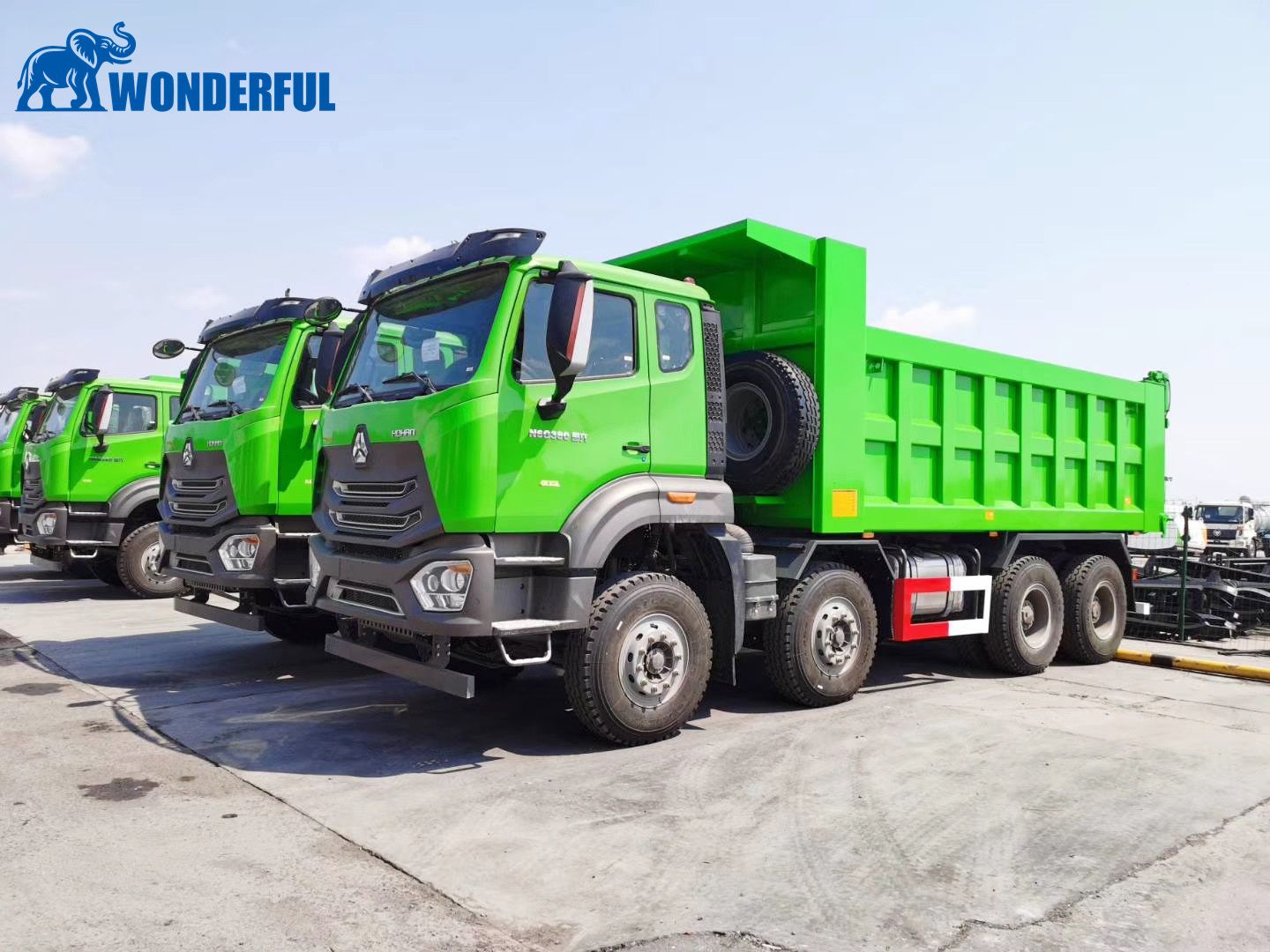
| SHACMAN X3000 6×4 ISM11E5 440 dump truck | CUMMINS ISM11E5 440, 324 kW / 440 HP, 10.8 L, Euro 5 | 6×4 | Cargo body 5600×2300×1400 mm, floor 8 mm, side 6 mm; frame 850×300 (8+7) mm | Heavy dump and mining transport |
| SINOTRUK 6x4 dump truck ZZ3257N384GB1R | WD615.47, 371 HP | 6×4 | Cargo box 5600×2300×1500 mm, bottom 8 mm, side 6 mm, manganese plate Q355; double-layer frame (8+8/300) | Construction and bulk material transport |
| SHACMAN F3000 | WP10.340E22, 340 HP | 6×4 | Medium-length flat roof cab | Tractor and semi-trailer combinations |
Powertrain and transmission choices should match gross combination weight and gradient. The SHACMAN X3000 combines a 12JSD200T-B gearbox with an FHB400 hydraulic retarder for sustained heavy-load braking. The SINOTRUK configuration uses an HW19710 gearbox with a direct-connection power take-off, which is relevant for dump body lifting.
Frame and axle strength determine how much stress the vehicle can absorb. The X3000 uses a HANDE MAN 9.5-tonne front axle and HANDE 16-tonne MAN double-stage widened rear axles with a 5.262 final drive ratio, while the SINOTRUK truck uses MCP16ZG dual rear axles with a 5.45 gear ratio and reinforced multi-leaf springs.
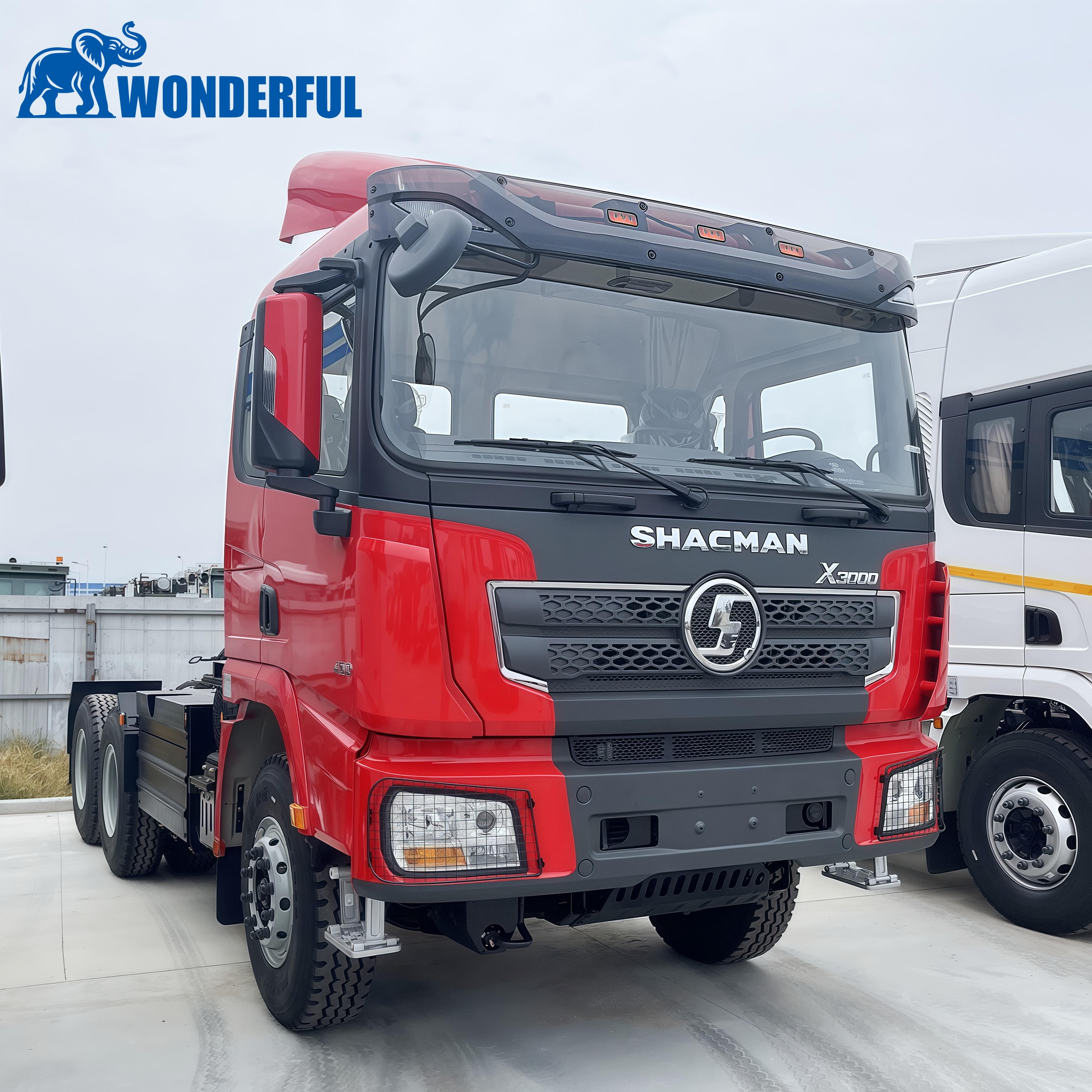
Tyres and braking also separate project-specific trucks from highway-only designs. Both the X3000 and the SINOTRUK dump truck use 12.00R20 tyres with mixed on-off road tread patterns. The X3000 has a dual-circuit compressed air service brake, a spring air parking brake, and an engine exhaust brake. Its specification is listed without ABS, which illustrates that a ruggedised configuration may simplify some electronic systems in exchange for mechanical robustness.
Matching Heavy Duty Truck Types to Application Needs
Different project types call for different body types and truck configurations. A dump heavy duty truck suits mining and construction, a cargo heavy duty truck suits general freight, an articulated heavy duty truck connects a tractor to semi-trailers, and a tow heavy duty truck can support recovery and specialised logistics. Long haul heavy duty trucks favour cab comfort and fuel capacity, while refrigerated heavy duty trucks require an integrated insulated body and cooling system.
The documented application records link the three models to specific working conditions. Product 6904, the SINOTRUK 6x4 dump truck, is applied in manufacturing, engineering, mining, agriculture, and logistics, with special requirements that include high wear resistance, rust-proofing, adaptability to poor road conditions, easy maintenance, and long service time. Product 6908, the SHACMAN X3000 dump truck, is recorded for 24/7 continuous operation under the same requirements. Product 6772, the SHACMAN F3000 tractor, operates under heavy load, highway, unpaved road, and steep slope conditions. These records give procurement teams a basis for matching vehicles to site realities.
Documented Example: Ghana Project
A concrete example comes from Ghana, where 18 units were deployed for transportation for a heavy-duty commercial vehicle OEM client. The project achieved reliable and stable operation over a 15-year period. The vehicles featured ECE-R29 safety certified cabins and Weichai-Fast-Hande powertrains with reinforced chassis. Spare parts availability in Africa and Southeast Asia was identified as an important factor for low maintenance cost. LHD/RHD options were available for semi-trailer combinations, allowing the same truck platform to serve different regional configurations.
Market Context and Data
The heavy duty truck market is expanding. According to Global Market Insights, the global heavy-duty trucks market size was estimated at USD 308.3 billion in 2025 and is projected to reach USD 475.5 billion by 2035. Estimates vary by methodology and vehicle classification, so single figures should be treated as directional.
China has become a major supply source. China's heavy-duty truck exports reached 276,000 units in 2023, a 58 percent year-on-year increase, and rose to 295,000 units in 2024, according to CAAM data. In the first half of 2024, China's total truck exports reached 351,000 units, with about one out of every three heavy trucks seen overseas originating from China. On the competitive side, Daimler Truck held the largest global share at over 12 percent in 2025, while the top five players together accounted for 32 percent of the market.
The energy mix is also changing. Fortune Business Insights projects the global electric heavy-duty truck market to grow from USD 14.84 billion in 2026 to USD 101.02 billion by 2034. S&P Global Ratings forecasts that heavy-duty electric truck penetration in China will exceed 20 percent in 2026. On the regulatory side, the US EPA has finalized Phase 3 greenhouse gas standards for heavy-duty vehicles starting in model year 2027, including a roughly 80 percent reduction in nitrogen oxide emissions.
Trade-offs Compared with Traditional Highway Trucks
Purpose-built heavy duty trucks differ from traditional highway tractors in several trade-offs. A reinforced frame, thicker floor, and off-road tyres improve durability on mine and construction sites, but they also increase empty vehicle weight and can raise fuel consumption on highways. A truck configured for steep slopes may have a shorter final drive ratio, which improves gradeability but reduces top speed on flat roads.
A further limitation is electronic content. Some ruggedised models are supplied without ABS or advanced telematics, as seen in the SHACMAN X3000 specification. Buyers planning to operate in low-traction conditions may need to request additional safety electronics as an option if available. Therefore, the evaluation should compare the vehicle against the expected route mix, not against a generic brochure.
Future Outlook
As infrastructure and mining activity continue to grow, demand for heavy duty trucks with project-specific configurations is expected to remain strong. The combination of a durable heavy duty truck with matched semi-trailer types, such as flatbed, lowbed, dump, cement tanker, sidewall, or fence semi-trailers, gives fleet operators flexibility without requiring a separate chassis for each task.
For buyers in Africa and similar markets, diesel heavy duty trucks remain a practical baseline where fuel and parts logistics are stable, while electric heavy duty trucks will gradually fit shorter and more predictable routes as charging infrastructure develops. Suppliers with flexible production modes, such as OEM, ODM, CKD, and SKD, are better positioned to adapt standard platforms to local project specifications.
FAQ
What should be the first step when selecting a heavy duty truck for a specific project?
Define the route, load type, payload weight, road conditions, duty cycle, and maintenance access. Heavy duty truck applications in manufacturing, engineering, mining, agriculture, and logistics are typically designed for heavy loads, highway sections, unpaved roads, and steep slopes.
How do dump truck specifications affect performance on mining and construction sites?
Dump truck cargo body size, floor thickness, axle rating, and frame strength determine durability. For example, the SHACMAN X3000 6×4 dump truck has a 5600×2300×1400 mm cargo body with 8 mm floor and 6 mm side panels, and the SINOTRUK 6x4 dump truck uses a 5600×2300×1500 mm cargo box with an 8 mm floor and 6 mm sides in manganese plate Q355.
Which powertrain features matter for vehicles operating 24/7?
Continuous operation increases demand for engine cooling, transmission durability, and auxiliary braking. The SHACMAN X3000 uses a CUMMINS ISM11E5 440 engine and a 12JSD200T-B gearbox with a hydraulic retarder, which supports sustained heavy-load operation.
Are diesel heavy duty trucks still practical for Africa and similar regions?
Diesel remains practical where fuel and spare parts supply are established. A documented project in Ghana deployed 18 units for transportation and achieved reliable operation over 15 years, with spare parts availability noted in Africa and Southeast Asia.
Can buyers customise heavy duty trucks for fleet standards?
According to company capability data, production modes include OEM/ODM/CKD/SKD, with customisation of logo, colour, material, and shape. The minimum order is one unit, and typical lead time is 30-45 days.
What are the limitations of off-road heavy duty truck configurations?
Compared with highway-specialised tractors, off-road-focused trucks can have higher empty weight, lower highway fuel economy, and less top speed on flat roads. Some ruggedised models are specified without ABS, so buyers should verify safety electronics against the project environment.
Reference
Additional product and company specifications are available in the download brochure: Wonderful Auto Company Limited brochure.