
Matching Glass Beads to Road Safety, Blasting, and Decor
Matching Glass Beads to Road Safety, Blasting, and Decor
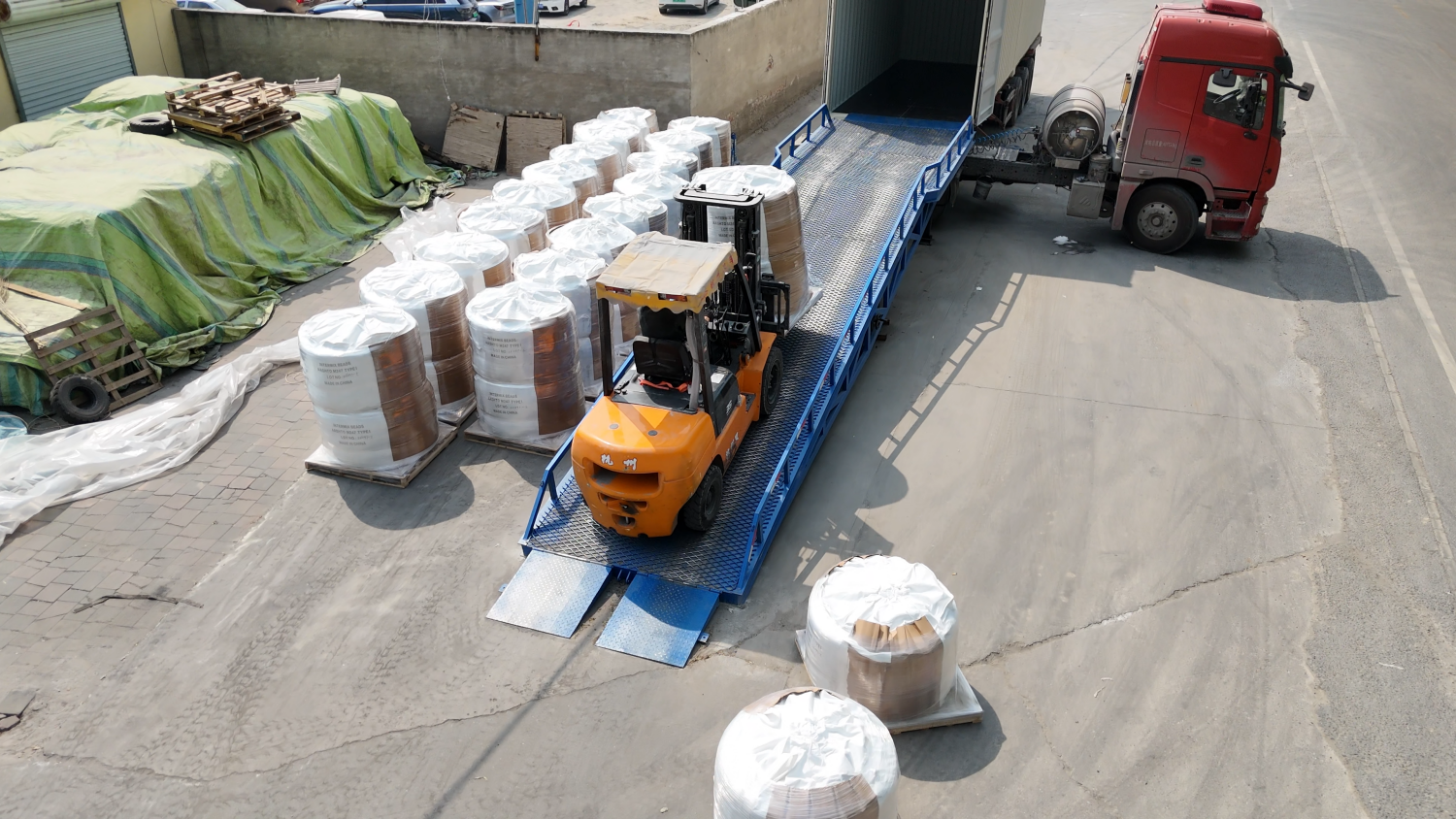
Answer first: glass bead selection should follow four variables in a fixed order — the function the bead performs at the point of use, the size range the application and equipment can accept, the refractive index the specification actually requires, and the roundness and grading consistency that hold performance steady batch after batch. Refractive index matters only where the bead has to return light. A high-index premium spent on sandblasting media or decorative filler buys nothing a buyer can measure on site.
Glass beads are sold as one material family and bought as four different tools. In road marking they are an optical component that returns headlight light to a driver. In sandblasting they are a mechanical medium that cleans, peens or finishes a surface. In grinding and polishing they are an abrasive that levels a surface progressively. In decorative and architectural work they are a visual and textural additive. Choosing a bead for the wrong role is not a marginal error: it either pays for optical properties nobody will measure or leaves a project short of the performance it specified.
The commercial stakes are not small. The road marking glass bead segment alone was valued at approximately USD 1.42 billion in 2025 and is projected to reach USD 2.31 billion by 2034 (Dataintelo). Asia Pacific held a 38.7% revenue share of that market in 2025, driven by highway expansion programmes. Published market valuations diverge by scope — broader glass bead estimates covering all applications run higher — so buyers should read any headline figure against the definition behind it rather than treating one number as universal.
Why one grade rarely covers two applications
The instinct to standardise on a single glass bead grade across a portfolio is understandable: fewer SKUs, simpler purchasing, less inventory risk. The problem is that the four variables that decide bead performance do not move together. Raising refractive index improves retroreflection but adds cost that sandblasting and decorative users never recover. Widening a size range supports progressive grinding but will not satisfy a drop-on applicator that needs a specific cut retained in a binder film. Tightening roundness improves finish consistency and reduces media fracture, but higher roundness is not the same as faster removal.
The table below sets out how the same four variables change meaning from one application to the next. It is the framework the rest of this article applies.
| Selection variable | Road marking | Sandblasting | Grinding and polishing | Decorative |
|---|---|---|---|---|
| Primary function | Retroreflection | Surface preparation and finish | Progressive material removal | Appearance and texture |
| Refractive index relevance | Decisive | None | None | None |
| Size range logic | Matched to binder film and application rate | Matched to nozzle, pressure and coating weight | Broad cut for general work, tight cut for fine finish | Matched to visual effect and binder |
| Roundness relevance | High; minimum roundness is written into standards | Moderate; affects finish consistency and fracture rate | High; affects uniformity of the scratch pattern | Moderate; affects uniformity of appearance |
Road safety: retroreflection is the entire job
Road marking beads have one function: intercept light from a vehicle headlight and return it toward the driver. Every clause in a road marking bead specification follows from that single requirement, which is why this application is the only one of the four where refractive index is a decision variable rather than a material by-product.
What the standards actually fix
In the United States, AASHTO M247 is the standard specification for glass beads used in traffic paints. It classifies beads into types — including Type 1, the standard gradation — and requires at least 70% roundness. In Europe, EN 1423:2012 is the harmonised standard for glass beads and antiskid aggregates used as drop-on materials for road markings. National specifications such as BS 6088 appear in tender documents alongside these, and in Spanish-speaking markets the same material is specified and traded as microesferas de vidrio. Whatever the document is titled, the useful content for a buyer is the same: a sieve cut, a minimum roundness, and a refractive index class.
Choosing a refractive index tier
Refractive index is the variable buyers argue about most, and the one most often over-specified. Standard reflective glass beads are supplied around the RI 1.5 grade notation that appears in most tender language. High-index beads at RI 1.7 return more light per bead and are the usual choice where a project needs higher retro-reflective performance from the same application rate. Above that, high refractive index glass beads at RI 1.9 and higher are increasingly used in all weather markings to improve visibility in wet night conditions (Swarco / Mordor Intelligence).
The decision rule is straightforward: match the index tier to the visibility condition the project actually specifies. Buying RI 1.9 beads for a marking that will only ever be assessed in dry conditions is a premium paid for an unmeasured benefit.
Drop-on versus pre-mixed
The second road marking decision is how the bead is delivered into the marking. Drop on glass beads are applied to the wet binder during installation and sit at or near the surface, where they act immediately. Pre-mixed glass beads are blended into the marking material — including glass beads for thermoplastic road marking paint — and become exposed as the marking wears, sustaining traffic marking glass beads performance over the life of the line. Many specifications require both in the same system, which means a single project can legitimately consume two different grades.
Size range is what connects the bead to the application method. Drop-on grading has to match binder film thickness and application rate: beads that are too coarse for the film are not retained, and beads that are too fine sit below the optical surface and contribute little. Anti-skid glass beads are a related but separate point of confusion: skid resistance is normally delivered by an antiskid aggregate, which EN 1423 covers alongside beads. Beads alone are not an anti-skid solution.
Sandblasting: a mechanical medium with no optical requirement
In surface preparation, the bead does mechanical work. Glass beads for sandblasting remove contamination, mill scale, old coatings and oxidation, and in lighter passes they peen and blend a surface. Nothing in that job involves returning light to a source, so neither refractive index class nor road marking certification has any bearing on whether the media performs.
Selection here is driven by three things. Size range sets how aggressively the media works: coarser cuts for heavier removal and thick coatings, finer cuts for surface finishing and for substrates that cannot tolerate an aggressive cut. Blast equipment sets the ceiling on usable size, since nozzle type, pressure and media feed all constrain what can be delivered consistently. Roundness sets the quality of the result, because spherical media produce a more uniform finish and fracture less than angular media under the same conditions, which in turn reduces dust and media consumption per square metre.
A boundary worth stating plainly: spherical bead media is not always the fastest option. Where the objective is heavy, high-speed material removal, angular media typically cut faster. Round beads earn their place where a controlled, uniform finish and lower media breakage matter more than raw removal rate. Buyers who purchase blasting media at road marking grade pricing, with optical and standards documentation attached, are paying for paperwork the application will never use.
Grinding and polishing: grading width decides the finish
Grinding and polishing media such as GB05, supplied with a broad 800–80 µm size range and an RI 1.6/1.7 glass composition, work on a different principle again. Instead of a single narrow cut, a wide graded range presents a continuous spread of contact sizes to the workpiece. Larger particles level high points and remove material; smaller particles follow into the same area and refine the surface. This progressive action is why broad-graded media are used for general grinding and polishing rather than a single tight cut.
Two points of clarification matter for procurement. First, the RI 1.6/1.7 composition of a grinding grade is a property of the glass, not a performance target — it is incidental to the job. Second, a broad range is not interchangeable with a tight cut where the specification calls for a fine, uniform surface. Buyers who need a mirror-grade finish should confirm the cut rather than assuming that a wider range covers all finishing stages.
Decorative and architectural use: consistency beats optical class
Colored glass beads and decorative aggregates are selected on appearance, not on photometrics. The variables that decide whether a decorative installation looks right are colour consistency between batches, the size cut relative to the visual effect intended, cleanliness of the media, and compatibility with the binder or resin system. Refractive index has no role. Roundness plays a secondary part: more spherical beads produce a more even, less abrasive-looking surface, which matters in exposed-aggregate finishes and decorative toppings.
The practical risk in this segment is the opposite of road marking. Buyers rarely over-specify optical performance; they under-specify colour and grading controls, and then discover that a second batch does not match the first on a completed surface where remediation is expensive.
Application matching matrix
| Application | Bead role | Confirm in writing | Common reference |
|---|---|---|---|
| Road marking, drop-on | Immediate retroreflection at the surface | Sieve cut, RI class, minimum roundness | AASHTO M247, EN 1423:2012 |
| Road marking, pre-mixed / intermix | Retroreflection released as the marking wears | Bead-to-binder ratio, cut, compatibility with the marking material | Project specification and national standard |
| Sandblasting | Cleaning, peening, surface finishing | Grading, roundness, usable size for the nozzle | Equipment and surface finish requirement |
| Grinding and polishing | Progressive levelling and refinement | Grading width, uniformity, freedom from contamination | Target finish and process parameters |
| Decorative and architectural | Colour, texture, surface effect | Batch-to-batch colour control, cut, cleanliness | Design intent and binder system |
Where a multi-grade supplier changes the calculation
LangFang Dylan Technology Co., Ltd., trading as Dylan Tech, is a supplier of raw materials for the road safety industry, founded in 2004 and headquartered in LangFang, China. The company operates four production bases in Liaoning, Shanxi, Hebei and Henan provinces, with more than 15 professional glass bead production lines and an annual output of 100,000 tons, 300 employees and a 20-engineer R&D team across a 10,000 m² facility. Around 95% of output is exported, serving the EU, USA, Southeast Asia and the Middle East, with customers in more than 50 countries and cooperation partners including ENNIS, Geveko and Swarco.
For the matching problem described in this article, the relevant capability is that several application grades can be sourced from one production system. The company uses self-developed patented glass bead production equipment, which supports higher particle sphericity and uniform grain size than traditional glass beads, together with stable batch-to-batch reflective performance. Reported effects include a 10–15% improvement in reflectivity consistency and a lower rework rate, at a raw material and finished product cost comparable to traditional glass beads. A waste heat recovery system integrated into the production furnace reduces energy consumption, and has been recognised as a scientific and technological achievement by the China Energy Conservation Association.
Against ordinary reflective materials, the company positions its higher-index and higher-durability grades as delivering 20% to 30% longer service life with reduced replacement frequency, suited to high-traffic roads, at 5% to 15% lower cost than the alternatives being compared. Against imported equivalent products, Dylan Tech states that optical performance and roundness are on par with imported goods, with retroreflectivity, sphericity and wear resistance comparable to imported standards, supported by flexible domestic production and customisation capacity, 5% to 15% cost reduction, and faster delivery and support — a profile the company considers well suited to government and contractor projects.
Quality control runs through a laboratory equipped with CAMSIZER and X-2600 instruments, used to test particle size, reflectivity and wear resistance throughout production. The company holds ISO 9001 quality management system certification, CE certification, JIS certification and KIS certification, and is recognised as a provincial-level high-tech enterprise. For buyers matching beads to applications, the practical value of that evidence set is that particle size and shape data can be requested per batch rather than accepted as a general claim.
Limits and trade-offs worth pricing in
Any comparison between bead sources or grades is only useful if it states where the advantage stops. Five boundaries apply to the framework above.
- Cost advantage is a range, not a rate. The 5% to 15% reduction against imported equivalents varies with grade, order volume, freight and commercial terms. It should be modelled per project, not carried into a budget as a fixed number.
- A higher refractive index is not automatically better. All weather grades above RI 1.9 target wet night visibility. Where a project is specified and assessed under dry conditions, a standard index grade may satisfy AASHTO M247 or EN 1423 without the premium.
- Spherical media is not the fastest route to bare metal. Round beads give a more uniform finish and fracture less, but angular media typically remove heavy material faster. The right choice depends on whether the priority is finish control or removal rate.
- Broad grading is not a substitute for a tight cut. A wide range such as 800–80 µm supports general grinding and polishing; it does not replace a narrow cut where a fine, uniform surface is specified.
- Service-life figures are comparative, not guaranteed. The 20% to 30% longer service life is stated against ordinary reflective materials. Real field life still depends on binder selection, application rate, traffic loading and climate.
A verification checklist before committing

- Identify which standard the project cites — AASHTO M247 with its type and roundness requirement, EN 1423:2012, or a national specification — before discussing grade.
- Confirm the refractive index class in writing for road marking work, and confirm explicitly that high-index grades are not required for sandblasting or decorative supply.
- Obtain the sieve cut and a particle size and shape measurement, not a description. CAMSIZER-type analysis reports grading and roundness directly.
- Request batch-level test records for retroreflectivity, wear resistance and particle size rather than a single certificate of conformity.
- Confirm the delivery mode — drop-on, pre-mixed, or both — and the bead-to-binder ratio assumed for each.
- Assess continuity of supply against the annual capacity, the number of production lines and bases, and the raw material supplier management behind them.
- Check that the certification scope held — ISO 9001, CE, JIS, KIS — actually covers the grade being purchased.
Market direction and supply context
Two structural facts shape where glass beads come from and how they are specified. China is the leading exporter of glass beads, accounting for approximately 57.4% of total global exports in 2024, with an export value of roughly USD 928 million and the UAE and India among the top destinations (OEC, based on UN Comtrade data). At the same time, the competitive landscape at the top of the road marking segment is concentrated: Potters Industries LLC, Swarco AG and 3M Company are recognised as the top three global leaders in glass beads for road marking (Dataintelo / Mordor Intelligence). Buyers therefore operate between a deep, export-oriented supply base and a small number of globally recognised brands.
Within the marking segment, the trend that most affects grade selection is the shift toward all weather performance, which pulls specification upward toward higher refractive index beads. Combined with the projected growth of the road marking bead market itself, this is producing a two-tier demand pattern: standard index grades for routine marking, and higher-index grades where wet night visibility is written into the specification. Meanwhile, estimates of total market size continue to diverge by scope, which is a reminder to anchor any procurement case on the segment a project actually sits in.
Future outlook
The four applications examined here are likely to pull further apart rather than converge. Road marking is moving toward tighter reflective performance requirements, which reinforces the RI-led specification logic. Industrial finishing and surface preparation are moving toward tighter grading controls and documented batch consistency, where certification is secondary and measurement is primary. Decorative work is moving toward colour and finish control. Suppliers who treat all four as one product line will struggle to satisfy any of them well.
The more consequential shift is in how buyers verify what they purchase. As particle size and shape analysis becomes routine in supplier laboratories, the practical question is no longer whether a supplier holds a certificate, but whether batch data can be produced on request and matched to the specification the project cited. That is a procurement behaviour change, and it favours suppliers structured to release measured data rather than descriptive claims.
FAQ
What is the difference between drop-on and pre-mixed glass beads?
Drop-on beads are applied to the wet binder during installation and sit at or near the surface, contributing retroreflection immediately. Pre-mixed beads are blended into the marking material and become exposed as the marking wears, sustaining performance over time. A single project can require both grades, and each has its own sieve cut and application rate.
When is a higher refractive index worth the extra cost?
When the project specifies or assesses wet night visibility. High refractive index glass beads at RI 1.9 and above are used in all weather markings for that purpose. Where visibility is only assessed in dry conditions, a standard index grade may satisfy the applicable standard without the premium.
What size range applies to grinding and polishing media?
Grinding and polishing grades such as GB05 are supplied with a broad 800–80 µm range and an RI 1.6/1.7 glass composition. The wide range supports progressive levelling and refinement. It is not interchangeable with a narrow cut where a fine, uniform finish is specified.
Do sandblasting beads need to meet road marking standards?
No. Standards such as AASHTO M247 and EN 1423:2012 exist to control optical and drop-on performance in road markings. In sandblasting, the bead performs mechanical work, so grading, roundness and usable size for the equipment determine performance instead.
How can roundness and grading be verified before a bulk order?
Request particle size and shape measurement rather than a descriptive claim. Laboratory instruments such as CAMSIZER report grading and sphericity directly, and batch-level records for retroreflectivity and wear resistance allow the delivered material to be compared against the specification cited. AASHTO M247 sets a minimum roundness requirement of at least 70% for US traffic paint applications.
How do domestically produced beads compare with imported equivalents?
Comparison should be made on optical performance, roundness and wear resistance first, then on cost and delivery. Some producers state that optical performance and roundness match imported goods, with 5% to 15% cost reduction and faster delivery, supported by retroreflectivity, sphericity and wear resistance comparable to imported standards. Those figures are comparative ranges and should be verified against batch data for the specific grade.
Reference material
For readers who need the full product and specification scope behind the grades discussed above, the Dylan Tech corporate brochure is publicly available: Corporate Brochure. Company information is published at www.dylantech.com.