
Matching Gel Ice Packs to Your Cold Chain Project: A Technical Guide for Health & Medicine Buyers
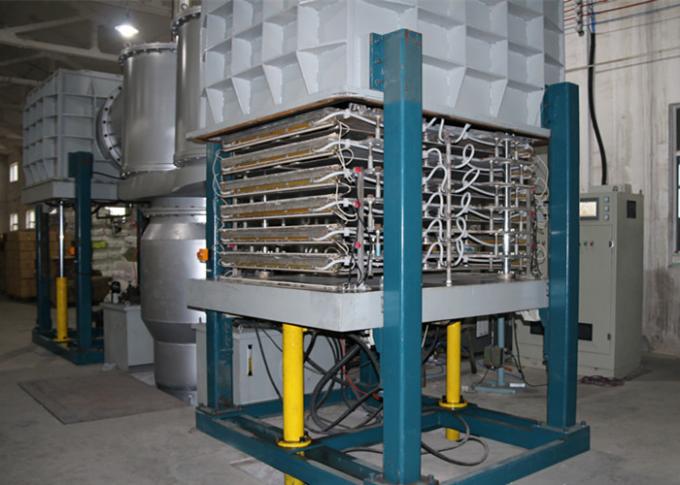
Selecting the right gel ice pack for a cold chain project in health and medicine requires more than a simple capacity check. Buyers must evaluate operating temperature range, phase change behavior, material safety, and the compatibility of the cold source with the transport container. For procurement professionals moving from research to evaluation, understanding how ice packs behave under real-world logistics conditions is essential to avoiding temperature excursions and regulatory non-compliance.
Problem and Opportunity in Cold Chain Logistics
The global reusable icepack market was valued at approximately USD 1.962 billion in 2024, with expectations to reach USD 2.862 billion by 2035 (Market Research Future). Driven by pharmaceutical cold chain demands, the gel ice pack market reached USD 14.56 billion in 2025 (The Business Research Company). Vaccine storage equipment, a key downstream application, is projected to grow from USD 0.86 billion in 2024 to USD 1.21 billion by 2029 (MarketsandMarkets). These figures underscore the increasing need for reliable, precise thermal management—especially in health and medicine where a few degrees of drift can compromise product integrity.
Jisi Cold Chain’s Product Portfolio for Project Fit
Changzhou Jisi Cold Chain Technology Co., Ltd is a factory established in 2013, specializing in a series of PCM ice packs, cooler boxes, and VIP panels. The company operates a 40,000 m² facility with an annual output of 620,000 units, exporting 70% of production to North America, South America, Western Europe, Eastern Europe, Eastern Asia, and Southeast Asia. Jisi Cold Chain provides phase change material (PCM) ice plates with multiple temperature points: -30°C, -25°C, -15°C, -10°C, -5°C, 0°C, 2–8°C, 18°C, and 23°C. These temperatures cover the refrigerated transportation needs of ice cream, food, vaccines, and pharmaceuticals. Core cooler box materials are made from PU or VIP panels, with low thermal conductivity and PCM ice plates achieving cold durations of 12, 24, 48, 72, 96, and even 120 hours.
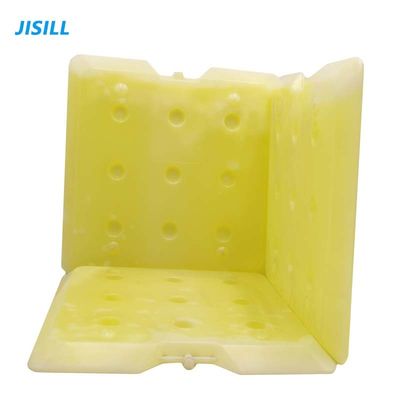
A PCM eutectic cold plate from Jisi Cold Chain, available in multiple temperature variants for precise thermal management.
Technical Explanation: Passive Cooling and PCM Behavior
Jisi Cold Chain’s gel ice packs operate in passive cooling and on-demand use mode. The cooling effect is achieved through the phase change of the internal material (SAP, CMC, or PCM) which absorbs heat at a constant melting temperature. For example, a PCM ice plate designed for 2–8°C will maintain that range until all material has changed phase, providing a stable thermal buffer. This approach is particularly suited for cold chain transportation environments where active refrigeration is unavailable or impractical. The outer material is typically food-grade HDPE, and all products carry certifications including FDA, SGS, MSDS, CPSIA, and CE.
Application Scenarios in Health & Medicine
A long‑term case study illustrates the real‑world performance of Jisi Cold Chain ice packs. A logistics and pharmaceutical transportation company in the United States has used over one million pieces over six years, resulting in stable operation. Their PCM ice plates with temperatures such as -30°C to 23°C met the refrigerated transportation requirements for ice cream, food, vaccines, and drugs.
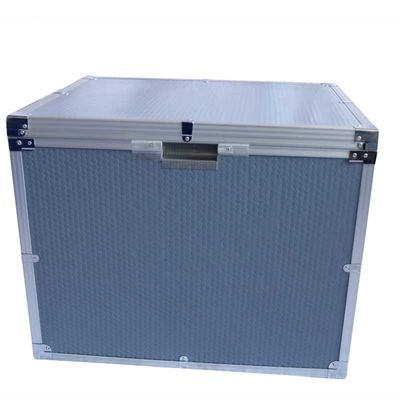
A medical cool box paired with Jisi Cold Chain gel ice packs ensures 2–8°C stability for vaccine and pharmaceutical shipments.
Typical projects include:
- Vaccine cold chains – using 2–8°C PCM plates inside insulated containers, often combined with VIP panels for extended duration.
- Blood and biologics transport – requiring -20°C or -15°C constant temperatures.
- Food and ice cream logistics – using large cooler ice packs (e.g., model BH084 at 33×22.5×2 cm, 1000g) with freezing points from 0°C to -25°C.
- Breast milk and daily cold storage – compact packs (e.g., BH125, 505ml) with food-grade HDPE and nontoxic gel.
Market Trend Analysis
The Phase Change Material (PCM) packs segment was valued at USD 476 million in 2025, growing at a CAGR of 4.5% due to demand for precise thermal management in biologics (Intel Market Research). China accounts for over 11.2% of global gel ice pack revenues as of 2025, serving as a primary manufacturing hub for export (Dataintelo). Jisi Cold Chain’s factory size and capacity reflect this industrial concentration, offering OEM/ODM customization (shape, temperature, color, size, logo) with a monthly capacity of 10,000 units and a MOQ of 1,000 pcs.
Comparison with Traditional Solutions
Traditional gel ice packs (water‑based or gel‑filled) often do not maintain a stable temperature plateau; as they thaw, the temperature slowly rises. PCM ice plates, by contrast, absorb heat at a specific melting point, providing a constant temperature for a defined period. This advantage is critical for pharmaceutical cold chains where WHO PQS performance specification E004/VC01.2 requires verified cold life durations.
One honest limitation: PCM ice plates typically cost more than standard gel ice packs. Buyers with high‑volume, less temperature‑sensitive shipments (e.g., short‑haul grocery transport) may find standard gel packs more economical. However, for projects where temperature excursion carries high cost or risk, PCM offers a clear performance edge.
Future Outlook
As biologic drugs and mRNA vaccines become more common, cold chain requirements will tighten further. The demand for custom PCM solutions—matching phase‑change temperature to exact product needs—will grow. Jisi Cold Chain’s investment in vacuum insulation panels (VIP) and expanded PCM plate portfolio positions it to support long‑duration, multi‑temperature zone projects. Buyers can expect shorter lead times and greater customization as factories in China continue to scale capacity.
Frequently Asked Questions
Q: Does this product require special supporting equipment?
Yes. It must be used with insulated containers or cooler bags. The passive cooling effect relies on the thermal insulation provided by these containers to maintain temperature.
Q: How does the product operate?
This product operates in passive cooling and on‑demand use mode. It works through passive cooling and on‑demand use operation. No active power source is needed.
Q: What environment is this product designed for?
This product is designed for cold chain transportation environments. It operates under cold chain transportation conditions, ensuring stable temperature control during transit.
Q: Are there any specific usage instructions?
For best performance, fully freeze the ice pack before use and place it in an insulated container with the items to be kept cold. Avoid puncturing the outer HDPE shell. Reusability is maintained as long as the shell remains intact.
For detailed specifications, certifications, and OEM/ODM capabilities, download the Jisi Cold Chain company brochure:
¿Tiene preguntas o necesita más detalles?
Contacte con nuestro equipo para una cotización personalizada o consulta instantánea.
Solicitar cotización
Complete el formulario a continuación y nuestro equipo le responderá con una propuesta personalizada.
Chat directo de WhatsApp
¿Prefiere chatear en tiempo real? Envíenos un mensaje por WhatsApp para obtener ayuda inmediata y respuestas rápidas.
- Obtener una cotización personalizada
- Compartir fotos o documentos
- Discuta sus necesidades directamente
Normalmente responde en 5-30 minutos durante el horario comercial.