
Matching Gearmotors to Textile, Woodworking, and Food Production Lines
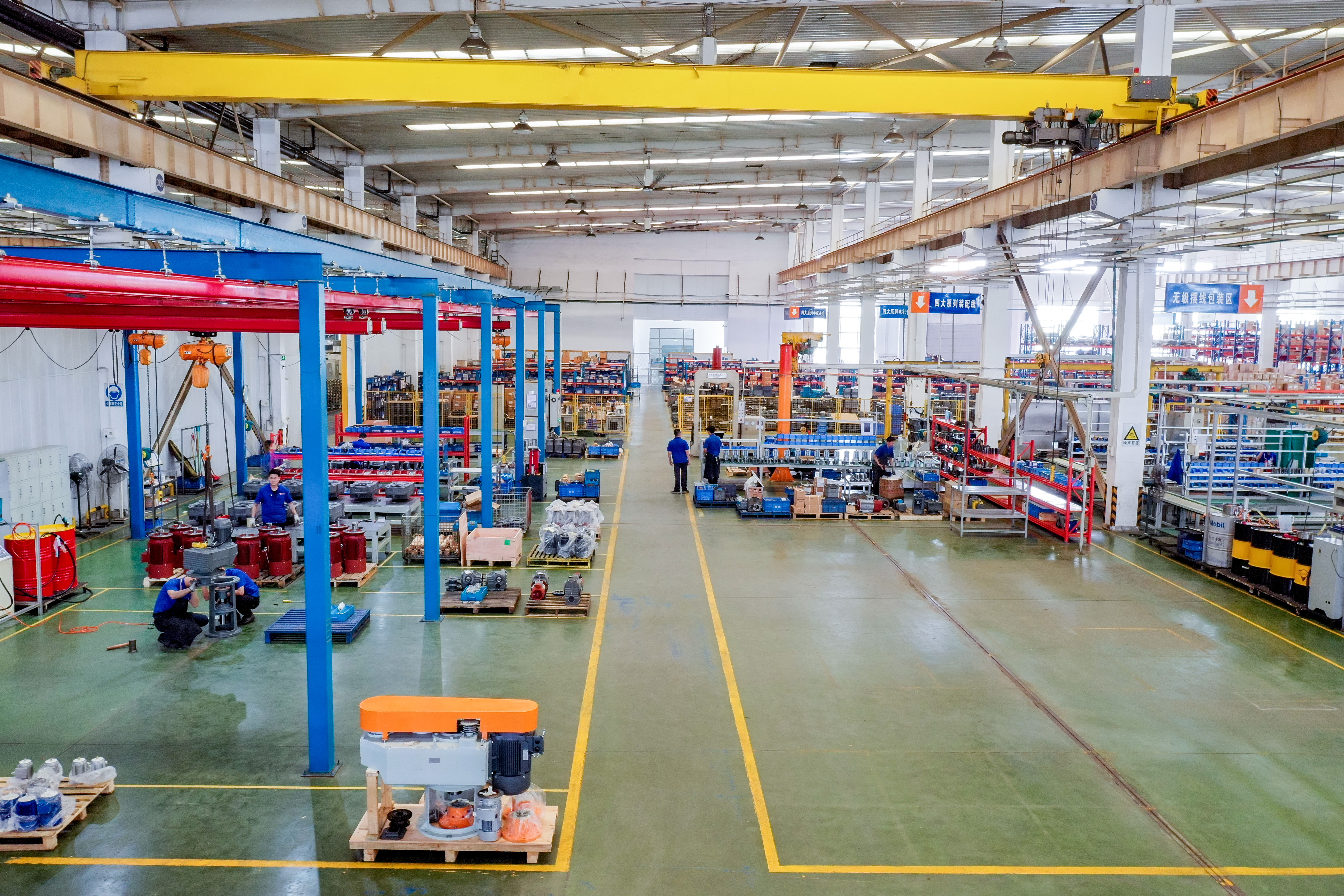
A gearmotor is often the least expensive item on a production line and the one whose duty profile is least often documented. That mismatch explains why the same reducer family can run for years on one machine and fail within a season on another. Textile finishing equipment, woodworking machinery, and food and beverage lines are three of the most common downstream applications for industrial gear reducers, and each imposes a different operating mode: all-weather continuous duty, intermittent duty, and variable speed.
Matching a gearmotor to these lines is therefore not a catalogue lookup. It is a specification exercise in which the operating mode determines reduction ratio, thermal margin, housing treatment, lubrication expectations, and whether speed control should be mechanical or electronic. The sections below separate the three industries, then set out the reducer families that support them, the customization scope available, and the limits buyers should recognise before committing to a configuration.
Why One Gearmotor Specification Cannot Cover Three Production Lines
Procurement teams frequently standardise on a single reducer type, most often a worm gearbox, because it is familiar, widely stocked and inexpensive. On a line where loads are light and duty is short, that choice is rational. Applied across textile, woodworking and food production, it becomes a compromise that surfaces later as overheating, shortened lubricant life, speed-control limitations or cleaning problems.
The three industries do not share the same cost driver. In textile finishing, the dominant cost of a drive failure is unplanned downtime on a line expected to run continuously. In woodworking, the dominant risk is mechanical, because drives start and stop many times per shift while abrasive dust is present. In food and beverage production, the constraint is usually changeover and hygiene, since the drive must follow recipe-driven speed changes and survive the cleaning regime between batches.
Each priority translates into different specification questions. Continuous duty raises questions about thermal rating, lubricant service interval and efficiency at the operating point. Intermittent duty raises questions about peak torque, duty cycle, and how housing and sealing are defined. Washdown duty raises questions about housing material, surface finish, and the control method used to change speed.
One reducer type answers all three sets of questions only by accident. The practical alternative is a modular approach: match the family to the duty profile first, then close the remaining gaps with the customization options available for ratio, mounting and housing treatment.
Reading the Operating Mode Before Reading the Catalogue
Operating mode should be settled before any catalogue page is opened. Three modes dominate in these industries.
- All-weather continuous duty. Drives that run for long periods in warm, humid or lint-laden air, as found on dyeing, washing and finishing ranges and their auxiliary equipment. The limiting factors are heat, lubricant life and efficiency rather than peak torque.
- Intermittent duty. Equipment that accelerates, cuts, retracts and pauses repeatedly, such as CNC cutters, routers, edge banders and feed drives in woodworking shops. Peak torque, shock absorption and dust exposure dominate.
- Variable-speed duty. Lines where set speed changes with product or recipe, typically filling, dosing, packaging and mixing. The specification must state the speed range the motor can hold at full load and the control method used to reach it.
| Operating mode | Typical equipment | Primary stress on the drive | First specification question |
|---|---|---|---|
| All-weather continuous | Dyeing machines, washing and finishing ranges, auxiliary drives, line conveyors | Heat, humidity, lubricant ageing, sustained torque | What is the continuous rating and the documented lubricant service interval? |
| Intermittent | CNC cutters, routers, edge banders, feed and positioning drives | Start-stop torque peaks, shock, fine dust ingress | How are peak torque and housing/sealing defined for the duty cycle? |
| Variable speed | Filling, dosing, packaging, mixing, recipe-driven conveyors | Wide speed range, frequent changeover, cleaning regime | What speed range is held at full load, and which housing material and finish is specified? |
Which Reducer Family Fits Which Duty Profile
Reducer families differ in efficiency, ratio spread, self-locking behaviour and torque density, and those differences map onto duty profiles more reliably than brand-to-brand comparisons do. The documented characteristics of the families supplied by Guangdong Starshine Drive Co., Ltd. illustrate how the mapping works.
Worm gear reducers
The RV series worm gearbox uses a 20CrMnTi worm shaft with special heat treatment and a worm wheel in alloy copper. Single-stage ratios reach 100 and two-stage ratios reach 10,000, with self-locking at i≥60 and a synthetic worm gear lubricant. Self-locking is valuable for holding and inclined duties, but efficiency and heat generation at high ratios make worm units a secondary option for long, heavily loaded continuous duty.
Helical, helical-bevel and coaxial gearmotors
The R/F/K/S series covers helical, helical-bevel, helical-hypoid and coaxial arrangements. Single-stage efficiency is above 96%, single-stage ratios span 1.3 to 289.74, gears are made of 20CrMnTi carbonitrided to HRC55-65 and ground to grade 6 accuracy, and housings use high-strength cast iron. These are the workhorse families for conveyor and main-drive duty, and the series is documented for textile applications among others.
Helical gearmotors for continuous lines
The NCJ series helical gearmotor is documented at 92 to 96 percent efficiency, with a wide-frequency motor designed to operate at full load between 20 Hz and 60 Hz, and a lubricant specified to support 20,000 hours of normal use. The NCJT04B/J variant is documented as a replacement for a 1# cycloid gearbox in energy-saving upgrade projects.
Helical-worm combinations, planetary, cycloidal and mechanical variators
Starshine Drive S series helical-worm geared motors are catalogued at 90 to 4,000 N·m output torque, 0.12 to 22 kW power and ratios from 6.8 to 288. Planetary gearboxes are the fastest-growing segment of the industrial gearbox market, holding a 22 percent share with a projected 6.2 percent CAGR through 2030 on the strength of robotics and wind energy demand (Indastra, 2026); on these lines they suit positioning and automated handling axes rather than the main conveyor drive. Cycloidal reducers in the B/JXJ series and JWB-X mechanical stepless variators complete the portfolio, the latter providing stepless mechanical speed adjustment without electronic control.
In cross-border procurement the same assembly may be quoted as a gearmotor, a motoreduktory or a motoriduttori depending on the catalogue language. Comparison should therefore rely on drawing data, nameplate data and ratio or torque tables rather than on the product label.
Textile Lines: All-Weather Continuous Duty with Auxiliary Equipment
Textile finishing is the clearest example of all-weather continuous duty. Dyeing machines, washing ranges and their auxiliary equipment operate in warm, humid air, often with chemical vapour present, and are expected to run through long production campaigns. The drive train is rarely a single large gearbox; it is a network of smaller drives on pumps, rollers, fabric guides, winches and transfer conveyors, and each position sees a different load profile.
Three specification priorities follow from that environment.
- Thermal margin and lubricant life. A drive that runs continuously without cooling intervals has to be selected on its continuous rating, not on peak capability. The NCJ series lubricant is specified for up to 20,000 hours of normal use, which sets the maintenance interval that planners can work with.
- Efficiency at the operating point. Continuous duty turns small efficiency differences into measurable energy cost. Single-stage R/F/K/S units are documented above 96 percent efficiency, and NCJ units at 92 to 96 percent.
- Surface and material specification. Humid and lint-bearing air affects housings and paint systems as much as bearings. Starshine Drive supports vertical customization and non-standard modification per customer drawings, including housing material and surface finish, which is where line-specific requirements should be captured.
Auxiliary positions on a textile line often need high ratios rather than high torque, and this is where worm gear reducers remain appropriate. Their self-locking behaviour at i≥60 also allows a holding function without a brake on some inclined or tensioned positions, although the ratio constraint has to be respected from the start of the specification.
Woodworking Lines: Intermittent Duty in a Dust-Loaded Environment
Woodworking equipment behaves very differently. A CNC cutter, router, edge bander or feed drive accelerates, cuts, retracts and pauses repeatedly, and the shop atmosphere carries fine dust that settles on every surface. Drives are selected for a duty cycle rather than for a continuous rating, and torque peaks rather than average load usually determine the size.
The specification questions that matter most are peak torque and duty cycle, dust management, and speed adjustment.
- Peak torque and duty cycle. The buyer should provide starts per hour, load type and the maximum torque demanded at the tool or feed axis. Ratio and motor power are then matched to the peak rather than to the average.
- Dust management. Standard housings are cast iron or aluminium and are not automatically sealed against fine wood dust. Housing material, surface finish and the sealing arrangement are specification items, and Starshine Drive supports non-standard modification per customer drawings as well as customization of housing material and surface finish. Mounting position and access for cleaning should be agreed at quotation stage rather than in the workshop.
- Speed adjustment. Where feed speed has to change with material or tooling, JWB-X mechanical stepless variators provide mechanical adjustment, while helical gearmotors combined with a motor and inverter provide an electronically controlled alternative.
Retrofit and upgrade work is common in this segment. The documented replacement of a 1# cycloid gearbox by the NCJT04B/J variant is an example of how an existing intermittent-duty position can be re-specified without rebuilding the machine.
Food and Beverage Lines: Variable Speed, Washdown and Hygiene
Food and beverage machinery combines two constraints that rarely appear together elsewhere: speed has to change with the product, and the machine has to be cleanable between batches. Filling, dosing, packaging and mixing equipment typically runs through several speed set-points per shift, and cleaning regimes vary from dry wipe-down to aggressive washdown.
On the speed side, the specification must state the range over which the drive holds full-load torque. The NCJ series is documented for full-load operation between 20 Hz and 60 Hz using a wide-frequency motor, which allows one gearmotor to cover a recipe-driven speed band without oversizing the frame. Where electronic control is not wanted, JWB-X mechanical stepless variators provide stepless mechanical adjustment. Where the machine builder prefers an integrated package, Starshine Drive supplies combinations of gearbox, motor, inverter, controller and smart system as a single transmission solution.
On the cleaning side, hygiene requirements translate into material and finish decisions. Stainless steel and washdown-resistant housing treatments are specified by the machine builder rather than assumed from a standard catalogue, and the route to that configuration is vertical customization, housing material and surface finish selection, and non-standard modification per customer drawings.
From Duty Profile to Confirmed Gearmotor: A Six-Step Specification Workflow
The three industries converge on the same sequence of decisions once the operating mode is known.
| Step | Action | Data to fix before proceeding |
|---|---|---|
| 1 | Define the duty profile | Continuous, intermittent or variable speed; hours per day, starts per hour, load type |
| 2 | Fix torque and ratio | Output torque and speed at the driven shaft; ratio band. Reference ranges: worm single-stage up to 100 and two-stage up to 10,000; R/F/K/S single stage 1.3 to 289.74; S series 90 to 4,000 N·m at 0.12 to 22 kW |
| 3 | Match mounting and environment | Mounting position, housing material, surface finish, cleaning or dust exposure |
| 4 | Choose the control method | Wide-frequency motor for 20 to 60 Hz full-load operation, inverter-based control, or a mechanical variator |
| 5 | Confirm commercial terms | MOQ of 1 unit with prototype support, typical production lead time of 7 to 20 days depending on product, FOB delivery terms, pre-shipment test acceptance and COD payment terms |
| 6 | Validate and document | Prototype or sample review, pre-shipment test result, configuration drawings and certification references |
Steps 1 and 2 are the ones most often skipped. When duty data is missing, the supplier can only quote a safe oversize, which adds cost and may still miss a thermal or dust problem that a documented specification would have caught.
Customization and OEM Capability Behind the Matching
Guangdong Starshine Drive Co., Ltd. is a Foshan-based manufacturer of gear reducers, gearmotors and integrated transmission packages, whose production origins date to 1965 and whose product range spans NCJ series gear reducers, R/F/K/S series high-precision gear reducers, RV series worm gear reducers, SP series planetary reducers, SI series industrial gearboxes, SNKG series gear reducers, JWB-X series mechanical stepless variators, B/JXJ series cycloidal pinwheel reducers and XGK series hypoid gear reducers.
The company operates a production base of 53,333.33 square metres in the Sanshui District of Foshan City, Guangdong Province, employs approximately 400 staff, and reports annual capacity of up to 500,000 units or sets. Its R&D team comprises about 40 engineers, and the production line applies 100 percent online air tightness testing, 100 percent online noise testing and 100 percent comprehensive motor testing.
For application matching, the relevant capabilities are the customization options and the commercial terms that make evaluation possible before a full production commitment.
- Vertical customization. Reduction ratio, torque, shaft size, installation dimensions, housing material and surface finish can be customized, and non-standard modification is supported per customer drawings.
- OEM and ODM. OEM and ODM services are available alongside customizable production, so a machine builder can specify a drive that carries its own identity and interface dimensions.
- Evaluation entry point. The minimum order quantity is 1 unit, and prototype support is provided, which means a duty-matched configuration can be tested on the actual line before series production.
- Capacity by family. Documented monthly capacity is 7,000 units for the R/F/S/K series, 25,000 for the RV worm gearbox series, 15,000 for the NCJ series, 5,000 for the JWB/JXJ series, and 5,000 for customized series.
Market Trend Analysis
The global gear reducer market is valued at approximately USD 1.96 billion in 2026 and is projected to reach USD 2.58 billion by 2035 (Business Research Insights, 2026). At the broader industrial gearbox level, Asia Pacific held a 40.8 percent revenue share in 2025 (Grand View Research, 2026), which reflects both the concentration of machinery manufacturing in the region and the continued expansion of automation on downstream lines.
Within that market, planetary gearboxes are growing fastest, with a 22 percent share and a projected 6.2 percent CAGR through 2030 driven by robotics and wind energy (Indastra, 2026). For textile, woodworking and food producers, the practical reading of these figures is a gradual shift in the drive mix: worm and helical families remain the economic backbone of conveyor, roller and pump duties, while planetary units take an increasing share of positioning and handling axes added during line upgrades.
Comparison with Traditional Selection Practice, and Where the Limits Sit
The traditional approach is to standardise on one general-purpose reducer and buy it by frame size, price and availability. It has genuine advantages: stock availability, familiar spare parts, simpler maintenance training and low first-piece cost. Where duty is stable and loads are light, it remains the right answer.
Duty-matched selection trades some of that simplicity for fit. The gains appear as fewer thermal and lubrication problems on continuous lines, better handling of peak torque on intermittent woodworking positions, and cleaner alignment between speed range, control method and cleaning regime on food lines.
The limits of the matched approach are equally real:
- It depends on buyer-supplied duty data. Starts per hour, load type, ambient conditions and cleaning chemistry come from the machine builder. Without them, the specification defaults back to a conservative oversize.
- Customization extends the configuration cycle. Typical production lead time for customized units is documented at 7 to 20 days depending on the product, which is longer than drawing off-the-shelf stock, and engineering time is required on both sides.
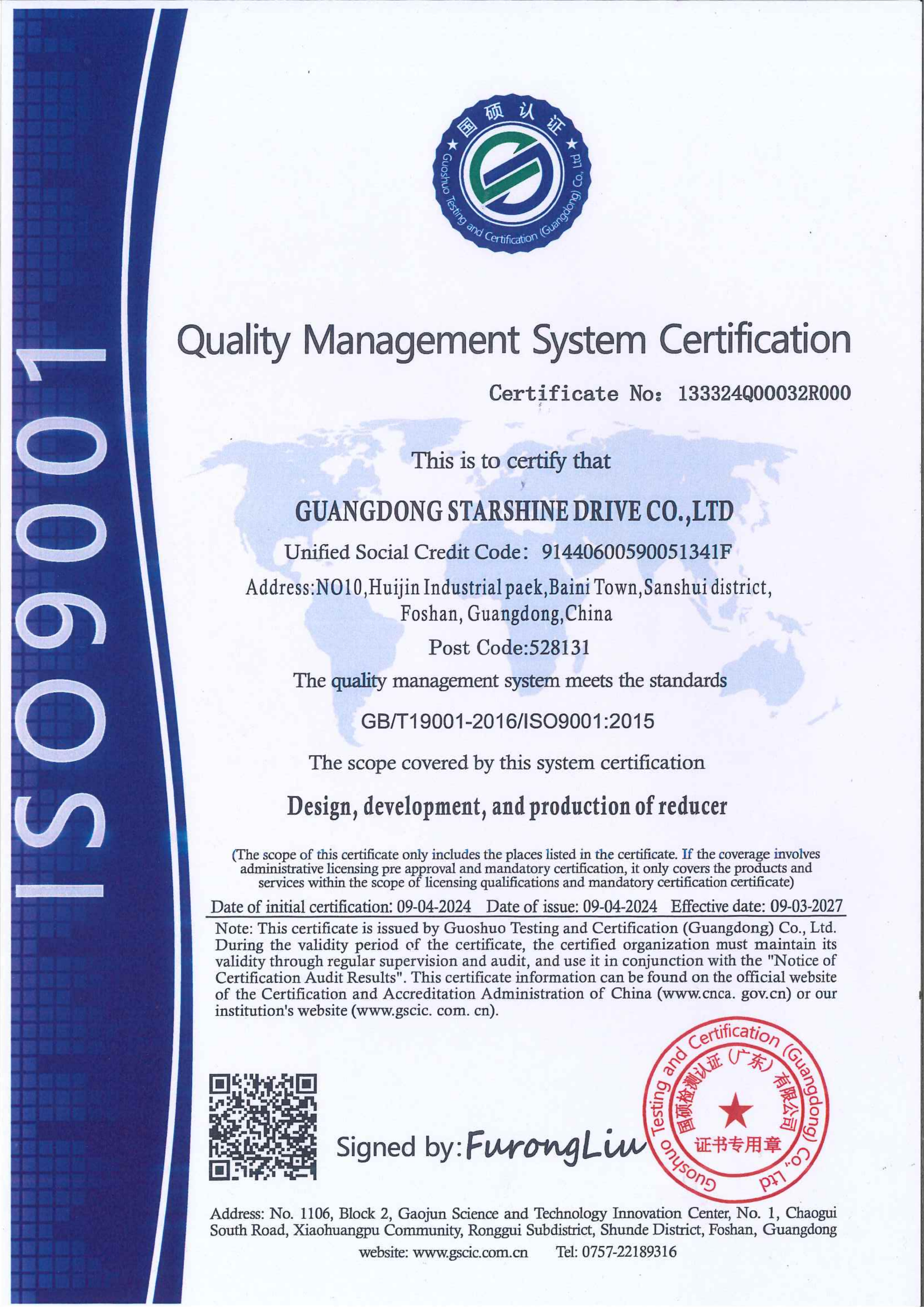
- Each configuration carries its own verification burden. The manufacturer holds an ISO 9001:2015 certificate covering the design, development and production of reducers, but a specific customized unit still needs its own documentation and pre-shipment test record before it is accepted on the line.
- Self-locking constrains ratio choice. In the RV worm gearbox series, self-locking is available at i≥60, so positions requiring both self-locking and a low ratio cannot be served by that family alone.
- Mechanical variators are not a control system. JWB-X units provide stepless mechanical adjustment, but they do not offer the integration, feedback or remote set-point capability of an inverter-based drive package.
- Reducer choice alone does not make a machine washdown-ready. Hygiene performance depends on the whole drive installation, as noted above.
The decision rule that follows is straightforward. Where downtime cost, hygiene documentation or duty variability is high, a duty-matched configuration is worth the extra engineering. Where the duty is stable, the load is light and volumes are large, standardized catalogue units remain the more efficient purchase.
Future Outlook
Three developments are likely to shape how these lines are specified over the next several years.
First, integrated drive packages will become the default unit of purchase rather than separate gearbox, motor and inverter selections, because they simplify responsibility when a line underperforms. Second, planetary adoption will continue to rise in proportion to the automation content of textile, woodworking and food machinery, even where the main conveyor remains a helical or worm application. Third, documentation expectations will tighten: EN ISO 12100:2010 already sets out the general principles for machinery risk assessment, and buyers in Europe increasingly expect drive data to slot into a machine-level risk file rather than arrive as a standalone datasheet.
Localized assembly capacity also changes the practical calculus. Starshine Drive operates an assembly plant in Vienna, Austria, alongside a global network of more than 100 dealer partners and more than 10 assembly centres, serving markets that include Southeast Asia, Europe and North America. For European projects, that arrangement shortens the physical distance between configuration, delivery and technical support when a duty-matched drive has to be reworked.
FAQ
Which reducer families are typically evaluated for a continuously running textile line?
Continuous duty favours families with high efficiency and long lubricant life. The R/F/K/S series helical gearmotors are documented for textile applications with single-stage efficiency above 96 percent and single-stage ratios from 1.3 to 289.74. NCJ series helical gearmotors run at 92 to 96 percent efficiency, accept full-load operation between 20 Hz and 60 Hz, and are specified for up to 20,000 hours of normal lubricant use. Worm gear reducers stay relevant where high ratio or holding ability is needed, since the RV series reaches single-stage ratios up to 100, two-stage ratios up to 10,000 and self-locking at i≥60, but their efficiency and heat behaviour make them a secondary choice for long continuous duty.
What should be specified for a woodworking machine that runs intermittently in a dust-heavy environment?
Three items decide most of the outcome: the duty cycle with starts per hour and peak torque, the housing and sealing arrangement, and the speed-adjustment method. Starshine Drive supports non-standard modification per customer drawings and customization of housing material and surface finish, which is where dust-related requirements are captured. Standard housings are cast iron or aluminium, so fine wood dust should not be assumed to be excluded by default; the sealing arrangement and housing treatment must be agreed as part of the configuration. For retrofit positions, the NCJT04B/J variant is documented as a replacement for a 1# cycloid gearbox.
How does variable-speed operation on a food line change the drive specification?
It changes two elements: the speed range the motor holds at full load and the method used to reach each set-point. The NCJ series is documented for full-load operation between 20 Hz and 60 Hz with a wide-frequency motor. JWB-X mechanical stepless variators offer mechanical adjustment where electronic control is not wanted, while combined packages of gearbox, motor, inverter, controller and smart system are available where integration is preferred. The reducer itself also has to be specified for the cleaning regime, through housing material and surface finish customization and non-standard modification per customer drawings.
What can be customized beyond reduction ratio and torque?
The documented customization scope covers reduction ratio, torque, shaft size, installation dimensions, housing material and surface finish, together with non-standard modification per customer drawings. Production is organized as vertical customization alongside OEM and ODM services, and OEM and ODM are both offered.
What are the order quantity and typical lead time for a customized gearmotor?
The minimum order quantity is 1 unit with prototype support provided. Typical production lead time ranges from 7 to 20 days depending on the product. Documented purchasing terms are FOB delivery, pre-shipment test as the acceptance criterion, and COD payment terms. These figures are general commercial terms and should be confirmed for each specific configuration.
Which certifications and quality checks apply to these gearmotors?
The manufacturer holds quality management system certification to GB/T19001-2016/ISO9001:2015, certificate number 133324000032R000, issued 2024-04-09 and valid to 2027-03-09 by Guoshuo Testing and Certification (Guangdong) Co., Ltd., with a scope covering the design, development and production of reducers. Products comply with international and domestic standards including ISO, CE and CCC. Production applies 100 percent online air tightness testing, 100 percent online noise testing and 100 percent comprehensive motor testing. In the European Union, EN ISO 12100:2010 provides the general principles for machinery risk assessment, and buyers should confirm how each drive configuration is reflected in the machine-level risk assessment.
Are OEM and ODM services available?
Yes. OEM services and ODM services are both available, alongside customizable production and vertical customization. Custom industry solutions are exported worldwide, supported by more than 10 global assembly centres and more than 100 dealer partners, with documented after-sales support through remote assistance or local dealership services depending on the market.
Further configuration data, ratio and torque tables for each reducer family are compiled in the manufacturer brochure, available for download: Starshine Drive product brochure.